Austin’s only venture fund run by women; True Wealth Ventures has closed on its second oversubscribed $35 million Fund II.
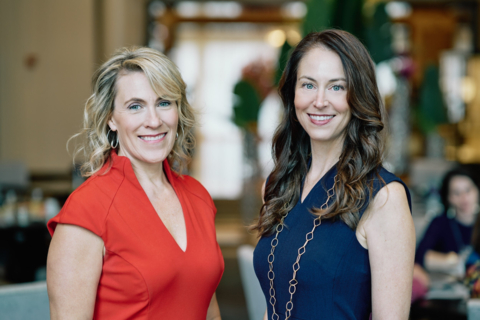
The firm, founded in 2015 by Founding General Partner Sara Brand and General Partner Kerry Rupp, focuses on investing in women-led companies in the healthcare and environmental industries.
True Wealth Ventures closed its first $19.1 million fund in 2018. It was the largest fund ever raised at that time with an explicit gender diversity strategy. And Fund 1 was backed by 80 percent women limited partners.
To date, True Wealth Ventures has about $60 million in assets under management. True Wealth Ventures’ investment thesis is that women-led companies perform better financially yet they remain an untapped market.
Despite statistics showing how well women-led startups perform, just 2.3 percent of total capital invested in U.S. venture-backed startups in 2021 went to companies solely founded by women and only 14.8 percent of that capital went to companies co-founded by women, according to a May Pitchbook report.
“While our primary mission continues to be getting early-stage capital to female founders whose core value proposition is improving environmental or human health, our secondary mission has been to facilitate more women investing into this asset class as LPs,” Brand, True Wealth Ventures founding general partner, said in a news release. “We not only believe this is the fastest way to change the gender inequality in the VC ecosystem, we also believe it is critical for our country’s innovation economy with the wealth shifting to women.”
Since closing the first part of Fund 1 in May of 2021, True Wealth Ventures has already made three investments including in Aeromutable, a San Diego-based startup that applies aerospace technology to the trucking industry. It also invested in De Oro Devices, a company headquartered in California, which makes mobility devices to assist people with mobility disorders to walk safely and confidently, and Flourish, an Austin-based startup that educates women on how to build sustainable habits in nutrition, hydration, sleep, stress, relationships, and movement.
Overall, True Wealth Ventures intends to invest in 15 women-led companies from Fund II.
About 80% of U.S. assets will be controlled by women by 2030, but women largely aren’t active in investing in VC funds today.
“Investing in women-led companies personally resonates with women who know their peers have potential and should be backed much more than a mere 2.3%,” Rupp, True Wealth Ventures general partner, said in a news release. “There’s a feeling of, ‘If not us, then who?’ Women are twice as likely to invest in companies that will have a positive social impact, and 10 times as likely to invest in companies with diverse teams.”
The U.S. Supreme Court Friday morning struck down a woman’s right to an abortion, overturning Roe v. Wade, which became law 50 years ago.
The court voted 5 to 4 to overturn Roe v Wade. The ruling does not make abortion illegal but does not make it a constitutional right. That allows states to pass laws banning abortion.
Texas’ trigger law automatically bans most abortions in the state. It goes into effect 30 days after the U.S. Supreme Court issues its judgment. Attorney General Paxton also released an official advisory setting forth Texas law in light of the Supreme Court’s decision.
In Austin, hundreds of people marched to the Texas Capitol building to protest and celebrate the ban on abortion. Other protests and celebrations occurred at the Supreme Court in Washington, D.C.
Hundreds of Texas companies see “restricting access to comprehensive reproductive care, including abortion, threatens the health, independence, and economic stability of our workers and customers,” according to a statement by Don’t Ban Equality. The statement was created in 2019 in response to the trend of states restricting access to abortion. To date, more than 350 business leaders have signed the statement.
Don’t Ban Equality in Texas was created when S.B. 8 was passed in Texas in 2021. At that time, more than 60 companies denounced the law’s stringent restrictions and railed in support of access to abortion care.
Austin technology companies backing Don’t Ban Equality Texas include OJO Labs, WP Engine, Bumble, Capital Factory, Spot Insurance, QuestionPro, Thinktiv and others.
“When S.B. 8 was enacted in Texas in 2021, more than 60 companies once again stood in solidarity to support access to abortion care and denounce the law’s stringent restrictions,” according to the organization.. “Now, as Roe has been overturned in Dobbs v. Jackson Women’s Health Organization, the corporate community must rally again. Following the Court’s decision to strike Roe down, 24 states have laws on the books that could outright ban or severely limit access to abortion for tens of millions of women, and only 14 states have passed laws that would explicitly protect the right to abortion.”
On Twitter, Max Hoberman, founder and CEO of Certain Affinity, a gaming company based in Austin, showed a letter he sent to his employees offering to pay for them to relocate to a state that provides comprehensive reproductive care.
“As a business leader it’s exceptionally difficult to navigate highly politicized issues like transgender and abortion rights. But I’m not content to sit back and say or do nothing,” Hoberman wrote.
“The economic losses from existing abortion restrictions, including labor force impact and earnings, already cost the State of Texas an estimated $14.5 billion annually,” according to Don’t Ban Equality. “Nationally, state-level restrictions cost state economies $105 billion dollars per year.”
The Sana team as featured in Silicon Hills News 2022 Calendar, photo by Errich Petersen
Sana, a health care insurance company, Wednesday announced it has closed $60 million in venture capital financing.
Trust Ventures and Gigafund co-led the Series B funding round with participation from existing investors American Family Ventures, mark vc, Breyer Capital, JAM Fund, and Liquid 2.
To date, Sana, founded in 2017 by Will Young and Nathan Hackley, has raised $107 million.
“Trust Ventures and Gigafund have been investors since our seed round,” Young, Sana co-founder and CEO, said in a statement. “They believe in Sana’s mission and have been valuable partners over the last three years. They’ve seen the opportunity that lies ahead and have supported us every step of the way.”
Sana provides health care options for small businesses. The company reports that Sana’s customers often save up to 20 percent compared to legacy insurers. It also provides telehealthcare and low co-pays.
“Health insurance is a critical way employers can support their employees, but small business health care has been stagnant for decades,” Salen Churi, Trust Ventures’ general partner said in a news release. “Sana delivers dramatically better care at lower prices that meets users where they’re at.”
“Gigafund has now led four separate rounds of investment in Sana because the team continues to impress us with their phenomenal vision and execution,” Stephen Oskoui, Managing Partner of Gigafund, said in a news release. “Sana empowers small businesses to cut costs and help their employees become happier and healthier. The company is improving the health care system and eliminating inefficiencies that strangle the economy.”
Sana plans to use the funds raised to hire new employees with a focus on customer service.
Sana operates in eight states and plans to expand to additional states in the coming months.
“We’re excited to use this funding to bring Sana and reliable, affordable health care to more small businesses and their employees,” Young said.
In January, the company opened Sana MD in Austin. It is Sana’s first primary care health center for members. Demand for appointments has surpassed expectations, spurring Sana to increase hiring staff for the center. In addition to in-person office visits, Sana gives employees access to virtual care with providers specializing in primary care, pediatrics, maternity and mental health.
More than half a dozen panels at Consensus 2022, a cryptocurrency conference that kicked off last Thursday in Austin focused on the regulation of cryptocurrency.
Among those sessions, U.S. Senator Kirsten Gillibrand, D-NY, talked about the Responsible Financial Innovation Act, a landmark bipartisan bill she introduced last week along with Cynthia Lummis, R-WY, and a member of the Senate Banking Committee.
The bill seeks to create a complete regulatory framework for digital assets, Gillibrand said, during a Friday afternoon session titled “Washington’s Crypto Awakening: The Lawmaker Town Hall.” Lummis also served on the panel discussion along with Republican Senator Pat Toomey from Pennsylvania and Patrick McHenry, a Republican Congressman from North Carolina.
The bill is the most substantial and comprehensive bipartisan effort to provide certainty and clarity to the growing digital asset and blockchain industries, according to Gillibrand.
The regulations come at a time when Bitcoin is down 52 percent this year to $21,173, and Ethereum is down 70 percent this year to $1,155.
Adding to the turbulence, Terra, an algorithm stablecoin, and its sister token Luna, crashed recently leading to an estimated $60 billion in losses. The Securities and Exchange Commission is investigating Terraform Labs Pte Ltd, the company behind Terra and Luna, and Do Kwon, its founder.
In addition, on Sunday, Celsius Networks, a trading platform with 1.7 million members, halted withdrawals. “Due to extreme market conditions, today we are announcing that Celsius is pausing all withdrawals, Swap, and transfers between accounts.” The network is still dormant and its members cannot do anything but wait.
“As this industry continues to grow, it is critical that Congress carefully crafts legislation that promotes innovation while protecting the consumer against bad actors,” Senator Lummis said in a statement.
The proposed legislation “creates regulatory clarity for agencies charged with supervising digital asset markets, provides a strong tailored regulatory framework for stablecoins, and integrates digital assets into our existing tax and banking laws,” Sen. Lummis said.
“Digital assets, blockchain technology and cryptocurrencies have experienced tremendous growth in the past few years and offer substantial potential benefits if harnessed correctly,” Senator Gillibrand said. “It is critical that the United States plays a leading role in developing policy to regulate new financial products, while also encouraging innovation and protecting consumers.”
Digital assets that meet the definition of a commodity, such as bitcoin and ether, which comprise more than half of digital asset market capitalization, will be regulated by the Commodities Futures Trading Commission.
The bill also provides rules for issuing stablecoins by banks and credit unions. The bill does not require all payment stablecoin issuers to become depository institutions.
The bill creates an advisory committee from industry, advocacy groups, federal and state regulators, and subject matter experts knowledgeable in consumer protection, consumer education, financial literacy and financial inclusion. It also has provisions for consumer protection.
The bill also requires a study on digital asset energy consumption.
The bill directs the Federal Energy Regulatory Commission to analyze and report on energy consumption in the digital assets industry. Virtual currency mining, like other mining, can be an energy-intensive endeavor. It is important to study this issue to determine the best ways in which we can leverage this technology to help us move closer to our common climate goals by deploying more renewable and clean energy and reducing energy waste.
Other mandates call for looking at establishing a self-regulatory organization and for existing regulators to create guidance for cybersecurity for digital asset intermediaries.
The bill provides a regulatory sandbox for state and federal regulators to collaborate on innovative financial technologies.
The bill also creates a workable structure for the taxation of digital assets. It also examines investing retirement savings in digital assets. And it examines the security implications of the digital yuan, China’s central bank’s digital currency.
It’s a conference put on by media company, CoinDesk, which focuses on Web 3, cryptocurrency, Decentralized Autonomous Organizations, known as DAOs, Nonfungible Tokens, or NFTs, Metaverses, and more.
A few hundred people attended the first Consensus in 2015, and this one has more than 17,000 registered ticketholders. A general admission ticket is nearly $1,600 and the more expensive ProPass and Piranha Passes are both sold out.
Consensus features more than 600 speakers on 23 stages and is spread throughout the Austin Convention Center, Hilton, Fairmount, and various other venues downtown. It has a feel of South by Southwest on a smaller scale.
There is a definite feeling of FOMO with all the programming and exhibitions going on at once along with dozens of happy hours, parties, gallery shows, DJs, bands, and even a casino night.
The event is also taking place during a volatile time in the U.S. economy with the COVID-19 pandemic still lingering, inflation soaring, skyrocketing gas prices, and tensions created from the war between Russia and Ukraine, said Michael Casey, Chief Content Officer for CoinDesk, during his Friday opening remarks. Cryptocurrency, like the stock market, is also experiencing some turbulence. Bitcoin is hovering around $29,333, down from its all-time high of $68,990 in November of 2021. And Ethereum is down to $1,676, from its all-time high of $4,865, also in November of 2021.
On top of that, there have been cryptocurrency failures and scams, Casey said.
Recently, the collapse of the Terra project, “led to combined losses of about $60 billion between the stablecoin, also known as UST, and its sister cryptocurrency luna,” according to CNBC. A few sessions at Consensus examine what went wrong.
“Since the start of 2021, more than 46,000 people have reported losing over $1 billion in crypto to scams,” according to the Federal Trade Commission.
But despite the massive volatility, failed companies, and scams, cryptocurrency has gained a strong foothold globally and increasingly in the U.S. In September of 2021, the Republic of El Salvador became the first country to adopt Bitcoin as legal tender. Consensus has some members of Congress and the Biden Administration in attendance and as speakers discussing regulation and consumer protection. But they are also talking about establishing a stablecoin and creating a digital dollar.
Recently China unveiled its digital yuan or e-CNY, a digital version of its sovereign currency that is not a cryptocurrency but is instead issued and controlled by the People’s Bank of China, according to CNBC.
And NFTs have opened a whole new way for artists and creatives to make money in the digital age. Some major brands including Mastercard, Anheuser-Busch, Pepsi, and the NBA have also embraced NFTs as a way to engage with their audiences.
There’s also a lot of talk at the conference about the Metaverse, which wasn’t really a topic when Consensus held its last conference in New York in 2019.
Consensus organizers decided to move the event to Austin because it has the infrastructure to handle large crowds, Casey said.
“It was a big decision to leave New York. But Austin made it a smooth transition,” he said.
Mayor Steve Adler said Austin is known as a city with a tolerance for risk-taking and that’s what creates innovation and drives progress.
“This is a city that is innovative, creative, and entrepreneurial to its core,” Adler said.
Counties have begun sending out property tax assessments to Texas homeowners.
And many have seen their property taxes rise dramatically. To protest, homeowners usually have to file an appeal or hire an attorney to handle the process. But this year, there is a new way to protest.
Ownwell, an Austin-based startup, helps commercial and residential property owners save money on property taxes, by identifying owners who are overpaying and helping them get a reduction on their tax bills.
Ownwell, previously called realAppeal, moved its headquarters from Santa Monica, California to Austin in January of 2022. And on Monday, the company announced it has received $5.75 million in seed funding, led by First Round Capital. Other investors include Wonder Ventures, Founder Collective, Long Journey Ventures, and former PayPal board member Scott Banister. To date, Ownwell has raised $7.5 million.
“Property owners have a lot to consider when deciding to protest: the costs in time and money, the complexity of the process, and the access to real estate expertise and advice,” Colton Pace, Ownwell’s CEO said in a news statement. “As part of our mission to reduce the inequities of property ownership, Ownwell handles the entire process of appealing on behalf of property owners and charges the lowest fees currently on the market. We ensure all property owners, regardless of financial status, have access to the tools, resources, and information they need to manage their property taxes with confidence.”
Pace grew up on a ranch in North Dallas and lived there for 16 years. The agricultural exemptions on his family’s property were his first interaction with property taxes and the start of Ownwell. He learned the tips and tricks to reduce the cost of owning real estate, he said.
In his previous roles as an investor and asset manager, Pace saw the inequalities between the world’s most sophisticated real estate investors and everyday property owners. He founded Ownwell to democratize access to the tools and resources real estate experts use to increase their wealth and reduce their expenses.
Ownwell, which has 27 employees, plans to use the funds raised to hire new employees in all areas including sales, marketing, technology, operations, and more.
It’s free for homeowners to sign up. After they do, the Ownwell lets them know whether they can save money on their property taxes and how much. If they choose to protest their assessment, local property tax experts use proprietary best-in-class software to build the best case possible. Ownwell charges 25 percent of the tax savings after winning on behalf of customers. Customers only pay if Ownwell saves them money. The company estimates that nearly nine out of 10 protests are successful, and customers save an average of $1,457.
Ownwell has operations in Texas, California, Washington, and Florida and plans to expand further.
Pingboard became profitable during the COVID-19 pandemic by having the right product at the right time, said Bill Boebel its founder.
“We’ve grown the business to just over $6 million in revenue,” he said. “We’ve scaled from being an org chart to being a tool for employee engagement focused on companies that are fully remote.”
The Austin-based company creates employee engagement software for small to medium-sized businesses. Its interactive org chart helps companies onboard, interact with and celebrate employees. That has become increasingly important during the pandemic as many businesses went to remote workforces, Boebel said. It has more than 2,500 customers including The Motley Fool, Duolingo, The Linux Foundation, Meetup, Carta, Silvercar, Turo, and more.
“We built something the employees like to use,” Boebel said.
Founded in 2013, Pingboard has raised $7.5 million in three seed rounds, most recently in 2018. Investors have included Silverton Partners, Capital Factory, Active Capital, and Betaworks as well as many Austin-based angel investors.
Recently, Boebel decided to step down as Chief Executive Officer to pursue other interests in the blockchain and cryptocurrency industries.
“About a year ago, I decided I’m not the best at this space,” Boebel said. “When we were smaller I had really good instincts. When you’re small, it’s easier to move fast and break things. I’ve found my instincts not to be that great as we scale.”
Some founders get a coach and scale the company to the moon, Boebel said. But he decided to hire a new CEO instead.
This year, Laith Dahiyat took over as CEO. He previously worked as general manager of Weedmaps, the largest software and data company focusing on the legal cannabis sector. He also previously served as Chief Strategy Officer of Chargify, expanding the product into event-based billing and overseeing a successful exit to Battery Ventures in May 2021.
“He believes in the vision for Pingboard,” Boebel said.
The remote workplace sector is a white-hot market for software as service companies right now, Dahiyat said. And Pingboard has all the tools for employee engagement, recruitment, and retention, he said.
“It’s poised to become a rapid growth company,” he said.
The secret to retaining talent is that employees want to feel special, and unique, Boebel said. Pingboard can help companies recognize employees and reward them for their hard work, he said.
Pingboard has 36 employees and plans to expand to 50 by the year and 75 by next year. Pingboard did lay off some employees to get to profitability. It went from 40 employees to 25 during the pandemic and now it’s scaling back up again.
Boebel is remaining with Pingboard as a member of the Board of Directors and as an advisor. Pingboard Co-founder and CTO, Rob Eanes, will continue to lead engineering.
Pingboard, which used to occupy a building near Capital Factory in downtown Austin, moved recently to a remote-first workforce.
“It’s kind of in the DNA of Pingboard,” Boebel said. “We use our own tools. We have that advantage. We have a highly engaged collaborative workforce.”
Tesla’s Giga Texas is the world’s largest manufacturing plant, said Elon Musk, Tesla’s CEO and Founder.
It’s as big as three Pentagons, Musk said. Or 194 billion hamsters
could fit in the building, he said.
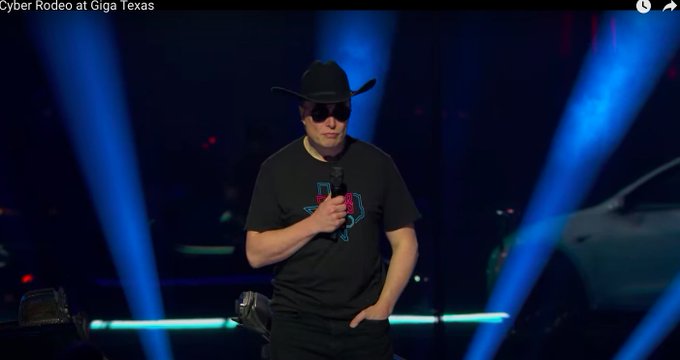
With fireworks, laser lights, and a drone show, Tesla officially opened Giga Texas on Thursday with a “Cyber Rodeo.” The company invited 15,000 guests to attend the invitation-only event which began at 4 p.m. Musk spoke at the event following the drone show at about 9:30 p.m. The event was live-streamed through Tesla’s YouTube channel.
Musk, who wore dark sunglasses, a black cowboy hat, and a Giga Texas T-shirt, also mentioned that Tesla is working on a Robo Taxi that is “going to look quite futuristic.”
Giga Texas is making Model 3 and Model Y cars. At the event,
Tesla showed off the first Made in Texas vehicles. In July of 2020, Musk
announced plans to build the $1.1 billion Giga Texas plant on 2,100 acres
located at SH 130 and Harold Green Road in Southeast Travis County. Tesla later
bought another 381 acres of adjacent land for a total of 2,481 acres.
At the Giga Texas plant, Tesla also plans to produce the Tesla Cybertruck beginning next year, Musk said. And it will also make the Tesla Roadster and Tesla Semi, he said. The site also serves as Tesla’s corporate headquarters.
Tesla is also building battery cells at the plant to power
its vehicles, Musk said.
“Over time we think this will be the biggest cell factory in
the world,” he said.
“This year is about scaling up and next year there’s going
to be a massive wave of new products,” Musk said.
Next year, Tesla’s Optimus, a humanoid robot, could go into
production, Musk said. Optimus is going to do everything that humans don’t want
to do, but no terminator stuff, Musk said. A prototype of Optimus was on
display at the event.
“It’s really going to transform the world, to a degree even
greater than the cars,” Musk said.
Tesla is also manufacturing its cars in a new way at the Giga Texas plant with the world’s biggest casting machine, Musk said. The casting machine can make the cars efficiently and faster in a radically new way, he said.
Everything in the Tesla facility is under one roof, Musk said. Raw materials come in on one side, a bunch of things happen, and cars go out the other side of the building, he said.
Join the Giga Texas team! https://www.tesla.com/giga-texas
“This will be the highest volume car factory in America,”
Musk said. The plant is expected to produce 500,000 Model Y cars a year.
In the last 12 months, Tesla delivered more than one million
cars worldwide to customers, Musk said.
“That said there is still a long way to go,” he said.
Tesla’s production makes up 1 percent of the world’s total
vehicle output and Tesla wants to grow its market share to 20 percent, Musk
said.
In order to make a big difference in sustainability, Tesla has to make a lot more cars to transition the world to sustainability as quickly as possible, Musk said.
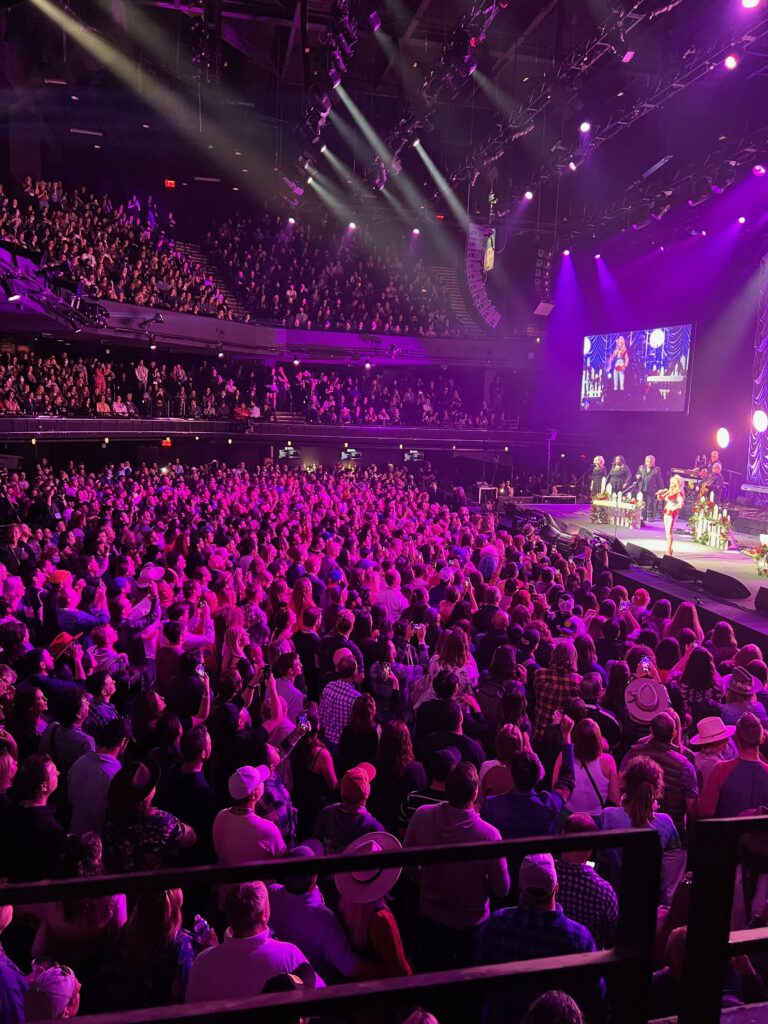
Dolly Parton performs on stage at ACL Live during Blockchain Creative Labs’ Dollyverse event at SXSW
Dolly Parton embodies everything that SXSW is about: music, film, technology, and creativity.
And Friday night, the country music superstar gave a high-energy outstanding performance to everyone attending virtually in Dollyverse, and in person at the ACL Live’s Moody Theater at SXSW.
Parton has performed live at ACL Live before, recorded music, and done movies in Austin, but the opportunity never came up until Friday to perform at SXSW, she said.
“I love Austin,” Parton said. “There is a first for
everything and this is the first for me and I’m excited to be here.”
Parton minted a lot of “firsts” at SXSW. She has written her first novel, Run Rose, Runwith co-author James Patterson which debuted on March 7th along with a new album. She created her first NFT or Non-Fungible Token of a rose collectible given free to everyone attending the event. Parton also launched Dollyverse, an audience-centric Web 3 experience with FOX Entertainment’s Blockchain Creative Labs at SXSW.
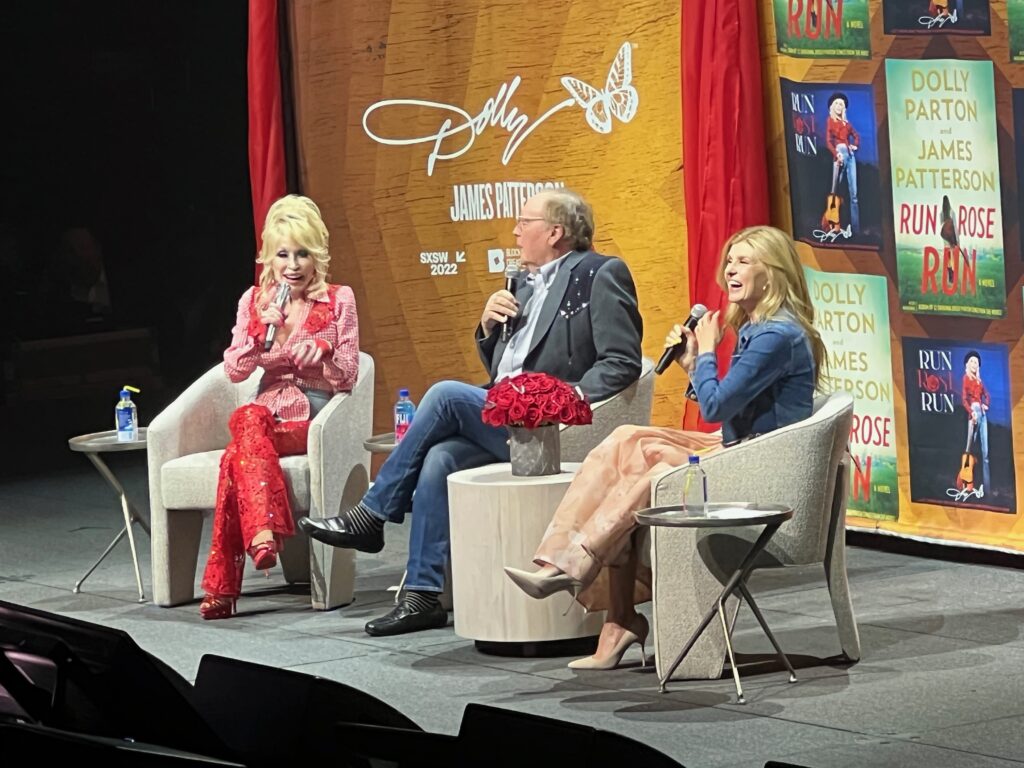
Before she sang, Parton sat down for a fun half-hour chat with her collaborator best-selling novelist Patterson and Emmy and Golden Globe Award-nominated Actress Connie Britton to discuss Run, Rose, Run, the novel she co-wrote with Patterson and its music album. The book is also going to be made into a major motion picture by Reese Witherspoon’s production company, Hello Sunshine, Parton said.
The book, Run, Rose, Run, centers around Nashville and the country music business including ruthless, predatory agents and managers. But it also highlights good people like one of the main characters, RuthAnna Ryder. She was once a big star and is kind of retired from the business, but still writes songs, and she still has a recording studio and a band, and she mentors the rising star, a young girl, AnnieLee Keyes. RuthAnna is fashioned after Parton, and she plans to play her in the movie, she said.
“I kind of wrote myself in a part for the movie,” Parton
said.
Run, Rose, Run provides insights into the inner workings of being a country star in Nashville, the good and the bad, Parton said. One of the songs she wrote is called “Snakes in the Grass,” because “you better watch your ass,” she said.
Dolly Parton and James Patterson in conversation with Connie Britton at ACL Live during Blockchain Creative Labs’ Dollyverse event at SXSW
Britton told Parton she was a great businesswoman, and she does it with service. Parton is a singer, a writer, an actress, a businesswoman, and a philanthropist. Dolly’s Imagination Library has donated more than 174 million books to children in five countries. In 2020, Parton also donated $1 million toward the development of a COVID-19 vaccine.
“It feels like everything you do, you do for other people, and we appreciate that,” Britton said.
“Once you get into a position to help, you should do it,”
Parton said.
Parton finds the right people to surround herself with that are going to take her purpose into the world as she does, Britton said.
“Dolly is the smartest person I’ve ever worked with,” Patterson
said.
“She is a genius and also an angel,” Britton said.
Parton said she doesn’t know about that; she’s just doing her work as a professional Dolly Parton.
The
collaboration with Patterson came about because Parton has always been a
big fan of his books.
“He came down to Nashville and we just hit it off right
away,” Parton said. “He had a good idea it was about Nashville, and I thought
well that is something I know a little bit about. So, we just got to talking.”
They liked each other. Patterson and Parton made the deal right there in Parton’s office without any lawyers, agents, or anyone.
“We just did it,” he said.
Patterson got back to his house in Palm Beach and two days later Parton sent him the lyrics for seven songs.
“That’s true,” Parton said. “That’s the way I can
contribute.”
Britton asked Parton if she just had the songs sitting
around in a closet.
‘The story I related to the young girl, AnnieLee Keyes, and she’s new in Nashville running to something and running from something that’s the mystery of the whole book,” Parton said.
When she started writing the characters and the stories, a
lightbulb went off over Parton’s head and she thought she should write an album
to go along with it.
Run, Rose, Run is a book with a soundtrack, and that’s unique, Patterson said.
“If you start by listening to the songs, it’s really cool to see where they come from in the story or if you read the book,” Patterson said.
Britton said the book provides a lot of details about Nashville
and captures the place. Patterson received his MA in 1970 from Vanderbilt University,
which is based in Nashville. And Parton moved to Nashville the day after
graduating high school when she was 18 years old.
The collaboration has been great, Patterson said.
“You never know when you’re going to work with someone
whether you’re going to like them,” Parton said. “And I don’t usually write
with people that much, but he just seemed like a new old friend, someone I’ve
always known.”
Parton recalled that she wrote a song with Kenny Rogers called “You can’t make old friends.”
“But sometimes you meet people, and you feel like you’ve
always known them,” Parton said. “So, I’m calling him now my new old friend.”
Britton asked Parton whether songwriting was very different from book writing.
“Well, it’s about the same as far as the creative process,” Parton said. But it’s easier to write a book, because when you write a song you must think about it playing on the radio, how long it has to be and it has to rhyme, she said. Writing a book gives the writer more freedom, she said.
Parton said she had always hoped to write a novel when she
was older. She’s glad it happened when it did because it’s been a really great
experience. Parton is 76.
“Isn’t it great that at whatever age, you can do something
new and have a new experience” Britton said.
Most people that are creative, it shouldn’t matter what age you are, Parton said.
“I always say that I’m as old as yesterday and as new as
tomorrow,” Parton said.
People often ask Parton how she looks so young, she said. She attributes it to good lighting, good makeup, and good doctors.
And she always looks like a million dollars on stage. At the book talk, Parton sparkled like a rock star but still had that underlying country girl persona in a red checkered button-up blouse accented with red lace around the collar and cuffs and blue denim shorts stitched together with red lace leggings with five-inch red stiletto heels. And Patterson wore a jacket adorned with rhinestones. Steve Summers, Parton’s stylist, and branding expert creates her outfits and helped Patterson as well, Parton said.
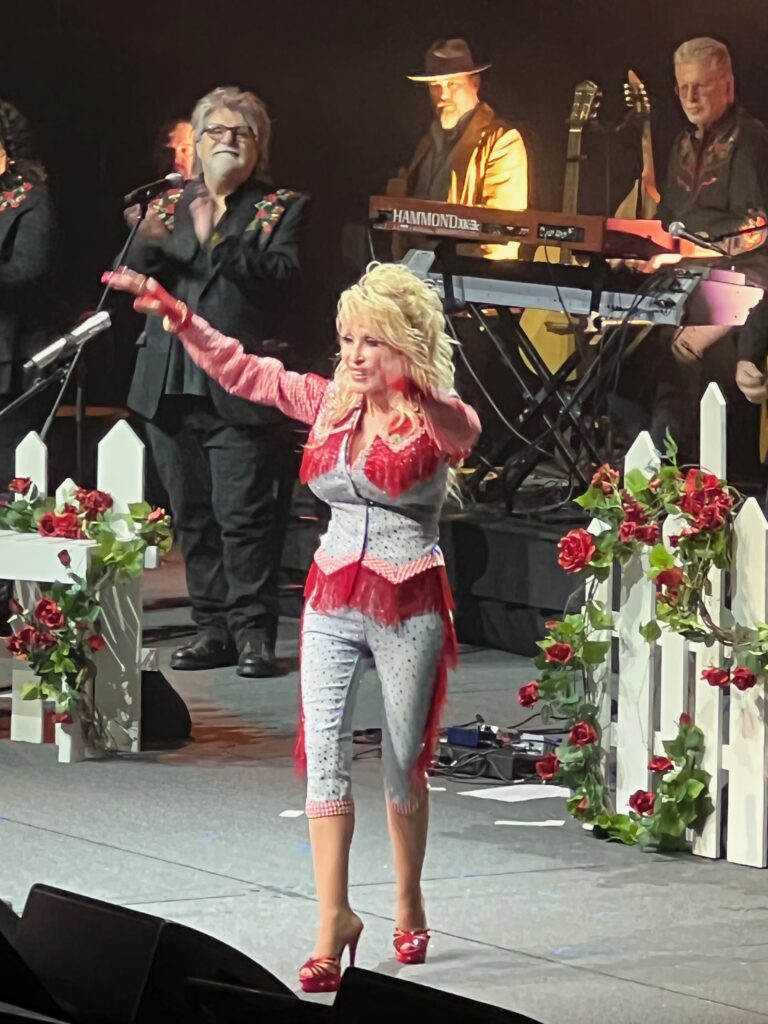
After a brief intermission, Parton took to the stage in a
new outfit – denim capris with bright red fringe and form-fitting denim jacket
top with red fringe and sparkling roses around the neck and red plaid sleeves
and her signature five-inch red stiletto heels.
Dolly Parton performs on stage at ACL Live during Blockchain Creative Labs’ Dollyverse event at SXSW
Parton sang three songs from her new album: “Woman Up and Take it Like a Man,” “Run,” and “Big Dreams and Faded Jeans.” And she sang several of her past hits while dancing across the stage like a teenager. She also told stories about her life. Parton has been married to her husband, Carl Dean, for 56 years. She met him a few weeks after arriving in Nashville at the laundromat. They married two years later. One story involved her husband going to the bank to see a beautiful young woman about a loan for his construction paving business. That woman became the inspiration for the song, “Jolene,” which is Parton’s most covered song and has brought in a lot of royalties over the years.
“She made me a lot of money,” Parton said.
Other stories centered around her childhood growing up dirt poor in the Appalachian region of Eastern Tennessee as one of 12 kids. Her mother sewed a coat from rags that became the inspiration for the song “Coat of Many Colors.” She gave her mother all the royalties from the song. Her father, a tobacco farmer, never learned to read or write and struggled to keep his growing family fed. But while the family may have lacked financial resources, it was never short on love, Parton said.
With her powerful voice, Parton sang an acapella version of
“Precious Memories,” a traditional gospel song that she used to sing in church
growing up.
But the song that brought the house down was “Working 9 to 5.” Parton sang the iconic song, which was the title soundtrack to her first movie role in the 1980 movie Working 9 to 5. The lyrics about female empowerment must have struck a chord with the audience, which sang along. After Parton finished her performance, she asked the audience to sing the song. The audience sang several verses much to Parton’s delight.
At SXSW, Parton is also featured in the documentary about the Working 9 to 5 movie, called Still Working 9 to 5, which debuted at SXSW and examines the 40-year evolution of gender inequality and discrimination in the workplace.
Parton also touches on the theme of discrimination in the music industry in her book, Run, Rose, Run. She mentions Tomato Gate, which was a real-life controversy in 2015 sparked by a radio industry consultant who advised radio stations not to play consecutive songs by female artists. He said the male country singers were the lettuce in the salad and the female singers were more like the garnish, like tomatoes. It is clear in her body of work; Parton has fought discrimination throughout her entire career.
At the event, Working 9 to 5 was supposed to be her last
song, Parton said. But she decided to sing “I Will Always Love You,” as her
farewell tune. Parton wrote the song in 1974 and it went to number one on the
country chart.
For the first time ever, Dolly Parton will perform at SXSW on Friday at the Austin City Limits Live at the Moody Theater.
She’s also involved in SXSW 2022 in a big way.
In addition to her live performance, Parton has written a book with best-selling author James Patterson, titled Run, Rose, Run. Parton has also created a music album that accompanies the book.
Parton will sit down with Patterson and Connie Britton, Emmy and Golden Globe Award-nominated actress, at 8 p.m. on Friday to discuss their collaboration on the novel, Run, Rose, Run.
Scheduled to open for
Parton and Patterson are Kovic, Callie Twisselman, Electra Mustaine and The
Brothers Moore.
The entire event will be streamed live for
free on “Dollyverse” by Eluvio, which also will power the “Dollyverse’s” NFT
sales.
The “Dollyverse” will release an exclusive selection of official and certified Dolly NFT collectibles, including limited-edition NFTs of the Run, Rose, Run music album and a limited series of Dolly-inspired NFT artwork, for purchase during and after SXSW. In-person attendees at Parton’s performance will be able to claim a free NFT, while fans streaming the event will be able to receive tokens authenticating their participation.
“There’s almost nothing more important to me than connecting with
my fans. And I’m almost always up for trying something new and
different,” Parton said in a news release. “I’d say releasing NFTs at my
first ever appearance at SXSW, with James Patterson by my side, definitely
counts as new and different!”
“I am a huge Dolly Parton fan. Who isn’t? She is a
national treasure, whose important contributions to the world transcend her
incredible work as an entertainer,” Scott Greenberg, CEO of BCL said in a news
release. “Dolly is a true pioneer who brings the highest level of
quality, heart and authenticity to everything she touches, which is why she’s
the perfect person to introduce to the mainstream audience an easy-to-use, Web3
experience that will live stream her SXSW event and provide them the
opportunity own and enjoy her music — not just a right to stream it – all
designed to bring Dolly even closer to her fans.”
“Dolly Parton’s participation in SXSW 2022 fulfills one of
our longtime goals and we’re absolutely ecstatic to have her involved in this
year’s event in such a unique way,” said Hugh Forrest, Chief Programming
Officer for SXSW. “Beyond her legendary status in the music
industry, Dolly embodies the SXSW spirit as she extends her unique brand of
creativity across many verticals. Most importantly, Dolly serves as an
inspirational and unifying role model for millions of fans — spanning
different ages, occupations, and viewpoints — from all over the world.”
In addition to the performance, book, album and
Dollyverse, Parton is also featured in the documentary Still Working 9 to 5
which revisits the hugely popular Working 9 to 5 Movie that Parton starred in
along with Jane Fonda and Lilly Tomlin. The comedy brought to light the
struggles of working women in the workplace. The documentary explores how the
movie was made and its feminist empowerment message and the underlying fight
for women to get equal rights in the workplace along with equal pay.