Category: Austin (Page 213 of 318)

Ten Semi-Finalists Named for SXSW Pitch Competition

By SUSAN LAHEY
Reporter with Silicon Hills News

imgres-6Silicon Hills News, Austin Technology Incubator and Central Texas Angel Network have picked the ten semi-finalists for a South by Southwest pitch competition to be held March 9 at the Austin Chamber Offices.

They are:
Pristine.io
Embrace Customers
Spot On Sciences
Filament Labs
Mahana
EyeQ Insights
SegUrWay
Fosbury
Lucid Tour
Articulate Labs

“What an amazing group of applicants this year,” said Kyle Cox, Director, IT/Wireless & University Development portfolio for ATI . “Our round 1 judges had a difficult time narrowing the field down to the 10 semi-finalists. The caliber of these local Austin firms is up there with any nationwide competition out there.”

The winners were chosen not only on the strength of their ideas from an investor standpoint, but also on their ability to tell their story in a manner compelling to the media. Frequently, it’s the back story that makes a startup stand out. That may mean stumbling upon the idea in an unusual way, enduring a remarkable struggle to bring it to fruition, embarking on an epic customer validation journey and the like.

Each of the ten finalists will receive one SXSW Interactive badge and be given the opportunity to pitch in front of a panel that includes Pat Noonan of Austin Ventures, Monique Maley of Articulate Persuasion, and Gary Forni of Central Texas Angel Network. Round one will take place at 9:30 a.m.

The five finalists from that round will go on to round two at 11 a.m. where they’ll pitch before Venu Shamapant of LiveOak Venture Partners, John Stockton of Mayfield Fund and Tom Chederar of VentureBeat.

The prizes include:

  • A series of profile articles in Silicon Hills News, following the company’s growth journey.
  • A three month membership in ATI’s Landing Pad portfolio.
  • A free spot in CTAN’s next investor pitch day.
  • Three hours coaching from professional pitch coach Monique Maley
  • Three hours consulting from ValentineHR on issues like hiring and recruiting and compliance.

The top winner will get a series of Silicon Hills articles and one other prize of his/her choice. The second place winner will also choose two prizes from those leftover and the third place winner will take the remaining prize.

San Antonio-based Carbon Black is Acquired by Bit9

CB_blog_imageCarbon Black, a San Antonio-based cyber security startup, has merged with Waltham, MA-based Bit9.
Carbon Black makes software to deal with detection of hackers on a computer system and response to hackers once an incidence has occurred. Bit9 makes software to prevent those attacks from occurring.
Financial terms of the transaction were not disclosed.
Bit9 also announced that is has raised $38.25 million from Atlas Ventures, Paramount Pictures, .406 Ventures, Highland Capital Partners, Kleiner Perkins Caufield & Byers and Sequoia Capital to fuel its growth. The company, founded in 2005, has raised $121 million to date with the latest financing, according to its Crunchbase profile.
The merged companies will be known as Bit9. Carbon Black CEO Mike Viscuso will move to the Boston area to become the new chief strategy officer at Bit9.
Scott Lundgren, director of engineering, and his team have been working out of offices on the 10th floor of Geekdom. The company has 16 employees.
“Every enterprise endpoint and server is a defenseless blind spot for advanced threats,” Patrick Morley, Bit9 president and CEO, said in a news release. “Traditional defenses such as antivirus can’t detect or stop stealthy attacks orchestrated by malicious actors, or help companies respond to incidents, which has been painfully underlined by the recent high-profile intrusions into leading retailers. The combination of Bit9 and Carbon Black satisfies all of these needs.”

Atlassian to Open Austin Office with Up to 300 Employees

imgres-5At Startup Grind 2014 in Mountain View, Calif. last week, a few people said Atlassian would be opening an office in Austin.
And the folks at the booth for Hipchat, the company’s group chat and IM tool, confirmed that, but they would not provide any more information.
It seems Lori Hawkins at the Austin American-Statesman got the details from the company president. She’s reporting today that Atlassian, an Australian software group, plans to open an Austin office with as many as 300 employees.
Atlassian has more than 30,000 customers including Citigroup, eBay, Coca-Cola, Netflix and United Airlines. It operates in 134 countries and has 750 employees, according to this ZDNet story.
Atlassian also recently moved its headquarters from Australia to the United Kingdom.

CoinTerra Cashes in on Bitcoin Mining Craze

By Leslie Anne Jones
Reporter with Silicon Hills News

 Ravi Iyengar Founder & CEO of CoinTerra


Ravi Iyengar
Founder & CEO of Cointerra

When there’s a gold rush on, it’s sometimes the shovel sellers who get rich fastest. On January 27, CoinTerra started shipping the world’s most efficient shovel for mining Bitcoin: the TerraMiner IV, a networked ASIC Bitcoin miner which, at $5,999, is presently the lowest price-for-performance model on the market.

Rated Austin’s fastest-growing startup in December by Mattermark, CoinTerra is less than a year old and did $35 million in sales in the five months since announcing its first product. The TerraMiner IV is sold out through April and the company is currently taking orders for May. Founder Ravi Iyengar says they will likely announce new Bitcoin mining products in coming weeks.

A bit of background for those who find cryptocurrency rather cryptic: Bitcoin is the frontrunner among dozens of decentralized peer-to-peer value transfer systems (including but not limited to Litecoin, Peercoin, DogeCoin, Kittehcoin and BBQcoin). Bitcoin’s current market capitalization is more than $10 billion, where every other alternative is less than $1 billion.

Introduced in 2009, Bitcoin is based on a cryptographic algorithm. It was created by an anonymous person (or perhaps group) known only as Satoshi Nakamoto. There will only ever be 21 million bitcoins in circulation, and presently there are only about 12 million. Bitcoins are released in blocks about every 10 minutes. A miner can obtain bitcoins by having his computer solve complex math problems in order to uncover the blocks and also to record transactions, for which the miner earns a fee. When Bitcoin was first introduced, this could be done on a personal computer, but Bitcoin is designed so the algorithmic problem solving (“mining”) becomes increasingly difficult over time. Today, a many thousand times more powerful system like CoinTerra’s is necessary to effectively mine Bitcoin.

This time last year, Iyengar was happily employed as a lead CPU architect at Samsung where he worked on next-generation mobile hardware. Last March, two people from the Bay Area contacted him over LinkedIn and asked him to head up their engineering team for a mining system. They offered half a million in base pay. Later, two Belgians approached him about cofounding a similar company. Iyengar asked them to invest in him instead.

“I decided to do it myself,” Iyengar said. CoinTerra was incorporated on May 15, 2013.

Iyengar and his wife were about to close on a house, but they couldn’t get their loan approved once he quit Samsung. “My wife was so bummed. It took a few weeks before she would talk nicely to me,” he recalled.

For the first five months, Iyengar didn’t pay himself anything. He received his first investors in June and raised $1.9 million between then and October. It took seven months to go from concept and product, and CoinTerra partnered with Open Silicon for the TerraMiner’s physical design and with AES for the system design. The boxes are manufactured at an undisclosed location in central Texas.

“We accelerated every part of this product,” Iyengar said. “We threw expediting money at everything.”

The finished product is a self-contained system that just needs to be plugged in and installed to start mining. “Your grandmother could do it,” Iyengar said, though most of his clients are men – home enthusiasts, mostly between ages 20-40, a tech background is common among miners. CoinTerra has some bulk customers too, but Iyengar said they plan to concentrate on retail.

CoinTerra's TerraMiner IV

CoinTerra’s TerraMiner IV

Presently, Iyengar doesn’t mine. He says he wants to take care of the customer backlog before he gets his own TerraMiner. However, some staff are engaged in other kinds of cryptocurrency mining: CoinTerra’s 24-year-old business development manager Stephen Henry keeps a warehouse in eastern Washington (cheap electricity) filled with computer hardware that mines various digital currencies around the clock. He doesn’t convert any of it to dollars though, “I believe in increasing stores of wealth based on technological innovation,” Henry said of his venture.

CoinTerra’s first local customer to pick up a unit was computer programmer Jake Gostylo. Gostylo first started mining on a more basic system with friends back in 2011. They cashed whatever they mined out immediately, and he estimates they made $15,000 before power and hardware costs. They had to give up that system when the algorithm became too difficult and power intensive to make it worthwhile. In the eight days since he and his friends received their TerraMiner IV, Gostylo said they mined 3 bitcoins, an equivalent of $2,400.

“I don’t doubt that we will be making our money back and then some very shortly,” Gostylo said. However, they aren’t going to exchange for dollars right away anymore, they’re keeping it in bitcoin now: “We’re hoping for the strength of the bitcoin economy to increase as well and the coins we have now will be worth more.”


Spredfast Opens an Office in London

77489v4-max-250x250Austin-based Spredfast, the social media marketing firm, keeps on making news.
The company announced on Thursday plans to open its first European office in London. The company has customers in more than 20 different countries. It has 150 employees nationwide with 110 of those in Austin. It expects to hire 120 people this year.
The expansion follows a record funding round for Spredfast in January when the company announced it raised $32.5 million.
Spredfast named Oana Neumayer, formerly vice president of EMEA, to lead its U.K. operations.
“Spredfast experienced unprecedented growth in 2013, as did the social media market itself — changing from a mere broadcast medium to one that is much more targeted,” Rod Favaron, CEO of Spredfast, said in a news release. “With this in mind, our company is committed to providing every brand, worldwide, with the most robust, social relationship platform on the market so they can reach their customers in a highly targeted, effective way and build lasting relationships. By opening an office in the U.K. and bringing on Oana, we are taking our first step — of many — towards global expansion.”
Spredfast has created a software platform that allows companies to communicate with customers across all kinds of different social networks from Twitter to Facebook to Pinterest to Youtube.

Austin-based makexyz Gets Investment from Intel Capital

images-5Makexyz, a startup in the 3-D printing industry founded by ex-indeed.com employees, landed an investment this week from Intel Capital.
The company can’t disclose the details of the funding or the amount, Nathan Tone, one of the co-founder, said in an email. Chad Masso is the other co-founder.
“Our goal is to help people make stuff,” Tone said. “And Intel’s investment strengthens our opportunity to help people make stuff at a significant scale. With a quickly growing, global network of 3-D printers, a lot becomes possible.”
Silicon Hills News did this Q&A with Tone last year.
Intel Capital also invested in CGTrader, another 3-D printing company.
“3-D printing is changing the way individuals and businesses give life to ideas,” Arvind Sodhani, president of Intel Capital and executive vice president of Intel Corporation, said in a news release. “We’re seeing the impact of this technology on numerous industries, including manufacturing, medical, retail and consumable goods, among others. CGTrader and makexyz will drive the development of the ecosystem.”
Makexyz is a 3-D printing marketplace that links people who need something made with 3-D printers to people who have 3-D printers in their neighborhoods.

Women@Austin Wants to Foster More Women Entrepreneurs

By LAURA LOREK
Founder Silicon Hills News

janryanpic2014Founding a high tech startup and raising venture capital is tough for everyone.
But it’s even tougher for women, according to the Clayman Institute for Gender Research at Stanford University.
In a recent study, the institute reported “women founded only three percent of technology firms and one percent of high-tech firms between 2004 and 2007.” And that only five percent of venture capital investment went to women-owned high-tech firms in 2001.
Those figures are also true in Austin, according to Jan Ryan, a successful serial entrepreneur. She knows those statistics really well. She has raised venture capital for her software companies and now she wants to help other women succeed.
At Social Dynamx, Ryan, a co-founder helped to raise $3 million in a seed stage investment. In 2012, Lithium Technologies Inc. acquired Social Dynamx. Last year, Ryan became a mentor and partner at Capital Factory, a technology accelerator and incubator in downtown Austin. She noticed that Austin lacked a central networking group for women entrepreneurs. So she joined together with 16 experienced women entrepreneurs and executives and they founded Women@Austin and defined its vision.
“We want to do something about the ratios of women in business in Austin,” Ryan said. “These are experienced women coming together saying we want to change this. We want to create an organization that helps bring together women on the front lines to be inspired and get actionable advice.”
Women@Austin is really both an organization and an initiative, Ryan said.
“I’m hoping this will be a movement,” Ryan said. “Our vision is to make Austin the most accessible and supportive city in the nation for women. We should be known for that.”
A lot of women entrepreneurs don’t go to traditional networking events, Ryan said. They may be working too hard at their early stage company. They often find themselves in a silo and they may be reluctant to ask for help, Ryan said.
“We want to create a trusted network for them to have some peers and mentors to talk to about problems,” she said.
One of the goals for Women@Austin is to triple the number of women funded businesses in the next three years. The organization also wants to expand the ecosystem for women and provide more visibility and mentoring, Ryan said.
“We need more mentors and more role models,” Ryan said. Studies show that if a woman has someone in her sphere of 50 close contacts doing something entrepreneurial, she will be more likely to do something herself, she said.
Women@Austin will help to showcase women-led deals and celebrate and highlight successes, Ryan said. They will also help women early on in their startup cycle to help them improve their chances of success. Female founders need to meet with potential funders early on and develop relationships so they have a network in place when they seek funding later on, Ryan said.
“Everywhere we see male images – men speakers on panels – men at keynotes. We need to change the narrative,” Ryan said.
Women@Austin is planning on having an event once a quarter to bring women entrepreneurs together.
It sold out for its first event “2014: Be Bold” Thursday night at the Capital Factory with 115 people attending and 50 people on a wait list. Bill Wood, general partner at Silverton Partners will be speaking to the group, along with a featured panel of three female entrepreneurs of start-ups including Heather Brunner, CEO of WPEngine, Patti Rogers, CEO of Rallyhood and Erica Douglass, CEO of MarketVibe.

Op3nvoice Named Among FinTech50

imgres-4Op3nvoice, which recently moved to Austin from London, has been named among the FinTech50. The award, founded by FinTechCity in London, recognizes companies that disrupt the financial services industry with their technology. Op3nvoice, which is a finalist for SXSW Accelerator, has a platform that makes recorded data searchable. Among other this helps companies—including those in financial services—use customer and other calls to find and verify data about transactions.
“It’s a big deal,” said Op3nvoice co-founder Richard Newton. “Not just for us but also for what it says more broadly about IT services in Wall Street, Frankfurt and the City of London. You know, these IT departments are, quite rightly, heavily fortified… innovation was slower to come because external innovators couldn’t easily get past the guards. The world moves faster now. And this sort of award recognizes that the financial services sector is really opening up to innovation from around the world. And that’s because the challenges faced by the sector are so enormous that it needs to scan the world for the disruptive technologies and it’s ever more likely that these will be found within new startup companies like ours. So Wall Street, Frankfurt and Wall Street are now interested in a startup in Austin. That’s pretty cool.”

Voter Trove Helps Conservative Campaigns Move into the Age of Big Data

By SUSAN LAHEY
Reporter with Silicon Hills News

logoThe data machine that helped President Barack Obama win his second term was like a 21st century Trojan horse, crashing in on the Republicans. Way behind in technology, the GOP was completely unprepared for the strategic advantage the Democrats gleaned from collecting, sorting, and analyzing copious amounts of voter data. But if Justin Gargiulo, founder of Voter Trove has anything to say about it, the GOP won’t get caught without rich data analysis again.
Gargiulo calls his company “Radical Technology for Conservative Causes.” Among his current clients are Congressional candidates Pete Sessions and John McKinney and Texas attorney general candidate Dan Branch.

The Early Adopting Republicans

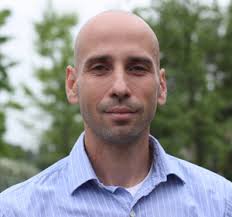
Justin Gargiulo, founder of Voter Trove

Justin Gargiulo, founder of Voter Trove

Voter Trove is a cloud based data management platform that Gargiulo created for conservative campaigns. The computer app allows volunteers to collect information about constituents from numerous sources—voter registration files but also social media and silo lists ranging from church membership directories to files to lists of petition signatories—to create a more complete picture of voters as individuals. That data is automatically integrated with other data streams, like that collected on robocalls, to craft outreach lists for phone calls, social media touches, text messages and email blasts. Currently, the app has a view that’s optimized for mobile but it’s working on a mobile app.
A political science major from Connecticut, Gargiulo worked as the principal analyst on reapportionment for the state’s Senate Republican caucus and also as the lead consultant on the reapportionment effort in 2011. The whole time, he was overseeing digital media efforts for members of the Connecticut State Senate Republican Caucus.
“I know enough code to be dangerous” said Gargiulo, who didn’t write the platform but was the one who knew what it needed to be. “I consider myself a technologist and I love it,” he said. “I’ve always been fascinated with platform technology in politics. I wanted to build the next thing to facilitate coordination in voter outreach.” He saw the Republicans were lagging behind the Democrats in technology. “It was like, here’s this file. Nobody knows what to do with it. The Democrats were doing this micro targeting thing but the Republicans were putting it in the voter vault and nobody did anything with it.”
Voter Trove was accepted into the Capital Factory incubator in November and is working toward being part of the accelerator.
Aaron Ginn, the official “Growth Hacker” for the Romney campaign, is also an advisor for Voter Trove. In the tech world, Ginn said, Republicans are a tight knit group.
“The big problem most campaigns are trying to solve right now is understanding how to slice and dice data and upload new data, integrating it across lots of different data platforms,” Ginn said. That might include Facebook ads, Eventbrite registrations, voter files and numerous silo lists. “The huge issue in the Romney campaign was getting into what voters think. That requires a very robust data tool. Lots of people are trying to solve different slices of that.”
Voter Trove’s chief competitor, Voter Gravity, has focused on the canvassing and phone bank aspect of that. But that’s not the piece that needs solving most, said Brent Buchanan, managing partner of Cygn.al, a Voter Trove customer and campaign communication firm with offices in Austin as well as D.C. and Alabama.

Making Data Easy

build-your-list-1“Justin’s platform is the most visually appealing of any we’ve looked at, and it handles data the best of any we’ve looked at,” he said. Voter Trove looks more like an e-commerce site than a database, he said. It’s simple for non-tech people to work with. For example, if a campaign has only budgeted for 5,000 pieces on a given mailer, it’s simple to go through the database and add or delete recipients based on characteristics. A counter on the side lets the user know when he’s hit the targeted number of recipients. Buchanan said the app tags and lists information in a way that makes it easy for staff and consultants to work with.
Voter Trove recently partnered with Campaign Grid which specializes in online media buying for campaigns. The data Voter Trove collects can identify not just previous voting history but other indicators of preferences. It might identify a group as second amendment supporters or people focused on education. With that information campaigns can target online ads more specifically, which is disruptive in the industry Gargiulo said.
Buchanan’s biggest rave about the app, though, is that “When we have an idea, (Justin) goes in and changes it. He makes it happen for us. There’s no “you use the system as built.’” Buchanan said. Gargiulo is relying on customer feedback, not theory. “If you build something today it won’t be the same thing you need for 2016. He’s setting himself up for long term success.”

Making It Through the Valley of the Shadow with Reid Hoffman

IMG_2546
By LAURA LOREK
Founder Silicon Hills News

Running a startup is like running a marathon, entrepreneurs need to know they are in for a long race and they’ve got to give it everything they’ve got.
“Startups are walking dead,” said Reid Hoffman, co-founder of SocialNet, PayPal and LinkedIn and partner with Greylock Partners.
“The classic metaphor I use for that is throwing yourself off a cliff and assembling a plane on the way down” Hoffman said. “The reason for that is to understand the mortality part and at all times compression matters. And a financing round is only a thermal draft. So you really need to get the plane built.”
Greg Tseng, co-founder and CEO of Tagged, interviewed Hoffman at Startup Grind 2014 at the Computer History Museum in Mountain View, Calif. Tseng asked Hoffman about maintaining a balanced life. Tseng recommended that startup founders get sleep, eat right, exercise and live a balanced life.
“In Silicon Valley, there’s this lore of 14 hour days and sleeping under the desk, almost like there’s a badge of courage around that,” Tseng said. But he said having a more balanced life makes an entrepreneur more effective at work.
Hoffman told Tseng that Tseng does better at that than himself. But he is working on it. He also said leading a balanced life as a startup founder is far more nuanced in Silicon Valley.
“Simply clocking hours is dumb,” Hoffman said.
But startup entrepreneurs who aren’t working six to seven days a week regularly are not going to succeed, Hoffman said.
“It’s not balanced,” he said. “It’s run hard and work hard and intelligently.”
A lot of smart people start companies these days to make money, to be famous and to be cool, Tseng said. “If you are doing it primarily for external reasons, you will not stick with it when the times are tough,” he said. “You have to feel intrinsically motivated by it.”
Hoffman said entrepreneurs can have, as part of their plan, the desire to become famous, cool or rich, but they do have to be driven by something more.
“99.99 percent of all startups go through a Valley of the Shadow – where they think why did we think this was a good idea? Why did we think this was going to work?” Hoffman said.
If you’re really doing it to say hey this is my pay day, that can work with a small company, he said.
“To build a real company, something that is transformative, to do that you have to have some commitment to the vision.”
In August of 2000, PayPal burned through so much money Hoffman told his co-founder that if they were standing on the roof throwing off wads of $100 bills they would not be spending money faster than PayPal was doing it. They spent $12 million in one month, he said.
“You’ve got to have a reason you’re in and that you’re playing through,” Hoffman said. “That doesn’t mean you have to be pure.”
Every startup Hoffman has been a part of has had a Valley of the Shadow moment where they thought they might die at any moment.
“People talk about taking risk – taking a bet that if it doesn’t work, it hurts,” he said. “Don’t try to hedge your bets too much. Part of it is you have the people around you helping you.”
It’s also good to be flexible and have plan A and plans B-Z, Hoffman said.
Google started out as an enterprise search company, but things change, he said.
Another key to success is to know when to hire people to take over the tasks that you’re not passionate about, Hoffman said.
“You’re never world class at anything you’re not passionate about.”
It’s also important to talk about your ideas to smart people and to gather intelligence and feedback, Hoffman said.
Forming a “really rich tribe around you and having great alliances is really important,” Hoffman said.
Mentors can help too, he said. But mentorship happens naturally and depends on shared objectives, personal connections and having a shared tribe, he said.
“The thing mentors are most useful for is solving key problems and crises. For that to work, there has to be a pretty strong alignment of values.”
Also, entrepreneurs think their ideas are super special and should remain secret, Hoffman said “That’s almost always a mistake,” he said.
Entrepreneurs shouldn’t publish their idea, because that doesn’t add any value, Hoffman said. But they should talk to as many smart people about their ideas as possible.
“Try to get as much input from your network as you can,” he said. “In order to measure what are your key problems.”
Pivoting early is also important.
“In the early days, it’s much cheaper to change,” Hoffman said. “There’s a huge expense to going out on the wrong path.”
Most startups fail, Hoffman said
“All entrepreneurs think they’ll out do the averages,” he said. “Take seriously the prospect that you may fail. Do something that you love to do. Make sure this is a good use of your life as you’re doing it.”

« Older posts Newer posts »

© 2026 SiliconHills

Theme by Anders NorenUp ↑