The Israel-based automotive company is
establishing its first center for the assembly and testing of its electric
vehicle platforms in Austin. The center is expected to create 150 jobs. The
company is exploring collaborations with Koch Industries companies to establish
the center.
Koch Strategic Platforms, a subsidiary of Koch
Industries, is an investor in REE.
“Establishing our U.S. headquarters in Austin,
Texas best positions us for growth and rapid expansion,” Daniel Barel, REE’s
Co-Founder and CEO, said in a news release. “Austin is fast becoming a
worldwide home for elite technology professionals. REE needs to continue
growing and thriving, and Austin’s dynamism and entrepreneurial spirit
definitely fit REE’s culture and values. Our U.S. presence will allow us to
capitalize on the incredible opportunities in the U.S. market and put us closer
to our North American-based customers and partners, including Magna
International and JB Poindexter, as we work together to develop and deliver
modular EVs (MEVs™).”
The company’s technology integrates critical
vehicle components, including steering, braking, suspension, powertrain and
control, into a single compact module between the chassis and the wheel, using
x-by-wire technology for steering, driving and braking, according to a news
release.
The company’s technology has enabled it to
develop “a modular, fully-flat skateboard chassis with more room for
passengers, cargo and batteries that will be highly adaptable to customers,”
according to a news release.
Electric vehicles platforms using its technology are agnostic to vehicle size and design, power source, and driving model, which allows the company to target a $700 billion market.
The company’s stock, trading under the symbol
REE, also began trading on the Nasdaq stock market last week. Its stock closed
$10.21, down 5 percent on Friday. The company went public as the result of a
merger with 10X Capital Venture Acquisition Corp.
“Toyota Motor Corp (7203.T) unit Hino will use Tel Aviv-based REE’s platform for its electric trucks and buses, and REE has also formed partnerships with American Axle (AXL.N), Canadian auto supplier Magna International (MG.TO), French autonomous shuttle maker Navya (NAVYA.PA) and EAVX, a newly-formed unit of U.S. commercial vehicle body maker JP Poindexter & Co,” according to Reuters.
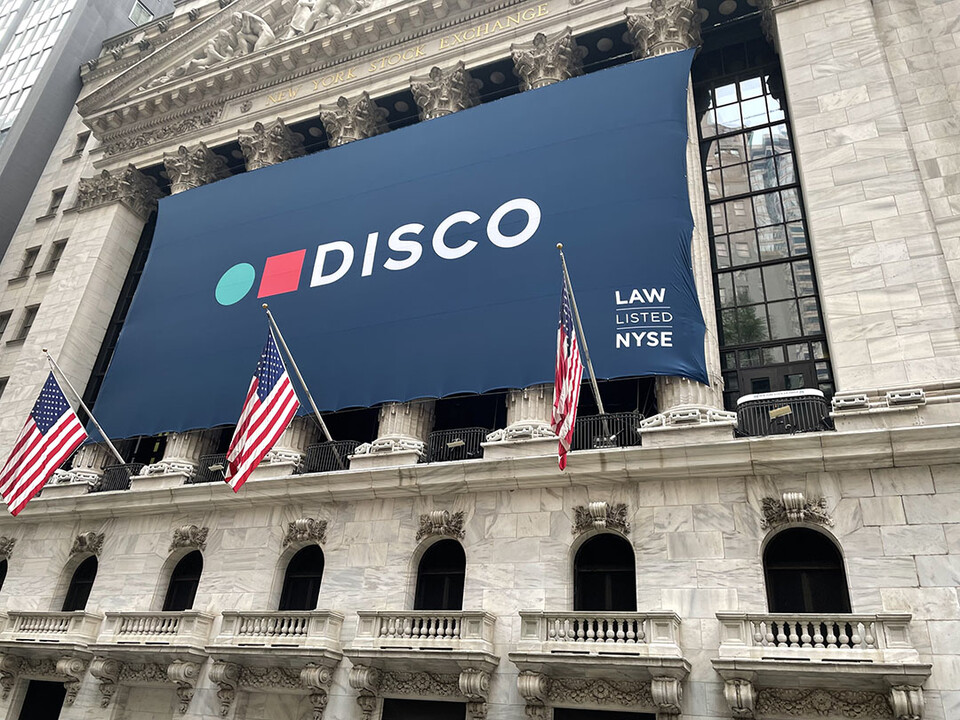
CS Disco became a public company last week debuting on the New York stock exchange under the stock symbol LAW.
The Austin-based legal tech company offered its stock at $32 a share and raised $224 million from its Initial Public Offering. And when the stock began trading on Wednesday it “opened at $42.26 and closed at $42.59, up 33% from its offer price. At $42.59, Disco is valued at $2.4 billion,” according to Barron’s.
On Friday, Disco’s stock closed Friday at $44.81, up almost five percent since its debut.
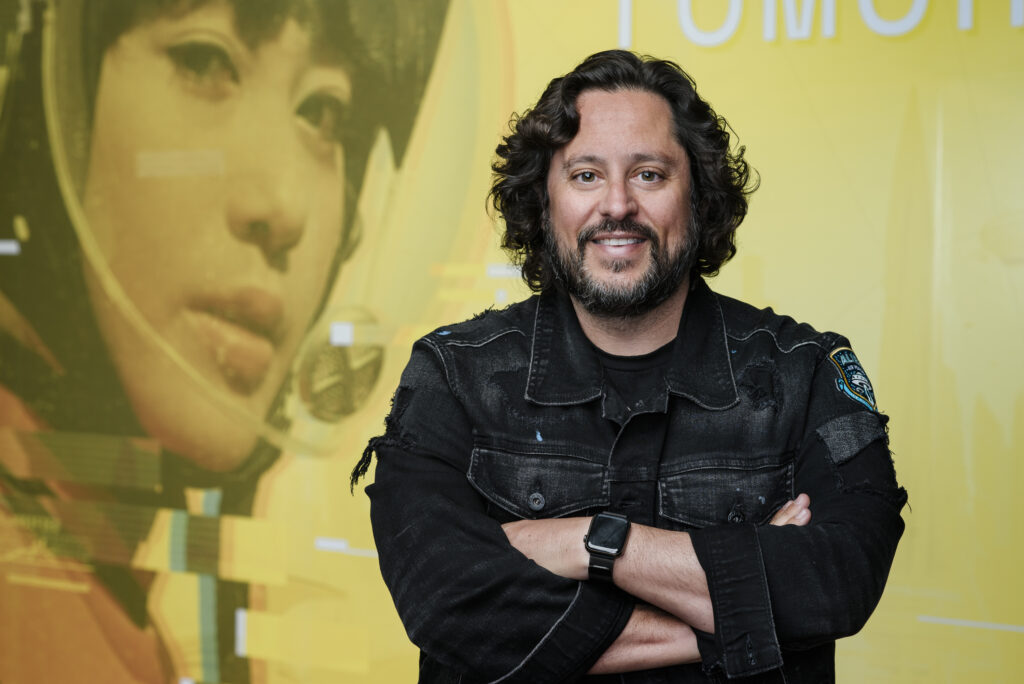
“Our IPO is a milestone, not an endpoint. We continue to have ambitious goals for our products and our continued growth,” Kiwi Camara, Disco’s CEO and Co-Founder said in a statement. “We believe access to the public markets will only improve our ability to better serve our customers’ needs — and better pursue our mission of using technology to strengthen the rule of law.”
DISCO uses artificial intelligence and cloud computing to help lawyers and legal teams. DISCO has more than 900 corporations, law firms, and government agencies as customers.
The company, founded in 2013, moved its headquarters from Houston to Austin in 2018.
CS Disco had raised $161 million in venture capital, according to its filing. Its investors include LiveOak Venture Partners, Breyer Capital, Georgian Partners, Bessemer Venture Partners, The Stephens Group and Comerica.
DISCO became a publicly-traded company on the New York Stock Exchange on July 21, 2021
By Krishna Srinivasan, Chairman of the Board, DISCO and co-Founding Partner, LiveOak Venture Partners
In October 2013, we received a cold email – it had all the elements on first glance that begged to be ignored. The email came from a person named “CeCe” who talked about a founder called “Kiwi” and a company called “DISCO” in the legal tech space, which was also a category that did not have a history of great companies or large outcomes. But, boy, am I glad that we did not ignore that email!
LiveOak’s entrepreneur-first philosophy meant a commitment to look at all deals, even cold, inbound ones, and we quickly discovered that this showed a lot of promise. Kiwi was the youngest ever graduate from Harvard Law (graduated at 19), was the managing partner of his law firm, and, while practicing law, had hacked together a product that was generating early revenue. When we first met him, we were blown away by his domain knowledge and passion for transforming the future of law. Additional deeper diligence through some friendly litigators in our network indicated that this was an industry that was sorely in need of better products. During deeper discussions with Kiwi, we uncovered a fierce entrepreneurial spirt and a desire to learn and evolve into a world-class tech leader. Armed with the conviction around a domain-rich entrepreneur and large market opportunity, we decided to proceed forward as a founding investor. Ultimately, the company was formed (spun out of his law firm) at the same time as our initial investment.
Wow, aren’t we delighted that we embarked on this journey. Since being founded in December 2013, the company has grown from minimal revenue to now a successful IPO (NYSE: LAW) with a first trade market capitalization above $2.5B As stupendous this trajectory has been, it neither has been a straight line nor influenced by a single factor. I would attribute the success to a combination of domain strength, grit, collaboration, and good ol’ serendipity.
Domain Strength
Yes, Kiwi’s rich domain expertise was what attracted us to DISCO (N.B. the LiveOak playbook entails backing domain-rich, often first-time entrepreneurs and helping them grow into world-class tech entrepreneurs by helping with all aspects of company building). Kiwi’s obsession with using technology to help lawyers practice law has permeated into a company-wide focus on infusing deep legal knowledge into every piece of code shipped out. Every product was conceived after thinking about the problem from the shoes of a lawyer. As a result, DISCO has fused seemingly orthogonal disciplines of deep understanding of law with world-class engineering to create powerful user experiences that lawyers and other legal professionals love. Lots of entrepreneurs have deep knowledge of their respective fields but Kiwi and team exemplified the desire and capability to create magical products – an incredible distinguishing feature of the company. In an industry not known for user delight, the product has an impressive NPS of 63.
Like any other ambitious entrepreneur, Kiwi, even from the first pitch, articulated a multi-stage product roadmap for grabbing a market that was tens of billions of dollars. While that looked like a pipe dream then, today, the company is well on its way to grabbing that exact market he had outlined.
DISCO is very much a story of Kiwi parlaying his rich knowledge of law and thinking many moves ahead for their customers and creating products, services, and experiences to meet current and future needs. That domain-rich inventor’s spirit is what positions this company to define and lead legal tech!
Grit
Kiwi and the company have gotten here in no small measure due to their grit. As with most startups innovating in markets not yet proven, there was some doubt from prospective investors, employees, and so on. They questioned how difficult it may be to attract future investments in legal tech, to show strong traction in the market, whether the business model was right and the impact of competition, even with the strength of DISCO’s product. Now seeing how far DISCO has come, their uncertainties have not come to fruition. These folks simply underestimated Kiwi and the team’s grit to bludgeon their way through these issues.
The financings of the company certainly involved significant effort. However, through them all, Kiwi never had a moment of self-doubt or reduced conviction on the scale of company that he could build here. So, for all the entrepreneurs out there, don’t be disheartened if there are challenges in getting the financing dollars and terms you want as there is not often a ton of term-sheet-love spewing out there.
There were challenges in hiring the optimal leaders for every function, given the preferences around possessing both legal domain knowledge and world-class enterprise software sensibilities. This unique combination is not often available due to the lack of standout winners in legal tech. In absence of optimal leaders, Kiwi has operated as a functional head for practically every department at some point of time. Waiting for the right leaders and gritting it out until the right one was available became the mantra. Today, more than half the executive team are lawyers and several others have deep backgrounds in the legal industry as well as experience at hyper-growth software companies.
Collaboration
The DISCO success story has also been a textbook example of collaboration between a venture capitalist and an entrepreneur, one that began the day we signed the term sheet. We had finally agreed on all the terms, but that was only after a relatively intense set of discussions where I felt that Kiwi came across as a nitpicky litigator who was focused on corner case scenarios rather than a typical pragmatic tech entrepreneur. I told him, to go forward, we needed to be convinced that our relationship could be more collaborative rather than one that felt like a legal scrimmage. Kiwi countered that he would drive over to the office to “make his case”. Now that was a rare icy November day and he was in Houston, 200 miles away! But that would not deter him from driving to Austin! His action to make this future relationship successful was itself enough of a powerful signal that we signed the deal the moment he strode into our office – that cast the die for a trusting, collaborative style throughout our relationship.
Indeed, we have had many spirited debates – should we stay as a pure-play software business or be full-stack with an AI-based review platform, what is the optimal organizational design to sustain our stunning land and expand model, should we stay mostly channel vs. make a big push on the direct business, how should we position ourselves (as a vertical software player or as a horizontal software for legal category), are we ready to go public – the list goes on and on and on. Every one of these questions had enormous underlying ambiguity and given the magnitude of the consequences, of course, had some fierce opinions on both our sides. Unequivocally, in all these situations, the process was intensely collaborative, intellectually honest, and with the sole emphasis on what was best for DISCO.
It was hard to predict it that icy night in November, I simply could not have hoped for a more collaborative partner than Kiwi in this incredible journey.
Serendipity
The origins of our first investment in the company was itself serendipitous. We at LiveOak were fortunate that we could spot this “diamond” in the volume of cold emails we received.
Many of the unicorn-esque hires on the leadership team required deep legal and enterprise tech expertise and happened as a result of happenstance. We were so fortunate to find Michael Lafair (a lawyer-turned CFO). We were also lucky to find Andrew Shimek, a rare lawyer-turned Head of Sales who embodied both legal and enterprise sales traits, and Keith Zoellner, our Head of Engineering with expertise building world-class products and legal domain. Many other people and key board members such as Jim Offerdahl, Colette Pierce Burnette, and Scott Hill were connections that were made at the right place, right time.
Finally, it was of course serendipitous that Kiwi and my favorite soul food cuisine was Sichuan food! Ma-Po Tofu from Mala’s Bistro in Houston or A+A Sichuan in Austin was added motivation to meet, eat and strategize often!
After all, good fortune favors the brave and those with grit!
In closing…
The future is even brighter, and the opportunity is seemingly unbounded, and we believe that the company is indeed poised to be one of the largest and innovative software leaders for decades to come. This is the first software IPO out of Austin in a while, and it’s extra special given it was birthed in Texas and seed invested at inception by a Texas VC firm.
The success of DISCO and its IPO will be even more impactful for Austin and Texas at large as outsized successes are bound to beget many, many more in the future. Also, with Kiwi and a management team that is committed to building a long-term standalone company, DISCO is bound to have a powerful accelerating effect on the Texas ecosystem. DISCO Cares is a company initiative that is helping drive programs that support vulnerable populations across Texas. There are a number of DISCO-alum startups already sprouting, in Austin and Houston.
Having started this journey as the only other board member besides Kiwi at the time of inception, I am honored to now serve as Chairman of the Board as a part of this milestone IPO event. I look forward to helping Kiwi drive and shape DISCO’s next phase of growth for years to come and to contributing to DISCO’s legacy-shaping initiatives, from their community impact to the spawning of more promising entrepreneurs in the decades to come. In particular, we look forward to partnering with many more entrepreneurs who might learn from and imbibe many of this successful young lawyer’s characteristics around domain strength, grit, and collaboration while building their respective successful ventures!
LiveOak Venture Partners’ journey with DISCO began with a cold e-mail from Kiwi Camara which led to its initial investment and today reaches a milestone IPO with a first trade market cap of $2.5B. LiveOak Venture Partners’ Founding Partner and DISCO Chairman, Krishna Srinivasan, shares an intimate look at this remarkable success story.
Editor’s note: This post originally appeared on LinkedIn and has been reprinted here with permission.
Bright Machines announced plans to open a new regional office and lab in Austin.
The company, based in San Francisco, is not moving to Austin. Instead,
it is opening a new San Francisco headquarters in August.
Bright Machines is opening a customer support center and
robotics lab in Austin.
“The new locations signal a continued commitment by the company
to contribute to two of the country’s most important tech ecosystems as the
nation begins to reopen in the wake of the COVID-19 pandemic,” according to the
company.
Bright Machines’ Austin location will have advanced product development teams as well as field operations and go-to-market functions. The office will open next year.
Since its founding in 2018, Bright Machines has had a presence
in San Francisco. During the COVID-19 Pandemic, the company shifted to a remote
workplace.
“In 2018 we established San Francisco as our global
headquarters, and today believe we have a responsibility to do our part to
promote the city’s tech ecosystem by growing our local presence and building
our team with the exceptional talent this city has to offer,” Fiorella
Dettorre, Chief Human Resources Officer at Bright Machines, said in a news
release.
The company helps to automate manufacturing operations through artificial intelligence, machine learning, computer vision, and robotics. It has 550 employees worldwide. It also recently entered into a merger agreement with SCVX, a special purpose acquisition company, to become a publicly-traded company in the second half of 2021.
GoPuff, a Philadelphia-based snack, and beverage delivery company, has acquired Austin-based Bandit, the App-only coffee shop founded by early Uber employee Max Crowley.
Bandit, founded in 2019, relocated its headquarters from New York to Austin in September of 2020 because it offered the startup an opportunity to experiment with curbside and drive-through technology in a booming city, according to a company blog post.
The financial terms of the acquisition of Bandit by GoPuff
were not disclosed.
Bandit had raised an undisclosed amount of venture capital
from Alex Pattis and four other investors, according to Crunchbase. GoPuff,
founded in 2013, has raised $2.4 billion in venture capital to date.
Bandit is all about contactless delivery of a cup of premium coffee, matcha, or ice cream. It also offers sandwiches and local pastries. Bandit is a mobile app that allows customers to browse a menu, place an order and receive rewards for purchases. Bandit competes with Starbucks and Dunkin Donuts and other coffee shops.
“We’re proud to serve delicious coffee, a full matcha bar, exciting new treats like ice cream, and a menu full of local offerings like Tacodeli breakfast tacos, pastries from Texas French Bread, and other treats from Easy Tiger,” the company wrote in a blog post when it moved here last year.
Editor’s note: This story was briefly taken down because a representative from GoPuff said it was incorrect. GoPuff says the acquisition took place last year. A PR firm representing Bandit sent a release saying the acquisition took place last week. The story has been updated.
LitLingo, which makes specialized software that allows businesses to monitor and correct real-time communications, announced that it has raised $7.5 million.
Breyer Capital led the
Series A round of funding with participation from former IBM CEO Sam Palmisano
and existing investors LiveOak Venture Partners, Clarke Nobiletti and James
Marsico.
To date, LitLingo has raised $9.5 million. It raised $2 million last August. LitLingo’s Co-Founders Kevin Brinig and Todd Sifleet met at Uber in San Francisco. They both moved to Austin and launched LitLingo in January of 2019.
The Austin-based startup employs artificial intelligence and natural language processing databases to help organizations communicate more effectively. LitLingo integrates with Slack, Zendesk, Gmail and Office 365.
The aim of LitLingo’s software is to help organizations communicate effectively and reduce litigation, compliance, and other problems. The software can flag questionable language in a real-time message before it is sent. LitLingo can also block message transmission and alert compliance teams for review.
“LitLingo is an incredibly valuable tool in our new hybrid workplaces and positioned to be one of the most important players in the digital communications analysis and management space,” Jim Breyer, Founder and CEO of Breyer Capital said in a news release.
“LitLingo is reimagining how we build
culture and mitigate risk,” Sam Palmisano, Chairman of the Center for Global
Enterprise and former CEO and Chairman of IBM said in a news release. “We have
all seen the impact a few badly written emails can have on an organization.
Yet, traditional approaches to compliance and risk mitigation are outdated,
reactive, expensive, and hard to scale across large enterprises. LitLingo is a
unique platform providing critical value to employees and organizations of all
sizes.”
“LitLingo leverages artificial intelligence to proactively help good people avoid bad mistakes in the workplace and to help leaders foster a better workplace overall,” said Brinig, LitLingo CEO.
LitLingo plans to use the venture capital
to hire key employees and double its headcount over the next 12 months at its Austin
headquarters and remotely. Also, the company plans to spend money on product
enhancements.
The U.S. Air Force has named Hypergiant Galactic Systems and 28 other companies as awardees on a potential $950 million contract, according to GovConWire.
The contract is to build and operate systems
across land, air, sea, space, electromagnetic spectrum and cyber domains as
part of the Joint All Domain Command Control program.
The companies will compete to provide software
and other solutions to the Department of Defense. The contract is expected to
run through May of 2025.
“We are honored that the Department of Defense has recognized
both the tremendous effort put forth already by Hypergiant and also the
sky-high potential for our team to push DoD capability even further into the
future.,” Bern Lamm, Hypergiant founder said in a news statement. “This award is not only a huge testament to
Hypergiant’s unique value, but also validation that modern software best
practices are alive and well within the DoD. We are incredibly excited about
the potential for JADC2, and are honored to have been selected to play a unique
role in its foundation.”
The installation of solar panels on a residential roof at the first Tesla Solar neighborhood, located in East Austin, photo courtesy of Brookfield Residential
Not only is Tesla building a $1.1 billion Gigafactory in Austin to make trucks and other vehicles, but Tesla Energy is also creating a solar-powered local neighborhood.
Last week, Tesla Energy announced the first Tesla Solar neighborhood called SunHouse at Easton Park, 12 miles east of downtown Austin. Tesla is working with Brookfield Asset Management and Dacra.
“Neighborhood
solar installations across all housing types will reshape how people live,”
Elon Musk, CEO of Tesla, said in a news statement. “The feedback we get from
the solar and battery products used in the community will impact how we develop
and launch new products.”
Installation of Tesla V3 solar roof tiles and Powerwall 2 battery storage began in June at select homes in the SunHouse community on land in Brookfield Residential’s Easton Park master-planned residential community.
The houses, being built by various homebuilders, start in the low $300,000s and go up from there.
“This
initiative brings together multiple parts of our organization with innovative
and forward-thinking partners that share a commitment to advance the
development of sustainable communities,” Brian Kingston, CEO of Brookfield’s
Real Estate business. “As consumers increasingly seek out energy security
alongside sustainable places to live, combining Tesla’s solar technology
together with Brookfield’s real estate and renewables development capabilities
will help us meet demand for environmentally responsible communities of the
future.”
“Our goal is to establish that fully sustainable neighborhoods are not only viable, but the best practical and economical choice,” Craig Robins, CEO of Dacra, said in a news release. “Together with Brookfield and Tesla, we are trying to change the world by creating technology-driven, energy-independent communities that make the world a better place.”
The master-planned community of homes seeks to become an energy-neutral, sustainable community and a model for the design and construction of sustainable large-scale housing projects around the world. The community also expects to produce enough energy to supply daily needs and reduce the daily demand on the electric grid. They will also have backup power and they will have the ability to sell excess energy back to the energy grid.
Tesla
Solar will provide ongoing oversight of the homes’ energy systems, and
Brookfield’s renewable power business will integrate a community-wide
solar program to serve broader public use needs and surrounding neighborhoods.
Brookfield Residential will also incorporate a suite of technology features,
including electric vehicle charging stations in each home and throughout the
community.
The
City of Austin and Travis County have both announced commitments to sustainable
development.
“The
City of Austin is excited for the arrival of these affordable options to
housing powered by renewable energy,” Mayor Steve Adler said in a news
release. “I am excited for the Tesla, Brookfield, and Dacra partnership’s
approach to sustainable energy and housing as an example of the out-of-box
thinking that continues to make our community a beacon of innovation for the
rest of the country and world.”
CS Disco, a legal tech startup, filed papers with the U.S. Securities and Exchange Commission for an initial public offering of stock.
The Austin-based company did not set a date to go public or a price for its shares, which will be traded under the stock ticker “LAW.”
CS Disco plans to use the proceeds from the stock sale for “working capital and other general corporate purposes, including developing and enhancing our technical infrastructure, solutions, and services, expanding our research and development efforts and sales and marketing operations, meeting the increased compliance requirements associated with our transition to and operation as a public company and expanding into new markets,” according to the filing. The company could also use the net proceeds to acquire complementary businesses, products, services, or technologies, but it doesn’t have any plans to do so right now.
CS Disco reported revenue of $68.4
million for 2020, compared to revenue of $48.5 million for 2019. It also
reported a net loss of $29.8 million for 2020 and a net loss of $22.8 million
for 2019.
The company gets less than 5
percent of its revenue from international sales, but it plans to expand further.
To date, CS Disco has raised $161 million in venture
capital, according to its filing. The company reported that it had $53.6
million of cash and cash equivalents as of March 31st, 2021.
CS Disco uses artificial intelligence and cloud computing to help lawyers and legal teams. As of March 31, 2021, the company reported it had 909 enterprises, law firms, legal services providers, and government organizations as its customers.
And the market is growing.
“Legal services is a massive,
growing global industry that we believe is significantly underpenetrated by
modern technology solutions,” according to the company’s filing. “According to
Statista, total global legal services spend is forecasted to be $767 billion in
2021 and grow to $846 billion in 2023. Within legal services, DISCO Ediscovery
addresses the ediscovery market. According to International Data Corporation,
the worldwide ediscovery software and services market is forecasted to be $14.7
billion in 2021 and grow to $16.9 billion by 2024.”
Founded in 2013, CS Disco moved its headquarters from Houston to Austin in 2018. As of March, the company had 336 full-time employees.
Skyrocketing health care costs is a problem Sana, a health care startup, has set out to solve since its founding in 2017.
Recently, the Austin-based company took another step in that direction by announcing a partnership with Proactive MD to open a primary health care center, Sana MD in Austin. With the center, Sana and Proactive MD expect to improve care management and reduce health care costs, according to a news release.
The center
is expected to open in late August, said Sheli Wibaux, Sana’s head of direct
care. Sana MD will operate as a subscription-based unlimited care option to
Sana’s health care members, Wibaux said. The nonprofit center will be located
at 1715 W. 35th St. in Austin.
“Sana
believes that exceptional, preventive-focused primary care is the most
effective way to improve health outcomes,” Sana CEO and Co-founder Will Young
said in a statement. “By establishing Sana MD as the foundation of our growing
Sana Care ecosystem, we are empowering members to take advantage of free,
high-quality primary care.”
Sana MD
will include family medicine, urgent and preventive care, reduced
cost-prescriptions through an in-house pharmacy, labs and diagnostics, chronic
disease management, physical therapy and total wellness solutions including
weight loss programs, diabetes education, stress management, smoking cessation,
and wellness coaching. In addition, patient advocacy services will also be
offered including mental health support and more.
“This
partnership with Sana is a huge step toward our ultimate goal of transforming
health care for the good of the patient,” John Collier, Proactive MD’s CEO,
said in a statement. “We believe that primary care is the most powerful tool
for risk management, cost containment, and overall patient wellbeing. Now that
our Advanced Primary Care model has joined Sana’s innovative health plans, our
positive impact on patient lives will be amplified in Austin.”
Sheli Wibaux, Sana’s Head of Care
Other Sana MD Centers could be rolled out to other locations if this one proves successful, Wibaux said.
“If we
find the model works, we would like to expand this offering to our members
nationwide,” she said.
Sana is providing access to Sana MD as an opt-in benefit to its members, Wibaux said. The clinic has the capacity to serve 2,500 members, she said. It also has a 24 hour, seven-day-a-week after-hours helpline and it also provides spots open for same-day appointments, she said.
Sana provides an alternative to big insurance providers like Aetna, Anthem Blue Cross Blue Shield, United Healthcare, Cigna, and Humana. It competes with them by providing insurance that is, on average, 30 percent cheaper, according to the company. Sana’s platform covers health, vision, dental, telemedicine, and maternity, in addition to benefits like ClassPass. Sana moved to Austin in 2018 from San Francisco.