Category: Austin (Page 158 of 318)

Austin’s VC Investment up 22 Percent to $198 Million in Third Quarter

By LAURA LOREK
Reporter with Silicon Hills News

iStock_000018108618Medium-300x199While the rest of the country saw a slight decline in venture capital dollars invested in the third quarter, Austin is still going strong.

“The message is we’re trending in the right direction,” said Larry Westall, partner with PricewaterhouseCoopers, based in Austin. “We’re up 22 percent in the last quarter, while the rest of the nation is down 5 percent.”

VC investment increased 22 percent in dollars invested in the latest quarter in Austin, compared to the second quarter, according to the MoneyTree Report from PricewaterhouseCoopers LLP and the National Venture Capital Association, based on data provided by Thomson Reuters. The number of deals decreased seven percent, compared to the previous quarter.

Nationwide, venture capitalists invested $16.3 billion in 1,070 deals in the third quarter, with dollars invested down 5 percent and deals down 11 percent, compared to the previous quarter, according to the MoneyTree Report.

But the third quarter marked the seventh consecutive quarter of more than $10 billion of venture capital invested in a single quarter. And the $47.2 billion invested so far this year is higher than the full year totals for 17 of the last 20 years.

In Austin, the MoneyTree report shows venture capitalists invested $198 million in 25 deals with software getting the most investment. Software deals increased 151 percent compared to last quarter with $120.8 million in investment. They made up 61 percent of the total investment dollars in Austin.

The other big industries to attract investment included IT services with $31.3 million, the second largest investment sector, followed by semiconductors with $24 million and four deals, according to the MoneyTree report.

“I’m expecting this amount of funding could exceed the amount of funding as far back as 2000 for the year,” Westall said. “It’s really great to see.”

Surprisingly, Austin did not have any biotechnology deals in the third quarter. In the second quarter, one deal attracted $41.8 million in investment dollars.

Austin companies in the expansion stage saw an uptick in funding dollars, compared to the previous quarter. But money for early and later stage investments in Austin declined in dollars, compared to the previous quarter.

Austin did see a dip, a 22 percent decline in dollars invested in early stage companies in the third quarter. Overall, 12 deals attracted $61 million in funding. And seed stage companies did not receive any investment in either the prior or current quarter, according to the MoneyTree report.

“Companies seem to be staying private longer,” Westall said. “It allows the management to be able to maintain control and avoid the public market. They don’t need it. There’s money available to them.”

In Austin, Civitas Learning attracted a $60 million investment in the third quarter, the top deal. Main Street Hub got $25 million as the second largest deal followed by Ziften Technologies and Continuum Analytics with about $24 million each.

In San Antonio, WellAware Holdings closed on $16.5 million in early stage funding, making it the city’s largest investment deal for the quarter.

Dallas had the state’s largest investment deal in the third quarter with AveXis, a clinical stage gene therapy startup, attracting early stage investment of $65 million.

And Dallas actually beat Austin as the lead metro area for the state attracting the most investment dollars in the third quarter. Dallas got $229.9 million, compared to Austin with $198.2 million. Austin had more deals with 25, compared to 12 in Dallas. Houston got $44 million in nine deals followed by San Antonio with $20.5 million in two deals.

By far, Austin still leads the state in the amount of venture capital invested in the first three quarters of 2015 with $627.8 million, followed by Dallas with $361.5 million, Houston with $102.9 million and San Antonio with $55.5 million, according to the MoneyTree Report.

Firefly Space Systems Lands $5.5 Million NASA Contract

Firefly Space Systems LogoNASA has selected Firefly Space Systems, based in Cedar Park, for a $5.5 million contract to demonstrate a CubeSat launch by March of 2018, according to a news release.

Firefly, a private aerospace firm founded in 2014, plans to launch small to medium sized satellites to orbit.

NASA awarded the contract as part of its “Venture Class Launch Services” which represents “NASA’s investment in the future of the commercial launch industry for SmallSats,” said Mark Wiese, chief of the FLight Projects Office for NASA’s Launch Services Program at Kennedy Space Center.

CubeSats are small satellites, the size of a cube. They have opened up space research for NASA since the CubeSats can be launched from missions at different altitudes and in unique orbits not currently available from payload missions or launches from the International Space Station.

“The tiny, box-shaped spacecraft have emerged in the last 16 years as a quick viable way to test components and techniques that, if proven, can be applied to much larger missions where the stakes are far greater than a simple, 4-inch cube,” according to NASA. “The price tag for each mission is one-tenth the cost of the least-expensive traditional launcher.”

Firefly’s mission is to reduce the costs involved in launching satellites to space. Its first rocket, Firefly Alpha, “will be capable of lifting 400kg to a 400km equatorial orbit or 200kg to a 500km Sun-synchronous orbit.

“Being recognized by NASA with a VCLS contract is a tremendous honor for the Firefly team. We have worked tirelessly during the last 18 months to develop Firefly Alpha, a vehicle that will be different from anything that has come before it. NASA’s vote of confidence in our technology and team is a significant boost to our efforts of ‘Making Space For Everyone’,” Thomas Markusic, Firefly’s CEO, said in a news statement.

NASA also awarded a $6.95 million contract to Rocket Lab and $4.7 million to Virgin Galactic for CubSat launches.

Atlas Wearables Celebrates as it Begins Shipping its Fitness Tracker

By LAURA LOREK
Reporter with Silicon Hills News

IMG_0202Atlas Wearables officially launched sales of its new $249 Atlas Wristband fitness tracker at a party Tuesday night.

After two years in development, the Austin-based startup is now shipping the devices to its customers and taking orders on its website, said Peter Li, CEO and co-founder.

The company, with 12 employees, participated in Techstars Austin’s inaugural class in 2013. Mike Kasparian is a co-founder along with Li. Its device is designed in Austin and manufactured in China.

Atlas Wearables party at Vuka.

Atlas Wearables party at Vuka.

The party, which received more than 300 RSVPs, held at Vuka Studios, celebrated the launch with food, drinks, a photo booth, DJ and fitness demonstrations with the device. Partygoers were encouraged to tweet with the hashtag #TheMagicisReal.

The Atlas fitness tracker, worn on the wrist during workouts, tracks calories burned and heart rate but it also collects data on metrics such as power, stability, efficiency and more, Li said. It also features a coach mode with workout programs, he said. The fitness tracker syncs its data via Bluetooth with the Atlas Wearables app on a smartphone. It’s available on both iOS and Android devices. The Atlas tracker features a touchscreen, which makes it easy to navigate the controls, and it is also water resistant.

IMG_0197Atlas’ fitness tracker distinguishes itself from other devices on the market like Fitbit and Jawbone, by tracking more than just steps. It’s geared to people who work out a few times a week. It can track a wide range of activities including weightlifting, push-ups, sit-ups, jumping jacks, burpees, squats and lunges.

The company launched an IndieGoGo campaign in early 2014 and exceeded its goal by 503 percent to raise $637,282. It’s now shipping those units to customers, Li said. It is also doing direct sales from its website.

Atlas, founded in 2013, has raised $2.8 million in funding so far and it will probably seek additional funding later this year or next year, Li said. It’s focused on marketing right now, he said.

IMG_0208

Oslo and Austin: Creative Cities on the Edge of Innovation

By SUSAN LAHEY
Reporter with Silicon Hills News

Skyline of Oslo, photo licensed from iStockphotos.

Skyline of Oslo, photo licensed from iStockphotos.

OSLO, NORWAY – At SXSW 2015, Austin and Oslo announced a memorandum of understanding to forge a Creative Cities Alliance. At the time, Oslo had its own SX lounge and Norwegian company Kahoot!, which has most of its customers in Texas, announced that it would office in Capital Factory. Now, at Oslo Innovation Week, the relationship is getting deeper, with three more Oslo companies planning to come to Austin and a possible Entrepreneur-in-Residence program for early-stage Oslo startups at Capital Factory.

So…why? At first blush, the two cities seem like total opposites. They’re 5,000 miles apart. Oslo gets very cold; Austin very hot. Oslo is an ancient city, founded in the 11th century; Austin, by comparison, is an infant. Oslo is Nordic: Northern lights, Vikings, lots of fish. Austin is Texas: Western vistas, cowboys, barbecue. But…both cities come from economies that have relied on oil and gas for their prosperity. Both are centers of culture and innovation—vibrant startup scenes. Both are live music capitals. Both have great universities where they’re working on med tech, as well as incubators and accelerators for ed tech, clean tech and space tech. Both believe in a form of cultural democracy—Oslo’s is institutionalized whereas Austin’s is implied. Both have an East Side that’s in the midst of a redo.

And much like SXSW, Oslo Innovation Week is an opportunity for Norway to showcase its technology to the world.

At Cutting Edge 2015, an event at Oslo Science Park at the University of Oslo, companies demonstrated everything from robots that perform construction jobs like drilling holes in concrete ceilings to a hybrid rocket engine to software for virtual reality games. One booth showed a product similar to Spot on Science’s HemaSpot—part of its offerings as a chemical analysis contract lab.

One Earth Designs' Chief Marketing Officer Even Haug Larsen shows off its solar kitchen.  Photo by Susan Lahey

One Earth Designs’ Chief Marketing Officer Even Haug Larsen shows off its solar kitchen. Photo by Susan Lahey

Another booth had a solar kitchen that can be taken on camping trips and barbecues, but One Earth Designs’ Chief Marketing Officer Even Haug Larsen said that’s only the beginning. The solar concentrator is seven times more efficient than PV panels. The material the solar collector is made of is seven layers thick, lightweight and has withstood years of testing in desert sandstorms as well as cold Nordic winters. But eighty percent of the company’s sales actually are in the U.S.; Texas is one of its top four states. The Norwegian founders met Wellesley and Harvard graduate Caitlin Powers of Boston when visiting the city a few years ago and they decided their technologies would work best together.

For Norwegians, building companies with American partners has the obvious advantage of accessing a huge market. But they’re not the only ones that benefit. The World Economic Forum ranks Norway’s higher education and technological readiness six out of a possible seven. Its innovation, though possibly held back by a more conservative European culture, is still at five out of seven—though the U.S. only ranks about five and a half out of seven. The country is rich with engineers, a leader in healthcare and social and gender equality. And they’re early adopters.

“We identified a lot of places with shared interests like music, art, film, technology,” said Hege Tollerud, communications executive for the Oslo Business District. “They’re both compact cities. They’re small, not just geographically but hierarchically. If you Tweet a VC you can meet them an hour later for coffee. They’re both fast growing. Oslo is the fastest growing capital city in Europe.”

And while Austin’s getting a lot of attention, Tollerud said maybe Oslo has the freedom it has because “No one’s paying attention. There aren’t expectations. We have the freedom to create without anybody looking.”

To some degree, they’ve never sought an audience. Norwegian culture is all about being understated and humble. Tooting your horn is looked down upon and it’s far preferable to give credit to everyone else in your organization. Everyone, including the Crown Prince and the successful CEO of a major company are approachable by everyone. Sometimes, Norwegians say, they go too far with the humility. It hinders their ability to promote their companies.

By contrast, Austin may be too used to getting attention said Fred Schmidt, head of international for Capital Factory. He’s promoting international startup collaboration not just for Capital Factory but for educational institutions, other incubators, the whole city.

“After seven years of winning the number one best of everything awards we’re getting very complacent and full of ourselves and we’re not trying as hard,” Schmidt said. “We’re not showing up…. Austin is still thinking small: ‘Why should we travel around the world? We’re number one! Everyone’s coming to us!”

Though he credits Austin Mayor Steve Adler with having an international mindset, he said that other countries spend tens of thousands to bring delegations to create partnerships with Austin and Austin is rarely willing to spend $1,000.

“That just shows me Austin’s got some growing up to do when it comes to the international landscape and responding to those overtures at a more professional level,” Schmidt said. “We’re not looking like the serious aspiring city of the future that we want to be.”

Austin is, in many ways in the U.S. landscape, where some of our partners such as Dublin, Oslo, and Hackney are in Europe’s. They’re not the first cities people think of but they’re vibrant cities full of smart people and “there’s a lot going on.” Just as it’s easier to get attention for your idea in Austin than in Silicon Valley, it may be easier for U.S. companies to find entry into Europe through these less competitive portals.

“Norway has a stated and purposeful intent to become a world leader in certain categories…,” Schmidt said. “Sometimes the underdogs of different markets join forces and become the new competitive strength.”

Editor’s note: Lahey’s trip was sponsored by Oslo Business Region, which puts on Oslo Innovation Week and the Norwegian Consulate in Houston.

Oslo Innovation Week Starts With Female Keynote Speakers

By SUSAN LAHEY
Reporter with Silicon Hills News

Keynote speakers at Oslo Innovation Week,  photo by Susan Lahey.

Keynote speakers at Oslo Innovation Week, photo by Susan Lahey.

OSLO, NORWAY – Just as the event got underway, master of ceremonies Torgny Amdam—among whose credits are as a singer in a hardcore band—announced: “Let’s all stand for the Crown Prince Haakon!” The crowd of about 200 people stood, the prince came forward, and the rap song “I’m On A Boat” started blasting over the speakers. Amdam high fived the Prince just as rapper T-Pain was chanting “Take a good hard look at the motherfuckin’ boat (boat, yeah).” The man in the seat beside me turned with a grin and said “Welcome to Norway!” That was the start of Oslo Innovation Week.

As it turns out, the boat song referred to a controversy about money spent on a boat involving the prince and was a goodhearted joke. It set the mood for the rest of the program filled with the promise of Norway’s future as an international center for innovation. One step toward innovation was that, in a field almost completely dominated by men, organizers created a lineup of keynotes done almost exclusively by women. Norway ranks third by the World Economic Forum for gender equality, behind Iceland and Finland.
Among them were the Norwegian ministers for commerce and development (who announced a new government initiative to support entrepreneurship—but they did so in Norwegian), a venture capitalist from New York, some female startup founders from Norway and Israel, and women who had started various programs to empower women in technology.

Israeli entrepreneur Orit Hashai, founder of Brayola and a judge for the 100 Pitches competition that Austin company TripChamp will compete in later this week, spoke about how difficult it was to get investment from male investors. Her company lets women interact online about what bras they love so that women with the same shape, taste and budget can recommend what works to each other. Men, she said, rarely understand the need for this until she gives them this pitch: “Imagine you had to buy a condom in a world where there are a million sizes, shapes, brands and you have to try many of them on, because it’s not just about the size listed. And then comes this guy (showing a picture of a bald man with a measuring tape). He wants to help you measure…. How fast would you replace that with an online store?”

Babou Olengha-Aaby spoke of her crowdfunding platform to support “The Next Billion,” referring to the billion-dollar market of women who are currently underserved. Unlike other crowdfunding efforts, however, hers lets people contribute what they can, whether that’s money, social media support or something else. The point is that contribution doesn’t just come in the form of financial investment and every contribution toward the economic success of women exponentially improves the society where it occurs.

Oslo, 12.10.2015. Crown prince Hakon enters OIW 2015 Photo by Gorm K. Gaare COPYRIGHT:GORM K.GAARE/EUP-BERLIN

Oslo, 12.10.2015. Crown prince Hakon enters OIW 2015 Photo by Gorm K. Gaare
COPYRIGHT:GORM K.GAARE/EUP-BERLIN

Anita Shjoll Brede, graduate of NASA’s Singularity University in Silicon Valley spoke of her entrepreneurial journey which included dropping out of medical school, starting her first business at the age of 20 doing “theater stuff,” building a racecar and more. Now she’s starting an organization called Iris AI, a technology to read the world’s research, looking for cross-disciplinary solutions to the world’s problems. “Let’s not build any more photo sharing apps until we make sure everyone has enough clean water, make sure the environment doesn’t go to hell….” she said.

In a country that’s made huge, deliberate strides toward equality over the past 20 years, having nearly all the keynote speakers be women was another conscious decision. Norway, which, like Texas, has relied on its oil reserves for economic prosperity is now looking toward becoming Europe’s most innovative country, with Oslo its most innovative city. Having women leading that charge is a big part of that goal.

Editor’s note: Lahey’s trip was sponsored by Oslo Business Region, which puts on Oslo Innovation Week and the Norwegian Consulate in Houston.

ROIKOI Gets $1.7 Million in Funding and Launches Recruiting Platform

roikoiROIKOI taps into the wisdom of employees to rate their online networks of friends and associates to help companies find the best employees.

The Austin-based startup has helped its customers, HomeAway, Zenoss, Intouch Solutions and Squareroot recruit employees. The company, founded in 2013, has also raised $1.7 million from angel investors like Brett Hurt, Rob Taylor, Jason Story and Andrew Busey and Capital Factory and SocialStarts.

“ROIKOI helped us get over 4,000 passive referrals from 100 employees, saving us hundreds of recruiting hours by not having to meet each employee individually and then hunt down the referrals’ contact information,” Antonio Busalacchi, HomeAway’s recruiting manager, said in a news release.

ROIKOI plans to make its passive referral platform available Tuesday and plans to publicly demonstrate it at the HR Tech conference next week in Las Vegas.

“Employee referrals are easily the best source of hire, but most tools require employees to kee up with all new jobs openings or spam their networks every time a new job opens up,” Andy Wolfe, ROIKOI’s founder and CEO said in a news release. “We capture the idea behind referrals – that your employees are great at identifying other great people – and make it much easier for employees to engage with.”

Dell and EMC to Merge in a Deal Worth $67 Billion

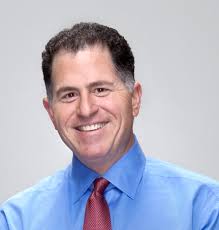
imgres-1In one of the largest tech deals ever, Dell announced Monday plans to acquire EMC Corp. for $67 billion.

Dell is partnering with Silver Lake and MSD Partners to complete the deal.

VMware, a cloud computing company in which EMC owns 80 percent, will remain as a publicly-traded company. Dell will remain a private company. Under terms of the deal, EMC shareholders “will receive $24.05 per share in cash in addition to tracking stock linked to a portion of EMC’s economic interest in the VMware business,” according to a news release.
The deal adds servers, storage and security capabilities to Dell, which has been diversifying its business from PCs and Servers into software, data, cloud and cybersecurity in the past decade. A few years ago, Dell took the company private in a deal valued at $25 billion.

“The combination of Dell and EMC creates an enterprise solutions powerhouse bringing our customers industry leading innovation across their entire technology environment,” Dell said in a news release. “Our new company will be exceptionally well-positioned for growth in the most strategic areas of next generation IT including digital transformation, software-defined data center, converged infrastructure, hybrid cloud, mobile and security.”

“I’m tremendously proud of everything we’ve built at EMC – from humble beginnings as a Boston-based startup to a global, world-class technology company with an unyielding dedication to our customers,” Joe Tucci, chairman and chief executive officer of EMC said in a statement. “But the waves of change we now see in our industry are unprecedented and, to navigate this change, we must create a new company for a new era. I truly believe that the combination of EMC and Dell will prove to be a winning combination for our customers, employees, partners and shareholders.”

Austin is a Hub for Autonomous Car Research

By LAURA LOREK
Reporter with Silicon Hills News

Greg Rucks with the Rocky Mountain Institute, Austin Mayor Steve Adler and Kara  Kockelman, transportation professor at the University of Texas at Austin at a panel at SXSW Eco.

Greg Rucks with the Rocky Mountain Institute, Austin Mayor Steve Adler and Kara Kockelman, transportation professor at the University of Texas at Austin at a panel at SXSW Eco.

Austin is one of the country’s leading centers for research and development of autonomous cars.

Google is already operating self-driving cars on the city’s roadways. It’s just the second location for testing the vehicles outside of Google’s Mountain View headquarters. And the head of the project, Chris Urmson, estimates autonomous vehicles will be available for the general public to ride in them within four years.

But Kara Kockelman, transportation professor at the University of Texas at Austin, has been doing Department of Transportation research on autonomous vehicles and estimates it will take at least 20 years before they are widely adopted.

“Adoption is going to take a while,” Kockelman said. “Without strong incentives, we don’t see a lot of people shifting to a Level 4 (fully autonomous) vehicle for decades. Prices have to fall dramatically.”

“I am not convinced it’s going to be 20 years,” said Austin Mayor Steve Adler. “I’d be surprised if it’s 10 years.”

Kockelman and Adler spoke on a panel at South by Southwest Eco last week moderated by Greg Rucks, principal of the mobility team with the Rocky Mountain Institute. The city is working with the institute to find solutions to its traffic problems. Last week, the city also released a mobility report to examine the city’s traffic problems and brainstorm solutions.

The benefits of autonomous cars to improve land use, alleviate traffic congestion, reduce traffic fatalities and accidents and to provide transportation to kids, older people without driver’s licenses, blind and disabled people are enormous, according to the panelists.

Autonomous cars are making a huge impact on today’s car industry, Rucks said. Today, a rare alignment has taken place between the incumbent automakers and the technology disruptors to create autonomous vehicles, he said.

Autonomous vehicles will trigger the biggest shake up in the auto industry’s history, according to CB Insights. While Google gets a lot of the attention, the research firm has identified 25 other major corporations in the driverless car space including Apple, Audi, Daimler, Delphi, Ford, General Motors, Honda, Mercedes-Benz and more.

Mayor Adler has ridden in one of Google’s autonomous cars being tested in Austin and found the experience quite exciting. Kockelman has also ridden in Google’s autonomous cars and called the experience “dull.”

What attracted Google to Austin is its innovative spirit but also because no rules yet exist for autonomous cars, Adler said. Any city, county or state official could have objected to the cars being tested here and put roadblocks in Google’s way but instead they all agreed to go ahead with the pilot project, Adler said.

“This is a magical place, Austin,” Adler said. “In part because of what this city is, it is the fastest growing metropolitan area in the country for the last four years, growing 30 percent faster than number two.”

But at one time, city officials decided they wanted to save the city from growth and they quit investing in infrastructure, Adler said. Today, the city has grave affordability issues that are intertwined with transportation issues, he said.

“If we are going to preserve who we are as a city, the spirit and soul that is Austin, frankly our affordability issues come down to transportation,” Adler said. “This technology, to me, represents a way out.”

Last year, Austin citizens voted 70 percent against light rail because the costs were too great, Adler said.

“We can’t build our way out of congestion,” Adler said. “We’re going to have to innovate our way out of congestion. The autonomous vehicles that are being tested in our city provide a solution.”

The use of autonomous vehicles will result in reductions of lives lost, Kockelman said. And the city will see some reduction in traffic congestion from fewer crashes, she said. Auto crashes cost every driver $1,000 a year, on average, she said.

The use of autonomous vehicles would result in crash reductions of 80 percent, Kockelman said.

“We will also be saving a lot of time,” she said.

Google prototype car on Austin roads, courtesy photo.

Google prototype car on Austin roads, courtesy photo.

But the autonomous vehicles could result in a lot of congestion from added miles travelled unless people start sharing the vehicles, Kockelman said. People could send the cars home empty after dropping them off at work and that would add to traffic on the roads, she said. Kockelman is advocating for shared autonomous vehicles that allow people to pair up with strangers going to the same location.

Another big benefit of the autonomous vehicles is greater connectivity, Kockelman said. A short-range communications band is now required of all vehicles, she said. It is considered Level 1 autonomy. That technology reports your location, speed and acceleration to vehicles within 300 feet. That will help self-driving vehicles see farther than their radar or cameras, Kockelman said.

“They will be able to anticipate issues farther ahead and they can react,” Kockelman said. “We’re going to see an evolution with some of these features and then a big leap frogging.”

While Google’s research focuses on individual cars, Adler is also excited about the opportunities for mass transit using autonomous technology. China has already rolled out the world’s first driverless bus, Adler said.

Mass transit combined with the last mile of transport with an autonomous car will do a great deal to alleviate traffic congestion in Austin, Adler said.

Autonomous cars also could reconfigure the look of Austin by getting rid of structured parking and surface parking lots, creating more opportunities in a city where property values are increasing, Adler said.

The Conan O’Brien Show Takes a Poke at Michael Dell

Screen shot, courtesy photo.

Screen shot, courtesy photo.

In a parody movie trailer “Forget Steve Jobs, get ready for Michael Dell’ the Conan O’Brien show had a little fun taking a poke at Michael Dell last week.

But Dell showed he had a sense humor.

In a tweet on Friday, Dell posted a picture of himself with a sleek new Dell laptop and wrote “I said make it thicker! And where’s the fan?!”

That was in response to the actor who portrayed Dell in the skit. In one scene, he instructs his employees during a meeting to “Don’t think different, think same.” He also tells them “And guys we need to make these laptops really thick, with the fans in the back so they can see them cooling down.”

The skit is in response to yet another Steve Jobs movie which hit movie theaters this weekend nationwide. The O’Brien trailer contrasts the late Jobs’ mythical technology industry status with that of Dell, who is a bit more low key.

Also, the latest Jobs’ movie is based on a book written by Walter Isaacson on Steve Jobs. He also wrote a book on the computer industry called The Innovators. And he kind of left out Dell’s contributions.

Despite the jabs, Dell has done pretty well with his strategy. The 50-year-old self-made billionaire took the company he founded private a few years ago in a deal worth $25 billion. And Forbes lists him as the 47th richest man in the world.

Misery Loves Company: FuckUp Nights at Austin Startup Week

By SUSAN LAHEY
Reporter with Silicon Hills News

Laura Beck, founder of stripedshirt

Laura Beck, founder of stripedshirt

There was the story about a really fun, crazy marketing plan with no return on investment, the entrepreneur who thought she could let her bills and health slide while she built her business, the visionary pivoter who didn’t bother to do any market validation before buying $100,000 worth of inventory, and the startup techie who didn’t get things in writing because her co-founder seemed like someone she could trust. It was Austin FuckUp Night, Startup Week Edition.

FuckUp Night is a global phenomenon that began in Mexico in 2012 where entrepreneurs can share their failure stories and lessons learned. Austin’s first FuckUp Night was in August. Thursday night Elijah May, Managing Partner at The Experience Firm, Frances Smith, formerly of Diesel Foods, Laura Beck, founder of Striped Shirt, and Nicole Forbes of Violet Crown Consulting bore their entrepreneurial wounds before a group of about 100 people at Mutual Mobile.

Marketing for Fun, Not Profit

May, chagrined to be sharing that brand strategist screwed up someone’s brand, told a sad tale that had the audience laughing the entire time. The idea started—like many startup brands do—with a crazy idea that had no real tie to the business plan. His favorite part of what he does is to create amazing experiences. And he was hired by a sign company that gave him carte blanche to create such an experience for customers.

“After a lot of conversations, I found this cool idea: Signs and Bacon…,” May said. People loved it, but it didn’t make people buy signs. “We didn’t do any homework,” he said. “We didn’t figure out what this thing was or understand the company’s culture. We had a cool logo and some fun stickers and we ended up getting a pig and naming him Kevin Bacon.”

At Christmas time, they tried to tie the campaign to selling yard signs by decorating the old-fashioned pig logo with a Santa cap and writing “Pork Your Neighbor,” on the signs. This didn’t go over as well as Kevin Bacon.

“No one wanted to pork their neighbor at Christmas,” May said.

At one point they had Kevin Bacon, the pig, make a star appearance, pulling up in Whurley’s (founder of Chaotic Moon Studios and Honest Dollar) car to a red carpet. The pig relieved himself in the car. That, May said, was kind of the moment he knew.

His biggest takeaway, May said, was: Don’t forgo the branding process. “Is the culture clear? Is the brand clear? We jumped right to the fun reputation stuff but you have to be sure why you’re doing it and provide people with a solution they want in their lives.”

When Your Business is Everything

Frances Smith, founder of Diesel Foods[/caption]Frances Smith spoke next. Hers was the freshest failure, since she closed her business, Diesel Foods, only six months prior. Smith said she’d had one talk prepared but switched it the night before to an admonition that entrepreneurs have to take care of themselves. Entrepreneurs, she said, sometimes pride themselves on the insane hours they work and how long they go without sleep. They shouldn’t. But they also shouldn’t neglect the other parts of being a person, like working out, getting a haircut, and possibly getting a counselor.

“All I ever talked about was my business so my friends never wanted to talk to me again,” she said.

Plus, friends who weren’t entrepreneurs didn’t understand that $50,000 in revenue didn’t mean she was getting paid. And that was one of the biggest issues: Not paying her bills. Tanking her personal credit score made it nearly impossible to get money for her business.

When an audience member asked her if she would have heeded her own advice had she heard it at the start of her business, she acknowledged “Probably not. But I’ll do it next time.”

Well I Love the Idea….

Laura Beck zipped the audience through a tragically hilarious dip into fashion entrepreneurship that she described as “One and done.”

Beck had been in PR for years and her agency was “killing it” with $3 million in revenue. But she was working constantly and didn’t have the time she wanted for her two young daughters. So, without the benefit of any market research beyond consulting her own opinions, she dumped it all and spent $100,000 on boxes and boxes of striped shirts that would let people show their support for a school or a team or a city, without having to wear some ugly logo. She imagined whole families going to games dressed in the shirts, which were priced at around $20.00—again, according to her opinion of what they should be priced.

She built a $10,000 website that was way more than she needed. “I did it thinking ‘I can scale this baby! I can have striped bathing suits and water bottles….’ I over architected the smack out of this thing. It was like I was building The Gap.” But she never took time to implement a lot of the other marketing tools she actually knew—on some level—that she needed.

She’d thought, being a PR expert, she could push her business without sales. But PR, she realized, is “air cover” for sales. The only time sales rose was in September. She thought it was tied to people going back to school and sports teams getting revved up, but in fact people were buying them for Halloween costumes, Where’s Waldo in particular.

In May she threw what became a viral “Kickstopper” or and “Indienogo.” “I wanted to bookend this fucker,” she said. She did a tongue-in-cheek Facebook video that got 138,000 views and sold 1,000 t-shirts. Then she took her family to China. (She still has a lot of shirts for sale).

Trust But Verify

Forbes told the tale many entrepreneurs struggle with about going into business with someone she trusted without pinning her co-founder to nitty gritty details like vesting schedules and control.

Ultimately, she said, the business, SMRT Mouth, a biometric mouth guard that collected data from players on the field and sent it to coaches with tablets on the sidelines, succeeded, but she was out. Forbes’ co-founder started by wanting 51 percent of ownership, promising her full control as to how to run a business.

Once they got their patents on a smart mouth guard, she was off like a bullet from a gun. “I was really eager, versus excited,” Forbes said. “It’s okay to be excited, but when you’re over eager, you start to overlook red flags.” For example, there was no proof of concept. “You couldn’t even put the thing in your mouth,” she said. She had no equity, there was no vesting schedule, she wound up working for a year for free, and every time she was on the verge of getting investment that might cut into the co-founder’s 51 percent, he put the kibosh on it. What finally convinced her to leave, she said, was learning that the co-founder had given someone else equity in the company.

The co-founder wanted to split the company into a hardware company, a mobile app company and a data company, giving her the hardware piece. “Everybody knows the money’s in the data,” she said.

Her biggest mistake, she said, was avoiding offending her co-founder. That and “Never go into business with someone who knows shit about business.”

FuckUp Night happens monthly in Austin.

« Older posts Newer posts »

© 2026 SiliconHills

Theme by Anders NorenUp ↑