Author: LauraLorek@gmail.com (Page 27 of 354)

LauraLorek@gmail.com

MeBeBot Creates Intelligent Assistants for the Workplace

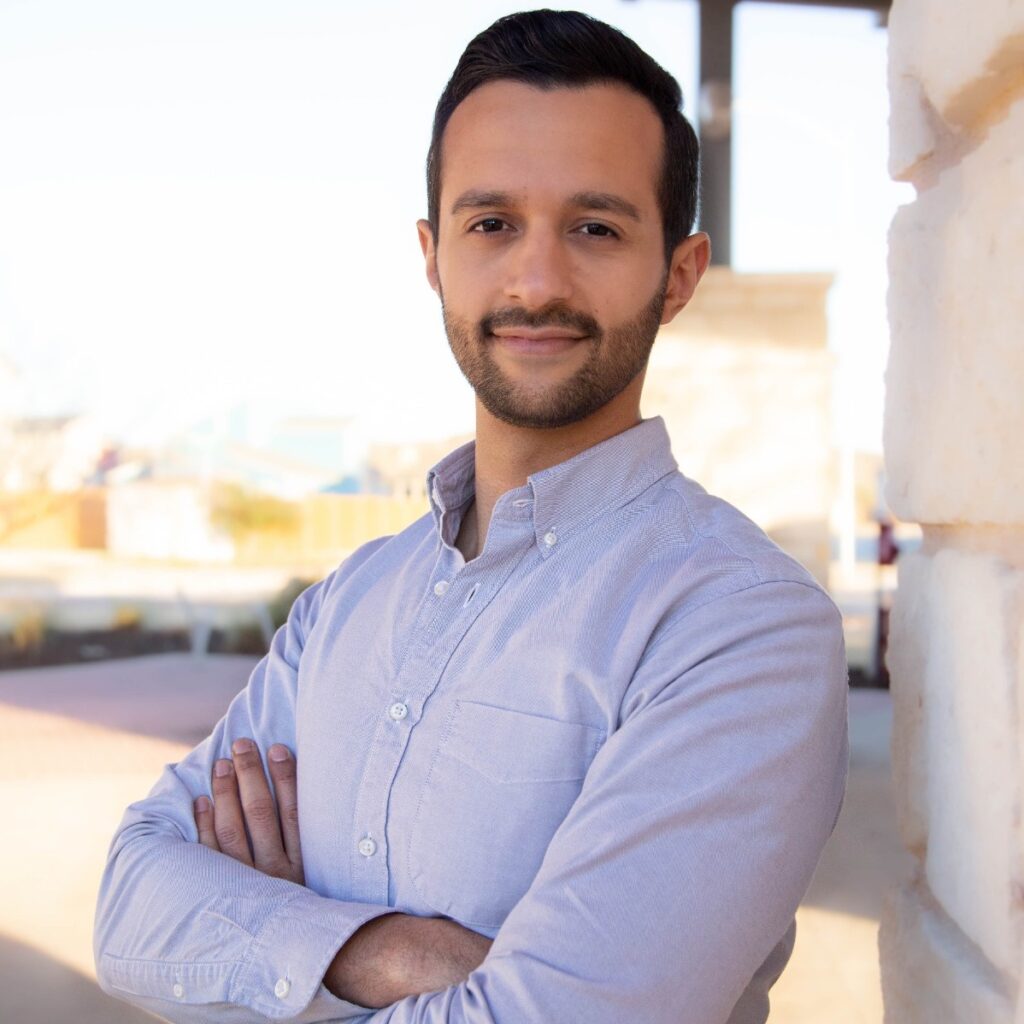
Beth White, Founder and CEO of MeBeBot, photo by Errich Petersen

Beth White, founder, and CEO of MeBeBot, created a virtual assistant powered by artificial intelligence that can answer frequently asked questions for companies. MeBeBot, founded in 2018, was also one of twelve startups featured in Silicon Hills News’ 2022 Austin Technology Calendar. White recently did a Q&A with Silicon Hills News about her company.

Q. What motivated you to create MeBeBot?

A. I spent years working in HR, manually responding to employees’ needs at the expense of focusing on strategic tasks. And I know that employees are often frustrated, waiting for responses to their inquires/help desk tickets or spending countless hours looking for answers to their questions on outdated Intranets. When I saw how consumer-facing chatbots were providing quick answers to their customers’ questions, I realized that this same technology can be used within the workplace to provide 24/7 support and consistent communications to keep up with the constant changes in our world.

Over the past few years, the workplace has changed dramatically. We went from busy offices to working in our homes. Now, hybrid work and global teams are the norm. Yet, companies are not ready for the new “world of work” and they lack the solutions to support their employees’ needs while providing consistent communications. Now more than ever, there’s a need to free up valuable time while everyone is doing more with fewer resources and lower budgets. Providing companies with a cost-effective solution to provide automation for routine tasks and let people do what they do best (more meaningful work) just makes fiscal and business sense.

Q. What does MeBeBot do?

A. MeBeBot is like the “Alexa” for the workplace, automating answers to routine employee’ HR, IT, and Facilities FAQs. Our AI Intelligent Assistant installs as an app in Teams or Slack, so when employees have questions like, “How do I use the VPN?” or “What is our remote work policy,” or “When do we get paid,” MeBeBot provides them an instant answer to their question that is configured by each company to fit their business processes and policies, 24/7. And, best of all, we provide a curated knowledge base of hundreds of FAQs that are commonly asked by employees, for all areas of the business. Our customers simply personalize our suggested answers for their unique needs and the entire AI solution can be launched to employees in weeks…across the globe.

Last year, our customers needed to provide real-time updates to all the changes happening in our world, from return to workplace protocols to updates to benefits programs. We responded with push messaging that allows our customers to send messages, reminders, or notifications to select user groups, via MeBeBot in Slack or Teams. This gains higher visibility of messages, as email is overused and does not always get read by employees. We also added pulse surveys, delivered via Slack or Teams, so that employee feedback on hot topics can be gathered in real-time…with over 50% participation in 2-4 hours (well exceeding traditional survey results).

Q. This week, you won the 2022 “Digital Transformation Project of the Year” by Women in Cloud, an economic development agency based in Bellevue, Washington, can you explain what that award means to your company?

A. We were so honored to win this award, as the nominees were from across the globe and focused on various types of digital transformation solutions. The panel of judges is comprised of respected leaders from some of the most admired technology companies in the world. I believe they realized the value MeBeBot brings to companies of all sizes and to their employees. We designed an AI solution that’s a catalyst for change, reduces the high-cost barrier to entry, and allows non-technical business users to launch a sophisticated AI solution in weeks…and this is truly unique.

Q. Who are your customers?

A. MeBeBot has amazing customers:  Epicor, e2open, Ziff Davis (includes Spiceworks, RetailMeNot, IGN, etc.), HireVue, Abrigo, CrowdStreet, Terminal, Massage Envy, Toyota Insurance Management Solutions, Care.com and IGT. Over 22,000 global employees are paid users and we’re proud to say that all of our customers have renewed their subscriptions to MeBeBot, as they are experiencing significant gains in efficiency and are benefitting from the usage and feedback they receive from employees (all visible in our real-time customer dashboard).  We love seeing our customers shine and to help provide them with a quick win towards digital workplace transformation for the employee experience.

Q. Who is on your team?

A. We have a lean, yet dedicated team of talented people, all focused on solving real customer problems that exist in the workplace. Jana Wilson is our fractional CFO and Ellen Madonia is our Chief Marketing Officer. They both worked at PeopleAdmin and Vibe HCM, other successful workplace technology companies. We also have sales and marketing team members, customer success, and an amazing development team in Argentina. We are also fortunate to have some amazing advisors that provide ongoing support and guidance. And a shout out to the team at Capital Factory, who has also been so helpful to us in our growth.

Q. What are the biggest challenges you face in the marketplace today?

A. We evangelize for digital workplace transformation and educate on how using AI and automation to create efficiencies and streamline manual tasks is a strategic imperative. We want companies to understand that they don’t have to be a Fortune 100 company to reap the benefits from an AI solution like MeBeBot. Our technology is affordable, easy to install, and available today. We believe that now is the time for companies to act….and we do see that they’re motivated to make these changes to support hybrid work, as they must reduce employee turnover while “doing more with less.”

Q. How do you acquire customers?

A. Our target customers are companies that are between 250-10,000 employees (mid-market) as that’s when they may be experiencing growing pains that we can improve. We sell directly to them, and we are also an app in the Slack App Marketplace (we were the “brilliant bot” for May) and in the Microsoft Azure and Teams Marketplaces. We also have some strategic referral partners and we’re working towards channel/reseller sales opportunities as well.  We really love it when our customers recommend us to their network as well (our average rating on G2 is 5 out of 5).

Q. What is the business model?

A. We’re a software-as-a-services company, and our product includes an AI App or chatbot for Teams or Slack and a customer-facing portal. We sell on an annual subscription basis and our pricing is on a per employee per month basis.

Q. Are you bootstrapped, or do you have angel or VC financing?

A. We were bootstrapped for the first year of business, then kicked off fundraising an angel round at a “not so opportune” time in March of 2020 (the start of the pandemic). We did raise the angel round (late 2020) and we’re really excited to kick off a $3M seed round, to accelerate our growth.

Q. Why did you decide to start your company in Austin?

A. I’ve been part of the startup world in Austin since moving here in 1998. I worked with a dot com and then many emerging tech companies, so I was familiar with the ecosystem in Austin, and I have many connections and supporters here. Austin has a wonderful business community of people that are truly helping each other out and I’ve loved being a part of it for years.

Q. What has been your biggest win so far?

A. I believe if you can attract and bring on the best talent possible for your team (especially as an emerging company), that is always the biggest win. Our people make our solution great, they support our customers’ successes, and they help to attract new customers that are also passionate about solving real problems with smart solutions.

Q. What is your long-term vision?

A. We say we are like the “Alexa” for the workplace as we are expanding MeBeBot’s functionality to be each employee’s assistant, just like we all appreciate our consumer devices (mobile phones, GPS devices, health trackers, etc.) that help to make our lives easier. We want each employee to have personalized answers to their needs, use MeBeBot to help them facilitate work processes, and provide our customers a rich dashboard of information so that they can learn more about their people through actionable insights.

Q. You have a free online event you are doing at 10 a.m. CST next Tuesday on Jan. 26th “Learn How Care.com Takes Care of Their Employees with AI.” Can you talk about who should attend this event?

A. Frankly, this event is great for anyone who wants to learn how business users can launch an AI solution within their company in weeks. We will have Lynn Pattin and Kristin Foxx, two of Care.com’s Senior HR team members, discuss what business challenges they had to manage employees’ needs and how they were able to solve their pain points with MeBeBot. We’ll also share information about how accessible AI can be to any company and the benefits that will be gained.

Q.  If you could put a billboard in downtown Austin, what would it say?

A. Work Smarter, not harder. MeBeBot’s your Intelligent Assistant for the workplace.

Austin Startups Raise $870 Million in 80 Deals in the Second Quarter of 2022

Austin Startups Raised $870 million in the second quarter of 2022, down 55 percent from $1.9 billion during the same quarter in 2021, according to the latest Pitchbook-National Venture Capital Association Venture Monitor report.

The deal volume also dropped 13 percent to 80 deals in the second quarter compared to 94 deals for the same quarter a year ago.

DealHub and SANA both raised $60 million each in the second quarter, tying for the two biggest deals of the quarter.

MicroTransponder raised $53 million, followed by Data.world with $50 million and Albedo with $49 million, according to the Pitchbook-NVCA report.

Overall, in Texas, 165 startups raised nearly $1.7 billion in the second quarter of 2022, 37 percent decrease compared to 201 startups raising $2.7 billion for the same quarter in 2021.

Overall, U.S. venture capital deal activity in the first half of 2022 was strong, according to the Q2 2022 PitchBook-NVCA Venture Monitor, the report jointly produced by PitchBook and the National Venture Capital Association (NVCA) with support from Insperity and J.P. Morgan.

“While deal count remained strong when compared with the highs of 2021, deal value declined significantly across all stages,” according to the report.

“As the market continues to react to volatility over the past six months, the venture ecosystem demonstrates strength as dry powder reaches new heights and fundraising levels surpass more than $100 billion for the second consecutive year,” said John Gabbert, founder and CEO of PitchBook. “Exits remain extremely low while late-stage companies act with caution as a result of bearish public market activity. There are still uncertainties as to what to expect in the second half of the year, however, market indicators show resilience to weathering the potential economic downturn.”

Austin-Round Rock, TX MSA1DealHub$60 million
Austin-Round Rock, TX MSA2SANA$60 million
Austin-Round Rock, TX MSA3MicroTransponder$53 million
Austin-Round Rock, TX MSA4Data.world$50 million
Austin-Round Rock, TX MSA5Albedo$49 million
Austin-Round Rock, TX MSA6WIN Reality$46 million
Austin-Round Rock, TX MSA7Redbud Brands$42 million
Austin-Round Rock, TX MSA8Onramp Funds$40 million
Austin-Round Rock, TX MSA9Iris Telehealth$33 million
Austin-Round Rock, TX MSA10Spot (Life and Health Insurance)$31 million
Source: according to Pitchbook-National Venture Capital Association Venture Monitor data.

Multicoin Capital Announces $430 Million Venture Fund III

Multicoin Capital, a crypto fund founded in 2017, announced last week its latest venture fund, $430 million Venture Fund III.

The Austin-based firm invests between $500,000 and $25 million in early-stage opportunities. It also finances later-stage projects up to $100 million or more.

“We’ve been investing in crypto for about 5 years now and have watched innovation slowly move up the stack,” according to a blog post. “While we continue to make deep tech and infrastructure investments, we are spending an increasing percentage of our time on things that directly face consumers and that are poised to reshape massive consumer-facing markets.”

Multicoin is most interested in investing in proof of physical work companies like its portfolio companies Helium and Hivemapper, DataDAOs like its portfolio company, Delphia, and creator monetization like its portfolio companies Metaplex, Aduius, Strata Protocol, and FanTiger. It is also interested in investing in consumer products, new business models for collaborating on IP, Web3 infrastructure and open finance, India, and DAO Tooling.

Multicoin, founded by Kyle Samani and Tushar Jain, has made 97 investments and had one exit, according to its Crunchbase profile.

Seven Key Takeaways from the Austin Chamber’s Tech Industry Report

1. High-tech salaries in Austin are up since 2020 by nearly 10 percent to an average of $150,026, compared to the average annual salary in Austin of $78,224 for all jobs.

2. Lots of companies have relocated to Austin from California, Illinois, New York, and other states. Today, Austin has 9,565 high-tech companies, up nearly 15 percent in 2021.

3. Austin outpaces the nation when it comes to high-tech industries, which make up nearly 17 percent of all jobs in the Austin metropolitan area, compared to 9 percent nationally.

4. Tech industry job growth in Austin shot up nearly 29 percent in the last five years.

5. Tech industry job growth in Austin grew by 58 percent in the last decade, compared to 19 percent nationally.

6. Today, 184,177 people work in tech in the Austin area, up 4 percent from 2020.

7. Most Austin high-tech jobs are in nonmanufacturing industries, which make up 78 percent.

Source: Austin Chamber of Commerce High Tech Industry Report

Three Austin and Two San Antonio Startups Receive Google Latino Fund Awards

April Dominguez, Founder of HANDSOME

At the UnidosUS Conference in San Antonio on Monday, Google announced the 50 recipients selected for its first-ever Google for Startups Latino Founders Fund.

Among the recipients, Google chose three startups based in Austin including Handsome, Kiss & Tell, and Lena Health.

Two startups, CodersLink, and Irys were from San Antonio.

And four others were chosen from El Paso and Houston.

All of the founders selected will receive $100,000 each to help grow their business. The founders will also receive hands-on support from Google employees across the company, $100,000 in Google Cloud credits, and access to mental health therapists at no cost.

The goal of Google’s fund is to increase economic opportunity for promising Latino startup founders in the U.S., who receive a disproportionately low percentage of investment, according to Google.

“We are excited to support these talented Latino entrepreneurs as they build innovative solutions and solve tough problems,” Daniel Navarro, U.S. marketing lead with Google for Startups, said in a news release. “I hope the launch of our inaugural Google for Startups Latino Founders Fund not only catalyzes the growth of these incredible Latino-led startups, but also inspires other Latino entrepreneurs, and ultimately generates wealth within the community.”

In addition to the Latino fund, “Google for Startups has provided $10 million in cash awards to 126 Black founders in the U.S. through its global Black Founders Fund,” according to a Google blog post.

The Austin founders selected included April Dominguez, founder of HANDSOME App, which is a career and advice sharing platform for the $190 billion beauty and barber industries to find coaching, techniques and earn more income.

“HANDSOME’s mission is to bring equal career opportunities for women in this industry, as well as to be a leader in diversity,” Dominguez said in a news release. “This support from Google for Startups allows us to put fuel on that fire and to continue pouring into the advancement of inclusion in our industry.”

Amy Jarczynski, founder of Kiss & Tell, a private social network and event planning site, based in Austin, also received a $100,000 Google grant.

“The Google for Startups Latino Founders Fund means an opportunity to launch our 2.0 product and rebuild our wedding and group travel bookings that were demolished during COVID,” Jarczynski said in a news release. “The support will be used to execute our go-to-market strategy”.

Alex Harb, founder of Lena Health,

Alex Harb, founder of Lena Health, a personal assistant for concierge care navigation, based in Austin, also received a $100,000 Google grant.

Instead of calling the clinic and dealing with call centers, patients can now send an SMS text to their Lena Assistant and request a task. A customer study showed that Lena reduced avoidable costly care by reducing ER visits, hospitalizations, and 30-day readmissions.

“We’re honored to be selected for the Latino Founders Fund and be included with a prestigious group of Latino founders,”  Harb, founder of Lena Health, said in a news release. “The financial support allows us to accelerate our growth while we leverage the Google network to continue to transform the health experience with a tech-enabled Care Concierge.”

Two entrepreneurs from San Antonio also received Google Latino Founders Fund grants including Jesus Salas, founder of CodersLink, a platform that empowers global companies to recruit, manage, and develop their LATAM tech teams, on-demand. Beto Altamirano, the founder of Irys, based in San Antonio, also received a grant. Irys is an innovative and collaborative two-way engagement tool that helps to drive community inclusion and infrastructure projects, improving project workflows and optimizing outcomes.

Silverton Partners Raises $248 Million Fund to Invest Primarily in Texas-based Startups

Silverton Partners announced this week it has closed on Fund VII at $248 million, its largest fund ever.

The Austin-based venture capital firm, founded in 2006, closed on Fund VI in 2000 worth $144 million, and Fund V at $108 million in 2018.

Silverton plans to invest about two-thirds of the fund’s capital to support Texas-based early-stage startups.

“We’re excited to put Fund VII’s capital to work in supporting the growth of companies in Texas and beyond,” Morgan Flager, managing partner at Silverton Partners, said in a news release.

“Though the current economic conditions are complex, there’s never been a better time to invest. History has shown that the best companies are often created in difficult times, and we remain committed to serving extraordinary entrepreneurs. We’ll keep investing and delivering exceptional results for our partners.”

Silverton Partners plans to allocate $177 million to Fund VII and $71 million to Silverton Opportunities II, which is earmarked as follow-on funding for existing portfolio companies.

To date, Silverton Partners has more than $950 million in assets under management. It has had 30 acquisitions and four Initial Public Offerings including SailPoint, Ping Identity, and Vacasa.

Silverton Partners is led by partners Kip McClanahan, Mike Dodd, Roger Chen, and Flager.

In addition, Silverton Partners announce the promotion of Matthew Saitta to Principal, Alyssa Dadoly to CFO and Operating Partner, and the addition of Aneesh Desai as an Associate on the investment team.

Via email, Flager answered a few more questions about the new fund.

Q. You’ve raised Fund VII just two years after your last Fund VI, which was $148 million, this one is $248 million – the largest ever.  The fund size is getting bigger and bigger, why has Silverton Partners’ fund size grown so big?

A. Flager: First we are excited to announce SPVII and Opportunities ii because of what it means for Austin. The local ecosystem is growing quickly, and the increasing set of world-class entrepreneurs here need more capital to compete and win. As the most active and longest-standing firm in the region, we want to ensure we can meet that need and help take Austin to the next level.

While we have grown assets under management, we haven’t changed our strategy since we started investing in 2006. We are still focused on being the first institutional investor and want to roll up our sleeves and serve as a true partner to our founders. We still invest early, primarily at the seed stage, and continue to support our companies as they grow.

Q. A lot of capital from a variety of VCs has flowed into the Austin market in the past few years, why do you think that is happening now?

A. Flager: Capital flows to where the best opportunities are…..Austin has proven itself as a leading destination for top-quality entrepreneurs and investors have followed the talent. Since I moved to Texas from California in 2006, Austin has been growing, but the past couple of years have seen that growth accelerate dramatically. While some elements of growth always pose challenges, it is hard to not be excited about what is in store for this city.”

Q. In the news release, Silverton states that the firm plans to use the bulk of the fund to invest in Texas-based startups. Are there any particular industries that Silverton is focused on investing in?

A. Flager: We tend to back the best entrepreneurs and focus on people, rather than verticals, we have been particularly active in SaaS software, Fintech/Insuretech, HealthTech, Web3, and many digital marketplaces.

Q. What is the $78 million Silverton Opportunities II fund?

A. Flager: “Our Opportunities fund allows us to continue to invest in existing portfolio companies as they scale. We’ve been fortunate enough to have been involved in several exciting companies from the seed stage that have gone on to grow quickly and raise large, growth rounds. Historically, we’ve sat those rounds out because the focus of our flagship funds is and has always been early-stage investments. Our Opportunities fund allows us to continue to invest in these exciting projects. We raised our first $27 million Opportunities fund and started investing out of it in 2019. Due to the success we had with that fund and the volume of interesting deals we have access to, we decided to increase the size up to $71 million in Opportunities II.

Q. How many companies did you invest in with Fund VI?

A. Flager: We invested in 22 companies in SPVI.

Q. How many companies do you plan to invest in with Fund VII?

A. Flager: We expect to have a similar number of portfolio companies in SPVII as we’ve had in prior funds. I’d anticipate we’ll make 18-25 new investments.

Q. Do you see any major trends developing in Austin as the tech industry continues to flourish here?

A. Flager: The biggest trend is the growth and increasing diversity of the tech ecosystem. When I moved here in 2006, Austin was primarily a B2B software and semiconductor town. Today, the city has market-leading companies in Fintech/Insuretech, HealthTech, Web3, CPG, PropTech, and many other verticals. We have been fortunate enough to back some of the companies that paved the way in these sectors like Self, The Zebra, TurnKey/Vacasa, and Wheel. Also, there is a lot more B2C and marketplace expertise in Austin now-which is great to see. The more diverse the talent pool here, the stronger and more resilient Austin will be to market changes and different economic cycles.

Q. How many employees does Silverton Partners have now? Do you plan to add more staff?

A. Flager: We currently have 11 employees. We are actively looking for an executive assistant. We also expect to add to the investment team later this year.

SXSW Expands to Sydney, Australia

Sydney skyline at twilight. Panorama of the Sydney Skyline.

Next fall, South by Southwest Conference and Festivals plans to expand to Sydney Australia.

SXSW Sydney will feature technology, film, and music sessions from October 15th to October 22, 2023.

It’s the first annual Asia Pacific installment of SXSW in collaboration with TEG, The NSW Government & Destination NSW.

“We couldn’t be more excited and honored to work with TEG and the New South Wales QAGovernment via Destination NSW on an event that brings to Australia the professional opportunities and unexpected discoveries that make SXSW unique,” Roland Swenson, CEO & Co-founder of SXSW., said in a news release.  “The purpose of SXSW is to help creative people achieve their goals, and Sydney is the ideal city to serve as a home for the cross-collaboration that exists within the many industries we bring together.”

“SXSW is an event without equal internationally that has launched the careers of so many creative professionals,” Geoff Jones, Group CEO TEG, Event Producer for SXSW Sydney. Said in a news “Through showcasing the creator industries of the Asia Pacific to the world, SXSW Sydney will establish a new SXSW touchpoint, enabling the international and cross-sector connections that deliver the most innovative products and content. I would like to welcome Colin Daniels as the Managing Director of SXSW Sydney and thank the NSW Government, Destination NSW, and the team at SXSW for their foresight and support.”

For more information, visit sxswsydney.com.

Austin’s True Wealth Ventures Closes on $35 Million Fund II Aimed at Investing in Women-Led Startups

Austin’s only venture fund run by women; True Wealth Ventures has closed on its second oversubscribed $35 million Fund II.

The firm, founded in 2015 by Founding General Partner Sara Brand and General Partner Kerry Rupp, focuses on investing in women-led companies in the healthcare and environmental industries.

True Wealth Ventures closed its first $19.1 million fund in 2018. It was the largest fund ever raised at that time with an explicit gender diversity strategy.  And Fund 1 was backed by 80 percent women limited partners.

To date, True Wealth Ventures has about $60 million in assets under management. True Wealth Ventures’ investment thesis is that women-led companies perform better financially yet they remain an untapped market.

Despite statistics showing how well women-led startups perform, just 2.3 percent of total capital invested in U.S. venture-backed startups in 2021 went to companies solely founded by women and only 14.8 percent of that capital went to companies co-founded by women, according to a May Pitchbook report.

“While our primary mission continues to be getting early-stage capital to female founders whose core value proposition is improving environmental or human health, our secondary mission has been to facilitate more women investing into this asset class as LPs,” Brand, True Wealth Ventures founding general partner, said in a news release. “We not only believe this is the fastest way to change the gender inequality in the VC ecosystem, we also believe it is critical for our country’s innovation economy with the wealth shifting to women.” 

Since closing the first part of Fund 1 in May of 2021, True Wealth Ventures has already made three investments including in  Aeromutable, a San Diego-based startup that applies aerospace technology to the trucking industry. It also invested in De Oro Devices, a company headquartered in California, which makes mobility devices to assist people with mobility disorders to walk safely and confidently, and Flourish, an Austin-based startup that educates women on how to build sustainable habits in nutrition, hydration, sleep, stress, relationships, and movement.

Overall, True Wealth Ventures intends to invest in 15 women-led companies from Fund II.

About 80% of U.S. assets will be controlled by women by 2030, but women largely aren’t active in investing in VC funds today.

“Investing in women-led companies personally resonates with women who know their peers have potential and should be backed much more than a mere 2.3%,” Rupp, True Wealth Ventures general partner, said in a news release. “There’s a feeling of, ‘If not us, then who?’ Women are twice as likely to invest in companies that will have a positive social impact, and 10 times as likely to invest in companies with diverse teams.”

Texans Object to the U.S. Supreme Court Overturn of a Woman’s Right to Abortion

Paramount Theater in downtown Austin

The U.S. Supreme Court Friday morning struck down a woman’s right to an abortion, overturning Roe v. Wade, which became law 50 years ago.

The court voted 5 to 4 to overturn Roe v Wade. The ruling does not make abortion illegal but does not make it a constitutional right. That allows states to pass laws banning abortion.

Texas’ trigger law automatically bans most abortions in the state. It goes into effect 30 days after the U.S. Supreme Court issues its judgment. Attorney General Paxton also released an official advisory setting forth Texas law in light of the Supreme Court’s decision. 

In Austin, hundreds of people marched to the Texas Capitol building to protest and celebrate the ban on abortion. Other protests and celebrations occurred at the Supreme Court in Washington, D.C.

Hundreds of Texas companies see “restricting access to comprehensive reproductive care, including abortion, threatens the health, independence, and economic stability of our workers and customers,” according to a statement by Don’t Ban Equality. The statement was created in 2019 in response to the trend of states restricting access to abortion. To date, more than 350 business leaders have signed the statement.

Don’t Ban Equality in Texas was created when S.B. 8 was passed in Texas in 2021. At that time, more than 60 companies denounced the law’s stringent restrictions and railed in support of access to abortion care.

Austin technology companies backing Don’t Ban Equality Texas include OJO Labs, WP Engine, Bumble, Capital Factory, Spot Insurance, QuestionPro, Thinktiv and others.

“When S.B. 8 was enacted in Texas in 2021, more than 60 companies once again stood in solidarity to support access to abortion care and denounce the law’s stringent restrictions,” according to the organization.. “Now, as Roe has been overturned in Dobbs v. Jackson Women’s Health Organization, the corporate community must rally again. Following the Court’s decision to strike Roe down, 24 states have laws on the books that could outright ban or severely limit access to abortion for tens of millions of women, and only 14 states have passed laws that would explicitly protect the right to abortion.”

On Twitter, Max Hoberman, founder and CEO of Certain Affinity, a gaming company based in Austin, showed a letter he sent to his employees offering to pay for them to relocate to a state that provides comprehensive reproductive care.

“As a business leader it’s exceptionally difficult to navigate highly politicized issues like transgender and abortion rights. But I’m not content to sit back and say or do nothing,” Hoberman wrote.

“The economic losses from existing abortion restrictions, including labor force impact and earnings, already cost the State of Texas an estimated $14.5 billion annually,” according to Don’t Ban Equality.  “Nationally, state-level restrictions cost state economies $105 billion dollars per year.”

Sana Lands $60 Million in Venture Funding to Expand its Healthcare Insurance Business for Small Businesses

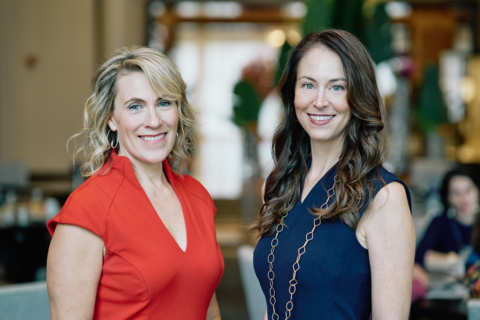
The Sana team as featured in Silicon Hills News 2022 Calendar, photo by Errich Petersen

Sana, a health care insurance company, Wednesday announced it has closed $60 million in venture capital financing.

Trust Ventures and Gigafund co-led the Series B funding round with participation from existing investors American Family Ventures, mark vc, Breyer Capital, JAM Fund, and Liquid 2.

To date, Sana, founded in 2017 by Will Young and Nathan Hackley, has raised $107 million.

“Trust Ventures and Gigafund have been investors since our seed round,” Young, Sana co-founder and CEO, said in a statement. “They believe in Sana’s mission and have been valuable partners over the last three years. They’ve seen the opportunity that lies ahead and have supported us every step of the way.”

Sana provides health care options for small businesses. The company reports that Sana’s customers often save up to 20 percent compared to legacy insurers. It also provides telehealthcare and low co-pays.

“Health insurance is a critical way employers can support their employees, but small business health care has been stagnant for decades,” Salen Churi, Trust Ventures’ general partner said in a news release. “Sana delivers dramatically better care at lower prices that meets users where they’re at.”

“Gigafund has now led four separate rounds of investment in Sana because the team continues to impress us with their phenomenal vision and execution,” Stephen Oskoui, Managing Partner of Gigafund, said in a news release. “Sana empowers small businesses to cut costs and help their employees become happier and healthier. The company is improving the health care system and eliminating inefficiencies that strangle the economy.”

Sana plans to use the funds raised to hire new employees with a focus on customer service.

Sana operates in eight states and plans to expand to additional states in the coming months.

“We’re excited to use this funding to bring Sana and reliable, affordable health care to more small businesses and their employees,” Young said.

In January, the company opened Sana MD in Austin. It is Sana’s first primary care health center for members. Demand for appointments has surpassed expectations, spurring Sana to increase hiring staff for the center. In addition to in-person office visits, Sana gives employees access to virtual care with providers specializing in primary care, pediatrics, maternity and mental health.

« Older posts Newer posts »

© 2026 SiliconHills

Theme by Anders Noren — Up ↑