
 Tim Jenison will be the featured speaker at Startup Grind San Antonio at noon on March 25th at Geekdom in downtown San Antonio.
Jenison is the founder of NewTek, a video graphics software and hardware company. He is an inventor, entrepreneur and now artist and filmmaker, in San Antonio.
Jenison is the star of the documentary, Tim’s Vermeer, produced by his friends Penn Jillette and Teller. It documents his nearly six-year long obsession to prove a link between technology and art.
Jenison developed a theory in 2008 that the 17th century Dutch painter Johannes Vermeer, who was known for his use of light and realistic paintings with photographic qualities, had used a camera obscura and a comparator mirror to create his paintings. He later revised his theory to involve a concave mirror and comparator mirror. In the hour and twenty-minute documentary, Jenison re-creates Vermeer’s painting The Music Lesson using those tools.
Jenison, who didn’t consider himself an artist, travelled the world to do research on Vermeer. And he eventually recreated a room from Vermeer’s house in a warehouse on the outskirts of San Antonio. He spent a year there recreating the room, its furnishings, textiles and more and then to paint The Music Lesson. He also had to find materials to create the paints that Vermeer used.
At one point in the documentary, Jenison admits he would quit if the cameras weren’t rolling and holding him accountable.
In the end, he paints the Music Lesson and he’s 95 percent sure that Vermeer used similar tools in his paintings.
The documentary is currently playing in Austin and San Antonio. It is well worth seeing.
And if you’re able to attend Startup Grind San Antonio Tuesday at Geekdom, you can meet Jenison in person and ask him questions about NewTek or Tim’s Vermeer. You can get your ticket, which includes lunch, here.
Page 229 of 352
By LAURA LOREK
Founder of Silicon Hills News
 Founded in late 2011, Geekdom has served as a catalyst for San Antonio’s technology startup industry.
Graham Weston, chairman of Rackspace and Nick Longo, founder of CoffeeCup Software, founded Geekdom.
Lorenzo Gomez now serves as the director of Geekdom.
It hosted the Techstars Cloud program, which graduated two classes of companies from its three-month accelerator including Par Level Systems and TrueAbility, which are both still based at Geekdom.
Other startups operating out of Geekdom include Pressable, Remote Garage, Monks Toolbox, CodeUp, VentureLab and Health eDesigns. It has helped more than 200 startups so far. The Geekdom Fund also offers San Antonio-based startups a chance at $25,000 in funding. The Geekdom Fund board meets monthly to evaluate startups and award funds.
Geekdom membership costs $50 per month or $200 monthly for a dedicated “tech startup desk” in an office.
Geekdom also hosts all kinds of events including a monthly Master’s Series featuring accomplished speakers in the technology industry, hackathons, 3 Day Startups, Startup Weekends, the monthly San Antonio Startup Grind and Health 2.0.
Geekdom last year launched a San Francisco office.
For the past two years, the collaborative coworking space, technology incubator and accelerator, has occupied the 10th and 11th floors of the Weston Centre downtown. But at the end of March, Geekdom will move to its new home in the historic Rand building, a former bank and department store building built in 1913, on Houston Street. The sixth floor will be for established companies with large numbers of employees and the move in date for that floor is set for Mid-April. The seventh floor will be for the general membership and it’s move in date is March 31st. Eventually Geekdom will takeover the entire 8-story building as its current tenant Frost Bank moves out.
The new offices will have bike racks, showers, and lockers, changing rooms, a nap room, a kitchen and more.
The space will contain a lot of white boards and other writeable surfaces and it will have reliable high-speed Internet with lots of outlets for wired service as well as Wi-Fi. It will also have a vault of mailboxes.
The main floor of the building features an events center where Geekdom will hold member and public events. The events will be livestreamed online from there using NewTek’s Tricaster equipment. The space is two stories and has a balcony and has doors that are accessible from the street.
Editor’s note: this article originally appeared in Silicon Hills News’ print magazine, launched at SXSW Interactive 2014. Also, Geekdom is a sponsor of Silicon Hills News.

Photo courtesy of Lyft
Lyft is also available in Dallas and Houston. The company held a party earlier this week at the Hotel Havana downtown to celebrate its service in the San Antonio area.
“San Antonio has been a longtime supporter of tech and innovation, and has a vibrant local culture and more than 120,000 college students,” said Katie Dally, Lyft spokeswoman. “It’s also been a transportation innovator, being Texas’ first city to have a B-cycle bike share system. Lyft fills in the gaps to enable residents to get around safely, reliably and affordably without always using their own cars.”
Lyft is a ride-sharing service available through a free app on an iPhone or Android smartphone. Customers simply request a ride using the app with a tap of a button and a driver arrives within minutes to provide a ride.
Lyft has been advertising on Indeed.com and Craigslist in San Antonio for drivers, touting that they can make as much as $500 in a weekend. All of Lyft’s community drivers are background checked and interviewed before being hired by the company to provide rides.
In addition to San Antonio, Lyft is available in 26 cities nationwide.
It’s an alternative to a taxi cab ride and that doesn’t sit well with the established transportation industry in some cities. Ride sharing services like Uber, Lyft and Sidecar have met with opposition in Austin. They are currently not available there. An early ride-sharing pioneering startup, Heyride launched there more than a year ago and was served by a cease and desist order by the city. Sidecar later acquired Heyride. Even during SXSW Interactive, services like Uber, Lyft and Sidecar could not provide rides or could only provide rides to festival attendees under restrictions.
Initially, the Lfyt rides in San Antonio will be operating under the company’s Pioneer program, which offers free rides to all new users for their first two weeks. After that, the Lyft rides are calculated based on time and miles. It charges a minimum $5 per ride.
The company, based in San Francisco, has 180 employees and it was founded in 2007 and has raised $82.5 million to date, according to its Crunchbase profile.
By JONATHAN GUTIERREZ
Reporter with Silicon Hills News
 When the founders of TrueAbility were searching for a domain name, they wanted to find something that truly represented what they hoped to accomplish. The four of them wanted a name that spoke to not only the recruiters that used their product for screening job candidates, but also spoke to the IT professionals coming to their company to showcase their technical skills.
“We felt like (TrueAbility) worked for everyone involved, so we were excited about the name,” said Luke Owen, Co-Founder and CEO at TrueAbility.
Owen, Marcus Robertson, Dusty Jones, and Frederick “Suizo” Mendler are all former Rackspace employees, and together founded the San Antonio-based startup in 2012. TrueAbility is a startup that provides IT professionals with a platform to demonstrate their abilities and make it easier for companies to see how qualified they are for a desirable tech job. Their offices are located at Geekdom, a coworking space and technology incubator, in San Antonio.
TrueAbility calls its product “AbilityScreen.” It is a job simulator that assesses IT professionals and their ability to perform in a live server environment. Over the past year, TrueAbility sought companies to purchase its product and allowed those companies to administer the tests themselves. TrueAbility has decided to reposition its product and have companies purchase a job post on their website.
This new method lets IT professionals browse through a list of companies and interview directly with any company who has a job posted on the job board. Each company listed offers the chance to interview on demand, so job seekers can take the assessment from anywhere at any time. Within seconds of completing a live technical interview, the job seeker’s results are sent to an employer for review.
TrueAbility is one of San Antonio’s home-grown technology companies with roots at Rackspace Hosting.
The four founders claimed the top prize at the San Antonio Startup Weekend in July of 2012 after impressing the judges with their business model and experienced team. Before teaming together for this new business venture, they had 30 years of combined experience hiring talent and were responsible for more than 1000 recruits at Rackspace, an IT hosting company based in San Antonio. They were also finalists in the SXSW Interactive Accelerator last March and placed third among the 500 companies who applied to compete.
By the beginning of 2013, TrueAbility received seed funding with an investment of $750,000 from Rackspace Chairman Graham Weston and Rackspace Co-founders Patrick Condon and Dirk Elmendorf.
In July 2013, TrueAbility closed on $2 million in additional funding led by Austin Ventures, a venture capital firm that helps entrepreneurs build companies in Texas. Part of the additional funding came from the Cloud Power Seed Fund 2013, a special San Antonio fund set up to invest in Techstar Cloud companies. TrueAbility is a graduate of the Techstars Cloud Program, a thematic accelerator that will fund companies focused on cloud computing and cloud infrastructure.
The company’s first employee was BJ “Derks” Dierkes. He is the Senior Linux Engineer for TrueAbility. He worked at Rackspace for nine years while the founders were there, so he joined the team already knowing them on a personal and professional level.
“I had a lot of trust with them, so it was a comfortable transition, even though it was a big move for me,” Dierkes said. “But, really what sold it for me was that I’ve been on both sides either hiring someone or being the person interviewed, and I recognized every single time I went through that process that it had to change. For a technical person, it just really didn’t make sense to sit in a room and draw something on a board or talk through a résumé.”
“You want to be able to prove your skills. Give me a task and I’ll show you I can do it, so it was just the perfect fit for me,” Dierkes said.
TrueAbility currently has a goal of reaching 100 companies using its product. Since the group set that goal in December, they have added 49 companies.
The staff spent a majority of the past year developing its product in the beta stages, while also working with specific customers, Owen said.
“We’ve worked with a handful of customers and screened over 3000 candidates that are applying to jobs and we feel very strongly about our product,” he said. “We’ve expanded our skills bank and the types of jobs we can screen and help companies with.”
Among the customers TrueAbility currently serves is TeamSnap, a software company based in Boulder, Colorado. H. Wade Minter, Chief Technology Officer at TeamSnap, said running job applicants through TrueAbility has revealed a few surprises during their recruiting process.
“We found some applicants with stellar résumés, but who completely bombed the same evaluations that existing employees were able to pass,” he said. “We found people whose paper experience wasn’t amazing, but who were able to solve the practical problems with ease. We even uncovered situations like applicants who didn’t follow directions or applicants who objected to the very idea of demonstrating skill versus just talking about it, which gave us a heads-up about possible culture fit issues.”
One thing True Ability is seeing is that AbilityScreen is making it easier for recruiters to go through a slew of candidates before making a hire.
“(Recruiters) are estimating that they’re getting about 15 to 20 per cent more time to go do more proactive recruiting and getting people in the system,” Owen said. “They’re not spending hours and hours screening every candidate.”
This saved time allows more applicants to get a chance, which improves the odds of an employer finding candidates who are perfect for a job opening.
“The typical process is they go and find 50 candidates that they think might have the skills for the job and then they’ll spend the next two or three weeks screening those people, spending thirty minutes on the phone with each of them to see if they have the skills for the job,” Owen said. “People they may have not called before because they didn’t have time, they’ll go ahead and send them the True Ability assessment. That’s giving these IT pros a chance to prove themselves.”
Dirk Elmendorf, co-founder of Rackspace, is also an advisor for TrueAbility. He said he has seen many people try to attack the problems with traditional recruiting, but they are often more concerned with what happens in the interview room than the process it took to get those applicants there.
“The technical market is an area of growth for the economy,” Elmendorf said. “As a result, it is sucking people in to apply for jobs they are not really qualified for. The real opportunity is to have an objective way to filter people based on their actual skills, not just what acronyms they put on their résumé to please résumé reviewers. That is what makes TrueAbility so exciting to me.”
Elmendorf said TrueAbility is the perfect team to have developed a product that assists IT recruiters in searching for job candidates.
“A lot of times when I talk to startups that are working on disrupting an industry, it turns out that they don’t know very much about the industry they have targeted,” he said. “Luke and his team have a ton of experience making technical hires for Rackspace. They got to see all the problems firsthand. That experience in the trenches has really helped them understand what is needed to help people make better hiring decisions.”
(Editor’s note: this article originally appeared in Silicon Hills News’ first print publication, distributed at SXSW Interactive)
 Now that the madness of South by Southwest Interactive has subsided, it’s time to reflect on all the lessons learned from one of the world’s largest technology conferences.
And the good folks at the Austin Chamber of Commerce have been busy crunching numbers and making sense of all the data and talks at SXSW. The chamber’s Innovate Austin initiative partnered with W2O Group, a marketing firm, to provide key analysis of the Interactive festival which ran from March 7 through March 11.
“Austin prides itself on being cutting edge, we are continually reviewing our target sectors to align opportunities to better prepare for economic cycles,” Michele Skelding, Senior Vice President of Global Technology and Innovation at the Austin Chamber of Commerce, said in a statement. “During SXSW, Austin is at the center of creative and disruptive ideas. Through this initiative, our goal is to identify and cultivate these conversations and trends to drive strategies that will accelerate development through new talent, ideas and funding.”
One of the key findings was “more than 540,000 tweets were associated with the #SXSW hashtag around the world, peaking on Monday with 160,8881 unique mentions surrounding Edward Snowden’s session.”
And the analysis found that only 10 percent of “SXSW-related tweets originated in Austin with nearly four percent from New York City and more than three percent from San Francisco and Los Angeles, respectively.”
The event has definitely become a global stage with more London being the most active of 13 international cities analyzed, followed by Toronto, Paris, Vancouver, Singapore and Buenos Aires.
“The top trending topic was the relationship between national security and technology, driven by appearances by Edward Snowden (185,005 mentions) and Julian Assange (48,252 mentions),” according to the chamber. “Additional hot topics included wearable technology, 3-D printing, food innovation, mobile, and social business.”
For more information, visit the chamber’s site for a full analysis.
“The ideas that flow from SXSW shape what’s next in technology,” Bob Pearson, President, W2O Group, said in a news release. “Our partnership with the Austin Chamber enables us to utilize algorithms and cutting-edge software solutions to sort through what is important in Austin and share it with entrepreneurs wherever they may be. It’s our way of accelerating knowledge sharing from our city to yours.”
 Phunware announced that it has raised $26.25 million of a $30 million Series E funding led by Firsthand Technology Value Fund.
The Austin-based company expects to close its over-subscribed funding round within 60 days.
The latest funding round includes current investors Fraser McCombs Ventures, Maxima Ventures, Wild Basin Investment and the Central Texas Angel Network. It also includes new strategic investors Cisco and WWE.
Since its founding in 2009, Phunware has raised $43 million including the latest investment.
As part of the funding, Kevin Landis, Chairman and President of Firsthand, and Chase Fraser, Managing Partner of Fraser McCombs Capital, join Phunware’s board of directors.
Phunware had 2013 revenues of $22.1 million.
“The company currently supports more than 1 trillion annual transactions on its “multiscreen cloud platform” across nearly 190 countries and 10 languages,” according to a news release.
Phunware provides mobile development services for several top-tier customers including E! Entertainment Television, NBC Sports, WWE, NASCAR, CBS, Qualcomm, Edmunds, Jawbone, HomeAway, Turner, UHealth, Transamerica, King, Warner Brothers, AT&T and Adobe.
“We continue to have a very ambitious vision for Phunware – to enable our customers to engage, manage and monetize every connected device on Earth,” Alan S. Knitowski, Chairman, CEO and Co-Founder of Phunware, said in a news release. “We have achieved tremendous growth since inception and this new funding will further accelerate our MaaS platform investments and geographic reach in supporting the multiscreen goals and objectives of our brands’ anytime anywhere audiences globally. 50 billion devices will mean 50 billion opportunities … and we intend to touch them all.”
By LAURA LOREK
Founder of Silicon Hills News
 At the Women in Tech Networking event at South by Southwest Interactive last week, Rackspace Hosting launched its new training program, Linux for Ladies, aimed at helping women get top jobs in the IT industry.
“Because of our rapid growth we want to make sure we have talent in the pipeline,” said Vivian Tate, Rackspace diversity program manager.
Currently, women occupy only 26 percent of computing-related jobs in the U.S., according to a recent survey by the Bureau of Labor Statistics. Rackspace wants to increase the number of women in technology jobs at its company, Tate said.
The jobs pay well too. According to Glassdoor, the national average for a Linux Systems Administrator I is $57,000.
“Rackspace has a very competitive starting salary and offers Rackers multiple opportunities to advance their careers,” according to the company.
The Linux for Ladies training program will be delivered through Rackspace’s Open Cloud Academy. It’s designed for women to achieve the right skills and certifications for IT jobs.
Rackspace plans to provide scholarships to 20 women in the first class. The scholarship will allow them to take the Linux System Administration training for free.
Rackspace’s Open Cloud Academy, based on the sixth floor of the Weston Centre downtown, launched a year ago. Its mission is to provide students with affordable IT certifications to bridge the IT skills gap and build San Antonio’s tech workforce.
Since its launch, the Open Cloud Academy has graduated 110 students and Rackspace has hired 31 of them. But 49 students just graduated and Rackspace is expected to make some offers to some of them too, said Deborah Carter, Rackspace Open Cloud Academy manager of operations.
Rackspace is holding a session on March 26th at 6 p.m. at the Open Cloud Academy for more information on the Linux for Ladies program.
The Linux for Ladies program, which trains women to become Linux system administrators, costs $3,500. Women must be 18 years or age or older and have a high school diploma to participate. The program begins June 2nd and lasts eight weeks. It runs from 8:30 a.m. to 5 p.m. Monday through Friday. Applicants must have a CompTIA network plus certification to participate. Rackspace offers a self-paced program to achieve that certification.
By JAIME NETZER
Reporter with Silicon Hills News
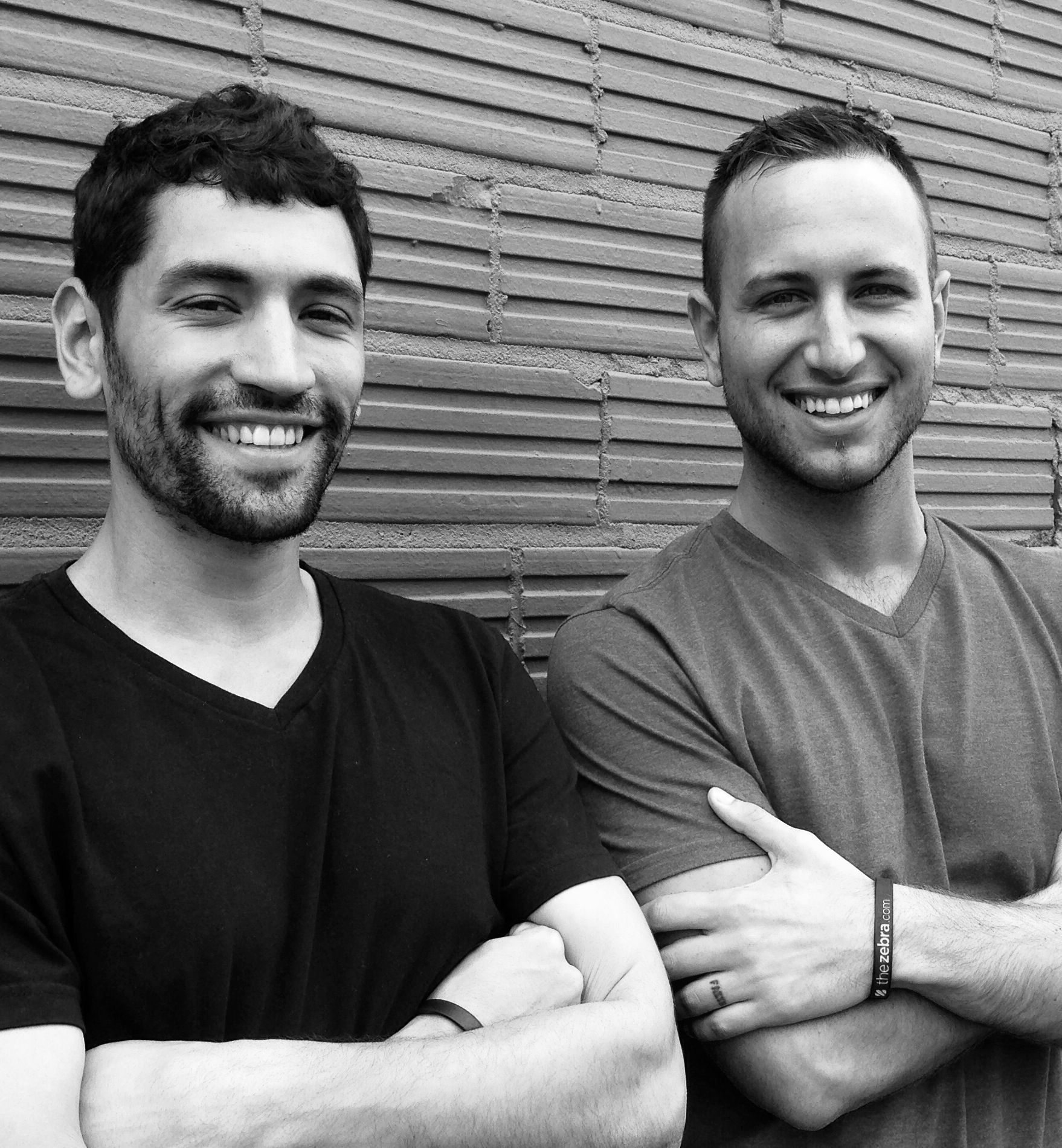 The word “disrupt” has become a start-up buzzword, but The Zebra COO and cofounder Joshua Dziabiak says it’s overused, and he’s not always sold when he hears it. “I don’t know if I ever really buy most of it,” he explains. But when Dziabiak, already the successful founder and CEO of ShowClix, saw Adam Lyons give the pitch for The Zebra, he was convinced. The venture, a digital auto insurance agency that lets consumers compare unbiased quotes in real time from more than 200 carriers, could do more than disrupt the insurance business: It could turn it on its head.
“The industry is ripe for a modern tool like The Zebra,” Dziabiak says. The mechanics are straightforward enough. The Zebra uses state insurance filing data to replicate insurance company models and estimate rates within a few dollars accuracy. “We were able to do something no one else has done before, by combining all of the different companies on one platform,” explains Adam Lyons, co-founder and CEO of the Austin-based company. The result is something new, too: transparency in the insurance industry.
Lyons and Dziabiak are both young, and the East Austin warehouse where The Zebra does its work boasts a mural on one wall and a buzzing energy that’s far from corporate. Though they’re selling insurance, which Dziabiak and Lyons say is a “stodgy, old, old money business,” The Zebra wants to inject a new set of descriptors to the conversation. “We want to throw ‘sexy’ into that,” Dziabiak says. “We want to throw ‘rebel,’ and ‘easy.’”
They explain that in 2014, consumers now expect to be able to make informed decisions about their purchases online, even from their phones. Sites like Kayak make this possible for air travel, but the insurance industry was missing an equivalent. Sites that claimed to, Lyons says, only compared a few, and still required consumers to fill out extensive questionnaires and provide contact information. “What happens is you get done, [the site] just says someone will contact you shortly,” Lyons says. “Then your phone gets blown up, your inbox gets flooded, and you never got anything.” As for companies like Geico? “Companies spend hundreds of millions of dollars marketing and saying you can go to their site and save, but that’s the equivalent of going directly to American Airlines and asking them to find you the best fare,” Lyons says.
 The company has caught early attention from big name investors, including Mark Cuban, Austin’s Silverton Partners, and Simon Nixon, UK tech entrepreneur and owner of juggernaut comparison site Moneysupermarket.com. In Austin since last year, The Zebra held its national launch party in December of 2013. They’re now licensed in all 50 states—and D.C., too. Morgan Flager, Partner at Silverton Partners, says the ambition of The Zebra’s vision is part of what drew him to the company. “This is the company where, if they’re successful, it’s going to put Austin on the map,” Flager says. “It would become a consumer Internet town as well, and that would be pretty exciting.”
Early returns look good for The Zebra. Using the site, customer Chiko Barnabas Abengowe, who owns Perfect Staffing Solutions in Austin, found that he was overpaying on his car insurance by nearly $80. “I love it,” Abengowe says. “I love that it’s smooth, it’s easy, and I just like how it has the whole breakdown and compares other insurance right on there.” Abengowe adds that often employees will ask his company for auto insurance recommendations, and that he wouldn’t hesitate to send them to The Zebra. “I’ll definitely mention it if they’re looking,” he says.
With website traffic increasing, The Zebra is expanding, hiring insurance agents, a project manager, and software engineers. Find more at www.thezebra.com.
By SUSAN LAHEY
Reporter with Silicon Hills News

Josh Kerr of Written, Cotter Cunningham of RetailMeNot and Utz Baldwin of Plum, photo by Susan Lahey
Kerr spoke glowingly of the help, support and advice he got from Capital Factory. He talked about building relationships with various angel investors over coffee, lunch or drinks until he gave them the ask. And he gave interesting tips: For example he suggested telling angels he’d love to have them invest even a small amount just to get them involved, and usually they upped the number because the investment he suggested seemed too small.
And the company wound up with $1 million seed round.
By contrast Utz Baldwin of Plum (formerly Ube) said finding funding for hardware like his lighting system that can be operated by your smart phone has found few Austin funders. It did, however, raise nearly $1 million on Fundable.
Finally, Cotter Cunningham of RetailMeNot explained that funding had been a little bit different for his company because his business model entailed buying existing businesses, which is an easier sell in some ways than getting funding for an idea alone. He got a $30 million round.
The panel, moderated by Shari Wynn Ressler, founder and CEO of Incubation Station, explored the process and hurdles of getting funding in Austin. All the panelists agreed that raising money is pretty much the CEO’s full time job, which can be a challenge.
For one thing, as Baldwin said, there were parts of developing the user experience he really wanted to get more involved with because it’s part of the business he enjoys. But he didn’t have time because he was busy raising money. Kerr said his team initially resented the fact that while they were doing the work of creating the company, he was wining and dining investors. Once he got the money though, they forgave him.
Beware the Soft Yes
“It was a little tricky with our model,” Cunningham said, “because it’s difficult to raise money and do an acquisition at the same time.” On the one hand were the funders doing their due diligence and collecting data and on the other were the selling businesses asking “Are we going to do this or aren’t we?”
Kerr said he kept the amount Written was asking for small, so that it looked like they were close to success. Then as more money came in, he upped the raise amount.
Cunningham and Kerr worked on building their networks, asking “Who do you know?” Baldwin wound up raising money from people he knew might be interested in the idea. After a ten minute phone call to a retired Cisco executive, for example, the exec gave him $150,000.
People who initially say no might change their minds if you make tweaks to the product that they suggest or if someone else takes the lead investment position, panelists said. Cunningham said “You have to be persistent. “Some of the people who gave us money told us ‘Until you called four times we weren’t paying attention.’”
But when making the ask, you have to know exactly how much money you want and exactly what you’re going to do with it. You also need to have practiced your pitch “a million times.” Cunningham said. And it’s best not to shoot for your most likely big funder on the early pitches. Practice on less likely candidates so you have it down when you’re shooting your big gun. That was a mistake Kerr made, going to Austin Ventures with his first pitch.
“In a matter of seconds I became uninvestible when they asked what we were doing with the money,” he said.
All the panelists experienced “the soft yes” which is not a definitive no but a “let’s keep talking” that never results in anything. Entrepreneurs need to guard against the emotional roller coaster of thinking a soft yes is the same as a yes.
Baldwin said that after his company won a People’s Choice award at DEMO, Sandhill Road (investor central in Silicon Valley) opened its doors to them. But one investor would say “You don’t want to be a hardware company, you want to be a software company” and another offered suggestions about the company’s business model. Baldwin was changing up the pitch deck after every meeting and he wound up with a garbled story.
“You have to nail that pitch. Exude absolute confidence in what you’re doing, demonstrate absolute domain knowledge and ask at every meeting if there are any red flags. ‘What do you see in this that would keep you from investing in my company?’”
Know Your Investor
While a hardware product like Plum’s, has trouble finding funding in Austin, the others talked about the difficulty of getting funding from outside Austin because investors often want to be able to keep a close eye on the companies they’ve invested in. But Cunningham said he’s had success pitching the benefits of Austin, such as a much lower attrition rate than that of Silicon Valley.
“In Palo Alto, most of the companies have a 20-to-25 percent turnover rate. Someone will be sitting in the office saying ‘I just got a call from Twitter and they’re willing to offer me 50 percent more than you’re paying me. In Austin that doesn’t happen. Our voluntary attrition is under five percent.”
Any form of investment takes a lot of investigation, panelists said. Friends and family may cough up the money but they’ll call every week and ask how their money is doing or require reports you wouldn’t normally have to generate, which is a time suck. There are numerous angels in Austin who go to all the meetings but invest very little. And there are some investors who are more trouble than they’re worth. It’s important to call their references and find out if they’re the kind who like to call you up at midnight with a question.
Entrepreneurs structure deals differently as well. Baldwin said his Fundable investors were happy with uncapped convertible notes and responded to discounts for early investors. Kerr, though, said all his early investors expected caps.
All the panelists said it was crucial to hire the best attorney available, not to scrimp or hire a relative. Kerr suggested finding an attorney who would work for equity.
At the end of the session, one audience participant asked where a new Austin startup could go to find more information about funding and Kerr recommended Capital Factory, which he had mentioned several times through the session. Claire England of Tech Ranch stood and asked a question, prefaced by the comment: “There are a lot of resources out there besides Capital Factory” to which Kerr responded that he wasn’t trying to be an advertisement for the incubator/accelerator.
Baldwin leaned over, looked at Kerr’s Capital Factory t-shirt and said “Nice shirt.”
By SUSAN LAHEY
Reporter with Silicon Hills News
 Entrepreneurs are going to be the ones who shape the data revolution, but they’re going to face some weighty opposition from the legacy data holders. That was the conclusion of a lively, rapid-fire panel Tuesday morning at SXSW Interactive called “How to Capitalize on Open Data.”
The panel, assembled by Susan Strausberg, founder of 9W Search and previous founder of Edgar Online, included Aman Bhandari, global director of strategic alliances at Merck and a senior advisor to the U.S. Chief Technology Officer at the White House; data journalist Ashish Patel, founder of The DocGraph Journal; and moderated by Michael Atkin, managing director of the Enterprise Data Management Council.
Atkin started the conversation with a brief history of data, beginning with data tagging and keyword searching which “unshackled” data from previous formats such as spreadsheets. “This precisely defined the meaning of data as separate knowledge from format, from content.”
The next big breakthrough was OWL, the Web Ontology Language, which helped people understand the relations between data.
And now the data world is developing toward transparency, collaboration, paying for volume and paying for value. Consumer demand of data.
Atkin said venture funding in data was close to $2 billion. The trend is away from legacy systems—governments and industries like healthcare hoarding the data—and toward transparency. This provides a huge opportunity for entrepreneurs to capitalize on data analysis products.
But, as Strausberg pointed out, there are a lot of mistakes waiting in the opportunity in terms of making sure the data is accurate.
So the question, Atkin said, is “How do we deal with intersection of opportunity and chaos?”
“In the healthcare side, entrepreneurs are leading the way to solving the problem and making order out of chaos.”
From Silos to Open Data

Bandai, Strausberg, Patel and Atkin, photo by Susan Lahey
In healthcare, insurance and other industries where information was previously siloed, panelists said, it is now being shared. But neither those industries, nor the government, have quite figured out what the demand or proper use case for that data will be.
“When the Affordable Care Act was passed, there was no chief data officer at Medicare,” said Bhandari. “A year and a half after it passed, now there is a chief data officer. There are new animals in the kingdom that weren’t there before.” And that makes room for entrepreneurs. As Atkin said, we now have the capacity to do data science “on hardware you have at home.”
One of those opportunities, said Patel, comes from interoperability of data management systems. If a patient wants to move his medical records digitally from one medical facility to another with a different data model, it can’t be done.
In terms of a business model, Atkin said, “Data is a factor of input. You don’t make money on factors. You make money on creativity and innovation.”
Billing and healthcare records and patient care research, Bhandari said, are areas on the forefront of data management innovation.
Opportunities and Risks
Privacy is a factor, of course. When she was running Edgar Online, with millions of users getting alerts on the companies they were following, Strausberg said, only one person asked if they were protecting his privacy. Now privacy is a whole different issue, especially with the risks of criminals and cyberterrorists attacking network security. One audience member has an online prescription ordering firm and recently had a spate of people creating false doctor profiles and prescriptions. Since the company was small, it was able to identify and stop the problem quickly.
When she founded Edgar Online, Strausberg said, she and her husband were doing research on over-valued IPOS and learned that the Edgar system of tracking company information was going digitally. “It was something of Carnac (the Magnificent) moment.” Everyone in the supply chain had been involved in some way in creating the standard. “It seemed pretty clear to us that this was going to change Wall Street, everthing. We thought ‘There’s a pony there’ and we, being entrepreneurs are always undaunted by the fact that nobody else is doing something.”
The powers that be threatened to shut her down, as she expects other legacy data holders to do to entrepreneurs today. But they failed.
Data is going to get increasingly open but currently startups may have to get their foot in the door of the data holders by offering added value such as analytics.
As Bhandari said “There will never be a better time to be an entrepreneur in health care.