Page 147 of 352

Dell Sells IT-Services Business to NTT Data

downloadDell announced on Monday plans to sell its IT and digital business solutions division to Tokyo-based NTT Data for $3.05 billion, according to the Wall Street Journal.

The division includes solutions for healthcare, financial services, insurance and the public sector. The sale helps Round Rock-based Dell raise cash to complete its $67 billion acquisition of EMC Corp. The deal will significantly increase NTT DATA’s presence in North America and strengthen and expand its global delivery network. NTT Data’s North American headquarters are based in Plano.

The Dallas Morning News reports Dell bought Plano-based Perot Systems in 2009 for $3.9 billion.

“NTT DATA is pleased with the unique opportunity to acquire such high-caliber talent, and a corporate culture that shares common values with NTT DATA, with emphasis on ‘Clients First,’ ‘Foresight,’ ‘Teamwork,’ and a commitment to innovation,” Toshio Iwamoto, President and CEO of NTT DATA Corporation said in a news release. “Welcoming Dell Services to NTT DATA is expected to strengthen our leadership position in the IT Services market and initiates an important business relationship with Dell.”

“I’m extremely proud of Dell Services’ solid growth, broad capabilities and deep domain expertise in Healthcare & Life Sciences, Banking, Financial Services and Insurance. Our investments in digital services, application modernization, tools, automation and ’as-a-service‘ models, have enabled Dell Services customers to simplify their IT environment, empower their workforce, engage their customers and grow,” Michael Dell, chairman and chief executive officer of Dell Inc. said in a statement.

Austin-based Favor Expands Delivery to WestLake

FavorbluelogoThe wait is over for Austin residents and businesses in the outlying areas of Westlake and 360 to get Favor, the Austin-based on demand delivery service.

This week the company announced it has expanded its Austin delivery zone to include Westlake. Its zone expanded west with Texas State Highway Loop 360 as its new border.

Favor’s runners deliver seven days a week from 8 a.m. until 3 a.m.

Favor delivers to 18 cities in the U.S. and Canada. Favor’s Texas markets include Austin, Dallas, College Station, Fort Worth, Houston, Plano, San Antonio and San Marcos.

Favor has more than 3,500 part time personal delivery assistants and more than 80 full time employees. The company has raised $16.9 million in venture funding.

Chaotic Moon’s Cooking up Some Cool Tech Applications

Chaotic Moon's proximity sensing headband. Courtesy Photo.

Chaotic Moon’s proximity sensing headband. Courtesy Photo.

During South by Southwest, Chaotic Moon showed off some of the latest applications created by its research and development team.

Chaotic Moon is known for some outrageous tech displays at SXSW. A few years ago, the studio launched a drone and tasered an intern in its offices.

This year, no interns were tasered. But the company had a lot of new technology products debuting at SXSW. Chaotic Moon is now part of Accenture. It was acquired last summer. The company continues to operate as an independent subsidiary of Accenture.

Chaotic Moon showed off a virtual reality problem solving game involving fire breathing dragons, a virtual reality tour of the Chaotic Moon offices, a mind reading app and smart scrubs called Under Currents that help workers do their jobs better. And a new proximity-sensing headband that can guide people, blindfolded, through obstacles.

The company also demonstrated a smartwatch, equipped with an acceleratometer to capture motion data, that can be used to execute commands like turning on and off lights and turning up or down the volume on a computer.

At its dance party, Chaotic Moon created “Doppledancers” of its guests. The program requires a person to step into a booth for a hi-resolution 3D body scan. Then the software program creates a 3D version of you and programs you with some serious dance moves. It then projected the Doppledancers onto a screen.

In another application, Mockzy Artificial Intelligence creates an avatar of notable public personalities.

And who wouldn’t want XYZ? It’s and application that lets you know when your zipper is down.

Austin-based AVAI Mobile Solutions Partners with C3 Presents

Photo courtesy of Avia Mobile Solutions.

Photo courtesy of Avia Mobile Solutions.

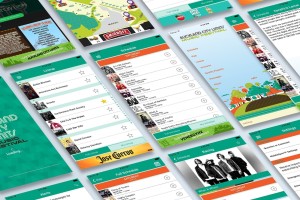
AVAI Mobile Solutions, based in Austin, announced it has been selected as the primary mobile technology partners for Austin-based C3 Presents, which produces Austin City Limits Music Festival and Lollapalooza.

AVAI, which Silicon Hills News wrote about in 2013, did not disclose the terms of the deal.

AVAI Mobile will be working with C3 to produce native apps for all the C3 music festivals, including Austin City Limits Music Festival and Lollapalooza. The app rollout began earlier this month, with new apps and features releasing as the festival calendar is announced.

“We’re excited to provide C3 with a higher-level mobile strategy and a new technology for their multi-app requirements,” Rand Arnold, CEO and Founder of AVAI Mobile, said in a news release. “C3 needed a single, integrated solution to streamline custom app development, make production simple, and centralize management across their entire portfolio of mobile apps. That’s exactly what the AVAI Mobile Platform was built to do.”

AVAI created a mobile platform that lets companies build and manage their mobile apps without developers. But AVAI also offers customization services to its customers.

C3 Presents other events include the Austin FOOD & WINE Festival, LouFest Music Festival, Music City Food & Wine Festival, Wanderlust Yoga & Music Festival and more. C3 books and promotes more than 1,000 concerts in arenas, theaters, casinos, and clubs across the US.

AVAI, a privately-held company, has created a platform that has been used to create more than 750 mobile applications.

UberEats Launches in Austin

Photo courtesy of UberEats

Photo courtesy of UberEats

Uber, the San Francisco-based ride sharing company, just launched UberEats in Austin.

UberEats, a smartphone app available on iOS and Android, lets people order food from local restaurants. It just launched in Austin. It launched March 15th in Chicago, Houston, Los Angeles, San Francisco and Toronto.

“For the past year and a half we’ve been delivering the best food cities have to offer in minutes,” according to a blog post on Uber. “The restaurants behind these favorites are putting the Uber network to work. They’re expanding delivery distances and reaching new customers–pairing great food with the reliable service that people know and expect from Uber.”

Uber created the UberEats app to be completed tailored to restaurant delivery. It offers delivery seven days a week from the menus of hundreds of restaurants.

Through the UberEats Instant Delivery menu, the service promises “great food in as little as 10 minutes.”

In Austin, UberEats competes with a variety of apps already on the market including Austin-based Favor, GrubHub, Postmates and Instacart.

ICYMI: Google’s Self-Driving Car Project at SXSW

Google Prototype car in Austin, photo courtesy of Google.

Google Prototype car in Austin, photo courtesy of Google.

In 2003, the U.S. Defense Department launched the DARPA Grand Challenge to have a car drive 150 miles by itself across the Mojave desert from Los Angeles to Las Vegas.

That’s when Google’s Chris Ursom, director of its self-driving car project, first got involved with autonomous cars. More than 100 teams registered the first year for the 2004 Challenge and none succeeded. In 2005, a team from Stanford University won the Grand Challenge. That car is now in the Smithsonian Museum in Washington, D.C. That year, five teams had cars that completed the task.

Today, Google’s self driving cars are being tested in Mountain View, California, Kirkland, Washington and Austin. Google’s self driving cars have driven 1.4 million miles and have witnessed all kinds of horrendous traffic infractions. And Urmson said from what they’ve seen during these drives this technology cannot get out into the world fast enough. Google says the technology will save lives. It will also save people time and reduce traffic and time spent in gridlock. And in the 1.4 million miles the cars have driven, only one time did a car get into an accident that was its fault, Urmson said. The car accidentally side swiped a bus. No injuries were reported. The car sustained damage to its body and to one sensor.

In Austin, the driverless cars have encountered cars doing down the wrong side of the road. And a guy rolling over the hood of one of the cars. And a naked man running out of his house and running up to the car. Urmson said “Thank you Austin for keeping it weird.”

Urmson gave a similar talk last summer in Austin when Google launched its Google prototype cars in the local market.

Thinking up World Changing Ideas with Max Levchin at SXSW

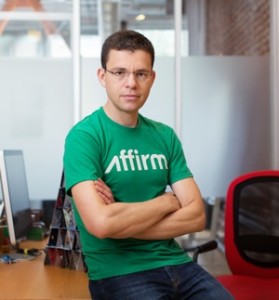
Max Levchin, cofounder of Affirm, courtesy photo from SXSW.

Max Levchin, cofounder of Affirm, courtesy photo from SXSW.

Max Levchin, one of the co-founders of PayPal, stayed up all night at South by Southwest Interactive, to come up with his list of five unstoppable trends that are going to change the world.

During his keynote address, Levchin said too many entrepreneurs focus on small ideas. He’s looking for transformative ideas that will have a massive impact through his firm, HVF. He is also the co-founder and CEO of Affirm, a financial technology startup and is an active investor in Uber and other startups. He also founded Slide and helped start Yelp. So he knows a thing or two about game-changing technology startups.

“Riding the big wave is the dream of every entrepreneur,” Levchin said.

During his talk, he outlined four major trends and a fifth bonus trend for entrepreneurs to focus on and to create startups around.

1. Beneficence – the act of doing good, active kindness. A company that does well by doing good for its customers.

2. Human-assisted AI – the robots will get smarter but they will still need humans to provide insight and knowledge.

3. Software eating older software – Building on Marc Andreessen’s famous essay on Software Eating the World, Levchin sees the second wave of software replacing older software creating tremendous innovation in old industries.

4. Regulatory Arbitrage – Opportunities created and money available from the government around data.

5. Fractal Knowledge – Specializing in niche markets and becoming an expert and forming a new model of how the world works and seeing opportunities that others might not.

Julie Huls to Join San Antonio-based DoSeum

JulieFor the past six years, Julie Huls has served as president of the Austin Technology Council during one of the biggest boom times for the city’s technology industry.

During her time there, she helped grow the organization’s membership and raise funds for the organization. The ATC has 280 companies as members representing 1,600 executives and more than 60,000 employees in the Austin area. Huls recently left the organization and the ATC named Barbary Brunner as its new CEO.

Now Huls plans to apply her talents in a new city, San Antonio as senior vice president of strategy for the DoSeum, the city’s children museum which just opened last June. She will join the museum in April. Huls made the announcement on her Facebook page.

The DoSeum, located near downtown at 2800 Broadway, is focused on science, technology, education and mathematics. The 29,000 square foot building features as variety of indoor exhibits but it also has plenty of outdoor space for kids.

Peeple and Kasita Win SXSW Innovation Awards

Kasita, courtesy photo

Kasita, courtesy photo

The word innovate has become such a buzzword at South by Southwest Interactive that Onion did a parody on it.

“Word “Innovate” Said 650,000 Times at SXSW So Far,” by the Onion is worth checking out.

But all joking aside, Innovation is serious business. And SXSW every year gives out Innovation Awards to the startups that stand out from the crowd and two Austin-based companies landed those coveted awards.

In the “Smart Cities” category, Kasita won. Jeff Wilson, also known as Professor Dumpster for having lived in a 33 square foot Dumpster for year, is a professor and dean at Huston Tillotson University and the founder of Kasita. Wilson’s startup takes minimalist living and makes it affordable and realistic in an urban setting. He has created 270 square foot container-sized homes that can be moved from city to city easily and installed in a pre-existing framework like plugging in a lamp.

And in the “Privacy & Security” category, Peeple By Building 10 Technology won. The Austin-based startup, founded in November of 2013, makes a smart peep-hole camera for a front door that notifies the homeowner when someone is there through an app on a smart phone. The company successfully launched a Kickstarter campaign last summer. The company founders originally came up with the idea for the Peeple during a hackathon in Austin.

A full list of all the winners can be found on the SXSW Interactive website.

Q&A with Austin-based BNB Shield

BNB shield logoQ. What is BNB Shield LLC?

A: BNB Shield LLC finds, reports on and challenges illegal, contract-breaking and unlicensed short-term rentals. We report these to the proper channels to ensure they are promptly removed from third-party rental platforms that include AirBnB, Craigslist, Home Away, Overnight, FlipKey, VRBO, VacationRentals.com, among others. A proliferation of short-term rental websites has appeared on the scene to meet both demand and supply dynamics for short-term rentals. In the last decade we’ve seen the concept of staying at a “stranger’s house” move from relative obscurity and uncertainty into a mainstream choice for any traveler.

The short-term rental market is increasingly disruptive to the hotel industry, with short-term rentals representing an increasingly competitive alternative to hotel stays– even at the upper end of the price range. BNB Shield represents a market response to the impact of the sharing economy. Many regulations are now on the books at many cities, including Austin, and there is simply no way to enforce them. While the city of Austin in particular has made great strides in enforcement there is more work to do. And we’re happy to contribute to that.

Q. Who are your customers?

A: Our customer base is hotels and hotel chains, apartment and condominium associations and municipalities. Our processes and reporting are tailored to each type of customer to better serve their distinct needs.

Q. Who is on your team?
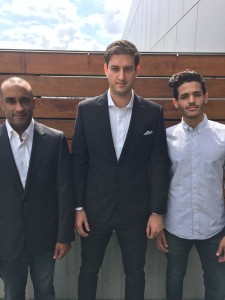
IMG_1913 (1)A: Our team consists of Isaiah Tornero, software guru and programmer who leads a small operations team as COO. Jacques Casimir is CEO and conceived of the idea behind BNB Shield, and Jordan French, engineer and former Federal enforcement attorney, who serves as President of the company.

Q. Why are you guys the ones to do this startup?

A: Our experience in the short-term rental market, real estate and technology led us to identify the problem and create a useful system to properly enforce existing regulations that apply to short-term rental markets.

Q. What challenges do you face bringing your startup into the marketplace?

A. Each city acts as its own market for short-term rentals and, along with that comes a variety of enforcement regimes. In all instances whether regulation of short-term rentals in a given market are tight or lax or enforcement is strict or light the goal among tax authorities, hotel industry executives and condominium management firms is the same. They all need our services.

Bad actors will become more creative in how they hide, including manipulating photos and migrating onto lesser known rental platforms to evade enforcement authorities. We’ve developed tools that swiftly follow existing bad actors and also uncover new ones.

Q. How do you acquire customers?

A: We do receive inbound leads from apartment-complex management companies and from hotel managers. Most are frustrated with the very real impact of short-term rentals on their bottom line. We also get referrals from people we know or meet in the hotel and lodging industry. Practically everyone articulates that short-term rentals are a problem that needs to be addressed.

Q. What is the business model?

A: BNB Shield has custom software and algorithms that find detailed information on all the third-party short-term rental platforms. Our system reports regularly to our clients so that they know which rentals–and how many–are inside and in close proximity to their buildings. We also provide reporting on our success rate with challenging short-term rentals and show the very real impact on revenues.

Q. Are you bootstrapped or do you have angel or VC financing?

A: Bootstrapped. We all come from business-to-business service backgrounds where you “raise money” by selling something people voluntarily pay for because they have a need. But we’re open to bringing on strategic partners and building a strategic board of advisers.

Q. What Austin resources have you found most helpful?

A: Economist Thomas Young, Ph.D. is crafting a very visual, instructive white paper for us on the Austin rental market that shows the relationship between short-term rentals and their proximity to hotels and the resulting impact on room receipts. His knowledge of Austin and hotel markets in general has been invaluable.

Q. What has been your biggest win so far?

A: We landed one large paying client that is a condominium association with several dozen other contracts in the works. We just began selling and we’re building a sales team. We have a significant deal in front of a major hotel association that will really showcase our tech and impact on enforcement.

Q. What is your long-term vision?

A: BNB Shield will be nationwide and then international. Illegal or unlicensed short-term rentals aren’t just a problem in Austin. They are an international phenomenon. We’ve upgraded our technology and processes twice and we’ll continue to reinvest to make sure we’re well ahead of the demands on our systems as we scale. We will also get increasingly surgical about catching and reporting unlicensed short-term rentals. In total, our services benefit all parties involved, including AirBNB and other short-term rental platforms. They provide a great service but it’s important that everyone using them plays by the rules.


« Older posts Newer posts »

© 2026 SiliconHills

Theme by Anders NorenUp ↑