
Page 148 of 352

Innovation Policy Day at SXSW Highlights the Need for Cooperation and Collaboration

By HOJUN CHOI
Reporter with Silicon Hills News

SXSW goers listened to experts and leaders from the tech industry discuss the intersections between new innovations and government policy during Innovation Policy Day on Tuesday.

The event, which featured four different panels, was organized by the Consumer Technology Association, which provides its members market research, education and networking opportunities within the consumer technology industry. This was the third year that the trade association held the event during SXSW Interactive.

“We’re starting to see that more people are starting to understand what types of roadblocks and challenges in the policy front might impact the products and services that they may use,” said Laura Hubbard, who serves as the association’s senior manager.

Most of the guest speaker panels focused on issues surrounding specific industries such as the sharing economy, Internet of Things and drone technology.

Nick Grossman from venture capital firm Union Square Ventures, who moderated the sharing economy panel, said consumers, entrepreneurs and regulators are at an important intersection that requires cooperation as well as understanding.

“We’re at this moment where we can look back several years worth of conflict and events, so we can look forward and think about how we want to progress from here,” Grossman said.

New York University business professor Arun Sundararajan, one of the panel’s guest speakers, said discussion around the sharing economy should be careful to consider not only the consumers who are enjoying new services, but also the laborers who are affected by new innovations.

“We have these new innovations, but we have to think about how much of the spoils of innovation the workers who are providing that innovation are going to see,” Sundararajan said.

Michael Hayes, who manages government affairs for the Consumer Technology Association, told Silicon Hills News that federal, state and local government should not “jump the gun” on putting regulations on services such as AirBnB, Lyft and Uber.

“If governments jump the gun with regulations in the beginning, they cut off the ability of people being able find out how these sharing platforms interact with their community,” Hayes said.

Hayes said that Austin -like many other cities around the world, is still coping with the challenges of new innovations disrupting the way certain industries have been operating for decades. The “wild and creative” culture of the local community, he said, could bring the different stakeholders together to make the city a space in which the new sharing economy can continue to grow.

“Ultimately, I think people in Austin are going to see that the sharing economy offers them all sorts of new opportunities to be participants in a new platform,” Hayes said. “I think the consumers, entrepreneurs and the local government will find a way to work together.”

In addition to panels that looked at the privacy and security issues behind the Internet of Things industry and drone technology, the all-day event also featured a panel titled, “Making Our Tech Look More Like Our Country”, which explored the lack of diversity in the tech industry.

Adrissha Wimberly, a senior advisor at the Mayor’s Office of Tech and Innovation in New York, said participating and organizing inclusive discussions around the subject of diversity is a critical part of changing the economic ecosystem.

“We have to make sure that we’re inviting an open dialogue that is not limited to just a small segmented group of leaders,” Wimberly told Silicon Hills News. “We have to bring in the community to voice what needs to change at the street-level.”

Wimberly, one of the three women who spoke at the diversity panel, said local governments can also influence change through making sure that companies that are winning bids for government projects are those that are mindful of how inclusive their organizations are.

Lisa Lee, diversity program manager at Pandora, also spoke on the diversity panel, and said that rather than “simply pouring” money into recruiting efforts, companies should “take a step back” and explore the factors that have led to a lack of diversity at the workplace.

“When people don’t have a willingness to first and foremost listen and understand the experience of being a persons of color or a woman in the tech industry, their solutions are not as comprehensive and not as holistic,” Lee said.

Journey to Mars Gets Standing Ovation at SXSW

By SUSAN LAHEY
Reporter with Silicon Hills News

It’s rare that a SXSW session gets a standing ovation but NASA’s Journey to Mars presentation Tuesday left a packed audience inspired and on their feet.

NASA panelists made it clear that there is not, currently, a mission planned to Mars. Instead, preparations are being made on numerous levels. Experiments are being done to study the effects of space habitation on behavioral and physical health—such as bone loss and disruption of the astronauts’ circadian rhythms. Gardening is being tested on the International Space Station. Research is being done to determine how they can employ reduce, reuse and recycle efforts on Mars and also maximize the benefits of 3D printing. They’re also working on space suits that function in low gravity and various equipment to land on and operate on Mars as well as a system to send a robot harvest asteroids to study.

Chris Crumbly, spacecraft/payload integration and evolution manager said that right now they’re building the ground systems, the Orion lunar orbit and lunar spaceship so they do tests in an initial deep-space habitation facility where they can get people home quickly if something goes wrong. They’ll be practicing by traveling to the dark side of the moon and increasing altitude away from Earth. “It will be the farthest and fastest we’ve ever gone,” he said.

Before going to Mars, said astronaut Victor Glover: “You have to know how to spacewalk, you have to know how to speak Russian at a high level. And you have to know how to fix the toilet because the toilet breaks a lot and there are only two.”

Astronaut Jessica U. Meir who finished her basic training a year ago said what she looks forward to from her first space flight is “Seeing that ball below you and everyone you’ve ever known, every place you’ve ever been, every experience you’ve ever had down there in its entirety…no borders…and the perspective that would give you.”

NASA has multiple international partnerships both with other government space programs and with commercial companies to bring an ultimate Mars mission to fruition. “No country can do this alone,” Crumbly said.

Yves Lamothe, lead systems engineer said that NASA’s Houston office that deals with commercial entities would be a first stop for tech companies interested in participating in preparations for the Journey to Mars. Companies can also look on the NASA website for the word “procurement” under broad area announcements and national research announcements, Crumbly said.

People Just Want to be Happy at SXSW

20160312-SXSW_DesigningHappiness-584What’s the secret to a successful panel discussion at South by Southwest Interactive? Puppies and cookies and a talk about happiness.
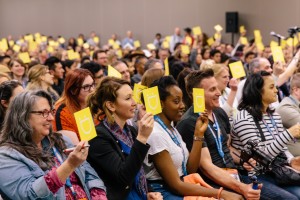
At the panel Designing Happiness on Saturday, Lippencott, Disney and SoulCycle had huge lines waiting to fill their 500 seat room. It was one of the highest attended panel’s of the day not including the keynote speaker.

“If you want to know the trick to designing happiness,” Bruce Vaughn, former Chief Creative Executive of Walt Disney Imagineering said. “simply look to nature. It’s foolproof.”

That’s when Vaughn brought out eight Golden Retriever and Labrador puppies on the stage alongside the panelists.

20160312-SXSW_DesigningHappiness-242A key to happiness is to end strong, according to the panelists. The other panelists included Randall Stone, Director of Experience Innovation at Lippincott and Gabby Etrog Cohen, Senior Vice President, Brand Strategy at SoulCycle. The session, moderated by Mark Wilson, Senior Writer at Fast Company, was designed to embody Lippincott’s research that found happiness to be as much about how we look forward to and look back on an event as it is about the event itself.

Lippincott brought their “happiness halo” research to life throughout the panel, creating moments of anticipation, interaction and afterglow. And the panel did end on a high note. The attendees were all given freshly baked cookies from Naegelin’s Bakery, the oldest bakery in Texas as farewell treats.

Mayor, Tech Leaders Want to Tackle Challenges Together

By CHELSEA COLLIER
Special to Silicon Hills News

Chelsea Collier, courtesy photo.

Chelsea Collier, courtesy photo.

It used to be that the phrase “tech policy” would send people running for more interesting conversation. But today, public policy and regulations are the hot topic at every meet-up, coffee gathering and cocktail party at SXSW and beyond. In fact, the intersection of tech and policy has never been more visible and it’s encouraging to see Mayor Steve Adler and Austin’s tech leaders all leaning in to create innovative policy solutions.

This kind of collaborative momentum is exactly what we need and know is possible in a city like ours.

During SXSW Interactive, Mayor Adler shared his vision for how Austin can “bridge the gap” between regulations and tech-based consumer choices. In panel after panel, festival goers heard it loud and clear that everyone – government and tech sector companies – will need to work together to craft policies that are workable for today’s tech offerings and today’s tech consumer.

We are hopeful that the Mayor’s commitment to work with the tech community will resonate throughout Austin’s city government. There is no better place than Austin to see a successful partnership between tech and city leaders. We CAN do it differently here.

Embarking on “something different” to tackle our city’s challenges will take some creative thinking from all of us. As Statesman reporter Alberta Phillips observed, “Moving beyond that impasse requires both – government and private companies – to come up with a new set of regulatory measures that advances the goals of both.”

An entrepreneurial approach to civic engagement can further cement Austin’s “tech-friendly reputation” at a time when it seems everyone is paying attention. From President Obama to dozens of mayors looking to emulate our success, all eyes are on Austin and for good reason. This is our chance to show the nation what “doing something different” looks like and how we’ll all be better for the change.

Bio: As Principal of Intercambio, Chelsea guides the direction and intention of the company. Her primary focus is to bring the best people together to do good work. From 2012-2015, Chelsea was the Executive Director Texans for Economic Progress (TEP) and now engages as a Strategic Advisor where she continues to facilitate dialogue between the statewide technology community and elected officials, advocating for greater access to tech education, entrepreneurship and infrastructure. She is also Co-Founder of three startups: Wake Up, a professional and personal development workshop series, Impact Hub Austin, a local effort within a global network to provide co-working and incubation for social and civic enterprises, Mable, a social enterprise that produces modular furniture from sustainable materials manufactured in the USA.

Atlanta Showcases its Tech Community at SXSW

By HOJUN CHOI
Reporter with Silicon Hills News

Scott Henderson, CEO of Sandbox Communities. Photo by Hojun Choi

Scott Henderson, CEO of Sandbox Communities. Photo by Hojun Choi

Community leaders from the heart of Atlanta’s tech scene had a chance to strut their city’s entrepreneurial spirit at ChooseATL’s Tech Square Takeover event on Monday.

The free SXSW event was open to the public, and was one of many events hosted at the ChooseATL House at Speakeasy nightclub on 4th St. and Congress Ave., which hosted two days of events, including special speaker panels only open to SXSW badge holders.

Monday’s event was co-sponsored by the Scheller College of Business and the Advanced Technology Development Center at the Georgia Institute of Technology, and The University Financing Foundation.

“ChooseATL House is a collective effort of the entire city to say that Atlanta is a great place,” said Scott Henderson, CEO and co-founder of Sandbox Communities. “It’s where hustle meets hospitality.”

Sandbox Communities is a membership-based club that focuses on providing its members with networking, education and resources to help their entrepreneurial endeavors. Henderson said that Tech Square ATL, which is set to launch during SXSW 2016, is an online news platform for telling the story of “Technology Square,” a revitalized area of Midtown Atlanta that serves as a hotbed for entrepreneurs in the area.

Henderson, who also serves on the program committee for SXSW Interactive Festival, said the Atlantan startup community decided to put together a joint effort to show SXSW goers why Atlanta-like Austin, is a great place to bring your idea to market.

“We came to Austin because the SXSW festival represents a global convergence of people trying to think of what is next,” Henderson said.

In addition to live music and open bar accommodations, the event featured six companies from Technology Square to showcase talent from the area. Attendees also had a chance to take a virtual reality tour of Technology Square.
Cory Hewett’s company, Gimme Vending, was also one of the businesses that came to help represent the city’s entrepreneurial successes, said both Austin and Atlanta have communities that seem to embrace new ideas.

“I love seeing communities that are grasping onto this idea that if you are someone that has a good idea, you just need to go out there and make it,” Hewett said.

Technology Square stretches across 1.4 million square feet and was developed with the help of the Georgia Institute of Technology. According to the university’s website for real estate development, the project began in 2000, and was projected to cost $380 million.

Jennifer Bonnett, who serves as the general manager of Advanced Technology Development Center at the Georgia Institute of Technology, said that the university played a pivotal role in the development of the business district. The center serves as an incubator for startups in the area.

“Georgia Tech became kind of an anchor tenant to Technology Square by putting its business school there,” Bonnett said.

Todd Ervin, director of marketing and communications for the university’s Scheller College of Business, said one of the main goals of the events centered around the Choose ATL House was to attract new talent to Atlanta, as well as retaining the talent that is already there.

“If people want to work on the next big startup; if they want to be a part of the next big thing coming, they should come to Atlanta,” Ervin said.

ChooseATL, a campaign launched by the Metro Atlanta Chamber in 2015, seeks to strengthen the city’s reputation as a space for entrepreneurship and innovation through informing the public about the benefits of pursuing their ventures in Technology Square.

“Our strategy is to meet ‘millennials’ where they are at and evolve their perceptions to have them be more open to bringing their skills to Atlanta,” said Kate Atwood, vice president of ChooseATL.

Below is a full list of Atlanta startups featured at Monday’s event, along with a short description:

352 Inc. – A web development startup that helps its clients design and create digital products for their businesses.

Converge – A digital marketing analytics company that provides a platform that allows clients to make better sense of digital, social and offline media data for their businesses. ()

Foundry 45 – Company that creates virtual reality experiences for trade shows, marketing and recruitment.

Gimme Vending – Food supply chain startup that helps vending machine operators better manage the inventories of their machines.

Monsieur – Startup that provides intuitive cocktail machines to venues to help lower costs associated with maintaining a bar.

Partpic – Company that helps its clients find the replacement parts using visual recognition technology through their mobile device.

Hate Your Commute? Ride in a Speedy, Private, Storm Trooper Helmet

By SUSAN LAHEY
Reporter with Silicon Hills News

If Richard Garriott de Cayeux gets his way, Austin’s nightmare traffic will soon be mitigated by little electrically powered pods that resemble storm trooper helmets, drive on an elevated roadway, and can get you from St. Edwards to the University of Texas in about eight minutes. According to Google maps, that’s normally about a 20 minute trip, burning fossil fuels the whole way—or more than 30 minutes on the bus.

Garriott spoke Monday at SXSW about his plan to solve Austin’s traffic problems almost immediately by building a Personal Rapid Transit system like the one at Heathrow Airport in London. With a PRT, electronically powered pod cars carry parties of up to four people—as well as bicycles and wheelchairs–on lightweight, elevated roadways in a web all over the city. The pods are, essentially, electronic cars with their own, dedicated road or track where all the traffic flows one way in a loop, connecting with other loops to traverse the city from north to south and east to west. Instead of waiting for a bus or train, contending with the other issues of mass transit, like other people and their stops, you would order a car on demand at one of several stations, get in and zip along the track to your destination.

The venture would be privately funded rather than requiring tax dollars, cost less than a tenth what a light rail system costs–$100 million for seven miles versus $1.5 billion for 10–and would run along streets near to major corridors.
“All we need,” Garriott said, “is for people not to say ‘No.’”

Garriott initially conceived the idea after his trip to outer space with a Russian commercial space company awakened him to the issues of global pollution. Back on the ground, he realized that his commute from his house near the 360 bridge to his downtown office was contributing to the city’s environmental and traffic problems, but he was unwilling to adopt a new solution unless it met his criteria of being personal, on demand, full-speed point-to-point. In short, it had to be better than driving his own car. His first thought, he said, was gondolas, but he quickly dismissed that one because of the heavy infrastructure and the safety hazards gondolas pose.

The PRT, he said, would use private, electrically powered cars that charge up when not running and use supercapacity lead acid batteries. The system would require users to register—as they do with Car2Go—because, as the inventor of the mass multiplayer gaming system he knows that anonymity encourages bad behavior. For that reason there are also cameras on each car and a central station would be in charge of monitoring the system in case of issues like a tree falling across a track.

Each trip would cost about $1.25 a mile.

His initial plan was to build a system around the University of Texas which would be a good test, he said, because it involved getting cooperation from the city, the state and private land owners. He paid about $1 million of his own money for a study on the efficacy of the system which includes details like how to preserve old oak trees and camouflage the poles that support the elevated roadway with greenery. He also tested whether the system would be able to handle the expected capacity. He said the study showed it could. But while he envisioned a limited test, everyone he spoke to, from city officials to state officials and the Capital Metro organization, and potential investors, encouraged him to expand to cover more of the city, beginning with downtown and a line to the airport. Eventually, he said, the system could take kids to school, with their passes only allowing the cars to open at home and at school, or could be used to transport garbage to the city dump.

Garriott said he believed that the system was ideal for Austin, which is a city of early adopters. Though many audience members—most of whom where Austin residents–immediately shot questions like “I live in the suburbs. If I have to drive in to town to get on this system how is that better than driving in to get on the bus?” or “Isn’t it possible for someone to use this with a false identity?” Revealing that even at SXSW Interactive—the very heart of innovation—Austinites are skeptical of a mass transit system whether they have to pay for it or not.

As long as the project isn’t blocked, Garriott said, part of it could be built as early as this year.

Austin Startup one of SXSW Accelerator’s top winners

By SUSAN LAHEY
Reporter with Silicon Hills News

Austin’s Pop Up Play won first place in the Entertainment and Content category at the SXSW 2016 Accelerator Awards. The company creates cardboard play sets—castles, spaceships–that children can design and customize online then order. Winners in other categories were Enterprise and Smart Data: Parknav uses real time data to provide users with parking information. Accelerator event producer Chris Valentine said he saw some 50 parking apps in his search for Accelerator competitors but Parknav’s technology is truly “smart” and predicts parking spaces to within 80 percent accuracy, despite the fact that cars are always moving.

Health 
and Wearable: MUrgency. Ninety percent of the world does not have an emergency responder system like 911. MUrgency provides the software so that countries where mobile phone use is widespread, or where people have sensors or wearables can quickly access emergency responders such as ambulances or fire departments.

Innovative World: Rorus makes filter packs that carry and instantly purify drinking water, removing both biological and chemical contaminants. The system can provide water for a family of six for a year for a cost of only $40.

Payment and FinTech: 
Chroma is a block-chain based exchange that allow financial firms to build and trade stocks and bonds for software-defined early stage companies.

Virtual Reality: Splash is a social virtual reality app that allows users to capture a 360 degree video in seconds, share it to any social network and view it in VR.

Valentine, who scours the globe for the cream of the crop companies, said he believed Virtual Reality would define SXSW Interactive 2016. The VR session was the first Accelerator program of the day and the room was always completely packed.
“I’m not a gamer,” he said. “So I was always like ‘meh’ about VR.” But this year, he realized, while some companies are using VR for games and entertainment, VR is also being used to help people learn skills and enhance medical treatments. A mental health professional treating someone with a fear of heights, for example, could use VR to virtually help someone ascend a set of stairs. Athletes use virtual reality to practice skills they want to enhance. It can even be used to teach surgical procedures. The brain often can’t differentiate between the virtual reality and physical reality so that learning something in virtual reality can accelerate acquisition of a skill exponentially.

Accelerator generally takes up several days of the Interactive conference and this year there were 48 competitors in six categories with two rounds of competition. It makes for an exhausting period for both competitors and judges and even the audience. Next year, Valentine said, they will expand the categories to ten, the number of competitors in each category to five, and only have one round of pitches. He’ll begin getting ready for next year’s competition right after SXSW ends. He will visit several tech competitions all over the world. This year, 15 of the 48 competitors were from other countries including England, Ireland, France, Germany, Spain and Norway.

Accelerator also has three other competitive categories.

Best Bootstrap Company (the company who has done the most with least): Hearken

The winner of the Most Innovative Company: Vantage.tv

And the winner of the One-Minute Pitch among alternates: Knocki

Is SXSW Less of a Zoo This Year?

By SUSAN LAHEY
Reporter with Silicon Hills News

IMG_7535After years of complaints that SXSW was getting “too big” and “too crazy” and “too much of a zoo,” many people who have been at the Interactive conference over the years have commented that the conference seemed quieter this year…less crazy.
Even with the President of the United States in attendance. This should be a good thing, but it also seems a little eerie and begs the question: Are the numbers down?

According to Kelly Krause, in charge of press for Interactive, they don’t give out official numbers until the festival is over but they believe the number of badgeholders is about the same as last year—33,825.

“With new hotels downtown, we were able to spread out a bit more, plus the great weather makes a difference.” Events are being held not only at the Convention Center but also at the Hyatt, Hilton, Marriott, Westin, Four Seasons and several other venues.

So, just in case you were wondering.

From the Silicon Gulch to the Silicon Hills, Austin’s Tech Industry Continues to Thrive

By LAURA LOREK
Reporter with Silicon Hills News

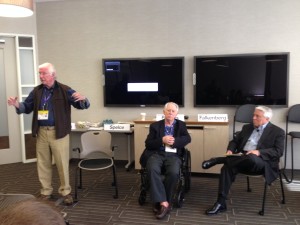
IMG_7483“When the three of us moved here you could fire a shotgun down Congress Avenue and not hit anyone,” said Neal Spelce, founder of AustinLetter.com. “It was a small town and everyone knew everyone.”
Today, Austin is the nation’s 12th largest city and the fastest growing in the nation. More than 100 people move to Austin every day. And it is expected to overtake, San Antonio, the nation’s seventh largest city, 75 miles down the highway, some day, Spelce said.

So how does a small town known for its musicians, film making, university, technology industry and a cool factor that most people used to call “weird” maintain its character amidst such tremendous growth? Those are issues the city must grapple with to maintain its status quo as one of the most innovative places in the country, according to three panelists at South by Southwest Interactive. They participated in a panel discussion on “Reflections on Austin’s Tech Scene: Then and Now” on Saturday morning at the Austin Chamber of Commerce offices. They understand Austin now faces issues of affordability and traffic congestion.

The panel included Spelce, Pike Powers, CEO of the The Pike Powers Group and Howard Falkenberg, with Staats Falkenberg & Partners.

Powers recounted how the region worked collaboratively to bring the headquarters of Microelectronics and Computer Technology Corp., known as MCC to Austin in 1983, followed by SEMATECH in 1988. Powers got recruited in the effort by Henry Cisneros, Gen. Robert McDermott and a group in San Antonio. When San Antonio didn’t make MCC’s final list, San Antonio threw all of its efforts into helping Austin land MCC, Powers said. Admiral Bobby Inman, UT’s George Kozmetsky and a whole bunch of business, government and city and state leaders came together to head up Austin’s efforts to land MCC, Powers said.

At the time, Powers worked with Gov. Mark White and the governor put all of his efforts behind landing MCC also and that made a huge difference. At the time, Gov. White said he wanted to take bold steps for mankind and humanity and that he didn’t want to finish second or win by inch, Power said.

“We worked every day together for months,” Powers said.

At that time, in the 1980s the Japanese were whipping the U.S. in the semiconductor and chip making area, said Spelce. But when Austin won MCC people could see suddenly there was a future for developing technology and competing with the Japanese, he said.

The semiconductor technology industry sent their best minds to MCC and they worked collaboratively for the greater good of the industry, Spelce said.

Before MCC, Austin was not on anybody’s map. But afterward, the New York Times, the Boston Globe and all kinds of media outlets did stories on Austin and suddenly Austin was red hot. And a philanthropist donated 32 $1 million endowed professorships at the University of Texas at Austin, which further solidified the area’s engineering expertise. UT went from being 24th in engineering to being in the top 10 ovenight, Spelce said.

“MCC was a critical turning point,” Falkenberg said.

Austin did have a tech industry before MCC. It had a nice IBM plant that made typewriters. Texas Instruments made transistor radios and Motorola developed a plant here in 1973.

“MCC didn’t’ elevate Austin in the minds in the general public but it did in the minds of technology industry,” Falkenberg said.

Today, Falkenberg said Austin needs to continue its push as a technology powerhouse and not lay back and relax otherwise it might lose its momentum.

If Austin hadn’t gotten MCC, the city would never have gotten Sematech, we would never have gotten Applied Materials and later Samsung, Falkenberg said. Its investment was largest single investment by a foreign company in the U.S. Now Google, Apple and Facebook they all have big offices here.

When Austin landed MCC, the New York Times called Austin Silicon Gulch and Spelce knew that the New York Times was the Bible within the media industry so he came up with the phrase – Silicon Hills – as opposed to Silicon Valley.

“If we were still referred to as Silicon Gulch today we would have had a hard time getting anyone to refer to us favorably,” Spelce said.

The panelists agreed that Austin is undergoing another transformation with the Dell Medical School and it’s going to have a tremendous economic effect on the city.

They also pointed out the arrival of Conde Nast, a huge media company opening an Austin office with 50 people to drive their digital convergence as a huge win for the city.

Austin’s growth goes back to the ingredients listed in Richard Florida’s book, The Creative Class and the three things he describes as essential for growth: talent, technology and tolerance, according to Powers. Austin has that in spades, he said.

“We are a bit weird, we are a bit funky, we don’t care if you get angry about that. We like who we are,” Powers said.

In the Tech World, Inclusion is Everyone’s Job

By SUSAN LAHEY
Reporter with Silicon Hills News

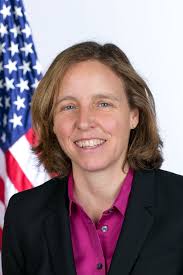
Megan Smith, U.S. Chief Technology Officer

Megan Smith, U.S. Chief Technology Officer

A woman headed up the team for the onboard flight software for the Apollo space mission. Cruise control was invented by a blind man. Most of the startups that succeed have founders who are over 40. These were some of the takeaways from Tech Inclusion, an all-day event hosted by Atlassian about the need to recognize the major contributions of women, minorities, older people, veterans, and the LGBTQIA community.

Keynote speaker Megan Smith, U.S. Chief Technology Officer talked about the lost history of women in technology—how few people know the integral role women have played in everything from inventing the dishwasher to cracking the Enigma code, to writing key software in the space program and working on the first team for Apple. But when they make movies about major technological breakthroughs, she pointed out, women are shadow figures representing love interests.

Smith echoed President Obama’s call to SXSW participants in his talk on Saturday that people in the tech community help push the nation forward in terms of its tech inclusion and for social programs. People in the tech community should get involved with educational programs, especially those that introduce technology to kids in underserved areas in hands-on programs. Many tech programs, she pointed out, make you read a lot of theory long before you get your hands on anything and understand what’s cool about tech.

Smith’s talk was part of a daylong panel designed to both highlight the fact that not all people who make major contributors to tech are Steve Jobs or Mark Zuckerberg—or, as one audience participant put it ‘Young, white, unwashed men who play video games.’ But the perception that they are intimidates others from entering the tech field. Rachel Williams, head of diversity for Yelp, said she was often approached by African Americans who ask her how to cope with “all these white people.” Her advice, was “Let’s say you’re going to foreign country. What do you do? You research the people. You learn about their language. You may have to eat a Kale salad.” At the same time, she said, people in the mainstream of tech need to become allies and advocates in the effort to include others and actually have the conversation about “What is this like for you?”

Organizational leaders have to make it a priority, but it can’t be left up to them.

The most common kind of discrimination case filed against tech companies, however, is age discrimination, according to Jeff Taylor, head of Targeted Sponsor Acquisition at Tech Crunch. While statistics from the Kauffman Foundation and Vivek Wadhwa of Singularity University showed that startups that succeed are most commonly started by those over 40. But many companies discriminate against older workers by including language in job descriptions like “looking for recent grad” or hinting about how the culture at the company involves “a bunch of college buddies” shooting each other with Nerf guns in the hallways.

This is not only illegal, Taylor pointed out, but unwise since the bulk of the population with money will soon be over 50 and having team members who understand the needs of the consumer population will be crucial to organizational success.

One of the biggest problems is that the language tech people use, and the way tech is introduced inherently scares off many people who could make huge contributions. Tracy Chou, software engineer for Pinterest and formerly with Quora, said she was raised in Silicon Valley by software engineer parents. But what she saw of them was two people sitting in front of computers in dingy cubicles and her two computer science courses left her less than enthusiastic. It wasn’t until she worked at Quora and realized that what they were doing was building something that hadn’t been there before that she decided to become a software engineer.

The program was hosted by Atlassian but also hosted by Galvanize, Tech Inclusion, and No Ceilings: The Full Participation Project.

« Older posts Newer posts »

© 2026 SiliconHills

Theme by Anders NorenUp ↑