Page 149 of 352

Goldman Sachs Buys Austin-based Honest Dollar

WhurleyIn huge news coming out of South by Southwest Interactive, the Investment Management Division of Goldman Sachs announced plans on Monday to buy Honest Dollar, a web and mobile-based retirement savings platform that launched at the show last year.

The terms of the deal were not disclosed.

William Hurley, known as Whurley, former founder of Chaotic Moon in Austin founded Honest Dollar with Henry Yoshida, who worked in corporate retirement and was a former Merrill Lynch financial advisor. Yoshida left the company last year.

Honest Dollar provides a way for small startups and medium sized businesses to provide retirement savings accounts for their employees. It also provides retirement accounts to individuals. Honest Dollar makes it easy for anyone to set up an IRA account and begin saving for retirement by putting away as little as $10 a week.

The market Honest Dollar is tackling is huge and largely ignored by the financial industry. It’s the market of the growing workforce of independent employees which number around 53 million today including contractors, part-timers, freelancers and solo business owners. That is a growing market which is expected to increase to 66 million just in the U.S. by 2020.

Last year, Honest Dollar partnered with Lyft to provide retirement savings accounts to its contractor workforce. The programs are designed to allow employees, known as 1099 contract workers, to save for retirement through Lyft, which has more than 100,000 drivers.

“Honest Dollar has created a simple solution to a complex retirement savings problem,” Timothy J. O’Neill and Eric S. Lane, co-heads of IMD at Goldman Sachs said in a news release. “Together, we have the potential to help millions of people achieve their investing goals.”

“We set out with a singular focus: to revolutionize the retirement industry and reach individuals who historically have been underserved,” Whurley, CEO of Honest Dollar, said in a news release.

Last year at SXSW, Honest Dollar won the Austin Technology Incubator’s Release It pitch competition.

Honest Dollar, which is based at WeWork on Congress, raised $3 million last March from Expansive Ventures, Formation 8 and Core Innovation Capital.

Honest Dollar plans to stay in Austin. The deal is supposed to close in the second quarter of 2016.

Inclusivity, Mentoring and Entrepreneurship Help to Create a More diverse Austin Startup Scene

By LAURA LOREK
Reporter with Silicon Hills News

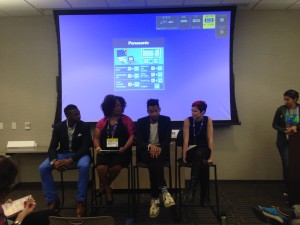
IMG_7471Austin has got a problem, said Michael Henderson, founder and CEO of Developers Doing Development.

The city’s black population is now around 8 percent, and city projections show it could fall to as low as 5 percent in coming decades, according to an article last summer in CNN.

Henderson spearheaded a panel at South by Southwest late Friday afternoon on Creating a More Diverse Austin Startup Scene. The event, held at Austin Chamber of Commerce, drew about 20 people.

The panelist included Viva Pinchas, growth marketer with Automattic, the parent company of WordPress, Charmane Sellers, advisory board member with Enterprising Women Foundation and Koy Mcdermott, chief strategy officer of Leaders Inspire Leaders.

Increasing diversity comes down to two things, said Pinchas, who grew up in Austin. First, it’s important to raise up under-represented voices, she said. And second is to decrease barriers and make technology more accessible to everyone, she said.

That’s where WordPress comes into play, Pinchas said. It “democratize publishing. One out of four websites is on WordPress,” she said. And Automattic also owns Woo Commerce, which is an open source e-commerce site that lets entrepreneurs easily open up a store.

“Both are entirely free,” Pinchas said. “You have to pay for hosting. For about $13 a month you can have your own business.”

Last year, communities hosted 89 WordCamps, community lead conferences capped at $20 a day and focused on teaching WordPress skills, all over the world and 21,000 people participated. WordPress also holds meetups once a month.

“With all of these different tools more people can start their businesses online,” she said.
Sellers with the Enterprising Women Foundation, focuses on teaching young girls Science Technology, Engineering and Math skills and mentoring them to success.

“We want to make sure that by 2020 we have close to 1 million girls in the STEM industries,” she said.

Last year, the organization hosted events in ten cities and more than 10,000 women attended the conferences and were matched with mentors, she said.

“There’s a lot of traction that is happening,” she said.

Acknowledging that a problem exists with diversity in Austin is the first step to addressing it, said Mcdermott.

“Diversity is a buzz word and it’s also a bit taboo,” Mcdermott said. “When it comes to diversity for me, it’s really understanding each and every individual has unique ideas, views and education.”

Leaders Inspire Leaders was founded in 2014 out of a personal need, Mcdermott said. He wanted to focus on teaching entrepreneurial skills to his generation: Millennials and to encourage diversity through entrepreneurship.

“The Millennial Dilemma is to get a good education, get a good job but individuals have not been exposed to entrepreneurship,” Mcdermott said.

“The things that we take for granted – it all was created in someone’s mind,” Mcdermott said.
He wants to focus on getting students as young as 12 interested in entrepreneurship. In May, he’s launching Level Up to take a cohort of six students – half women/half men – through a five-week program so at the end of the program they will have a micro-business. The goal is to create more diversity in startups.

Austin is a tale of two cities with the best of times and the worst of times, Henderson said. He also grew up here. For a long time, it was east Austin, which was predominantly black and west Austin, which was largely white, he said.

But East Austin has become gentrified and a number of black families have been pushed out their neighborhoods because of affordability issues.

And to create a more diverse Austin it’s important to be inclusive, Henderson said.

Mcdermott encouraged everyone to advocate on behalf of a person who comes from a diverse background. It’s free and it’s essentially mentoring on steroids, he said.

“That’s one way we can expose individuals to opportunities,” he said. “That’s something that will cost you nothing but your time.”

Sellers pointed out the importance of organizations like Black Girls Code and Girl Start to encourage girls to pursue STEM careers while their still young and their get their mind is fresh and they still have the passion to dream and not be pigeon holed or typecast, she said.

President Obama Wants the Tech Industry and Government to Collaborate Even More

By LAURA LOREK
Reporter with Silicon Hills News
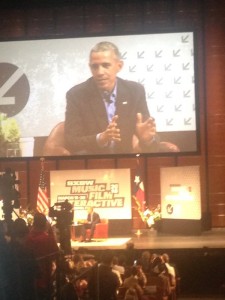
PresidentObamaIn the 30-year history of South by Southwest, one of the most special events to take place is President Barack Obama’s talk at the conference, said Hugh Forrest, director of SXSW Interactive.

On Friday, Texas Tribune Editor in Chief Evan Smith interviewed President Obama at the Long Center before a crowd of more than 2,000 people. SXSW Badgeholders entered a special lottery to win tickets. The crowd also included invited guests, media, technology industry leaders and politicians.

During an hour long talk, Smith and Obama discussed civic engagement and ways to improve the government through collaboration with the technology industry.

“Part of my challenge since I’ve been President is trying to find ways in which our government can be a part of the positive change that is taking place and can help convene and catalyze folks in the private sector and nonprofit sector to be part of the broader civic community in tackling some of our biggest challenges,” Obama said.

President Obama said his administration is “spending a lot of time trying to figure out how to make government work better in digital platforms.”

“The reason I’m here really is to recruit all of you,” Obama said. “It’s to say to you as I’m about to leave office how can we start coming up with new platforms, new ideas, new approaches across disciplines and across skill sets to solve some of the big problems we’re facing today.”

Smith pointed out that the culture of tech and government are totally different.

“Government is big and bloated and slow and risk averse.” Smith said. “It’s run on outmoded systems and outmoded equipment. Tech is sleek and streamlined and fail fast and enamored of the new and the shiny. How do you take these two things that seem culturally unlike and put them together in a way that they can and want to work together.”

Obama talked about enlisting the best and the brightest technology experts in the private sector to fix the website for enrollment in the Affordable Care Act. As a result, his administration built a world class technology office inside the government called U.S. Digital Services. It now has top talent from Google, Facebook and all the top tech companies working for the government. In some cases, they work six months and in others two years, he said.

They are working to update “agencies like the Small Business Administration that has been a bit clunky is redesigning itself so if an entrepreneur wants to startup a business in Texas they can go to one spot and within a day they can handle all the regulatory red tape that used to take months to navigate,” Obama said.

In Austin, Obama also met with entrepreneurs, movie makers, organizers, tech leaders to figure out ways to make a real difference in countering violent extremism. He wants government to work with the private sector and nonprofits to solve big problems.

Obama also wants to make it easier for people to vote.

“We’re the only advanced Democracy in the world that makes it harder for people to vote,” Obama said. “You are laughing but it is sad. We take enormous pride in that we’re the world’s oldest continuous Democracy and yet we systematically put up barriers and make it as hard as possible for our citizens to vote.”

It’s easier to order a pizza online or book a trip than to vote, he said.

Smith pointed out that Texas has one of the worst records for voter turnout in the country and Texas doesn’t even let its residents register to vote online.

“The folks who are currently governing the good state of Texas aren’t interested in having more people participate,” Obama said. Citizens need to make a political argument about why it is important, he said.

Obama also said that people like to complain about the government but the government does great things. It creates satellites that provide information to weather apps, it builds roads and highways and tackles some of society’s toughest problems like educating poor kids, providing shelter to homeless people and providing care to aging veterans.

“Part of our task is to tell a better story about what government does,” Obama said.

President Obama Urges Tech Industry to Comprise on Unlocking Smartphones

By LAURA LOREK
Reporter Silicon Hills News

ObamaSXSWAt South by Southwest on Friday, President Barack Obama discussed the importance of balancing civil liberties with the need for law enforcement to protect the public and cautioned the tech industry against taking an absolutist view about encrypting smartphones and never allowing government to unlock them.

Texas Tribune Editor in Chief Evan Smith asked President Obama during a SXSW keynote talk at the Long Center for the Performing Arts about how the Federal government protects citizen’s privacy versus the need for security. He mentioned the case in which a federal court last month ordered Apple to unlock an iPhone for the FBI investigating suspected terrorists who killed 14 people during an attack in San Bernardino, California last December.

President Obama said he could not comment about the specific case but he did talk about the importance of allowing access to an iPhone or smartphone, in general, in cases where public safety is at risk. Obama spoke to about 2,000 people including technology industry executives, entrepreneurs and SXSW badgeholders who won tickets in a special lottery.

“All of us value our privacy,” Obama said. “This is a society that is built on a constitution and a bill of rights and a skepticism of government overreaching its power.”

But that privacy can be breached. If law enforcement has probable cause, they can get a court warrant and search your home, Obama said.

“They can go into your bedroom and riffle through your underwear to see if there’s any evidence of wrong doing,” Obama said. “And we agree on it just like we recognize with all of our other rights like freedom of speech and freedom of religion that some constraints we impose in order to make sure we are safe, secure and living in a civilized society.”

Edward Snowden’s disclosing classified U.S. documents has elevated people’s suspicions of the government and privacy. But Obama assured the audience he wasn’t sitting in the situation room tracking people on a giant screen like it’s depicted in popular culture.

“Sometimes I’m just trying to get a connection,” Obama said, generating a lot of laughter from the audience.

“The Snowden issue vastly overstated the dangers to U.S. citizens in terms of spying,” Obama said.

In 2013, Snowden, a former CIA employee and federal contractor, released classified documents revealing numerous global surveillance operations by the National Security Agency. The Snowden case showed some excesses that were taking place overseas regarding U.S. intelligence agencies and reforms have since been set up, Obama said.

“We’re concerned about privacy,” Obama said. “We don’t want government to be looking through everyone’s phones willy-nilly without any kind of oversight or probable cause or a clear sense that it’s targeted at somebody who might be a wrong doer.”

What makes the situation even more complicated is that the U.S. wants really strong encryption to prevent people from disrupting the financial system, air traffic control system and a whole lot of other systems that are increasingly digitized, Obama said.

“And the question we now have to ask is if technologically it is possible to make an impenetrable device or system where the encryption is so strong that there is no key, there’s no door at all then how do we apprehend the child pornographer, how do we solve or disrupt a terrorist plot?” Obama said. “What mechanisms do we have available to even do simple things like tax enforcement. Because, if in fact, you can’t crack that at all government can’t get in then everybody’s walking around with a Swiss bank account in their pocket.”

There has to be some concession to be able to get into that information somehow, Obama said.
But some people on the encryption side fear that a key to unlock an iPhone or smartphone could then be used to on every device. That might be technically true, Obama said. But he thinks it can be overstated.

That means society needs to decide how to balance these respective risks, Obama said. He already has a task force of smart people tackling the problem. They have also engaged the tech community aggressively.

“My conclusion so far is you cannot take an absolutist view on this,” Obama said. “So if your argument is strong encryption no matter what and we can and should in fact create black boxes that I think does not strike the kind of balance we have lived with for 200 or 300 years and it’s fetishizing our phones above every other value and that can’t be the right answer.”

The answer is going to come down to creating a system where “the encryption is as strong as possible, the key is as secure as possible and it is accessible by the smallest number of people possible for a subset of issues that we agree are important,” Obama said.

Obama emphasized he’s on “the civil liberties side of this thing.”

“But the dangers are real. Maintaining law and order in a civilized society is important, protecting our kids is important,” Obama said. “So I would just caution against taking an absolutist perspective on this.”

U.S. citizens make concessions all the time for safety. Travelers agree to searches at the airport. Communities have stops to check for drunk drivers.

“It’s an intrusion but we think it’s the right thing to do,” Obama said. “And this notion that somehow our data is different and can be walled off from those other tradeoffs we make I believe is incorrect.”

The U.S. government needs the help of the tech community to solve this problem, Obama said. He encouraged the audience to get involved in finding a solution.

Because if nothing is done now, when something really bad happens “the politics of this thing will swing and it will become sloppy and rushed and it will go through Congress in ways that have not been thought through,” Obama said.

And then the civil liberties of U.S. citizens really will be affected, he said.

Kahoot! Wins “Best Global Austin Startup” Hands Down

By SUSAN LAHEY
Reporter with Silicon Hills News

In the packed Hilton ballroom, with a large percentage of international attendees (there was a show of hands) Kahoot! was the undisputed favorite among sever Capital Factory companies presenting at a panel of “Austin Goes Global: Best International Startup” companies.

It could have something to do with the fact that voting for the best company was done through a Kahoot! Game where audience members voted one of several responses:

• Interesting, but not my cup of tea
• Intriguing I’ll check out their website
• Fascinating let’s have a meeting
• Love this company and product. I’m in!

Not only did the audience give Kahoot! An overwhelmingly favorable rating as compared to the other companies, but panelists Dawn Winchester, chief digital officer for Publicis, Joel Eriksson Enqvist, investment manager for Nordic venture capital firm Creandum, and John Erskine, vice president of publishing for Cloud Imperium Games also voted that Kahoot! Was the most likely to put Austin on the global map over the next five years.

Other companies that presented included OwnLocal, WPEngine, Re:3D and YouRoam. The criteria for entrants—who were chosen by Capital Factory partners—was a significant global presence. All of the companies have customers in several countries.

Each of the companies said it was important, when expanding into different countries, to build and sustain relationships with their new customers especially—as Kahoot! Founder Johan Brand said—the “heroes” who are responsible for the product getting a lot of traction. In Kahoot!’s case, they carefully watched where their customer base was expanding and swooped in to offer support in those regions.

Lloyd Armbrust, founder of OwnLocal, said maintaining those personal relationships could be a challenge. OwnLocal, which extracts information from print advertisements and converts it into digital marketing campaigns, said it realized it was time to go international in 2015 when it went to a conference in Helsinki, Finland, and people said to him “We want this. We want it now. How can we buy it now?”

The travel is difficult, Armbrust said. Dealing with time zones and exchange rates is more difficult that he would have expected.

Fred Schmidt, Capital Factory’s director of international programs, emceed the event, explaining that Austin is becoming increasingly involved in sister city programs, Creative City and Science City alliances, and what he calls “Global Cool City” alliances.

Military Veterans Bringing a Presence to SXSW Interactive

By SABRINA MARSHALL-WOJTEWICZ
Special to Silicon Hills News

BunkerThere’s not yet an official outreach effort targeting military veterans to SXSW, but as trained leaders will do, there are some military veterans taking on the opportunity to rally the veteran community at the SXSW Interactive festival this year- and in the future.

Johnathan and Sabrina Wojtewicz, the husband and wife team leading Bunker Labs Austin, have partnered up with Dell’s Government Affairs team to put on a series of panels at the #DellLounge. They are conveniently enough being hosted at The Brass House, which is owned locally by a Marine veteran. The partnered events are promoting military veteran entrepreneurship (including tech, women and diversity crowds), and building conversations with elected officials about the roles of policy in bridging gaps to take down barriers that can create challenges for these groups as entrepreneurs.

Johnathan, a Marine Corps veteran and native Austinite, launched Bunker Labs Austin in December 2014 while anticipating his departure from a Fortune 200 company after two acquisitions from him and his business partner. The Wojtewicz’s, Blake Hogan and RideScout Co-founder and CEO Joseph Kopser wanted to make the transition from military leader to business leader smoother and allow for more military veterans to earn the success they are equipped to create as entrepreneurs.

Bunker Labs is the nation’s first innovation laboratory and community catalyzing the entrepreneurial potential of military experience to lead the American economy. After launching in Chicago with 19 companies in December 2014 and in Austin with 12 companies, Bunker Labs has continued to spread across the nation with 6 active locations and another half-dozen in various stages of launch. The Kauffman Foundation cites 25% of veterans as wanting to start businesses but the largest barriers to success have been a lack of business mentors, lack of connections in professional networks and translating military experience to business success. Bunker Labs aims to solve these issues with their focus areas to Inspire, Educate and Connect.

After jumping into unofficial SXSWi 2015 events with some BIG successes, Bunker Labs Austin targeted those that stepped up to help veterans as partners leading into 2016. “Dell was very gracious about inviting our members to events to interact with elected officials in 2015, so we partnered with them to immerse our members and more military veterans into the event lineup for 2016,” Wojtewicz says.

Another corporate partner, Silicon Valley Bank (SVB), stepped up to invite veteran entrepreneurs to their office hours lounge at Parkside on 6th, and even went on to sponsor Bunker Labs Austin’s demo-day pitch event last July. This year they have branded Parkside again as the Next Stop Lounge by SVB and have invited military veterans to mingle and network on Monday, March 14 from 11:00am-1:00pm. As a managing partner at Silicon Valley Bank and former Navy SEAL, Beau Laskey has been active in seeking out and supporting veteran ventures.

Joseph Kopser, who acts as Chairman and Champion of Bunker Labs Austin, is well-known for his veteran entrepreneurship advocacy. Prior to RideScout, Joseph served in the Army for 20 years earning the Combat Action Badge, Army Ranger Tab and Bronze Star. Following the successful acquisition of RideScout by subsidiary Daimler AG (the maker of Mercedes-Benz), Kopser has promoted and supported Bunker Labs at every opportunity, going so far as to lend RideScout offices as workspace for Bunker Labs and member companies and hosting Bunker meetings and events. He also connects Bunker Labs to the wide networks of West Point, Harvard, UT and Austin’s Startup community collected in his successful career and time building RideScout.

Kopser’s RideScout Co-founder and COO, Craig Cummings, has come to love Austin so much he recently relocated his family here. As his succinct LinkedIn profile says, he is a “Former Army Intelligence Officer turned entrepreneur. Specializes in founding, accelerating, and investing in start-ups with high impact potential. Enjoys working with and inspiring veteran entrepreneurs.” In addition to joining SXSW as part of RideScout’s presence, Cummings is a General Partner at Moonshots Capital, which invests in exceptional entrepreneurs with world-changing ideas and was founded by two West Point graduates—Kelly Perdew and Craig Cummings. Kelly and Craig form close working relationships with the companies they back to help them achieve their critical milestones and frequently take on Board seats or formal advisory roles. Kelly and Craig, both successful serial entrepreneurs, have worked and invested together for over ten years. They invest a minimum of $25K into the first round of every deal they syndicate and look to back 8-12 companies a year. They often back companies led by military veteran entrepreneurs. Both Kelly and Craig have operated start-up companies as founders and members of the senior management team. They’ve raised in excess of $100M in angel capital, ventured capital, and debt and participated in eight exits between them. Both Cummings and Perdew can be found bouncing around various SXSWi events, possibly scouting out their next venture investments.

Connections are key and the military/veteran entrepreneur community is coming together to bring a presence at SXSWi to help build more opportunities. Bunker Labs Austin has curated a list of official and unofficial SXSWi events that would be of interest to military veterans or are paneled by military veterans. Check it out and send them a shoutout on Twitter (@TheBunkerAustin) if you find it helpful, want to connect, get involved or just love what they are doing for the veteran community. You can find out more by visiting www.BunkerLabs.org or joining their #BunkerBrewsATX happy hour event (hosted at RideScout) on Saturday from 2:00pm-4:00pm.

Unofficial Bunker Labs & Partners SXSWi Events:

Saturday, March 12th:
8:00am-10:00am | #DellLounge & Bunker Labs – Women in Tech
Join Rep. Suzan DelBene, Rep. Susan Brooks, and Karen Quintos, Dell’s SVP and Chief Marketing Officer, for a discussion on the role of public policy in empowering women entrepreneurs, innovators and technology leaders.

11:00am-1:00pm | #DellLounge & Bunker Labs – Diversity in Tech
Join Dell, the Hispanic Heritage Foundation, Univision and minority programmers, coders, entrepreneurs for an interactive working session to develop recommendations to help ensure diversity in the technology industry and among tech startups.

DON’T MISS! 2:00pm-4:00pm | #BunkerBrewsATX Bunker Brews & News @RideScout
Join Bunker Labs Austin at RideScout for a high-impact veteran entrepreneur community networking event and find out what Bunker Labs is all about, what’s going on in Austin and in cities around the nation from D.C. to Nashville and more.

6:00pm-9:00pm | #DellLounge & Bunker Labs – Dell PolicyHack
Join Dell and (5)five Bunker companies for an interactive hack-a-thon that tasks teams of policymakers, entrepreneurs, venture capitalists and students, along with a “coach”, to design solutions to policy challenges faced by entrepreneurs running growing businesses. The goal is to share the winning solution with the next president. Following the hack, the teams will pitch their idea to a panel of experts including members of Congress and Elizabeth Gore, Dell’s entrepreneur-in-residence, as well as the wider audience – you – will vote for the winning solution! The winning team will receive a Dell product and commitment from Dell to further develop the proposal and champion it with the new presidential administration.

Sunday, March 13th:
8:30am-10:30am | Bunker Labs/Dell Veteran Entrepreneur Breakfast Lounge @RideScout
Please join Rep. Will Hurd, Rep. Katherine Clark, Rep. Billy Long, Dell Executive Robert Douthit, Bunker Labs Austin Co-founder and Executive Director Johnathan Wojtewicz and RideScout Co-founder and CEO Joseph Kopser for breakfast and coffee at the Veteran Entrepreneur Lounge @RideScout. Members of congress and military veteran entrepreneurs will engage in discussions on the role of public policy in empowering veteran entrepreneurs as innovators in the American economy.

11:15am-12:15pm | Bunker Labs @ Tech Inclusion Day at Galvanize

Monday, March 14th:
11:00am-1:00pm | Bunker Labs and veteran entrepreneurs invited: Next Stop Lounge @Parkside by SVB

Official SXSWi Events:

Saturday, March 12th:
SATURDAY, MARCH 1
9:30AM – 10:30AM
Data Defeats Truman: How CRM Will Elect a President
Solo / Dual / Panel
Hilton Austin Downtown
Salon G

9:30AM – 10:30AM
Supporting US Entrepreneurs: America Job 1
Solo / Dual / Panel
JW Marriott
Salon 3-4

9:30AM – 10:30AM
Military and Veteran Roll Call Meet Up
Meet Up
JW Marriott
Room 213

11:00AM – 12:00PM
Is There an Innovation Party?
Sessions
Solo / Dual / Panel
Partner Programming
Omni Downtown
Capital Ballroom

12:30PM – 1:00PM
Matt Gallagher: Iraq War Vet, Youngblood Author
Book Reading
Austin Convention Center
Room 10AB

12:30PM – 1:00PM
5 Cities, One Fed, $50 Million: Smart City Challenge
Solo / Dual / Panel
Government and Policy
JW Marriott
Salon 5

2:00PM – 3:00PM
How to Disrupt Government
Sessions
Solo / Dual / Panel
Partner Programming
Omni Downtown
Capital Ballroom

3:30PM – 4:30PM
Technology Driven Accessible Transportation Apps
Solo / Dual / Panel
JW Marriott
Salon 1-2

5:00PM – 6:00PM
Female Founders in Tech: Sparking Growth
Solo / Dual / Panel
JW Marriott
Salon 7

5:00PM – 6:00PM
Military Medical Practitioners Meet Up
Meet Up
JW Marriott
Room 208
SUNDAY, MARCH 13
Sunday, March 13th:

11:00AM – 12:00PM
Believing Is Seeing: Tech+Attitude Trumps Blindness
Solo / Dual / Panel
Austin Convention Center
Room 9ABC

11:00AM – 12:00PM
What the Ethics? Ethics of Data Decision Making
Solo / Dual / Panel
Hilton Austin Downtown
Salon H

2:00PM – 3:00PM
Radical Strategies in Institutional IT Security
Solo / Dual / Panel
Old School Bar

3:30PM – 4:30PM
IBM Watson: Information, Insight and Inspiration
Solo / Dual / Panel
Courtyard Marriott
Rio Grande Ballroom

3:30PM – 4:30PM
The New Battleground: States and Tech Policy
Solo / Dual / Panel
Omni Downtown
Capital Ballroom

3:30PM – 4:30PM
Veteran Hiring as a Strategic Differentiator
Solo / Dual / Panel
Old School Bar

5:00PM – 6:00PM
(Video) Gaming the Healthcare System
Solo / Dual / Panel
JW Marriott
MedTech Stage
MONDAY, MARCH 14
Monday, March 14th:

9:30AM – 10:30AM
Swipe to Get Intimate: Tech Tatts & Surveillance
Solo / Dual / Panel
Radisson Town Lake
Riverside Ballroom

11:00AM – 12:00PM
Hiring Veterans in the Tech and Energy Field Meet Up
Meet Up
JW Marriott
Room 210

12:30PM – 1:30PM
Frugal Innovation: Making a Culture of Ownership
Solo / Dual / Panel
JW Marriott
Room 303-304

2:00PM – 3:00PM
Ultimate Empathy Machine: 360 Storytelling in VR
Solo / Dual / Panel
Austin Convention Center
Room 9ABC

3:30PM – 4:30PM
Ignite SXSW: Behind the Curtain
Ignite™
Austin Convention Center
Room 10AB

3:30PM – 4:30PM
Leveraging an Open Ecosystem for App Development
Solo / Dual / Panel
Radisson Town Lake
Riverside Ballroom

5:00PM – 6:00PM
How to Recruit for Diversity and Achieve Inclusion
Solo / Dual / Panel
JW Marriott
Salon 6

5:00PM – 6:00PM
Awareness Reform: Engineering “Perception Shift”
Solo / Dual / Panel
Four Seasons
Ballroom AB
TUESDAY, MARCH 15
Tuesday, March 15th:

9:30AM – 10:30AM
Turn Texas Green
Solo / Dual / Panel
JW Marriott
Salon 3-4

12:30PM – 1:30PM
Veterans in Public Relations Meet Up
Meet Up
JW Marriott
Room 210

3:30PM – 4:30PM
Tech, Impact Investing and Driving Social Change
Solo / Dual / Panel
JW Marriott
Room 303-304

The All You Can Eat 24-Hour Buffet: SXSW Interactive Kicks off

BY LAURA LOREK
Reporter with Silicon Hills News

HughTalksSouth by Southwest Interactive didn’t always get a lot of respect.

In 1998, the conference, then called SXSW Multimedia had a hard time gaining traction and took a backseat to the music and film conferences, said Hugh Forrest, executive director of SXSW Interactive. It was called SXSW Multimedia because CD-ROMS were a big deal and that technology ruled the tech industry.

Around 2004, SXSW Multimedia began to gain a bigger following, Forrest said. That was the year, Jonathan Abrams, founder of Friendster, the first online social network, gave a keynote talk, he said.

“He turned out to offend half the audience,” Forrest said.

John Battelle, CEO of NewCo, said at the early SXSW keynotes the audience was quick to voice their disapproval for speakers. Battelle interviewed Forrest Thursday afternoon at W2O’s PreCommerce Summit held at the Zach Theater.

SXSW Interactive picked up even more steam in 2007 when Twitter took off. Its founders always credit SXSW Interactive as its launching pad but Twitter, in fact, launched six months earlier, Forrest said.

This year, SXSW Interactive will have 35,000 attendees, Forrest said. The 23rd annual SXSW Interactive conference officially kicks off Friday and runs through Tuesday.

Between 2004 and 2014, SXSW Interactive had hockey stick growth. There were some growth years that were just crazy, Forrest said.

“The challenges of growth, the challenges of scale, the challenges of trying to retain the user experience that helped that growth is very significant,” Forrest said.

Battelle asked Forrest what year did the marketers show up?

There wasn’t a specific tipping point, Forrest said. They followed the success of startups spinning out of the conference, he said. Twitter hit it big in 2007 and Austin-based Gowalla and New York-based Foursquare both location based services launched in 2009, Forrest said.

“The common thread is the products, apps, services get the most buzz out of South by Southwest are the things that help people at SXSW,” Forrest said.

To get the most buzz out of SXSW, think up something that helps people digest the SXSW experience, Forrest said.

Battelle asked Forrest if he’s seen any breakout startups this year.

“Have you heard about that drone breakfast taco delivery app?” Forrest said in jest. There probably is something like that, he said.

It’s also interesting that on the eve of its one-year success at South by Southwest, Meerkat, the breakout app last year, announced it is changing direction, Forrest said.

“We were as surprised as anyone last year that Meerkat got so much buzz,” Forrest said.

It was a relatively small startup that got huge traction.

“Who knows if there will be something like that this year,” Forrest said.

SXSW Interactive continues to gain in popularity and the lines between music, film and interactive continue to blur together. In the last 15 years, geeks have become the rock stars, Forrest said. Mark Zuckerberg and his success with Facebook and getting crazy rich is so much what powers the startup mindset and ecosystem, Forrest said.

Throughout the years, SXSW Interactive has seen a lot of interesting, crazy, fun promotions including a Ferris Wheel at fourth and Congress this year, Forrest said. Those create buzz, but the things that create the most buzz are things that help people better absorb the event, he said.

In past years, Chevy provided free rides in a program called “Catch a Chevy” that got a lot of buzz with conference goers, Forrest said. This year, Mazda is SXSW’s auto sponsor, he said.

Forrest declined to name any marketing flops from previous conferences. He said SXSW seeks to provide guidance to marketers so they have a good experience.

Battelle said some of his best experiences at SXSW come from informal interactions around the conference.

SXSW is much more aggressive in trying to control unofficial parties and events around the conference for safety reasons, Forrest said.

Battelle asked Forrest how he landed President Barack Obama as a keynote speaker.

SXSW has been cultivating a relationship with the White House for years, Forrest said. In other years, the timing didn’t work out. This year, the timing did work out, he said. And the White House has been easy to work with throughout the process, he said. It wasn’t confirmed until SXSW announced it last week, Forrest said.

President Obama is scheduled to give a keynote talk on civic engagement with Evan Smith, Editor in Chief of the Texas Tribune on Friday at 2:30 p.m. at the Long Center. SXSW had a lottery drawing for its badge holders to attend the event.

SXSW is also livestreaming the event in several conference rooms at the Austin Convention Center.

SXSW is also famous for having tons of programming going on simultaneously and that’s intentional, Forrest said. Unlike the TED conference, which is carefully curated and designed to put the spotlight on one speaker at a time, SXSW offers a smorgasbord of content.

“TED is this finely curated meal and that’s wonderful, we are this all you can eat 24-hour buffet,” Forrest said.

Oslo and Austin EdTech Companies Celebrate SXSW Edu

By SUSAN LAHEY
Reporter with Silicon Hills News

Maiuran Loganathan, age 17, co-founder of Ediphy, based in Norway, pitched his startup at SXSW Edu. Photo by Susan Lahey.

Maiuran Loganathan, age 17, co-founder of Ediphy, based in Norway, pitched his startup at SXSW Edu. Photos by Susan Lahey.

Oslo EdTech Cluster and Austin’s EdTech Action held an Oslo-Austin happy hour at Capital Factory Wednesday night with 60-second pitches from edtech companies from both cities, including a couple of Norwegian companies with offices at the Capital Factory.

At the event, Norwegian Consul General Morten Paulsen spoke briefly about the growing Oslo-Austin relationship. Norwegian-Texan shared interests have historically focused on oil and gas, but he was happy to be involved in supporting the connection between startup ecosystems—in particular edtech, an arena where Norway hopes to become a global leader.

Among the issues of launching a successful edtech company is that different school districts and countries have different procurement policies regarding what resources they will use in their districts, said Scott Lipton, co-founder and CEO of EdTech Action. Sometimes teachers have the freedom to experiment with products that don’t cost the school money but often there is a long buying cycle that lasts the entire school year, which presents a challenge to startups and potential investors.

Olso-Austin Happy Hour at Capital Factory, photo by Susan Lahey.

Olso-Austin Happy Hour at Capital Factory, photo by Susan Lahey.

Some companies, like Norway’s Kahoot!, are able to grow their product successfully by giving it away to teachers and school districts. Others, like Norway’s DragonBox games that teach even very young children algebraic and other mathematical concepts starting with images rather than numbers, go straight for the parent market and bypass the tricky school procurement system.

Among the companies that presented from Austin were 3 Day Startup, PenPal Schools, which connects students from over 100 countries to take courses together. ScribeSense, which automatically grades paper-based assessments with 99% accuracy. SchooLinks, which helps connect high school students with colleges that would better suit them, and Globaloria, a platform that teaches coding and STEAM skills through the design, creation, and publication of educational video games.

Two of the Norwegian companies, Kahoot! and Clarify–a service that provides interactive digital dictionaries with content from publishers like Merriam-Webster and Collins—have offices in Capital Factory. Other companies that presented included Creaza, which allows learners to create mind maps, presentations, comic strips, cartoons, movies and audio productions, and Kikora, a learning tool for mathematics instruction. The Norwegian group also included The Urban Legend comic books about a superhero who fights against poverty, injustice and discrimination. Ediphy, which helps students all over the world connect around topics they’re studying through a social platform, was co-founded by the youngest member of the Norwegian team, Maiuran Loganathan, age 17. Loganathan’s parents are from Sri Lanka where good education is less accessible than it is in Norway. They fled Sri Lanka’s civil war in the 1980s and accepted the offer of airline tickets from a friend who had been going to Norway.

“If that one tiny circumstance hadn’t happened, that they came to Norway, I would never have had the opportunity to have the education I have. That made me want to create a company,” he said.

Hege Tollerud, CEO of Oslo’s Edtech Cluster, said that forging the partnership with Austin was helpful because of introducing companies to one another’s markets. But also for other reasons.

“It’s not just about sales and users but also about taking advantage of each other’s experience and knowledge. Coming to events like SXSWEdu, you step outside your normal environment and encounter people and ideas that you normally would not have the opportunity to encounter.”

Robert Scoble Leaves Rackspace for UploadVR

scobleRobert Scoble, who has worked in various roles with Rackspace for the past seven years, announced Thursday he is leaving the San Antonio-based tech company to join UploadVR.

Scoble made the announcement at the Pre Conference Summit SXW20, a daylong event put on by the W2O Group at the Zach Theater in downtown Austin.

Scoble will serve as UploadVR’s Entrepreneur in Residence. He will join the company in April.

Scoble said he’s excited about the possibilities of virtual reality and he’s looking forward to exploring the new industry.

Scoble, a former reporter with Fast Company Magazine, joined Rackspace in 2009 as an employee. He produced videos and other content for the company’s Building 41 website. He later took on the title of futurist for the company. He often represented Rackspace at various technology conferences worldwide.

Rackspace Chairman Graham Weston, who was a speaker at the event Thursday morning, thanked Scoble from the stage for his work.

“In joining UploadVR, Scoble will play a big role in a number of our different business properties from providing his voice on our site and helping build new media properties to working with companies in the Upload Collective, our hybrid co-working and incubation space for AR and VR companies that opens on March 15” Will Mason, co-founder and Editor in Chief with UploadVR.com wrote in a blog post.

ATC Names Barbary Brunner as its New CEO

Barbary Brunner, new CEO of the Austin Technology Council, courtesy photo.

Barbary Brunner, new CEO of the Austin Technology Council, courtesy photo.

The Austin Technology Council on Thursday announced the appointment of Barbary Brunner as its new CEO.

Brunner will take the reins from Julie Huls who has served as the organization’s president for the past six years. She announced her plans to resign in December.

Brunner has more than 20 years of experience as an executive at Experian, Yahoo!, Microsoft and Vivendi Universal and as a consultant to small and mid-sized companies.

“Barbary is an advisor and board member to, and investor in, a number of early stage companies, is a past mentor of the Founder Institute’s global accelerator program and prior to her years in high tech, worked with nonprofits and civic organizations as a board member, committee chair and lobbyist,” according to a news release.

“After a thorough executive search, the ATC board is thrilled to appoint Barbary Brunner as CEO,” Mark McClain, ATC Chairman and CEO of SailPoint, said in a news release. “Barbary’s extensive experience leading and growing technology companies of all sizes, from a marketing, sales and executive leadership capacity, will serve as a tremendous asset for ATC’s diverse membership as we enter the next chapter of growth and evolution as an organization and a market.”

“Austin Technology Council has built an incredible and unique network of strong, strategy-minded technology and life sciences industry leaders all working together to tackle some of the area’s greatest challenges,” Brunner said in a news release. “As CEO, I look forward to building upon the momentum ATC has gained around understanding how we will attract talent, increase Austin’s access to later stage capital, build our life sciences sector, and continually evolve market strategy in these critical years of rapid growth. I’ve had the opportunity to work in some of the strongest technology markets in the US, but Austin has always been my dream destination, and I look forward to helping ensure Austin’s place among the elite locations for tech and life sciences companies to do business.”

The ATC, founded in 1992 as the Austin Software Council, operates as an independent nonprofit 501-C6 organization. It also runs the ATC Foundation, a separate 501-C3 organization. The organization has 280 companies as members representing 1,600 executives and more than 60,000 employees in the Austin area.

The ATC will host its ATC Gateway event tonight at The Belmont and Brunner will be in attendance.

« Older posts Newer posts »

© 2026 SiliconHills

Theme by Anders NorenUp ↑