Technology is the instrument that can lead to a brighter future, according to Amir Husain, founder, and CEO of Austin-based SparkCognition.
SparkCognition is doing significant projects with
partners all over the world to build and deploy technology to shape the future,
Husain said. But the biggest question he gets asked from companies is what is
artificial intelligence and how can they use it, he said.
“AI is like mathematics, it’s like physics, it’s not a
product – it’s a way of thinking,” Husain said.
Husain gave the closing remarks at the end of the two-day AI and future tech summit, Time Machine, an annual conference put on by SparkCognition, at the Palmer Events Center in Austin.
Machine learning, which is a branch of AI, is only
focused on identifying correlations, Husain said. It’s not magic, it’s a tool,
he said.
Husain spoke about deploying AI in a talk on the model-based enterprise with lessons learned from working with large customers like Verizon, Boeing, State Street, and others. SparkCognition, an artificial intelligence technology company, makes applications for industries such as oil and gas, defense, utilities, aviation, and financial services.
SparkCognition also recently partnered
with Boeing to form SkyGrid, a joint venture focused on delivering unmanned
aircraft system traffic management solutions through AI and blockchain
technologies.
The impact of AI is horizontal and
applies to all industries including food service, construction, wholesale and
retail, agriculture, social services, transportation and storage, Husain said.
The magnitude of that impact is unignorable, he said.
During his presentation, Husain
displayed a slide quoting various reports on the impact of AI on the global economy.
“AI could boost average profit by 38 percent and lead to an economic impact of
$14 Trillion by 2035,” according to Accenture.
AI also can be used to distribute resources
more effectively, Husain said. It focuses everyone to ask questions about
whether there is enough food and energy in the world for everyone and enough
capital for everyone. With the application of AI, in many cases, the answer
will be yes, Husain said.
“The question is will we make the choice
to bring the world that allows everyone access to these opportunities that AI
creates,” Husain said.
He acknowledged that there some fear and ethical concerns exist around the deployment of AI. Those things must be addressed, he said.
AI is about four things: perception,
decision-making, acting, and learning, Husain said. The Japanese process of
Kaizen or continuous learning and improvement is the result of machine learning
and AI, he said. During his presentation, he gave examples of the application of
machine learning in loan approval in the financial services industry, the
military identifying a target, and utility industry using data from sensors to
detect equipment failures.
In these scenarios, AI and machine learning have automated work done by human beings and created a workflow that continuously improves over time, Husain said. That way of thinking lets companies look at the workflows that drive their companies and automating ones that make sense to drive increased productivity and revenue, he said.
The modern driven enterprise is a bunch of these AI-driven workflows running together in parallel at scale, Husain said. Scale-up a million processes in different areas like sales, marketing, and human resources and suddenly a company that has one million virtual workers, he said.
“What I’m talking about is that when you
move to a model like this you can create scale and capability the likes of
which has never existed on planet earth,” Husain said. “So modern driven
enterprises change the game. First of all, because these processes are digitized,
they can be replicated.”
With AI, a company can have two million digital workers doing sales price comparisons autonomously across the inventory of the largest company in the world in a particular category of product, no problem, Husain said.
“If you’ve got the compute capacity to
launch the AI pipeline running these models, you’re in business,” Husain said.
DivInc’s Cohort Number 5 at the conclusion of Demo Day
Ten years from now, if DivInc, an accelerator program aimed at helping women and founders of color, didn’t exist, then it would have achieved its goal, said Preston James, founder, and CEO.
“We set out to transform the ecosystem by making it more
authentically inclusive,” James said.
Austin-based DivInc launched in 2016 and has had 5 cohorts, 64 founders and 49 companies go through its 12-week program. It has also branched out into other programs such as Startup Sistas, empowering women of color, Champions of Change, an annual awards ceremony to recognize others in the community who are driving effective change around diversity and inclusion. It also has an alumni program in which it gives them access to investors, mentors, partners, and others who might help their business.
“We come together and make this a very diverse and equitable ecosystem,” James said. “Austin can thrive with everyone and not leave anyone behind.”
The majority of DivInc’s companies are still operating and several have gone on to participate in other programs in Austin like Sputnik Accelerator, Capital Factory Accelerator, MassChallenge Texas, and SKU.
“DivInc provides a place where our founders can be who they
really are,” James said. “We give them the tools and resources to be successful
and thrive.”
The latest cohort pitched Wednesday afternoon at the Robert
B. Rowling Hall at the University of Texas at Austin’s McCombs School of
Business.
First up, Leah Mayo, co-founder, and CEO pitched Found Experience, a virtual concierge for vacation rental properties.
Found Experience uses machine learning and artificial intelligence to find the best events, restaurants, bars, and other experiences in a city and then shares that information with vacation rental properties that subscribe to its service. Those vacation rental property owners then provide the information to their renters as a perk.
In the U.S., there are 2.5 million property owners, Mayo said. They are under-resourced and they are struggling to diversify, she said.
Found Experience can help them distinguish their properties,
Mayo said.
Found Experience’s Software as a Service, SaaS platform
raises the bar when it comes to concierge services and helps increase revenue,
create brand loyalty and stand out from the competition, Mayo said.
To date, Found Experience has conducted beta tests with users in New York, London and Paris. It is launching with direct sales to property owners and property management companies. It is in two beta tests with business to business companies and is in negotiations with one of the largest property management companies in the U.S., Mayo said.
Leah Mayo, Founder of Found Experience
Next, Rahel Abraham, founder and CEO of ClimaGuard detailed the devastation wreaked by Hurricane Harvey in Houston.
Hurricane Harvey resulted in $5 billion in auto claim losses
including Abraham’s vehicle.
“As an engineer, I knew I could create a better solution and I did,” Abraham said.
ClimaGuard makes a military-grade, waterproof car cover that sells for $299. It’s made from tear-resistance waterproof material and it encapsulates a car from tires to top like a Ziplock bag.
Over 41 million Americans live in a flood zone, Abraham
said. The U.S. has $10 billion annually from non-hurricane related flooding,
she said.
ClimaGuard is selling directly to consumers and is on its way
to selling out its first production order by the end of this year, Abraham
said.
The third to pitch was Kanna, a marketplace for the gig economy in the fast-growing legal cannabis industry.
In the U.S., there are 296,000 cannabis-related jobs created, said Farhaj Mayan, Co-Founder and CEO of Kanna. But the 39,000 businesses in the legal cannabis industry struggle with hiring, he said.
So Kanna created a platform that connects legal cannabis businesses with employees. Kanna sources quality and trained cannabis workers, Mayan said. Gigs in the cannabis industry typically pay $15 as a starting wage, he said. Kanna does background checks on employees, business verification on employers, Mayan said. Kanna charges employers a per-employee fee.
Kanna launched in Oklahoma with 9 paid pilots live and 68 farms,
Mayan said. The industry is growing quickly from $2.3 billion in 2019 to $8.2
billion by 2024, he said.
Right now, cannabis companies hire from staffing agencies like Vangst, FlowerHire, Hempstaff or job boards: Indeed, Budlist, Weedhire, and Craiglist, Mayan said. Kanna differentiates itself from its competition by being a career development company offering employees a digital portfolio, online training, and certifications. It’s like LinkedIn for the cannabis industry.
“Our vision is to build a vertically integrated platform across hiring in cannabis, offer education, benefits, and banking for workers,” Mayan said.
Hirekanna.com
The fourth to pitch was KikuPal, a personalized employee support platform.
One in 4 employees are going through a life event which results in 30 days of lost productivity per life event or $100 billion in lost productivity annually, said Naomi Bourgeois, CEO, and founder.
She understands the problem firsthand. She had to return to
work following the death of her husband, who died from cancer. She had two young
children at home. She felt overwhelmed.
“This is where we saw an opportunity to help,” she said.
KikuPal, a personalized employee support platform, allows employees and colleagues to buy points for the employee they want to help. Those points can be redeemed for services such as lawn care, rideshare, food delivery or maid service.
Companies’ current benefit offerings do not meet needs, 91 percent want customizable programs, Bourgeois said. Already, companies spend $8.7 billion on employee wellness programs, she said.
KikuPal helps to support, acknowledge, and celebrate
employees who are going through a life event whether that’s a new baby, illness,
the death of a close relative or something else.
It’s a subscription-based model that charges $3 per employee
per month, and it launched direct to consumers last year and has since expanded
nationwide, Bourgeois said.
The fifth to pitch was Milly Fotso, founder and CEO of Peace of Home, a platform that streamlines the home finding, moving and decorating experience for consumers.
Sixty percent of Americans say moving is the most stressful
life event, with divorce coming in second, Fotso said.
And corporate relocation still sucks, she said.
Moving costs 18 days of lost employee productivity when
relocating resulting in $88 billion in lost productivity annually, said Fotso,
a former Facebook employee who relocated from New York to Austin.
Every year, 40 million Americans move and $25 billion is spent
on corporate relocation annually, Fotso said. It’s a highly fractured business,
which Peace of Home aims to streamline, she said. Employees can go straight to
the Peace of Home platform to coordinate a move and Peace of Home handles
everything, coordinating with all the vendors, she said.
“We believe moving should feel less than a divorce and more
like a stroll down the beach at sunset,” Fotso said.
“Today, we are excited to announce five employers and $225,000
in revenue in 2020,” Fotso said. “We are just getting started.”
The sixth to present, Frank Mendoza, founder and CEO of Detecting Talent, outlined the problem of attrition and his solution to proactively retain top talent.
Companies spend $1 trillion annually on attrition, Mendoza said.
And 52 percent of those employees who quit say there is something their manager
could have done to keep them from leaving, he said.
That’s where Detecting Talent comes in, Mendoza said. It has
created a platform powered by artificial intelligence and machine learning to
identify and retain top talent with interactive dashboards, informed action
plans to improve engagement and monitor movement, he said.
“Our solution is industry agnostic,” he said.
In the U.S. $6 billion with 124 million employees, but
Detecting Talent is going to focus on the Texas market first, he said.
In the U.S., 87 percent of companies do not use artificial
intelligence to identify at risk talent, Mendoza said. It has monthly subscription plans and is working
with IBM and Sono Bella as beta customers, he said.
Last year, Detecting Talent took third place in the IBM
Watson competition, and the startup was invited to join the Capital Factory
accelerator community, Mendoza said.
Averett Barksdale, Co-Founder and CEO of Soko
Lastly, Averett Barksdale, Co-Founder and CEO of Soko,
pitched his mobile gaming loyalty app targeted at college students.
Every year, $130 billion is spent on digital advertising,
Averett said. But increasingly it is becoming difficult to reach consumers and
convert on those ads, he said. There is a 3.7 percent average conversion rate
for digital ads across all industries, he said.
His solution is Soko, a platform that connects brands and consumers on a mobile gaming site.
Every month, mobile gamers spend 1.5 billion hours of time
playing games on mobile devices. Soko’s solution is a mobile gaming, loyalty
and rewards platform for gamers that allows them to play games, earn points and
shop.
The loyalty market is worth $54 billion, he said.
In the U.S., there are 80 million college students and that equates
to $574 billion in spending power, and 42
percent play mobile games every day, Barksdale said.
Soko makes money by charging a monthly subscription, per user per interaction fee. Its competition is Dosh, drop, LevelUp, Shopkick, Flok, SpotOn, Foursquare, and LoopyLoyalty. But Soko’s Secret sauce is as the platform entertains, it creates a relationship that it can then convert, Barksdale said.
Fast-growing startup tech companies outgrow office space quickly.
That’s led to the popularity of co-working sites like WeWork but the WeWork model comes with shared space with others and doesn’t include company branding, said Scott Harmon, Founder, and CEO of Swivel, an Austin-based office leasing platform.
“It’s
like working at the mall,” Harmon said.
That’s where Harmon and Mike Maples Jr., partner at Floodgate, a Silicon Valley-based VC firm, saw a sweet spot. They founded Swivel in Austin in late 2016 to deliver a short-term office leasing alternative for companies.
But it’s different from its competitors, New York-based Knotel, which leases office space directly to companies, and WeWork and Liquidspace, which target individuals and small teams with coworking and office space. Instead, Swivel targets middle tier, growing companies of 10 to 200 people looking to level-up from coworking spaces or expand into bigger private fully furnished offices, Harmon said.
Lately, Swivel has seen a lot of interest from
companies that once worked out of WeWork and are uncertain about WeWork’s
future since the withdraw of its IPO and the departure of its CEO, Harmon said.
Swivel functions like Amazon Web Services for office space, Harmon said. Its platform provides a one-stop-shop for companies to search for space they need, easily lease it from one year to three-year leases and move in quickly. And if they outgrow a space, they can level up easily, without worrying about subleasing their old space, he said.
“There’s
a well-known axiom in the real estate industry: “the most expansive real estate
is space you don’t use,” Harmon wrote in a blog post. “Hands-down, the savviest
business strategy to lease a workspace is to pay for it in shorter, incremental
“chunks” after you are certain about the size of your workforce. That means one
to three years for most teams.”
Harmon
knows the problem first-hand. He has founded and scaled several tech companies
in the Austin market including Motive in 1997 with Maples, which they took
public and it was later acquired. He was also part of Tivoli Systems along with
Maples, which IBM acquired. And he has led other companies including Noesis
Energy and AlterPoint and served as an entrepreneur in residence at Austin
Ventures.
Swivel also takes a lot of the pain away from companies
that must move into larger spaces, by providing turnkey office space. Swivel
allows the companies to lease furniture to outfit the space and move in quickly,
Harmon said. And those companies can also personalize
their workspace with artwork, plants, kitchen appliances, monitors, whiteboards
and more.
Swivel takes a small percentage of the rent each
company pays to lease space. It works with landlords like Capital Commercial
Investments, Equitable Commercial Realty, Endeavor Real Estate Group, HPI,
Kucera, PS Business Parks and leasing brokers such as Aquila, CBRE, Cushman
& Wakefield, JLL, LiveOak, Site Select Group and Transwestern.
Swivel
is available in Austin, Dallas and Fort Worth, Denver, Houston and San Antonio.
It plans to move into more markets next year.
Swivel has raised $6.6 million in seed-stage financing in three rounds, according to filings with the Securities and Exchange Commission. It has also generated some buzz. CNBC first wrote about the company, which was then code-named Poquito, in June of 2017. And the Austin American-Statesman wrote a story in June of 2018.
And Swivel may soon become its own customer,
Harmon said. The company, with 10 employees, plans to double in size in the
next year and will be needing a bigger office, Harmon said. And it knows just
where to go to find the space it needs in the Austin market, he said.
Austin downtown skyline view and view down Congress Avenue with the Texas State Capitol building in view.
An investor group including several Austin founders have joined together to buy Nautilus, a literary science magazine founded in 2013.
The New York-based magazine has 10,000 paying subscribers and has an online reach of more than 10 million.
Daily Dot co-founder and CEO Nicholas White is leading the investment group that is acquiring Nautilus. He will assume the same title at Nautilus.
“Nautilus is the best and brightest science brand I know,” White said in a news release. “It’s also a love letter to the intersection of science, art, and culture. It will be an honor and privilege to help steward our team and mission. The editorial operation at Nautilus is world-class and will remain so. Our proposed plan will put the right growth team in place, which will allow us to deliver Nautilus to the wide audience it so clearly deserves.”
Other Austin-based investors include Ben Lamm, CEO of Hypergiant, and Josh Jones Dilworth, founder of JDI.
Other investors include Larry Summers, 71st Secretary of the Treasury, former Chief Economist of the World Bank, Charles W. Eliot University Professor and President Emeritus, Harvard University and Alexander Falk, co-founder and CEO Altova and prominent angel investor. And Elisa New, Director of Poetry in America and the Powell M. Cabot Professor of American Literature at Harvard University, Drew Hamlin, software designer and Fraser Howie, author.
John Steele will remain as Nautilus’ Publisher and Editorial Director. Kevin Berger will take the helm as Editor-in-Chief and Michael Segal will be Editor-at-Large.
Notable contributors to Nautilus have included: Scott Aaronson, Amanda Gefter, Martin Rees, Lisa Randall, Robert Sapolsky, Hope Jahren, Nicholas Carr, Sylvia Earl, Carl Zimmer, B.J. Novak, Alan Lightman, and Cormac McCarthy.
“The proposed deal gives Nautilus the resources it needs to continue to support the same kind of vibrant, original writing and reporting that has differentiated it from the very beginning,” Steele said in a news release. “Like our staff, contributors, partners and advisors, our new ownership group will be in it for the long haul, and for all the right reasons. Together we will work even harder to expand the public’s knowledge and understanding of fundamental questions of scientific inquiry, as well as their connection to human culture.”
“Science needs all of the love it can get. It deserves everything we have to give,” Jones-Dilworth said in a news release. “We want everyone to understand the fundamental scientific questions of our day, and appreciate how advances both large and small positively impact daily life. All of us in the proposed ownership group share this drive. Nautilus is essential today. If you’re not already a subscriber, you really need to be.”
Nautilus is currently a project of NautilusThink, a New York not-for-profit corporation, which will continue to run programs to advance interest in the sciences following the proposed acquisition.
The Sign from the old City of Austin Power Plant red neon Lights glowing bright. Displaying the words “City of Austin”
November is jam-packed with lots of fun events to attend.
Silicon Hills News is hosting its first SpaceATX event on Wednesday, Nov. 6th. We hope to see you all there.
And Silicon Hills News is currently taking photos for our 2020 Austin Tech Calendar. There is only one spot left for a startup to be featured. Contact LauraLorek@gmail.com if you are interested. Get your early bird tickets to the party here.
Without further ado, let’s check out what’s happening in
November.
Nov. 1st
Laughter Therapy with Yasim Butt
When: 7:00 p.m. to
9:30 p.m.
Where: Capital Factory, 701
Brazos St., Austin, TX 78701
Why: Laughter Therapy is a Stress Management Exercise. It is 40 minutes of Continuous Laughter in a group that produces a chemical in the brain called dopamine responsible for happiness. People who regularly participate in Laughter Therapy report increased levels of happiness, life satisfaction and deep sleep. For more info.
Nov. 4-8th
Austin Design Week
When: Monday-Friday
Where: Various Venues
Around Austin, Texas
Why: Celebrate Austin design through a week of workshops, talks, studio tours and events this November as the city celebrates its creative economy in the fourth annual Austin Design Week. For more info.
Nov. 6th
SpaceATX: Space the Next Frontier: Exploring
Space, Travel and Colonization
When: 8:30 p.m. to 12:30
p.m.
Where: Blanton Auditorium 200
E. Martin Luther King Jr. Blvd. Austin, TX 78712
Why: Google is excited to host C level executives and other decision-makers from Austin and surrounding areas. We will cover multiple topics surrounding Google Cloud including Machine Learning, AI and infrastructure modernization from Googlers and other experts. For more info.
Nov. 7th
ATC Roundtable Breakfast: Women in Tech
When: 7:30 a.m. to 9:00
a.m.
Where: Galvanize, 119
Nueces Street, Austin, TX
Why: Monthly breakfasts targeted to specific groups within the Austin technology community to come together in a small group of 25-40. These events include a featured speaker who kicks off open discussion amongst attendees. Women-only event. For more info.
Why: TiE Austin is holding a pitch competition open to startups that have been through an accelerator program. For more info.
Nov. 8th
Austin Tech Summit hosted by BYU Alumni &
Friends 2019
When: 8:00 a.m. to 5:00
p.m.
Where: Dell Technologies
Campus, 524 Louis Henna Blvd., Building 2 East – rooms Dallas and Houston, Round
Rock, TX
Why: BYU Alumni Austin Chapter will host the Austin Tech Summit at the new Dell Campus in Round Rock. While BYU is spearheading this event, one need not be BYU alumni to attend. The purpose of this event is to build and support the local tech community by providing networking and professional development opportunities. For more info.
Nov. 12th
Austin Forum: Internet of Things
When: 5:15 p.m. to 7:30
p.m.
Where: Austin Central
Library; 701 W. Cesar Chavez
Why: Rhonda Dirvin of ARM and Jason Shepherd of Dell Technologies will discuss technologies that demonstrate IoT’s power to shape our lives, jobs and society. For more info.
Nov. 13th-14th
Time Machine 2019 by SparkCognition
When: Nov. 13th
and Nov. 14th
Where: Palmer Events
Center, 900 Barton Springs Road
Why: “The Time Machine summit is a vital opportunity for your organization to take its place among the early adopters who will define the businesses of the future. At Time Machine, you will discover how to leverage AI technologies to ensure your business is future-ready in the changing technology landscape.” For more info.
Nov. 14th
DivInc Demo Day
When: 2:30 p.m. to 6:00
p.m.
Where: Rowling Hall, 300
West Martin Luther King Junior Boulevard Austin, TX, 78705
Why: DivIn’s latest cohort will show off their hard work following their participation in the 12-week accelerator program. The event will feature pitch presentations, a chance to meet the companies, and light bites during conversations with the founders. For more info.
Nov. 16th-17th
New Worlds 2019 Conference and Cowboy Space
Ball
When: Nov. 16th
and Nov. 17th
Where: Bullock Texas State History Museum 1800 Congress Ave., Austin, TX 78701
Why: A day long conference on space featuring former astronauts, engineers, space company founders, NASA officials and more. Followed by the Cowboy Space Ball where Astronaut Buzz Aldrin will receive the Space Cowboy Award. For more info.
Nov. 19th
InnoTech Austin
When: 8 a.m. to 5:30
p.m.
Where: Austin Convention
Center
Why: The 16th annual technology conference showcases a variety of tech companies based in Austin and in Texas. It features speakers, an exhibit hall and a special conference focused on women in tech – the Women in Tech Summit. For more info.
Nov. 19th
Defense Innovation Summit
When: 9:00 a.m. to 6:00
p.m.
Where: Capital Factory, 701
Brazos Street, Austin, TX 78701
Why: The Defense Innovation Summit brings defense partners, corporations, the startup community and investors together for a full day of programming to promote valuable collaborations in defense innovation. It includes a pitch competition featuring a $100,000 prize. For more info.
Nov. 20th
Invent + Innovate Awards
When: 5:30 p.m. to 7:30
p.m.
Where: AT&T Conference
Center
Why: UT’s Office of Technology Commercialization’s annual Inventor Awards Reception and Ceremony is now called the Invent + Innovate Awards. The program has been expanded to recognize even more UT Austin researchers whose work is changing the world. For more info.
Nov. 21st
Fall 2019 JBTVL Venture Expo
When: 4:30 p.m. to :630
p.m.
Where: Robert B. Rowling Hall,
The University of Texas at Austin300 W Martin Luther King Jr. , Blvd, Crum
Auditorium (First Floor), Austin, TX 78701
Why: This semester, the exposition will feature the 12 members of our Fall 2019 JBTVL Accelerator Cohort who comprise some of the best early-stage startups in the area. Additionally, we will feature a selection of our past years’ JBTVL Accelerator alumni companies. For more info.
Todd O’Brien, CEO of corporate-startup engagement partner at Rainmaking
Rainmaking, a corporate innovation and development firm, has opened an office in downtown Austin.
The organization, founded in 2006
in Denmark, runs Startupbootcamp accelerator programs throughout Europe. It launches
impact-focused startups, builds them into successful companies and eventually
exits them.
To date, Rainmaking has scaled
more than 700 ventures in 15 different industries, which collectively have
secured $1.3 billion in investment and created more than 1,500 jobs. They work
with large corporations including IKEA, HSBC, Airbus, Jaguar, Facebook, VISA
and others.
But now Rainmaking is expanding to
the U.S. with Todd O’Brien, CEO of corporate startup engagement partner at Rainmaking,
opening the Austin office.
“We already work with a lot of
businesses in the U.S. and we have an established presence in the market
through our Startupbootcamp accelerator programs. Opening an office in Austin
allows us to partner with more corporations that want to integrate impact into
their business while leveraging the ever-growing tech startup scene in Austin
and beyond,” O’Brien said in a news statement.
Ingrid Vanderveldt, founder of the “Empowering a Billion Women by 2020” movement
Vanderveldt and O’Brien worked
together previously at Dell as Entrepreneurs in Residence. Together, they plan
to help companies drive financial growth and make real progress on business,
environmental and social issues. Sustainable Development Goals is a trillion-dollar
problem, according to Rainmaking.
“For most organizations, sustainability transformations remain challenging to achieve and come with risks,” Vanderveldt said in a news release. “I have met a lot of executives seeking to balance the desire to create impact while also driving bottom-line business and financial results. Very often, results can be achieved faster by engaging with innovative startups.”
Rainmaking helps its clients refine
and focus on its strategic areas to source and select startups who are the
right fit, according to O’Brien.
“We mitigate the key touchpoints
to drive growth through the integration and balance of social, human and
financial capital,” he said.
Rainmaking is also driving major initiatives on a broad
spectrum of social impact issues, closely aligned with the UN Sustainable
Development Goals and it’s a member of the UN Global Compact.
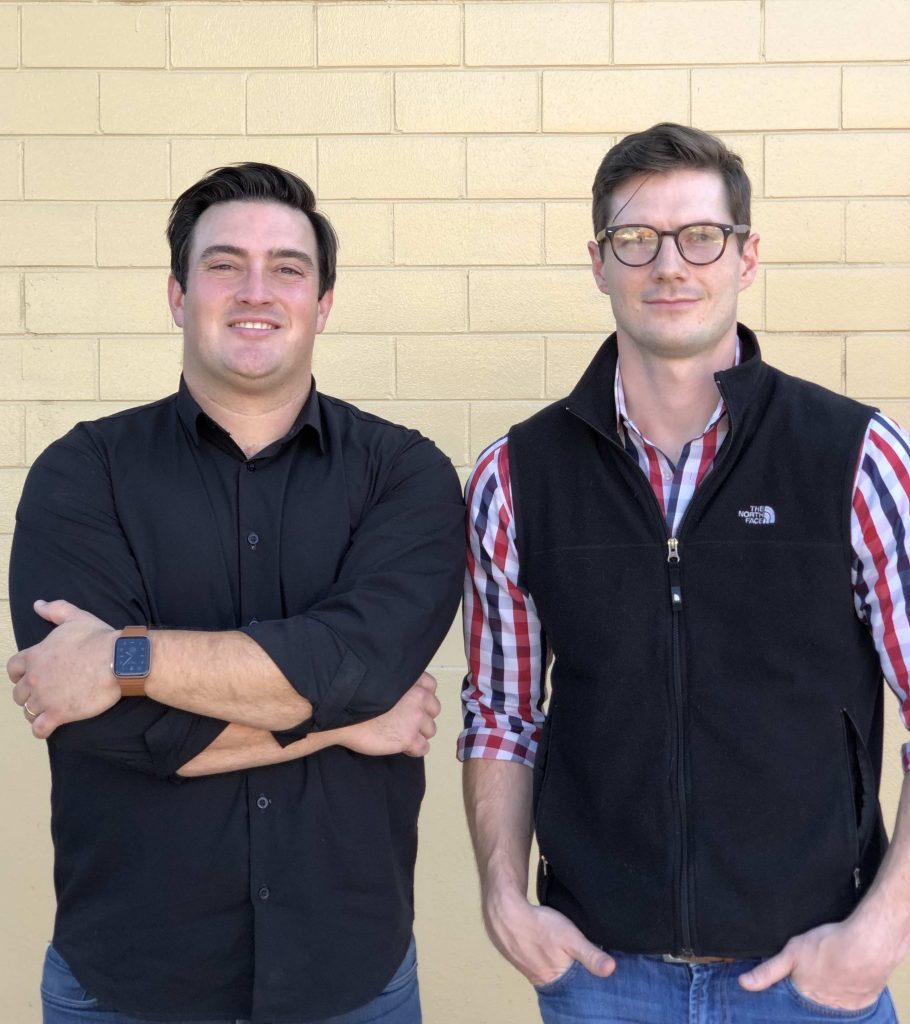
Justin Papermaster and Gary Garofalo, co-founders of LoudCrowd
Brands have worked with influencers to sell products through
social media for a long time.
But it’s been more difficult for them to engage with regular
customers who might like their products.
And that’s where LoudCrowd saw an opportunity. The Austin-based startup sells software directly to brands that allow them to reward customers who promote their products.
“It’s about taking behavior that is already happening and creating a structure around it,” said Justin Papermaster, Co-Founder of LoudCrowd.
LoudCrowd on Thursday announced that it has closed a $515,000 Pre-Seed round led by Active Capital, with participation from local angel investors. Papermaster co-founded the company along with Gary Garofalo. They both have extensive experience in the marketing and analytics software space from working at several Austin-area startups including TrendKite, Umbel, and Spredfast.
They came up with the idea after dealing with chief marketing officers and vice presidents of marketing on social engagement projects. The companies wanted a product that would leverage their customers’ user-generated content and get them to be more vocal about its products, Papermaster said.
There wasn’t a product, Papermaster said. So LoudCrowd
created one, he said.
The LoudCrowd platform helps brands create a personalized program to turn customers into a vocal brand supporter. LoudCrowd’s platform makes it easy for brands to provide customer incentives when the customers mention the brand on social media. It creates a lot of micro-influencers for the brand, Papermaster said.
Already, companies that do referral marketing provide customers with sign up referral code and they get $10 every time a friend signs up. But people are not going to blast out referral codes, Papermaster said.
Instead, People are tagging brands and acting like influencers on Instagram, Papermaster said. LoudCrowd’s software encourages all customers to act as influencers and ambassadors for the products they like and then they get rewards from the brands, he said.
LoudCrowd democratizes the whole concept of influencer
marketing by incentivizing thousands of a brand’s customers instead of a select
few, Papermaster said. LoudCrowd’s software also verifies that the person is a
customer, he said.
“We’re not asking people to do these shameless photos,”
Papermaster said. LoudCrowd incentivizes a person for a photo they already took
and posted and tagged the brand in it. It’s becoming a normal thing for people
to tag brands in Instagram posts, Papermaster said.
“Normal people are tagging the brands they really love,” he
said.
Right now, LoudCrowd is only available on Instagram, but it plans to branch out to Pinterest, Snapchat, and TikTok, Papermaster said.
LoudCrowd is based in an office at E. 3rd St. and Chicon St., which is the original Zebra office in Austin. It has eight employees.
“Influencer marketing has clearly become a huge and growing business,” Pat Matthews, founder, and CEO of Active Capital. “We love the approach Justin and Gary are taking to help everyday consumers become engaged “influencers” for their favorite brands.”
Sana announced Tuesday that it has received an additional $3.6 million in seed funding, bringing its total seed funding raised to date to $6.3 million.
The Austin-based healthcare insurance startup reported
that the seed funding was led by Gigafund and Trust Ventures.
Other investors include Greenlight Re and Mark VC as
the other major institutional investors in Sana.
The company offers premium health benefits for small and medium-sized businesses at 30 percent lower costs than traditional options, according to Will Young, its cofounder.
Silicon Hills News wrote about Sana moving from San
Francisco to Austin a year ago. Young and Nathan
Hackley, founded Sana in 2017. The two previously worked together at Justworks,
benefits and payroll company in New York.
Initially, Sana worked out of WeWork on Barton Springs but has since moved to its own 5,500 square-foot headquarters on Manchaca Road. The company now has 37 employees.
“Through vertical integration, modern care management,
and intelligent backend automation, we cut out much of the waste associated
with traditional health insurance and pass that benefit on to our customers,”
Young said. “Sana members can see the
doctors they want and get concierge care.”
Sana works to
solve a simple problem: healthcare in the US is insanely overpriced, Young said.
The U.S. spends more on healthcare per capita than most countries because of wasteful spending that costs roughly $1 trillion every year in waste, Young said.
A lack of competition, broken distribution and massive
cascading technical debt is contributing to the problem, Young said. In
addition, giant monopolies dominate the U.S. healthcare market, which leads to arbitrary
price hikes, he said.
“Those monopolies are enabled by traditional broker
distributors who have a direct financial incentive to sell expensive plans,”
Young said. “These excessive profits have made incumbent players complacent and
they haven’t updated their technology in forty years.”
Sana sells its plans directly. It offers premium services to its customers through partnerships with Plushcare, Maven, Beam, ClassPass, and Calm. Sana has built all of its own technology from scratch on a modern HIPAA compliant web stack which enables Sana to be a leader in back-office automation and data-driven approaches to care management, Young said.
Sana launched in Texas last year and now has dozens of
customers and thousands of individuals on Sana health plans.
“Clients tell us they save tens and hundreds of
thousands of dollars each year because of our services and their employees see
the doctors they want,” Young said. “Most
importantly, our members feel like we have their back when they need it. We are
building a more human kind of healthcare that gets us excited.”
Joyce Durst, Co-Founder and CEO of Growth Acceleration Partners
Instead of seeking venture capital, Joyce Durst, Co-Founder, and CEO of Growth Acceleration Partners decided to bootstrap the software development company.
Growth Acceleration Partners, known as GAP, offers analytics, cloud, mobile and QA
services. Before co-founding GAP, Durst served as CEO of venture-backed startup
Pinion Software, a security software company. At that company, she raised $21
million in venture capital.
“There is such a thing as the wrong money at the wrong time,” Durst said. She made the comments last Thursday during an interview for the Ideas to Invoices podcast.
In 2007, when Durst co-founded the company, GAP decided to
focus on its customers and generating revenue rather than fundraising, she
said.
“Maybe someday there will be a right time to take money, but so far we haven’t needed it,” she said.
And GAP recently received certification as a Women’s
Business Enterprise by the Women’s Business Enterprise National Council. That’s
an important milestone for the company because it shows the company is walking
the talk, Durst said. GAP really believes in diversity and inclusion, she said.
A recent news release said GAP made a point of hiring women
and promoting them to leadership positions in GAP.
“The key thing about having women at all roles in the company
at all levels, it’s really about diversity of thought,” Durst said. She didn’t
set out to have 70 percent of its technical leadership roles filled by women,
but they were the best people for those jobs, she said.
“Can we have diversity to get the very best ideas,
innovations and thoughts out on the table,” Durst said. That includes diversity
in gender, age and multi-cultural, she said.
Durst also tells executives that say they can’t find women
to hire, that isn’t true. Companies need to change their hiring and recruiting,
and onboarding practices and they will find qualified women to fill technical
roles in their companies, she said.
“If you do those things, you will be widely successful in
building a diverse team,” Durst said.
GAP chose to put software development offices in Costa Rica
and Colombia because they share the company’s values, Durst said. They are
innovative places in the same time zone with happy people, great talent, culture
and values, she said.
GAP has a wide range of customers across a wide variety of industries including healthcare, fintech, and technology, Durst said. They have built products for Whole Foods, Dell, Solar Winds, Disney, Marvel. GAP reaches new customers primarily through content generation and word of mouth referrals from its clients, Durst said.
GAP has more than $20 million in annual revenue and 300
employees. In the future, the growth is coming from technology and data
analysis, Durst said. One of the clients it works with harvests data from cars
and GAP helps interpret data to identify traffic patterns to help locate brick
and mortar stores, Durst said.
Because GAP is private, it can take a much longer-term view
of its business and its goals, Durst said.
Arlo Gilbert, CEO and Co-Founder of Osano and Scott Hertel, CTO and Co-Founder of Osano, photo courtesy of Osano
In the modern era, every company is a global company, said Arlo Gilbert, CEO, and Co-Founder of Osano.
Today, more than 65 laws exist worldwide governing how companies handle customers’ data online and privacy laws, Gilbert said.
Most notably, the General Data Protection Regulation, known as GDPR, went into effect in May of 2018. It is a law that governs privacy for all citizens of the European Union and how their data is handled by companies.
And a similar law, the California Consumer Privacy Act will take effect Jan. 1, 2020. It is designed to give consumers more control of their data and personal information online and it will have a huge impact on how to handle customer privacy online, Gilbert said.
“The California law is like GDPR – the biggest common
elements – you have to ask permission of a visitor to your website – before you
share data with other people,” Gilbert said. “And you have to record that
permission somewhere.”
Other rights include the right to delete and modify
data and opt-out of data selling or sharing, Gilbert said. The GDPR law also
has the right to be forgotten to exclude information about an individual, he
said.
Osano, founded in 2018, is focused on helping companies, particularly mid-sized enterprise companies, comply with privacy laws. It has created an online data privacy platform that companies subscribe to on a monthly basis and keeps them in compliance with GDPR and other privacy laws like the California law. It offers a free platform for solo entrepreneurs and prices ranging from $99 up to $199 monthly for larger companies. It launched publicly this month and it already has signed up more than 300 companies.
Osano’s name is intentional, Gilbert said. In Hindi, Osano means make it easy and that’s what Osano is doing for its customers when it comes to keeping them in good standing with privacy laws, he said. Being compliant with privacy laws also helps reduce data breaches and potentially exposing customer information, he said.
Companies with local websites must comply with global laws because they have people visiting from outside their region, Gilbert said.
“That means you have to comply with the laws in
Brazil, and China and France and Germany and California,” Gilbert said during a
talk on the future of Big Data & Online Privacy put on by America’s Future
Foundation. “And it’s really, really hard. And big companies have big teams
that they use to go and solve all these problems with lots of lawyers and lots
of tech people and they hire lots of privacy experts.”
But companies with under about 5,000 employees the
odds are high that they are just kind of “winging it,” Gilbert said. “And that’s
not good.”
Gilbert is a serial entrepreneur. He and his
co-founder, Scott Hertel, previously built Meta SaaS and sold it in 2018 to Flexera.
Gilbert started his first bootstrapped company in 1997 while a student at the
University of Texas. He grew that to $50 million in revenue before selling it.
Osano has built a set of tools that makes it easy to
comply with all these data laws for companies with just a few employees up to
5,000 employees, he said.
“A lot of really great companies have chosen not to do
anything with data privacy,” Gilbert said.
But the California law is going to make them act, he
said.
“It’s effectively a national law,” he said.
Right now, only eight percent of companies online are compliant with the requirements of the California law, Gilbert said.
“We’re trying to help them get ready fast,” he said.
Osano has raised $3 million from LiveOak Venture Partners in 2018 with participation from Next Coast Ventures, Capital Factory, Social Starts, Barracuda Networks and 345Partners Co-Founder Michael Perone, data.world and Bazaarvoice Founder Brett Hurt, and Indeed Founder Rony Kahan. Osano has seven full-time employees and works with a team of contract lawyers nationwide. Those lawyers read company privacy policies and rate them.
Osano has built a comprehensive product for privacy that handles consent, vendor monitoring, and advisory services, Gilbert said.
It makes a consent form pop up that asks website visitors if they agree to the company’s policy of using cookies to track website visitors. More than 750,000 companies use Osano’s website popup and it serves up 2.5 billion pop-ups a month, Gilbert said.
The consent manager keeps a marketing team from getting
a company in trouble, Gilbert said. It requires a person visiting the webpage
to give consent to use their data, he said.
“The consent component is table stakes these days – if
you’re not doing it, your company is going to get sued,” he said.
Osano also operates an Irish subsidiary, Osano International
Compliance Services, based in Dublin, Ireland. Companies with more than 200
employees are supposed to have a presence in the European Union to comply with
GDPR, Gilbert said. Osano handles that requirement for its customers.
Osano also offers up to date privacy monitoring. It has created its own rating scorecard on more than 7,000 vendors and how their privacy policies rate.
“It’s really hard to figure out if one company is
doing a good job of privacy vs. another one,” Gilbert said. So Osano created a
standardized form to rate them.
Companies have convoluted privacy statements, Gilbert said. Osano contracts with 24 attorneys who read those statements and then answer 163 questions on a standard form which ranks how the company’s privacy policies rate. It also monitors the sites for changes in policies and updates them. The rating scale also lists how many lawsuits the company has pending against it in court. Facebook has more than 2,200 lawsuits, Gilbert said. The average company has one, he said.
“You can really assess the risk and determine whether
this is a company you should be doing business with,” he said.
“One of the important reasons for vendor monitoring –
it’s a good idea to understand your supply chain,” Gilbert said. “If you’re Whole
Foods you can tell me everyone in your supply chain for that can of tuna. It’s
also required under the California law that you cascade down to your vendors
and all their privacy policies. “
California’s fine is $7,500 fine per record of
violation for 1000 records that is a $7.5 million fine.
Lastly, Osano provides advisory services that help companies build internal privacy policy, Gilbert said.
“Compliance is kind of boring,” Gilbert said. “This is
not a sexy industry. We’re not making a new Rocketship.”
But data protection is a $125 billion industry, Gilbert said. And Berkeley Economic Advising and Research predict companies will spend $55 billion over the next two years just to get complaint with California’s law.
“We just thought this product needed to exist,” Gilbert said. “This is the second time we’ve been really lucky about timing. We are in the right place at the right time.”
Osano is a B-Corp, which is a mission-driven for-profit venture with goals to be Austin’s next company valued at $1 billion, Gilbert said.
“Aside from that noble altruistic goal, we want to
turn this company into Austin’s next Unicorn,” Gilbert said. “We’re going to be
part of that club. Our goal is to build a really big Austin success story.”