Author: LauraLorek@gmail.com (Page 60 of 354)

LauraLorek@gmail.com

Shipwell Raises $35 Million, Plans to Expand in Austin and Chicago and Hire 200 More Employees

Gregory Price CEO and Co-Founder of Shipwell and
Jason Traff, President and Co-Founder of Shipwell, photo courtesy of Shipwell

Shipwell, which makes an online platform for any business to ship and track freight easily, announced Thursday that it has raised $35 million.

Georgian Partners, based in Toronto, Canada, led the Series B round. Other investors include Fifth Wall, Global Founders Capital, Box Group and Aspect Ventures.

To date, Shipwell, founded in 2016, has raised $47 million in funding.

With the latest funds, Shipwell plans to open an additional office in Austin in the Domain area, said Jason Traff, President and Co-founder of Shipwell. It has a 7,800 square foot office with 88 employees in the Bank of America building downtown, said Traff said. Shipwell plans to keep that office. It also plans to open an office in Chicago in January, he said.

Right now, Shipwell has 95 employees, but the company plans to hire another 200 employees, Traff said.

Both Traff and Gregory Price, co-founders of Shipwell have experience in the shipping industry. They also share ties as students at MIT. Traff dropped out of MIT’s Sloan School of Management to join Y-Combinator and launch Leaky, an insurance technology startup that was later acquired by an insurance company.

Before that, Traff had an oil painting reproduction business based in Shenzhen, China that shipped to four continents. Price worked at McKinsey with Fortune 100 companies on supply chain consulting. They saw a lot of inefficiency and waste in time and money companies spent in the shipping industry.

Together, they saw how some of the best companies in the world like Amazon and Wal-Mart invested in supply chain logistics to turn shipping into a competitive advantage.

They created Shipwell to give customers that same kind of supply chain shipping advantage by using its online platform. The company’s freight shipping platform provides quotes, and tracking information on every shipment.

Its customer saves an average of 15 percent on shipping costs, Traff said.

“Everything everywhere should ship as easy as Amazon,” Traff said.

Shipwell has been focused on the domestic US market but has also expanded into Canada. Shipwell is also now handling parcel shipping along with its traditional freight shipping modes. It is now FedEx compatible, allowing its customers to manage their parcel and freight shipping on one centralized platform.

“For a lot of companies, we are able to give them visibility to where their shipments are at any moment,” Traff said.

Since October 2018, Shipwell grew shipments on the platform by 600 percent from over 4,000 monthly customers that generate over 100 million rows of location data every day.

 “In the coming months and years ahead, our focus on delivering a platform with layers of sophistication built on machine learning and AI will take our customers to the future of supply chain execution,” Traff said.

Austin-based Literati Lands $12 Million in Funding

Photo courtesy of Literati

Literati, a children’s subscription book service, announced Wednesday that it has received $12 million in new funding.

Nikhil Basu Trivedi at Shasta Ventures led the Series A round.

Jessica Ewing and Kelly Carroll founded Literati in 2016. Literati is a children’s book club aimed at children from birth to 12 years old.

The company plans to use the funding to strategically grow the business and to hire new employees in Austin.

“I’ve been on the lookout for the next great consumer subscription business, having invested at Shasta in category-defining brands such as Dollar Shave Club, Imperfect Foods, and The Farmer’s Dog,”  Basu Trivedi said in a news release. “The book market is massive, and Literati’s growth, customer love, and mission really blew me away as I spent time with Jess, Kelly, and the Literati team.”

Other investors included Dick Costolo of 01 Advisors, former CEO of Twitter, Katie Jacobs Stanton and Jessica Verrilli of #Angels, Dan Graham of Austin’s Springdale Ventures, Kevin Hartz, founder of Eventbrite, Thomas Lehrman, founder of GLG, Allan Hubbard, former director of the National Economic Council, and follow-on investments from Founders Fund, Pathfinder and Silverton Partners. Additionally, Literati received funding from Brent Montgomery at Wheelhouse, backed by comedian and late-night host Jimmy Kimmel.

“Our mission is to build a lasting company that stands for lifelong learning and sparks revolutionary excitement in books and literature,” Founder and CEO Ewing said in a news release. “We hit our stride in this round, adding key investors who really get our vision. We want to build consumer products that make life more meaningful, not merely more efficient.”

“Literati is a shining example of the innovative new companies that are being built outside of Silicon Valley. Jessica’s vision for the company is expansive and inspiring, and it is revolutionizing one of the last undisrupted media channels – the massive books market,” Costolo said in a news release. “We are excited to see the next phase of growth for Literati.”

Literati is a subscription book service that charges $9.95 a month for a box of five books. Parents have seven days to return the books they don’t want in a pre-paid envelope and they pay Amazon retail prices for the ones they want to keep.

Kids, ages eight to 18, are now using screens – laptops, tablets, phones, TVs, Playstations, Xboxes, etc., up to seven hours a day. That’s where Literati fits in with parents who want their kids to read more books and get away from electronics.

“The curation around themes is incredible and we discover books we’d never discover otherwise,” Cyan Banister, partner at Founders Fund Pathfinder who led Literati’s seed round of funding, said in a news release. “Research shows that creating a steady stream of new age-appropriate books has been shown to nearly triple interest in reading within months.”

Hypergiant Partners with Dynetics to Create Space Mission Solutions

Hypergiant announced Wednesday a new partnership with Dynetics to develop space mission solutions for government and commercial customers.

The companies plan to use Amazon Web Services and its cloud for artificial intelligence, machine learning, analytics, Internet of Things and AWS Ground Stations to deliver mission and payload on-demand services.

“These services will support the current space ecosystem customers and also open up opportunities for new participants in the burgeoning space economy,” according to a news release.

First, the companies plan to develop services to support Hypergiant’s planned missions using its Slingshot deployment system and NASA’s International Space Station infrastructure.

 “Now that space-mission hardware costs are being reduced, our ability to get more data, more often, is rapidly increasing. People need a way to get that data more efficiently and to interpret it more effectively. That’s why we entered into this partnership with Dynetics: smarter, more cost-effective solutions for space data to all companies,”  Hypergiant Founder and Chief Executive Officer Ben Lamm said in a news release.

Dynetics, an aerospace and defense company based in Huntsville, Alabama,  brings over a decade of human spaceflight as well as satellite development, deployment, and deployment experience to the partnership. It also has 45 years of experience in systems engineering, analytics, and hardware and software development.

“Demand for these solutions continues to increase from civil space, defense, and national intelligence agencies. Our rich experience with US DoD, NASA, and various commercial aerospace companies provides a unique value proposition with Hypergiant while also utilizing AWS to deliver flexible, cost-effective, and secure solutions in-line with the customers’ needs,” Jonathan Pettus, Dynetics vice president of Strategic Cybersecurity, Artificial Intelligence and Information Technology, said in a news release.

Founded in 2018, Hypergiant Industries has offices in Austin, Dallas, Houston, Seattle and Washington, DC.

This is the second major partnership for Hypergiant this year. In August, Hypergiant announced a big partnership with Booz Allen Hamilton, a huge government contractor.

Opcity Plans to Double in Size Adding 600 More Employees


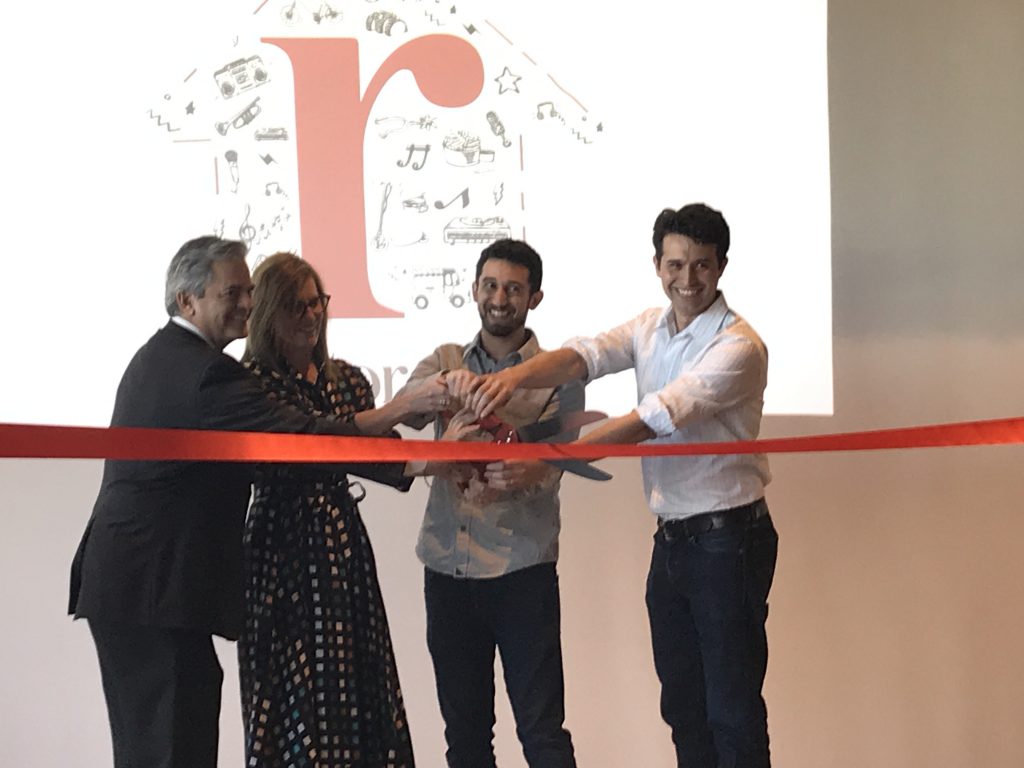
Mayor Steve Adler, Tracey Fellows, realtor.com interim CEO, Ben Rubenstein, CEO and Co-Founder of Opcity and Michael Lam, CFO and Co-Founder of Opcity

Opcity plans to double in size hiring 600 more employees in the next couple of years, said Ben Rubenstein, the company’s CEO and Co-Founder.

Already, Opcity has 660 employees. It grew from zero to 660 in less than four years, he said. Opcity plans to hire 500 new employees next year, he said.

Opcity is also phasing out its brand in favor of Realtor.com, which is more recognized by consumers and potential employees, Rubenstein said. It’s not going to happen overnight, but Opcity is doing more and more under the Realtor.com brand name, he said. In 2018, Move, Inc., which operates Realtor.com, and is a subsidiary of News Corp., acquired  Opcity for $210 million. About 73 million unique visitors come to the Realtor.com website every month, Rubenstein said.

Realtor.com officially opened its new tech hub on Austin’s eastside on Tuesday.

And Opcity is already on the hunt for larger headquarters for its growing staff, Rubenstein said in an interview following the company’s official ribbon cutting.

The new office at 901 E. 6th Street will house engineering and product development staff for Realtor.com. The company makes a technology platform that matches home buyers and home sellers with the best real estate agents in their neighborhoods with no upfront costs. The company uses proprietary data and applied analytics to increase sales.

The new office can hold up to 200 employees and already has 100 employees. The office features a couple of murals done by local artists depicting Austin scenes like the bats emerging from the Congress bridge and another one with statues of Willie Nelson and Stevie Ray Vaughan. It also has lots of open spaces featuring natural light, high ceilings, open workspaces, kitchenettes, meeting and huddle rooms, bike racks, and more features like Ping Pong tables that appeal to tech workers.

“I love this space,” said Mayor Steve Adler. “I also like it when Austin, which is a cool city, gets a little bit cooler.”

Austin is a city where it’s ok to try new ideas, Adler said. Opcity is a great example of that, he said.

“The people that try something and work at it and stay with it and then it grows, and it succeeds, those are the real civic folk heroes in our city,” Adler said. “That’s why there are more startups per capita in Austin than anywhere else.”

Austin is rated so high for new businesses and tech startups, Adler said.

“There’s just something cultural about being creative and innovative in this city,” he said.

Opcity has been one of the fastest-growing startup success stories to come from Austin in recent years. Rubenstein and co-founder Michael Lam first worked on the real estate startup at Galvanize in downtown Austin. But they outgrew that office and moved nearby to offices in the Silicon Labs building. And then in 2017, they moved to 50,000 square feet of space at the Bergstrom Tech Center in Southeast Austin on Burleson Road.

Opcity is working with a commercial broker looking for its next headquarters, Rubenstein said.

“We’re hiring,” Rubenstein said.

The Zebra Moves Into Chic New Eastside Headquarters

Photos courtesy of The Zebra by Peter Molick

The first time Silicon Hills News met The Zebra, the two founders showed up at Longhorn Startup Demo Day in 2013 to meet Billionaire Mark Cuban.

They had sent a cold email to Cuban who invested in The Zebra despite never having met the founders.

That night at the Lady Bird Johnson Auditorium at the University of Texas at Austin, they met.

And since then, the Austin-based startup that has created an online comparison search engine to shop for car insurance and it has gone from a couple of employees to 150 employees.

And this week, The Zebra moved into its new headquarters custom-outfitted with room to expand to 300 employees.

And its last offices weren’t bad either. The Zebra occupied the top two floors of the high-rise San Jacinto Building in downtown Austin. But the insurance startup grew cramped there and needed more space.

Now The Zebra has 43,000 square feet of space or one and a half floors of a new building at 1801 East Sixth St. two blocks from its original headquarters at 4th Street and Chicon.

 “This neighborhood has something for everyone. Good food, music, coffee and breweries…it’s the ideal spot for The Zebra. We’re very excited about being a part of the East Side again,” Keith Melnick, CEO of The Zebra, said in a news release.

The office includes a coffee bar with an in-house barista and “internally engineered online coffee ordering system,” according to The Zebra.

Its offices also include locker rooms and showers for commuters, and a patio with an outdoor grill and room for outside meetings. The Zebra’s office is also close to the Plaza Saltillo train station and has a below-ground parking garage with bike and scooter storage.

The Zebra worked with the Austin office of global firm IA Interior Architects and Chrystal Toth Designs, of Westport, Connecticut, for the project. 

“The Zebra has grown — and grown up — so much since 2012. In designing their custom office, we made sure to take the elements of mindfulness, efficiency, and modernity that make The Zebra so successful, and work them into the space,” Chrystal Toth, CEO and Principal of Chrystal Toth Designs, said in a news release. “The result features warm, earthy tones, and layering of organic textures with hyper modern clean lines. It’s not your average insurance industry office.”

“IA created a design concept that embraced The Zebra’s mission, ‘Insurance in Black and White’, and established a sense of power through subtly and simplicity. Architectural elements were purposefully designed to construct visual patterns through the use of negative and positive space in screens, which help define social and private work zones,” Raul Baeza, Senior Designer, IA Interior Architects, said in a news release.

To date, The Zebra, founded in 2012, has raised $61.5 million.

MassChallenge Texas Awards $500,000 to Five Startups

Mike Millard, managing director of MassChallenge Texas, photo courtesy of MassChallenge Texas

TRAXyL, a startup that installs high-speed Internet on roadways, received the top prize of $150,000 in cash from MassChallenge Texas in Austin on Thursday night.

The company,  based in Warrenton, Virginia installs high-speed fiber optic cable on roads, and parking lots. It coats the fiber optic cables in heavy-duty paint that can be glued on top of roads and other paved surfaces.

TRAXyL has also gone through the DreamIt UrbanTech Accelerator program and received a $225,000 grant Small Business Innovation Research grant from the National Science Foundation.

Four other finalists received a total of $350,000 in cash awards. In total, 74 startups participated in the second annual MassChallenge Texas Austin accelerator program. The accelerator picked 14 finalists that competed for the prize money.

Three startups received $100,000 each including Collective Liberty, based in Washington, D.C., that has created a platform to help prevent human trafficking. And Mens Gold Boxx, based in Austin, a big and tall e-commerce site for men. And teleCalm, based in Allen, Texas, which created a phone service aimed at keeping seniors safe.

Olifant Medical, based in San Antonio, won $50,000. The startup has developed a medical device to insert breathing tubes into patients easier.

About 400 people turned out for the second annual awards ceremony held at the Hilton downtown.

The managing director of Mass Challenge Texas, Mike Millard, started the Austin awards ceremony by running around the ballroom high fiving everyone and encouraging the audience to do so also.

Millard has been with the organization since it launched in Texas two years ago.

“It’s been a journey to bring MassChallenge Texas to where it is now, Millard said. “Our goal has been to build a connected ecosystem that attracts the world to the Lone Star State to innovate at an accelerated pace. Through this community, we can provide startups the access they need to achieve milestones and goals.”

Sara T. Brand, a founding general partner of True Wealth Ventures, a venture capital firm based in Austin, gave one of the two keynote addresses. She highlighted studies that show diverse startup teams with at least one woman in a leadership position outperform other teams.

Women-led startups made up 58 percent of the 74 startups selected for the MassChallenge Texas Austin cohort.

“Diversity breeds innovation,” Brand said.

Having diversity at the early stages of a startup builds a culture that leads to greater innovation, Brand said. It’s critical to focus on diversity in the beginning because it’s hard to add it in once the culture has been established, she said.

William Hurley, known as Whurley, founder of Strangeworks, a quantum computing startup, gave the second keynote talk on things they don’t tell you about being an entrepreneur. Previously, Whurley founded and sold Chaotic Moon to Accenture and Honest Dollar to Goldman Sachs.

The number one thing that they don’t talk about is exhaustion, Whurley said.

“Startups don’t like you to have a life,” he said. He talked about how difficult it is to balance family life with the demands of a business.

And the struggle is real, Whurley said.

“Startups are always in one of two phases, they’re either struggling or they’re out of business,” he said.

There is a lot of entrepreneurial bullshit, Whurley said. The covers of magazines like Inc, Entrepreneur, portray a glamorous the startup life, he said. But In reality, it’s difficult path to choose.

When a startup founder says everything is great, I know they are either lying to themselves, the person they are talking to, or both Whurley said.
>
“You, as a founder, have to do everything,” he said, “the only person that will make your startup successful, the only one you can count on, is you”.

Tenfold Raises $7.5 Million in Additional Funding

Tenfold Team, Photo courtesy of Tenfold

Tenfold, one of Silicon Hills News’ 25 hottest Austin startups to watch in 2019, recently announced it has raised $7.5 million in additional funding.

The Austin-based company, which integrates customer relationship management programs with voice platforms, announced it has raised a Series C funding round lead by Austin-based Next Coast Ventures.

To date, Tenfold has raised $37.5 million with funding from Next Coast Ventures, Salesforce Ventures, Andreessen Horowitz, Geekdom Fund, Active Capital, Techstars and others.

Tenfold plans to use the funding on developing its products.

“Customers are awaiting the day when they call into a support or service center and the agent on the other end knows exactly who they are and is enabled with relevant information right at their fingertips to provide personalized and efficient service,” Jeff Cotten, the CEO of Tenfold, said in a news release. “This additional funding will give Tenfold the ability to further empower global sales and service organizations to better serve customers at the point of interaction with intelligent ‘no touch’ data capture and streamlined sales and service workflows.”

Tenfold has created a software platform that connects a company’s phone systems with its customer relationship management software, enterprise resource planning software, marketing systems and more and provides users with a unified view of the data. Right now, that’s a challenge at many customer engagement centers, according to Tenfold.

“We’re very impressed with the market traction that Tenfold is getting with large-scale contact centers in strategic industries like financial services, retail and high tech, which is why we wanted to increase our stake in the company,” Bill Patterson, EVP, and GM of Salesforce Service Cloud, said in a news release. “Tenfold provides Salesforce with the depth and breadth we need to better integrate the voice channel into our sales and service CRM and thus are a critical partner for us to enable a more human-centric service experience that is effortless and personal.”

“Tenfold’s mission to revolutionize the customer service experience fits squarely into our investment thesis: a great entrepreneur disrupting a massive industry using cutting-edge technology to solve a universal pain point for companies and consumers alike,” Michael Smerklo, co-founder and managing director of Next Coast Ventures, said in a news release. “Since coming on as CEO just eight months ago, Jeff Cotten has already done an incredible job of reshaping the company’s vision by building out a great team and driving a relentless focus on delivering real value for Tenfold’s growing customer base.”

Tenfold has more than 600 customers in 60 countries. Its customers span a wide range of industries including telecommunications, insurance, financial services, hospitality, and healthcare.

Reset is Helping Austin Restaurants Monetize Their Space During the Day for Events and Coworking


Reset Co-Founders Siri Chakka and Silva Gentchev, photo by Nina Q. Ho

When Christine Ziegler needed a place for 35 employees to meet off the BigCommerce campus, she turned to Reset.

Reset offered up a few venues and Ziegler picked the Tillery Kitchen and Bar at 3201 E. Cesar Chavez. The restaurant features spacious and comfortable indoor seating with big windows and lots of natural light and a patio with a tree-lined view of the Colorado River.

Reset started out as a co-working business that sets up in Austin restaurants by day but has since evolved in the last year to offer more event space for company offsite meetings. Its name Reset derives from the act of resetting the table.

Reset is the brainchild of Siri Chakka and Silva Gentchev, who met each other while getting their MBAs at the McCombs School of Business at the University of Texas at Austin. They created Reset to help restaurants use their space during the day when they aren’t as busy as coworking sites and event venues.

 “Restaurants want to monetize their space, but they don’t have the staff and the ability to do that,” Gentchev said.

BigCommerce liked the flexibility of the Tillery space, said Ziegler, a senior executive assistant at BigCommerce.

“We were able to bring in our own food one day,” she said. “They already had the projector and screen ready to go. It was all-inclusive with flexibility too. Should the need arise I would totally go back.”

BigCommerce used the space on a Wednesday and a Friday from 8:30 a.m. until 5 p.m. and they had breakfast and lunch brought in the first day and the last day Tillery catered the lunch.

Going offsite gets people out of their daily routine and gets them thinking creatively, Ziegler said. It’s great for team-building activities, she said.

Reset opened in August of 2018 and it is now working with eight restaurants throughout Austin with plans to add three to four more by the end of the year.

“Over the last year, we’ve learned a lot about the coworking industry. It has become increasingly saturated,” Chakka said.

Reset is still a good choice for the person who works out of the coffee shop, Chakka said. Its location on Tillery is easily accessible, has great wi-fi, coffee, water and plenty of seating in a nice relaxing setting and it offers free parking.

While doing the Reset coworking business, companies began contacting Reset about hosting meetings, Chakka said. Over the last two months, it has been targeting that market, she said.

Pivoting Reset’s business model to offer more event space sourcing for companies seemed like a natural fit, Chakka said.

“Businesses need this, and restaurants are getting more value out of it,” she said.

Reset faces competition from bigger sites like Peerspace, but its advantage is that it’s Austin-based and Chakka and Gentchev have curated a network of spaces that they have vetted personally.

There is no shortage of beautiful restaurants in Austin, Chakka said.

“We act as a liaison or concierge of sorts,” she said. “We are planning the event hand in hand with our clients. Helping them find the space and helping them book it. We are there on the day of the event on-site to make sure everything is going well. We are curating all the spaces. We go, we see them, we talk to the restaurant owners to make sure it’s something we want to represent Reset.”

Reset’s business model is to take a pre-negotiated commission on each event it books. The bulk goes to the restaurant for providing the space, Chakka said. Reset has planned everything from an eight-person team meeting to a 100-person sales kickoff meeting.

Many of the restaurants Reset works with also have the option to cater.

Ian Thurwatcher and Krystal Craig are the husband and wife founders of Intero Restaurant in East Austin. Intero began working with Reset after Chakka approached them to be involved.

“We already love having guests in our restaurant, so the opportunity to host new people, specifically offering other small companies our available areas daytime, seemed like a perfect venture,” Craig said. “We also enjoy partnerships with great people, and we could tell immediately that Siri herself was someone we’d be happy working with.”

So far working with Reset has been extremely positive, Craig said. Intero has hosted small company business meetings and is planning some bigger events.

“Aside from always being greatly responsive, they diligently do all the leg work to set everyone up for the best success in enjoying the shared space experience,” she said.

“From our side, Reset helps to provide new opportunities in meeting people you may not have, aiding in expanding your own network of guests and future possibilities,” Craig said. “From observing the other side- it’s really cool people can enjoy an event or office meeting in a more interesting, or new way, and in a less conventional setting. In a way, overall it feels like it adds some spice in variety for both parties involved.”

Austin-based Eterneva Lands an Investment from Billionaire Mark Cuban on Shark Tank


Eterneva Co-Founder Adelle Archer and Garrett Ozar on Shark Tank, courtesy photo

Diamonds are made from carbon and people are made up of carbon, so why not make diamonds out of people?

That’s the bright idea behind Eterneva.

And it landed the Austin-based startup a $600,000 investment from Billionaire Mark Cuban on Shark Tank, which aired last Sunday.

Adelle Archer and Garrett Ozar, co-founders of Eterneva, had several sharks interested in investing in their startup which turns cremated ashes into diamonds. But some of the sharks were upset that Eterneva had already raised a $1.2 million seed-stage round of investment. In the end, Eterneva landed Cuban who got a 9 percent stake in the company at an $8 million valuation.

Archer and Ozar handled the negotiations with the sharks well.

“You got to stick to your guns,” Archer said. “You got to know what you’re worth and be comfortable explaining that.”

Eterneva’s deal ranked in the top five percent of all Shark Tank valuations. The investment in Eterneva is a positive move in the right direction of the dying well trend, Archer said. Eterneva’s mission is to celebrate lives well-lived and give those left behind a way to remember their loved one, Archer said.

Following the show, Eterneva saw a ton of traffic to its website, Archer said. And one of the best parts of the pitch was that Eterneva was able to go on a national stage and shine a spotlight on people who are no longer here, she said. During its presentation, Eterneva highlighted several customers who had a diamond made to remember their loved ones.

Eterneva is part of the “death positive movement,” Archer said. People are finally talking about what they want to do at the end of their lives. It’s no longer taboo to talk about death, she said.

Archer got the idea for Eterneva while starting a lab-grown diamond company. One of her mentors, Tracey got diagnosed with stage 4 pancreatic cancer and she died and was cremated. That’s when Archer decided to extract the carbon from the ashes and grow a diamond to remember Tracey.

“She was the first diamond we made,” Archer said.

That is what drove Eterneva to pivot, she said.

“Being the customer, I feel like I had a good instinct on what the experience I wanted,” Archer said. “It’s as much about the journey to the diamond, like the diamond. We build a ton of anticipation throughout the journey.”

The diamond also provides the survivor an outlet to talk about their loved one when the rest of the world stops talking about them, Archer said.

“We’re really a grief wellness company,” Archer said. “We are for the living who are going through this experience.”

The process of creating a lab-grown diamond from ashes takes eight to ten months and involves a lot of intricate steps from growing the diamond from that carbon, cutting, polishing, certifying and setting in jewelry and hand-delivering the diamond. Eterneva hand delivers every diamond it makes, Archer said.

“A lot of our customers will throw homecoming parties,” she said. “That’s what this is all about. These rituals to help someone through a time that is tough.”

Eterneva makes its diamonds in a few different facilities. Its technology comes from Germany. It also has a brand-new facility in South Austin with 14 employees, up from four employees at the start of the year.

The deal with Cuban is going to take Eterneva even farther, Archer said.

“I think Mark is going to be a phenomenal person to open doors and break into new opportunities,” she said.

Already, Cuban helped Eterneva land a consumer financing plan to make the cost of the diamond more accessible to people, Archer said. Eterneva’s diamonds start at $3,000 with the average price being around $8,000. The cost varies depending on the size, style, and color of the diamond.

A cremated body yields about eight to ten cups of ashes and Eterneva only needs a half of a cup of ashes to extract the carbon and create the diamond, Archer said.

.

San Antonio-based Dura Software Raises $10 Million in Funding


Paul Salisbury, CEO of Dura Software

San Antonio-based Dura Software announced Friday that it has raised $10 million in funding.

The company reported it was the largest round raised in San Antonio this year.

In addition, Dura Software bought 6Connex, based in Pleasanton, Calif. The company makes virtual event software.

Dura Software, founded in 2018, acquires and operates business to business software companies. Previously,  in August, Dura Software bought Nordic IT, a software company specializing in enterprise software, based in Denmark. Before that, Dura bought Moki Mobility, a software company based in Utah. Moki makes software that allows companies to convert mobile devices into retail kiosks and securely manage them remotely. Dura Software currently has 15 employees in San Antonio and is hiring, according to a spokesman.

 “In just 18 months, Dura has gone from $0 in revenue to among the largest software companies in south Texas,” according to a news release.

Ozone Capital Management, based in Redwood City, Calif., led the round along with private investors from San Antonio and throughout North America.

“The Dura team possesses unique operational capabilities and an extremely successful track record, and we are thrilled that our investment will help Dura grow its footprint in San Antonio for many years to come,” Matt Morris, Managing Partner of OZCM, said in a news release.

As part of the deal, Morris will join Dura Software’s board. The company also added the following board members: Paul Salisbury, CEO of Dura Software, John McGuire, entrepreneur and investor, Bianca Rhodes, CEO of Knight Aerospace, and Michael Girdley, executive chairman of Dura Software.

Dura Software plans to use the funding to acquire new companies, according to a news release.

 “We are excited that our vision is resonating well with founders of the companies we acquire, their employees and the investment community,” Salisbury said. “The early success of our SaaS operating model and the excitement we have seen during this round of financing validates that were are on the right track.”

« Older posts Newer posts »

© 2026 SiliconHills

Theme by Anders Noren — Up ↑