Five finalists and four alternates from Austin made the list for the 11th annual SXSW Pitch event to be held at SXSW in March.
Two startups from Houston and another from Missouri City,
Texas also made the finalist list.
“We had a record number of companies apply this year,” said Chris Valentine, event producer for SXSW Pitch, which changed its name from SXSW Accelerator this year.
For 2019, 857 companies applied, compared to 622 last year
and 517 in 2017, Valentine said.
SXSW Pitch also added two new categories for Blockchain and Artificial
Intelligence and dropped the FinTech and Security and Privacy categories. The
changes reflect the trends SXSW Pitch has seen in the technology industry
overall, Valentine said.
For 2019, LinkVR Robot, which makes the VR Haptic Robot to train users with VR applications, made the list of five finalists from Austin. It is competing under the Augmented and Virtual Reality category. myHouseby, based in Austin, made the alternates list. myHouseby is a platform for new home construction that lets buyers and builders explore various home designs virtually.
Other Austin finalists included Eggschain in the Blockchain
category. It uses the blockchain to track frozen eggs, embryos, sperm and
genetic materials in the fertility field of medicine.
Austin had a particularly strong showing in the Enterprise
and Smart Data category with two finalists: Molecula and Osano and one
alternative: Kilroy Blockchain. Molecula is a computational analysis engine
based on Pilosa. Osano is a platform that provides users with insights into
data sharing. Kilroy Blockchain uses blockchain, artificial intelligence and
ecommerce technology to streamline business processes.
In the Entertainment and Content category, Austin-based
Tankee is a finalist and Austin-based Ibble is an alternate. Tankee helps
parents protect their kids from inappropriate online content. Ibble is a
financial news and investment platform.
And Rocket Dollar is an alternate in the Hyper-Connected
Communities category. Rocket Dollar is a retirement investment service that
makes it easy to invest in anything allowed by the IRS, with no penalties.
Other Texas-based companies include Zibrio SmartScale, based
in Houston, in the Health and Wearable category. It makes a smart scale that
measures balance and identifies fall risk. Fluidity Technologies Aviator, also
based in Houston, made the finalist list for Hyper-Connected Communities. It makes
a drone controller that puts intuitive flight control in one hand and
much-improved camera control in the other hand.
Xplosion Technology, based in Missouri City, Texas, is a
finalist in the Sports and Performance category. The company makes a human
performance software platform.
Overall, SXSW Pitch selected 50 startup finalists in 10
technology categories. Those finalists will participate in the SXSW Pitch event
that takes place March 9-10th during the Entrepreneurship &
Startup Track at the downtown Hilton Austin. Judges will select one winner from
each category along with an overall “Best in Show” winner.
The selected companies come from all over with finalists
from Dubai, Canada, the UK, Pakistan, Singapore, Tanzania and Japan.
Out of
the 453 companies that participated in SXSW Pitch from 2009 and
2018, more than 71 percent have received more than $5.43 billion in funding. And 16 percent have been acquired by Google,
British Telecom, Huffington Post, Apple and others.
Austin startups have
always had a strong showing in the SXSW Pitch competition. For 2019, 47
startups applied and five made the finalists and four made the alternates.
And from 2016 to 2018, Austin has had five winners, Valentine said. Last year, Austin-based GrubTubs won in the Hyper-Connected Communities category and Austin-based ICON 3D won in the Social and Cultural category.
RetailMeNot appoints Marissa Tarleton as its new Chief Executive Officer.
Cotter Cunningham, founder and CEO,
will become the company’s chairman.
Tarleton has served as RetailMeNot’s
chief marketing officer since 2015. In that role, she has led the company’s
brand, consumer, and business marketing and communications initiatives. She is
responsible for “driving significant transformation for the business,”
according to a news release.
In addition to his new role as
chairman, Cunningham will take on a new role with MacAndrews & Forbes,
owner of Harland Clarke Holdings and RetailMeNot, working on new emerging
technology ventures and initiatives.
Cunningham founded RetailMeNot, then called Whale Shark Media in 2009. Silicon Hills News’ did this profile of the company early on. Since its founding, RetailMeNot made more than 15 acquisitions, raised nearly $300 million in venture capital, and lead the organization to an Initial Public Offering in July 2013. In 2017, San Antonio-based Harland Clarke Holdings bought RetailMeNot.
“It has been one of my greatest achievements to build a successful company from the ground up. With a mission of saving millions of people money while building great technology, I am fortunate to have had a tremendous nine years in this role,” Cunningham said in a news release. “I look forward to my continued service as chairman, and I am excited that Marissa Tarleton will take the reins as CEO. Under Marissa’s leadership, RetailMeNot will continue to deliver on its promise of being the ultimate savings destination.”
During her time at RetailMeNot, Tarleton
has launched two new sub-brands, RetailMeNot Everyday and RetailMeNot Rx
Saver. Those brands resulted in more customers and more revenue for
RetailMeNot. Tarleton was also named a top 50 CMO on the inaugural Forbes CMO
Next list in 2018. Previously, Tarleton worked at Dell in multiple regional and
global marketing and e-commerce leadership roles. Before that, she worked in
advertising in New York City for both Ogilvy & Mather and Foote Cone &
Belding.
“Cotter has not just led
a successful business, he has also created an incredibly vibrant and beloved
company culture. I would like to thank him for his leadership and mentorship,
and I look forward to building upon his immense success,” Tarleton said in a
news release. “I am honored to serve the millions of consumers who count
on RetailMeNot to save money, the marketers who depend on RetailMeNot to
drive revenue, and the top-notch talent at RetailMeNot who make it
all work.”
Tarleton will report to Erik
Prusch, the new chief executive officer of Harland Clarke Holdings.
“It’s an exciting time at Harland
Clarke Holdings and RetailMeNot. Together, we are well-positioned for
strategic growth,” Prusch said in a news release. “Cotter has built an
extraordinary company. I want to offer my sincerest thanks to him for all that
has been accomplished and look forward to our continued work with him in his
new role. I would also like to extend sincere congratulations to Marissa as she
takes on her new leadership role. I am thrilled about the future ahead.”
RetailMeNot is an online coupon
site that connects consumers with retailers, restaurants and brands, both
online and in-store.
AlertMedia, an emergency alert notification system, Thursday announced it closed on a $25 million investment from JMI Equity.
The Austin-based startup, founded in 2014, has raised more than $42 million to date from investors including Austin-based Next Coast Ventures and Silverton Partners and angel investors.
Brian Cruver, chief executive officer of AlertMedia, announced the funding in a blog post on the company’s site.
“JMI meets with over 500 software companies annually and makes only a handful of investments each year,” Cruver wrote in the blog post. “They invested in AlertMedia because they recognize us as the emerging leader in a critical industry. And because they’re excited about the way AlertMedia’s software helps organizations keep their people safe and informed during all types of events.”
AlertMedia provides big companies like DHL, AT&T, Greyhound and H-E-B with an emergency mass notification system. AlertMedia’s customers can send and receive critical communications via voice, app, email, text, Slack, social media and other channels with one mobile system.
AlertMedia has customers in more than 80 countries. Companies are also using the company’s software for day-to-day business communication and operational activities such as scheduling, dispatching, and other coordination activities.
From climbing Mount Everest to diving the Great Barrier Reef, adventurous people can now get a short-term life insurance policy from Austin-based Life by Spot.
“For the first time in the US, customers can quickly and
easily obtain a short term life insurance policy to give them peace of mind as
they live out a life of adventure, whatever adventure means to them,” Matt
Randall, CEO and Co-Founder, said in a news release.
Randall founded Life by Spot with Maria Miller, a former New
York Life executive. They saw a need in the marketplace to offer on the spot
coverage with instant approval for life insurance through its online platform.
The Austin-based company announced Friday that it has closed
on $5.85 million in funding led by Silverton Partners. It plans to use the
funds for product development and marketing.
Policies, issued by Fidelity Life Association and reinsured
by Hannover Life Reassurance Company of America, range from one day to 30-day
terms and start at $7.
“Life by Spot
encourages people to live life to the fullest,” Randall said.
“Obtaining life insurance is a complicated and
time-consuming process, and Spot aims to change that,” Miller, COO and
Co-Founder of Life by Spot, said in a news release. “We’re not only expanding
the market but also creating an entirely new distribution channel for life
coverage; we’re reaching a target demographic that traditionally has been
untouchable by traditional life insurers, and we’re just scratching the surface
of what is possible.”
“Life by Spot is redefining the traditional insurance market
with a truly innovative suite of products,” Kip McClanahan, general partner at Silverton,
said in a news release. “We believe the time is right for a new take on
insurance and Matt and Maria’s vision for Spot is incredibly exciting.”
This year, three of the startups featured in our 2018 Austin Tech Calendar were acquired by larger companies.
H-E-B bought Favor for an undisclosed price. Go Daddy bought Mainstreet Hub for an undisclosed price. And News Corp. bought Opcity for $210 million.
Now, Silicon Hills News has highlighted 25 startups we think will make some big moves in 2019. The list also includes several artificial intelligence firms, which is an emerging specialty industry for Austin. It also features retail, healthcare, financial technology, 3-D printing startups and more.
On Jan. 24th at Opcity, Silicon Hills News will reveal the startups featured in the 2019 Austin Tech Calendar. Please join us for that event. Early-bird ticket sales run through Friday. Thank you to InnoTech Austin, Active Capital, Egan Nelson, Chastain Partners and Opcity for sponsoring. There are still a few more sponsorship opportunities.
Now without further ado, please check out the list and let us know if we missed a startup that should be featured and why.
Funding: It has raised $9.4
million to date, according to Crunchbase.
What it does: Cerebri
AI is an artificial intelligence solutions company. It is first tackling the
automotive and financial services industries with machine learning and
artificial intelligence technology to mine customer data for actionable
insights.
Why it’s hot: The Artificial
Intelligence Market is expected to exceed more than $191 billion by 2024,
growing at a rate of 37 percent annually, according to Market Research Engine.
Funding: To date, Convey has
raised $25.7 million. Investors include Silverton Partners, Techstars Venture
Capital Fund, RPM Ventures, NextGen and others
What it does: Convey
makes software that help businesses ship items to customers easily. Its
customers include four of the world’s top retailers and global carriers.
Convey’s platform helps companies “proactively resolve shipping issues before
they impact the customer experience.”
Why it’s hot: Convey
provides more transparency and visibility into the commercial shipping industry
helping companies save time and money. Gartner recently named Convey as a
Representative Vendor in its Market Guide for Real-Time Transportation
Visibility Providers. According to the report, those representatives provide
commercial customers and consumers with real-time insights into their orders and
shipments once they left the brand owner’s or service provider’s warehouse.
Funding: $56 million to date including
$44 million in a Series A round in 2018 with PayPal and Goodwater Capital as lead
investors. Other investors include Next Coast Ventures, Chetrit Ventures and Extol
Capital.
What it does: Dosh
is an app that gives consumers cash back for purchases.
Why it’s hot: It’s
disrupting the $200 billion advertising industry by going directly to consumers
and giving them cash back on purchases linked to their credit card.
What it does: Dropoff is a same-day, last mile delivery
service that enables businesses across industries to meet rising expectations
for faster deliveries. Its
customer include Whole Foods, HEB, Nordstrom, Neiman Marcus, Quest Diagnostics,
LabCorp, Susie Cakes, and Sprinkles Cupcakes.
Why it’s hot: On-demand
delivery is a hot market and it’s growing. Dropoff had a great 2018 and has big
plans for 2019, said Sean Spector, its CEO and Founder. It recently hired two
key executive leaders with Neil
Seth as Chief Technology Officer
and Rey Madolora as Chief Financial Officer. It is in 21 cities coast to coast and plans to expand into
other markets in 2019. It does a lot of healthcare, food and retail deliveries.
Funding: $5 million from
NextGen Venture Partners, Full Tilt Capital, Next Coast Venture Partners and
others, according to CrunchBase.
What it does: It is a digital health platform that provides at-home health
tests and lab results. Tests includes metabolism, food sensitivity,
cardiovascular, inflammation, cholesterol and lipids, sleep and stress, and
many more.
Why it’s hot: The
home healthcare market is expected to exceed more than $349 billion by 2020,
according to a report by Market Research Engine.
Funding: $7 million from
investors including Intel Capital, Azure Capital Partners, Bandgap Ventures,
Capital Factory, FAM Capital Partners, Lip-Bu Tan, UT Horizon Fund and WS
Investment Co.
What it does: The
company’s telecommunications technology increases network performance by up to
30 times in dense environments.
Why it’s hot: The explosion of smartphone usage and internet bandwidth is pushing the limits on today’s network architecture and available spectrum and GenXComm’s technology can unleash the full potential of spectrum used for today’s 5G mobile, Wi-Fi and cable networks.
What it does: Hypergiant,
which has offices in Austin, Dallas and Houston, provides artificial
intelligent solutions to Fortune 500 customers including TGI Friday’s, Bosch
and Schlumberger, and six strategic partnerships including Adobe and General
Electric. The company is split into three divisions: Hypergiant Space-Age
Solutions, Hypergiant Applied Sciences and Hypergiant Ventures.
Why it’s hot: “AI
adoption which has happened in
fits and starts, will accelerate in 2019,” according to PriceWaterhouse Coopers.
AI “could contribute up to $15.7 trillion to the global economy by 2030,”
according to PwC. But many business leaders don’t know where to go to implement
an AI strategy and that’s where Hypergiant fits in.
Funding: $9 Million investors
include Oakhouse Partners, D.R. Horton, Emaar, Capital Factory, CAZ
investments, Cielo Property Group, Engage Ventures, MicroVentures, Saturn five,
Shadow Ventures, Trust Ventures, Verbena Road Holdings and Vulcan Capital,
among others.
What it does: It has
created the first up-to-code 3D printed home in the United States using
concrete as substrate.
Why it’s hot: Time
Magazine named ICON one of the best inventions of 2018. Popular Science named
ICON one of the best 100 Greatest Innovations of 2018. With its large-scale 3D
printer, the company “could construct a one-story, two bedroom, 650-square-foot
home in a day for about $4,500,’ according to Popular Science. Its invention is being heralded as a
potential end to homelessness.
What it does: It has
created a marketplace for parents to comparison shop for childcare.
Why it’s hot: There
is a huge need in the market for a place for parents to go to find childcare
and compare options. Laurie Felker-Jones, JuiceBox Hero’s Founder and CEO, recently
completed the prestigious Women’s Startup Lab Accelerator in Silicon Valley.
She also graduated last year from DivInc’s accelerator and is part of the
Capital Factory Accelerator.
What it does: It creates
natural beauty care products for women of color.
Why it’s hot: By
2024, the U.S. market for natural beauty care products will be $7.4 billion, according
to Kim Roxie, founder and CEO of LAMIK. An estimated 64 percent of women of
color want to buy natural beauty care products but they can’t find them, Roxie
said. Roxie’s company is focused on creating a vegan cosmetic line with natural
ingredients. LAMIK recently graduated from the SputnikATX
accelerator program in Austin and previously graduated from the DivInc program.
Funding: To date, $1.75 million,
investor include Active Capital, Cathexis Ventures and Capital Factory.
What it does: It has a novel approach that focuses on behavioral design and gamification to educate employees about cyber threats in the workplace and how to avoid them. The startup has created the Cyber Security Escape Room training for employees in an actual room in real life that involves problem-solving, puzzles in a fun and engaging environment. It also recently created Cyber Escape, a digital training platform.
Why it’s hot: The cybersecurity
market size to grow from $152.7 billion in 2018 to $248.3 billion by 2023, at a
compound annual growth rate of 10.2 percent, according to ResearchandMarkets.com. Already, Living Security is
working with over 50 companies, many of which are in the Fortune 500.
Funding: To date, the company
has raised $57 million.
What it does: Outdoor Voices has created a high-tech fashionable line of athletic apparel for men and women including leggings, shorts, skirts, T-shirts and more.
Why it’s hot: It’s
competing with Lululemon and Nike but aiming to fill the needs of the
Millennial market with its technical activewear. Tyler Haney, the CEO and
Founder, moved her company to Austin from New York in 2017. The global activewear
market is booming, according to a report from Allied Market Research. It was at
$351 million in 2017 and is expected to reach $546.8 million by 2024. The market
in North America accounts for 42 percent of the total revenue.
What it does: Revealix is developing an innovative imaging software service
enabling point-of-care screening and early discovery of vascular and diabetic
limb complications.
Why it’s hot: Revealix is making diabetic limb screening
simple, and prevention possible. Diabetes device market is expected
to grow to $35.5 billion by 2024, according to a report by Grand View Research.
Adrianna Cantu, the company’s founder and CEO, graduated from the DivInc
accelerator and participated in the TMCx accelerator at the Texas Medical
Center in Houston. It is also part of the Capital Factory accelerator.
Funding: $40,000 in seed stage
investment from Start-Up Chile, according to Crunchbase.
What it does: The
Austin-based company makes Gigabot, a large 3D printer. It is also developing a
new 3D printer that uses recycled materials.
Why it’s hot: Samantha
Snabes, co-founder of re:3D, took home the top prize of $1 million in the
for-profit category of the first WeWork Creator Awards Finals. She also won the
veterans award at the first MassChallenge Texas competition. re:3D is part of
the circular economy is finding a way to recycle plastic materials and use its
3D printers to create new products.
Funding: $1.6 million in seed
stage funding, according to Crunchbase.
What it does: Allows
people to open a self-directed IRA to invest in real estate, cryptocurrency and
other alternative investment opportunities.
Why it’s hot: Financial technology is one of the hottest areas for startups inventing new technology to compete with traditional bank services. Henry Yoshida previously served as co-founder of Honest Dollar, a retirement savings platform bought by Goldman Sachs. Rocket Dollar also announced in December that it has been named a member of the 2019 Envestnet/Yodlee incubator class.
Funding: $14 million to date with
investment from LiveOak Vennture Partner, Anthem Venture Partners and
ManchesterStory Group, Silverton, Autotech Ventures and Capital Factory.
What it does: It
has created an online platform for dealers and retailers to sell powersports,
RV, marine and industrial equipment.
Why it’s hot: Rollick has
partnered with more than 2,000 employers to give its 25 million employees
discounts on motorcycles, ATV, side by side, jet ski, snowmobiles and RVs. Its
partners include Amazon, Bank of America, Walgreens, Starbucks, McDonalds,
Boeing, GM, The Home Depot, JPMorgan Chase, Lowe’s and more. And its dealer
network has expanded to include dealers in 40 states.
Funding: $2.3 million from
Greenlight RE and other investors.
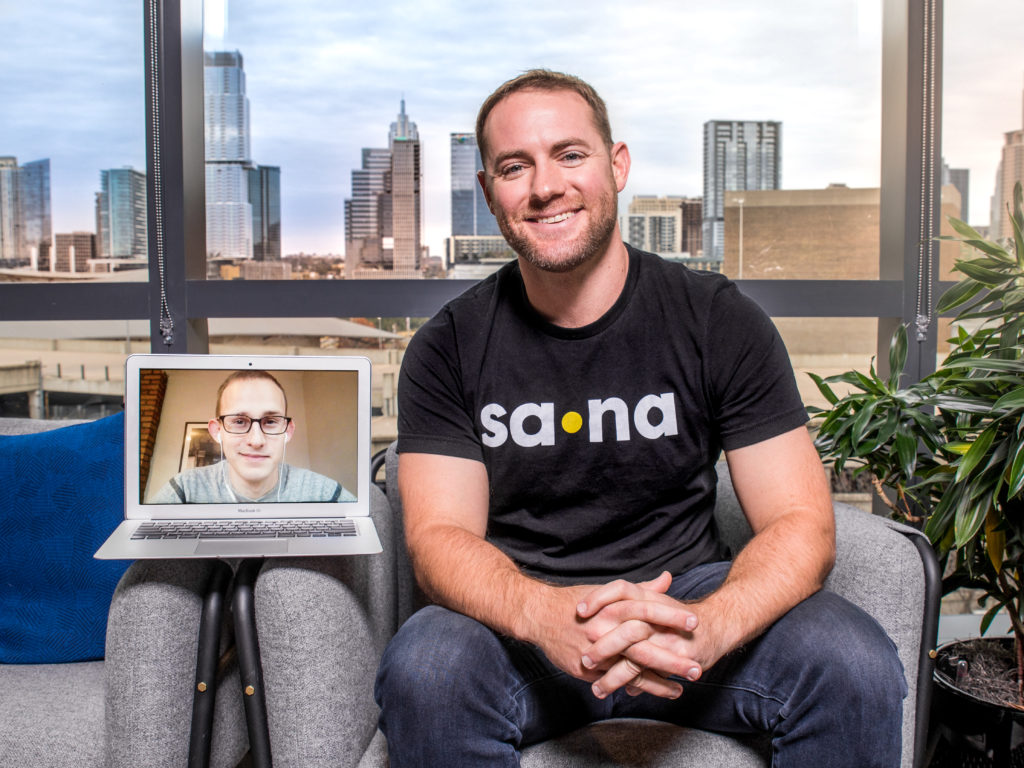
What it does: It
has developed a health insurance platform that allows small to medium-sized
business to access benefits and save money.
Why it’s hot: Healthcare
is an industry ripe for disruption. Sana Benefit’s founders, Will Young and
Nathan Hackley want to make it more transparent and less expensive for small to
medium sized companies. Young and Hackley formerly worked together at
Justworks, a benefits and payroll company in New York. They founded Sana
Benefits in 2017 and moved the company to Austin in 2018.
Funding: $9.3 million in seed
funding including $2.5 million from RTP Ventures.
What it does: Smarter
Sorting, founded in 2017, takes unwanted consumer chemical products from cities
and businesses, primarily retailers, and finds a reuse for them to prevent
waste from going up in smoke.
Why it’s hot: It’s
part of the circular economy, which is focused on recycling and reusing goods
instead of disposing of them in a landfill or being burned in an incinerator. Reusing
resources not only provides an environmental benefit but has an economic
benefit for companies as well, this is a strong trend that is becoming
increasingly popular, according to the World Economic Forum.
Funding: $12.9 million to
date, according to Crunchbase
What it does: ScaleFactor
has created a finance and accounting platform that taps into machine learning
to create more intelligent budgeting and forecasting information aimed at small
business.
Why it’s hot: Accounting
and payroll is a huge pain point for many small businesses. It’s a big market. ScaleFactor
recently announced an exclusive partnership with Gusto, the leading payroll,
benefits and human resources technology platform, to deliver automated
accounting services to Gusto users. It enables businesses to sync payroll and
benefits directly with their accounting and financial data.
Funding: $4 million in seed-stage
financing led by Lightspeed Venture Partners.
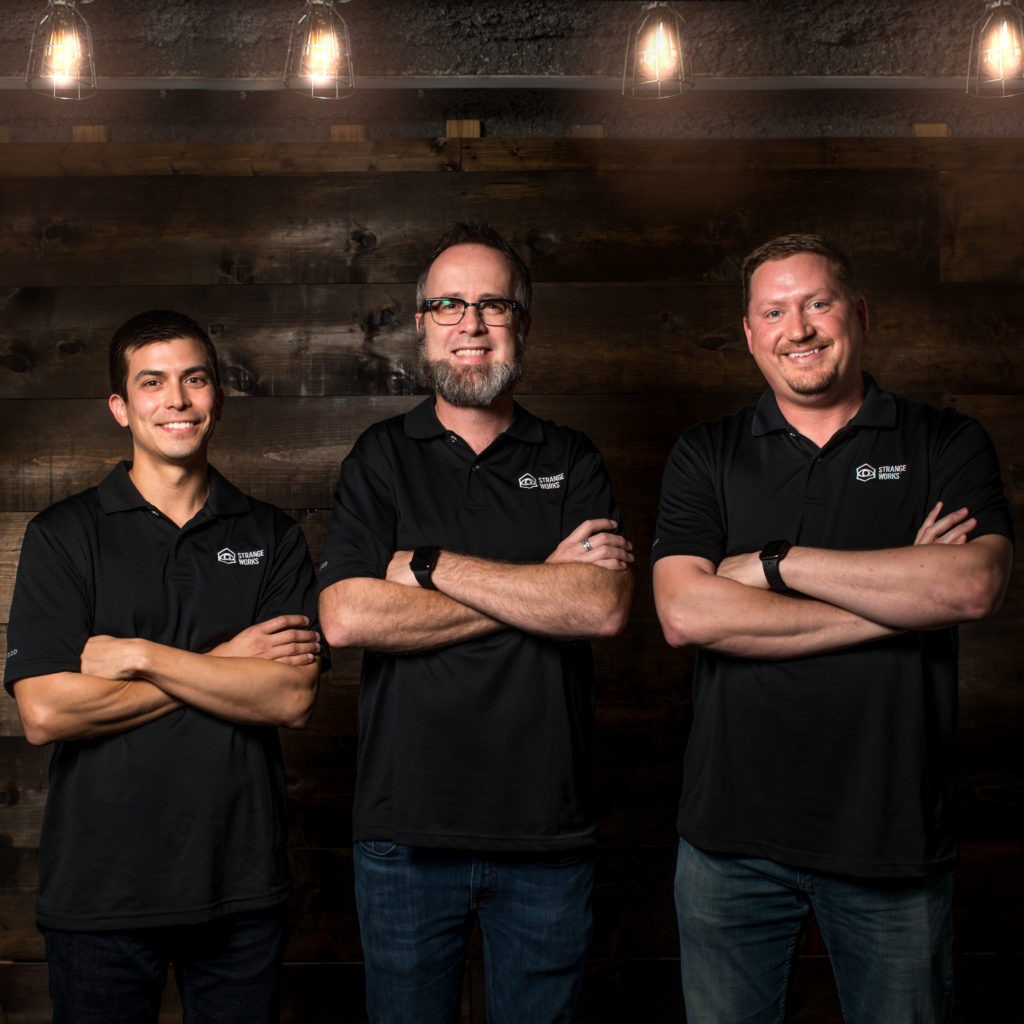
What it does: Strangeworks
is focused on quantum computing. It plans to design and deliver tools for
software developers and researchers and others in the technology industry. It
is targeting applications in the aerospace, energy, finance and pharmaceuticals
industries.
Why it’s hot: Overall,
the field of quantum computing has seen tremendous growth over the last few
years and the U.S. leads all other nations in the number of patents filed in
the field with 295 patent applications filed in 2015, according to William Hurley,
a.k.a. Whurley, Strangeworks’ CEO and Co-Founder. Companies heavily involved in
the quantum computing technology include D:Wave, IBM, Microsoft, Intel, Google
and startups like Strangeworks, Regitti, 1Qbit, QCWare.
Funding: To date, Stoplight
has raised $4.65 million with investment from Bill Wood Ventures, NextGen
Venture Partners, Next Coast Ventures, Social Starts, and Capital Factory.
What it does: It
sells an API toolkit that empowers more efficient workflows.
Why it’s hot: Stoplight has attracted more than
500 paying customers in a vast array of industries including Honeywell,
Zendesk, and SendGrid. Stoplight is seeing a lot of interest from the finance
and healthcare industries.
Funding: $1.5 million from investors including Founders Fund Angel, Tim Draper of Draper Associates, Joshua Baer of Capital Factory, Active Capital, and Boost.VC.
What it does: The
company helps people rent apartments and homes.
Why it’s hot: It’s
the latest startup from Zac Maurais and Ben Doherty. The co-founders previously
started Favor, which sold to H-E-B in 2018. Rentals are a big market with the
average person spending 33 percent of their income on housing, Maurais said.
Funding: $30 million with
funding from Next Coast Ventures, Salesforce Ventures, Andreessen Horowitz, Geekdom
Fund, Active Capital, Techstars and others.
What it does: It has created a software platform that connects a company’s phone
systems with its customer relationship management software, enterprise resource
planning software, marketing systems and more and provides users with a unified
view of the data.
Why it’s hot: Tenfold
has more than 400 customers and is growing quickly. In December, Tenfold
announced it hired Jeff Cotton as its Chief Executive Officer, effective Jan. 1st.
Cotton previously served as the president and chief
revenue officer of San Antonio-based Rackspace where he oversaw global sales,
international operations, and their fastest-growing product lines.
What it does: TrustRadius,
founded in 2012, provides reviews for business software, striving to do for
business people what’s sites like Trip Advisor, Yelp and Cars.com have done for
consumers.
Why it’s hot: It’s
providing transparency to buyers of business software. They get reviews from
professionals about the products they use in their industry. TrustRadius has more
than 100 technology brands including AlienVault, Marketo, TrendKit, Qubit, IBM,
Oracle and TIBCO.
What it does: Underminer
Studios creates virtual reality, augmented reality and mixed reality tools. Its
technology, volumation, creates 3D animated images of any object for entertainment with increased
realism and immersion.
Why it’s hot: The AR and VR market revenue is expected to reach $55 billion by 2021, according to ResearchandMarkets.com. Underminer Studios, run by the husband and wife team of Tim and Alex Porter, is a pioneer in this emerging and growing industry. It is in the Intel Software Innovators program.
Sources: individual companies, archive stories and Crunchbase.
The financial terms of the deal were not disclosed.
Black Pixel, founded in 2007, has a roster of Fortune 500 clients which it provides digital product strategy, design, and development services and builds sports, news, and media applications. Its customers include ESPN, Twitter, the New York Times, Apple, Starbucks, and This American Life.
“Over 100 million people use the software application Black Pixel has created for their customers every day,” according to a news release.
Daniel Pasco and George Dick founded Black Pixel and grew its revenue to $15.2 million in 2017.
“Joining Hypergiant provides us with the scale, talent, and AI capabilities to grow our offerings to the next level–all while integrating our unique culture and unwavering commitment to well-engineered applications into Hypergiant Space Age Solutions,” Daniel Pasco, co-founder of Black Pixel, said in a news release. “We’re excited to take on harder challenges with cutting-edge machine intelligence technology for leading brands across the globe.”
As part of the deal, Pasco will join Hypergiant Space Age Solutions as director of engineering. Black Pixel’s 50 employees and George Dick, co-founder, will also join Hypergiant Space Age Solutions. Hypergiant will maintain an office in Seattle and some of the employees will relocate to Texas.
“I’ve admired Black Pixel’s work for years, watching them create consumer and enterprise applications used by hundreds of millions of people for some of the world’s top brands. Now, Hypergiant is positioned to supercharge our custom AI solutions for clients across additional industries through Black Pixel’s amazing team,” Ben Lamm, founder and CEO of Hypergiant, said in a news release. “Black Pixel’s custom software expertise paired with Hypergiant’s intelligence platforms, customer-base, and ability to execute will be impactful to the industry as whole.”
Hypergiant Industries, with 120 employees, is based in Texas, with offices in Austin, Dallas, and Houston.
Hitch can hook riders up with a ride from Austin to Houston without ever putting a thumb in the air and no need to stand beside the road.
The Austin-based startup wants to make hitching a ride from Austin to Houston easy and seamless and next year, it plans to expand to other cities.
The idea came from the frustration Kush Singh and Tanuj Girish, freshmen at the University of Texas at Austin, experienced trying to get an affordable ride home to Houston and Dallas from Austin. They thought there had to be a better way than taking an expensive plane ride or riding the bus.
So, they came up with a city ridesharing service, Hitch, which provides rides back and forth from Austin to Houston from 7 a.m. to 7 p.m. seven days a week. The average price is $25. Hitchhikers book rides using an iPhone or Android app and Hitch’s system connects them with a driver with as little notice as one hour before departure. The parties meet at a coffee shop near the route and drop off at a similar location in the destination city.
Hitch went through the Longhorn Startup Program and is one of the portfolio companies of Genesis Program, a fund that provides pre-seed capital to student entrepreneurs at the University of Texas at Austin. But Singh and Girish have dropped out of UT to work on their startup fulltime.
They officially launched Hitch this month. And uShip Founders Matt Chasen and Jay Manickam have invested in Hitch and Chasen has joined the company’s board and Manickam serves as an advisor, Singh said.
To date, Hitch has raised almost $250,000. It has enrolled more than 50 drivers and another 1,000 users.
Within the next 18 months, Hitch plans to expand to provide ridesharing services within the entire Texas Triangle, including Houston, Dallas-Fort Worth and Austin. The company has three employees, including two interns and a full-time director of engineering.
While there have been a few other startups that have tried to solve the city to city ridesharing problem, Hitch has a unique model that allows for same day bookings, Singh said.
In two seasons of the Ideas to Invoices podcast, Silicon Hills News has interviewed dozens of highly successful Austin entrepreneurs and many of them recommended books on their podcasts. The following list contains some of their book recommendations to aspiring entrepreneurs.
So, if you’re looking for a gift for an entrepreneur or you are an entrepreneur and you want something to read over the holidays, check out this list.
Joseph Kopser, the co-founder of Grayline and Ridescout, thinks budding entrepreneurs should read “The Intelligent Entrepreneur,” (2011) by Bill Murphy Jr. “If that book doesn’t resonate, and you don’t set it down at the end and say ha I can do that if that doesn’t happen, then maybe you’re not cut out for entrepreneurship,” Kopser said.
Jason Seats, co-founder of Slicehost and Chief Investment Officer at Techstars, advises entrepreneurs to read “Venture Deals: Be Smarter Than Your Lawyer and Venture Capitalist” (Third Edition 2016) by Brad Feld and Jason Mendelson. Mostly as a reference guide, Seats said. “You should not raise money from investors unless you’ve read that book,” he said.
Ryan Wuerch, founder of DOSH, recommends a classic business book: “Good to Great: Why Some Companies Make the Leap and Others Don’t“(2001) by Jim Collins. It focuses your mind from the very beginning on not being average and on creating a spectacular $1 billion company, according to Wuerch.
Mark Rolston, founder of Argodesign, says he doesn’t read a lot of books about design because it’s kind of like dancing about architecture. Tacit knowledge is a big part of design and that’s difficult to capture. He does recommend “Zen and the Art of Motorcycle Maintenance: An Inquiry into Values” (1974) by Robert M. Pirsig, to inspire that tacit knowledge.
Matt Sanchez, founder and Chief Technology Officer of CognitiveScale, suggests people read“Human + Machine: Reimagining Work in the Age of AI” (2018) by Paul Daugherty and H. James Wilson, to better understand the implications of artificial intelligence. It’s a really good overview of the man plus machine scenario and how all that works, Sanchez said. It’s written for business leaders who are thinking about how to apply AI to their industries, he said.
In an age of disruption, entrepreneurs have to constantly be on the lookout for technological change that will upend their business model. While the disruptions that garner the most attention tend to be sudden and radically transformative, just as important are the gradual changes that take place over an extended period of time, slowly eating away at those who refuse to evolve.
A great example of this phenomenon is website design. In some important ways, websites haven’t changed much in the last 25 years. In other ways, they’re dramatically different. Standards of design, speed, and content are constantly changing.
Here are a few things to consider as you look to make updates to your website in the New Year.
Mobile Matters More
Anybody who is alive and conscious is aware that people are hopelessly addicted to smartphones. And yet, far too many businesses still rely on website designs that aren’t mobile-friendly. Considering that smartphones and tablets generate a majority of global web traffic and over a third of U.S. retail sales, a web strategy that doesn’t target mobile users is as silly as a telemarketer only calling landlines.
A mobile-friendly site is not one that is merely able to function on smartphones or tablets, but one that is optimized for mobile devices, making it as easy as possible for mobile visitors to navigate the site. Sites that aren’t optimized are penalized in Google rankings. Google has a handy tool to check whether your site is mobile-friendly: it takes about five seconds and it should definitely be your first step before making any changes.
Load Speed
Once upon a time, people were willing to wait five seconds for a website to load. Now users begin getting impatient after two seconds. Low load speed not only drives users away, but it prevents you from attracting new visitors due to its negative effect on SEO. There are multiple factors influencing load speed, including the types and sizes of images, the presence of unnecessary query strings, broken links and parsed JavaScript, among many others.
Whether you designed your site ten years ago or last week, it’s worth checking out how your site compares to others in terms of load speed. GTMetrix offers a free tool that quickly analyzes your site and creates a report showing how your site compares to others on various metrics that affect speed.
Aesthetics
There’s nothing that will scare customers away faster than pre-Y2K web design. Even if your website isn’t nearly that old, it could easily appear outdated if it hasn’t been redesigned in the last few years. Take a look at your competitors’ sites and be honest with yourself: does yours look as good? Try to get some objective feedback from customers, colleagues or a focus group.
It’s important to recognize that even if your website looks decent, the design may not align with your brand identity and it may lack some design flair that could boost its productivity. Adding video, for instance, offers a completely different form of media that may broaden your website’s appeal.
Content
Visitors to your site need to be able to quickly understand exactly what you’re offering and how they can take advantage of it. While content that describes your values is important, it should not distract from the concrete product offering.
Your content needs to be crafted to align with your overall brand identity, whether that means youthful and spunky or conservative and button-downed. There’s no simple formula for writing blog posts or white papers. The proper tone and wording depends on your audience, so it’s key that your content reflects the culture, interests and, above all, reading habits that are characteristic of your buyer persona.
Above all else, your website content needs to be written and edited by a professional. Entrepreneurs often underestimate the importance of the written word, but it can make or break a business. Just as a well-crafted sentence can turn a visitor into a customer, grammatical errors, typos or sloppy writing can instantly discredit a business.
Conversions
It’s important to identify what types of conversions matter to your company and orient your website toward driving those conversions. SaaS companies tend to optimize their website for free trial subscriptions, while managed service providers might lead with a free demo request. Regardless of the business model, you will want to optimize for initial top-of-funnel opt-ins like newsletter offers or free resource downloads. These easy call to actions should be strategically displayed, such as above the fold on a landing page or at the end of a blog post. Visitors should not have to think about how to get in touch with you. Just as important, you need to make the conversion process as easy as possible for the users. The amount of information you ask of them must be commensurate with the value the gated content you are offering them in return.
If one type of conversion isn’t generating interest, you may need to rethink how you’re pitching it on the site. Are people not finding it? Is the call to action unclear or the button color not attention-grabbing? The key is to review your website’s backend data to see how visitors are engaging with your site.
Apple Thursday announced a new $1 billion campus in North Austin with 5,000 additional jobs.
Apple also reports the 133-acre campus, which is less than a mile from its existing facilities, could grow to 15,000 employees and is expected to make Apple the largest private employer in Austin.
“Apple is proud to bring new investment, jobs and opportunity to cities across the United States and to significantly deepen our quarter-century partnership with the city and people of Austin,” Tim Cook, Apple’s CEO, said in a news release. “Talent, creativity and tomorrow’s breakthrough ideas aren’t limited by region or zip code, and, with this new expansion, we’re redoubling our commitment to cultivating the high-tech sector and workforce nationwide.”
Cook visited Austin last year to announce a partnership with the Austin Community College District to offer its App Development with Swift curriculum to students. The program allows students to learn app development skills that will prepare them for careers in the technology industry.
Already, Apple has a large presence in Austin. It has a large seven-building campus in Austin with more than 6,200 employees and is the largest campus of Apple employees outside of its headquarters in Cupertino, California. Apple’s Austin operations focus on chip engineering, technology, administration and customer support. And the nearby Flextronics Factory assembles the Apple Mac Pro.
“Apple is among the world’s most innovative companies and an avid creator of jobs in Texas and across the country,” Texas Governor Greg Abbott said in a news release. “Their decision to expand operations in our state is a testament to the high-quality workforce and unmatched economic environment that Texas offers. I thank Apple for this tremendous investment in Texas, and I look forward to building upon our strong partnership to create an even brighter future for the Lone Star State.”
“Jobs created at the new campus will include a broad range of functions including engineering, research and development, operations, finance, sales and customer support,” according to Apple.









 By LAURA LOREK
 Sponsored Post
 Your content needs to be crafted to align with your overall brand identity, whether that means youthful and spunky or conservative and button-downed. There’s no simple formula for writing blog posts or white papers. The proper tone and wording depends on your audience, so it’s key that your content reflects the culture, interests and, above all, reading habits that are characteristic of your buyer persona.