
 Austin-based Newgistics, which makes e-commerce products, has acquired Tacit Knowledge, a digital commerce consultant.
The terms of the deal were not announced.
“Like Newgistics, Tacit Knowledge is a trusted partner to some of the world’s most recognizable retail brands,” Bill Razzouk, CEO of Newgistics said in a news release. “Both organizations also share a reputation for excellence, making Tacit a perfect fit as Newgistics launches an end-to-end e-commerce offering that brings together best-in-class technology solutions spanning the entire customer journey.”
Both companies share similar cultures, values, mission and an entrepreneurial spirit, Chris Andrasick, CEO of Tacit Knowledge, said in a news release. “With the launch of our new end-to-end e-commerce solution, this is a particularly exciting time in Newgistics history, and we look forward to playing a key role in the company’s continued growth.”
Tacit Knowledge, founded in 2002 and based in San Francisco, has 80 employees.
Page 261 of 352

Krista Endsley, CEO, Abila
The terms of the deal were not disclosed.
Abila, which changed its name in July from Sage Nonprofit Solutions, sells software to nonprofit organizations and government agencies. Avectra sells customer relationship management software to nonprofits and associations.
“We are delighted to welcome Avectra’s highly regarded product set, talented team and significant base of clients into the Abila family,” Krista Endsley, CEO, Abila, said in a news release.
The combined company now has 8,000 customers and will maintain offices in McLean, Chicago and Maitland, Fla.
In March, Sage Nonprofit Solutions was acquired by Silicon Valley-based private equity firm Accel-KKR from Sage Group PLC.
 At Javelina’s on Rainey Street in Austin, FrameBuzz officially launched its online video conversation platform Tuesday.
The startup’s free platform lets people have a conversation while watching a video online. The messages appear in the upper corner of the video screen.
“Social conversations around online video are disjointed right now and filled with spam, giving people a bad taste in their mouth when it comes to video commenting. Instead of using separate social networks to have conversations around videos or using static, after-the-fact commenting, people can use one platform for coherent, threaded, moderated conversations within the video itself. With FrameBuzz, we want those conversations to live on as part of that video, in the moment, anytime someone presses play,” Jason Kohn, FrameBuzz co-founder said in a news release.
The FrameBuzz platform allows video viewers to interact with the content creators. The platform provides immediate feedback on YouTube or Vimeo videos.
FrameBuzz tested its platform with several Austin businesses including UPG Video Marketing, Winding Road Magazine and fashion creators.
“We want to change the way people interact with video. Current commenting solutions simply don’t allow for intelligent conversations around online video. FrameBuzz provides the glue between content creators and video connoisseurs whose interactions will shape the way video is produced, shared, and discovered,” Aaron Lindsey, CEO of FrameBuzz said in a news release.
To use the service, go to FrameBuzz and sign up for a free account and then start commenting on videos online.

Eric Sonnier and Broderick McClinton, Co-founders of Equity Endeavor
And although that practice has been approved by Congress and signed into law by President Obama as part of the JOBS Act, equity-based crowdfunding still isn’t allowed. That’s because the U.S. Securities and Exchange Commission has not yet signed off on the practice and provided the rules to regulate equity based crowdfunding. Those rules are expected to go into effect on Sept. 23 and the SEC is currently seeking comments on them. Angellist, a site that helps tech startups find investors, thinks the new rules are too complicated and will hurt startups. Equity Endeavor decided to go a different route.
“We wanted to create a more efficient ecosystem for funding startups but we couldn’t wait for the government to come up with its regulations,” said Eric Sonnier, co-founder of Equity Endeavor.
So the startup company did a pivot.
“Out goal is to help small businesses,” said Broderick McClinton, the site’s other co-founder.
So they decided to focus on rewards-based crowdfunding for local businesses. They plan to launch this fall with five companies each in Austin and New Orleans.
McClinton and Sonnier are now both Harvard Business School students who will graduate next spring. They received a small grant from Harvard to work on their startup. They’ve split their time between Austin, where they have work out of Capital Factory and New Orleans. Sonnier graduated from the University of Texas at Austin and McClinton graduated from Tulane University in New Orleans.
Right now they are looking for businesses to try out their site in Austin and New Orleans. The businesses must be locally owned and looking to raise between $4,000 and $40,000. Although rewards-based crowdfunding sites like Kickstarter, Indiegogo, RocketHub and others already exist, Sonnier said they felt like a void existed for a crowdfunding site focused on supporting local businesses by a locally-focused crowdfunding site.
“It’s very hard on these national markets to contribute to a small business in Austin, Texas,” Sonnier said.
The whole focus is on helping local businesses reach their communities and expand their customer support.
“It should be just as easy to raise money in Austin, New Orleans and Kansas City as it is in Silicon Valley,” McClinton said.

Duane La Bom, director of learning at Rackspace and head of its Open Cloud Academy.
The academy recently added network administration to its roster of training classes, said Duane La Bom, Rackspace’s Director of Learning and Development.
The class of 22 students kicked off on Aug. 5th and provides training for people to earn their certification as network administrators, network operators and network engineers.
“We’re putting our students through several weeks of intense training,” La Bom said.
The Open Cloud Academy also offers training in Linux system administration, software development and cyber security.
The academy graduated its first class of 17 students in June. Rackspace hired 11 of them and placed three others at local businesses and is still working to find the last two graduates jobs, La Bom said.
The demand for the classes has been strong, La Bom said.
On Aug. 6th, he met with more than 100 people interested in enrolling in the classes during an evening information session. To qualify for one of the classes, the students must first go through Phase I, a self-paced training course. The goal is for them to earn network administration certification so they can advance to the next stage, La Bom said.
“That qualifies them to move into Phase II,” he said. And in Phase II, the students get to enroll in Linux, Network Administration and other classes.
The Open Cloud Academy, based on the sixth floor of the Weston Centre, is similar to Rackspace University at Rackspace’s headquarters. The academy teaches the general public the same cloud computing and system administration skills and technology needed to work at Rackspace. The students pay around $3,500 per course.
The Open Cloud Academy holds information sessions on the first Tuesday of every month. But registration is required to attend.
 Ambiq Micro, an Austin-based maker of ultra-low power integrated circuits, announced Tuesday that is has secured $10 million in Series B financing.
Austin Ventures led the round along with participation from existing investors including ARM, Mercury Fund, Huron River Ventures and other investors.
Ambiq Micro makes technology that lets semiconductors operate at low power levels.
“As more and more markets are demanding devices that are mobile, portable or remote, batteries and low power ICs become essential enablers for business,” Mark Foley, CEO and President of Ambiq Micro said in a news release. “With this investment round, we will proliferate our SPOT platform-based products to these emerging low-power markets and applications. AV is a perfect partner for us as it shares our vision for the rapid growth of the Internet of Things.”
The company’s technology can be used in batteries for smart watches, wireless sensors, smart cards and medical devices.
“Austin Ventures expects Ambiq Micro products to have a major impact in many high-growth applications. Long life will be the driving factor behind consumer acceptance of new networked, battery-operated devices. Ambiq Micro is forging a path to change the market. We are very excited to join its investor group,” Clark Jernigan, Venture Partner, Austin Ventures, said in a news release.
By SUSAN LAHEY
Reporter with Silicon Hills News
Techstars will introduce its inaugural class in Austin Monday night, August 19th at 6:30 at Capital Factory. Announcing its first Austin program in May, Techstars has reviewed applications from more than 850 companies and chosen ten.
- Filament Labs build patient tracking and compliance software around mobile health, behavior tracking, and behavior change. One of its consumer products, HealthSpark, was 1 of 30 hand-selected apps within Aetna’s CarePass initiative.
- MarketVibe (founded by the Whoosh Traffic team at Capital Factory) uses customers web analytics and shopping cart data to teach companies how to get more traffic, leads and sales.
- Fosbury is a cross-platform digital wallet solution for designing, managing and analyzing campaigns on Apple Passbook and Samsung Wallet. Fosbury ensures retailers and other that their customers always have loyalty cards and coupons with them and provides a new way to interact with customers.
- Atlas Wristband takes a new approach to wearable technology in the fitness industry. Atlas combines top talent from Johns Hopkins University, Phillips Healthcare and Maxim Integrated Products.
- AuManil helps Online Retailers identify, manage and grow their most valuable customers – and create more of them. It enables shopper-facing agents to engage high value customers based on behavioral profiles and predictive insights. These targeted, personalized engagements lead to increased revenues, high retention rates, and better customer satisfaction.
- Ube: controls lights and appliances from a smart phone, inexpensively. The company’s Wi-Fi enabled Smart Dimmers, Smart Plugs and Smart Outlets are competitively priced, easy to install, and provide the convenience of controlling your lights from your smartphone from anywhere in the world.
- ProductGram: allows online sellers to extend their store from one outlet to many. Currently in development for Etsy sellers, the mobile app will push an attractive listing, not just a third party link to drive more product views to increase sales via other channels, with checkouts happening wherever engagement happens.
- Testlio: opens a network of mobile testers to developers needing every last bug uncovered. The company has created tools for software testing that use real time chat, integrate issue reports into their existing systems, and do daily/weekly testing based on the customers own release schedule.
- Accountable: streamlines and simplifies HIPAA compliance by providing a suite of tools and resources for firms, from necessary agreements and policies to risk assessments and employee training. All required pieces are tracked for completeness and time-sensitive expiration, with monitoring and alerts maintaining compliance. Audits are as simple as printing out a report and all requested information.
- ProtoExchange: is a cloud-based network of professional 3D printing services that allow businesses to source the production and material capabilities of the network in a scalable, cost-effective, and time-efficient manner.
Brandon Marker, analyst with Techstars Austin, said the accelerator went through every one of the applications and wound up sitting down with 40-50 teams either in person or on a video call. Techstars has a very specific list of criteria. For example, Marker said, they tend not to accept single founders because “It’s very difficult to control and manage everything going on in the TechStars program while you’re growing, building and managing your business at the same time.”
Matt Ford, a spokesman with Techstars said the criteria boils down to: “Team, team, then idea. We’re looking for talented, passionate co-founders with a nice balance of skills.”
Techstars is a 13 week program with a demo day at the end of October.
“The difference (between Techstars and other programs) is going to be our approach to mentorship and growing community within Austin,” Marker said. “The mentors have a very natural, organic connection to the company. There’s no pay, no incentive. It’s just do you want to meet with them? Do you want to take any of them on beyond the initial meeting?”
Techstars recruited 90 mentors among serial entrepreneurs, investors and others. Each of them met with Jason Seats, managing director of the Techstars program in Austin, during the selection process. The companies’ goals vary depending on where they are in the development of their companies.
“They’ll have focused long term vision,” Ford said.
“We’re pushing them to a stronger, more meaningful business model,” Marker said. “When they’re done, they will clearly know what their business is, who their client is and how they want to push that growth.”
 In the past, some kids took classes in High School to learn vocational skills like repairing a car in the auto shop class or crafting some cabinets in the woodshop class.
But today’s workforce requires more high tech skills and most public schools have not kept pace with the change.
In fact, less than 5 percent of the High Schools in the country offer a Computer Science class to students, according to CodeHS.
So what’s the solution? CodeHS, founded by two Stanford University Computer Science graduates, to teach kids basic computer programming. CodeHS is a graduate of the summer 2012 Imagine K12 Incubator.
This fall, 400 students at Highlands High School in the San Antonio Independent School District will get to learn computer programming thanks to a grant from Rackspace Hosting’s Chairman Graham Weston’s 80/20 Foundation. It is sponsoring the use of Code HS, a web-based platform, in the school.
Zach Galant and Jeremy Keeshin founded CodeHS to simplify computer programming for kids by turning lessons into interactive games.
“CodeHS users write their own code, starting with a game to direct a dog named Karel through a maze, progressing into more complex projects,” according to a news release. “As opposed to traditional lectures, CodeHS provides individual, personal feedback, ensuring active student engagement and deeper learning of the material. The program includes dozens of tutorial videos, allowing visual, hands-on training for students.”
The focus of CodeHS is to expose kids early on to programming in hopes that they may pursue careers in the field.
“This project will play a role in building a generation of San Antonians who will be a step ahead of their peers when it comes to cloud computing knowledge,” 80/20 Foundation Executive Director Lorenzo Gomez said in a news statement. “Software is an integral part of today’s world, there is no job that doesn’t use at least a small amount of software. The employees who know how to use or fix the software will rise above the ones who do not. They will have competitive edge in the high-skilled, high-paying tech job market and position San Antonio as the cloud computing capital of the world.”
Full disclosure: Graham Weston is co-founder of Geekdom, which is a sponsor of Silicon Hills News.
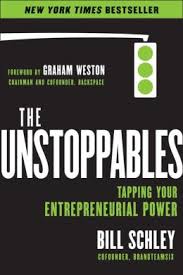 Bill Schley wrote “The Unstoppables: Tapping Your Entrepreneurial Power” with a foreword by Rackspace Chairman Graham Weston. In the book, they dispel myths and share the keys to entrepreneurship with the goal of doubling the number of people who found companies during the next 10 years. Schley recently spent some time with Silicon Hills News and answered a few questions about startups. The interview has been edited for space.
Q. Why has there been an explosion in the interest of entrepreneurship locally, nationally and globally?
A. I think people recognize that entrepreneurs are going to make the jobs, the companies and the markets. They are going to make the innovations. They are going to make the changes that matter. Change is only accelerating. The whole world is going faster and it takes an entrepreneurial mindset and approach to function and succeed in such a dynamic new market. You need people who think like entrepreneurs who can adapt and change on the fly. You can sit on your laurels less and less and less. Entrepreneurial thinking is designed for this new world. People recognize that the old fashion jobs are going away and something has to replace them. The entrepreneurs make the new jobs with 80 percent of the new jobs created by companies that are less than five years old.
Q. What are the traits of successful entrepreneurs?
A. There’s a lot of myths about that. It’s more about what they are not, than what they are. They are not necessarily geniuses or visionaries or people who like risk, or people who are highly educated and specialized, or rich. They are entirely unremarkable people from the outside. Everybody has a dream but for most people they just remain dreams. The entrepreneur wants to turn that dream into a reality. He takes steps to do that. He gets in motion and once he gets in motion he just keeps swinging. The successful ones realize it’s an obstacle course. They keep persisting. A high number of them get to succeed. But first, they must overcome that emotional ability to get started. It’s an emotional ability to stand up to risk. They are risk mitigators more than they are risk takers. They want to get someplace so they are trying to remove as many obstacles as they can.
Q. What is the best way for an entrepreneur to get started?
A. One of the most important ways you can get started is to not be doing it alone but to have a founding team–whether it’s one, two or three more people. Find other people and share your passion and your mission. We found that the quality of the team is such a huge success multiplier. It’s the whole approach and philosophy behind the Navy Seals who only do things in three or four man teams. One thing is to see if you can find those teammates. Another thing is to find an idea that inspires you. Find an idea that inspires you to get started and find other people to go on that mission with you.
Q. Where do entrepreneurs go for help once they’ve decided to start?
A. Collaborative workspaces like Geekdom can help provide resources. There has to be some capital to start most businesses. Friends and family financing is often the first infusion of capital. Most of the companies on the Inc. 500 list started with under $10,000 of FFF–friends and family financing. And you create a very simple business plan.
Q. Why did you write The Unstoppables?
A. We wrote The Unstoppables to encourage more entrepreneurs. When people decide they want to do something badly enough they figure it out. They’ve been doing that for centuries. There weren’t books, business schools, incubators and collaborative workspaces. We think we can tap another whole tranche of entrepreneurs if we can take away the mythology people have and help them with their emotional ability to deal with fear. The book is also about what we call accelerated proficiency. It’s a process of learning a very small number of principles that help align the whole process called The Unstoppable Six. We developed the whole doctrine because we believed that the real essence of entrepreneurship isn’t being taught in business schools. But entrepreneurship can be tapped in people if you show them that essence. It’s a little bit of a manifesto of what you can do.
Q. What are some of the myths of entrepreneurship?
A. That an entrepreneur has to be this unique special person with all of these advantages. The idea is to get more people in motion.
Q. Most startups fail, so what is the biggest indicator that a company will succeed?
A. 1) If customers like your product enough to pay you more for the product than it cost you to make, and– 2) If your team has tried and failed a few times but kept at it– that proves your people have the resilience you need to keep swinging–that they are UnStoppable.
Q. Is there enough money to fuel the startups? There’s been talk about a Series A funding crunch and that companies can’t find money to take their venture to the next level.
A. There’s an awful lot of money sitting out there. If you really have a good idea you can find some resources.
Q. Are the startup ideas big enough to be transformative?
A. A lot of times I look at them and I say no. I look at what’s going on in Web development and mobile apps space and they aren’t necessarily business ideas. They are product apps. Many are what we call solutions looking for a problem. But the more ideas you have, the more chances you create. Sure, some of the ideas are silly and frivolous but out of all that comes the revolutionary stuff. You can’t always tell the difference at the beginning. The more people we have doing it, the higher the chances are that we are going find the gold. That’s why we have to get millions more people in motion. That’s what happens when more people realize they’re UnStoppable.
Full disclosure: Graham Weston is a co-founder of Geekdom, which is a sponsor of Silicon Hills News.
By ANDREW MOORE
Reporter with Silicon Hills News
 The Austin tech scene wouldn’t be complete without a few game studios – all of which are trying to find a place in a competitive market. Developer FoxySoft is working to carve out their own niche with the their adult Massively Multiplayer Online Role Playing Game Venus Rising, which lets gamers fight, buy property, and find love in a virtual Roman city.
FoxySoft was created in September 2012 by 15-year MMORPG developer Alex Allen, who has worked on other titles such as D.C. Universe Online. Tired of the hectic schedule and constant layoffs in the game industry, Allen decided to create her own niche game that combined elements of MMOs and Adult titles.
Venus Rising will work similarly to MMORPG juggernaut World of Warcraft – allowing players to work together to kill enemies and find loot. Additionally, however the game will allow users to buy property, throw parties, chat with other players, and even have virtual romantic encounters with those players.
The startup will use the increasingly popular freemuim business model that allows users to download the game at no cost and then make in-game purchases, or microtransactions. Such transactions will mostly be for cosmetic items, such as clothing, but may also include weapons and items with rare game play benefits. To access additional content, including the adult content, users will have to purchase a subscription.
FoxySoft contracts two developers on a regular basis and other help as needed. It is currently bootstrapping on a budget of $100,000 and looking to crowdsource another $5,000 in the short term. Allen hopes to eventually raise around 1.2 million, which will help her hire more artists and programmers to flesh out the game further. Venus rising is scheduled to release an alpha product this fall and plans to release the full game in late 2014.
Have questions or comments about the show. Leave a comment on our Facebook Page!