Category: San Antonio (Page 24 of 62)

WellAware of San Antonio Lands $37 Million in Venture Funding

WellAware LogoWellAware, an oilfield analytics startup in San Antonio, received another $37 million in funding.

Billionaire Carlos Slim, Ed Whitacre Jr., former CEO of AT&T and General Motors and former vice president Dick Cheney led the investment.

The company plans to use the money to further develop its software for oilfield data collection, storage, visualization, mobility and predictive analytics.

“The oil and gas industry is predicted to spend over $33 billion by 2022 on oilfield intelligence solutions to address key industry challenges such as managing labor shortages, maintaining license to operate, reducing capital expenditure, and increasing efficiency and production,” according to a news release. “Current oilfield intelligence solutions are expensive, dependent on communication technologies that can be antiquated and may soon be retired, and often include a software interface that can be difficult to use and are limited with regard to interoperability and scale.”

WellAware’s product provides a remote monitoring and production management platform that is reliable, less expensive and provides for data visualization and predictive analytics.

Disrupting Education to Create a Highly Skilled Workforce

By LAURA LOREK
Founder of Silicon Hills News
IMG_3439To cultivate a high tech industry, a city needs highly skilled workers.

Yet almost every city in the country faces a shortage of workers with Science, Technology, Engineering and Math skills.

And San Antonio is no exception.

“San Antonio children face a crisis: only 63 percent of public school students graduate high school and, by national standards (ACT or SAT), only 9 percent of them graduate college ready,” according to Choose to Succeed.

To improve those statistics, the nonprofit organization has recruited and supported the nation’s highest performing public charter school operators to serve 80,000 San Antonio students by 2025.

To discuss “Innovation in Education,” Choose to Succeed hosted a panel Tuesday at the Pearl Brewery.

Richard Whitmire, author of On the Rocketship, moderated the panel featuring Jarrad Toussant, vice president of Rocketship Education Texas, Tom Torkelson, founder and CEO of IDEA Public Schools, Lorenzo Gomez, executive director of the 80/20 Foundation and Geekdom and Carri Baker Wells, board chair of the San Antonio Independent School District Foundation.

“What you have seen at public schools is an evolution of choice,” Wells said, citing magnet school programs, in district charter schools and public schools with programs specializing in architecture, engineering, business careers and health careers.

“You can see across our public schools how they are trying to reach the desires and wants of families with choice while preserving that which has been great within public schools,” she said.

Competition is spurring public schools to up their game, Wells said.

“But it can’t do it alone,” she said. “This city will never be a strong education city without a strong public school system.”

Yet Charter schools disrupt education by teaching kids better and cheaper than traditional public schools, Torkelson said. IDEA Public Schools plans to have 20 schools with 14,000 students by 2017 in San Antonio, he said.

Nearly 100 percent of its students get accepted to a four-year college or university, he said.

“It’s not just about more money and more resources,” he said. “It’s about a fundamental redesign about the way we do public education to improve student outcomes.’’

High tech businesses in San Antonio see the need for more highly skilled workers, said Gomez with Geekdom and the 80/20 Foundation and formerly with Rackspace.

To meet the needs for Geekdom and 80/20 Foundation, Gomez hires workers through Elance and oDesk to complement his staff of two employees at the foundation and four at Geekdom.

His virtual assistant in Bangladesh does WordPress, programming and backend database troubleshooting for $4 an hour, Gomez said.

“That’s what our students are up against,” he said. “They are being blasted by people who have superior skills in the marketplace.”

Efforts are underway to improve the skills of the local workforce.

Last year, the 80/20 Foundation worked with SAISD to bring CodeHS to Highlands High School to provide an introduction to computer programming class to 450 freshmen students. The program continues next school year.

“Technology is a second language just like everything else,” Gomez said. “Students need to get it as early as possible and as fast as possible.”

Gomez mentioned Netscape Co-Founder turned Venture Capitalist Marc Andreessen’s article “Why Software is Eating the World” as evidence of why students need programming skills. No industry is immune to the cannibalization of software, he said.

“Students that have these skills are going to be the students that win,” Gomez said. “The city that can produce these skilled students wins too.”

One of the biggest impediments of having ubiquitous computer programming education in the schools is the lack of qualified teachers to teach students, Gomez said.

Wells with SAISD agreed.

“You’ve got to have the talent in the classroom,” she said.

And businesses have a responsibility to drive innovation in the school system, because schools can’t do it on their own, she said.

Blended learning models integrate technology with traditional direct instruction to customize a student’s learning experience.

In San Jose, the schools leverage adaptive online programs to reconfigure the schedule to teach students each week, Toussant said.

“Real-time changing of the structure of instruction that wasn’t happening year to year. It was happening week to week,” he said.

“On state standardized tests, Rocketship is currently the highest-performing low income elementary school system in California, and its students are performing like those in nearby affluent suburbs such as Palo Alto, providing its ability to close the achievement gap,” according to a new release. “Rocketship is in the process of applying for a Texas charter, with plans to open its first school as early as the fall of 2015.”

Blended learning is catching on in San Antonio.

At Geekdom, Gomez mentioned Codeup, a 12-week program to teach nonprogrammers how to code. Codeup guarantees a student will find a job within six months of graduation or they will refund half of the $10,000 program fee. The program uses seven instructors but also has an online element.

At Highlands High School, the CodeHS program is a web-based program. Teachers can help students, but also the software has remote mentors who can help kids when they get stuck.

Gomez stressed the human element is still essential.

“If you lean too much into the software, you become the matrix,” he said.

Also, if you lean too much into the hardware you run into problems, Torkelson said. He mentioned Apple computers in the ‘80s, laptops in the ‘90s and now iPads as technology saviors for schools.

Google Glass is the next big transformative tech for schools, Toussant joked.

“There is a danger of this faddism,” Torkelson said. There isn’t a magic bullet that is going to save schools, he said.

“It still comes down to transformative classrooms teaching students and remarkable leadership at the principal level,” he said.

And for further reading – check out San Antonio Charter Mom’s review of Richard Whitmire’s book “On the Rocketship.”

The Hard Truth About Entrepreneurship

By LAURA LOREK
Founder of Silicon Hills News

Photo courtesy of Gary Schoeniger

Photo courtesy of Gary Schoeniger

Entrepreneurship can empower ordinary people to do extraordinary things.

Yet a huge disconnect exists between what is being taught about entrepreneurship and what they are really doing, said Gary Schoeniger, co-founder and CEO of the Entrepreneurial Learning Initiative.

And the myths lead people to the wrong conclusions, he said.

In fact, the typical Inc. 500 startup has no new technology or Intellectual Property and the entrepreneurs are not writing business plans, Schoeniger said.

“They have little or no formal planning,” he said. “Their market research is ad hoc instead of in depth, the median startup capital is about $10,000 coming from credit cards, second mortgages, friends, fools and family.”

And 40 percent have no experience in their chosen field, he said.

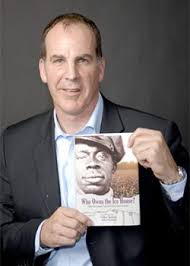
Schoeniger could not find a curriculum to explain how entrepreneurs actually operate so he created the Ice House Program. It is based on the book “Who Owns the Ice House” with interviews of more than 300 successful entrepreneurs. He wrote the book with Clifton L. Taulbert, one of the inventors of the Stairmaster. The Ice House Entrepreneurship Program is designed to teach the entrepreneurial mindset.

Peter French, president of Cafe Commerce, brought Schoeniger to San Antonio to teach the program to San Antonio entrepreneurs.
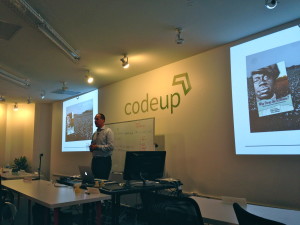
IMG_3437Schoeniger spoke for two hours Monday night to a group from Café Commerce in San Antonio about the Ice House Program, funded by the Ewing Marion Kauffman Foundation of Kansas City.

During his talk, Schoeniger dispelled some Silicon Valley stories about entrepreneurs getting rich quick and coming up with earth-shattering innovations. He thinks those stories give people the wrong impression about what it takes to succeed as an entrepreneur. His goal is make entrepreneurship accessible to everyone.

The need for entrepreneurship is huge, Schoeniger said. Studies show that 70 percent of all American workers are not engaged in their work, he said.

“Five us are flapping our paddles in the water and only three of us are pulling the whole boat,” he said.

Jason’s Story

To illustrate how transformative entrepreneurial thinking can be, Schoeniger recounted the story of Jason Campbell. He was a 12-year-old boy in his fourth foster home when Schoeniger met him.

“Jason never knew a father,” he said. “His mom was in prison for the fourth time in his life.”

Schoeniger took Jason in. He went to work on weekends with him at a construction management firm.

At 15, Jason went to live with his mom, but that didn’t last because his mom went back to prison during his junior year.

At the time, Jason had a 1.7 GPA. He dropped out of high school to work at Applebee’s full time. He wanted autonomy.

“I convinced him that movie had already been made and it didn’t end well,” Schoeniger said. “I wasn’t looking to be a hero. I knew the kid. I knew he was bright. I felt like I had no choice but to get custody of him and grab hold.”

Jason enrolled in high school and got a minimum wage job at a construction site. But six weeks into the job, Jason told Schoeniger he hated the job and he wanted to become an entrepreneur.

Schoeniger helped him launch “Jason’s Jobsite Cleanup” with a shop vac, push broom, mop, bucket and some fliers.

Schoeniger told Jason to charge $20 an hour even though Jason normally made $6 an hour.

“That terrified him,” Schoeniger said. It was outside his realm of understanding.

“It’s like I pushed him in the pool,” he said.

Jason spent his first day as an entrepreneur driving around in his 1986 Toyota Corolla looking for a customer. He was afraid to get out of his car. He had a fear of behaving in a way outside of societal norms, Schoeniger said.

When he did approach a group of construction workers, they laughed at him and offered him a job at $8 an hour. Jason said no thanks I own my own business.

“They laughed at him, but he thought that’s survivable,” Schoeniger said.

He kept pitching his service and his pitch got better. He also had to pitch to the decision makers and not the workers. But when he pitched to an owner, the guy turned him down and Jason wanted to lower his price.

“So often when we are behaving in these new ways, we are looking for excuses to go back to the old ways,” Schoeniger said.

The fifth or sixth time he encountered a builder the magic happened, Schoeniger said. The owner gave Jason an address of a house and told him to go there and tell him how much it would cost to clean it.

Jason estimated it would take four hours and offered to do the job for $75. He got the job. It actually took eight hours. But after a few jobs, the man saw Jason was reliable and consistent and he started recommending Jason for other jobs.

Jason hired two of his friends to work for him at $10 an hour. He charged the client $20.

“Which end of that transaction do you want to be on?” Schoeniger asked.

Jason graduated from high school, joined the Marine Corps. Special Forces and served two tours of duty in Iraq. Then he graduated with a B.A. in international relations from San Francisco State University.

Looking back on his experience as an entrepreneur, Jason said the fact that he was reliable was the key to his success. He also saw other people’s problems as opportunities. He would leave the house at 5 a.m. to go clean construction sites before school.

“This was the same job that he hated working for someone else,” Schoeniger said.

The impact of entrepreneurship on Jason was so profound; Schoeniger began teaching a course on entrepreneurship at a local high school. One of his students received a $100,000 contract to clean parking lots.

“I got a call from his father and he asked if there was any way he could take the class,” Schoeniger said.

That’s what led to the creation of the Ice House program, Schoeniger said.

Uncle Cleve is shown on the cover of the Who Owns the Ice House book.

Uncle Cleve is shown on the cover of the Who Owns the Ice House book.

Ice House Owner Uncle Cleve

Schoeniger met his co-author Taulbert in Tulsa. Taulbert, who was born to a teenage mom in the Mississippi Delta and picked cotton as a child, learned to be an entrepreneur from his Uncle Cleve.

Uncle Cleve owned the Ice House. He had four other businesses. He had money in the bank but he still drove an old car and people in the community ridiculed Uncle Cleve because he deviated from societal norms.

“It’s very difficult to make entrepreneurship education formulaic,” Schoeniger said.

That’s why Schoeniger dislikes articles in Inc. Magazine, Forbes that assign attributes to entrepreneurship with titles like “Do you have what it takes to be an entrepreneur?”

“They are assigning the wrong cause to the effect,” Schoeniger said.

People need to stop looking at characteristics and instead create the circumstances that allow entrepreneurs to thrive, Schoeniger said.
Entrepreneurs have to survive in resource-constrained environments and they develop traits to do that really quickly.

“It’s up to each of us as individuals to figure out how to do something useful,” Schoeniger said. “I don’t care if it’s washing windows, curing cancer or making sandwiches.”

Money is a horrible motivator, Schoeniger said.

“Jason hated the job when he was told to do it,” he said. “He was completely immersed in it when he had ownership of it.”

From his research, Schoeniger concluded it’s important for entrepreneurs to hang out with people who are entrepreneurial. They also have to have an entrepreneurial mindset or perspective.

And lastly, the situational facts that will push you down the path are important, Schoeniger said.

“It’s actually an advantage when you have nothing to lose,” he said. “The naiveté works for you.”

That’s because highly uncertain niche opportunities take years of being in the market and just scratching away – that’s how entrepreneurs uncover what’s otherwise undiscoverable, Schoeniger said.

“If you knew how hard it would be you would never get on the path,” he said. “You’re probably better off working for somebody else financially speaking.”

“The Silicon Valley stories pollute our thinking,” he said. “We start to think it should be easy. If I just had the right idea, someone should be throwing money at me.”

In reality, it takes eight years to get to $1 million in revenue.

“It’s not about getting rich quick,” he said.

Codeup Launches Program to Teach Teens to Code for Free

imgresAt the School’s Out Hackathon at Rackspace last weekend, Michael Girdley served as a mentor and a judge.

He also noticed that out of the 500 kids in attendance, about 200 lined up to borrow a laptop computer.

Most of the kids didn’t know computer programming or how to code, he said.

“With so few schools offering programming, many teens in South Texas will go through high school without any exposure to programming,” Girdley wrote in an email announcing the program. “That’s got to change. These kids deserve better.”

Earlier this year, Girdley launched Codeup in San Antonio, a course to teach nonprogrammers how to code. Codeup is on its second class. Girdley has seen the need in the San Antonio community to teach coding to people to get good jobs. The first Codeup class landed 23 job offers with good benefits and salary.

Now he has launched Codeup Teens, a free program where high school students can learn to code during Saturday afternoon sessions with the Codeup staff.

The two-hour sessions will take place starting at 1 p.m. on the fourth Saturday of each month on the 10th floor of the Weston Centre downtown in Codeup’s offices.

Codeup Teens can accommodate up to 30 kids and pre-registration is required, Girdley said. Click here to register for the class.

Codeup staff and former and current Codeup class members will teach the class. The curriculum will be based on the student’s knowledge of programming. It will be customized to fit the needs of each class, Girdley said.

“I think there’s so much demand for this type of stuff,” Girdley said. “We can do this 100 times over in San Antonio.”

GroupDesk and Personal Concert Win Grand Prizes at School’s Out Hackathon

By Jonathan Gutierrez
Special Contributor to Silicon Hills News

images-4GroupDesk and Personal Concert won the grand prizes at the inaugural School’s Out Hackathon for high school students last Saturday.

The GroupDesk team created an online collaborative platform to “nourish productivity and teamwork.” The web application helps teachers and students collaborate on school projects.

“Working with other people can be hard,” according to GroupDesk’s pitch. “With tardiness, non-accountability or even just plain laziness, collaboration can be difficult even amongst the most organized and social of us. GroupDesk was designed to help those who need just a little more organization in small projects, both personal and curriculum-based, by providing a set of simple but powerful tools.”

The app includes chat rooms, task lists, email lists, file management tools and more to encourage collaboration.

The GroupDesk winning team included Miguel Obregon from Katy, Michael Brenan and Andy Sturzu from Houston.

Personal Concert created an affordable, personal audio system “that makes use of tactile transducers to create a sound experience you can feel,” according to its pitch.

The winning teams created products that would be hard for most tenured programmers to create, said Lorenzo Gomez, director of Geekdom in San Antonio and one of the panel judges.

The judges picked the winners based on problem solving, creativity, design and technical aptitude.

As the grand prizewinner for software, each member of GroupDesk received a pair of Beats Headphones and a new Occulus Rift.

As the grand prizewinner for hardware, each member of Personal Concert won Beats Headphones and the team won a 3D printer.

Overall, the sponsors for the event gave out more than $13,000 worth of prizes.

Apps for Aptitude and Rackspace, the cloud-hosting company, collaborated to host the largest hackathon for high school students. Apps for Aptitude, a non-profit startup, develops and publishes mobile applications to fight illiteracy.

The inaugural School’s Out Hackathon brought 500 students from around the country to Rackspace headquarters in San Antonio to participate in the 24-hour event, which kicked off Friday. Some students brought laptops, desktop computers, backpacks, pillows and sleeping bags. Some of them worked straight through the night on their projects. Others slept under desks or at their workstation.

“San Antonio was very well-represented in attendance, but the event also featured out-of-staters from Seattle, Arkansas and California, as well as Dallas, Austin and Houston,” said Daniel Sherrill, Rackspace’s community affairs specialist. “For those kids to come just for this event, was to me so special. And for our local San Antonio kids to get to connect with those other kids, the relationships they made in the last 24 hours are going to last forever. It’s so life-changing.”

Students demonstrated their coding and entrepreneurial skills in front of sponsor representatives from companies such as Rackspace, Google, Microsoft, and Facebook among many others. Apps for Aptitude raised $40,000 in sponsorships to put on the event.

A lot of the students who attended the hackathon had little experience in coding and developing web applications. The event was a competition, but also served as a way for students to seek guidance from volunteers, teachers and representatives from some of the most prominent tech companies in the world.

“It was really brave of them to come here and say, ‘I don’t know anything and I’m OK with that, but I’m going to learn in 24 hours how to build something awesome,” said Josh Springer, CEO of Apps for Aptitude.

“We had been to hackathons in the past, and we found that the best way we learned was through these hackathons because you’re forced to build something or you won’t meet the deadline,” he said. “There’s no, ‘Oh, I’ll just put it off until tomorrow.’ It’s, ‘I have to do it in the next hour or I won’t be able to submit my hack.'”

“People are venturing into code which is one of the hardest things to learn in today’s economy,” Springer said. “(These students) who competed had one goal in mind and they wouldn’t let anything stop them from getting to that goal.”
Gomez, the director for Geekdom, said every city needs an “Apps for Aptitude.”

“They have three high school students that have really been the catalysts for the high school hacking movement in San Antonio,” he said. “It’s something special. And really what they’ve done is give high school students a place where they can meet their tribe. Ten years ago, if you were programming in high school, you were alone. You didn’t know where to go to meet people like you. Apps for Aptitude just gave them a place to do that with SoHacks, (an initiative group that helped organize the event.) We hope to help them do this every single year and we think it’s going to be a great event going forward.”

Making City Data More Accessible at the Alamo Civic Hackathon

By LAURA LOREK
Founder of Silicon Hills News

IMG_3170Software developer Tony Broomes wants to see San Antonio develop into a high tech region along with Austin.

He’s working to make that happen.

On Saturday, Broomes participated in the Alamo Civic Hackathon held at Geekdom on the seventh floor of the Rand building in downtown San Antonio. Code for America and Geekdom sponsored the event along with OpenSATX. More than 30 people participated. Catherine Lester, Allen Buck and Pegy Brimhall organized the event.

It was part of the National Day of Civic Hacking in which more than 100 cities held hackathons nationwide and in some countries, said Buck, the San Antonio event’s captain.

“Our goal is to use open data and open records and to build a more transparent government using technology,” Buck said.

IMG_3181The group met at 10 a.m. and selected a project to work on until the program ended at 5 p.m. They chose to create a web app to help connect entrepreneurs and freelancers with projects for hire by the city.

A lot of times small companies and solo-entrepreneurs don’t know about contract opportunities with the city, Buck said.

With the web app, vendors, like freelancers and entrepreneurs, would be able to create a profile and put information like what type of work they do and what part of the city they work in, Buck said. The app would make it easier to apply for jobs and grants with the city, he said.

“This is a democratizer,” Buck said. “This creates a level playing field for a lot of people.”

Code for America held an event in February at Rackspace to bring together citizens to come up with ideas on how better to access government services. More than 50 people attended.

“The idea is to build an ecosystem of civic minded hackers to work on projects in San Antonio,” said Maya Benari with Code for America. She flew in for the event.

“This is so the people of San Antonio can have their voice heard and be able to shape the way the city works,” she said.

Benari is one of three Code for America fellows working with the City of San Antonio this year. The other two are David Leonard and Amy Mok. They are in San Francisco working on their project for the city.

IMG_3195Code for America is working on creating a platform to make it easy for San Antonio homeowners to fix up their homes, Benari said.

The platform would make it easy to apply for permits from the city online and also to find grants and loans to make improvements as well as connecting homeowners with contractors or volunteer groups, she said.

The fellows expect to complete the project in September and introduce it at the Code for America summit, she said.

“Code for America is trying to reinvent the way city governments can effect change using innovation,” said Lorenzo Gomez, director of Geekdom.

“This particular event is for anybody who wants to come and throw out some ideas for ways for people to innovate from a city perspective,” Gomez said.

Overall, events like the Alamo Civic Hackathon help create new civic habits of getting involved, Gomez said.

IMG_3171“It lets people know you can effect change,” Gomez said. “This removes people away from thinking “Oh there’s no way I can effect the mindless machine, the political machine, that is out there and moving them to thinking hey I can actually help in a real way and I can do it in a safe environment like Geekdom.”

By the end of the day, the group will have a minimum viable product, Benari said.

“I’m glad to see things are starting to be made,” she said.

Any civic hackathon wants to accomplishment something in a short period of time, Buck said.

After the event, the group plans to meet with the city’s information technology department and present its project as an idea the city should adopt, he said.

IMG_3169

San Antonio and Austin Plan to Change the World Through Civic Hacking

logo-1For many people, this weekend will be a time to relax and kick back and enjoy the beginning of summer.
But not for a group of dedicated citizens in San Antonio and Austin. They will be hacking away for free to make the world a better place for everyone.
Saturday is the National Day of Civic Hacking.
San Antonio and Austin are two of 79 cities and 98 civic hacking events taking place from May 31st to June 1st, according to Government Technology.
San Antonio’s Civic Day of Hacking takes place at Geekdom’s Rand building starting at 10 a.m. and runs through 5 p.m.
“This year, openSATX and Geekdom have partnered with CODE for AMERICA to host Cafe Commerce, an entrepreneurial incubator launched by ACCÍON and the Office if the Mayor last month,” according to a news release. “Using city data, we hope to build real-time applications that will ignite local business.”
This will be the second time Austin has held a National Day of Civic Hacking. Its program, ATX Hack for Change, will be held at St. Edwards University. It kicks off Saturday at 5:30 p.m. and it is sold out. A demonstration of the projects developed during the event will be held Sunday night.

Lyft Launches in Austin Without City Approval

images-3Despite restrictions, Lyft, the ride sharing company known for its cars emblazoned with giant pink mustaches, launched Thursday in Austin.
“The Austin community’s overwhelming calls for more transportation options have been heard,” according to Lyft’s blog post. “After a petition started by ATX Safer Streets garnered nearly 4,000 organic signatures from Austin residents – many of whom left comments explaining their need for Lyft and other ridesharing services – Lyft will now be providing friendly, reliable, and affordable rides throughout the Heart of Texas beginning tonight at 7 p.m.”
Lyft provides its ride-sharing service through a free app on an iPhone or Android smartphone. Customers download the app and then they can schedule a ride by inputting the time and place. For the first two weeks, Lyft is offering free rides to customers in Austin.
Lyft is known as a peer-to-peer ride sharing program which means its drivers use their own cars to provide rides to others. The drivers do have to pass a background check, according to Lyft.
“With Lyft, passengers are connected via smartphone to background-checked community drivers – which include a food truck owner and middle school social worker in Austin – all easily recognized by the furry pink mustaches on the front of their cars,” said Katy Dally, spokeswoman for Lyft.
The company is holding a kick off party to celebrate its Austin launch Friday evening at Bungalow on Rainey Street.
While Austin’s City Council formed a task force to study the issue of ridesharing at its recent meeting, the council did not approve the practice. And the city’s transportation department has issued a statement warning Lyft that its drivers could receive citations and have their vehicles could be impounded if they are found in violation of current laws.
“Lyft is not operating illegally in Austin nor San Antonio, as taxi and chauffeur laws in those cities do not apply to Lyft,” Dally wrote in a statement. “In Austin, the city’s passing of a resolution to create a new regulatory structure for TNCs demonstrates that the current structure does not account for emerging and unique business models. We are committed to staying at the table and continuing to work with the City, as we have in jurisdictions across the country.”
Austin is Lyft’s fifth city in Texas. The two year old San Francisco-based company launched in San Antonio in late March but it met with opposition from the city’s taxi cab industry and city officials. Uber also launched in San Antonio in late March and it also met with opposition.
San Antonio’s Police Chief William McManus warned Lyft and Uber drivers against providing rides for pay or else they would be cited for violating the city’s vehicle for hire law and their vehicles might be impounded.
The City of San Antonio formed a transportation study and has held hearings on the ride sharing services. Meanwhile, Lyft and Uber continue to operate and they have begun charging people for rides.
In Austin, Lyft created a Youtube video explaining why it chose the city and also outlining the need for its service including issues such as traffic congestion and drunk driving.
Yellow Cab Austin President Ed Kargbo released a statement regarding Lyft’s launch calling it an “illegal operation” with a “complete lack of respect for the City of Austin.”
“We strongly advise everyone to ask for proof of commercial insurance before using any illegal service,” Kargbo said in a news release. “While they choose to sidestep the rules, we’ll honor a commitment to addressing our city’s challenges through legal transportation options that prioritize the safety of both riders and drivers, including innovations like the Hail A Cab app. We will also continue to respect the process set forth by the Austin City Council — one that is in place for the protection of our residents and visitors.”
Lyft’s service is not illegal, Dally said.
“Despite what Yellow Cab representatives might say, Lyft does protect all passengers and drivers with commercial insurance,” she wrote in a statement. “In fact, Lyft offers three times the insurance coverage as an Austin taxi, and also has more strict background check and DMV driving record check requirements.”

Skyonic Secures $12.5 Million to Develop its Carbon Capture Technology

imgres-2Austin-based Skyonic Corp. announced last week that it has landed another $12.5 million in funding.

The company, which creates carbon capture technology, received the funding from existing investor, ConocoPhillips and from new investor Enbridge of Canada.

Skyonic plans to use the money to further develop its technology, called SkyCycle, which uses thermolytic chemical reactions to capture carbon dioxide emissions. It then converts the CO2 emissions into other products such as hydrochloric acid and limestone.
The company is building a plant in San Antonio, which is expected to be operational in October.

“Stationary emitters are facing a lot of uncertainty right now, with new, stricter EPA regulations expected to be proposed next month,” Joe Jones, Skyonic founder and CEO said in a news release. “As emissions regulations continue to develop over the next several years, SkyCycle can help the industry to evolve with them.”

Skyonic, founded in 2005, has raised a total of $143.5 million to date, according to its Crunchbase profile.

CodeHS Turns Kids Into Coders

By LAURA LOREK
Founder of Silicon Hills News

Students who excelled at the inaugural CodeHS program at Highlands High School.

Students who excelled at the inaugural CodeHS program at Highlands High School.

In the first CodeHS program at Highlands High School this year, Ernest Rodriguez learned to program a computer and to do animation.

“I saw the opportunity and I took advantage of it,” said Rodriguez, a freshman.

Now he wants to be a computer programmer and work at Rackspace Hosting some day, he said.

Rodriguez not only completed the program, but also excelled at it, said Chelsey Cook, CodeHS coordinator at Highlands. The students earn points for completing coursework. They expected students to earn about 100 points by the end of the year. Rodriguez earned more than 600 points.

On Tuesday, Rodriguez and 27 other students, the outstanding performers in the class from Highlands, took a field trip to Rackspace to tour the high tech campus in San Antonio. They also gave a brief presentation demonstrating some of the skills they learned in the program.

This past school year, the entire freshman class at Highlands High School, more than 450 students, in the San Antonio Independent School District, participated in CodeHS, a web-based platform to teach kids to code. Rackspace Hosting’s Chairman Graham Weston’s 80/20 Foundation provided a grant to fund the program.

The coursework teaches the students how to write their own code through interactive games, which then progress into more complex projects and lessons. The program includes dozens of tutorial videos and hands on training.

“I learned that even if there’s something wrong with your computer, you can fix it and understand it,” said Lucinda Angel, a freshman at Highlands. “I feel so connected to the computer.“

For many people, understanding computers is difficult, Angel said.

“But since we’ve been working on it all year, I understand its language now,” she said.

Angel wants to be a lawyer and she’s hoping she can get a job working for Rackspace.

“I’m not a geek or anything,” she said. “But geeks rule.”

CodeHS motivated the students and expanded their horizons, said Joan Jackson, CodeHS teacher.
“This exposed them to so much more,” Jackson said.

A lot of students’ talents came out during CodeHS, said Cook, the program’s coordinator. Some of the students who got average grades in other courses, excelled in CodeHS, she said. And the computer programming coursework helped complement what the students learned in other classes like math and science, she said.

The CodeHS program lets students work at their own pace, Cook said. It also prepares them for college and for the workforce for computer programming jobs that are in demand.

“If they don’t get exposure in high school, they are less likely to know about those opportunities when they get in college,” she said.

Next year, the students who have gone through the program will take advanced computer programming and will serve as mentors to the freshman taking the Code HS course, Cook said.

“We really strongly believe in the model that CodeHS has set up,” said Daniel Sherrill, spokesman with Rackspace.

“We’re looking for ways for our Rackers to further engage with the kids,” Sherrill said.
Rackspace is also interested in applying the CodeHS model to others schools in San Antonio, Sherrill said.

“Anything that is creating that future talent pipeline is something Rackspace is interested in,” he said.
In June, Rackspace will host a high school hackathon with more than 500 students. It’s inviting kids from CodeHS to participate in the hackathon, Sherrill said.

“It’s an opportunity for students to connect with other students from all over who are passionate about code,” Sherrill said.

“We are thrilled with our partnership with San Antonio ISD and Highlands High School,” said Scott Meltzer, deputy director with the 80/20 Foundation. The San Antonio CodeHS program is the second largest in the country, he said.

The CodeHS program will continue next year in a “targeted and focused manner” with about 150 freshman and sophomore students at Highlands High School, Meltzer said. The program focuses on preparing the students to enter a job-training program like Cloud Academy or CodeUp in San Antonio or to go on to pursue a college degree, he said.

The CodeHS program is directly connected to San Antonio’s workforce needs, Meltzer said.

“It’s the next step on their pathway to pursuing high tech jobs in San Antonio,” Meltzer said.

« Older posts Newer posts »

© 2026 SiliconHills

Theme by Anders NorenUp ↑