Smile a lot and wear a great outfit, those are a few pieces of advice given to women pitching their tech startups to investors.
But even that doesn’t seem to work. Women founders actually raised less money last year than in 2020 with female founders securing just 2 percent of venture capital in the U.S. in 2021, the smallest share since 2016, according to Bloomberg News.
To say things are not great for female founders in Texas or across the United States today is an understatement.
The landmark decision of the U.S. Supreme Court in which the court held that the constitution does not confer a right to abortion in Dobbs v. Jackson Women’s Health organization set women back years in their fight for equality.
Couple that with the fact that Texas bans abortions at all stages of pregnancy unless you have a life-threatening medical emergency. Texas law does not provide exceptions for cases that involve rape or incest.
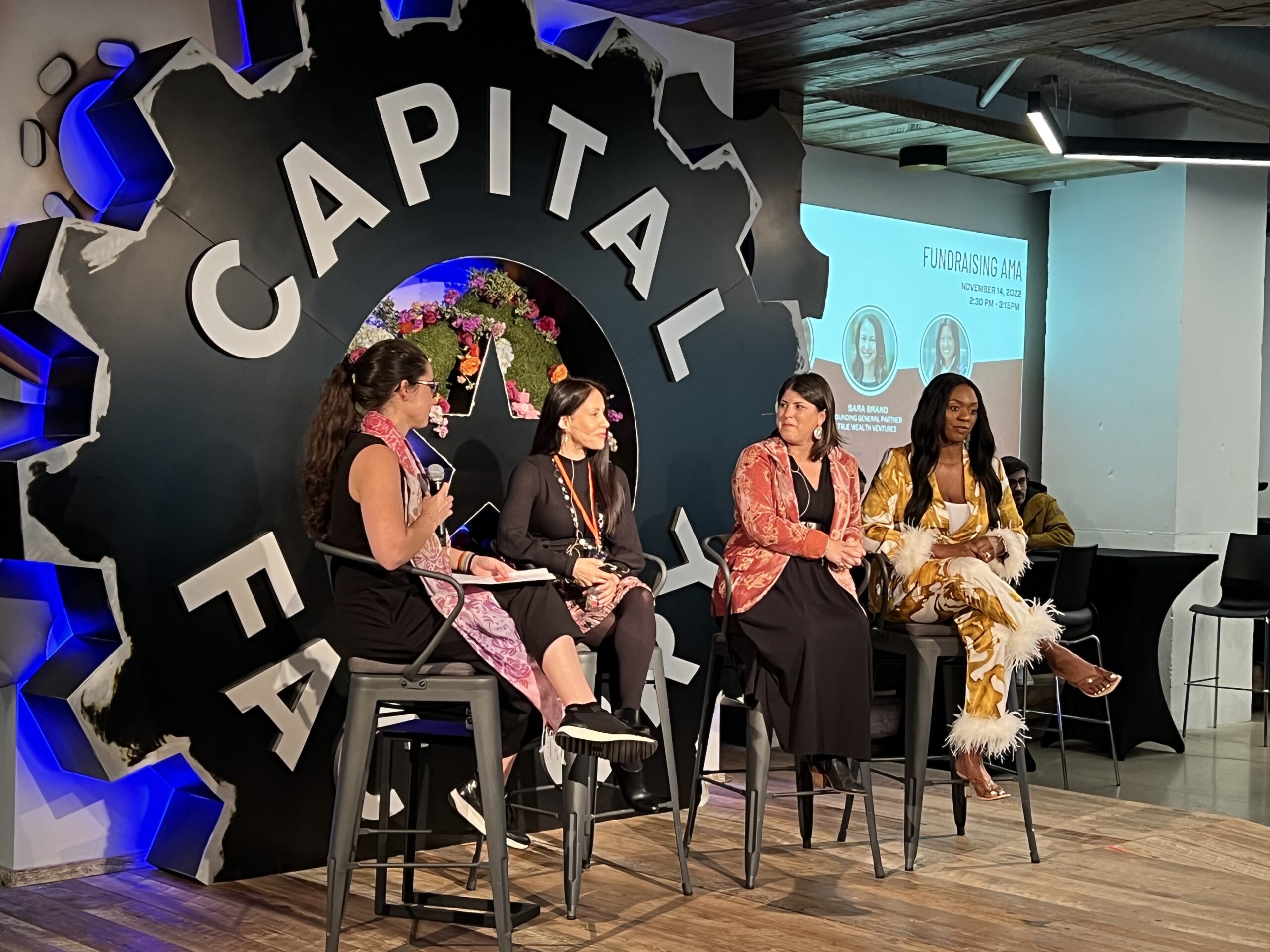
Despite all the obstacles, the first day of Austin Startup Week at Capital Factory focused on women in technology and showed how resilient and innovative female founders in Austin are.
For example, Eunice Ajim, the founding partner at Ajim Capital, launched an early-stage fund and angel community to provide startups in Africa with pre-seed to seed funding, with check sizes of $25,000 to $150,000.
Lesley Robinson, director of the Kendra Scott Women’s Entrepreneurial Leadership Institute, said she sees UT students interested in social, political, and environmental and impact startups.
“We’re seeing a lot more social impact, environmental entrepreneurs, and I like that trend,” Robinson said during an afternoon panel discussion titled “Who Runs the World.”
Ajim said women need to see their differences as advantages.
“When you get in a room and you are different people pay attention,” Ajim said.
She wears a great outfit in a room with a bunch of people wearing suits and that stands out.
“Use it to your advantage,” she said.
Bet on yourself every time, said Cat Dizon, Active Capital Co-Founder, and Chief Operating Officer.
Women pitching to investors need to come in with passion and determination, Dizon said.
“If it’s not a real problem, and you’re not really passionate about it, It comes through in everything that you do and that you say,” she said.
The largest black technology conference, AfroTech Conference, kicks off Sunday at the Austin Convention Center.
It marks a return to in-person events after two years of the AfroTech Conference held virtually due to the COVID-19 Pandemic.
The conference features fireside chats with technology leaders and music performances.
“We are continuing to tackle the diversity gap in Big Tech and AfroTech Conference serves as the destination for those fueling more inclusivity in the industry. As we return in person, our mission remains the same: to further build the Black Silicon Valley by helping fast-growing businesses effectively hire Black professionals and close the wealth gap,” Morgan DeBaun, CEO and Founder of Blavity, which puts on the conference, said in a news statement. “We are thrilled to announce our largest lineup of diverse industry speakers and brand partners looking to engage in meaningful discussions about tech disruption and Black innovation. I am excited for the ideas, funding, and career advancement that will come out of this experience and can’t wait to enhance the celebration with our first-ever music festival of Afro-Latinx and Black artists.”
More than 100 speakers will participate in this year’s AfroTech Conference, which will cover such timely topics as: Securing the Bag: Navigating Tech from Cradle to Career; Climbing to the Top of the Tech Ladder for Engineers and Managers; Web3, Crypto and the Black Economy: Unlocking Inclusive Access with a New Wave of Commerce; Inclusive Product Design: What It Is and Why It Matters, and more.
The 2022 conference takes place from Nov. 13th to Nov. 17th at the Austin Convention Center.
On Sunday, AfroTech’s official welcome and kickoff take place at 3:30 p.m. with DeBaun and Will Lucas in a fireside chat with a performance by Zaytoven.
Other highlights include:
NASCAR driver Bubba Wallace will speak in partnership with DoorDash to discuss strategies to thrive while being the First, being the Only, and being Different in your industry, company, or boardroom.
Rapper and businessman Chamillionaire will take the stage with Silicon Valley Bank to share his journey from rap star to successful founder and investor. He will discuss his entrepreneurial ventures, investment philosophy, and how he’s working to make the tech ecosystem more inclusive and accessible to the Black community.
Mark Cuban, Governor of the Dallas Mavericks professional basketball team of the National Basketball Association, Co-Founder of Mark Cuban Cost Plus Drug Company, and Investor on ABC’s Shark Tank, Haywood L. Perry III and Ansley Carlisle of Mark Cuban Companies will share insights from their journeys to entrepreneurship and how they support emerging founders and investors today.
Creative director, activist, and fashion designer Aurora James will be joined on stage by Blavity CEO and Founder Morgan DeBaun to discuss how to hold corporations accountable.
In another sign things in the Austin startup world are beginning to return to normal following the COVID-19 Pandemic, Austin Startup Week returns to in-person events next week.
The 12th annual Austin Startup Week takes place at Capital Factory downtown Monday through Friday next week. Register here.
“Austin Startup Week has always been about connecting the city’s entrepreneurs and tech community,” Austin Startup Week co-founder Jacqueline Hughes said in a statement. “After two years of virtual events because of COVID-19, we are so excited to be able to unite the people who make growth and innovation possible together in one place.”
Austin Startup Week is free to all registered participants. It features a series of talks, panel discussions, workshops, startup showcases, coffee meetups, lunches, happy hours, parties, and a startup crawl on Friday that requires a paid ticket.
Organizers anticipate 6,000 Austinites and visitors will attend throughout the five days.
This year’s event will feature 12 learning tracks with educational sessions. Featured sessions will include:
The Future is FemTech: Founders and health leaders will address how tech can advance health equity and protect patient rights.
Raising Your Seed Round: How startups can begin their fundraising journey.
How to Engineer a PR Strategy that Actually Works: A guide to credibility for emerging brands.
The Future of The Digital Economy, A Web3 Forecast: Influential web3 executives will discuss the next innovations being built using blockchain technology.
Industry leaders including IOOGO, McKesson, American Express, BCBSTX | C1 Innovation Lab, DuploCloud, SixLab by Studio X, Fross Zelnick, American Airlines, Chloe Capital, Perkins Coie, and Tech Girl will be on hand for sessions, panels, and networking events highlighting the latest trends in business and technology.
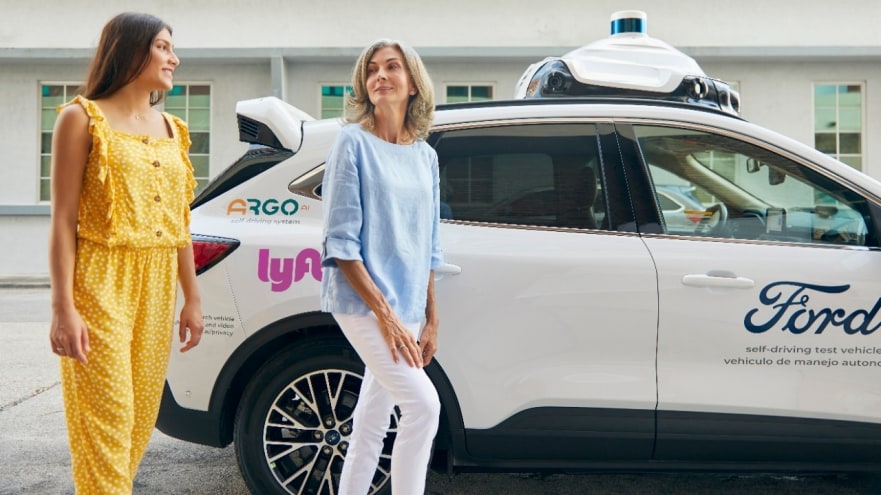
Argo AI, the self-driving startup that launched Robo taxies in Austin, is laying off 78 employees in Austin.
The company filed a report with the Texas Workforce Commission, reporting 68 employees would be laid off at Argo’s 7th Street location and 10 employees at its Congress location. Argo AI had engineering and development operations and fleet operations in Austin, according to its website.
In 2019, Ford announced plans to expand its self-driving vehicle testing to Austin in collaboration with Argo AI. It was only the third market for Ford to test in along with Miami-Dade County and Washington, D.C.
TechCrunch reported on Oct. 26th that Argo was shutting down its operations. The announcement came after Ford announced a write-down of its $2.7 billion investment in Argo following its third-quarter earnings report, according to Ward Automotive.
“The folding of Pittsburgh-based Argo AI, which was valued at $7.25 billion just two years ago, according to the website Pitchbook.com, throws a broom-handle in the spokes of the whole notion of fully automated vehicles – an idea industry players have been touting for five years,” according to Ward Automotive.
In September of last year, Walmart announced that it teamed up with Ford Motor Co. and Argo AI to launch an autonomous vehicle delivery service in Austin, Miami, and Washington, D.C.
On Sept. 29th, Lyft reported that it was offering customers autonomous vehicle rides in Austin, the first commercial autonomous service available in the city. It was working with Argo AI to provide the service.
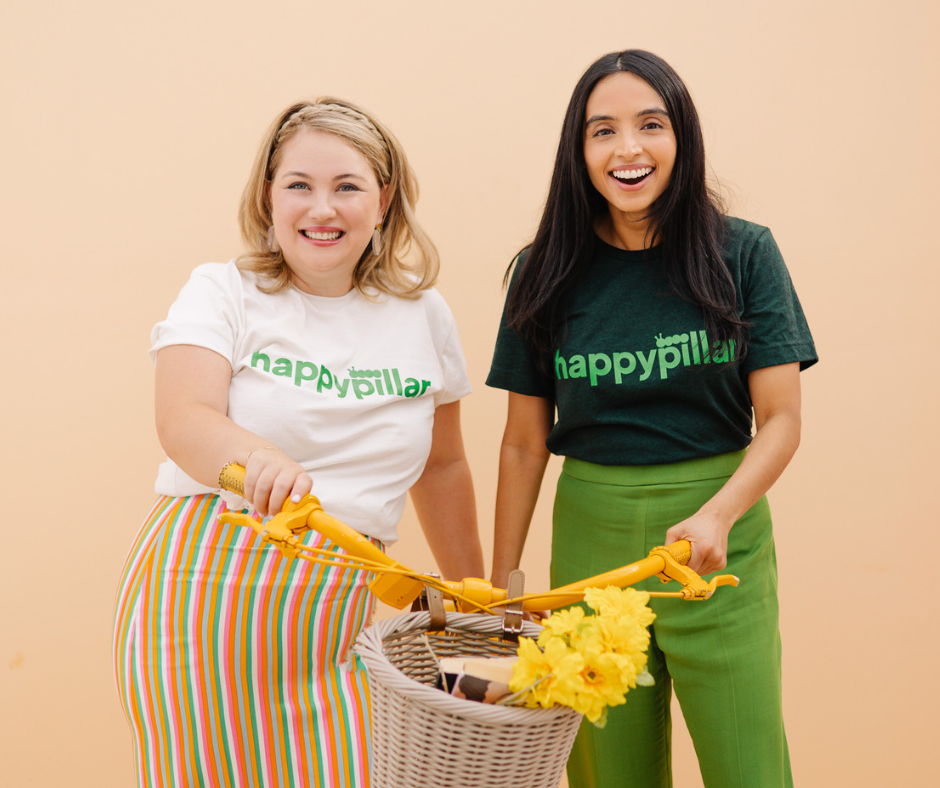
Now an Austin-based startup, Happypillar has come up with a mental health aid for parents. Happypillar’s founders created a digital therapeutic app that teaches parents how to interact with their young children during playtime.
The Happypillar app only requires five minutes a day and provides instant feedback to parents on how they are positively or negatively interacting with their children by listening to the conversation. This allows parents to change their behavior, which may result in more positive behavior from their children.
Happypillar, founded in February of 2022, launched its app last summer and is currently in beta testing. And it is already receiving accolades. The company announced that Happypillar has won Best App in the 2022 National Parenting Product Awards, which is an annual awards ceremony showcasing the best products for families.
“We’re not necessarily a replacement for therapy, we can be used in addition to regular therapy,” said Sam Gardner, CEO, and co-founder.
Gardner has more than a decade of experience providing go-to-market services to Fortune 50 companies. She built customer success teams at a16z and Accel-backed startups including Rasa and Sauce Labs. She is also the mother to a one-year-old son and a four-year-old son.
Happypillar is going to be widely available in the marketplace before the end of the year, Gardner said.
Happypillar provides low-cost mental health support to parents. The app is based on a subscription model and costs $99 for a whole year or $20 a month.
“We leverage machine learning and licensed clinical play therapists to provide parent coaching and real-time personalized feedback,” Mady Mantha, CTO and co-founder, said in a news release.
Mantha previously worked at Rasa and Sirius. She is a strategic advisor to Fortune 10 companies on their machine learning initiatives. She also led a successful exit with consumer app, FeedYou.
Happypillar focuses on teaching parents how to talk and interact with their children during playtime which can result in “significantly improved behavior, reduced caregiver frustration, and a happier, calmer family,” according to the company.
The need for mental health services in the United States is already big and growing, according to a report by the Brookings Institute in December 2021.
“Health and mental health providers, including the American Academy of Pediatrics, are warning that U.S. children and adolescents are facing a mental health state of emergency,” according to the report. “Well before the COVID-19 pandemic, rates of many behavioral health conditions affecting children and youth had been escalating. In 2018, suicide was the second leading cause of death for youth 10-24. The proportion of all emergency department visits for kids related to mental health increased substantially in 2020.”
To exacerbate the problem, mental health services are often not covered by traditional medical plans. Treatment can be expensive and out of pocket for parents. And low-income families often cannot afford to pay for mental health services.
That’s where Happypillar saw an opportunity to provide low-cost help to parents of young children.
“This is an amazing app. The app is teaching parents and monitors what they are doing (awesome technology). I like that the program is evidence-based and there is clear research behind the program,” according to the NAPPA’s evaluation team.
“It’s an honor to be recognized by NAPPA,” Gardner said. “Being a parent today is demanding. Families need access to affordable and actionable support. This award is a testament to the skill, ingenuity, and vision of our team.”
Happypillar raised over $570K in a pre-seed round, including investments from Rana el Kaliouby (CEO, Affectiva and GP, AI Operators Fund), Rob May (CTO, Dianthus, and GP, AI Operators Fund).
Earlier this year, Happypillar raised $469,839 in a successful equity-based crowdfunding campaign on WeFunder from 127 investors. HappyPiller used that money to build the beta version of its app and take it to market.
The money came from interested parents and therapists who are now part of the Happypillar community, Gardner said. WeFunder allows anyone to invest in a company for as little as $100.
Happypillar has three full-time employees. In addition to Gardner and Mantha, Ben Quachtran is the founding engineer at Happypillar. He previously worked at Rasa and Disney. He provided strategic planning and engineering services to Fortune 50 companies.
The company is fully remote and is working to raise its seed-stage round of funding, Gardner said.
The company harnesses artificial intelligence to help businesses and individuals create content. Its technology has been used in companies to help with blog posts and write and illustrate children’s books and help non-native speakers communicate more effectively.
Insight Partners led the round joined by Coatue, Bessemer Venture Partners, IVP, Foundation Capital, Founders Circle Capital, HubSpot Ventures, and others.
The company plans to use the funds raised on product development, customer service, and distribution expansion. Jasper has a new browser extension, released for Chrome. In addition, the company recently released Jasper Art, text-to-image generation, and its newest innovation in the browser extension.
“With the extension, content creators who find themselves stuck can call up Jasper with a single click or keystroke and get contextual recommendations for original content whenever writer’s block strikes,” according to a news release. “The extension can be found at Jasper.ai and works across Google Docs, Gmail, Notion, HubSpot, Shopify, social media platforms, content management systems, and many more content destinations.”
“Generative AI represents a major breakthrough in creative potential, but it’s still inaccessible and intimidating to many,” Chief Executive Officer Dave Rogenmoser said in a news release. “Jasper is working to bring AI to the masses and teach people how to leverage it responsibly so that businesses and individuals can better convey their ideas. We’re grateful to our investors for believing in that potential as firmly as we do.”
Since launching in January of 2021, Jasper now supports more than 70,000 paying subscribers ranging from individual creatives to teams at large enterprises.
Texas Attorney General has sued Google over its use of biometric data collections in Texas.
Attorney General Ken Paxton alleges that Google unlawfully captured and used the biometric data of millions of Texans without their consent.
The lawsuit alleges Google “collected millions of biometric identifiers, including voiceprints and records of face geometry, from Texans through its products and services like Google Photos, Google Assistant, and Nest Hub Max.”
The lawsuit alleges Google violated the state’s Capture or use of Biometric Identifier Act.
“Google’s indiscriminate collection of the personal information of Texans, including very sensitive information like biometric identifiers, will not be tolerated,” Attorney General Paxton said in a news statement. “I will continue to fight Big Tech to ensure the privacy and security of all Texans.”
José Castañeda, a Google spokesman, said in a statement to the New York Times that Paxton “is once again mischaracterizing our products in another breathless lawsuit.” He added, “We will set the record straight in court.”
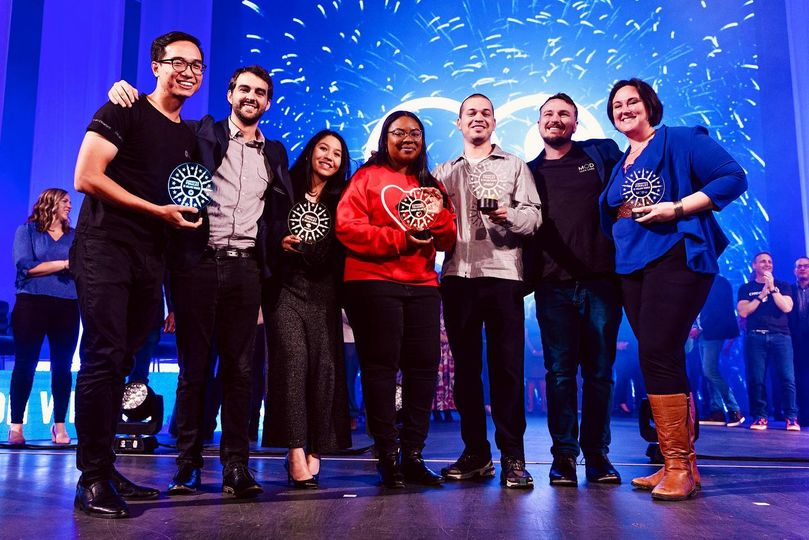
Austin’s Mod Tech Labs won $1 million in the 43North pitch competition in Buffalo, New York last week.
It was one of five companies that won $1 million each. All the winners must move to Buffalo for a year to participate in the 43North Y8 accelerator program in exchange for a 5 percent stake in their companies.
Mod Tech Labs was one of eight finalists who flew to Buffalo to pitch on stage at Shea’s Performing Arts Center and answer questions from a panel of judges.
Alex Porter, CEO, and Co-founder delivered the pitch and Tim Porter, her Co-Founder, and husband, joined her on stage to answer questions. Mod Tech Labs has created an automated platform that uses artificial intelligence to transform photos and videos into 3D, helping scale content for film and transmedia production.
This fall, 43North Finals returns to Shea’s, and the stakes are higher than ever! Five companies will be chosen to receive a $1 million investment and a spot in 43North’s coveted accelerator program. Tune in to see who will seize the chance to build their business in Buffalo!
Founded in 2014, 43North is a nonprofit organization backed by New York State, Empire State Development, the Ralph C. Wilson, Jr. Foundation, and several other sponsors. Its focus is to attract and retain high-growth startups in Buffalo.
In addition to the $1 million, to date, Mod Tech Labs has received about $800,000 in funding.
In April, Mod Tech Labs received $68,474 from 63 investors in a WeFunder equity crowdfunding campaign.
In 2021, Mod Tech Labs participated in the Mass Challenge Accelerator in Austin and was a finalist.
In 2020, Mod Tech Labs participated in the Austin-based Sputnik Accelerator and received $100,000 in funding.
In 2019, Silicon Hills News named Underminer Studios, the former name of Mod Tech Labs, as one of its top 25 Austin-based startups to watch.
In addition to Mod Tech Labs, M Aerospace, an advanced additive manufacturing technology company specializing in 3D metal printing, based in Austin, was a semi-finalist.
Space environmentalist Moriba Jah, an associate professor of Aerospace Engineering at The University of Texas at Austin, has been awarded a MacArthur Fellowship, also referred to as the Genius Grant.
Jah has tracked and monitored more than 30,000 pieces of space junk and other man-made objects orbiting the earth.
Jah is one of 25 individuals selected for the five-year fellowship which comes with an $800,000 no-strings-attached grant. Recipients are nominated based on proven talent and extraordinary originality and dedication to their creative pursuits.
“The orbital highways are getting crowded, and the services and capabilities that we depend upon are in jeopardy of being lost due to collisions from orbiting space debris, and it’s very difficult to predict where and when those things might happen,” Jah said in a news statement.
Jah advocates for environmentally protecting space and eliminating space junk and pollution. He has proposed that companies must take responsibility for the satellites they deploy in space. Instead of abandoning them in space, they should reuse them, according to Jah.
Jah is also co-founder and chief scientist at Privateer, a private space venture co-founded with Alex Fielding, who co-founded Ripcord, and Steve Wozniak, co-founder of Apple.
Space Junk presentation by Dr. Moriba K. Jah, director of the Advanced Sciences and Technology Research in Astronautics (ASTRIA) program, and Associate Professor of Aerospace engineering and Engineering Mechanics in the Cockrell School of Engineering at The University of Texas at Austin.
Astrodynamicist Moriba Jah envisions transparent and collaborative solutions for creating a circular space economy that improves oversight of Earth’s orbital spheres. #MacFellow He’s a 2022 MacArthur Fellow, our award that celebrates and inspires the creative potential of individuals through a no-strings-attached fellowship.
Austin startups raised $701 million in venture capital in the third quarter of 2022, 30 percent less than the same quarter a year ago, according to the latest Pitchbook-National Venture Capital Association Venture Monitor report.
It’s also a nearly 18 percent decline from the $850 million Austin startups raised in the second quarter of this year.
The number of deals funded in the Austin Round Rock metropolitan area also dropped to 70, down 32 percent from 103 deals in the third quarter of 2021.
To date, Austin startups have raised $4 billion in the first three quarters of 2022, compared to $2.4 billion for the same period in 2021.
The top deal financed in the third quarter was $145 million to Founderpath, which helps SaaS founders get funding without having to raise equity. The second largest deal was MicroTransponder, a medical device company that makes neurostimulation devices to treat neurological diseases, which received $73 million in funding, followed by Happy Health, which created a ring to monitor mood and stress, which received $60 million.
Overall, in Texas, startups raised nearly $1.4 billion in the third quarter of 2022, a 33 percent decrease compared to startups raising $2.1 billion for the same quarter in 2021. The number of deals dropped 35 percent to 145 deals in the third quarter of 2022, compared to 223 for the same quarter a year ago.
Overall, U.S. venture capital deal activity in the first three quarters of 2022 was showing signs of stress in response to economic headwinds, according to the Q3 PitchBook NVCA Venture Monitor, the report jointly produced by PitchBook and the National Venture Capital Association (NVCA) with support from Insperity and J.P. Morgan.
“Deal counts fell across all stages for the second consecutive quarter after reaching a record high in Q1 2022 and total money invested reached a nine-quarter low, cementing a tone of investor hesitancy and increased focus on business fundamentals,” according to the report. “This pullback was especially pronounced at the late stage, where nontraditional investors – the largest drivers of mega deals and the overall growth seen at the top of the market – slowed investment in VC-backed startups. Aside from several outsized deals in Q3, annual exit activity has also been lethargic, with 2022’s exit value on pace to fall below $100 billion for the first time since 2016.”
Despite that, VC fundraising has already reached a new annual record in the first three quarters of the year, according to the report.
“The VC slowdown narrative that has been pervasive in the market this year has finally materialized in the data, with nearly every metric aside from fundraising falling sharply in Q3,” John Gabbert, founder and CEO of PitchBook, said in a news statement. “The VC ecosystem, however, has shown remarkable resiliency in the face of continued economic headwinds, raising record levels of capital and closing an unexpectedly high number of deals. In many ways, 2021 was an outlier year, and the VC market is now returning to pre-pandemic levels and long-term trends of steady growth.”
HIGHLIGHTS from the Report:
Investment Activity
VC investment totaled just $43 billion across an estimated 4,074 deals in Q3 2022, a nine-quarter low for deal value. Estimated deal counts have fallen nearly 20 percent from the quarterly high in Q1 2022 – the lowest count since Q4 2020.
Aside from corporate VC (CVC) investors, nontraditional investor participation fell faster than the broader venture market in 2022. PE firms have participated in just 48.3 percent of deal value in 2022 and asset managers just 34.9 percent compared to 58.5 percent and 43.6 percent in 2021, respectively. Meanwhile, CVCs have participated in 25.6 percent of VC deals year-to-date, as well as nearly 45.3 percent of deal value; both figures are in line with past yearly highs.
Total dollars invested in late-stage VC decreased by 48.3 percent from the Q2 figure of $48.1 billion and set a record eleven-quarter low. The median late-stage deal size in Q3, $10.0 million, decreased by a third from the 2021 full-year figure of $15 million.
Fundraising Activity
US VC fundraising reached a new annual high of $150.9 billion in Q3, surpassing last year’s previous record and taking the 21-month fundraising total above $298.1 billion. We are beginning to see momentum atrophy, however, with just $29.4 billion in fundraising added to the dataset since our Q2 report, the lowest quarterly total this year.
In 2022, 79 percent of the record fundraising has gone to funds led by established managers. Emerging managers suffer disproportionately during economic downturns, as LPs are less likely to increase their VC allocations and commit to GPs with limited or no historical track records.
Nearly 2,600 VC funds have been closed since the beginning of 2020, with the majority of these still within their new investment period. That is roughly the same number the US market saw closed from 2006 through 2015.
Exit Activity
With just $14 billion in exit value generated across an estimated 302 exits in Q3, this year’s total exit value is in danger of falling below $100 billion for the first time since 2016.
2022 has produced only 59 public listings, just one year after a record 303 VC-backed public listings generated $670 billion in exit value. The frozen IPO market continued in Q3, with just five companies exiting via traditional IPOs this quarter.
SPACs – once pervasive in the market – have all but disappeared, with only three SPACs completing listing this quarter, a far cry from the peak of 281 listings in Q1 2021. Many of the remaining SPACs that have yet to complete acquisitions are nearing their two-year time limit, at which point shareholders can opt to have their investment returned.
Top 10 V.C. Deals for Austin in the 3rd Quarter
Founderpath Commercial Banks $145 million
MicroTransponder. Software $73 million
Happy Health Healthcare $60 million
Form Bio Healthcare $30 million
CrowdStreet Software $28 million
FeatureBase Software $28 million
Spruce Commercial Services $26 million
INK Games Software $19 million
Zippy Software. $16 million
Theori Commercial Services $15 million
Source: Pitchbook-National Venture Capital Association Venture Monitor data.