Category: Austin (Page 186 of 318)

Wisegate Lands $4 Million in Venture Capital

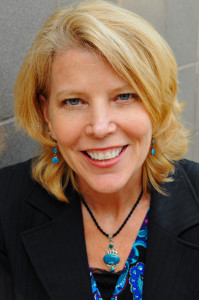
Sara Gates, CEO and Founder of WiseGate, photo courtesy of the company

Sara Gates, CEO and Founder of WiseGate, photo courtesy of the company

Wisegate, a platform for information technology professionals to network, announced Tuesday it has closed on $4 million in venture capital.

The Austin-based startup reported that Arcus Capital Partners led the Series B round with participation from Series A investors including Central Texas Angel Network, Atlanta Technology Angels, Golden Seeds and Cowtown Angels. To date, the company has raised $8 million.

“Wisegate has hit on a massive need in the enterprise IT market to connect senior practitioners with their peers in order to provide real-time data and insights. The traditional analyst firm model of research and reporting cannot move at the pace of technology today, leaving a gap in the market that Wisegate’s social and matching algorithms help to fill. Wisegate helps IT help themselves and I am a big believer in this model and this team,” Ross Singletary, Managing Partner of Arcus Capital Partners, said in a news release.

Wisegate has created a platform for IT leaders to interact and share information. It does not allow marketers, vendors or advertisers to participate.

“Just as we are selective in who can join our membership, we’ve also been very selective with our investors and are proud of the continued support and enthusiasm shown to us in this round. Our Series A allowed us to prove out our product in the market, and with the significant growth we’ve had along with renewal rates over 90 percent, we have done that and then some. This round will allow us to accelerate our growth,” Sara Gates, Wisegate’s Founder and CEO said in a news release.

Wisegate plans to use the funds to hire marketing, sales and customer relations staff.

General Assembly to Open a Campus in Austin

general-assemblyGeneral Assembly, an educational instruction company focused on technology, business and design, has announced plans to open a new campus in Austin.

The company plans to begin offering students in Austin classes and workshop this month. And in early 2015, it plans to offer full-time immersive programs and part-time courses in topics such as web development, user experience design, business fundamentals, digital marketing, product management, data science and more.

The Austin campus is General Assembly’s 13th location. It also opened campuses in Atlanta, Chicago and Melbourne this year.

“As a rapidly growing city with a burgeoning job market, world-renowned tech companies, and homegrown startups, Austin is a natural fit for our expanding portfolio of U.S. locations,” Anna Lindow, general manager, campus education and operations, General Assembly said in a news release. “Our mission is to help people pursue work they love, and we feel Austin has the perfect mix of attributes to make this mission possible.”

General Assembly’s Austin campus will be located within WeWork downtown and will open in early 2015. While it is being built, GA will offer classes and workshops in various locations throughout the city. Part-time courses will begin in March, and full-time immersives will launch in April.

Kingdom Games Buys 4Soils

10568805_560516177404022_3504027959475011316_nKingdom Games has acquired 4Soils, a children’s Bible app producer.

The terms of the deal were disclosed. Austin-based Kingdom Games reports the acquisition “strengthens its mission to provide ethical and moral games to upcoming generations of all ages.”

“We are thrilled to have 4Soils join the Kingdom Games family,” James Parkman, Studio Head of Kingdom Games said in a news release “With our newest line of 4Soils games, parents can instill faith-based learning in an engaging environment that is trustworthy and convenient on mobile devices. The collaboration will continue our efforts to provide quality games to children of all ages in an approachable way that is also entertaining.”

4Soils’ most popular game is Sproutville, a Bible app which offers Bible stories for children and songs, coloring and other games. Other 4Soils games include bedtime story apps and sing-a-longs.

James Parkman and Phil Smith founded Kingdom Games in July 2013. The company has 20 employees and five full time consultants. The company makes a Bible quiz game called Qible made for mobile devices. It is also working on a role playing game for desktop PCs.

Epicor Software Buys ShopVisible

Ep_BI_logo-80Austin-based Epicor Software has bought ShopVisible, which makes cloud-based retail order management software, based in Atlanta.

Epicor Software makes software for retail, manufacturing and distribution businesses. The terms of the acquisition were not disclosed. The company has more than 20,000 customers in 150 countries.

“We are excited about this acquisition, as ShopVisible has spent several years developing and proving out its world-class order management and digital commerce solutions with some highly progressive companies,” Noel Goggin, executive vice president and general manager, Epicor Retail, said in a news statement.

“Epicor and ShopVisible have a shared vision and complementary technology foundation that will provide a complete extended omni-channel solution to retailers and branded manufacturers,” Sean Cook, CEO of ShopVisible said in a news release.

Periscope Holdings Buys BidSync

imgresAustin-based Periscope Holdings has acquired BidSync, a cloud-based procurement and bid notification service for the public sector.

The terms of the deal were not disclosed. Parthenon Capital Partners, Periscope’s private equity partner, assisted in the acquisition.

Our acquisition of BidSync is incredibly exciting and we are thrilled to bring these two public procurement industry leaders together,” President and CEO of Periscope Holdings Brian Utley said in a news release.

“We are enthusiastic about joining the Periscope team,” BidSync CIO and interim CEO Fred Tillman said in a news release. “The combination of these two eProcurement pioneers will have tremendous benefits to our customers and the eProcurement industry as a whole. Not only will this transaction bring together the two industry-leading eProcurement products for the public sector and higher education, but it also will enable BidSync and Periscope to drive further innovations that enable better purchase interactions between agencies and vendors.”

With the completion of the transaction, BidSync employees join the Periscope Holdings team led by Utley. BidSync will retain its location in American Fork, Utah.

OutboundEngine Lands $11 Million in Venture Capital

imgres-6OutboundEngine, an email, social media and content marketing platform, has closed an $11 million Series B funding round led by Silverton Partners.

Other participating in the round were Noro-Moseley Partners, Harmony Partners, Altos Ventures and Capital Factory.

The Austin-based startup plans to use the money on office expansion, product development and new vertical markets.

“The majority of business owners don’t have time or interest in becoming marketing experts,” Branndon Stewart, founder and CEO of OutboundEngine said in a news release. “And they no longer have to. We provide a powerful, affordable and fully automated SaaS marketing platform that turns their existing client list into a stream of repeat business and referrals. It’s more cost effective than buying leads and frees them up to do what they do best – their jobs.”

OutboundEngine provides an engagement platform for more than 4,500 customers.

“We’re excited to see OutboundEngine democratizing marketing automation,” Morgan Flager, General Partner, Silverton Partners said in a news release. “The market is saturated with great DIY marketing solutions, but those don’t help SMBs get more done because they require time and expertise to manage. This is a huge market and we’ve seen plenty of evidence that ‘done-for-you’ solutions will soon become the dominant paradigm in SMB marketing.”

Michael Dell Talks About Taking Risks as a Private Company

By LAURA LOREK
Reporter with Silicon Hills News

IMG_4828The Aspen institute, an educational and policies studies organization based in Washington, D.C., launched Aspen Across America, a series of talks with extraordinary individuals Wednesday night.

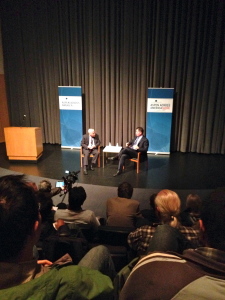
The series kicked off at the Blanton Art Museum with a talk between Journalist and world-renowned biography Walter Isaacson and one of Austin’s top tech innovators and entrepreneurs Michael Dell, founder of Dell Computers. The University of Texas at Austin sponsored the event.

“Austin is a hotbed of innovation and high tech development and it has been for more than 30 years and it continues to grow along with our university,” said Gregory Fenves, executive vice president and provost of the University of Texas at Austin.

The Aspen Institute chose Austin to launch its series, in part, because the city reflects “innovation and creativity and the spirit of human potential.”

Dell’s Entrepreneurial Roots
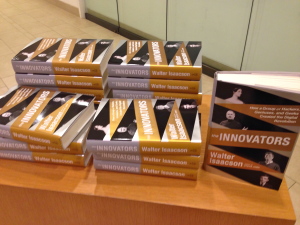
IMG_4819Isaacson’s latest book is The Innovators: How a Group of Hackers, Geniuses and Geeks created the Digital Revolution.” In his role as a biographer, Isaacson asked Dell to recount his early years as an entrepreneur and his fascination with computers as a young kid growing up in Houston.

In Junior High, Dell got access to a Teletype terminal during his math class. He would stay after school and type in programs. He began to learn about microprocessors from Byte Magazine. And there was a Radio Shack store between his house and the school that he frequented.

When he was 15 he saved enough money to buy an Apple II. He took it apart and he figured out how it worked and how to upgrade it.

In 1981, IBM released its personal computer and at the age of 16, Dell became fascinated with them. He started upgrading the machines and that continued when he entered college.

“I kind of had this side activity while I was going to school of upgrading these machines,” Dell said. “It got in the way of my studies a little bit.”

Around November of 1983, his parents thought he was focusing more on his computer business than his studies. They paid him a surprise visit to his dorm room and they gave him a stern lecture. Dell told his parents he would quit doing the computer business and focus on his studies. That lasted about 10 days.

“I really, really tried hard,” Dell said. “During that 10 days, I decided it wasn’t a hobby or a fun thing, it was actually something I was very, very passionate about and something I wanted to do much, much more. If they hadn’t made me stop I might never have done the company.”

The Beginning of Dell’s Computer Business

Dell incorporated the company about a week before finals. He finished his freshman year as a biology major. Then he dropped out of the University of Texas and founded Dell Computers with $1,000. He relocated the company from his dorm room to a proper office.

The business grew in the first nine month to $6 million, Dell said. It grew in the next year to $33 million, he said. It grew about 80 percent per year compounded for eight years and then for the six years after that it grew 60 percent, he said.

Dell’s secret sauce was the way he sold the PCs.

“It was certainly the time of enormous growth in the personal computer industry,” he said. “But what I observed was the way the machines were being sold was inefficient. When we introduced our 286 machine it was twice the performance of the IBM machine and half the price.”

Dell created a new business model and a new way to engage with customers.

At that point, Isaacson pointed out that what Dell has in common with Benjamin Franklin, Albert Einstein, Steve Jobs, Mark Zuckerberg and Bill Gates is that they all dropped out of college.

“Was being rebellious and willing to take that big leap an important part what made you who you are?” Isaacson asked.

“It actually didn’t seem like a big risk,” Dell said. “Because at the University of Texas, if you leave for a semester, you can come back. We kind of came to an understanding, my parents and I, that I would take the business into a different phase and if it worked I would keep doing it, and so far, so good.”

At age 27, Dell became the youngest CEO of a Fortune 500 company ever. Isaacson asked him what that was like.

“It was fun,” Dell said. “The good news is I wasn’t the first young person in the technology sector. There were others I could look to that had done things like that. We were just focused on growing our business, expanding around the world, tons of opportunity.”

Going Private

Next, Isaacson quizzed Dell about the completion of taking the company private. Dell Computers had been a public company for 25 years and last October it went private.

“How liberating has that been?” Isaacson asked.

“It’s been great,” Dell said. “It really has allowed us to think about the business in a different way. To think about it more in a three year, five year and 10 year horizon. To take on some risks that are harder to take on in a public company. It’s allowed us to go after some investments we’ve been able to go after. “
IMG_4827As a private company, Dell has been able to accelerate its growth rate, gain market share in its various businesses and they are all performing well, Dell said. Now that the company is private it has invested hundreds of millions of dollars in projects that will lower its earnings in the short term but will be great businesses years from now, Dell said. The company has made big investments in Healthcare, Cloud computing, software and cybersecurity.

Dell doesn’t have to respond to a 90-day shot clock any longer. As a publicly traded company, Dell had to report its earnings every 90 days and that led to a short-term focus for the business, Dell said. As a private company, Dell enjoys the benefit of planning for the long term.

The healthcare industry and information technology

The healthcare technology industry holds a lot of promise for Dell, he said.

“You look at the economy, healthcare is consuming a larger and larger portion of the economy but IT has not played the transformative role it has in healthcare as it has in other sectors,” he said.

Healthcare will become more effective, efficient and affordable through the use of data and analytics, Dell said.

“Our whole industry has an incredible amount of computing power that is being made available at lower costs,” he said.

By combining computing power with genomic research, healthcare providers can create targeted therapy for specific types of cancer, Dell said. For example, they can tackle conditions like neuroblastoma, a deadly childhood cancer. And in a very short period of time, they can create a therapy for a patient that would have taken 10 times or 100 times the time and it wouldn’t have been as targeted, Dell said.

Medical imaging is another area that can be tapped into to provide better analysis. Dell stores eight billion medical images for customers. If physicians could access that database easily they might be able to use it to diagnose and treat patients more effectively, he said.

The Data Revolution

The next wave in the digital revolution will be the merger of the information technology and life sciences and healthcare industry, Isaacson said.

That will not be the only wave, Dell said.

“If you think about computing power, its cost is just coming down at a tremendous rate,” he said. “For a few pennies, you can put silicon in any number of devices, machines, gadgets and physical objects. And say you go from having a billion connected devices to 100 billion or a trillion. Now you are creating enormous amounts of data and that data can be used to create better outcomes, better results and improved productivity, efficiency. And again you step back and you look at the world’s unsolved problems whether they be in energy, environment or medicine as we get more computational power I think we’ll address those problems at a faster rate. It’s a very exciting time. “

The data economy will provide the next trillion dollars of growth for Dell’s customers, he said.

Innovation in the Education

Education is another area ripe for disruption and innovation, Isaacson said.

Benjamin Franklin created the one room school in Philadelphia and if he walked into a school today, he’d see a room, about 24 desks and a blackboard in the front, the same thing they had back then, Isaacson said.

“The things that have not changed very much, don’t change very quickly,” Dell said. And that’s K-12 education, he said. But Dell, through the Michael and Susan Dell Foundation are working to improve that in the U.S. and throughout the world by using better data and common measurements.

“You’ve got to have a dashboard, you’ve got to have data to judge outcomes,” he said.

Monopolies aren’t very good at changing, Dell said.

“That’s been a big part of the problem with school districts,” he said.

The Michael and Susan Dell Foundation

Isaacson asked Dell what lessons he has learned in business that applies to philanthropy.

“We’ve certainly learned that data matters,” Dell said. “It’s Ok to experiment and make mistakes. We’ve learned that many philanthropic or charitable organizations have great intentions but their ability to execute don’t match up necessarily. We’ve had a pretty hands on approach in ensuring the results of our grants.”

The Dell Foundation likes to find areas to make a discernable difference in a defined amount of time and then move on to something else, Dell said.

Isaacson pointed out that unequal opportunity among kids in our society seems to be widening and asked Dell what could be done to make opportunities for every kid in America more equal?

That’s not just a question for America, but a question for what’s going on in the world economy, Dell said
“A kid that doesn’t have the 21st century skills in a developed country is going to have a difficult time keeping up,” Dell said. “The education system has had a difficult time keeping up with that requirement. I think this is a big, big challenge.”

How Does Dell Foster Creativity?

During the question and answer session with the audience, one person asked Dell how he keeps his company competitive and creative.

One of the challenges big companies have, as they grow, is that they don’t want to take risks., Dell said.

“Part of my job is to reinsert risk into the company, which means you have to accept some failure,” he said. “If you’re failing over and over again at the same thing, that’s not risk, that’s something else. We consciously take on projects. Think about it this way, you’ve got 10 projects and seven or eight of them work out well and a couple of them don’t work that’s ok.”

But the key is to try new things and experiment, he said.

“As companies grow, they often forget to keep experimenting,” he said. “The reason you got to be a large company is because you took on risk, you accepted failure and you weren’t looking for the perfect solution. We have all kinds of programs and incentives to encourage that.”

As a private company, Dell can be bolder and take on more risk, he said.

“The results may be more volatile but that’s the way things happen,” he said. “There’s no such thing as the straight trajectory of a business.”

And the best way to grow is to listen to your customers, Dell said.

“It sounds kind of corny but the best mentors for us have been our customers,” he said. “We just learned the most from our customers.”

One young man asked Dell what advice he would give to young entrepreneurs.

“Experiment,” Dell said. “Don’t be afraid to fail. Just get started. You’ll know more six months after starting. Just start.”

Texas Venture Labs Fall Expo Showcases New Startups

By LAURA LOREK
Reporter with Silicon Hills News

IMG_4756The Jon Brumley Texas Venture Labs at the Univerity of Texas at Austin showcased 12 Austin startups and three Alumni companies at its Fall 2014 Expo last Friday.

The companies presented in three different categories with the consumer products and services startups kicking off the event at the AT&T Executive Education and Conference Center. The other groups included software and technology and biotechnology and medical devices.

“With the expo today, we’re helping companies raise money,” said Rob Adams, director of TVL. The program doesn’t offer any venture capital but 40 percent of its 102 companies have raised money.

Out of the audience of 300 attending the expo, about 75 of them were investors, Adams said.

To date, companies participating in the program, which was founded five years ago, have raised $240 million, Adams said. TVL takes about a dozen companies every semester for its accelerator.

Ten Acre Organics made a lot of connections through the program, said Michael Hanan, the company’s co-founder with Lloyd Minick. The company is building a 10-acre farm as a model that can be copied in other cities. The farm uses aquaponics in which fish and vegetables are grown together to create a zero waste farming environment.

Ten Acre Organics is raising $600,000 and is also applying for $600,000 in U.S. Department of Agriculture funding, Hanan said. They are planning to spend the money on expanding from a 1,000 square foot greenhouse to a 10,000 square foot greenhouse. They also want to expand to 10 acres on the edge of the city limits for their model farm. They participated in the Unlimited USA incubator as well as TVL.

BeehiveID, an online identity verification platform, enrolled in the Texas Venture Labs program to tap into its research capabilities to help the company gather data on its market size, said Mary Haskett, the company’s CEO and co-founder. BeehiveID is also part of the Austin Technology Incubator. It is also a graduate of the Techstars Seattle program.

“I knew the program had a group of really sharp MBA students, law students and engineering students, and all kinds of students in a variety of disciplines working on stuff and it’s free so to me it would be insane not to apply,” Haskett said.

Texas Venture Labs extends an open invitation to any startup in Austin to apply, so why not, Haskett said.

Share is a credit card that allows people to earn money to give to charities with each purchase. Cardholders can track and see the tangible result of their donations through its app and online platform.

The TVL program helped the early-stage startup refine its business plan, said Stephen Garten, its founder.

“They just really helped us with market validation,” he said.

Texas Venture Labs also brings in a lot of successful entrepreneurs from Austin to give talks to the startups. Larry Warnock of Gazzang and Cotter Cunningham with RetailMeNot gave great talks, he said. The company will also be participating in South by Southwest Interactive’s social good pitch next year.

The other companies participating in the TVL Fall Expo included:

Omganics – a startup founded by two mothers that makes wipes and other organic products for children.

RunTitle – a big data startup for the oil and gas industry which provides a database of mineral title research.

DRAFT – formerly known as Hrvt is an online portfolio management company that uses aggregation and crowd source technology.

Inkscreen – has created Photolink, a secure high-resolution photo storage and sharing app aimed at companies, particularly regulated industries such as insurance, government, energy, healthcare and defense.

Predictalytics – a market intelligence platform for the electricity industry to give power providers the ability to predict prices.

Silexta – this startup has developed patented technology to prolong the life of Li-ion batteries, which are used in electric vehicle applications.

Macromoltek – has created software that provides antibody modeling and analysis tools for drug manufacturers.

Vigilant Devices – the company has created a new system to track drug dosages in hospitals to eliminate waste and theft.

Onko Solutions – a new non-invasive medical device to screen and detect cervical cancer in women.

ENTVantage Diagnostics – has created a diagnostic test to diagnose bacterial sinusitis and differentiate it from viral sinusitis. The test is similar in nature to the rapid strep throat test administered at many doctors’ offices and clinics.

Alumni Presentations:

TeVido BioDevices – is using 3D bio-printing of a women’s own cells to build custom grafts for breast cancer reconstruction.

NutureMe – has created a new category of baby food.

Equipboard – is building the world’s largest database of artists and the gear they use.

The Bunker Austin Launches to Help Veteran Led Startups

logo_bunker_austinThe Bunker Austin, a program geared to help veterans become entrepreneurs, has launched at the University of Texas at Austin.

Joseph Kopser, founder and CEO of RideScout, and Craig Cummings, co-founder, donated $70,000 to provide a Student Veteran Entrepreneurship Endowment. The seed fund is earmarked for students with veteran status at the University of Texas at Austin. The first award will be the James D. Pippin Veteran Entrepreneurship Award, a prize in the Texas Venture Lab Investment Competition. Pippin is a Retired Command Sergeant Major with the U.S. Army. Kopser and Pippin served together. The Pippin Award will be given to the most promising startup in TVL with one or more veteran co-founders.

The Bunker Austin is going to be a one-stop place for veterans to plug into all the resources available in Austin, Kopser said. To be a success entrepreneur, veterans need time, talent and treasure, he said. The Bunker Austin seeks to provide access to those things for veteran entrepreneurs.

Kopser and Cummings, both U.S. Army Veterans and graduates of the West Point Class of 1993, founded RideScout in 2011 and recently sold the company to Daimler’s car2Go subsidiary for an undisclosed price. RideScout makes a mobile phone app that let consumers search and compare aggregated ground transportation options to find the best one. It’s available in 69 cities in the U.S.

The company participated in the Jon Brumley Texas Ventures Lab program at the University of Texas at Austin.

The Bunker Austin is an offshoot of The Bunker in Chicago, which launched last month and announced plans to expand its veteran-focused accelerator to seven cities nationwide including Austin. The other cities are Los Angeles, Tacoma, Colorado Springs, Kansas City, Washington, D.C. and Philadelphia.

At the Bunker Austin, the veteran-led startups will have access to mentorship, a network of veteran entrepreneurs and help to find venture capital. The program is accepting application for its first cohort through January 10th. The first cohort will begin on Jan. 21st and last six months.

The Bunker Austin will be housed at the Austin Technology Incubator at the University of Texas at Austin.

“We’ve been really lucky that every company that has come through our program and has had a liquidity event has given back,” said Rob Adams, CEO of the Jon Brumley Texas Venture Labs at the University of Texas at Austin. The program does not require them to do so, he said. He thanked the founders of RideScout for sharing their success with the endowment.

TeVido BioDevices Launches IndieGoGo Crowdfunding Campaign

Laura-Bosworth-199x300TeVido BioDevices, which prints 3D nipples crafted from human cells, has launched a crowdfunding IndieGoGo campaign to raise $35,000.

The Austin-based company recently received a Small Business Innovative Research grant from the National Cancer Institute of the National Institute of Health and a grant from the National Science Foundation for total funding worth $900,000. It is also a graduate of the Jon Brumley Texas Ventures Lab at the University of Texas at Austin.

TeVido is raising the money to cover the costs of filing for patents on its technology and methods. So far, the company has raised $8,428 or 24 percent of its goal. It has 50 days left to meet its funding goal.

“Every dollar counts,” Laura Bosworth, the company’s CEO and co-founder said at the Venture Expo Fall program. She presented an update on her company as an alumni presenter.

“Globally nearly 1.5 million women receive a diagnosis of breast cancer each year, and in the United States it is estimated that forty percent of the nearly 300,000 women diagnosed undergo mastectomy or full removal of the breast tissue as part of their cancer treatment regime,” according to TeVido. “Approximately one-third of all mastectomy patients will undergo breast reconstruction, with the final step in the process involving the nipple areola complex (NAC). Unfortunately, results of currently available NAC reconstruction techniques are unpredictable and studies highlight that patients with loss of the nipple and areola continue to experience psychological distress long after the overall breast shape has been reconstructed. Recreation of the nipple-areola complex has a high correlation with overall patient satisfaction and acceptance of body image.”

TeVido’s patent pending technology called Cellatier uses 3D bioprinting to build custom nipple grafts for patients undergoing reconstructive surgery.

Silicon Hills News did this profile of TeVido Biodevices earlier this year.

« Older posts Newer posts »

© 2026 SiliconHills

Theme by Anders NorenUp ↑