Category: Austin (Page 148 of 318)

Two Austin-based Companies Acquired by j2 Global of Los Angeles

122.w700.r1j2 Global, based in Los Angeles, announced this week it has completed the acquisition of two Austin-based companies.

j2 Global bought Offers.com, a digital media company based in Austin and MX Toolbox, founded in 2004, which provides managed IT services for small businesses worldwide. The terms of the deal were not disclosed.

Offers.com, a coupon, codes and deal site founded in 2003, has raised $7 million in venture capital, according to its CrunchBase profile.

“j2’s M&A program ended 2015 on a very high note,” j2’s CEO, Hemi Zucker said in a news release. “We are committed to drive growth globally, in part through acquisition, and completed twenty-four acquisitions in 2015 with that objective in mind. We are pleased to welcome our new business colleagues and customers around the world.”

The company also acquired Ausweb, a hosting company in Australia and On Demand Recovery, a backup computer company based in the United Kingdom.

j2 provides Internet services through its business cloud services division and its digital media division. Its business cloud services division offers Internet fax, virtual phone, hosted email, email marketing, online backup, unified communications and CRM solutions. Its digital media division offers technology, gaming and lifestyle content through its digital properties including IGN, PCMag, AskMen, Speedtest, ExtremeTech, Geek, Toolbox, TechBargains, Ziff Davis B2B and emedia.

OneSpot Hires Jon Driscoll as its Chief Revenue Officer

Jon Driscoll, OneSpot's new Chief Revenue Officer, courtesy photo.

Jon Driscoll, OneSpot’s new Chief Revenue Officer, courtesy photo.

OneSpot announced this week it has hired Jon Driscoll as its chief revenue officer.

Driscoll previously worked at Spredfast. At OneSpot, Driscoll will be responsible for sales strategy and business development. He reports directly to OneSpot CEO Steve Sachs.

Austin-based OneSpot has created a content marketing platform and its clients include Kraft Heinz, Mondelēz International, Whole Foods Market and Delta Faucet.

“Jon is an industry veteran whose significant experience leading business growth for industry innovators and building successful relationships with major brands is second to none,” Sachs said in a news release. “Content marketing has arrived and is now a central and mission critical part of marketing in general. As OneSpot moves to the next level and continues to ascend as a vital partner to the industry’s top brands, we are confident Jon will be a key figure in expanding and accelerating our leadership.”

Driscoll has more than two decades of strategic sales and client services experience. Before Spredfast, he worked at Mass Relevance. And he started his career at Trilogy Software, and was a founding member of its spin-off, pcOrder.com. A graduate of the University of Texas at Austin, Driscoll holds a bachelor’s degree in Finance.

“I am excited to be joining OneSpot’s team of visionaries, who foresaw that brands would become more like publishers and need to engage customers by building deep content-driven relationships at scale,” Driscoll said. “Content marketing is no longer a campaign effort but an integral part of how modern marketing is done. As the only cross-channel personalization platform purpose-built for branded editorial content, OneSpot is pioneering the field of Content Sequencing, and I look forward to helping further drive that momentum.”

LawnStarter Expands to San Antonio and Four Other Markets

LawnStarter-Press-Kit---Logo-200x48Lawn care is a big business nationwide.

But it’s a highly fragmented industry with a lot of mom and pop businesses.

That’s where LawnStarter has found its sweet spot. The on-demand lawn care service has found success in Austin, Orlando, Florida and Washington, D.C. hooking up lawn care providers with customers and now it’s branching out to other Texas cities including San Antonio, Houston, Dallas and Fort Worth. It also launched service this week in Jacksonville, Florida.

The Austin-based startup, founded in 2013, has created a simple-to-use online system that gives consumers the ability to easily order, manage and pay for lawn care services.

“LawnStarter’s goal is to make ordering lawn care service as easy as ordering a pizza,” Ryan Farley, co-founder and chief operating officer of LawnStarter, said in a news release. “The old, complicated way of hiring a lawn care provider is a thing of the past. Our technology, coupled with our top-tier customer service, is bringing a modern, customer-friendly approach to lawn care.”

“As we enter our five new markets, LawnStarter continues to grow as an innovator and key player in America’s on-demand economy, which was estimated at $18.5 billion in 2015,” Farley said.

Austin VC Investments up 20% in 2015 to $740 Million

By LAURA LOREK
Reporter with Silicon Hills News
iStock_000030057966Large copyNationwide the venture capital industry had one of its best years ever in 2015.

And that’s true for Austin too.

Austin ended the year with $740 million in VC investments, up 20 percent from 2014, in 99 deals, according to the MoneyTree Report from PricewaterhouseCoopers LLP and the National Venture Capital Association, based on data provided by Thomson Reuters. The number of deals dropped 13 percent with 99 deals in 2015, compared to 114 in 2014.

“It’s nice to see the dollars flow into Austin at this level,” said Larry Westall, partner with PricewaterhouseCoopers, based in Austin.

Software deals attracted the most money in Austin and nationwide, followed by biotechnology investments, according to the MoneyTree report.

The slowdown in the fourth quarter in deals in Austin doesn’t mean there will be a slowdown in 2016, Westall said. There may be some leveling off because of macroeconomic news with the Presidential election, oil prices, Isis activity, stock market fluctuations and China’s cooling economy, Westall said. But new investments are definitely seeing headwinds in 2016 locally, he said.

In 2015, Austin led the state in venture capital investments followed by Dallas with $214 million in venture capital in 29 deals, Houston with $161 million invested in 30 deals and San Antonio with $55.5 million in five deals, according to the MoneyTree Report.

Overall, Texas attracted $1.17 billion in 2015 in venture capital invested in 163 deals, down 18 percent in dollars invested from 2014, according to the MoneyTree Report. The number of deals dipped nearly 13 percent to 163 in 2015, down from 187 in 2014.

In Austin, the number one deal for the year was Civitas Learning attracting $60 million in venture capital, followed by Aeglea Biotherapeautics with $44 million, Mirna Therapeutics with $41.8 million and SpareFoot with $30 million.

In the fourth quarter, Austin companies received $100 million in venture capital, down 52 percent from the previous quarter in 16 deals, also down from 32.

In Austin, the top deal in the fourth quarter was Phunware with $19.3 million in investment, followed by Savara Pharmaceuticals with $18.5 million, Trendkite with $10.7 million, TVA Medical with $8.7 million and Vital Farms with $8 million.

Nationwide, venture capitalists invested $58.8 billion in the U.S. in 2015, up 16 percent from 2014, marking the second highest full year total in the last 20 years, according to the MoneyTree Report.

For the fourth quarter of 2015, venture capitalists invested $11.3 billion into 962 deals, down 32 percent in dollars and 16 percent in deals compared with the third quarter.

“While a handful of unicorns and late-stage funding rounds by nontraditional investors continue to grab the headlines, more than half of all deals in 2015 went to seed and early stage companies, with more than 1,400 companies raising venture capital for the first time,” Bobby Franklin, President and CEO of NVCA said in a news statement.

“It was a great year for Austin in terms of overall progress,” said Krishna Srinivasan, partner in LiveOak Venture Partners in Austin. “In the 16 plus years of being in the business, we saw this as the best year for entrepreneurial investment in quality and quantity of deals.”

First financings are improving immensely, Srinivasan said. LiveOak Venture Partners made five new company investments in 2015 and several follow on investments, he said. It also had its first exit in December when its portfolio company, StackEngine sold to Oracle.

“It was our biggest year in terms of financing,” Srinivasan said. “We are seeing a lot of activity.”

Srinivasan doesn’t expect a slowdown going into 2016. The technology industry in Austin is stronger than ever before, he said. Even if the rest of the country starts to slow down, Austin’s technology industry will remain strong, he said.

“Overall the ecosystem is achieving some good maturation,” Srinivasan said. “Talent is moving here from other parts of the country…We’re seeing more interest from the coastal investors. We should see a lot more coastal activity for follow up activity in much greater numbers this year.”

Increasing Diversity in Austin’s Tech Ecosystem

By LAURA LOREK
Reporter with Silicon Hills News

Hugh Forrest, director of SXSW Interactive, heading up a Tech Talk on Diversity at the Austin Chamber

Hugh Forrest, director of SXSW Interactive, heading up a Tech Talk on Diversity at the Austin Chamber

South by Southwest, the nation’s largest technology conference, has worked hard to tackle diversity in technology to get more people who are not middle aged white guys as speakers and participants, said Hugh Forrest, director of SXSW Interactive.

Last year, SXSW declared diversity in tech as its trend event with high profile black speakers like Jesse Jackson and Maxine Williams.

And at SXSW, 33 percent of the speakers are female, Forrest said.

“That’s higher than other tech conferences, but not as high as SXSW would like it to be,” he said. “SXSW has also worked to get more black speakers.”

But that’s not enough, he said.

“I’m painfully aware we have barely scratched the surface of this issue,” he said.

To discuss ways to encourage diversity in Austin’s technology industry, a group of community leaders met Wednesday morning for a “Tech Talk on Diversity” at the Austin Chamber of Commerce.

Forrest co-hosted the gathering with Michele Skelding, senior vice president of global technology and innovation at the Austin Chamber of Commerce. The heads of the Austin Black, Hispanic and Asian Chambers of Commerce attended along with startup founders and community leaders.

Austin needs a lot more mentorship and role modeling, said Jan Ryan, a successful serial tech entrepreneur and head of Woman@Austin with more than 600 members.

“We need more visibility,” Ryan said. “We need to spotlight those that do it well.”

Women@Austin is now featuring a profile of a woman entrepreneur on its website.

Women and minorities in Austin also need more access to funding sources, Ryan said.

Tam Hawkins, interim president of the Austin Black Chamber, said Austin technology companies and entrepreneurs must level the playing field and make opportunities accessible to everyone.

“Diversity is not a feel good, kumbaya feeling, it changes the world,” she said. “It changes business, it changes families.”

“We’re in the room, but we’re not being heard,” said Donell Creech, founder of Griot Media. “That’s where the inclusion part comes in. That’s where we have to realize we need to dig that this is a game of chess and not checkers.’’

Mikaila Ulmer, founder of BeeSweet Lemonade talks about the challenges kid entrepreneurs face.

Mikaila Ulmer, founder of BeeSweet Lemonade talks about the challenges kid entrepreneurs face.

Dominique Bowman, senior development officer at Huston-Tillotson University, said the university has a computer science program but folks don’t reach out to them. Its students often get placed with Facebook or Google but they would also like to have opportunities with startups, she said.

“We need to do more around reaching out to HBCUs (Historically Black Colleges and Universities)” said Natalie Cofield, cofounder of Urban CoLab in Austin.

Black and Latino/Latina entrepreneurs need that inspiration and aspiration by seeing others that look like them, said Preston James, Entrepreneur in Residence at the McCombs Business School at the University of Texas at Austin. He’s also co-founder and CEO of E3 Angel Network, focused on providing resources and funding to minority entrepreneurs.

“There’s plenty of deal flow out there,” James said. “The big challenge I see is how do we get them access to the resources that are critical to build entrepreneurial talent.”

James also sees an opportunity for corporations to help more ethnically diverse entrepreneurs startup their own companies.

And one of the ways to tackle diversity in tech is to encourage more genuine collaboration, James said.

Vi Nguyen, co-founder of Homads, an online marketplace for sublets, said it is helpful to see women who are doing the same thing. She seeks them out in the Austin tech community for advice.

Ashley Doyal, co-founder of RecruitHER, said diversity in technology workplaces creates a path to wealth for minorities and women.

Amy Beckstead, a labor and employment attorney founded Mama’s Austin, a 500 women referral network. It’s important for companies to address obligations people have outside of work, she said. Companies need to figure out solutions like part time tracks to keep women in the workforce and let them have a path to power, she said.

The networking group, Mama’s Austin, refers jobs and leads to each other, she said.

“There is not a better feeling in the world than to see someone you’ve helped get the job that they want,” she said.

Mehron Azarmehr, head of Azarmehr Law Group in Austin, said diverse workplaces aren’t just about feeling good, but they are about making money and performing better.

“One single thing I’ve learned from being a lawyer and also managing people we do much better when we have a diverse staff,” he said. “Everyday I’m noticing how well diversity works not because it’s a feel good thing but because our clients like it.”

“Functionally for business owners and entrepreneurs, if you have a diverse group in ethnicity and gender you are just going to do better in the service industry,” he said. “Your clients will like it. Your employees will like it. And you will make money.”

Medical Focused Coworking Space, HeLiX, to Open in Austin

By LAURA LOREK
Reporter with Silicon Hills News

HeLiX Coworking Lab set to Open in Austin, courtesy photo

HeLiX Coworking Lab set to Open in Austin, courtesy photo

Developing new products for the medical industry requires special facilities like mock surgery rooms and lab space and the community in which to brainstorm ideas.

“Whatever policy, procedure or product you’re working on we want it in an operating room environment so we can mimic those same problems and solutions,” said Dr. Aaron Ali, CEO of MedtoMarket, the parent company behind HeLiX, a new coworking and bioskills lab space.

Redefining coworking, HeLiX is opening this spring in Austin with plans to offer its members everything they need to develop products for the medical, life sciences and healthcare sectors.

“HeLiX will even feature a cadaver lab and a human factors engineering lab where inventors can watch people work with their products,” said Ali, a board certified anesthesiologist, who has worked on several startups. He understands the needs of innovators working to take a product to market.

“The resources are here but they are kind of scattered,” Ali said. “We’re trying to bring everything together in one place versus trying to find them all over the place.”

“Right now, HeLiX is soliciting information from members of the medical, life sciences and healthcare sectors through a survey to make sure they meet their members needs,” said Loxley Browne, Executive Director of HeLiX. “Imagine Tony Stark and Richard Branson collaborating to create the ultimate business ecosystem…that is the space that I am designing for our community.”

Dr. Aaron Ali, Co-Founder & CEO of MedtoMarket, the parent company behind HeLiX

Dr. Aaron Ali, Co-Founder & CEO of MedtoMarket, the parent company behind HeLiX

“You have got to have the right community – the same like-minded people in the same trenches,” Ali said. “Under our roof you will find members from every sector of the life sciences, healthcare and medical field – medical professionals, pharmaceutical companies, reps, biotech companies, dental companies, healthcare IT, medical devices, digital health, universities, hospitals, service providers, associations, startups and individuals. The ability to conversate over coffee to work out the minute details of your plan and have the insight of someone who understands the problems you are addressing. That factor is key in taking your product to market successfully.”

The HeLiX site will be 15,000 square feet featuring collaborative workspaces with 10 desks, 20 private offices, three break-out meeting rooms with whiteboard walls, a luxurious boardroom, a lecture hall equipped to seat 50 people, a bioskills lab space, mock surgery rooms, and a few special items that Browne has designed into the space. Browne plans to announce the site location soon. It is in negotiations for the space currently, she said.

“I want our members to feel the vibrancy of the space and for that to translate into what they are doing,” Browne said. “The design of the space itself will be cutting edge and filled with the latest technology. The factor that will set us apart is the combination of the space, the vetted members and the testing of products in our laboratory facilities.”

HeLiX will also feature events and mentorship with renowned board members and industry leaders for emerging, existing and established individuals and companies creating new products and devices for the healthcare industry, Browne said.

“It’s going to be an absolutely incredible space to collaborate. It’s extremely unique,” Ali said.

Community involvement is also one of the core values at MedtoMarket. In the past, students have participated in labs and have walked away in wonder and with new career choices in mind, Ali said.

“HeLiX plans to do a summer outreach program to work with middle school and high school students to get them interested in medicine,” Ali said.

“We are already creating programs and involving schools in our new space,” Browne said. “We plan to not only mentor businesses and adults but also our future leaders. It is important to show them what is available and the choices they can make. Watching a teenager find that magic niche that excites their mind and makes them want to come back to learn more, that is what makes the hard work and effort that we have put into this worth every minute.”

“The HeLiX coworking space meets a need in Austin that others have not,” Browne said. “It will give Austin the advantage we need to become a shining star in the medical field. I’m excited to open the doors and showcase our talented members to the world.”

Editor’s note: HeLiX is a sponsor of Silicon Hills News.

Star Wars Could Pave way for Austin Hologram Company’s Success

By EVA RUTH MORAVEC
Reporter with Silicon Hills News

Photo courtesy of Zebra Imaging

Photo courtesy of Zebra Imaging

A licensing rights agreement with the Walt Disney Company has awakened the force at an Austin company known as a global leader in 3D visualization.

Zebra Imaging is taking pre-orders for the result of that agreement: a 3D hologram of one of five images from the Star Wars franchise, which sell for $125 a pop or $250 when packaged with a bottom-lit display designed to look like Darth Vader.

Zebra Imaging plans to make more than 40,000 images over the next year, and has had to ramp up operations and capabilities to meet their targets.

But selling holograms hasn’t always been this easy.

For years, Zebra Imaging survived off of government contracts. The commercial side was later to catch on, first at trade shows, and then by architects, oil and gas companies and others who used Zebra Imaging’s products for marketing.

The company’s gallery, tucked in the back of its North Austin building, takes visitors from the beginnings of Zebra Imaging – founded in 1996 by graduates of the Massachusetts Institute of Technology’s Media Laboratory – to the future.

In Zebra Imaging’s infancy, the MIT team entered a contest to help Ford come up with new technology to develop cars. The founders had already been working on holograms, or three-dimensional images that are produced by lasers, but the Ford competition got the founders’ idea out of the lab, said Mike Masters, Zebra Imaging’s chief marketing officer.

“They wanted a replacement for their clay models,” said Masters, explaining that Ford used the models to design new vehicles. “So they made holograms. The early models were $30,000 and took four or five days to print.”

Then came the military, which hired Zebra Imaging to make 3D holographic maps that could be rolled up and carried in a tube, then displayed in the field with a flashlight, sunlight or the headlights of a Humvee. Zebra Imaging made more than 14,000 maps for the U.S. Department of Defense of war theaters in Afghanistan and Iraq.

“There were lots of topography challenges,” Masters said. “But they could send a plane overhead, to a Lidar scan, then we could use those to make a map that can be used in the theater.”

In the gallery, featured alongside a giant Mickey Mouse, before-and-after-9/11 images of the World Trade Center buildings and a sheik-commissioned custom interior plane window image of Arabian horses are several of these military maps, all made in the color green.

The federal government grants, including a $30 million one from the Defense Advanced Research Projects Agency, carried Zebra Imaging through the 2000s, Masters said. But due to the highly confidential nature of the work, it also shrouded Zebra Imaging’s operations in secrecy.

“It was initially thought to be hush-hush. That requirement later went away, but we didn’t do white papers,” said Zebra Imaging’s President and CEO Chuck Scullion.

Then came a failed federal contract bid, followed by changes in war strategy that caused the demand for military maps to evaporate. The company hit a low point in 2012, shrinking from about 50 people to 18.

Meanwhile, though, Zebra Imaging had carved out a niche on the cutting edge of technology, polishing every step of the hologram production process down to the hogel, which is striped like a zebra and the hologram’s equivalent of a pixel. Zebra Imaging also created their own printers, the material that images are printed on, and much more – in all, the company now has about 50 patents with more pending.

Reaching out to other markets, Zebra Imaging continued to make images and eventually, the government contracts returned. In September, the company announced an $86,000 contract to create high-resolution 3D maps of the borders for the U.S. Department of Homeland Security/Customs and Border Protection.

According to Zebra Imaging’s CrunchBase profile, the company has raised $24.5 million in venture capital in five rounds. The Austin Business Journal reported that Zebra Imaging was projected to generate $6 million in revenue in 2015.

Photo courtesy of Zebra Imaging

Photo courtesy of Zebra Imaging

And then there’s the force. After working with a company to produce small, consumer-sized holograms in malls, the idea arose to work on a Star Wars project.

“We didn’t go out looking for Star Wars,” Scullion said Zebra’s President and CEO Chuck in a recent interview. “But it seemed like a perfect fit, and we kind of went all-out.”

After wooing executives in a virtual tour of the company’s gallery, Zebra Imaging secured the licensing rights. Focus groups followed, and uber-nerds of the franchise helped Zebra Imaging’s talented artists and designers tweak products to perfection.

Now, Zebra Imaging will have to decide how to grow. Producing holograms for other franchises like Marvel Comics or Star Trek would be “actually pretty easy,” Masters said, and the company is already working with a children’s TV show on designing playing card-sized holograms. If a customer provides the 3D image, Zebra Imaging can produce a hologram in three hours, at a price starting at $200.

“Whatever we do, we want to make sure we expand properly,” Scullion said. “We can’t grow too fast, but if this grows as we think it will, then debating expansion strategies is a champagne problem at that time.”

Spiceworks Turns 10 and Plans to Add 100 Employees This Year

By LAURA LOREK
Reporter with Silicon Hills News

Jay Hallberg, co-founder and CEO of Spiceworks, courtesy photo.

Jay Hallberg, co-founder and CEO of Spiceworks, courtesy photo.

Ten years ago, four technology workers in Austin got an idea to start a social network for IT professionals.

Today, that network, Spiceworks, is one of the largest IT social networks in the world with millions of monthly users, thousands of customers and hundreds of employees. This week, Spiceworks is celebrating its 10th anniversary by taking its entire workforce to see Stars Wars at the Alamo Drafthouse Theater on South Lamar, said Jay Hallberg, one of the co-founders and its CEO.

The other founders Scott Abel, Greg Kattawar and Francis Sullivan are all still with Spiceworks, which recently moved into much larger headquarters in the Westlake area. Hallberg took over the CEO job from Abel last year.

Spiceworks now has 450 employees and it plans to hire another 100 employees this year, Hallberg said. The company has also raised $111 million in venture capital funding in five rounds from six investors. It last raised $57 million from Goldman Sachs in 2014. Other investors include Adams Street Partners, Tenaya Capital, Institutional Venture Partners, Shasta Ventures and Austin Ventures.

The company has had steady growth and never had trouble making a payroll, Hallberg said. When it hired a guy from Dell in 2007 at its second office building, that guy showed up on his first day on the job. A longhaired engineer wearing crocs answered the door to let the guy in and the office, which had heating problems because of problems with the building, was about 55 degrees. Everyone had space heaters by their desks. The guy thought Spiceworks was having trouble paying its heating bill, Hallberg said.

Spiceworks took some deliberate steps to get to achieve a high rate of adoption and growth, Hallberg said.

“Even before we officially incorporated the company, we drove around Austin and talked to IT Pros,” he said. “We asked them what did they like, love and hate in their jobs. In listening to them we realized we could build a product that could help them do their job.”

The key to Spiceworks success has been having a constant conversation with an ever growing base of IT professionals on how Spiceworks could help them do their jobs better, Hallberg said. It seems to be working. Spiceworks fans call themselves Spiceheads and its mascot is an orange T-Rex called SpiceRex. It holds two major events each year for its customers. Spiceworld in the Spring in London and Spiceworld in the Fall in Austin.

Another key strategic move was making Spiceworks free, Hallberg said.

A lot of services and products are free online for consumers so why wouldn’t they be for businesses? Hallberg said.

“We decided to build a great product that people would use and rave about,” Hallberg said. “This community of users grew around Spiceworks and what we were doing.” Spiceworks attracted a community of like-minded people who supported each other, he said.

Spiceworks revenue comes from advertising. Its products include a Help Desk solution, IT Asset Manager, Network Manager, Mobile Device Management, IT Concierge and the Spiceworks Community.

“My thought back in 2006 – this model works for Google and Facebook, why wouldn’t it work for IT,” Hallberg said. “There’s almost no industry in the world that changes more rapidly than IT. It’s 100 times more complex today than it was ten years ago. Networks exist because there are technology companies. It’s the perfect market for an advertising based model. Every month, millions of IT pros are in Spiceworks doing their jobs and they can learn about services to help them do their jobs better.”

Spiceworks launched advertising essentially from day one, Hallberg said.

“We’d rather know from the beginning whether it’s going to work,” he said. “Secondly, though in the spirit of having an open conversation with our audience, we thought it was a lot better to be open from the beginning.”

On July 24, 2006, Spiceworks launched its Beta product, which included advertisements. Its first download came from Australia, Hallberg said. Today, the network is used in nearly all countries of the world, he said. It’s also used on all continents including Antarctica.

And Spiceworks has more plans for growth in 2016, Hallberg said.

“We’ve been cranking away growing the team,” he said. “We plan to build more products and value for IT pros. We’re working on some more interesting ways for IT pros to find the products they are looking for.”

Silvercar Lands $28 Million in Venture Capital led by Audi

Luke Schneider, CEO of Silvercar, has directed the company through its largest capital raise to date with a $28 million Series C equity issuance led by Audi, courtesy photo.

Luke Schneider, CEO of Silvercar, has directed the company through its largest capital raise to date with a $28 million Series C equity issuance led by Audi, courtesy photo.

Silvercar, a rental car startup with a fleet of silver Audi A4 sedans, announced Monday it has raised $28 million in Series C funding led by Audi.

Other investors included Austin Ventures and Eduardo Saverin, co-founder of Facebook.

Austin-based Silvercar plans to use the funds to expand into other markets nationwide. Also, Silvercar plans to work with Audi to “develop Audi Shared Fleet, a turnkey solution for businesses looking to provide accessible transportation to their employees on corporate campuses,” according to a news release.

“Audi’s confidence in Silvercar allows us to extend our reach even further, and bring forth the concept of shared mobility into many more markets, applications and product offerings,” Silvercar CEO Luke Schneider said in a news release. “It is our goal to accelerate the expansion of our successful airport business in order to integrate these new mobility products into the market as soon as possible.”

In addition, Audi North America President Scott Keogh will be joining Silvercar’s Board of Directors. Keogh will join Ken DeAngelis, Austin Ventures, Samrat Ganguly, Velos Partners, Blair LaCorte, formerly of Texas Pacific Group, and Silvercar CEO Luke Schneider on the board.

“Silvercar represents not just the future of the car rental industry, but a vision for the future of mobility,” Keogh said in a news release. “We want to utilize the company’s strengths in technology and innovation to merge connectivity and mobility for today’s consumer.”

Silvercar, founded in 2012, has raised $58.5 million to date from eight investors in five rounds, according to its Crunchbase profile.

Top Ten 2015 Austin Tech Topics

By LAURA LOREK
Reporter with Silicon Hills News

Looking back at 2015, Austin’s technology industry had a really good year. It was a year filled with big acquisitions, the largest of which was Dell’s offer to buy EMC Corp. In addition, lots of interesting developments like Google’s autonomous cars testing on the streets of Austin continued to showcase the city’s innovative backbone.

So without further ado, here’s our picks for the most talked about tech topics in Austin in 2015.

Austin-Prototype-e14425912085951. Google Driverless Cars – Hand’s down the number one story of 2015 for Austin. People are beginning to understand how transformative this technology is going to be on our society. And Austin is playing a major role in the development of the autonomous car industry. It is the only market outside of California where Google is testing its self-driving cars.

Austin downtown skyline with a bridge, Lady Bird / Town Lake, and an Autumn colored tree.

Austin downtown skyline with a bridge, Lady Bird / Town Lake, and an Autumn colored tree.

2. Why do People Keep Moving to Austin? The city lands on the top of just about every list for hottest startup market and most robust technology industry. Add to that the new Dell Medical School and the healthcare and life sciences opportunities it is going to generate and it’s no wonder Austin is experiencing a population explosion.

static1.squarespace3. Ridesharing – Does anyone remember HeyRide which first disrupted the transportation industry with ridesharing back in 2012? The City of Austin slapped them with a cease and desist order. Well the controversy continues with new regulations on Lyft and Uber that some think might lead to those services leaving the city. Let’s hope this all gets sorted out in the New Year.

10632415_351416988340977_1111700816_n4. On Demand Delivery Services – Amazon launched its two-hour delivery service for Prime customers in Austin and then rolled out its one hour restaurant delivery. Things are getting heated up in the Austin market with so many options for delivery that folks never have to leave their houses any more. The startups include Favor, Burpy, Postmates and Instacart for food. For booze, there’s Drizly, BrewDrop. And for courier services there’s Dropoff.
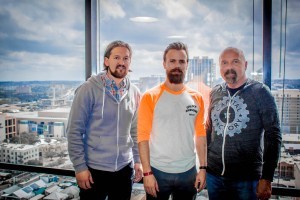
unnamed-1-300x2005. International Connections – Ireland opened up Ireland House, the first Irish consulate in Texas in Austin this year. Angelos Angelou’s International Accelerator is helping foreign startups set up operations in Austin. And Kahoot from Oslo became the first company to join Capital Factory’s international program. Kevin Koym with Tech Ranch also forged new international connections this year with Japan.
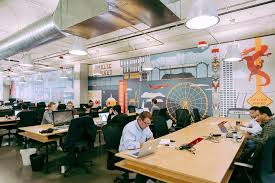
imgres-4-16. Coworking explosion – Austin now has dozens of coworking sites, up from just a handful a few years ago. WeWork launched in Austin in February, filled up and expanded. Techspace announced plans for a new coworking space to open in March next year. And Galvanize is opening in Austin. And Urban Co-Lab set up shop on the city’s East Side.

260027-300x200-17. Acquisitions – The biggest news, of course, was Dell’s announcement to acquire EMC for $67 billion in what is deemed as the largest tech merger ever. Meanwhile, Expedia announced plans to buy HomeAway for $3.9 billion and private equity firms acquired SolarWinds for $4.5 billion. Other notable acquisitions included Heaven Hill Brands of Kentucky buying Deep Eddy Vodka, Accenture acquiring Chaotic Moon, Oracle buying Stack Engine and Ultra/Standard buying Texture Media.

Crowdfunding concept written on a blackboard with chalk

Crowdfunding concept written on a blackboard with chalk

8. Crowdfunding – The SEC adopted new equity-based crowdfunding rules. Texas had already approved crowdfunding last year. And the first Texas crowdfunding portal received approval from the state’s securities board. This is expected to free up a lot more capital for investment into mom and pop businesses.

A white unicorn stallion looks over his vast territory from a mountain cliff.

A white unicorn stallion looks over his vast territory from a mountain cliff.

9. The Tech Bubble and Unicorns – At SXSW, Silicon Valley Venture Capitalist Bill Gurley told the crowd to enjoy the upside while it last. Discussions about Unicorns and the tech bubble continued throughout the year. Bob Metcalfe, professor of innovation at UT Austin, participated in a discussion about the deflation in valuations of so-called technology unicorns or private companies with valuations in excess of $1 billion.

Genetic Science Research as a Medical Abstract Art

Genetic Science Research as a Medical Abstract Art

10. Data – Data and analytics continue to transform entire industries like healthcare. Austin startups like Capsenta and PotentiaMetrics are using data to improve healthcare. And it’s not just in the healthcare field, People Pattern is helping brands better understand and cater to their customers through data analysis.

« Older posts Newer posts »

© 2026 SiliconHills

Theme by Anders NorenUp ↑