Author: LauraLorek@gmail.com (Page 92 of 354)

LauraLorek@gmail.com

Does Your Company Have a Just Cause?

Simon Sinek speaking at the WorkHuman 2018 conference in Austin.

By Laura Lorek
Publisher of Silicon Hills News

To succeed, businesses must have a just cause, said Simon Sinek, the bestselling author of Start with Why.

“A cause so just that not only do people feel like they are part of something bigger than themselves, but they are willing to sacrifice in order to advance that cause,” Sinek said during a keynote address last week at WorkHuman 2018, a conference of human resource professionals. It took place at the Austin Convention Center.

The cause has meaning, Sinek said. It leads employees to work hard, give their best ideas, and sacrifice time away from family to travel to spread this message and sell products because they believe in them, Sinek said.

“A just cause is something you believe in,” he said. “It’s not anything you are against. It is what you stand for.”

“The companies that we love and admire tend to have a just cause that underlies what they do,” Sinek said.

Sinek says it’s about why a company is doing something. What is its purpose?

He cited Southwest Airlines, based in Dallas, as an example of a company with a just cause.

“Southwest Airlines is not an airline – they stand for freedom,” Sinek said. “They stand for the average working Joe…Their history was all about giving the freedom of travel to people who used to take the car or the bus.”

Apple wasn’t founded to be a computer company, Sinek said.

“They were founded to give power to the individual to stand up to big brother,” he said. “The personal computer was the perfect tool to advance that just cause.”

In addition to a just cause, companies must have courageous leadership, trusted teams, competition, and a flexible playbook, Sinek said.

“What is the point of having a just cause if we have don’t have leaders who prioritize the advancement of that cause,” Sinek said. “Then it’s just marketing.”

Courageous leadership comes in many forms, Sinek said.

At a corporate level, it’s committing our organizations to do the thing that advances the cause even if it costs us in the short term, he said.

For example, drugstore chain CVS, a healthcare company, sold cigarettes until the company’s leadership a few years ago banned the sale of cigarettes across all its stores.

“They took billions of dollars of revenue out of their stores,” Sinek said. Wall Street went apoplectic and CVS’ stock price dropped in the short term, he said.

But the stock price rebounded as the action created so much goodwill among its customers, Sinek said. And CVS believes that because of their actions smoking has declined in the U.S., he said.

“That’s courageous leadership on a company level,” he said.

To succeed, businesses also must have trusting and vulnerable teams, Sinek said.

He spent time with SEAL Team Six, “there about 3000 guys that are regular SEALs, only about 10 percent of them are SEAL Team Six,” Sinek said. “They are the best of the best of the best.”

What sets SEAL Team Six apart is its members are selected based on performance and trust, Sinek said.

“The high performer of low trust is a toxic leader,” Sinek said. “They would rather have the medium performer of high trust or even the low performer of high trust, over the higher performer of low trust.”

“Now the problem in business is we have a million metrics for performance and we have negligible or no metrics for trustworthiness,” Sinek said.

“And so we keep promoting people who literally are toxic leaders because they keep making or padding their numbers and they are destroying the fabric of our companies,” he said.

“The most gifted natural performer who is helping everybody on the team,” he said. “We don’t recognize them. We don’t reward them. And that’s why we don’t incentivize that behavior throughout the company.”

Simon Sinek at a book signing at the WorkHuman 2018 conference in Austin.

Companies need to create an environment where people feel safe coming forward when they make a mistake or are in over their head or are stuck or having troubles at home without fear of retribution, Sinek said.

“If you do not have that where the people feel comfortable to express themselves that way, what you do have is an organization where people are showing up every day lying and hiding mistakes,” Sinek said.

Sinek told the audience of HR professionals that too many HR departments fail their people.

Today’s abuse of power in the workplace is because of the failure of HR departments, Sinek said. They do not see themselves as the advancement of the people, they see themselves as the advancement of the executives, he said.

“There has to be someone standing up for the people,” Sinek said.

A leader is simply the one who acts to look after the people first, he said.

“And HR should be the leaders of the people within the organization,” Sinek said.

Companies also must have worthy adversaries, Sinek said.

Competition is extremely valuable because it pushes us harder and reveals weaknesses to improve upon, Sinek said.

“People who are actually better at what you do than you: admire them, study them and learn from them,” he said.

“The goal is not to beat them,” he said. “The goal is to outlast them.”

Lastly, companies need to have a flexible playbook to innovate and change with the times, Sinek said.

In 1975, Kodak invented the first self-contained digital camera. They couldn’t imagine having to blow up the whole company. So they suppressed digital photography for fear that it would undermine the strategy that they had chosen, Sinek said. In 2012, Kodak went bankrupt.

Companies with closed playbooks and a refusal to compete when someone better comes along will go out of business, Sinek said.

“They could not make a decision with short-term liabilities for the long-term gains,” he said. “So they ultimately put themselves out of business. It wasn’t the market. It was their decision.”
San Antonio’s RealCo Accelerator Hires New Director and Expands to Austin and Boulder

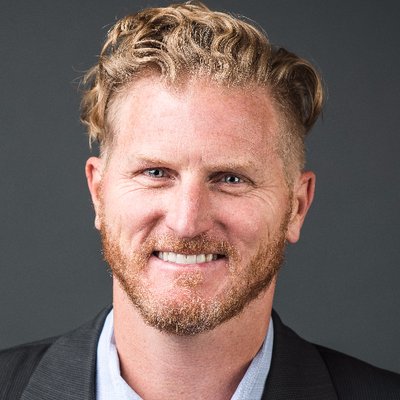
Richard Grote, courtesy photo.

RealCo, the San Antonio-based accelerator that launched last year, announced this week plans to expand into Austin and Boulder and the hiring of a new managing director.

Richard Grote, who lives in Boulder part-time, will become the new managing director.

Grote has spent the “past 18 years building and mentoring startups, as well as nurturing the now thriving startup community in the Boulder/Denver area,” according to a news release.

“I’m incredibly grateful for and humbled by the opportunity to join RealCo as Managing Director,” Grote said. “This team and community of mentors, founders, and investors have created a truly amazing program to help startup founders build real, VC-ready companies.”

Previously, RealCo was known as the RealCo Seed Fund. Michael Girdley, co-founder of Codeup and co-founder of Geekdom Fund, headed it up with Teresa Evans, co-founder of San Antonio Science and associate director of Alamo Angels along with Chris Saum, co-founder and director of business development of MUD Geochemical. Evans has left. Saum lives in Austin and will lead RealCo’s expansion into that market.

RealCo, based at Geekdom, is a 15-month long program that focuses on getting startups ready for a Series A round of investment. It provides networking, capital, mentors, co-working space at Geekdom, access to investors and more. Startups in the program receive $100,000 in funding. It currently works with seven startups: Dauber, dearduck, FileThis, FunnelAI, MR Presta and two more startups in stealth mode.

“RealCo is built around the idea that startups today are part of a global ecosystem from day one,” Girdley, founder of RealCo and managing director of the Geekdom Fund, said in a news release. “Having partners geographically distributed reflects the reality of successful company-building today.”

RealCo will host an AMA, Ask Me Anything, with Grote on Thursday, April 12th. at the Geekdom Event Centre in San Antonio.

Silicon Hills News did this Ideas to Invoices podcast with Saum and Evans about the RealCo Seed Fund Program last year.

Vista Equity Partners Backs Austin-based YouEarnedIt

Autumn Manning, co-founder and CEo of YouEarnedIt, courtesy photo.

YouEarnedIt, a startup focused on rewarding employees at companies, has landed an investment from Vista Equity Partners, based in Austin.

The Austin based startup also received investment from its previous investors, Ridge Ventures and Silverton Partners. It did not disclose the financial details of the deal. Previously, YouEarnedIt raised $8 million in venture capital.

“It has always been my vision to push the boundaries of employee engagement and give companies a better way to support their people and amplify their culture,” Autumn Manning, co-founder and CEO of YouEarnedIt, said in a news statement. “To be working with Vista – one of the best software investors available – to grow our presence in the HR software market is great validation for what we have built at YouEarnedIt and where we can go from here.”

The company, founded in 2013, plans to use the funds to hire additional employees, on further product development and sales and marketing.

“When Autumn and I launched YouEarnedIt, we understood that the importance of prioritizing culture to build incredible teams and companies was pivotal for businesses to succeed,” Kenny Tomlin, serial entrepreneur and co-founder of YouEarnedIt, said in a news statement. “

YouEarnedIt works with more than 400 customers worldwide. Since last January, when Vista raised $6.5 million in Series A funding, the company has doubled in size and overhauled its employee engagement and rewards platform.

“Employee engagement and productivity continues to be a top focus for companies,” René Yang, principal at Vista Equity Partners and co-head of the Endeavor Fund, said in a news release. “YouEarnedIt’s innovative approach to employee engagement provides a true platform for companies to enhance their culture of engagement and create incredible transparency across the organization. We are thrilled to be partnering with YouEarnedIt to help the business continue its strong trajectory of growth.”

YouEarnedIt also added James Mann as its Chief Financial Officer and Michael Logan and Executive Vice President of Sales.

#MeToo Movement Leaders Encourage Corporate HR Leaders to Push for Systemic Change

By Laura Lorek
Publisher of Silicon Hills News

Voice can be a powerful lever for change, said Adam Grant, bestselling author and professor at Wharton School of the University of Pennsylvania.

Grant moderated a panel at WorkHuman 2018, a meeting of human resource professionals put on by Globoforce, at the Austin Convention Center Wednesday morning featuring key leaders in the #MeToo movement including Tarana Burke who started the Me Too movement in 2006. Other panelists included Ashley Judd, actress, and activist, who came forward early on to accuse Hollywood Producer Harvey Weinstein of sexual harassment and investigative journalist Ronan Farrow, who broke the story with the first allegations of assault and rape against Weinstein in The New Yorker.

“You three have literally changed the world,” Grant said. “You’ve raised awareness about bias and harassment and you’ve given people the opportunity to speak up and drive real change.”

Burke, a survivor of sexual assault as a child, created the Me Too movement as a way to change the lives of other survivors who had also been assaulted. She also works to educate and prevent sexual assault and harassment.

“It’s not just about healing the individual, it’s about healing the community,” she said.

Tearing down the wall of shame and talking about sexual violence lets victims know that it isn’t their fault, Burke said.

At the age of seven, Judd said she was sexually assaulted and she told two adults who didn’t do anything to help her. From a young age, she vowed to always speak out when something didn’t seem right.

“People like Ashley speaking out early on were absolutely a lifeline,” Farrow said in getting the story out there about Weinstein. “Every single voice counted.”

“For the victims of sexual assault in this story, the women who spoke out about harassment were part of the foundation they could stand on,” Farrow said.

This was about systems ultimately, Farrow said.

“This was not just about Harvey Weinstein, this was not just about the entertainment industry, this was a phenomenon that it was very clear to me it was playing out in every single industry,” Farrow said. “And that men and women from blue-collar workers to executive boardrooms were dealing with this range of issues from harassment to assault. And that there were elaborate systems in place that could be utilized by the most powerful and the wealthiest, usually men in this country, to silence voices that spoke out against them.”

It became apparent that the systems were just as much of the story as the underlying allegations, Farrow said.

“A lot of those systems play out within structures of the private sector and powerful companies and they involve people at the very top of those companies commandeering the process and what you do is important,” Farrow told the HR professionals in the room.

People who speak out can make all the difference, Farrow said.

The systems at companies are set up to silence and intimidate women and the criminal justice system is not set up to help them either, Farrow said. And the media landscape, before these stories, was very inhospitable, Farrow said.

Reporting systems inside companies are broken Grant said.

Companies can’t create policies after things go wrong, they must create a culture beforehand that prevents sexual harassment and assault in the workplace from the beginning, Burke said.

Institutional courage comes from individuals that just grow “a damn backbone” to stand up and do the right thing, Judd said.

Judd cited University of Oregon Professor Jennifer Freyd’s work with the acronym DARVO that refers to a reaction sexual offenders may display in response to being accused of wrongdoing. DARVO stands for “Deny, Attack, and Reverse Victim and Offender.”

“Cherish the whistleblower is really important to protect that culture of it being Ok to come forward and divulge,” Judd said.

Hiring and promoting women is absolutely key, Judd said.

“Because it’s fundamentally about the asymmetry of power,” she said.

To affect change, individuals in companies need to have difficult conversations, Burke said. People are deathly afraid of being uncomfortable even for a couple of minutes, she said.

“We need to be uncomfortable as a country,” Burke said. There is still so much more to unpack, she said.

People need to learn how to listen on a more deep and humane level, Judd said.

Grant brought up the topic of Intersectionality, which refers to the ways different forms of discrimination intersect like racism and sexism in the experiences of marginalized people.

Amplification is what makes a difference, Burke said. Right now, people don’t talk about R. Kelly or Bill Cosby as much, the focus has been on Weinstein, she said. White women of privilege need to speak out on behalf of women of color too, she said.
Starting with the most privileged people and hoping that it trickles down to those that have the least, those people will get left out, Burke said.

“We have a very unique opportunity in the world to have a culture shift,” Burke said.

In the first 24 hours that #MeToo went viral there were 12 million engagements with the hashtag MeToo, Burke said.

“Everyone of those persons represents someone with courage,” she said.

And if 12 million people were infected with some disease within 24 hours all conversations would be focused on finding a cure, Burke said.

“We would be talking about how did we get here. How do we stop it and how do we make sure it never happens again,” Burke said.

It’s important not to derail the conversation with talk about inappropriate hugs and abstract concerns in the workplace, Burke said. Farrow echoed that sentiment.

The focus should be on sexual violence that is destroying lives, Farrow said.

“Place principles above personalities,” Judd said.

EBW 2020 Launches MintHer Aimed at Helping Female Founders Scale Their Ventures

Ingrid Vanderveldt, Chairman and CEO of EBW 2020 and Hugh Forrest, Chief Programming Officer of SXSW.


By Laura Lorek
Publisher of Silicon Hills News

At South by Southwest 2018, Ingrid Vanderveldt, chairman, and CEO of Empowering a Billion Women by 2020 movement, launched MintHer, a financial resources network for female entrepreneurs.

Vanderveldt, who previously served as the first entrepreneur in residence at Dell, spoke at SXSW 2018 on “Empowering a Billion Women with $1 Billion in Capital by 2020.”

On Tuesday morning at the Austin Chamber of Commerce, Hugh Forrest, Chief Programming Officer of SXSW, interviewed Vanderveldt following his presentation SXSW 2018 early observations.

“What I was happy to see this year was the involvement of the women,” Vanderveldt said.

This year, Vanderveldt noticed more women coming in for SXSW and more attention on the women speakers, she said. She had women flying in from all over the world for the MintHer launch. She hosted a “Champagne Crawl” with women and self-proclaimed “Man-bassadors” to various Austin boutiques. She also hosted a VIP dinner.

In 2015, Vanderveldt and the Empowering a Billion Women by 2020 movement worked with Dell Financial Services, Frost & Sullivan, and Xero, to release its “Business in a Box” software platform for women fueled with a $100 million IV credit fund.

“When we launched the $100 million fund, not a single woman applied,” Vanderveldt said. “We launched in May of 2015 and not a single woman applied. The guys did. The guys blew up the fund.”

The women were buying the “Business in a Box” services but they couldn’t scale fast enough, Vanderveldt said.

“We realized how important mentorship and education and building scalable ecosystems to help women start, grow and build their ventures and build confidence before they ever go apply for the funding,” she said.

MintHer seeks to provide those things.

“We went into development for three years and spent over $3 million and 7,500 people on the engine of this platform, but we essentially built out a matching platform to match women entrepreneurs to funding resources and revenue opportunities,” she said.

Dell allocates $4 billion a year to diverse and women-led companies, Vanderveldt said. Other companies are trying to allocate big contracts to women-led ventures and they are having trouble finding them, she said.

“So this platform now qualifies and vets potential deal flow and matches them to the revenue opportunity,” Vanderveldt said.

To ensure startups can meet the scale up and supply requirements for the big companies, that’s where the $100 million credit fund comes into play, Vanderveldt said.

“One of the things we’re really looking at is women showing up,” Vanderveldt said.

Hugh Forrest Provides Seven Early Observations on SXSW 2018

By Laura Lorek
Publisher of Silicon Hills News

From amazing weather to Elon Musk‘s pop up appearance, blockchain technology, and internationalization, South by Southwest 2018 is over but not forgotten.

Hugh Forrest, Chief Programming Officer of SXSW, gave an overview of seven early observations from SXSW 2018, during a Tech Talk event with the Austin Chamber of Commerce Tuesday morning at the chamber’s offices.

“We as SXSW staff have one perception of how the event went,” Forrest said. “I think it went pretty well. But I also know that beginning this week we will also spend roughly a month reading lots and lots and lots and lots of attendee feedback.”

Often times, that attendee feedback tells you things that were great and things that you didn’t know were not so great, Forrest said.

“I’ll have a different picture, perception of the event, after reading that,” he said.

“While SXSW 2018 was generally a successful event, we can’t ignore the backdrop of SXSW week 2018 which was the bombing stuff which certainly was one of the darkest weeks in Austin in recent memory,” Forrest said. A 23-year-old domestic terrorist planted a series of bombs in March that killed Anthony Stephan House, 39, and Draylen Mason, 17, and seriously injured Esperanza Herrera, 75 and he rigged tripwire and package bombs that led to other injuries. While none of the events occurred at SXSW, the tragedies were felt by everyone in Austin and beyond.

In the presentation, Forrest’s first observation, “sounds somewhat trite,” he said. But Austin had really amazing weather this year, Forrest said.

“This is the first year in at least a decade where we didn’t have one day of rain or one day of cold,” he said.

Austin looks great all the time but looks a lot better with beautiful weather, he said. And great weather helps spread people out and mitigates overcrowding problems, Forrest said.

The second observation focused on diversity and inclusiveness.

Esther Perel, a couples’ therapist, gave the opening Interactive keynote on Friday on the importance of relationships determing a person’s quality of life. It’s a really powerful talk, Forrest said. And it’s available on SXSW’s YouTube channel. He encouraged everyone to watch it.

“Patriarchy doesn’t just hurt women, it hurts us all,” she said during the speech and in a takeout quote featured on Forrest’s slideshow.

SXSW had a lot of programming focused on diverse entrepreneurs and organizers made sure to bring those panels and discussions into the main venues, Forrest said.

The third observation focused on the blockchain buzz and how blockchain can be used in a lot of different applications including healthcare, Forrest said.

The fourth observation focused on internationalizing Austin. The Mayor of London Sadiq Khan gave a keynote address about inclusiveness in the technology industry and the need for government regulation. SXSW also featured talks from the Prime Minister of Ireland Leo Varadkar, Techfugees’ CEO Josephine Goube from Paris and Norway’s Crown Prince Haakon.

“Lot of international presence in Austin,” Forrest said.

It’s easier for internationals to get to Austin and the reputation of SXSW is stronger than ever internationally, he said.

SXSW named global connections as the trend of the event. The trade show had more than 30 different companies exhibiting and international houses exhibited throughout Austin including the first ever Africa House, Forrest said.

“All of these countries and cultures use technology in slightly different ways, use creativity in slightly different ways but Austin is a platform for them to come together and see which ways they can cooperate and which ways they can build new relationships,” Forrest said.

Mayor Steve Adler has a vision for a more international Austin as well as things the Austin Chamber of Commerce is working on to bridge connections with other countries, Forrest said.

The fifth observation is more City of Austin support for SXSW.

SXSW worked a lot with the City and the new city manager Spencer Cronk, who recently took over the job after moving from Minneapolis, on crowd control.

“At this point, when you are planning a big event like SXSW literally 25 percent of your planning time is related to safety and security,” Forrest said.

And the number sixth observation is “Elon happened.”

“The Elon Musk thing was pretty amazing,” Forrest said. “If it happened two weeks later with the backdrop of the week they had last week it wouldn’t have happened.”

“For as long as I’ve worked at SXSW I’ve never been a part of something that came together this quick,” Forrest said.

“We got an inkling that he was going to be in town on Wednesday and we reach out to Elon and his people every year, can you speak at SXSW because Elon is kind of a pinnacle for so much of our community. We usually get a polite no, it’s not going to quite work this year. When we reached out Wednesday this year, they said that might work.”

SXSW staff pulled together a venue, ticketing, production for Elon Musk’s Q&A talk within 24 hours, Forrest said. Elon Musk, founder of Tesla, SpaceX and other companies, made a surprise appearance at the SXSW Westworld panel on Saturday. Late that day, SXSW announced a special Q&A session with Musk on Sunday. And despite the daylight savings time change making it even earlier than usual, a line of people stood around the block outside the Austin City Limits theater at 10 a.m. waiting for the noon talk.

“It was a nice SXSW touch,” Forrest said.

By comparison, when SXSW had President Obama speak a couple of years ago, SXSW staff spent six months preparing for the event, Forrest said.

Last but not least, the seventh observation is the Fairmont Hotel opening.

“That was a great thing for us and the city,” Forrest said.

The Fairmont gave SXSW more hotel rooms and meeting space to accommodate people, Forrest said. It was touch and go up until March on whether the hotel would open on time, he said. Not all of the hotel sleeping rooms opened on time, but SXSW was still able to accommodate about 600 guests at the Fairmont, Forrest said.

(My SXSW Facebook Live video of the new Fairmont Hotel – taken during SXSW)

Case Foundation’s Sarah Koch on the Importance of Inclusivity and Diversity in the Tech Industry

Sarah Koch, vice president of social innovation at the Case Foundation, courtesy photo.


By Laura Lorek
Publisher of Silicon Hills News

Sarah Koch, vice president of social innovation at the Case Foundation, has attended South by Southwest a few times and she noticed a big change and focus on inclusivity and diversity this year.

“Last year it felt like was that first turning point of seeing a lot of attendees who were from diverse communities,” Koch said. “Feeling like there was the beginning of content that spoke to more than just kind of the experience of the privileged white male in Silicon Valley.”

“This year the program coordinators have really hit it out of the ballpark,” Koch said.

Koch spoke about the Case Foundation’s involvement in this year’s SXSW 2018 on the Ideas to Invoices podcast.

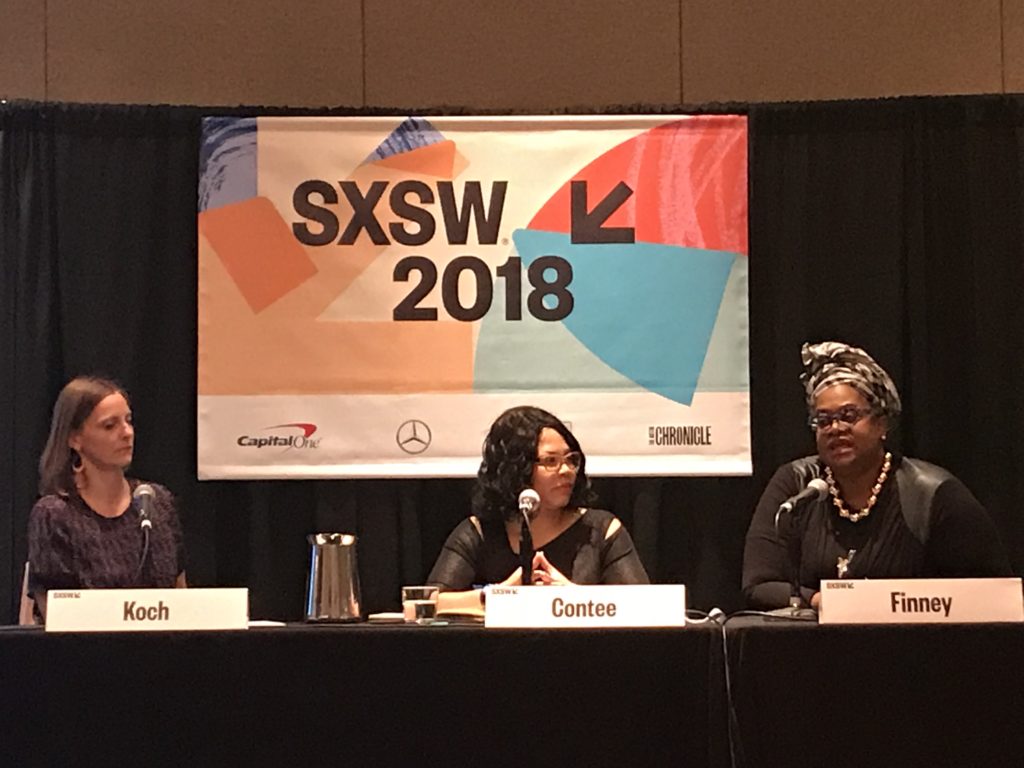
Before the interview, Koch had participated in a panel at SXSW at the JW Marriott on “Why Black Women are 2018’s Best Investment,” which discussed some of the successes black female entrepreneurs have had. The panel featured Kathryn Finney, founder of The Budget Fashionista and founder and CEO of digitalundivided, Cheryl Contee, CEO and co-founder of Fission Strategy and co-founder of social marketing software Attentive.ly at Blackbaud and Koch.

That wasn’t the only panel on the topic, Koch said. This year, SXSW had additional panels and conversations around black female entrepreneurs and LatinX female entrepreneurs and other diversity and inclusion panels, Koch said. The Case Foundation also co-hosted a brunch panel with the European Union and the United Nations Women focused on female entrepreneurship focused on the realities and opportunities there.

“I’ve really seen both from a content and attendee standpoint that we’re really starting to have a conversation around entrepreneurship that is encompassing and including all of the different types of entrepreneurs who we knew were out there building businesses today.”

During the Why Black Women are 2018’s Best Investment panel, the panelists discussed how less than 1 percent of all venture capital dollars go to black female-led companies.

While Koch is hopeful change will happen and is happening, she’s also realistic that it’s going to take time. People need to focus on how to change systems and creating an awareness around unconscious bias by investors, she said.

More coverage in the media about diverse entrepreneurs will start to affect the conversation people have about entrepreneurship and inspire others, Koch said.

Organizations that surround themselves with diverse people and look for diverse pipelines can overcome their unconscious bias and perform better than homogeneous organizations in the long run, according to Koch.

“Become more educated on who is out there,” Koch said. “There are some real Rockstars that are building companies now.”

Project Diane, a 2016 Report, showed that only 11 black women in the technology industry had raised $1 million or more of venture capital. That stat has more than tripled in the last few years, according to the panel. The full study is coming out in July, Koch said.

The Case Foundation is the family foundation of Steve and Jean Case. Steve Case co-founded America Online. Jean Case is CEO of the Case Foundation and Chairman of the Board of National Geographic. The Case Foundation has been involved in the inclusive entrepreneurship space during its entire 21 years but it is particularly focused on inclusivity and diversity for entrepreneurship through its Faces of Founders campaign, Koch said. The three ingredients entrepreneurs needs are social capital like mentors and accelerators, financial capital and inspiration capital, showcasing stories of diverse entrepreneurs.

Less than 10 percent of venture-backed companies have a woman on their founding team, Koch said. Less than 2 percent have an African American founder and less than .02 percent have an African American female founder, she said.

“So the capital just isn’t flowing in the right direction,” Koch said. “But the opportunity is there. There are more and more studies saying that investing in diverse teams or investing in women make investors more money.”

The Faces of Founders campaign is the key to the Case Foundation’s inspirational capital. The Case Foundation launched the campaign a year ago and it received 750 stories from entrepreneurs who are building businesses. Koch said.

“They were incredible stories entrepreneurs took the time to write out and be heard,” Koch said.

The top five stories ran in a series with Fast Company, but that wasn’t enough so they launched the FacesofFounders.org to feature more stories from entrepreneurs, Koch said.

And it isn’t a zero-sum game.

“There is so much capital that is being brought into this space that can be deployed in a lot of different ways and support a lot of people,” Koch said.

At SXSW, Case Foundation partnered with Tech.co and Kauffman Foundation on the American Cities House. Case set up a Facebook Live studio and brought through 14 different entrepreneurs, ecosystem builders and investors to talk about what they are doing.

“It was a really powerful moment,” Koch said.

For more on the interview, check out the entire podcast interview on Ideas to Invoices on iTunes and please rate and review the podcast.

Austin-based SpareFoot Acquires SiteLink

SpareFoot, the Austin-based online self-storage marketplace, announced Thursday plans to acquire SiteLink, a software maker for the self-storage industry, founded in 1996 and based in Raleigh, North Carolina.

As part of the deal, Cove Hill Partners, a private equity firm in Boston, will acquire a majority stake in the combined company. The financial terms of the deal were not disclosed.

SpareFoot CEO Chuck Gordon will become CEO of the combined company and Ross Lampe will remain president of SiteLink. The deal is expected to close in the next 30 days.

“We’re excited to combine two of the most respected and successful technology companies in self-storage,” Gordon, CEO of SpareFoot, said in a news release. “This deal and partnership with Cove Hill allows us to increase investment in our products to help self-storage operators run their businesses cost-effectively and help consumers find the perfect storage solution.”

SpareFoot, founded in 2008, works with more than 12,000 storage facilities in the U.S. on SpareFoot.com and SelfStorage.com. Before the acquisition, SpareFoot had raised $59 million in venture capital, according to a company spokeswoman.

Correction: Due to incorrect information on CrunchBase, the amount of money SpareFoot had raised was incorrect in an earlier version of this story.

Austin-based SpyCloud Raises $5 Million

Ted Ross, founder and CEO of SpyCloud, courtesy photo.

SpyCloud announced this week that it has received $5 million in venture capital funding.

Austin-based Silverton Partners and March Capital Partners led the Series A round. SpyCloud plans to use the funding on product development, security research and to expand its database of assets. It also plans to hire more employees.

SpyCloud, founded in 2016, previously raised a $2.5 million seed funding round from Silverton Partners and March Capital Partners.

The cybersecurity company has created a software platform, database and other tools that specialize in account takeover prevention. It can find vulnerabilities in a company’s computer system before cybercriminals can strike. SpyCloud’s software flags employees and customer accounts that have security issues early on.

The company uses a database of exposed accounts, leaked passwords and other identification information. It mines that information to check the security of a company’s computer systems and accounts. It has more than “32 billion current assets and billions of new assets being added every month,” according to the company.

SpyCloud reports stolen or leaked passwords is a huge problem. It cites a report from Verizon that shows 81 percent of hacking breaches last year involved stolen or leaked passwords.

SpyCloud’s software, data and tools help companies avoid security breaches and protect their systems from being infected with keyloggers or malware.

“There isn’t a company in the world that doesn’t run the constant risk of having its employee or customer accounts exposed, and that leads to a host of other issues,” Ted Ross, CEO, and co-founder of SpyCloud, said in a statement. “The only chance businesses stand against these increasingly-proficient criminals is to know as soon as possible which accounts have been exposed and to take preventative measures well before credentials make it onto the dark web.”

SpyCloud, which emerged from stealth mode in June of last year, reports it has already protected “tens of millions of employee and customer accounts for notable companies across the finance, retail, healthcare, and technology industries.”

“The continued customer traction and growth SpyCloud has achieved is a testament to both the immediate demand for its technology and the unparalleled collective experience of the team,” Kip McClanahan, general partner of Silverton Partners, said in a news release “We look forward to helping them capitalize on those strengths to make ATO prevention universal table stakes in the enterprise.”

MineralSoft’s Gabe Wilcox Talks About Disrupting an Industry on the Ideas to Invoices Podcast

Gabe WIlcox, co-founder and CEO of MineralSoft.

By Laura Lorek
Publisher of Silicon Hills News and Host of the Ideas to Invoices Podcast

A native of Arkansas, Gabe Wilcox and his family know firsthand the problem mineral rights owners have in managing their assets.

“It has been a very archaic industry,” said Wilcox, CEO and co-founder of MineralSoft.

In the U.S., individuals can own the rights to any oil and gas that lies beneath the surface of their land and that’s what is called mineral rights, Wilcox said. Before MineralSoft, people made do with a lot of paper and technology tools that weren’t made to manage the assets, he said. When Wilcox couldn’t find a good tool to oversee his family’s assets, he saw an opportunity to build one.

At the time, Wilcox was working in investment finance and spent a summer in San Francisco where he reconnected with John Parker, now the company’s Chief Technology Officer. Together they founded MineralSoft, now based in Austin, which allows mineral rights holders to analyze their portfolios in real time.

Wilcox is featured in this episode of the Ideas to Invoices podcast discussing how MineralSoft is disrupting an industry.

Initially, to test their idea, Wilcox and Parker printed up business cards for a “company that didn’t yet exist.” And they flew to Houston to attend the annual NAPE Summit, the oil and gas industry’s marketplace for buying, selling and trading prospects and producing properties.

“We got really positive feedback and we learned a lot,” Wilcox said.

Wilcox, who had been studying for an MBA at Wharton School of Business at the University of Pennsylvania, dropped out to focus on MineralSoft full time. Wilcox and Parker joined the Y Combinator startup program and graduated from that accelerator in 2016.

In February, MineralSoft announced that the company raised $4 million in funding. Investors included Cottonwood Venture Partners, based in Houston. Earlier investors included Bear Capital and Y Combinator.

In addition, MineralSoft recently entered into a joint venture with oil and gas data analytics company Drillinginfo, another Austin-based startup.

“Our products are really complementary,” Wilcox said.

An estimated 12 million private owners in the U.S. own mineral and royalty interests, according to the National Association of Royalty Owners. Those are MineralSoft’s customers as well as endowments, investment funds, trusts and other institutions.

MineralSoft has built a strong team of employees with oil and gas and technology backgrounds. The company has 20 employees currently and plans to double in size within the year, Wilcox said.

“We are changing the way people do things in this industry,” Wilcox said.

“Our challenge is really to go to the market and make them aware we are out there and that is a new and more efficient way to manage the asset.”

MineralSoft acquires its customers through word of mouth and through referrals, Wilcox said. The company will be doing more marketing and public relations outreach this year, he said.

MineralSoft is a cloud-based software company that charges its customers monthly for its service. Today, the company has more than 100 customers on the enterprise-side and its growth has been rapid the last few years, Wilcox said. It launched into the market when oil was at $20 a barrel.

“When oil is in the 20s you better have a value proposition, or no one is going to buy,” Wilcox said.

For more on MineralSoft, listen to the entire interview and please rate and review the Ideas to Invoices podcast on iTunes and you can also support Ideas to Invoices on Patreon.

« Older posts Newer posts »

© 2026 SiliconHills

Theme by Anders Noren — Up ↑