Author: LauraLorek@gmail.com (Page 74 of 354)

LauraLorek@gmail.com

The Inventor Documentary Tells the Story of the Colossal Fraud of Elizabeth Holmes and Theranos

Photo of Elizabeth Holmes, courtesy of HBO

“The Inventor: Out for Blood in Silicon Valley,” is a story about storytelling, said its Academy Award Winning Director Alex Gibney.

The documentary is about how a couple of veteran journalists got fooled along with a lot of investors into believing Elizabeth Holmes just might be the next Steve Jobs or Bill Gates.

Instead, Holmes, an attractive and charismatic entrepreneur who favored black turtlenecks and black pants, took the fake it till you make it mantra of Silicon Valley a bit too far and faked test results, lied to reporters, regulators and investors, and committed fraud on a massive scale.

The HBO documentary premiered at the Sundance Film Festival. But a screening of the film took place Friday night to a sold-out crowd at the Atom Theatre at South by Southwest.

Gibney also directed “Enron: The Smartest Guys in the Room,” and HBO’s Emmy-winning “Going Clear: Scientology and the Prison of Belief.”

The documentary does a great job of laying out Holmes’ vision in her own words. The film kicks off with her proclaiming she doesn’t have many secrets. Theranos had a culture of secrecy, according to the documentary.

Holmes granted lots of interviews and spoke before TED and medical conferences and before lawmakers to promote her technology. And Theranos recorded quite a few internal talks and company meetings and parties too, which Gibney was able to obtain 100 hours of footage shot inside the company and use some of it in the documentary.

“That’s where suddenly we were able not to tell the story from the outside in but from the inside out,” Gibney said.

The idea for Theranos began in 2003 when Holmes, then just 19, and a student at Stanford founded a company that was going to revolutionize healthcare. She dropped out of Stanford the following year to work on it full time.

Theranos promised to disrupt the blood testing industry. It wanted people to be able to give a small sample of blood from a finger prick and test it for 200 different diseases. That would replace the legacy method of blood testing involving a venous blood collection with a long needle and several tubes of blood. And behind it all was Theranos’ printer-sized machine, called Edison, named after Inventor Thomas Edison, that could perform all the tests with just a tiny, bullet-sized sample of blood.

By 2014, Holmes had raised more than $400 million, valuing Theranos at $9 billion, and making Holmes the youngest self-made billionaire in the world, according to a Fortune article. Fortune put her on the cover of its magazine with a title that said, “This CEO is Out for Blood,” by Roger Parloff.

Another article followed by Ken Auletta called “Blood, Simpler” in the New Yorker. But Auletta’s article was a bit more skeptical of Theranos and Holmes and that caught the eye of Wall Street Journal Investigative Reporter John Carreyrou. He also got an inside source to provide him with information about how Theranos was defrauding investors and potentially harming people with incorrect and faulty blood test results.

Theranos lawyers found out the source of the leaked information and went after him with a cease and desist order and a threat of lawsuit for sharing trade secrets. But another whistleblower came forward and filed a complaint with the U.S. Food and Drug Administration that eventually got the Theranos lab shut down.

Today, Theranos is worthless, the company shut down last September. Holmes reached a settlement for lying and making false statements with the U.S. Securities and Exchange Commission, according to the New York Times. But then she was indicted on criminal charges and is awaiting trial, according to the New York Times.

The movie ends with the song “U Can’t Touch This” by M.C. Hammer. It is the same song Holmes played and danced to with other company executives during a company party. Other moments in the film show Holmes in talks with Ramesh “Sunny” Balwani, Theranos’ former president and chief operating officer, and Holmes’ former boyfriend.

One of the lessons of the film is to beware of arguments that tout the ends justifies the means, Gibney said. Police are aware of this – they call it noble cause corruption, he said.

Another lesson is to get the facts and don’t believe things that are too good to be true.

“A lot of what this story is about is how compelled we all are in emotional terms by stories that we want to like – the journalists were part of that, but the investors were part of that too,” Gibney said.

The Inventor: Out for Blood in Silicon Valley (2019) | Official Trailer | HBO

From Academy Award-winning director Alex Gibney comes a documentary about the rise and fall of Theranos, the one-time multibillion-dollar healthcare company founded by Elizabeth Holmes. Premieres March 18 on HBO. #HBO #HBODocs Subscribe to the HBO YouTube Channel: https://goo.gl/wtFYd7 Don’t have HBO?

Robots Behind the Wheel: Self Driving Cars are Inevitable

By LAURA LOREK, Publisher of Silicon Hills News

Self-driving cars are the future, but there is still some uncertainty on how long it will take to get there and what that future looks like.

That’s the conclusion from a panel discussion at South by Southwest Saturday morning. Hundreds of people showed up for the 9:30 a.m. session on Self-Driving Cars: The Future is When? Featuring Chris Urmson, CEO of Aurora Innovation and Malcolm Gladwell, author and host of the Revisionist History podcast.  NBC News Correspondent Jo Ling Kent moderated the discussion.

The talk took place before the premiere of the documentary film “Autonomy,” inspired by a special edition of Car and Driver Magazine on autonomous vehicles. The film features Gladwell and Urmson and explores the history and evolution of self-driving cars. It also focuses on the impact of those cars on car aficionados who prefer “analog” vehicles that they can take apart and control.  The documentary screening took place at the Atom Theatre at the Austin Convention Center following the talk.

Gladwell, who drives a Blue 2003 BMW M5, isn’t thrilled with the idea of self-driving cars replacing individually owned ones. He’s not ready to hand over his steering wheel to a robot.

“I’m not sure I am excited,” Gladwell said. “Do I want it? No, I actually really like driving.”

Urmson, who is already testing self-driving cars on public roads, drives an Audi Cabriolet. He loves driving down Interstate 280 in Northern California. But then he gets into gridlock traffic in San Francisco and he concludes, “this is why we need self-driving cars.”

Self-driving cars are being tested today, but they are not widely available in the United States. However, a lot of today’s cars have different levels of autonomous technology built in like automatic braking and sensors that warn about obstacles.

The benefits of self-driving cars are that they handle the mundane parts of driving, especially in urban environments, Urmson said.

“An awful lot of people don’t enjoy driving like you do,” Urmson told Gladwell. “The vast majority of people don’t enjoy driving, they don’t like commuting.”

The technology is inevitable, Gladwell said. He doesn’t think self-driving cars and cars driven by humans can co-exist and that eventually, the entire world will become one of self-driving vehicles. He also objects to the term “autonomous,” for self-driving vehicles, because autonomous describes the cars that are driven by humans. Cars give drivers autonomy, Gladwell said.

Gladwell is worried that people who like to drive, like himself, are going to get dealt out of the driving equation and will no longer have that option.

The system would be dramatically better if it were solely based on driverless cars, Urmson said.

“But I don’t think that’s real,” he said. “There are people who love driving.”

There is no reason to worry about self-driving cars taking over the roads entirely anytime soon, Urmson said.

“I think there are parts of driving that make a ton of sense to have self-driving cars serve,” Urmson said. For example, self-driving cars can help people move through urban centers more efficiently. Today, 30 percent of the traffic moving through San Francisco is people looking for parking, Urmson said.

In Paris, 80 percent of the people driving are looking for parking, Urmson said.

With self-driving cars, people don’t have to park. The cars just drop them off at their location and go on to look for another passenger. There will no longer be a need for parking garages, Urmson said.

Gladwell said that makes the situation even worse because people will no longer own cars. They will essentially be taking taxis everywhere. Cars will become mass transit.

If people have self-owned self-driving cars, the traffic will increase dramatically, Gladwell said. Uber has increased traffic in Manhattan because people don’t take mass transit, they hop in an Uber, he said.

Self-driving cars are inevitable in cities, Urmson said.

“It’s not sustainable to have one person in a two-ton vehicle driving down the road,” Urmson said.  “It doesn’t mean you don’t get to enjoy your car.”

Driving might be restricted in urban areas and people might be allowed to drive on the weekend in rural settings, Urmson said.

The promise of the self-driving technology is to have vehicles that are safer than human drivers, Urmson said. About 37,000 people die from traffic accidents in the United States every year and 95 percent of those accidents occur because of human error. Self-driving cars would make it safer to commute and save lives, Urmson said.

Already, the airline industry has adopted auto-pilot plane technology and that has helped reduce collisions and crashes, Gladwell said. With autos, there will be far fewer traditional accidents. But self-driving car technology opens the door to someone hacking into the system and causing a major car accident, Gladwell said.

He said he feels like people in Silicon Valley are  “a little too blasé about security features” when it comes to self-driving cars. Because the technology is introducing multiple points of vulnerability into the system, Gladwell said.

Cybersecurity is highly important, Urmson said.

“But it is not a self-driving car problem, it’s a connected world problem that we have to solve,” Urmson said.

“Silicon Valley can poo-poo some of the risks in favor of the technology,” Urmson said.

Gladwell said that was a grand understatement.

It’s really a fleet inoculation problem and engineers must think about cybersecurity, but this is a fundamental societal problem, not just a self-driving car problem, Urmson said.

Cybersecurity is a huge unanswered problem in the movement to the Internet of Things, Gladwell said.

 It’s just not encouraging to be launching a massive revolution when Cybersecurity is still unsolved, Gladwell said.

The one part of self-driving vehicle technology that doesn’t bother Gladwell is the jobs. He doesn’t think it will lead to massive unemployment of truck drivers. Self-driving vehicles is going to change the nature of the work and create a whole lot of new jobs, he said.

“There still has to be a person in the truck,” Gladwell said. “ There has to be a person that helps to unload the truck once it gets to where it’s going.”

Kitt – a self driving vehicle on display at SXSW

Cannabis, Music, Helmets and License Plates at SXSW Release It

By SUSAN LAHEY, Senior Writer with Silicon Hills News

One of the best moments at SXSW Release It pitch competition was when CEO and co-founder of the winning company, Lumos Helmet, admitted that he had no idea how the company’s first product wound up on Oprah’s favorites list.

“I was afraid to ask,” Lumos Helmet CEO and Co-Founder Eu-wen Ding confessed on stage.

Lumos Helmet, which launched its new line for scooter riders and skateboarders at Release It, makes helmets with bright lights on the front, and big, lighted, flashing signals on the back, to let motorists and others know which direction the helmet wearer is headed. They released their new, more streamlined “urban chic” helmet at the event.

The company was one of 10 companies chosen to release their products at SXSW 2019. Other standouts included Reviver Auto, which makes license plates that are customizable, trackable, connected to your smartphone, and never require you to go to the Division of Motor Vehicles again…ever. Company CEO Neville Boston pointed out the multiple uses of the license plate including replacing tags for toll roads. The plates are expected to be legal in 10 states by the end of the year.

Drugs and Rock and Roll

Leaf Tyme is an online e-commerce platform for cannabis products with CBD but no THC. The company provides a place for cannibus dispensaries and others to sell their goods without being kicked off the exchange—as they are for some more traditional e-commerce platforms.

The Labz is a collaboration platform for songwriters and musicians that let each person’s contribution to a piece of music be recorded on the blockchain so that people can be adequately compensated. The Labz CEO Farrah Allen said that some $2.5 billion in music profits goes unclaimed because people collaborated on songs without creating any kind of a paper trail documenting their work. The Labz, she said, is like “DocuSign for music.”

Riteband, a Swedish startup created to help with pay equity for musicians, allows music lovers to buy “stock” in a song, sending the money directly to the artist. Then when that song’s “stock” goes up, you can sell your investment for a profit. Founder Linda Portnoff pointed out that since Sweden is the hub of much of today’s music it’s the perfect origin for such a startup.

Ampl is a news article sharing platform that aggregates over 250 premium publishers including The New York Times, VICE, TechCrunch and Psychology Today. Ampl uses messaging tech that lets consumers converse about the article.

A Big Step Toward Diversity

What was as remarkable as the companies themselves was the incredible diversity presented. It was only a few years ago that people were complaining SXSW looked like a white frat boy convention. But more than half of the Release It competitors were people of color, showing the conference has made a serious commitment to diversity.

The judging panel consisted of Todd Nuckols, Managing Director of Lighthouse Labs, Melissa Larson Youngblood, Co-Founder of Venn Ventures, and Jennifer Skjellum, Director of Programs at the CO.LAB. Todd, Melissa, and Jennifer were joined by emcees Jen Consalvo, Co-Founder and COO of Tech Cocktail and Andy Stoll, a Senior Program Officer at the Kauffman Foundation. 

At SXSW, Fans Line Up to Bleed for the Throne at HBO’s Blood Drive Event

Photos courtesy of HBO

Sharing a pint takes on a whole new meaning at South by Southwest this year.

At the HBO Game of Thrones event at SXSW, participants are asked to bleed for the throne – literally.

HBO has joined with the American Red Cross to combat a worldwide blood shortage by harnessing the power of Game of Thrones fans, HBO asks fans “Will you bleed for the throne?”

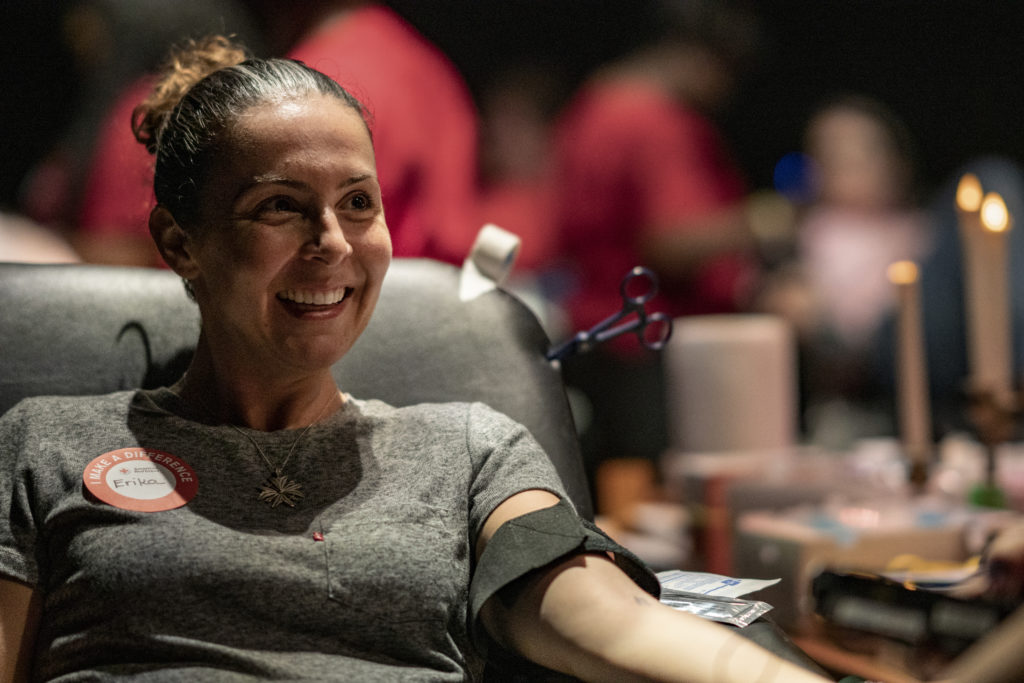
And Thursday the event kicked off, people lined up outside to do just that. Those who opted not to donate ended up in a different line with a longer wait time. Priority went to those who bled for the throne by donating a pint of blood. They also got a special edition Game of Thrones T-shirt and a sticker to unlock a unique Snapchat filter.

The Red Cross has a special intake area, fashioned to look like a fancy castle or mansion, with rollaway beds and nurses who draw blood and provide snacks and drinks afterward. The entire process generally takes less than an hour.

HBO and the American Red Cross have taken over Fair Market in East Austin for the sold-out event which runs through March 9th. SXSW offered spots on Feb. 19 for fans to register as blood donors or to visit the activation without donating blood. All the appointments were filled in under two hours. Standby lines are available for fans who were unable to make appointments online.

HBO made quite a splash at SXSW in 2018 with its Westworld activation in which it took guests to a Westworld town on the outskirts of Austin for a Wild Westworld experience.

The Bleed for the Thrones event is similar, but on a smaller scale.

Guests start their adventure with a headset and an audio tour and walk through a maze filled with pictures of HBO’s Game of Thrones characters. It talks about those who have bled for the Iron Throne. Actors dressed up to look like Guards stand at attention throughout the throne room.

The installation is a celebration of the hit show which is entering its eighth and final season on April 14th.

After the tour, guests are treated to a Choir concert and are asked to kneel before the Iron Throne. They are also given a pin showing an arm wielding a sword in victory. Afterward, everyone enters a courtyard “camp” filled with Game of Thrones character actors like Jon Snow who encourages everyone to fight for the living. Others mill about and forge weapons or get into sword fights. Drinks and burgers are served as long as supplies last.

In addition to the SXSW event, HBO and the American Red Cross are running a nationwide blood drive from March 12 to April 11th in 43 states and nine universities. Fans who present to donate blood or platelets at participating drives between Feb. 19th and March 17th will automatically be entered for a chance to win one of five trips to the season 8 world premiere of Game of Thrones.

It’s a heck of a way to kick of SXSW, but yes, I did bleed for the throne.

Hypergiant Adds Tech Industry Veterans to its Staff

Hypergiant Industries is beefing up its staff with some heavy hitters from the technology industry.

Hypergiant has announced that Brian Beard and Gary Gattis will join as Global Chief Strategy and Legal Officer and General Manager in Residence respectively.

Hypergiant, which came out of stealth mode last year, has launched two new divisions, Hypergiant Galactic Systems and Hypergiant Sensory Sciences. The company is focused on building AI-powered solutions for its customers.

“Hypergiant’s business model is designed to spark innovation, collaboration, and growth in a way I’ve never seen before, and I’m excited to help accelerate that business model,” Beard said in a news release. “CEO Ben Lamm has a vision for the AI industry that’s unmatched — and my role is to facilitate that vision at the highest level and with the same speed and precision that Ben has come to be known for.”

Previously, Beard served as managing partner of Wilson Sonsini Goodrich & Rosati in Austin. He came out of retirement to work for Hypergiant. During his career, he served as outside corporate counsel to public and private companies, advising them on a wide range of significant corporate transactions, including mergers and acquisitions, initial public offerings, and private equity and venture capital financings.

With Hypergiant Industries, Beard will help manage M&A transactions, develop strategic plans for joint ventures, and execute on the long-term vision of the company with speed and precision.

“Hypergiant’s vision is a powerful testament to our need to move beyond technology for the sake of technology. We have been stuck in a vicious cycle of making products that we think will make money, versus the products we need to create a better world for us all,”  Gattis said in a news release. “As General-Manager-in-Residence, I’ll be focused on finding ways to bring a new standard of user experience to several internal R&D AI products, further enabling the data manipulation and analysis that is going to not only drive modern business, but our entire world.”

Previously, Gattis co-founded and served as CEO of Austin-based Spacetime Studios, the leading mobile games studio. “Spacetime Studios designed and developed the world’s first cross-platform 3D mobile massive multiplayer online game, “Pocket Legends”. The subsequent Legends titles have since amassed over 50 million downloads on Android and iOS. Previously, Gattis has also served as a Senior Producer for Sony Online Entertainment, Director of Enterprise Software at Bowstreet, and was co-founder of Human Code (acquired by Sapient),” according to a news release.

 “Both Brian and Gary have been absolutely transformative in their careers up until this point, and I can’t wait to see how they can further our mission” Hypergiant CEO, Ben Lamm said in a news release. “We designed our business model to fuel innovation, and Brian’s expertise is going to help our entire ecosystem of companies thrive. Gary is by nature an interdisciplinarian, so we’re especially excited to see what he works on at Hypergiant. He’s great at building up and motivating teams, and keeping the mission and long-term vision front and center. They’re both going to play a big role in the future of Hypergiant.”

Bumble Fund Invests in Alice and Other Women-Led Startups, Plus Bumble Hive Takes Over Jo’s at SXSW


Austin-based Bumble announced this week that it has completed its second round of investments into women-led startups.

Through its “Bumble Fund” Bumble, which is a women-focused dating and social network with more than 50 million users, has made early stage investments in women founders. The latest round includes an investment in Houston-based Alice, an AI-powered platform that provides entrepreneurs with resources they need to build their business.

In addition, Bumble has opened applications for its third round of investments with the details available through Bumble Bizz.

Bumble has also partnered with Alice to allow founders interested in the Bumble Fund to apply through Alice’s website.

”The partnership marks the first time every applicant of a venture fund will receive education, support, mentorship and guidance to grow their companies, no matter if they qualify for investment at that moment,” according to a news release.

Bumble Fund, which launched in July of 2018, is open to all entrepreneurs in the U.S. who identify as women, prioritizing those with diverse backgrounds, experiences and perspectives. It provides early-stage investment ranging from $5,000 to $25,000.

The latest round of investments include the following: Alice, founded by Carolyn Rodz and Elizabeth Gore: an AI-powered technology helping entrepreneurs find the right path to start and grow their companies:  Gixo – founded by Selina Tobaccowala: a fitness app founded to improve global health and activity rates by democratizing access to live workouts with professional trainers: Translator – founded by Natalie Egan: the world’s most advanced diversity & inclusion training system for corporations, schools and non-profits and Promise – founded by Phaedra Ellis-Lamkins: a technology company that creates cost-effective, equitable, and humane alternatives to incarceration with a mission to get people out of jail and provide ongoing support to help them stay out.

“We are looking to invest in entrepreneurs whose company purpose solves a problem that disproportionately affects women,” Sarah Jones Simmer, Chief Operating Officer at Bumble, who leads Bumble Fund’s investment strategy, said in a news release. “While we can’t fund every promising business and entrepreneur, we strongly believe these companies and founders deserve access to grow, evolve, and thrive. Through community, access to experts, how-to guides, and more, Bumble and Alice are committed to helping women founders find the support and resources they need on their path to success.”

As an equity investor in Alice, Bumble joins Melinda Gates, Jean Case, Zaw Thet and others, in supporting Alice’s unique AI platform designed to tailor early stage business support to diverse founders and business owners.

“For the last several years, only 2% of venture capital went to women founders. At Alice and Bumble, we see that as a 98 percent opportunity,” Carolyn Rodz, Alice, founder, and CEO, said in a news release. “The Bumble Fund, powered by Alice, is that opportunity in action; together, we’re going to rewrite the rules of venture capital to be more accessible, more transparent and more supportive for women founders.” Bumble’s first round of investments were in Beautycon, Cleo Capital, Female Founders Fund, Mahmee, and Sofia Los Angeles, a winner of the inaugural Bumble Bizz Pitch Comp.

In addition, the latest investments, Bumble is hosting the Bumble Hive from March 8th through March 18th at Jo’s Coffee Shop in downtown Austin on 2nd Street. The space will be transformed into one of Bumble’s famous, photo-friendly Bumble Hive. The Bumble Hive will be open to the public every day during SXSW from 7 a.m. to 7 p.m. It will serve complimentary coffee throughout the day and breakfast tacos from 7 a.m. to 9 a.m. to those who show their Bumble Date, BFF or Bumble Bizz profile. It will also feature special programming throughout SXSW. For more information, visit Bumble’s SXSW site.

And on International Women’s Day, the Bumble Hive will feature a special concert performance Friday night starting at 8 p.m. by Princess Nokia.

The Zebra’s Founder Adam Lyons Launches a Reality TV Show Focused on Helping Entrepreneurs

Adam Lyons, photo by john Davidson

Adam Lyons, founder of The Zebra, is going to be starring in a new reality TV show focused on entrepreneurs.

Lyons is teaming up with Pilgrim Media group on the new show which will showcase Lyons working with business owners and aspiring entrepreneurs to develop their ideas into full-fledged, high-growth businesses.

Lyons founded The Zebra, the most visited car insurance search engine in the nation. Investors in The Zebra include Mark Cuban, Accel Partners, and Floodgate.

Pilgrim Media Group produces TV shows including American Ninja Warrior, Dirty Jobs, Ultimate Fighter, and American Chopper. Its work has been distributed by Discovery, History, A&E, Lifetime, TLC, Syfy, OWN, CMT, WEtv, and National Geographic Channel.

On the show, Lyons will mentor entrepreneurs with the hopes of landing a venture capital investment.

“As much as people celebrate entrepreneurship, it’s still not very accessible to the average person,” Lyons said in a news release. “If you have a business or an idea for a venture, the hardest part is taking that next step and executing to bring your idea to the masses. I’m looking forward to working with business owners and aspiring entrepreneurs to help them create the next billion dollar company.”

Lyons left The Zebra last year.

In 2012, Lyons launched The Zebra, an aggregation and comparison site for insurance, in Pittsburgh, his hometown.

Lyons’ took an unusual path to entrepreneurship. At 15, he dropped out of high school. A year later, he left home and worked several odd jobs and had no idea what he wanted to do. Eventually, he got into community college and then transferred to  Temple University. He graduated and got an internship in London and ended up working in insurance. He saw the industry was ripe for disruption.

“There are thousands of other entrepreneurs out there just like me, ready to make something out of nothing,” Lyons said. “The show gives us a platform to meet those folks, and do whatever we can to help. I feel an enormous duty to pay it forward. Of course, if I’m going to invest, I have to see that x-factor, that ceaseless hustle that all great entrepreneurs have, no matter where they come from or what they’ve been given.”

The name, network and and air date of the new show have not yet been announced.

Make School is Rethinking College to Diversify the Tech Workforce

Jeremy Rossmann, co-founder of Make School, a computer science and software engineering school, based in San Francisco is disrupting higher education.

Make School offers a two-year Bachelor’s Degree to students accepted into its computer science program.

Rossmann founded Make School in 2012 with his high school friend, Ashu Desai. Rossmann dropped out of MIT and Desai dropped out of UCLA to create Make School.

Make School is disrupting higher education. Make School only gets paid when its students land a job after graduation making $60,000 a year or more. Many of its students make far more than that. They have landed jobs at Facebook, Google, Tesla, Amazon and more. Rossman was in Austin to speak at SXSWEdu about “Rethinking College to Diversify the Tech Workforce.” Make School seeks to educate a diverse and underrepresented student population, Rossmann said. Forty-five percent of its students are Latino or Black, he said. It also does not admit students solely based on grades and SAT Scores, Rossmann said. It takes a student’s work history, and family obligations into consideration too, he said.

Following his discussion at SXSWEdu, Rossmann spoke with Silicon Hills News for its Ideas to Invoices podcast.

Make School, a B-Corp startup, has raised $10 million to date from
Y Combinator, Tim Draper, East Ventures, and other investors.

For more on Make School, listen to the Ideas to Invoices podcast.

SXSW Kicks Off on International Women’s Day

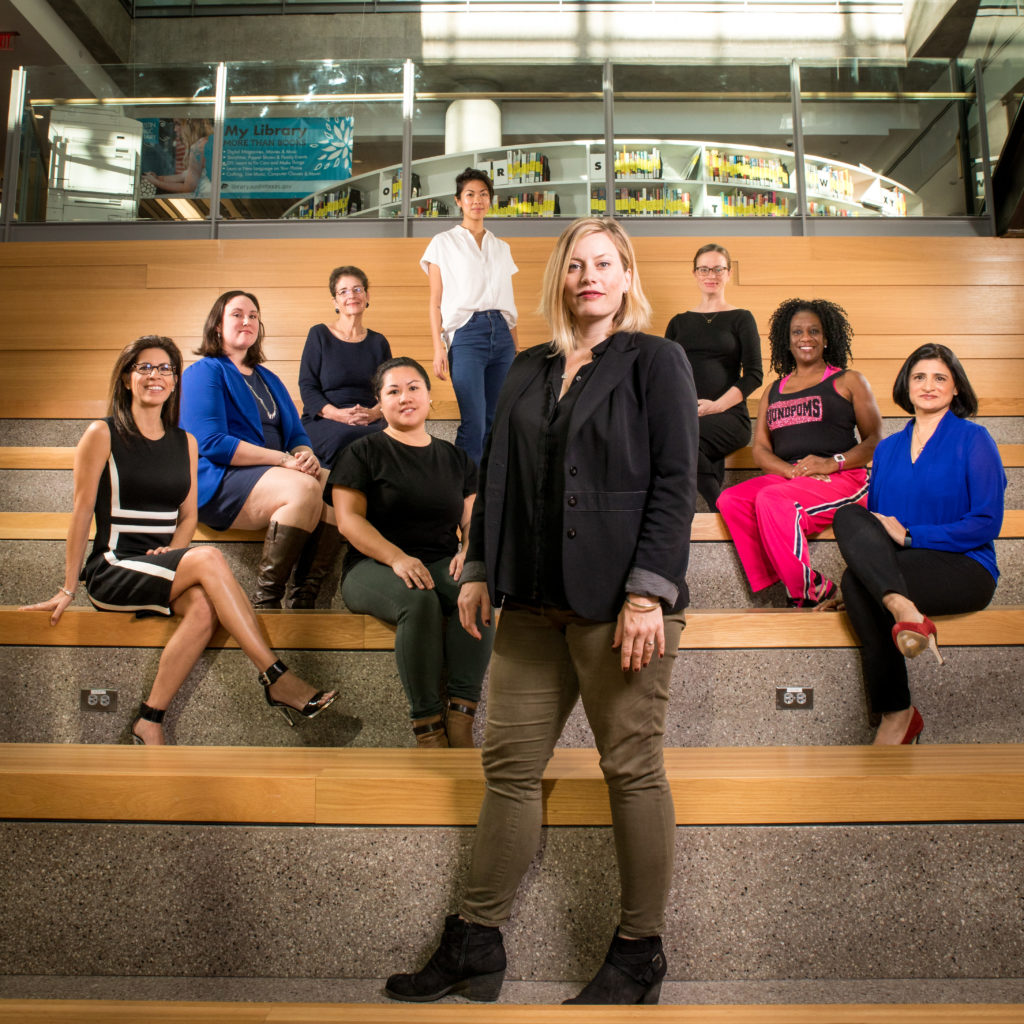
Austin Female Founders featured in Silicon Hills News’ 2019 Austin Tech Calendar, photo by Errich Petersen

March is women’s history month and Friday is International Women’s Day, which happens to coincide with opening day of South by Southwest in Austin.

And while the tech industry is still heavily-male dominated and women-led startups only get 2 percent of all venture capital funding in the U.S., the industry is starting to change. And that is evidenced by all the programming focused on women in tech on the 2019 SXSW schedule. And it’s not all happening on International Women’s Day but throughout the conference.

For example, on Saturday, a panel of speakers which include Alex Williams of Austin-based Bumble will host a session on “How Women are Rebuilding a Man-Made Internet.”

When: Saturday, 3:30 p.m.

Where: Hilton Austin Downtown, Salon G

Looking for a variety of female focused programming from investment to diversity and inclusion? Then Women2.0 has got it covered. Women2.0 put together a comprehensive list of events at SXSW focused on women.

Among the events listed is a discussion on Friday on Equitable Growth Ecosystems for Entrepreneurs.

When: Friday, 3:30 p.m. to 4:30 p.m.

Where: Hilton Austin Downtown Salon K

And Springboard Enterprises Dolphin Tank – a pitch competition featuring female tech founders.

When: Saturday, 10 a.m. to 11 a.m.

Where: Palm Door, 401 Sabine St.

“Fighting for Funding as a Female Entrepreneur” 

When: Sunday, 12:30 to 1:30 p.m.

Where: Austin Hilton, Salon ABC – 500 East 4th Street

International Women’s Day EU@SXSW – The European Union partnering with UN Women to be the official host of SXSW’s International Women’s Day celebration.

When: Friday, 2 p.m. to 10 p.m.

Where: Palm Door on Sixth, 508 East 6th Street

There are also events taking place outside the convention center.

#Women4WomenATX: An interactive event celebrating all women in business is hosted by four female-led fashion and lifestyle brands, Rank & Style, Katie Kime, Maggie Louise and Packed Party.

When: Friday, 10 a.m. to 2 p.m.

Where: Katie Kime Store downtown, 500 N. Lamar No. 150

The Bumble Hive: Bumble is taking over Jo’s coffee shop on Second street from March 8th to March 18th with special programming.

On International Women’s Day, the Bumble Hive has free breakfast tacos from 7 a.m. to 9 a.m. and free coffee all day. It’s also offering speed mentoring with Bumble from noon to 4 p.m. and it is hosting a special International Women’s Day performance by Princess Nokia from 8 p.m. until 11 p.m.

When: Friday, March 8th – Monday, March 18th

7 a.m. to 7 p.m. every day Special after-hours programming: March 8, 12, 15

Where: Jo’s Coffee on 2nd Street at 242 W 2nd St.

ACLU Kicks Off Its 100th Year Anniversary Tour at SXSW

At noon, the ACLU will host a Women’s Rights Brunch and Lightning Talks featuring the following speakers:

  • Michele Moore, ACLU Chief Communications Officer
  • Monica Poindexter, Lyft Vice President of Diversity & Inclusion
  • Jessica Massa, Buzzfeed Supervising Producer
  • Zulima Espinel, Starbucks Vice President of Global Public Policy
  • Lauren Johnson, ACLU of Texas Criminal Justice Outreach Coordinator

When: Friday, 12 p.m.

Where: 313 Red River St.

Smash the Glass Ceiling on International Women’s Day

ADP partnered with WIRED to create the activation and give SXSW attendees the chance to break down the barriers that stand in the way of realizing their full potential.

When: FridayMarch 8 – Sunday March 10, 12 PM – 6 PM.

Where: The Empire Control Room, Room 606 East 7th Street, Austin, TX, 78701

Also be sure to check out Austin-based Blnded Media’s Complete List of Diversity Focused Tech Events at SXSW.

ClearBlade Wins $100K in Ingram Micro’s Comet Competition

Michael Kenney, Vice President of Business Development at Ingram Micro

Austin-based ClearBlade won the first place prize of $100,000 in the Comet Competition contest sponsored by Ingram Micro.

Other Austin-based winners included re:3D, Sempulse and The Mentor Method.

The Comet Competition, funded by IT distributor Ingram Micro, set out to uncover, fund and bring to market the next wave of business to business software innovators in the region. The finalists were chosen based on a number of criteria including future vision, potential in the channel and ecosystem readiness.

ClearBlade has created a platform for companies to deploy Internet of Things solutions to make their operations safer, more efficient and easier to manage.

“It’s great when a company like Ingram recognizes brilliance,” said Eric Simone, Founder and CEO of ClearBlade. “For me it’s more about the recognition and the partnership with Ingram than the cash prize. The 100k will not move the needle for the company, but the partnership with Ingram Micro will.”

ClearBlade has a standard system for deploying Internet of Things, also known as IoT, solutions. It has customers in the railroad industry and real estate.

“Customers need solutions that are easily delivered,” Simone said. This partnership with Ingram Micro will bring its technology to many more industries and companies, he said.

 ClearBlade brings hardware and software together to provide Internet of Things solutions that can be easily instituted by customers, Simone said. It’s platform is like getting a Sonos sound system delivered to a residence. It’s easy to setup and put into action.

“IoT is nothing like that today,” Simone said. “But the combination of ClearBlade and Ingram Micro will now give customers out of the box solutions when it comes to IOT.”

The Mentor Method has developed a proprietary algorithm that matches mentors and mentees within a company with a focus on creating and maintaining greater diversity and inclusion in the workplace. Ingram Micro is partnering with The Mentor Method to use its technology in its business. Sempulse has created a smart patch that can be attached behind the ear and it can quickly and easily read vital signs in emergency situations. And re:3d has created large scale 3-D printers that use recycled plastic as feedstock.

Ingram Micro also held competitions in Boston and Tel Aviv, Israel. All three of the grand prize winners will be showcased on the mainstage at Ingram Micro’s Cloud Summit, which takes place in San Diego from March 11 – 13.

Fortune 500 Company Ingram Micro is the world’s largest hardware and software distribution system with revenue of more than $54 billion annually, said Michael Kenney, vice president of strategy and business development for Ingram Micro.

“One of our big initiatives is to drive programs to help early stage companies and entrepreneurs to realize the value of going to market with a partner ecosystem,” Kenney said.

“As a business, we’ve been doing this for a long time,” he said. Now Ingram Micro is looking at it from an entrepreneurial perspective, he said.

“How do we help embrace these different entrepreneurs – Comet was an approach for us to reach these early stage ecosystems to leverage some of our assets,” he said.

Ingram Micro initially partnered with Mass Challenge, one of the biggest accelerators in the world, to create the competition to help find the next great business to business software companies, Kenney said.

“The competition was an overwhelming success,” he said.

In addition to Austin, the Comet Competition held events in Boston and Israel with 370 applications across these three cities, Kenney said. The judges narrowed the field of competition down to 15 finalists in each city. Those startups then pitched for cash prizes.

The winners in each city received a cash prize of $100,000 and the runners up got a go to market package including tickets to Ingram Micro’s cloud summit and introductions to thousands of reseller partners, Kenney said.

 “Some of these technologies were flat out amazing,” Kenney said. “Some of these technologies we can help commercialize”

In February, Ingram Micro held its pitch competition in Austin at the WeWork Barton Springs location.

Ingram Micro,  based in Irvine, Calif., is looking at developing its own accelerator program with six to eight more global events with $2.5 million in cash prizes, Kenney said. The accelerator could be based in Austin, he said.

“We want to keep the excitement going and maintain the momentum,” Kenney said.  “We are literally there to help companies we think we can help commercialize faster.”

« Older posts Newer posts »

© 2026 SiliconHills

Theme by Anders Noren — Up ↑