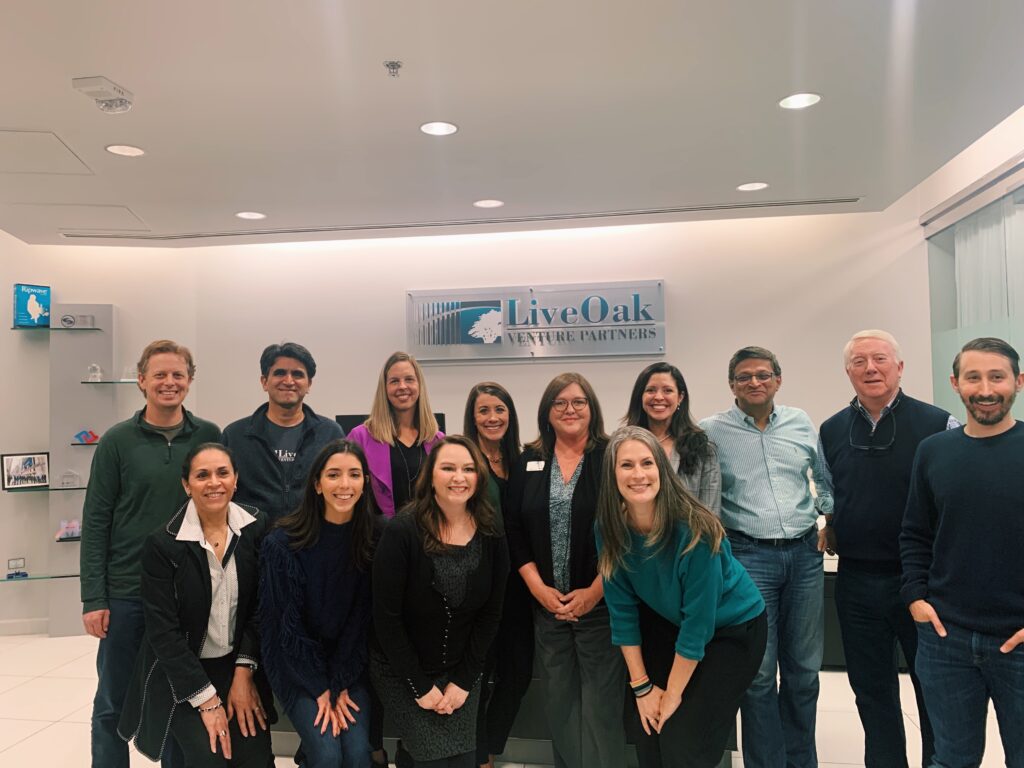
For the third year, LiveOak Venture Partners has spearheaded the LiveOak Gives program to support nonprofit organizations.
This year, LiveOak Gives Program is giving $250,000, the highest in the history of the program, which donated $200,000 in 2020 and $174,000 in 2019.
LiveOak selects nonprofit organizations focused on children, women’s empowerment, the elderly, and others in need and provides support for two years before selecting new organizations, said Venu Shamapant, co-founder and partner in LiveOak Venture Partners.
“We generally have an
emphasis on supporting vulnerable populations and locally focused
organizations,” said Krishna Srinivasan, co-founder and general partner of
LiveOak Venture Partners
The program launched
in 2019 and has given away more than $600,000, Shamapant said.
LiveOak Gives Program’s mission is to engage Austin’s tech community, including LiveOak Venture Partners’ portfolio companies, to support nonprofit organizations based in Texas.
LiveOak Venture Partners, founded in 2012, is
a venture capital firm that has invested in almost 50 Texas-based companies
This year the major
underwriters for the LiveOak Gives campaign include LiveOak Venture Partners,
Ben Scott, John Thornton, Kiwi Camara, Tim Heyl, Jim Breyer, Darin Hicks,
Andrew Perkins, and Joe Aragona.
The LiveOak Gives Program has selected the following six nonprofit organizations to receive $40,000 each in funding this year:
The Andy Roddick
Foundation – which provides learning and enriching opportunities for children
especially in underserved neighborhoods to achieve their full potential.
JUST – which provides microloans and job training to women (mostly minority) entrepreneurs in our community and targets the challenges of capital availability, access, and mentoring at a grassroots level.
Meals on Wheels In-Home Care Program – which is focused on supporting the elderly at home with services that have been incredibly challenging to deliver during the pandemic.
CC4C – which enhances
the quality of life for rare undiagnosed diseases in children by building
support teams for them and their families.
Heart Gift – which provides life-saving heart surgeries to children from around the world where specialized medical treatment is either scarce or nonexistent.
Scholar Shot, which helps at-risk students exit poverty by completing career-ready vocational, associate, or bachelor’s degrees.
Generational wealth is created
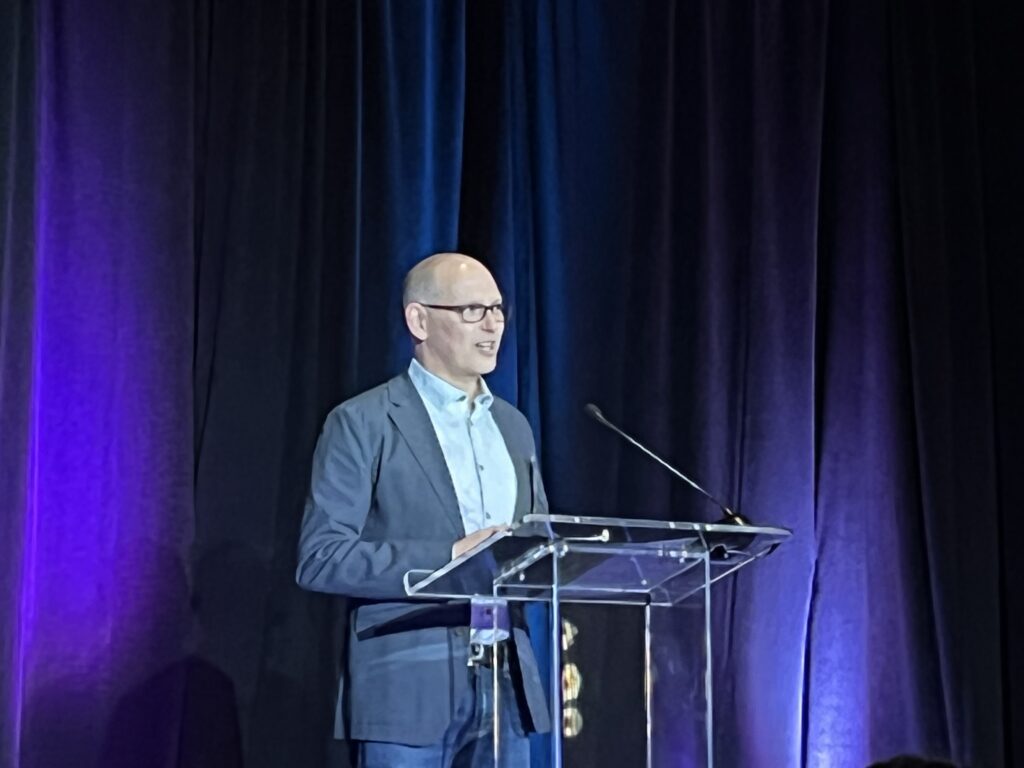
by people who found companies, said Chris Hyams, CEO of Indeed.
That’s why DivInc, a nonprofit accelerator focused on assisting women and people of color is so important in Austin, said Hyams who serves on the DivInc Board of Directors and as 2022 Honorary Chair for the DivInc Champions of Change Awards.
“When you think about those
massive disparities we have in housing, healthcare and education, and the
criminal justice system,” Hyams said. “Those are really symptoms of an
underlying sickness which is economic inequality.”
It is impossible to imagine
making real progress on those issues without addressing the wealth gap, Hyams
said.
That is where Austin-based DivInc comes in, Hyams said.
“Our mission at DivInc is to
generate social and economic equity through entrepreneurship,” he said. “We
support and guide underrepresented founders in building sustainable startups.”
It’s about economic
sustainability, he said.
A successful business is an
opportunity for creating generational wealth and creating more jobs and
impacting more lives and more families and more communities, Hyams said.
“That’s why I’m so proud to
support the amazing work at DivInc,” Hyams said.
Indeed, a job search site is a global company with more than 10,000 employees but its headquarters is in Austin.
“Talent is universal, but opportunity is not,” Hyams said. There are bias barriers in hiring that stand in the way of people getting a fair shake, he said. Indeed has people that work every day to break down those barriers, Hyams said. Diversity, inclusion, and equity are at the heart of everything that Indeed does, Hyams said. And even though it’s a global company, Austin is its headquarters, he said. That’s why it is so important that Indeed support the work that DivInc does, he said.
And the DivInc Champions of Change Awards gives the community an opportunity to shine a spotlight on the changemakers for diversity, equity, and inclusion in Austin, Hyams said.
DivInc, founded in 2016, is the premier startup accelerator for people of color and women entrepreneurs. Hyams also pledged to match $30,000 worth of donations to DivInc Thursday night. The organization had a goal of raising $150,000 from the event and was at $120,000 early on in the evening.
Several hundred people turned out Thursday night for DivInc’s fourth annual Champions of Change Awards presented by Notley, held at Fair Market, and an after-party of dancing, drinks, and food hosted by H-E-B Digital. Event organizers required everyone to show proof of vaccination or a negative COVID 19 test or required masks for attendees.
In all, 43 people were nominated
for awards by a diverse selection committee. The following people received
awards:
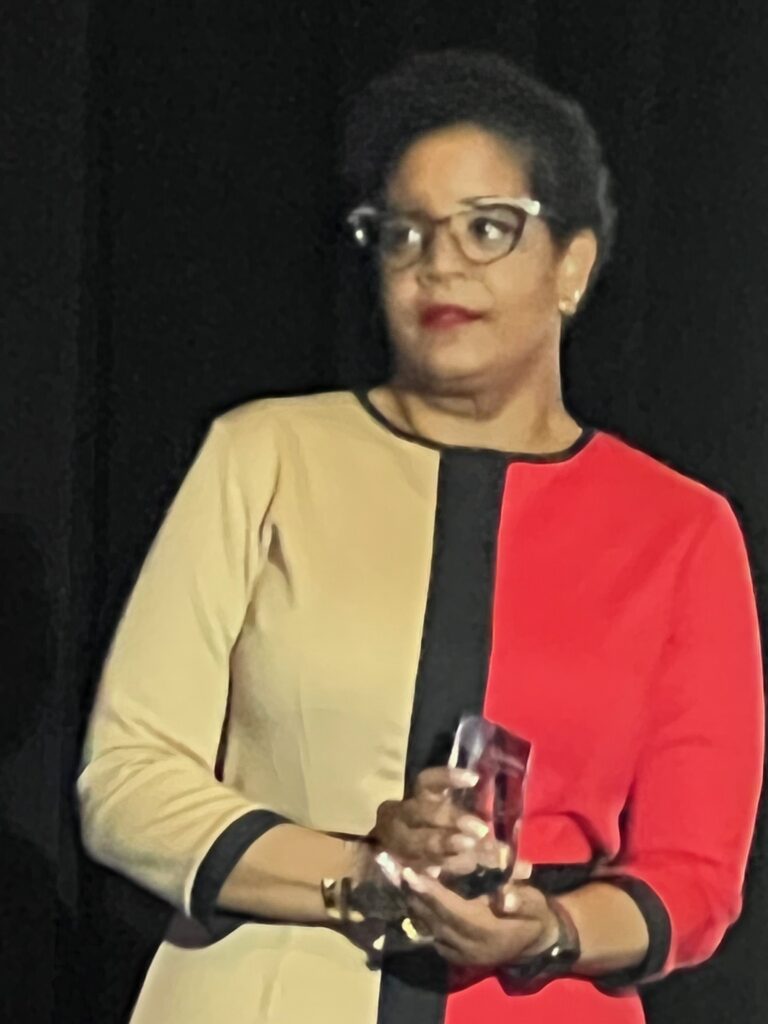
The Executive of the Year Award
went to Pamela Benson Owens, President and CEO of Edge of Your Seat Consulting
and Executive Director of Six Square.
Pamela Benson Owens, President and CEO of Edge of Your Seat Consulting and Executive Director of Six Square.
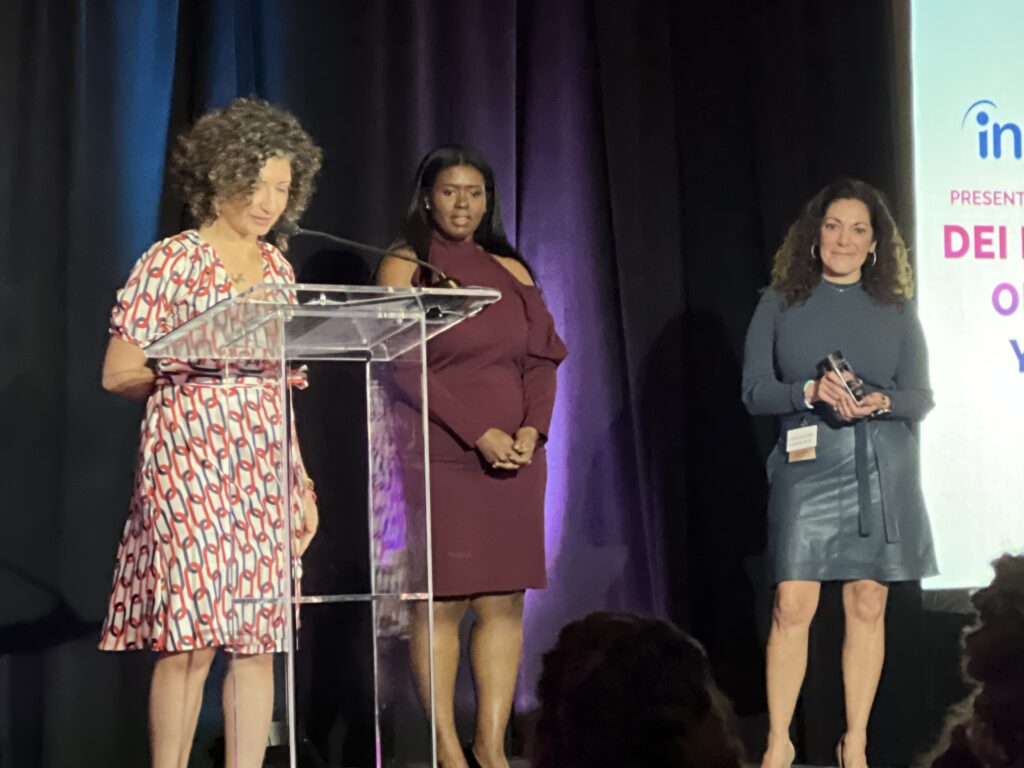
Parisa Fatehi and Farah Muscadin present Gloria Gonzales-Dholakia, Ph.D., Jolt Action and Initiative Executive Director, with the DEI Leader of the Year Award
The DEI-Leader of the Year Award went to Gloria Gonzales-Dholakia, Ph.D., Executive Director of Jolt Action and Jolt Initiative.
The Startup Investor of The Year Award went to Ethan Monreal-Jackson, founder and general partner of Newtype Ventures.
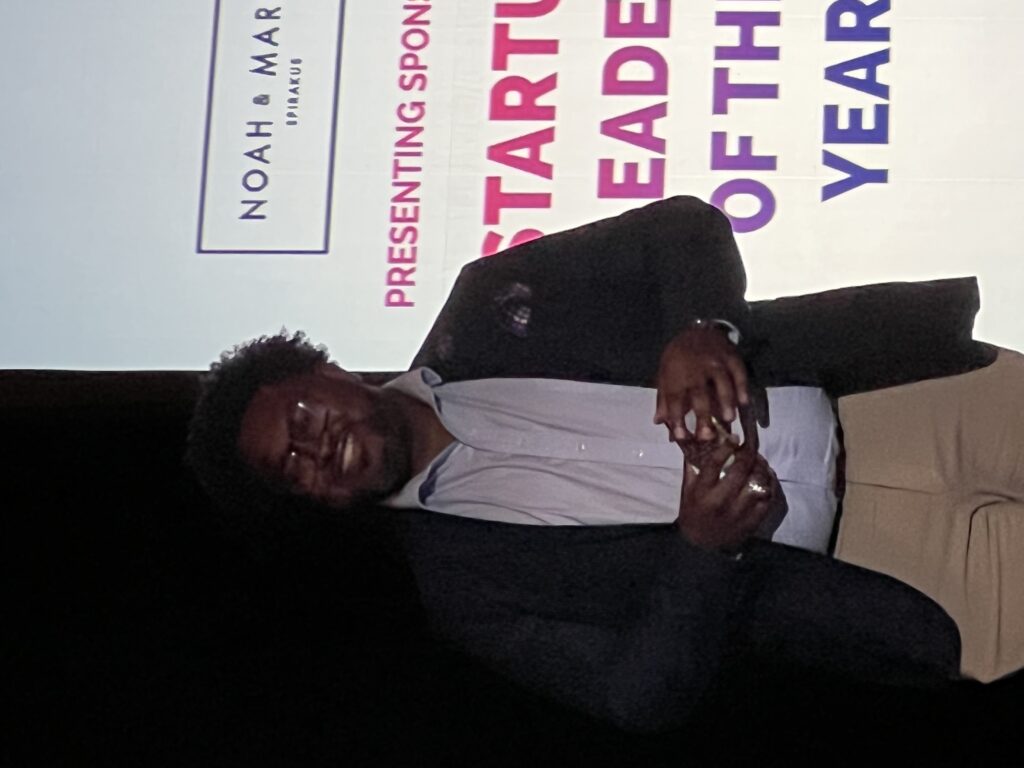
Harold Hughes, Founder and CEO of Bandwagon accepting the Startup Leader of the Year Award
The Startup Leader of the Year Award went to Harold Hughes, Founder and CEO of Bandwagon.
Antony Jackson, founder and CEO of We Can Now, accepting the Rising Star Award
The Rising Star Award went to Antony
Jackson, Founder and CEO of We Can Now, a nonprofit organization.
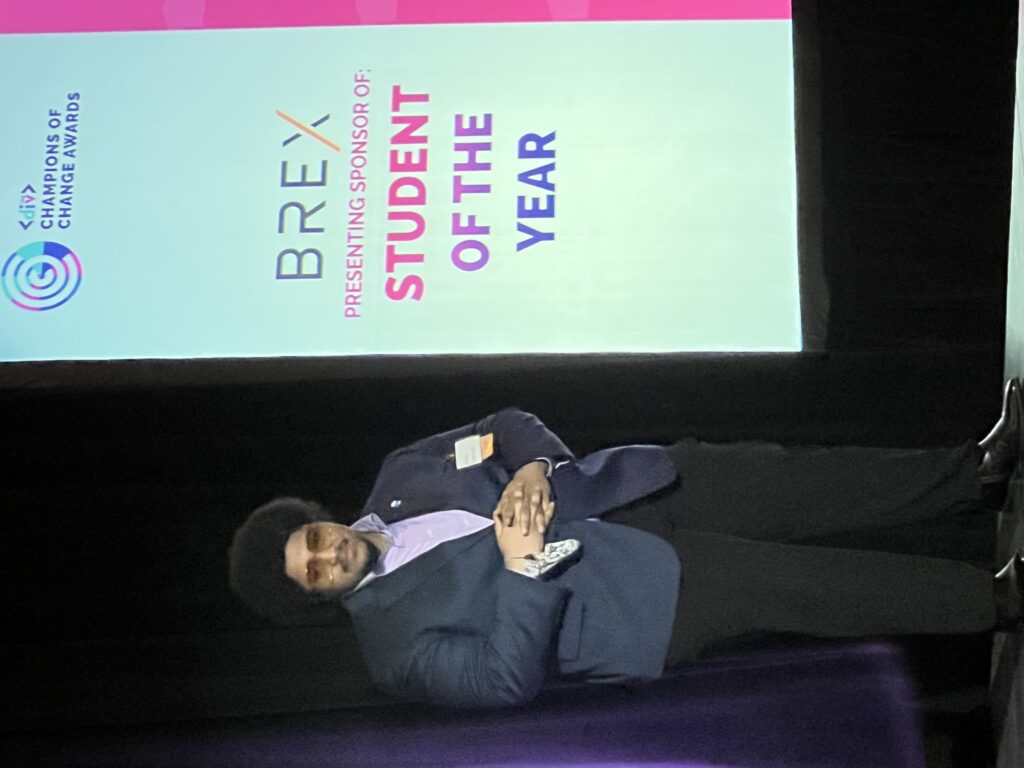
Jeffrey Clemmons, vice president of the NAACP Youth and College of Texas, accepting the Student of the Year Award
The Student of the Year Award went to Jeffrey Clemmons, vice president of the NAACP Youth and College of Texas.
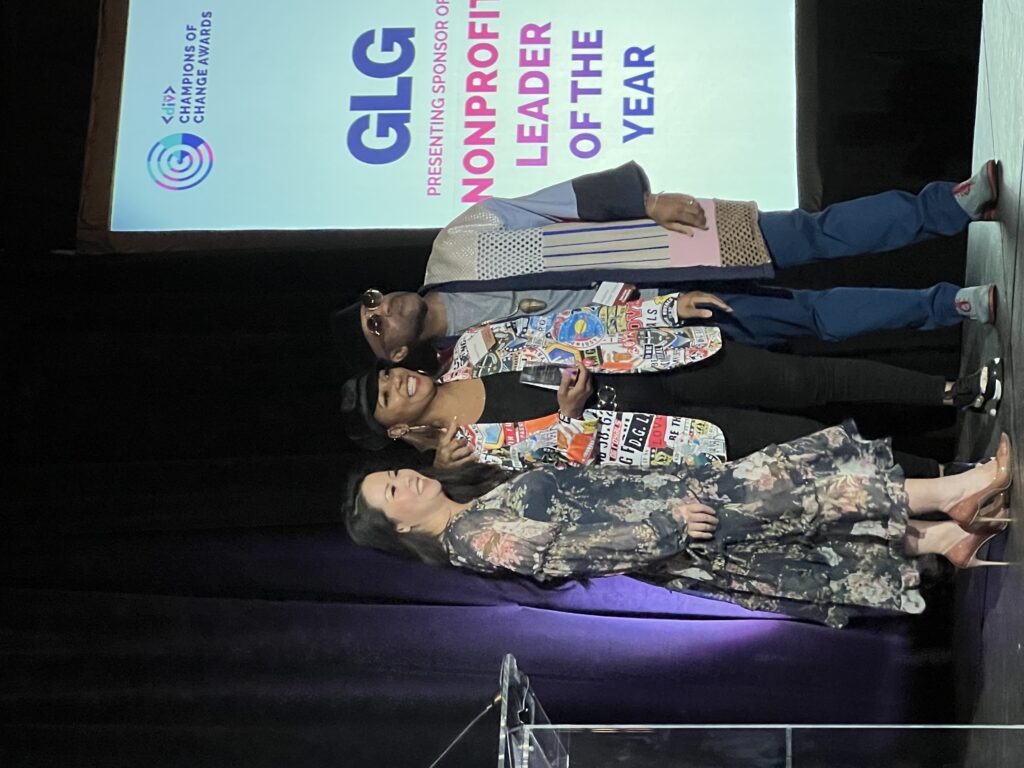
Olivia Chan and Jonathan Chaka Mahone present the Nonprofit Leader of the Year Award to Ebonie Trice, CEO and Founder of Mission Accomplished
The Nonprofit Leader of the Year Award went to Ebonie Trice, CEO, and Founder of Mission Accomplished.
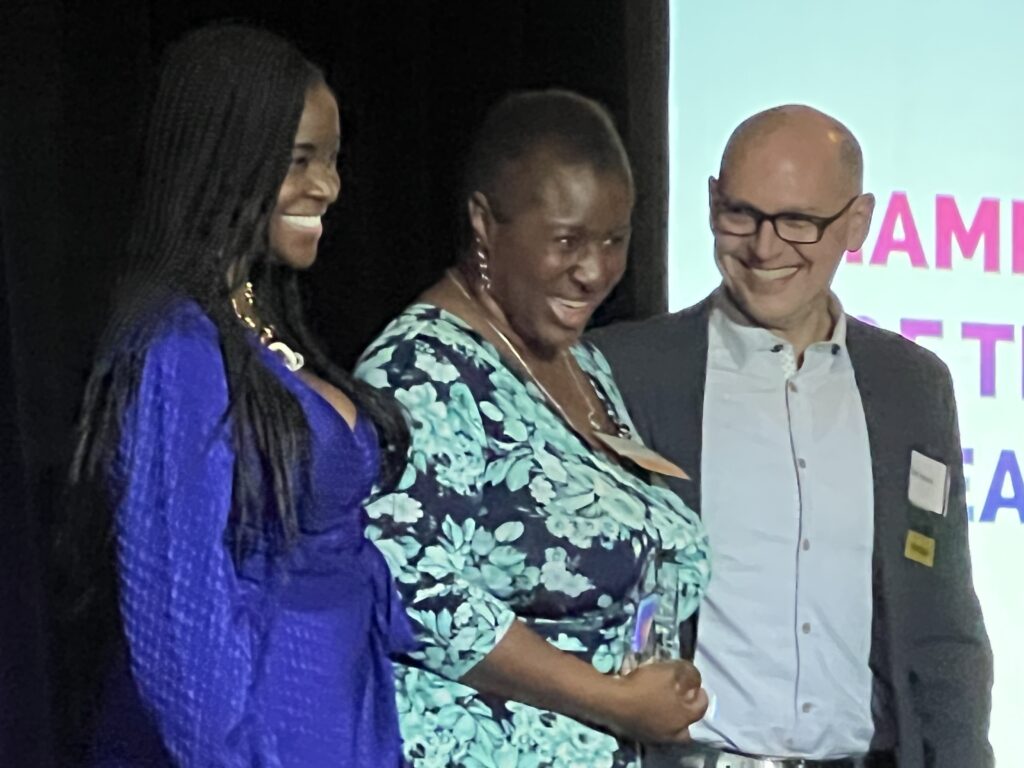
Janice Omadeke, Founder of The Mentor Method with Jereka Thomas-Hockaday, Co-Founder of the Central Texas Allied Health Institute and Chris Hyams, President of Indeed
The Champion of the Year Award went to Jereka Thomas-Hockaday, Co-Founder of the Central Texas Allied Health Institute.
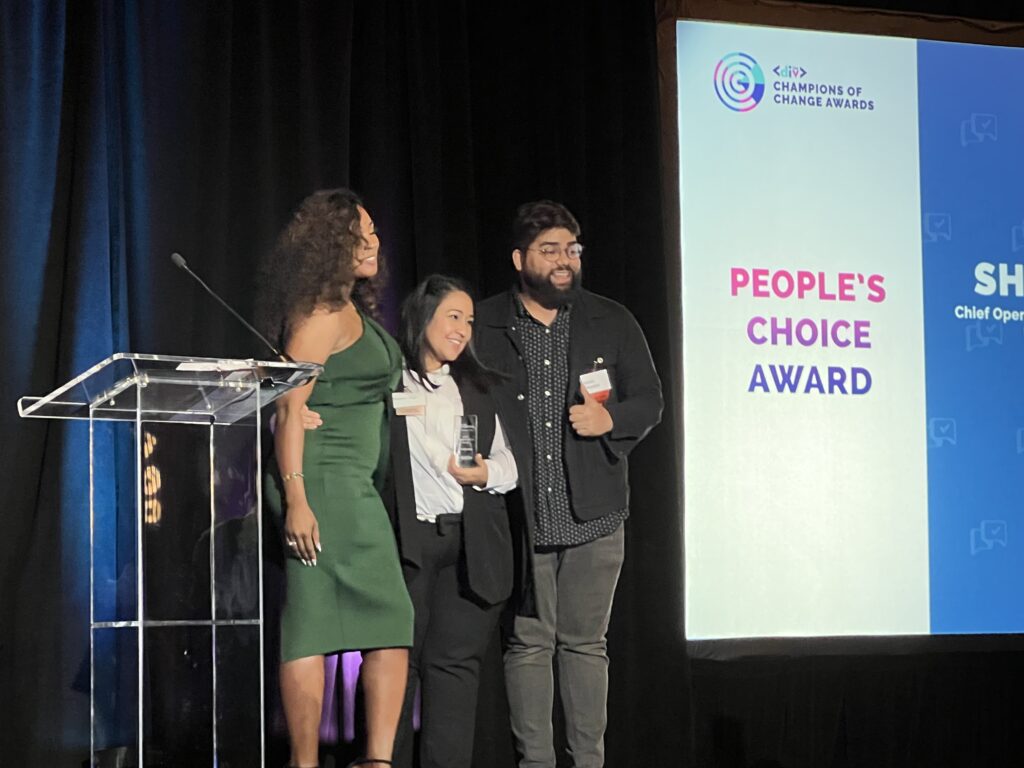
The People’s Choice Award went
to Sharon Vigil, Chief Operations and Equity Officer of Communities in Schools
of Central Texas.
Nicole Taylor and Roman Gonzalez Present the People’s Choice Award to Sharon Vigil, Chief Operations and Equity Officer of Communities in Schools of Central Texas
The First-Ever Dr. Colette Pierce Burnette Legacy Award went to Colette Pierce Burnette, Ph.D., President and Chief Executive Officer of Huston Tillotson University.
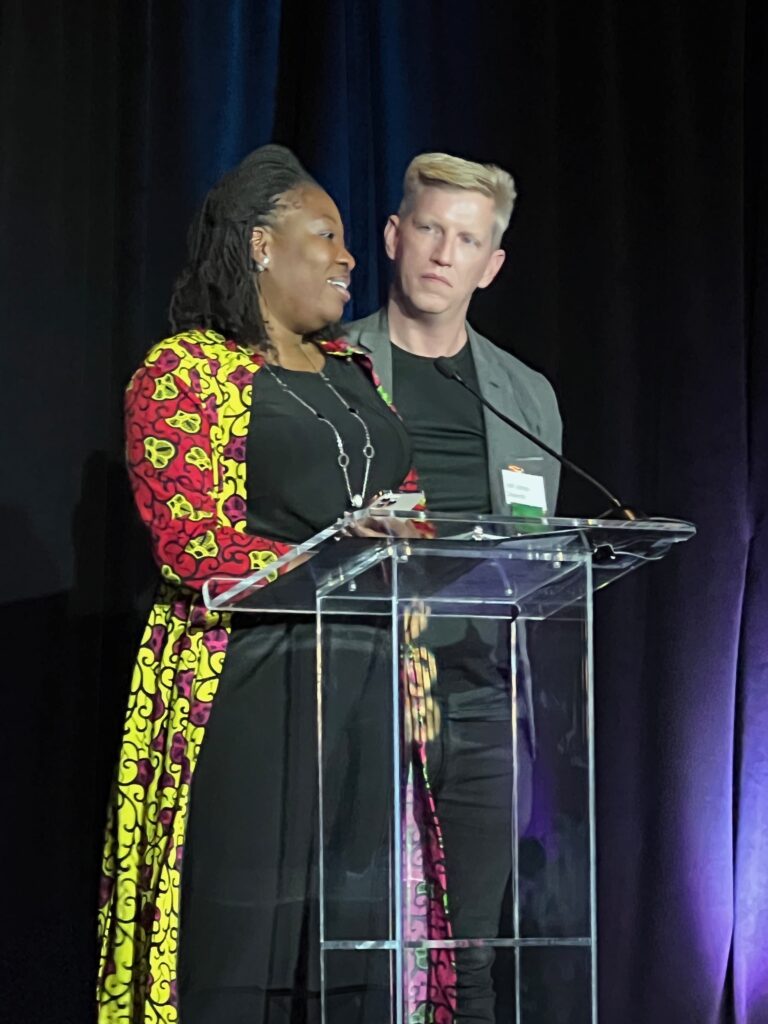
Closing Remarks by Ezinne Ojiudezue and Josh Jones-Dilworth
Colette Pierce Burnette, President of Huston-Tillotson University, and Preston James, Co-Founder of DivInc at DivInc’s Champions of Change Awards
Colette Pierce Burnette, President and Chief Executive Officer of Huston-Tillotson University received the first-ever legacy award at DivInc’s fourth annual Champions of Change Awards presented by Notley.
Burnette came to Austin in 2015 as Huston-Tillotson’s first black female president.
During her time in Austin, Burnette has blazed a trail for diversity, equity, and inclusion throughout the city, said Preston James, co-founder of DivInc. Her work earned her the honor of the Austin Chamber of Commerce naming Burnette as the 2021 Austinite of the year.
At Huston-Tillotson, Burnette
has grown the endowment by 55 percent for the Historically Black University in
East Austin. She also partnered with Apple to create the African American Male
Teacher Initiative and has collaborated with Tesla on a manufacturing
engineering curriculum and a career progression internship for undergraduates.
Burnette also served as co-chair for the
Mayor’s Task Force on Institutional Racism and Systemic Inequities.
The Austin Chamber will honor Burnette at an event on Wednesday at the Austin Marriott.
Burnette has announced her
plans to retire from Huston-Tillotson University in June.
James with DivInc said whether Burnette stays in Austin or not, she has already made an out-sized impact on the city and the DivInc Legacy Award will forever be known as the Dr. Colette Pierce Burnette Legacy Award.
Founded in 2016, DivInc is the
premier startup accelerator for people of color and women entrepreneurs. The nonprofit
organization is based in Austin, and it opened a second location in Houston in
the Spring of 2021.
Xebec, a company that launched during the pandemic, has made the list of Innovation finalists at South by Southwest.
The Austin-based company’s
product, Xebec Tri-Screen 2, is a finalist in the Speculative Design category.
Other finalists include Biometric Ignited mobile self-defense, Flash Freeze
Premium Ice Cream on Demand, Katalyst Training System and The First Ever Waste-Based
3D Filament.
“The Innovation Awards
are such a huge part of what we do at SXSW – the title of this competition
reflects one of the pillar tenants of the event. And for this year, the quality
of entries we received was absolutely off-the-charts,” Hugh Forrest, Chief
Programming Officer of SXSW said in a news release. “Each 2022 finalist is
pushing the envelope with the new ideas, new technologies, and new processes
that they are bringing to the table. I can’t wait until the Innovation Awards
Ceremony on March 14 to see which of these finalists emerge as the best of the
best of the best!”
“We are honored,” said Alex
Levine, CEO and founder of Xebec. “We think it’s a really cool opportunity for
us.”
Founded in 2018, Xebec’s
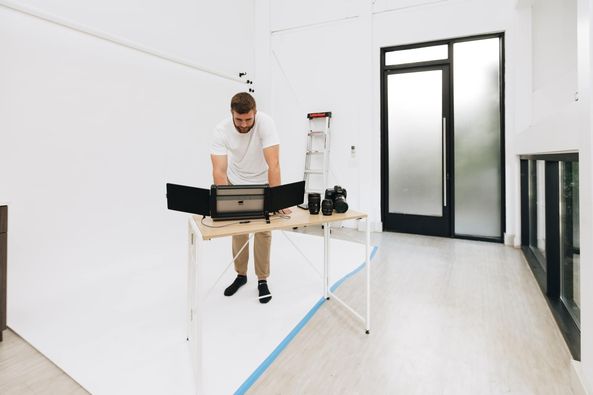
flagship product is the Xebec Tri-Screen, a laptop attachment that adds two
additional screens to any laptop to create an instant office set up anywhere.
Xebec has faced many challenges since it launched. It was planning on debuting its product at SXSW in 2020 but the festival was canceled that year. And Xebec’s plant in Shenzhen, China was shut down. The plant eventually did ship Xebec’s products which were in big demand because so many people were working remotely because of the COVID-19 pandemic, Levine said.
Xebec now has 14 employees,
and it has moved into an office at Fifth and San Marcos on Austin’s East Side. It’s
even hosting the Xebec House SXSW Kickoff Party on Friday, March 11th.
Lisa Gillespie, vice president of marketing and new business development at the San Antonio Express-News and HearstLab Scout
HearstLab is holding its first-ever pitch competition for female-led founders in San Antonio.
It is looking to fund high-growth, women-led startups in the
South, said Lisa Gillespie, vice president of marketing and new business
development at the San Antonio Express-News and HearstLab Scout.
“We’re not just a newspaper,” Gillespie said. “We’re interested
in investing way beyond a newspaper.”
Hearst is a 134-year-old privately held New York-based media company with more than $11 billion in revenue from newspapers, magazines, television stations, and other ventures. William Randolph Hearst founded the company in 1887 and his family continues to run it.
HearstLab is looking to invest in pre-Series A stage companies
led by women and located in the South, Gillespie said.
By April 15th, HearstLab will select the
semi-finalists and by May 18th judges will select ten finalists to
pitch live at an event on June 23rd at the Tobin Center in downtown
San Antonio.
HearstLab will select a minimum of three companies for a $100K investment and three months of support, Gillespie said.
Eve Burton, a senior vice president and general counsel at Hearst, started HearstLab 12 years ago in New York to invest in women-led companies.
“We’ve just expanded from there,” Gillespie said.
HearstLab mostly invested in companies in the Northeast, she
said. But during the Pandemic, HearstLab decided to expand the HearstLab
network across the country.
Lisa Burton, formerly founder of AdMass, a portfolio company of
HearstLab, and now a vice president with HearstLab, moved to Austin last
December.
After massive research, HearstLab decided to launch the first pitch competition in San Antonio, Gillespie said. She works with Mark Medici, CEO and Publisher of the San Antonio Express-News. Medici wanted to host HearstLab in San Antonio. In Texas, Hearst owns the San Antonio Express-News, Houston Chronicle, Beaumont Enterprise, Midland Reporter Telegraph, Laredo Morning News, and other newspapers.
HearstLab is working with Geekdom and other local organizations to get its message out, Gillespie said.
In addition to the pitch competition, HearstLab has teamed up with Project W The Artemis Fund, and Beam at SXSW to present the second “Founded in Texas” event showcasing on March 13th in Austin. It will feature 12 female founders of seed-stage technology companies based in Texas.
An artificial intelligence program has beat a human at chess, checkers, the game of Go, and Jeopardy.
Now GT Sophy, an AI agent has defeated some
of the world’s best drivers of the PlayStation racing simulation game, Gran
Turismo Sport.
Sony AI with Polyphony Digital and Sony
Interactive Entertainment announced the breakthrough in artificial intelligence
recently. And the achievement has ties to the University of Texas at Austin.
Peter Stone, professor of computer science at UT Austin and director of Texas Robotics and executive director of Sony AI America
It’s a huge milestone for the advancement of robotics, said Peter Stone, professor of computer science at UT Austin and director of Texas Robotics.
Gran Turismo involves real-time strategic, tactical decision making and split-second reactions and GT Sophy mastered those capabilities, said Stone. He is also executive director of Sony AI America and is a core member of the team that worked on the project. He is one of the authors of a paper published in Nature titled “Outracing Champion Gran Turismo Drivers with Deep Reinforcement Learning.” Four of the authors are affiliated with UT Austin.
Gran Turismo is a very real simulation in
the sense that it models the friction of real race cars and resistance, Stone
said. In fact, real race car drivers use it for training, he said.
The robot has learned social navigation, Stone said. People do that smoothly and seamlessly. If there is a crowd that lets out after a football game at UT, people leave the stadium and cross the street without running into each other because they can use their senses, experience, and knowledge to navigate through the crowd. That is what the researchers have taught GT Sophy.
“What we’ve done is created a computer controller,”
Stone said.
Right now, the AI technology is in the laboratory stage, but researchers are working closely to integrate it into a future version of Gran Turismo to enhance the gameplay experience, he said.
The focus of Sony’s work in AI is to enhance
human creativity, Stone said.
“This is an example of that,” Stone said.
In 1997, the IBM supercomputer called Deep Blue beat Garry Kasparov, the world’s best chess player, but that didn’t mean people quit playing chess, Stone said. It’s the same with AI in video games, he said. AI will enhance the game playing experience, but it will not replace humans, he said.
At UT Austin, Stone and his team are
training robots to play soccer in a RoboCup, but those robots even if they defeat
professional soccer players will not end the sport, Stone said.
“The same thing here,” Stone said. “Even if
computers are better than people at driving race cars, the F1 will still remain
a human sport.”
Austin has become one of the premier centers in the world for robotics research. In 2002, when Stone joined the faculty, there were only two roboticists on campus and today there are 16 faculty members. Texas Robotics has several industry affiliates including Amazon, Sandia, and Apptronix. It is also in talks about working with Tesla, Stone said.
The AI technology developed for GT Sophy does present new opportunities that may be used in areas such as autonomous racing, autonomous driving, high-speed robotics, and control, Hiroaki Kitano, CEO of Sony AI, said in a news release.
But right now, there are no plans to use the
technology behind GT Sophy in autonomous cars, Stone said.
“Training a video game is different than training
in real cars,” Stone said.
To perfect GT Sophy, Sony AI tested the AI agent by racing against four of the world’s best Gran Turismo drivers in two events on July 2, 2021, and Oct. 21, 2021. GT Sophy learns continuously by playing the game. The AI agent made improvements based on the results of the first race and then outperformed the human drivers in the second event in October.
GT Sophy was trained to master race car control, racing tactics, and racing etiquette to avoid at-fault collisions and respect opponent driving lines.
“One of the most exciting challenges of our time is how can we use AI to enhance what people do,” Stone said. “We are using AI to augment human capabilities rather than to replace them.”
The full press conference announcing the GT Sophy breakthrough is posted below.
The media event where Gran Turismo Sophy, a revolutionary racing AI agent jointly developed by Sony AI, Polyphony Digital, and Sony Interactive Entertainment, was first announced and presented on February 9th, 2022.
SourceDay, which makes supply chain management software, announced on
Tuesday that it has raised $31.5 million in venture capital funding.
Austin-based SourceDay, founded in 2013, has raised $55 million to date. Norwest Venture Partners led the Series C round of funding with participation from existing investors ATX Ventures, Baird Capital, Draper Associates, Ring Ventures, and Silverton Partners.
SourceDay has seen a huge uptick in customer demand for its platform. The company broke records in 2021 with thousands of new customers. Today, more than 12,000 global manufacturers, suppliers, and distributors use SourceDay’s software and platform to manage supply chain issues. So far, SourceDay has processed more than $124 billion for its customers.
SourceDay plans to use the new funds for product development and to hire new staff. “The company plans to double its product and engineering teams and bring on a product leader to its executive team,” according to a news release. SourceDay has more than 80 employees and recently hired Sarah Scudder as its chief marketing officer.
“Procurement teams can expect more than half of their purchase orders to change—a level of unpredictability that can be detrimental to many organizations. Procurement teams—and their suppliers—need user-friendly solutions in response to the supply chain’s erratic nature,” Tom Kieley, CEO and co-founder of SourceDay, said in a news release. “Maintaining healthy supply chain performance is more important today than ever. Our emphasis on streamlining a company’s first mile enables teams to increase on-time deliveries, eliminate pricing discrepancies with suppliers, minimize inventory issues and drive predictability with last-mile receiving. This investment will have a tremendous impact on our services and digital platform as we embark on another year of record growth and creating resilient supply chains for our customers.”
In addition to leading this round,
Norwest partner Sean Jacobsohn will take a seat on SourceDay’s board of
directors.
“Tom, Clint and the SourceDay team
have impressed us with their deep domain experience and ability to scale the
business at a time when supply chain performance software couldn’t be more
critical,” Sean Jacobsohn, Partner at Norwest said in a news release..”
Tyler Norwood, Managing Partner for Antler in the U.S.
Austin has a new venture capital firm, Antler, that is accepting applications for its first cohort, which is expected to kick off next month.
Tyler Norwood is a managing partner for Antler in the U.S. where he oversees the firm’s U.S. operations.
“Our plan was always to start in New York and then to launch
across probably what we would consider the top 7 to 10 tech ecosystems in the
U.S. and Austin was on that list even before COVID hit, and Austin really
became part of the conversation as tech expands outside of the coastal cities,”
Norwood said.
When COVID hit, Norwood and all his team were living in New York. He went down to North Carolina to live with his parents. And then he started traveling around the country to scout out Antler’s second location in the U.S. He stayed in Airbnbs in Los Angeles, Seattle, Boulder, and Austin, and Austin stood out as the best location and it resonated with him the most, he said. He bought a house and moved here last year.
“I think Austin has all the components you need to become a
successful tech hub,” Norwood said. Even though many would already consider
Austin a tech hub, he said he thinks it has a lot more potential for growth and
to get to the next level.
Antler will select about 30 founders to participate in the
Austin program which will last six weeks. After that, the founders will pitch
their ventures to Antler and the firm will decide whether to invest in them.
Antler invests in the pre-seed stage but it also can offer its portfolio companies follow-on capital as they grow and scale, up to Series C funding rounds.
What makes Antler unusual is that the firm invests in founders
with ideas. They don’t have to have a startup, Norwood said. He spoke recently
to Silicon Hills News on the Ideas to Invoices podcast about the firm’s local
plans.
Antler was founded in Singapore in 2017 as an early-stage VC
firm. It has raised $300 million to date and has invested in more than 350
companies globally since 2018. The company gets more than 50,000 applications
for its cohorts and only accepts less than 5 percent of them.
When selecting a founder, Norwood said he looks for founders who are curious, have a life-long love of learning, have a strong work ethic, and have integrity.
“Ultimately, I think successful founders have to be really curious, they have to really wonder why are things the way they are, how did we get to where we are, what are we going to have to do to change things. How can I change things? Norwood said.
Antler also gets back to founders within 24 hours of applying
on its website. Norwood said Antler is receiving about 20 applications a day
for its Austin cohort. When the firm receives an application, he or his team
will contact the founder and set up an interview if they are interested in moving
forward. The firm is also industry agnostic. It is interested in founders who
are solving big problems in a variety of industries, Norwood said.
Antler’s portfolio companies span 30 different industries. And
40 percent of the companies have at least one female co-founder.
Investing in female founders makes financial sense, Norwood
said. Female founders bring a different perspective to business, and they have
valuable insights, he said.
And even though companies in the U.S. raised $621 billion, a record amount of venture capital in 2021, Norwood thinks there is still a frighteningly low number of founders starting a business. Antler fills a role in helping seed-stage companies launch, he said. Norwood wrote an essay on Medium outlining his thoughts about why the world needs more founders.
To apply for its Austin cohort, go to Antler.co. For more on the interview with Norwood listen to the entire podcast posted below or on Apple iTunes, Google Podcasts, Spotify or wherever you get your podcasts.
Amber Gunst is stepping down as the Chief Executive Officer of the Austin Technology Council in September.
Gunst has served in that role since May of 2018. She took over as interim CEO when Barbary Brunner left the organization to join an Austin-based tech company. Gunst had previously served as head of sales and membership services at ATC.
ATC, founded in 1992, has begun the search for a new CEO. The non-profit organization has locally founded companies and global organizations with Austin-based offices as its members. It currently has more than 200 members.
“When ATC was
founded 30 years ago, Austin technology companies needed a voice in Austin. But
today, Austin tech companies are the main driver of Austin’s economic
miracle,” Scott Francis, CEO and Founder of BP3 Global and chair of the
ATC executive committee, said in a news release. “ATC’s next CEO will help
us re-imagine our organization’s role and responsibility in an era where tech
companies are the mainstream drivers of our economy rather than the
underdogs.”
Membership dropped 10
percent during the pandemic. But ATC pivoted to online programming in March of
2020.
As CEO, Gunst also oversaw the
evolution of the CEO Summit and the expansion of membership benefits.
“It was important
for me to give our board the time they needed to find my successor,” Gunst
said. “The affection I have for ATC is abundant and my greatest wish is
for whoever follows me to have a successful start to their tenure. It is not
only best for them, but for our team, our board, and especially our members,
who count on strong leadership to keep them involved.”
ATC will celebrate its 30th
anniversary in September with a battle of the bands event and tech awards.
“We are so
grateful for Amber’s leadership and proud to support her in her next
chapter,” Robert Alvarez, CFO at BigCommerce and member of the ATC
executive board said in a news release. “The next phase of our journey
will be the best one yet. We are excited to bring in our next CEO with the
purpose and passion to help the Austin tech ecosystem thrive in the years
ahead.”
For people who want to book a house near Joshua Tree National Park and get away from it all but still have ultra-fast Wi-Fi, Wander has a place.
Wander allows people to get lost in the desert but still have all of the amenities of a smart home for the perfect work-from-home vacation.
Austin-based Wander launched just nine months ago and raised a seed round of funding six months ago. Last week, the company announced it has raised a $20 million round.
QED Investors led the
Series A round with participation from Redpoint Ventures, Authentic Ventures,
Fifthwall, Susa Ventures, Kevin Durant and Rich Kleiman’s Thirty Five Ventures,
Packy McCormack, Sahil Bloom, Todd & Rahul’s Angel Fund, Alumni Ventures,
Vibe Capital, al16z and others.
To date, Wander has raised $27 million. It plans to use the funding to expand its portfolio of properties, hire more employees, and product development.
The company is focused on catering to the more
than 20 million professionals whose jobs in the U.S. are projected to become
fully remote by the end of 2022.
The number of people worldwide who can work fully remotely continues to grow and they need infrastructure to support them especially when they travel. And that’s where Wander comes in. The company owns all of the homes on its platform which means it can deliver high-quality, smart technology in great locations.
When guests check in to
one of Wander’s smart homes, they can control everything through the mobile
phone app including opening the door and turning on the lights.
And each Wander home
comes with a Tesla. It can also be accessed through the mobile phone app.
“Our goal is to
build the infrastructure to experience the world,” John Andrew Entwistle,
founder and CEO of Wander, said in a news release. “We’re scaling rapidly
to meet the demand of our more than 30,000 community members, with dozens more
properties coming soon. We’re already seeing our vision for the future take
shape.”
Wander currently offers
stays at its California properties in Joshua Tree, Lake Tahoe and Mendocino County and Oregon properties
in Port Orford and Bandon Dunes, with
dozens more coming across the United States this year. In addition to
its growing waitlist, the company also has the support of more than 2,000+
Founding Members, many of whom participated in the latest funding round as
angel investors.
“While we hopefully
return to ‘normal’ in 2022, flexibility and remote work seems to be a common
theme,” QED Partner Chuckie Reddy said in a news release. “After two
years of being restricted from travel and exploring new places, it has become
clear how important it is to have a change of scenery from time to time.
Blending those two things together in one extraordinary experience is exactly
what Wander is all about. People are living busier lives than ever — when they
spend time to travel, it should be perfect.”