

Author: LauraLorek@gmail.com (Page 130 of 354)

LauraLorek@gmail.com

It’s Time for Austin to Become “Startup Capital of the World”

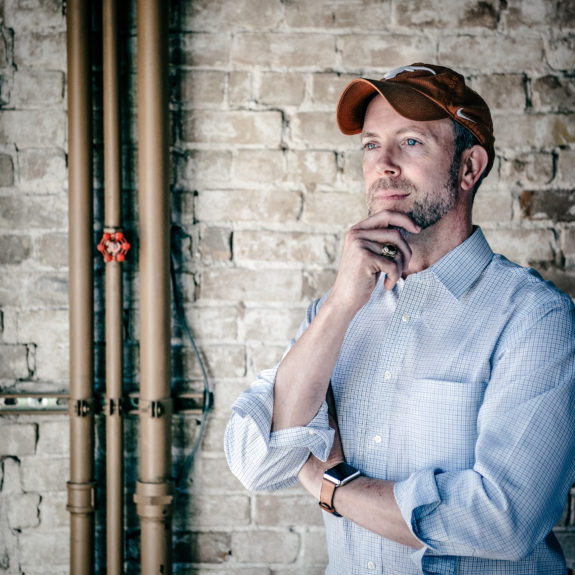
Dave Manzer, courtesy photo.

Dave Manzer, courtesy photo.

By DAVE MANZER
Sponsored Contribution to Silicon Hills News

Many are familiar with Austin’s official slogan: “Live Music Capital of the World.” The city officially adopted the slogan in 1991 after it was discovered that Austin had more live music venues per capita than any other city in America.

In a bit of marketing hocus pocus, the city council seized on the idea of making Austin the live music capital of the world, not just America. It turned out to be a brilliant move. Much like a business does with a tagline and vision statement, Austin hoped its new slogan would make it a destination for live music the world over.

Austin rocks

Notwithstanding recent news about Austin’s loss of some high-profile live music venues, Austin has indeed attained a special place in the world music scene. Austin City Limits has become the longest running music series in American TV history. What’s more, it continues to attracts top music acts from around the world for Austinites to enjoy even as it cruises into its 42nd season.

Live music is still alive and well, thanks in no small part to ACL Fest and SXSW, which bookend the live music festival scene and have made Austin a household name for music lovers the world over. The bottom-line has been impressive, too, with annual revenue generated by the music industry now approaching $2 billion. In short, it’s hard to argue that Austin’s marketing strategy has not paid huge economic and brand awareness dividends for the city.

With that branding coup under its belt, Austin now has a unique opportunity to do for startups what it did for music.

But wait, Austin already has a vibrant, high-octane startup ecosystem, right? Why should we muck it up with an Austin City Council vote on a slogan?

Because when private and public visions merge there is an even greater awareness of the need to help the industry prosper, and when an industry prospers the city benefits with more jobs and highly localized spending.

Because when the city council declared Austin “Live Music Capital of the World” the slogan was used in all of its promotions and gradually became part of the city’s mystique.

Because even though Austin is a startup hotbed it still needs to establish a more sustainable startup culture in the form of more venture capital and angel investors with an appetite for risk and startups that make it to the IPO stage.

Startup reality check

Indeed, the Austin startup scene is far from perfect. It still lags Silicon Valley and New York City in terms of VC activity. Our average deal size tends to be far smaller than other markets, which forces many of our startups to pump the brakes on the kind of growth many tech startups on both coasts are known for.

Fewer and smaller investments also bring a host of economic challenges that impact many industries that exist to support the startup ecosystem. Finally, many startups either flame out or get acquired. Not that we should blame hard-working entrepreneurs for wanting to cash out at some point; it’s their economic prerogative. But if more local startups grew and matured into larger enterprises – think Dell or Whole Foods – then the entire startup ecosystem would be much richer for it.

So can a simple slogan really make a difference? Do we really think we can compete with Silicon Valley?

Trying to become the next Silicon Valley misses the point. Just look back again at the music scene in Austin. By adopting the Live Music Capital of the World brand, nobody ever expected that Austin would actually eclipse LA, NYC or even Nashville as a center for the music recording industry. What Austin did do, however, was establish a target for the city to become an epicenter of live musical performances. It’s hard to say the city hasn’t accomplished much of that objective from what amounted to a very humble beginning.

Austin tops the list

Why shouldn’t Austin claim to be Startup Capital of the World? We do startups well here. In fact, back in August Forbes declared that for the second year in a row (based on a Kaufman Foundation study) Austin is #1 on the list of America’s top 40 metro areas for startups.

For those who have been in Austin long that Forbes ranking comes as no surprise. We excel at collaboration and launching low cost startups, perhaps better than any other city of our size. We have resources of all kinds – public and private – to support the risk-takers and trailblazers. We have an incredibly vibrant food startup community from new food trucks and restaurants to craft liquor distillers and cold brew coffee makers. You can’t throw a stone in Austin these days without hitting startup professionals hard at work in coffee shops, tech accelerators and coworking spaces (see the Austin’s Startup over Coffee map).

Let’s not forget that Austin is home to the world’s preeminent tech startup festival in SXSW Interactive. Every year over 30,000 the world’s leading tech luminaries, aspiring startups and tech professionals converge on the Austin Convention Center to learn, share and network. SXSWi is where the tech world comes to discover hot new trends and break-out brands all the while enjoying a carnival-like atmosphere of parties where attendees can enjoy some VR, AR or AI with generous amounts of tacos and beer.

We also have many of the things that startup professionals value: a vibrant downtown full of great restaurants, coffee shops, hiking and biking paths, water sports and watering holes, great educational institutions like UT, ACC and St. Edward’s University. And, of course, we are the Live Music Capital of the World.

It’s our time!

It’s undeniable. The world really does look to Austin for inspiration when it comes to its live music scene. Why shouldn’t we show the rest of the world how Austin does startups?

Whether we adopt an official slogan or just a symbolic tagline for a city-wide call-to-action matters little. Austin’s startup growth has been astonishing thus far, but nothing lasts forever without careful nurturing. We can use our existing startup ecosystem — one of the richest in the U.S. — to become a beacon for startups from around the world. Austin can, in turn, benefit from the talent of international startup professionals to enrich and diversify its startup scene.

It’s time for Austin to become “Startup Capital of the World.”

Dave is the president of Manzer Communications. With offices in Austin and Denver, Manzer Communications is a marketing communications and PR agency serving technology startups and fast-growth enterprises with offices in Austin and Denver. Dave founded PR over Coffee, is a mentor at Startup Aggieland and just launched Startup over Coffee, a crowdsourced map for startups and startup professionals in Austin.

This is a sponsored post.
Q&A with Joseph Kopser of moovel

Joseph Kopser, president of moovel global

Joseph Kopser, president of moovel global

Joseph Kopser is global president of moovel, a division of Daimler Ag, the maker of Mercedes-Benz. But he’s also a successful entrepreneur as co-founder of RideScout, a startup smartphone app created to increase transportation efficiency by getting people out of their cars and into other public, commercial and private options. Before that, Kopser spent 20 years in the Army, retiring in 2013 as Lt. Colonel. In addition to moovel, Kopser co-founded The Bunker Labs in Austin, an organization dedicated to supporting veteran entrepreneurs. Moovel announced plans to relocate its 36 employees in Austin to its Portland, Oregon headquarters today. Kopser will stay in Austin. This interview was conducted a few weeks ago before the announcement.

Q. What brought you to Austin?

JK. Austin’s reputation. I was nearing my 20 years in the Army. I wanted to transition to a part of the country where Amy and I could put down roots. I applied for and received a position to teach leadership and strategy at the University of Texas. That position introduced me to the people who make the city so great. It gave me the inspiration to kick start RideScout.

Q. How did you start RideScout?

JK. The thinking behind it began in Washington, D.C. when I was working at the Pentagon. I only had five miles to get to work. I had lots of choices on how to get there. But no matter what mode I chose each one came with a certain cost benefit. If I did drive in, I could control my own schedule but I had to deal with this 4,000-pound albatross. So, this idea started rolling around in my brain. I didn’t do much about it until I moved to Austin. I immediately became involved in the ecosystem of entrepreneurship. Nights and weekends I was building the RideScout app.

Q. What resources in Austin helped you the most?

JK. Obviously, the University of Texas. Since I was on campus every day I sought out Johnny Butler who taught a class on entrepreneurship. I began auditing his class. That helped me learn the language. Bob Metcalfe and everything he was doing in the innovation and entrepreneurship scene helped me. He connected me to the Longhorn Startup camp. Beyond that just the people and the open world of connections in Austin. I would say something to Bob this is what I’m building and what do you think. And he would give me feedback and tell me who else to talk to about it. Also, the Austin Cofounders Meetup that goes on at Capital Factory every month. I needed a technical cofounder. I tell people I built RideScout in Austin one beer at a time. I’d take everyone out for a beer and get their advice.

A. How did Daimler acquire RideScout?

JK. Daimler’s Mercedes Benz not only invented the automobile. They did a lot of innovation for automobiles including antilock brakes, pioneered the airbag. And they recognized 10 years ago the need for transportation alternatives. They pioneered Car2Go – one of their first ventures into this whole new world of shared mobility and on demand mobility. They acquired RideScout two years ago. Then RideScout acquired GlobeSherpa.

Q. As global president of moovel what is your role?

JK. I’m working to align all the initiatives Mercedes has for smart cities. Daimler created Freightliner Inspiration, the first autonomous 18-wheel truck, Mercedes Benz created the Vision Van, a drone delivery van. There are also autonomous electric passenger city buses. So many innovations along all these lines and more.

Q. How does Austin fit into the smart cities initiative?

JK. We didn’t get the Department of Transportation Smart City grant but that doesn’t mean these things went away. We didn’t get the money, but shoot we still need to do all of this. moovel and Mercedes can participate in smart cities. Austin is also aspiring to be part of the smart state innovations between Austin, Houston, San Antonio and Dallas.

Q. How long is it going to take these innovations to get on to the street?

JK. They are already happening. Cap Metro has an app that serves as a ticket along with schedules, maps and other information. Uber and Lyft are gone for now but new ridesharing companies are entering the market. We’re working to create a car pool van system that allows commuters to come into town. Special bus lanes. Mopac has variable tolling lanes that will change the way people get around. These are all going to make incremental changes. There won’t be one thing overnight that will improve everything. All of them will come together. Austin is such an attractive community to people like me and others that want to move here. We always must be thinking of how we get ahead of this problem.

Q. What role do you see veterans playing in Austin’s economy?

JK. We need more creative leaders. I see veterans really being able to play a role in this for three reasons. We build teams well. That comes from the natural way the military operates. We can solve hard problems quickly. When you are in austere conditions you don’t want to contemplate 40 things that might work but one or two things that work quickly. And we’ve been through very stressful situations– once you’ve been in those situations you don’t sweat the small stuff and get too emotional or excited when things break or fail fast. That’s why veterans can uniquely come in and help so many of these companies. Veterans are creative people who want to build things for the benefit of others and society. That’s why I think the Bunker is such a great entity. The Defense Department is creating a Defense Innovation Unit Experimental, or DIUx outpost here. I’ve been a big proponent of Austin, Texas. This city has some incredibly unique engineers and innovators with ties to the military. There’s no better place in the country to put this DIUx than Austin, Texas

Editor’s note: Joseph Kopser was featured in Silicon Hills News’ 2016 Austin Technology calendar. SHN will run Q&As with the people featured in the calendar. For information on how you can sponsor or be a part of the 2017 Austin Technology calendar, please contact Laura@SiliconHillsNews.com. Thank you.

moovel Moves Austin Team to Portland Headquarters

moovel100In April, Austin-based RideScout and Portland-based GlobeSherpa merged and re-branded to form moovel North America, a subsidiary of Daimler.

And on Wednesday, moovel announced plans to consolidate its operations and house everyone at its Portland, Oregon headquarters. All of 36 employees in the Austin office are being offered a full relocation package to move to Portland or a severance package if they choose not to relocate, according to moovel spokeswoman Patti Kelly.

Joseph Kopser, co-founder of RideScout and global president of moovel, “will remain in Austin and will be leaving moovel sometime in the near future,” Kelly wrote in an email. “He is committed to continuing to assist Daimler with their ongoing Smart City initiatives. More details will be forthcoming soon.”

Overall, moovel has 116 employees. It also has 16 transit agency contracts in the U.S.

“In September alone, more than 1.3 million public transport tickets were sold using moovel transit mobile ticketing technology in the US. Portland’s TriMet Tickets app, powered by moovel transit, sold their 10 millionth ticket in October since launching in 2013, with Chicago’s Ventra app reaching more than 1 million users and $110 million in ticket sales since launching in 2015,” according to a statement from moovel.

The move is being made to increase productivity and efficiency and to allow the company to scale faster, according to a statement.

“moovel is committed to transforming mobility as we know it today,” moovel CEO Nat Parker said in a news statement. “The success we are experiencing comes from our moovel transit platform and this is in part due to our strong relationship with TriMet, an industry innovator in public transit, and our presence in Portland. By moving the talent from our Austin office to reinforce our success in Portland, we will be able to move faster toward accomplishing the goal of seamless mobility as a service.”

Q&A with Whurley of Honest Dollar

Honest Dollar CEO William Hurley, known as Whurley, photo by John Davidson.

Honest Dollar CEO William Hurley, known as Whurley, photo by John Davidson.

William Hurley, known as Whurley, is a successful serial entrepreneur who embodies Austin’s creative spirit. Most recently, he co-founded and serves as CEO of Honest Dollar, a fintech startup which recently sold to Goldman Sachs.

Before co-founding Honest Dollar, Whurley co-founded Chaotic Moon, which sold to Accenture. He also worked in research and development at Apple and at IBM as a master inventor. And he co-founded and served as CTO for Symbiot, a network security company.

Q. Where did you grow up?

Whurley: I grew up in a military family so we moved around a lot, but we eventually settled in Temple, Texas when my father was transferred to Fort Hood.

Q. Why did you choose to live in Austin?

Whurley: I moved to Austin in the early 90’s to work for Apple Computer and I haven’t thought of leaving since.

Q. When did you first become an entrepreneur?

Whurley: Before working at Apple I was doing some consulting, and I’ve always said having to learn how to do everything yourself was a tremendously useful experience to have early on.

Q. You launched Chaotic Moon and Honest Dollar at South by Southwest Interactive. What is it about SxSW that makes it a great place to launch?

Whurley: There are a couple of things. First SxSW is, in my opinion, the best place to launch a startup bar none. There are so many potential clients in one place, it’s very easy to get the word out about what you’re doing, and the networking opportunities are unparalleled. However, there’s another reason I always launch at SxSW; I consider launching there a lucky charm of sorts. If I ever found another startup, you can be sure I will launch it at SxSW 20XX.

Q. What prompted you to start Honest Dollar?

Whurley: I’d left Chaotic Moon and really wanted to do something new, and in a completely different direction. I’d set out to find a potential startup that fit three key areas: Something that made the world a better place, something that would be able to affect every person I came into contact with in a positive way, and something where there was a huge entrepreneurial opportunity.

Q. How does Honest Dollar differentiate itself in the marketplace for financial service products?

Whurley: Well to start we’re a company focused on savings in a society based on spending. That is, we’re constantly innovating around the core of our product and services. There’s so much opportunity to do more than put assets under management. Things like applying nudge theory, or using zero user interfaces. I’m approaching this space with the same approach to innovation that I started at Chaotic Moon.

Q. Who is your ideal customer?

Whurley: Small businesses and 1099 workers are the sweet spot for Honest Dollar. We launched our first products in both of these areas in 2015 and continue to grow those markets in 2016.

Q. Why did you sell Honest Dollar to Goldman Sachs?

Whurley: It’s really simple. The most innovative startup in fintech now has the resources and credibility of the most storied company in financial services. It’s literally an unbeatable combination. Who wouldn’t want to be a part of that?

Q. And how did the deal come about?

Whurley: I had met Allison Rhodes from Goldman Sachs after selling Chaotic Moon to Accenture. During the meeting, she became intrigued and started asking about Honest Dollar. Her interest led her to discuss the company internally and that kicked off a series of unexpected meetings that eventually led to the sale.

Q. Jobs and the economy in the United States are going through a great upheaval with machine learning, robots, autonomous vehicles, artificial intelligence and other disruptive technologies. How can someone best navigate this brave new world?

Whurley: To me navigating an ever changing world is all about knowing yourself. You have to be objective in understanding what you’re not good at, and most importantly the one thing you’re better at than anyone else. Objectivity, even when you face the inevitable truths that will bring you down, is the key to having a successful career regardless of the environment you’re working in.

Q. What is the best advice you ever received as an entrepreneur?

Honest Dollar CEO William Hurley, photo by John Davidson

Honest Dollar CEO William Hurley, photo by John Davidson

Whurley: My business partner Mike Erwin taught me to “Use it up, wear it out, make do, or do without.” I wouldn’t say learning this first hand was my favorite experience in my career, but it has been one of the most invaluable lessons I’ve ever learned.

Q. In the startup world, the mantra is to fail fast and move on, what lessons have you learned from failures or mistakes?

Whurley: Failing fast is not a good thing. The fact is that people have made this their mantra; and that’s bad. You see failing fast leads people to think its OK, they get an endless amount of chances at the entrepreneurial game, and that’s simply not true. You build your reputation as an entrepreneur every time you change your path or start a new business. If you fail fast four or five times in a row you’ve become that great ideas person who can’t build a business instead of the entrepreneur everybody wants to work with. Failing fast is a drug, and too many young entrepreneurs get addicted to it too early in their career.

Q. What advice would you give to someone just starting out as entrepreneur?

Whurley: Don’t quit your day job. Seriously, you’ll need a paycheck and it won’t be coming from your startup. You have to understand that startups are always in one of two states, struggling or out of business. If you’re struggling, no matter how bad it seems, trust me that’s a fine place to be and in reality just the way it works. No great entrepreneurial story goes “we had a great idea, and people showered us with money, and we built it without issue, and people bought it and paid way too much, and now we’re successful and things are great.” That’s just not how being an entrepreneur works.

Q. What has been your greatest resource in the Austin startup community?

Whurley: I think the community itself. I’ve received so much love and support from the Austin community over the years and I wouldn’t be where I’m at today without it. It’s something I’ll always cherish and never forget. Startups aren’t built by founders and employees alone. You have to have unaffiliated people who love what you’re doing and support it in ways that seem minor, but cumulatively can make or break your business.

Q. In September, you announced plans to team up with the United Nations and the International Telecommunication Union to drive a global outreach effort to get more girls and women into Science Technology Engineering and Math jobs. How is the effort going?

Whurley: The effort is going extremely well. In fact I’m heading to Bangkok this month to meet the team from UN Women and the UN ITU. We’ll be signing a formal agreement, and officially kicking of the project with a number of strategic partners and organizations that have signed up since the launch. We’ll also be in a steering committee where we hope to expand on our long term goals, and most importantly document to the community how we will track and measure them. I don’t think I’ve ever been so excited about a project. It’s a great cause, and the team we’ve pulled together is simply amazing.

Q. What book would you recommend entrepreneurs read?

Whurley: Massive Change by Bruce Mau, I like it because It’s not about the world of design, but the design of the world. It sounds like semantics but read it and I think it will help reshape your perspective on a number of things.

Q. Anything else that you are working on that we should know about?

Whurley: I have some surprises set for 2017, but those will have to wait. In the meantime, my son Brooks is launching his first startup; that’s pretty exciting for me to watch as a father.

Editor’s note: Whurley was featured in Silicon Hills News’ 2016 Austin Technology calendar. SHN will run Q&As with all the people featured in the calendar. For information on how you can sponsor or be a part of the 2017 Austin Technology calendar, please contact Laura@SiliconHillsNews.com. Thank you.

The Inaugural Austin Design Week Kicks Off on Monday

Doreen Lorenzo, Director of the University of Texas at Austin’s new Center for Integrated Design and Design educator and designer, James Victore, are the keynote speakers during Austin Design Week. Photos courtesy of Austin Design Week.

Doreen Lorenzo, Director of the University of Texas at Austin’s new Center for Integrated Design and Design educator and designer, James Victore, are the keynote speakers during Austin Design Week. Photos courtesy of Austin Design Week.

Design is “more important than ever before,” in business, according to Wired.

And Austin takes design seriously.

That’s why a team of creative minds launched the first Austin Design Week, which kicks off on Monday. The week includes a variety of events where people can share their work, ideas and work spaces and learn from one another.

“Each day we’re inviting the community to participate in riveting design talks from local leaders, hands-on workshops like jewelry making, or interesting new topics like design in government,” according to a post by Danielle Barnes, Austin Design Week organizer and co-founder.

Doreen Lorenzo, director of the University of Texas at Austin’s new Center for Integrated Design, will deliver the keynote address at the Austin Design Week Kick-Off Party at Austin Beerworks on Monday.

Design educator and designer, James Victore, will deliver the keynote talk at the Austin Design Week Closing Party on Friday at Canopy.

The rest of the week features a variety of speakers, workshops, studio tours and parties. It even includes a silk screen workshop in which attendees are encouraged to bring their our shirt to design. And Isa D’Aniello is teaching an introduction to hand lettering session to teach typography basics and lettering styles.

IBM Design has also created The HUB, an interactive installation, to inspire design exploration and learning at the E. William Doty Fine Arts Building, 2301 Trinity St. on UT’s campus.

Another highlight is the Fisterra Projects Studio Tour, a collaborative project between the Design Institute for Health, Fisterra Studio, the Thinkery, ThinkEAST, and Johnson & Johnson. It looks at ways to improve health at the community level.

There’s even a storytelling event which seven Austin designers will give five to seven minute lightning style talks about how design has affected their lives.

Check out the full schedule for Austin Design Week here and make sure to RSVP for events.

Austin-based HealthTronics Acquires HealthTech Solutions

HealthTronics LogoAustin-based HealthTronics this week announced it has acquired Plymouth, Minnesota-based HealthTech Solutions.

The financial terms of the deal were not disclosed.

“Acquiring HealthTech Solutions further enables HealthTronics to make available a wide array of clinical treatment options to doctors and hospitals of any size – from comprehensive medical centers to offices in remote, rural communities,” Russell Newman, president of HealthTronics, said in a news release.

Founded in 2002, HealthTech Solutions’ technicians deliver, set up and monitor laser and surgical technology. The company also offers workshops and training, as well as cosmetic products. The company has operations in Minnesota, Wisconsin, Iowa, North Dakota and South Dakota. It has a staff of 14 employees who will join HealthTronics’ staff.

HealthTronics, founded in 1989 in Austin, has made five acquisitions in the past two years. The company provides mobilized medical technologies and services as well as physician partnership opportunities.

“Expanding HealthTronics’ technology fleet and geographic reach through the acquisition of HealthTech Solutions will help us put the best tools available into the hands of even more physicians,” Newman said in a news release.

Tiff’s Treats Lands $11 Million to Continue Expansion

tiffcookieA fresh baked cookie startup in Austin is attracting a lot of dough.

Tiff’s Treats, launched by a couple of graduates from the University of Texas at Austin, just closed on $11 million in funding.

Dallas-based CIC Partners led the round. Tiff’s Treats with 22 stores in Texas and two stores in Atlanta plans to use the funds to open more locations nationwide. Last year, the company raised $14 million.

In 1999, Tiffany and Leon Chen founded Tiff’s Treats 16 years ago while students at the University of Texas at Austin.

The company is known for baked-to-order cookies and brownies delivered warm to a house or office in about an hour.

To date, Tiff’s Treats has raised $32.9 million, according to its Crunchbase profile.

“Tiff’s Treats is adored by everyone that knows it, and that doesn’t happen by chance,” Mike Rawlings, partner at CIC Partners, former CEO of Pizza Hut and current Mayor of Dallas, said in a news release. “From my days at Pizza Hut, I can appreciate the immense complexity of the delivery business, and the Tiff’s Treats team makes the customer experience seamless. At CIC Partners, our goal is to partner with top management teams, and this team fits the bill.”

Rackspace Officially Goes Private in $4.3 Billion Deal

Photo courtesy of Rackspace

Photo courtesy of Rackspace

It’s the start of a new era for Rackspace, San Antonio’s largest technology company, which Thursday officially became a private company following the completion of its $4.3 billion acquisition by Apollo Global Management, with investment by Searchlight Capital Partners.

Its common stock, under the symbol RAX, will no longer be listed for trading on the New York Stock Exchange, effective immediately, according to a news release.

Apollo acquired Rackspace for $32 per share, a 38 percent premium compared to Rackspace’s closing stock price on August 3, the last day before news reports began circulating about the possible buyout.

“We are excited to begin this new chapter for Rackspace as a private company,” Taylor Rhodes, president and CEO of Rackspace, said in a news release. “I would like to thank our Rackers around the world who, throughout this process, have remained focused on serving our customers. Every day they deliver expertise and Fanatical Support for the world’s leading clouds. We look forward to working with Apollo as we manage Rackspace for long-term growth and expand our early leadership of the managed cloud market. We believe that the best years for Rackspace are yet to come.”

“We are pleased for our managed funds to invest in Rackspace and are excited to be associated with the company and its world class employees, who go to enormous lengths to offer industry-leading expertise and service,” David Sambur, Partner at Apollo, said in a news release. “We look forward to working together with the Rackspace management team and its employees, as well as with Searchlight to help advance Rackspace’s strategy and continue the company’s strong heritage of innovation and customer satisfaction.”

Founded in 1998, Rackspace has a rich history in San Antonio. It grew from just a few employees to more than 6,000 employees worldwide. It went public in 2008. Today, it serves business customers in more than 120 countries with offices and data centers on four continents. It reported 2015 revenue of $2 billion.

Localeur Secures $4.2 million in Funding

localeurLocaleur, a travel recommendation service aimed at millennials, has raised nearly $4.2 million of a $4.6 million offering from 43 investors, according to papers filed with the Securities and Exchange Commission.

The Austin-based startup, founded in March of 2013, previously raised $1.2 million, according to its Crunchbase profile. Silicon Hills News did this profile of the company in 2013. Localeur is now in 30 cities and is available as a mobile phone app.

Joah Spearman, Co-Founder and CEO, formerly worked at Bazaarvoice with Co-Founder and President Chase White. They saw an unmet need for a travel site with recommendations by locals. A void left by travel and recommendation services like need Yelp and Trip Advisor.

Spearman has been vocal in the Austin startup community about difficulty in finding funding and at one point talked about moving his startup to California.

Localeur didn’t send out an announcement after it raised the funding last week, which Spearman wrote took “forever to raise,” in a post on Hacker Noon’s Medium Site, a San Francisco-based blog for Hackers. Instead, in that same post, he listed seven reasons why startup fundings are overrated.

The number one reason Spearman listed: “people think raising money is success rather than fulfilling your mission.”

He also said he sold his 2011 Toyota FJ Cruiser, also known Uncle Phil, in August to make payroll and that stuff like that never gets covered unless he writes about it on Medium. And he complained in his post about inaccuracies in media reports.

In a separate post on the Localeur blog, Spearman reports Localeur is hiring and it’s soon going to have an all hand’s on meeting in San Francisco to plot its strategy. It’s aiming to have next year’s meeting in London.

Google Fiber Will Continue to Roll Out in San Antonio and Austin

google-fiber-jefferly-com-llogoGoogle confirmed plans on Wednesday to continue to roll out its high speed Internet network in San Antonio and Austin despite retracting in other markets.

Google Fiber first announced plans to come to Austin in April of 2013. The service is currently live there and continues to roll out to different parts of town.

“Google Fiber isn’t leaving Austin. We’re still thrilled to be your neighbor and continue to offer superfast Internet to residents,” according to a statement from a Google Fiber spokesperson.

In August of 2015, Google announced plans to provide its “Gigabit” Internet network to San Antonio. Google’s network is about 100 times faster than what most broadband users currently experience in the city.

“Google Fiber will continue in San Antonio. We can’t wait to deliver high-speed connectivity to San Antonio residents, and are even looking at innovative new ways to deploy, as enabled by One Touch Make Ready and a new construction method we’ll be piloting called Microtrenching. In Austin we’ve already seen a 10x improvement in digging speed (i.e., laying Fiber) with no strikes to utility lines using microtrenching,” according to a statement from a Google Fiber spokesperson.

But overall, Google Fiber is winding down plans for some of its new markets.

“In terms of our existing footprint, in the cities where we’ve launched or are under construction, our work will continue,” according to a blog post form Craig Barratt, SVP, Alphabet and CEO of Access. He also announced plans to step down as CEO of the Google Fiber operations.

Google plans to pause operations in its “potential Fiber cities,” those cities where its been in exploratory discussions, according to Barratt.

“In this handful of cities that are still in an exploratory stage, and in certain related areas of our supporting operations, we’ll be reducing our employee base,” he wrote in the blog post.

« Older posts Newer posts »

© 2026 SiliconHills

Theme by Anders Noren — Up ↑