
 The Austin Startup Crawl, also known as ATX Startup Crawl, took place Thursday night showcasing more than 70 startups.
And it was the largest startup crawl ever with more than 5,000 people registered to attend.
The crawl kicked off at 5 p.m. with shuttles that ran until 10 p.m. to various venues scattered throughout downtown Austin.
Page 253 of 352
 All of Rackspace’s customers will be hybrid cloud customers in the future, said Gerardo Dada, the company’s product marketing leader.
San Antonio-based Rackspace, which calls itself the Open Cloud company and co-founded with NASA the Open Stack operating system, has seen its cloud computing business skyrocket in the past few years.
The cloud lets customers operate a “network of remote servers hosted on the Internet to store, manage, and process data, rather than a local server or a personal computer.”
Rackspace faces competition in the hybrid cloud market from Amazon Web Services, the number one leader, and other players such as Microsoft, HP Cloud and IBM’s SoftLayer.
Right now, customers can choose from public, private and hybrid clouds.
But a study just published this week from Gartner, a research firm, predicts that most big businesses will have hybrid cloud deployments by 2017.
“Virtualization reduced capital expenses, and standards and automation reduce operational expenses,” Thomas Bittman, vice president and analyst at Gartner, said in a news release. “However, taking the next step of adding usage metrics, self-service offerings and automated provisioning requires investment in technologies without a significant reduction in operational cost. With this in mind, the driving factor for going that next step should primarily be agility.”
Most companies are already using hybrid to an extent, Dada said. They already recognize they’re different types of cloud environments, he said.
“The question is not when hybrid but how,” he said.
Hybrid clouds, the combination of publicly and privately hosted servers and dedicated servers working together, can increase efficiency and save money, Dada said.
For example, many companies do not need exchange servers to host their own email, he said.
“They’re never going to be as good as a specialist,” Dada said.
Companies need to ask themselves what are the right technology applications to be publicly hosted and privately hosted, Dada said. There is not a single answer.
Rackspace recently started hosting Hubspot, a marketing service for small to medium-sized businesses, on a hybrid cloud from a private cloud setting. The company has realized a four times increase in efficiency with the public cloud at half the cost, Dada said.
“Chief Information Officers like public cloud servers because they are built around the “compute as a utility” model, where costs are generally low and users pay by the hour,” according to Rackspace. “But using public infrastructure means you may need to share resources with other tenants and you may lose some of the performance benefits that the private and hybrid clouds offer.”
There’s been so much buzz about the public cloud, Dada said.
“The cloud is powerful and transformational but it has its place,” he said.
The hybrid cloud offers more security than a pure public cloud, Dada said. And it gives companies a path to grow and expand in the future, he said.

By SUSAN LAHEY
Reporter with Silicon Hills News
It was a big day for startups to learn about design in Austin Wednesday.
An evening panel for Startup Week, From Idea to Product, was led by Adrian Taylor of Pushstart Creative. Panelists were Aaron Vorn Eigen, also of Pushstart, Patrick Barrett, co-founder of Greater Good Labs, designer Ty Rarick, and Selina Silvas, senior interaction designer at Mutual Mobile, where the panel was held.
Taylor started by asking what constitutes a good product and panelists answered everything from a useful product to a sustainable product. Ultimately, Barrett said, “a stop sign is a really good product…there’s a continuum of utility and emotional frivolity that might have a stop sign at one end and mink underwear at the other. Nest has done a great job of taking commodity products and turning them into fetish items.”
Who is Your Customer?
The problem, the panelists agree, is that most people who design a product think of themselves as the user and never really explore the question of usability. Silvas said her favorite method of determining whether a product is useful is to begin by building a story around it and asking “How does this fit into somebody’s life?” “A lot of product ideas have nothing to do with a person. Just because you know it will be used by a certain type of employee, it’s still a person.”
She complained about working on a project for a company that specializes in data collection and conversion metrics. They wanted to present their metrics as validation for the viability of their products. But, Silvas said, their website was designed to drive visitors along a particular path, so the metrics weren’t based on what people chose to do, they were based on what people were directed to do. That doesn’t prove viability.
Most of the designers acknowledged they hated having to go find end users, pick their brains and change their products accordingly because, Taylor said “You’re in love with your idea and the user is going to tell you your idea is wrong.”
Rarick, who spoke at the MiniTrends 2013 conference, urged startups to look at the minitrends, where competitors are going to be in two-to-three years.
Paper Airplanes
Barrett said startups should also start by releasing a product with one feature and committing to iteration. Many companies tend to go the opposite direction, Taylor said, layering on feature after feature and believing “they’re making this awesome and better and more.” But frequently it’s more complexity than users want to deal with.
Taylor is a big proponent of making the lowest fidelity version of an item before investing in a prototype. Can it be made of paper? Then make it of paper. Vorn Eigen said their company keeps the 3D printer busy, too, cranking out prototypes.
“It’s absolutely crucial to watch humans interact with the product,” Barrett said. “Yes, you’re putting them in a really weird situation and saying you’re not observing and judging them but you are observing and judging them,” he joked. But in that context “don’t get lost on a single data point. One user might have a learning disability when it comes to your product. Otherwise you’re constantly revising for a single user at a time.”
Taylor recently held a similar talk at Capital Factory. After the panel, he said, he wants to help Austin become as successful as Silicon Valley and designing a great user experience is the key to that.
Letting Your Customers Lead—Design Research for Startups
In a brilliant move, SXSW Eco introduced “Straight to the Point:” 15-minute long sessions designed for little bits of information that don’t need a whole hour. In some cases, these sessions turned out to be pitches for business, but at least they were only 15 minutes long!
Wednesday, for example, Daniel Goldfarb partner and head of design research for Greenstart spoke on “Letting Your Customers Lead—Design Research for Startups.” Greenstart began as a clean tech incubator in Silicon Valley but pivoted to become a company that focuses on helping startups with design of everything from user experience to logos. The company still works in clean tech and it takes its pay in equity.
By investing design help into their client’s products, he said, they’re greatly reducing the risk of their investment because the most successful products are those that “delight” their users. Most startups he said don’t have millions of dollars or lots of time to do extensive market research on who their customers are or what appeals to them.
•customer discovery
•problem solution fit
•proposed mvp
•proposed funnel
followed by:
•feedback
•customer validation
•product market fit
•business mode
•sales and marketing roadmap
and, if necessary, a pivot.
Greenstart does market research, digging into customer preferences with approaches common to market research experts: such as asking people not just which beer is their favorite, but which animal best represents their favorite beer. This provokes a deeper analysis and critical thinking about customers like what they like, what attributes are most important to them about their brand of choice.
Startups, Goldfarb said, need to design products thinking about the context in which they live—technologically, socially, politically. They need to understand how people’s usage of technology is changing and what their competitors are doing.
“We spend a great deal of time talking to people,” he said, “going to their houses, watching them use things…getting at the context: What are they scared of? What do they love?”
By LAURA LOREK
Founder of Silicon Hills News
 Funded companies, which are performing well, get nice offices and free lunches for their employees, said Mike Dodd, partner with Austin Ventures.
Mass Relevance is one of its portfolio companies performing quite well. And on Wednesday, the company hosted a panel discussion about successfully raising capital for a startup company as part of Austin Startup Week.
The two-year-old company has grown from four employees to more than 120 employees and raised $5.5 million in a Series A round of funding and it already has millions in revenue from customers like NBC, MTV Networks and CNN. Its partners include Facebook and Twitter. Mass Relevance, formerly known as TweetRiver, aggregates social media content for its customers.
Claire England, executive director of RISE Austin, moderated the discussion, which paired two successful startup Co-founders with their lead investors. Eric Falcao, founder and Chief Technology Officer of Mass Relevance joined Dodd of Austin Ventures and Josh Kerr, Co-founder and CEO of Written teamed with Krishna Srinivasan, general partner at Live Oak Venture Partners.
Mass Relevance got early traction by landing a six-figure deal with MTV, said Falcao. And then the Co-founders brought on Sam Decker, formerly of BazaarVoice, as its CEO. He had connections with Austin Ventures. Mass Relevance got seed funding easily and raised its first round without a lot of trouble, Falcao said. Mass Relevance also went to California and received funding from Mike Maples Jr.’s Floodgate Partners, an early investor in Twitter.
Kerr bootstrapped his first two companies, but he wanted to build a really big company with Written, which markets bloggers’ content to brands, so he saw the need to get funding from the start. He was able to get a seed round from Live Oak Venture Partners.
“I wanted the structure that comes from raising money and the acceleration that comes with it,” Kerr said.
Signs of a successful startup
Next, England asked the venture capital investors to talk about the signs they look for when evaluating a startup investment, the warning signs of bad investments and top signs of good investments.
“This is such a people business,” said Srinivasan with Live Oak Partners. “I think that is the most important factor. We’re looking for people who have an insight from what they have done before.”
Live Oak Partners also looks for people they can work with and collaborate, Srinivasan said. The ones that don’t work out are entrepreneurs who are not collaborative and those that don’t want to be great partners, he said.
“It’s obviously team, team, team,” Dodd said.
 But Mass Relevance had a really great product and they were solving a problem of aggregating real-time Tweets for companies early on, Dodd said.
“What we try to do is look around the corner at the early markets,” Dodd said.
Austin Ventures saw Mass Relevance as being one of the big players in social media for television, Dodd said.
The importance of relationships
Next, England asked how often the companies and funders met and interacted with each other.
Falcao said he sees Dodd once every quarter, but that Dodd met with other executives, like Decker, on a more regular basis.
Dodd said he talked to Decker about once or twice a week. He joked he visited the Mass Relevance office often because they have free lunch for employees. His firm also helped in hiring some of the senior executives and helped to recruit people.
“We can get six head of sales literally almost over night,” he said.
Kerr said Srinivasan gives his seed stage company sage advice.
A good investor helps in team building and scaling the company much more aggressively, Srinivasan said.
England also asked if there was a downside in partnering with investors. The question was met with laughter and then a bit of awkward silence before Falcao answered.
“When things are going well, things are going well,” said Falcao. “VCs are good. They come with checks and advice and more checks. When things work, they work. So far, we haven’t gone through hardship. So it’s tough to point to anything.”
The downside is companies start to rely on them, Kerr said.
“They are bringing this really great value to the business. It’s not just money,” Kerr said. “It’s your buddy. It’s much, much more than that. But you’re not the only company they are invested in and you’re not getting 100 percent of their time. So the only downside is you might want more and not get it.”
What happens when things are not going well? England asked.
 “I have plenty that are not doing well,” Dodd said. “They don’t have offices like this. They don’t have free lunches. We focus on burn.”
Austin Ventures works to make sure they are focused on maximizing profit and minimizing losses and working to get market share in their industries, Dodd said. The relationship between the investor and the entrepreneur doesn’t change, he said. In a few cases, though, it has, he said.
“I still believe in what they are doing, it’s just taking longer than expected,” Dodd said.
Venture capitalists like to chase trends but it’s good to keep focused on the main business and not get distracted by whacky ideas and the latest trends, Falcao said.
“You need to ask yourself are we just chasing something new?” Falcao said. “You shouldn’t always do exactly what your customers want you to do. There’s something about staying on a mission and staying focused rather than chasing X.”
When a firm makes an investment and things don’t go as planned, the investors work to salvage the value and help hold the ship together to find an acquirer or to get some modest outcome, Srinivasan said.
“Those things take a lot of hard work,” he said.
Making the pitch to investors
 England then asked the entrepreneurs how they marketed themselves to potential investors.
Kerr said when he pitched his company to Live Oak, Srinivasan sent him three really challenging questions in an e-mail message. He had time to think about the answers, but he couldn’t come up with the answers.
“Ultimately I ended up going back to him and saying these questions are too hard,” Kerr said.
At an early stage, the investment in the company is more about the people than the idea, and it’s better to be honest and admit when you don’t know something, Kerr said.
“If you don’t know the answer, you don’t know the answer,” he said.
Srinivasan said that he liked the honesty that Kerr displayed. He was able to evaluate the risk of investing in them and to gauge how much it would take to get the company to the next level, he said.
Startups should know how to answer basic questions from investors about customer acquisition costs and know how to scale, Falcao said.
“If you haven’t thought about that, you’re not thinking about how hard it is to scale a SMB (Small to Medium-Sized Business) company,” Falcao said.
How much money should startups ask for and how much time should they spend doing it?
The size of a check should be reflective of the stage of the company and issues it is facing, Srinivasan said.
“Just getting out of the gate, you’re going to raise a little bit of money,” Dodd said.
Typically, seed stage companies raise money from angel investors ranging from $350,000 to $1.2 million, Dodd said. A Series A round receives between $2.5 million and $7 million and a Series B round can get up to $20 million, he said.
Kerr said he spends 90 percent of his time raising money. His other partners focus on running the business.
The startup ecosystem in Austin
 England asked if Austin had a strong enough funding ecosystem to support startups.
Both Kerr and Falcao raised money from California from Floodgate Investments.
“More firms. We need more firms here,” Dodd said.
The ecosystem needs more sophisticated seed stage investors, he said. He said he wished there were three or four more firms like Live Oak to increase competition for funding, he said.
Raising second and third round funding is easy if a company is doing well, he said. But it’s harder to get people in the valley to invest in early stage companies, he said.
Austin needs more firms focused on early stage, Dodd said. More investment firms are good for Austin, he said.
“A rising tide floats all boats,” he said. “The more money that is in town, the better everyone will do.”
In the 30 years he has been in the market, this is the most vibrant and most exciting time, Srinivasan said. The quality of the ideas is really good, he said.
“Clearly this place can have more early stage companies,” he said.
The overall maturing of Austin’s startup ecosystem has contributed to Austin’s vibrant startup community, Srinivasan said. People who have been through the process a few times and transplants from California now populate it, he said.
“It’s a genealogy effect,” Dodd said. Successful companies spin out successful startups, he said.
Austin Ventures has funded three or four startups by people who left BazaarVoice, a company Austin Ventures backed that went public, Dodd said.
 Dave Rupert, a software developer with Paravel in Austin, posted a bug to GitHub, a web-based hosting service for software development projects.
Rupert goes by the name “davatron5000” on Github.
I filed a bug with the @whitehouse https://t.co/Lf75PaCeR1
— Dave Rupert (@davatron5000) October 9, 2013
Here’s the complete post:
“No one is assigned.
I noticed a bug over the past week or so and it seems reproducible:
Go to U.S. Government.
U.S. Government is shut down.
Expected results: Government should be working.
I’m unable to debug or propose a fix since there’s not an open, transparent stack trace. Conflicting error messages are being thrown as well.
Hope you can resolve this soon. It would seem that the U.S. Government would value 100% uptime in order to be a reliable and trustworthy source for the rest of the world.
Thanks! Love this project and would like to continue using it.”
Damon Clinkscales alerted Silicon Hills News to the geek humor, which has been making the rounds on Twitter. More than 300 people have responded to Rupert’s bug post, but so far no one has found a solution to fix the problem.

Photo courtesy of SXSW Eco
It also showcased innovative entrepreneurs and individuals working to solve those problems and conserve natural resources.
On Tuesday night, SXSW Eco gave awards to two videos that highlight ways people can make a difference in helping our planet in its “Sustainability Goes Viral! Video Competition.”
The winners are “Follow the Frog” and “Rachel Beckwith’s Last Wish.”
This year, SXSW Eco also featured a number of panels and sessions focused on startups. On Tuesday, several companies participated in the SXSW Eco Startup Showcase.
The winners of that competition are Sseko Designs, a sandal company, for Social Impact, New Sky Energy, conversion of industrial waste products into new products, and Blue River Technologies, advanced technology for better agriculture, for Greentech and Faraday, customer acquisition platform for energy solutions, and Watersmart, water conservation software, for Cleanweb.
By SUSAN LAHEY
Reporter with Silicon Hills News

David Valenti, a partner with Reed & Scardino, photo by Susan Lahey
Valenti gave a presentation Tuesday on “What Kind of Entity Should I Form” for Austin Startup Week at the company’s offices, 301 Congress. About 30 people attended.
Among the questions Valenti said startups need to ask themselves are:
- How much personal liability do I want?
- Do I want to be able to transfer ownership?
- How many owners are there going to be?
- Will there be any foreign owners?
- How do I intend to raise capital?
- What kind of management structure do I want?
- How much corporate maintenance do I want to do with respect to filing documents and meeting regulatory standards?
Of all the most common entities, sole proprietorship, general partnership, limited liability corporation, S Corporation or C Corporation, the LLC and C Corp make the most sense, Valenti said. Both limit the company’s liability, meaning that if there’s a lawsuit, it’s only against the company and not the owner’s personal assets. Both allow foreign partners—which S Corps don’t—which might be important if you hire a foreign national and want to offer equity as part of your compensation.
Also, he said, if a company wants to later convert to a C Corporation, it’s easier to do so from an LLC. The reason for that is that, with an S Corporation, the income of the company “passes through the company” and is reported as the personal income of the partners. With the others, the company’s income is separate and partners take a “reasonable salary.” VCs are often unable to invest in S Corps because some of their investors are non-profits and the profits of a company would “pass through” to the non-profit, violating the non-profit’s status.
If a company intends to bootstrap or raise only friends and family rounds, or even solicit investments from angels, it can do so as an LLC. If a company doesn’t intend to solicit VC funding for several years, setting up an LLC is relatively inexpensive–$300—as compared to the costs of a C Corporation which requires setting up a separate bank account, establishing bylaws and a board and other maintenance costs that could require the services of an attorney and accountant.
But if the company does intend to solicit VC funding, it should set up a Delaware Corporation.
“VCs will tell you they want to invest in a Delaware Corporation because Delaware is very settled on how corporations operate. The whole system set up to litigate corporate matters.”
There is no tax advantage, Valenti said, to setting up a corporation in another state like Nevada. At one time, the “tax friendly” status of the state where the entity was set up would ease a company’s tax burden, but that’s not the case any more. Startup partners, he said, should set up the entity in the state where they live and operate. And they shouldn’t use their home addresses if they have no office. They should setup an account with a company that provides a street address and suite number instead of a P.O. Box.
Reed & Scardino work in several areas of business law but have a special focus on startups and the issues surrounding founding a company. The firm is offering office hours during Startup Week for
companies looking for individual help.
By LAURA LOREK
Founder of Silicon Hills News
 For the second year in a row, Eric Bandholz travelled from Spokane, Washington to attend Austin Startup Week.
“I lived here in 2003 and 2004 and I’ve been waiting for past ten years to get back here,” Bandholz said.
His favorite events during Austin Startup Week include epic office hours, the Startup Crawl and a UX Design mentorship meetup. The week long celebration of Austin’s technology entrepreneurs and industry is jammed packed with daily events at various venues around town.
The event kicked off Monday and runs through Friday.
Monday night, Bandholz manned a table for his company beardbrand at the Made in Austin Career Fair and later attended the Austin Technology Council’s Battle of the Bands at Mohawk.
Before the Battle of the Bands, 50 companies had tables at the Made in Austin Career Fair, sponsored by HP Cloud, CoolheadTech, Masters of Technology Commercialization Program at UT, Reed & Scardino LLP and PayPal.
 Erik Larson and Frederick “Suizo” Mendler of TrueAbility, a site that tests the technical aptitude of Linux administrators and others, made the trip from San Antonio, to recruit a few new employees.
Other companies in attendance included Mutual Mobile, The TechMap, SpareFoot, MapMyFitness, StoryPress and Tech Ranch Austin.
Bandholz is one of ten people Jacqueline Hughes, organizer of Austin Startup Week, arranged to fly in for the event. Altogether, ten people flew in this year for Austin Startup Week, up from six last year, she said.
Overall, Hughes said she expects more than 4,000 people to attend the various events throughout the five days of Austin Startup Week, up from 2,500 people last year, she said.
Bandholz plans to move his company, beardbrand, to Austin in April. His business partner, Lindsey Reinders moved here a few months ago.  Their ecommerce site sells products for the bearded lifestyle, Bandholz said.
“We foster style for the urban beardsman,” said Bandholz, who sports an impressed beard himself. “We do a lot of business on the Web. We could be located anywhere. Austin is our city of choice. We’re coming here because it’s a cool city.”
That’s the kind of thing Julie Huls, president of the Austin Technology Council, likes to hear. She arranged for the first ever Battle of the Bands Monday night at Mohawk. The event featured eight startup bands made up of technology workers at various startups around town.
“There’s similar patterns between musicians and technology people,” Huls said. “Music is a huge part of the technology industry in Austin. The technology industry wouldn’t be here without music. The two industries are symbiotic.”
The competing bands included Scorpio Rising, Digital Tiger (MapMyFitness), TroubleHawk (BuildASign), Thanks Light (Big Commerce), Boogaloo Grove (SpareFoot), The Pons (PeopleAdmin), Vorcha (ReachForce) and Hector Ward and the Big Time (Oracle).
 TroubleHawk from BuildASign won the crowd favorite as measured by a clapping meter.
Vorcha won the judge’s favorite and as a prize gets time to record in Aryln Studios.
By SUSAN LAHEY
Reporter with Silicon Hills News
 Last year, when the Game Developers Conference Online announced it was moving to Los Angeles, Jennifer Bullard, chair of the Austin chapter of the International Game Developers Association, immediately launched into planning a new conference that would remain in Austin. Captivate started Sunday morning at the Palmer Center with a keynote by Warren Spector and will continue until late Tuesday afternoon.
Bullard and co-creators’ objective was to create a conference of convergence, where artists, musicians, filmmakers and game designers could come together and learn more about supporting themselves through their art.
Convergence of Art and Business
A lot of these creatives, she said, have many different types of art in their experience and portfolios and are always having to redo their resumes to emphasize one area or another. “There are these huge swaths of people crossing back and forth and they’re not recognized for being on the cutting edge of convergence,” Bullard said.
The conference had several sessions on how to make money, handle legal issues such as what kind of company to create, how to network, how to craft an elevator pitch and how to build teams.
If someone identifies himself as a game designer but he hasn’t shipped any titles and he works at Walmart, Bullard said, he’s a Walmart employee.
“We want to help them earn a good living, and not a subsidized living,” she said. “In the creative space, you’re taught your craft. You’re not taught how to start a company or how to do marketing and PR….There’s a certain amount of DIY but it’s good to know how to do this yourself and where does that stop and hiring a professional start.”
Badges for the event ranged from a $25 badge for someone “who’s curious” up to $400 for professionals. About 1,200 people showed up for the event, which is about a third of the annual attendance of the GDC conference. But, said Bullard “I’ll get there in two to three years.” One problem may be that the conference was at the same time as Austin Startup Week, a conflict Bullard didn’t know about when she booked the space. But, she said, creatives tend not to go to Startup Week for some reason.
Session on Business Models With Meaning
Among Monday’s sessions was a session on Creative Ambitious Business Models That Change the World through Meaning. Panelists were Michelle Zadrozny of Helping the Aging, Needy and Disabled (HAND), and Rip Rowan and Tommy Darwin of Avail Design Group, a consulting firm that helps businesses grow and sustain their businesses.
Business and meaning, Darwin said, are yin and yang, they go together at the same time. The key, he said “is to get as close as you can to the people themselves trying to help. Deal with issues; don’t think hierarchies…..Talk to the people who are closest to the problem. Who is living in it. They’re a great source of ideas. Find out how they are already solving the problem. They have a lot of insights as to what will be valuable to them. Then when you have your idea, take it and go out to the people. As soon as you get a good guess, as soon as you get a good working notion, just start trying it. business is about getting a workable idea and a working version.”
“Become a student of all the different ways money flows into your area of interest….” Darwin said. “if you can find a way to get into that flow, you can support yourself. But you still have to do it with integrity. I’m not talking about pandering or selling out.”
Zadrozny talked about the benefits of technological advances like online applications for the Supplemental Nutrition Assistance Program. There are, she said, many challenges for the working poor just to survive, including the obstacle of paying for transportation to a job that didn’t pay enough to cover basic living expenses, let alone the transportation to get there.
One audience member brought up a video game where the player had to live out the issues of the working poor including the very question of whether to walk 15 blocks to save the bus fare the player needed for grocery money. A game that also showed decisions of the wealthy at the same time, panelists agreed, would be very helpful for actually changing behavior.
They also agreed that every endeavor, whether it’s a game or a documentary, needs a call to action so that people know what to do with their newfound perspective.
Tuesday’s sessions will include one on using improvisational theater to build teams, legal and business basics for startups, nine tech trends that will influence the next 10 years, and a keynote by Gary Hoover.
By LAURA LOREK
Founder of Silicon Hills News
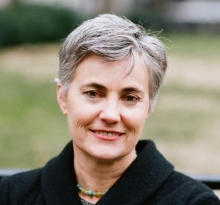 The world is getting hotter.
In fact, it’s supposed to rise 11 degrees fahrenheit over land by the 2060s if we don’t meet our goals to reduce carbon impact, said Robin Chase, founder of Buzzcar, a peer-to-peer car sharing service and co-founder and former CEO of Zipcar, a car sharing service.
That means we must act now to institute drastic change to save our planet, Chase said during the afternoon keynote at South by Southwest Eco in Austin.
“I’m really, really focused on getting these jobs done,” she said.
Global warming is caused by Carbon Dioxide and air pollution trapped in the atmosphere, which acts like a blanket warming the earth when the sun heats it up. The biggest contributor to global warming is the burning of fossil fuels.
To solve the problem, Chase proposes Peers Incorporated, a partnership to drive the collaborative and shareable global economy.
“It’s a partnership between autonomous individuals and bigger institutions,” she said.
In 2000, when Chase launched Zipcar she saw an unfilled need and excess capacity in the marketplace.
On average, it costs $8,000 annually to own a car, but owners only drive them five percent of the time, Chase said.
The problem was people could only rent cars in 24 hour bundles.
“You couldn’t buy it in the way you actually consume it,” Chase said. “There was a real economic opportunity here.”
To address the problem, Chase created a platform for participation and treated Zipcar’s customers as its peer collaborators. They were not consumers, but co-creators.
“You wouldn’t rent a car for an hour if it was going to take you 20 minutes to get one,” Chase said. “Thanks to the Internet we could make that transaction cost really simple. We built this platform that allowed you to rent a car in 60 seconds.”
To create Zipcar, they would ask people for help all the time.
“We talked to them intimately about our desire to build a great company,” Chase said.
 The big shift in the Peers Incorporated method is to look at customers as collaborators and producers. Some of today’s most successful tech companies relied on this method to scale their platforms including Skype, Facebook, YouTube, Wikipedia, eBay and Flickr.
Chase discussed the power of the shareable economy to scale quickly.
For example, she said it took the largest global hotel company, InterContinental Hotel Group, 60 years to amass 645,000 hotel rooms in 4,400 hotels in 100 countries. And Hilton, the second largest, took 93 years to build 3,800 hotels with 610,000 rooms in 88 countries.
But it only took four years, for Airbnb, a peer-to-peer room rental service, to amass 650,000 rooms in 192 countries.
And Couchsurfing, which is nine years old, has 2.5 million rooms in 207 countries.
“It is the incredible pace of growth that is possible,” Chase said. “This new way of doing business is incredibly disruptive. And it provides some good opportunities for us.”
 The old industrialization model required companies to build a business as big as possible. It involved industrial strength, large investments, multi-year efforts, integration and aggregation of many parts, deep sector knowledge, diverse technical expertise, standard contracts and standardization, consistency, brand promise and globalization.
The new model relies on individual strength focusing on people, small non-government organizations and companies, small investments, short term sporadic efforts, delivery of small services, local knowledge, specific unique expertise offering customization, specialization, creativity, and personal social networks (trusted individuals.)
“With this model, we can capitalize on what individuals do best,” Chase said. “It’s this collaboration that I’m calling Peers Incorporated.”
It’s a platform for participation, she said.
“The individuals bring this incredible creativity,” Chase said. “Each side has to give a little that makes it interesting for the other side to play. Excess capacity is just permeating the whole thing. Platforms deliver economies that scale and high growth – that is what a platform is made to do.”
In addition to Airbnb, other examples include Etsy, a marketplace for selling things made by individuals, Fiverr, which has grown from 2010 to 2013 to offer 2.5 million gigs, or things people will do for $5. And even though the smartphone is only five years old, people have created more than 1.5 billion apps for Apple devices and Android devices.
The Peers Incorporated model lets people tap into “those tens of thousands, hundreds of thousands, millions of people outside of the room,” Chase said.
The Peers Incorporated model brings diversity, innovation, resilience and redundancy, Chase said.
Under that model, the economics of things completely change, she said.
 Her latest venture is Buzzcar, a peer-to-peer car sharing company in France that leverages the excess capacity of vehicle owners to rent out their cars to others. Buzzcar has a network of 7,000 cars across France, Chase said.
“I think of this excess capacity as a path toward abundance,” she said.
PeersIncorporated.com just launched based on case studies but this kind of disruption is happening in every single sector of the economy, Chase said.
For example, Global Forest Watch provides satellite images to let people find out what is happening in forests right now and shows deforestation happening in real time.
“It’s giving the power of the corporation to individuals,” Chase said.
Massive satellites and photographic evidence given to the tribe leader of a region in the Amazon in Brazil enables him to fight corporations to take back his land, Chase said.
“For me this is an example of a powerful platform for participation,” she said.
To end, she quoted Tim DeChristopher, a climate activist: “We are on track for such rapid and intense change, we might as well steer toward the world we want to see.”
Chase said there’s three things to do every day to build a sustainable world we want to live in:
- Exploit excess capacity
- Build Community Muscle – the future ahead is so hard – this is something we really have to do.
- Focus on Platforms for Participation – scale and grow as fast as possible.
Intergovernmental Panel on Climate Change Report says that the world will use up its carbon budget in 30 years, Chase said.
“We should feel this incredible urgency,” she said.
For more on Robin Chase’s ideas, watch her Ted Talk from last year.