
Category: Austin (Page 28 of 318)

SourceDay Raises $31.5 Million in Venture Funding

SourceDay, which makes supply chain management software, announced on Tuesday that it has raised $31.5 million in venture capital funding.

Austin-based SourceDay, founded in 2013, has raised $55 million to date. Norwest Venture Partners led the Series C round of funding with participation from existing investors ATX Ventures, Baird Capital, Draper Associates, Ring Ventures, and Silverton Partners.

SourceDay has seen a huge uptick in customer demand for its platform. The company broke records in 2021 with thousands of new customers. Today, more than 12,000 global manufacturers, suppliers, and distributors use SourceDay’s software and platform to manage supply chain issues. So far, SourceDay has processed more than $124 billion for its customers.

SourceDay plans to use the new funds for product development and to hire new staff. “The company plans to double its product and engineering teams and bring on a product leader to its executive team,” according to a news release. SourceDay has more than 80 employees and recently hired Sarah Scudder as its chief marketing officer.

“Procurement teams can expect more than half of their purchase orders to change—a level of unpredictability that can be detrimental to many organizations. Procurement teams—and their suppliers—need user-friendly solutions in response to the supply chain’s erratic nature,” Tom Kieley, CEO and co-founder of SourceDay, said in a news release. “Maintaining healthy supply chain performance is more important today than ever. Our emphasis on streamlining a company’s first mile enables teams to increase on-time deliveries, eliminate pricing discrepancies with suppliers, minimize inventory issues and drive predictability with last-mile receiving. This investment will have a tremendous impact on our services and digital platform as we embark on another year of record growth and creating resilient supply chains for our customers.” 

In addition to leading this round, Norwest partner Sean Jacobsohn will take a seat on SourceDay’s board of directors.

“Tom, Clint and the SourceDay team have impressed us with their deep domain experience and ability to scale the business at a time when supply chain performance software couldn’t be more critical,” Sean Jacobsohn, Partner at Norwest said in a news release..”

VC Firm Antler is Accepting Applications for its First Austin Cohort to Kick off in March

Tyler Norwood, Managing Partner for Antler in the U.S.

Austin has a new venture capital firm, Antler, that is accepting applications for its first cohort, which is expected to kick off next month.

Tyler Norwood is a managing partner for Antler in the U.S. where he oversees the firm’s U.S. operations.

“Our plan was always to start in New York and then to launch across probably what we would consider the top 7 to 10 tech ecosystems in the U.S. and Austin was on that list even before COVID hit, and Austin really became part of the conversation as tech expands outside of the coastal cities,” Norwood said.

When COVID hit, Norwood and all his team were living in New York. He went down to North Carolina to live with his parents. And then he started traveling around the country to scout out Antler’s second location in the  U.S. He stayed in Airbnbs in Los Angeles, Seattle, Boulder, and Austin, and Austin stood out as the best location and it resonated with him the most, he said. He bought a house and moved here last year.

“I think Austin has all the components you need to become a successful tech hub,” Norwood said. Even though many would already consider Austin a tech hub, he said he thinks it has a lot more potential for growth and to get to the next level.

Antler will select about 30 founders to participate in the Austin program which will last six weeks. After that, the founders will pitch their ventures to Antler and the firm will decide whether to invest in them.

Antler invests in the pre-seed stage but it also can offer its portfolio companies follow-on capital as they grow and scale, up to Series C funding rounds.

What makes Antler unusual is that the firm invests in founders with ideas. They don’t have to have a startup, Norwood said. He spoke recently to Silicon Hills News on the Ideas to Invoices podcast about the firm’s local plans.

Antler was founded in Singapore in 2017 as an early-stage VC firm. It has raised $300 million to date and has invested in more than 350 companies globally since 2018. The company gets more than 50,000 applications for its cohorts and only accepts less than 5 percent of them.

When selecting a founder, Norwood said he looks for founders who are curious, have a life-long love of learning, have a strong work ethic, and have integrity.

“Ultimately, I think successful founders have to be really curious, they have to really wonder why are things the way they are, how did we get to where we are, what are we going to have to do to change things. How can I change things? Norwood said.

Antler also gets back to founders within 24 hours of applying on its website. Norwood said Antler is receiving about 20 applications a day for its Austin cohort. When the firm receives an application, he or his team will contact the founder and set up an interview if they are interested in moving forward. The firm is also industry agnostic. It is interested in founders who are solving big problems in a variety of industries, Norwood said.

Antler’s portfolio companies span 30 different industries. And 40 percent of the companies have at least one female co-founder.

Investing in female founders makes financial sense, Norwood said. Female founders bring a different perspective to business, and they have valuable insights, he said.

And even though companies in the U.S. raised $621 billion, a record amount of venture capital in 2021, Norwood thinks there is still a frighteningly low number of founders starting a business. Antler fills a role in helping seed-stage companies launch, he said. Norwood wrote an essay on Medium outlining his thoughts about why the world needs more founders.

To apply for its Austin cohort, go to Antler.co. For more on the interview with Norwood listen to the entire podcast posted below or on Apple iTunes, Google Podcasts, Spotify or wherever you get your podcasts.

Amber Gunst to Step Down as CEO of the Austin Technology Council in September

Amber Gunst is stepping down as the Chief Executive Officer of the Austin Technology Council in September.

Gunst has served in that role since May of 2018. She took over as interim CEO when Barbary Brunner left the organization to join an Austin-based tech company. Gunst had previously served as head of sales and membership services at ATC.

ATC, founded in 1992, has begun the search for a new CEO. The non-profit organization has locally founded companies and global organizations with Austin-based offices as its members. It currently has more than 200 members.

“When ATC was founded 30 years ago, Austin technology companies needed a voice in Austin. But today, Austin tech companies are the main driver of Austin’s economic miracle,” Scott Francis, CEO and Founder of BP3 Global and chair of the ATC executive committee, said in a news release. “ATC’s next CEO will help us re-imagine our organization’s role and responsibility in an era where tech companies are the mainstream drivers of our economy rather than the underdogs.”

Membership dropped 10 percent during the pandemic. But ATC pivoted to online programming in March of 2020.

As CEO, Gunst also oversaw the evolution of the CEO Summit and the expansion of membership benefits.

“It was important for me to give our board the time they needed to find my successor,” Gunst said. “The affection I have for ATC is abundant and my greatest wish is for whoever follows me to have a successful start to their tenure. It is not only best for them, but for our team, our board, and especially our members, who count on strong leadership to keep them involved.”

ATC will celebrate its 30th anniversary in September with a battle of the bands event and tech awards.

“We are so grateful for Amber’s leadership and proud to support her in her next chapter,” Robert Alvarez, CFO at BigCommerce and member of the ATC executive board said in a news release. “The next phase of our journey will be the best one yet. We are excited to bring in our next CEO with the purpose and passion to help the Austin tech ecosystem thrive in the years ahead.”

Austin-based Wander Raises $20 million

For people who want to book a house near Joshua Tree National Park and get away from it all but still have ultra-fast Wi-Fi, Wander has a place.

Wander allows people to get lost in the desert but still have all of the amenities of a smart home for the perfect work-from-home vacation.

Austin-based Wander launched just nine months ago and raised a seed round of funding six months ago. Last week, the company announced it has raised a $20 million round.

QED Investors led the Series A round with participation from Redpoint Ventures, Authentic Ventures, Fifthwall, Susa Ventures, Kevin Durant and Rich Kleiman’s Thirty Five Ventures, Packy McCormack, Sahil Bloom, Todd & Rahul’s Angel Fund, Alumni Ventures, Vibe Capital, al16z and others.

To date, Wander has raised $27 million. It plans to use the funding to expand its portfolio of properties, hire more employees, and product development.

 The company is focused on catering to the more than 20 million professionals whose jobs in the U.S. are projected to become fully remote by the end of 2022.

The number of people worldwide who can work fully remotely continues to grow and they need infrastructure to support them especially when they travel. And that’s where Wander comes in.  The company owns all of the homes on its platform which means it can deliver high-quality, smart technology in great locations.

When guests check in to one of Wander’s smart homes, they can control everything through the mobile phone app including opening the door and turning on the lights.

And each Wander home comes with a Tesla. It can also be accessed through the mobile phone app.

“Our goal is to build the infrastructure to experience the world,” John Andrew Entwistle, founder and CEO of Wander, said in a news release. “We’re scaling rapidly to meet the demand of our more than 30,000 community members, with dozens more properties coming soon. We’re already seeing our vision for the future take shape.”

Wander currently offers stays at its California properties in Joshua TreeLake Tahoe and Mendocino County and Oregon properties in Port Orford and Bandon Dunes, with dozens more coming across the United States this year. In addition to its growing waitlist, the company also has the support of more than 2,000+ Founding Members, many of whom participated in the latest funding round as angel investors.

“While we hopefully return to ‘normal’ in 2022, flexibility and remote work seems to be a common theme,” QED Partner Chuckie Reddy said in a news release. “After two years of being restricted from travel and exploring new places, it has become clear how important it is to have a change of scenery from time to time. Blending those two things together in one extraordinary experience is exactly what Wander is all about. People are living busier lives than ever — when they spend time to travel, it should be perfect.”

Enboarder Raises $32 Million in Funding

Enboarder on Wednesday announced it has raised $32 million in additional funding.

NewSpring led the Series B round with participation from previous investors Greycroft and Next Coast Ventures and new investors Golub Capital, Escalate Capital Partner, Alumni Ventures, and Gaingels.

In June of 2019, Enboarder raised $8 million and made Austin its U.S. headquarters. The company, founded in 2015, is based in Sydney, Australia.

“Enboarder’s mission is to help HR teams drive action on their programs and initiatives by better engaging with their employees and creating more personalized experiences,” Brent Pearson, founder and CEO of Enboarder, said in a news release. “In a time when employees are more overwhelmed and disconnected than ever before, and uncertainty in hybrid work plans continues, ensuring workers are connected and engaged is crucial. This investment will power Enboarder’s next stage of growth and is critical to helping Enboarder lead the global people activation revolution.”

Enboarder plans to use the new funds for international expansion. It also plans to double its staff in the next year and invest in additional infrastructure and systems to accelerate its growth and expansion.

“The key to any successful business is a happy, engaged and connected workforce and Enboarder ensures organizations can do just this by putting their people first,” Hart Callahan, NewSpring Partner, said in a news release. “We’re excited to partner with Enboarder at this pivotal moment in the company’s history and look forward to supporting its continued growth and the wider people activation revolution.”

Last year, Enboarder also created a new platform aimed at engaging employees in the workplace. The company also reported it doubled its revenue and increased its customer base by 130 percent. Its customers include more than 400 companies including Deloitte, Dolby, Eventbrite, Hugo Boss, ING, McDonald’s, Shopify, and Wyndham Destinations, Enboarder also doubled its staff in 2021.

The company also recently hired Laura Lee Gentry as Chief People Officer and Andrea Dumont as Chief Marketing Officer.

“Employees are more overwhelmed than ever before and hybrid work environments are leading to increasingly disconnected workforces. In fact, Enboarder’s own research supports this: in a recent survey of global employees, 69% of the workers we surveyed worldwide don’t feel a very strong sense of connection to their co-workers and 67% would use the phrase ‘burnt out’ to describe work over the past 12 months,” said Pearson. “It’s clear that HR initiatives are still failing to drive change and engagement. Enboarder is poised to help HR teams transform their processes and programs to create a more engaged, connected and successful workforce during this critical juncture of the future of work.”

The Metaverse Offers Opportunities for Immersive Storytelling

The Metaverse is already here, says Erin Reilly, founding director of the Texas Immersive Institute at the University of Texas at Austin.

It was first mentioned in the 1992 book Snow Crash, a science fiction novel by Neal Stephenson.

Today, the Metaverse is the latest iteration of Cyberspace, a blend of virtual and real-life applications, Reilly said.

“It is an extension of our lives enhanced by technology,” Reilly said.

Because of the Pandemic, people are turning to the metaverse to connect with each other, she said.

The Texas Immersive Institute is focused on immersive storytelling for students, scientists, technologists, artists, and others. The institute focuses on creating experiences that are interactive and personalized, and that it blends physical and digital, Reilly said. It can be done with augmented reality, virtual reality, mixed reality, artificial intelligence, and the Internet of Things, she said.

Erin Reilly, founding director of the Texas Immersive Institute

Reilly is a creator, educator, and strategist with 20 years of experience in storytelling. She is a professor of practice and heads up the institute at Ut Austin. The institute is focused on research, projects, and learning the future of media.

In this episode of the Ideas to Invoices podcast, Reilly talks about virtual beings, virtual worlds, applications for mixed reality projects, non-fungible tokens, and more. Her students at UT Austin, which she calls “explorers” are creating applications for the metaverse.

For example, the institute is working with Mixby, a smartphone app that uses beacons and Bluetooth to connect with consumers and provide information in museums and other locations was created by Seattle-based Artifact Technologies. It is one of the institute’s sponsors. Students used Mixby to create projects such as a bicycle bar that students pedaled around to learn about four bars on Sixth Street. The technology can be used at conferences, weddings, museums, and more to provide another layer of information through augmented reality apps.

Also, the institute is doing work with Zepeto, the largest virtual world in Asia, to create a fashion collection using the ZEPETO Studio platform.

In addition, UT Austin is looking at ways to use nonfungible tokens or NFTs, Reilly said.

And Reilly teamed up with Moriba Jah, an associate professor of aerospace engineering at UT Austin, to create Shifted Space, a project that seeks to bring awareness to the need to clean up space. Jah traveled to Hawaii last year to shoot the pilot episode for the series that is currently being shopped to streaming services for an 8-part virtual reality series. The focus is to create a movement that will lead to government officials passing legislation to clean up space.

For more, listen to the entire podcast posted below or on Apple Podcasts, Google, Spotify, or wherever you get your podcasts.

Venture Capital Firm Trust Ventures Closes on its Third Fund Worth $200 Million

In 2018, Trust Ventures closed on its first venture capital fund of $35 million in Austin.

The next year, it closed on a second $70 million fund.

And on Tuesday, Trust Ventures closed on its third and largest fund yet, targeting $200 million.

To date, Trust Ventures has invested in 22 companies including Sana Benefits, ICON and Oklo. The VC fund is focused on investing in startups with disruptive technology.

Salen Churi and Brian Tochman lead Trust Ventures. Previously, Churi worked as a law professor and founded the Innovation Clinic at the University of Chicago Law School. He also practiced law at Kirkland & Ellis and Sidley Austin.

Tochman was the co-founder, president, and chief operating officer of Kasita, an Austin-based startup that builds modular homes and apartments. Previously, he worked as vice president of mergers and acquisitions for Platinum Equity, a Beverly Hills, CA-based private equity fund.

“We founded Trust Ventures on the belief that the obvious is not the inevitable: solutions to many of society’s greatest challenges are already out there, but many are being held back because of outdated or unnecessary policy barriers,” Churi, general partner of Trust Ventures, said in a news release. “We help our companies overcome those barriers and bring those barriers and bring those solutions to those who need them most.”

Trust Ventures is focused on highly regulated markets such as clean energy, affordable housing, and quality healthcare.

“There are huge opportunities for innovation in these industries, but unfortunately innovations are being held back due to barriers put in place generations ago in a very different environment from today, or by industry insiders looking to protect the status quo,” according to a news release.

That’s where Trust Ventures sees an opportunity in working with startups to remove regulatory barriers. The fund takes an active and operational approach when working with its portfolio startups and founders.

“We’re looking to invest in startups where we can add tangible value,” General Partner Tochman said in a news release. “We are an investor who has the best interests of the entrepreneur in mind. We’re invested in their success and we’re with them every step of the way as they grow and navigate around barriers.”

The fund takes an active and operational approach to work with startups and help founders to understand their policy barriers and determine the right strategy to overcome those barriers.

“Every success from one of our portfolio companies unlocks tremendous growth not just for the company itself, but for the customers whose lives will be materially improved by their product or service, and for society at large,” Churi said.

Bodhi Lands $4 Million in Funding to Help Solar Companies Better Serve Customers

When consumers install residential solar panels, they are often left in the dark throughout the process, said Scott Nguyen, founder and CEO of Bodhi.

After they sign the contract, they don’t know how long the installation is going to take and what the various steps are, he said.

“You can buy $30 worth of takeout food and track when it goes into the oven, when it goes into the delivery vehicle and when it’s delivered to your front door,” Nguyen said. “You buy a $30,000 solar system and you have no idea when it’s going to be installed, and what the next steps are in the process.”

That’s what happened to Nguyen when he put solar panels on his house in Austin. And it sparked the idea to create Bodhi, which makes a customer experience software platform for solar installation companies.

Bodhi integrates with a solar companies’ customer relationship management software to personalize the homeowner’s solar installation. And once the system is working, Bodhi’s smartphone app sends homeowners information on its performance.

Nguyen founded Bodhi in 2018 and has gone through the Mass Challenge accelerator program. Bodhi has customers nationwide and has been growing steadily as the demand for solar installations has skyrocketed in the last few years, Nguyen said.

When the pandemic struck in March of 2020, Bodhi shut everything down and Nguyen didn’t know when the market would return. But it did return after about three months with a vengeance, he said. Consumers, many stuck at home, decided to go forward with home improvements like solar installations, and demand shot up almost overnight, Nguyen said.

The Texas Blizzard in February of 2021 and the resulting power outages statewide also contributed to a spike in demand in Texas from consumers wanting a home solar system with battery storage, Nguyen said.

To keep up with demand, Austin-based Bodhi last week announced the closing of $4 million in financing led by Clean Energy Ventures, a venture capital firm funding early-stage climate tech innovation.

With the new funding, Nguyen plans to hire more engineers, sales and marketing, and operations staff. Bodhi currently has six full-time employees and two part-time employees. It plans to double by the end of the year, Nguyen said. Bodhi is also developing new products.

 “Over the decades, hard costs facing the solar industry have dropped tremendously, but what we’ve noticed is that customers are still hesitant about making the leap to solar,” Daniel Goldman, Co-Founder and Managing Partner of Clean Energy Ventures, said in a news release. “Our investment in Bodhi is premised on the potential to make consumer solar purchases seamless, hassle-free, and end-to-end. Bodhi’s platform is designed to alleviate all customer pain points in the installation process and post-installation monitoring, removing the last remaining barriers to greater solar adoption.”

Texas ranks second in installed solar capacity, which makes up less than 3 percent of the energy generated in the state, according to the Solar Energy Industries Association. California ranks first with nearly 25 percent of the state’s electricity generated from solar.

“Texas is poised to become a nationwide leader in solar energy, with more than 4 GW of capacity expected to be installed over the next 5 years, with appropriate state policy that removes market barriers and recognizes solar’s benefits,” according to SEIA.

Texas has more than 137,000 solar installations and solar investment has exceeded $14.4 billion, according to SEIA. Its report shows Texas has 86 solar manufacturers, 201 installers and developers, and 225 other companies involved in the solar industry.

Because of the COVID-19 pandemic, some solar companies have experienced supply chain problems particularly with solar batteries, Nguyen said. Solar panels are still available and have not been largely impacted, he said. Labor shortages are also a problem for installation companies, he said.  Despite those issues, pricing is coming down, he said.

Prices for solar systems in Texas have fallen 11 percent during the last five years, according to SEIA.

Nguyen says Bodhi’s work in solar is just the start. The company plans to expand into other areas like homebuilding and house buying.

Passage Lands $4 Million in Funding for Password Application to Allow Face or Fingerprint Access to Websites

A year ago, Anna Pobletts and Cole Hecht hatched the idea for Passage, a passwordless authentication service for a website that uses biometrics.

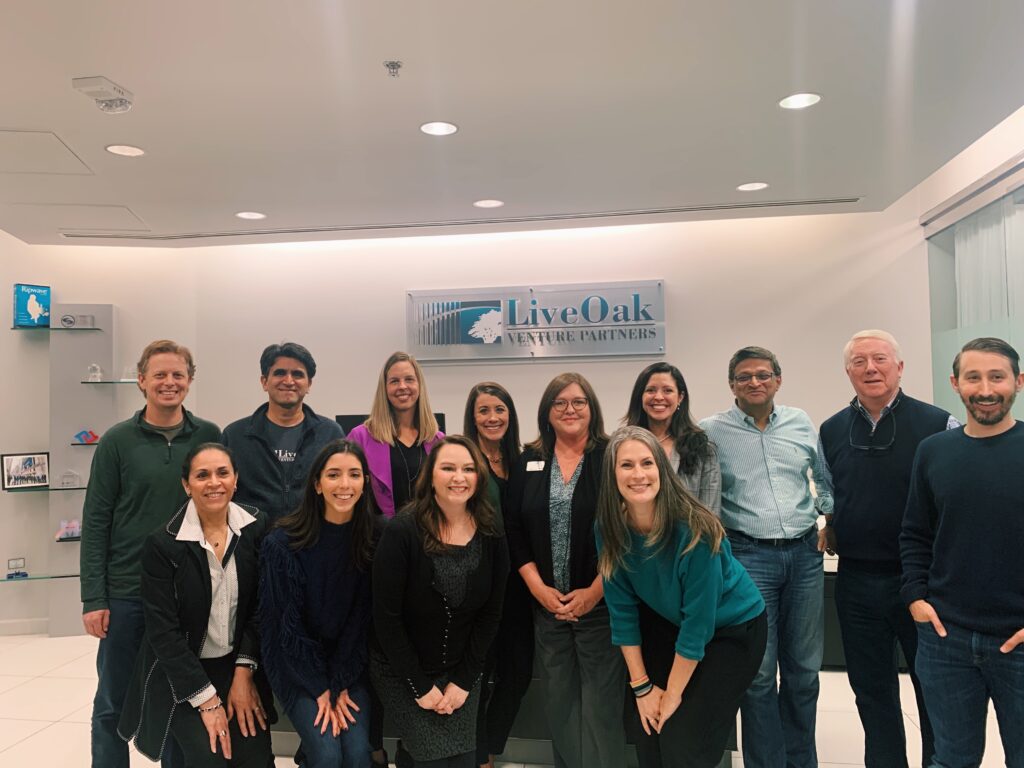
They were both working at an Austin-based cybersecurity company when they decided to launch their own venture. This week, Passage emerged from stealth operations and launched its beta, and announced $4 million in seed-stage funding led by LiveOak Venture Partners with participation from Next Coast Ventures, Tau Ventures, Secure Octane, and various angel investors.

Today, everything online requires a password from airline reservations to banking applications, subscription services, and retail shopping sites.

The problem is consumers often use the same password across multiple sites and that increases their vulnerability to hackers.

The cybercrime problem is huge and growing. Cybersecurity Ventures expects global cybercrime costs to grow by 15 percent per year over the next five years, reaching $10.5 trillion U.S. dollars annually by 2025, up from $3 trillion in 2015.

“We want the Internet to be safer,” said Hecht, Passage’s Co-Founder and Chief Executive Officer.

Passage’s solution relies on biometrics, face, and fingerprint authentication to access websites online, Hecht said.

“It’s a unique time,” Hecht said. Today, more and more people are familiar with biometrics because they have smartphones and computers that rely on facial recognition or fingerprints to access the devices.

“We have great biometric devices in our pockets,” he said. Passage has created an application that allows web developers to build that technology into websites. Passage allows users to log in to web applications with Face ID, Touch ID, Windows Hello, and other biometrics built into their devices.

Compared with other forms of user authentication, biometrics offer improved security and a smoother login experience for users, said Pobletts, Passage’s Co-Founder and Chief Technology Officer.

For example, a lot of consumers will abandon an online shopping cart when they go to check out because they forgot their password. Passage’s system allows for easy authentication through biometrics and allows businesses to reduce cart abandonment, user churn, and password-related support costs, Pobletts said. Biometrics also eliminates phishing and account takeover attacks and reduces the risks of a breach when businesses store and manage passwords, she said.

With the new financing, Passage plans to introduce its application to more developers, and it also plans to hire more employees, Hecht said. The company has 5 full-time employees, and they work out of an office at WeWork University Park.

“Consumers are getting really comfortable using biometrics on mobile devices,” Hecht said. The biometric identification only exists on the smartphone or laptop the person is using to access the website.

“It is only tied to the device,” Hecht said.

Passage allows developers with a few lines of code to enable their users to register and log in to websites with only their face or fingerprint, Hecht said.

“Passage is poised to change the fundamental way we interact with the Web,” Creighton Hicks, Partner, LiveOak Venture Partners, said in a news release. “Imagine a world where you seamlessly signup, login, and checkout online – no matter which device you’re on, without having to remember or lookup your password.”

Passage is excited to lead the way for developers wanting to implement better authentication for their users, Pobletts said.

In the next few years, biometric authentication will become commonplace online, Hecht said.

“Passage makes biometric passwordless authentication accessible to all developers and makes the open-source standard WebAuthn easy to integrate in any environment,”  Chris Aniszczyk, CTO, Linux Foundation, said in a statement. “Improving security practices should be top of mind for everyone and I highly encourage all developers to support passwordless authentication in their applications.”

Cart.com Raises $240 Million to Expand its Ecommerce Platform Internationally

Cart.com announced on Thursday that it has raised $240 million in new equity and debt funding.

With the new funding, Cart.com plans to roll out its eCommerce platform for online brands internationally. The company has raised $380 million to date.

Legacy Knight Capital Partners, the growth equity arm of Legacy Knight Multifamily Office, led the equity round with participation from Citi Ventures, Visa, and other Fortune 100 brands. J.P. Morgan and TriplePoint Capital provided the venture debt financing.

In December, Cart.com moved from Houston to Austin. The company reports its revenues have grown 400 percent last year and it now has more than 850 employees. Founded in September of 2020, Cart.com makes eCommerce software and provides services to scale businesses online. Cart.com reports processing more than $3 billion in gross merchandise value over the last 12 months.

“With this new funding, we’re poised to continue our strategy of acquiring top providers from across the eCommerce value chain, while staying hyper-focused on meeting the evolving needs of the brands we serve,” Omair Tariq, CEO of Cart.com, said in a news release.

Cart.com has recently acquired FB Flurry, fulfillment and customer care provider, and SellerActive, a leading provider of software as a service eCommerce tools. The two acquisitions bolster Cart.com’s support of merchants nationally.

“Citi Ventures is excited about the future of commerce and we were particularly impressed by how quickly and seamlessly Cart built a comprehensive platform to power e-commerce. Omair’s industry expertise and M&A playbook have enabled the company to rapidly identify targets, execute acquisitions, and fully integrate new partners into Cart’s unified platform. Citi Ventures looks forward to supporting the Cart team on its continued expansion,”  Luis Valdich, Managing Director at Citi Ventures.

“The Cart.com team is building a platform that can help sellers of all sizes grow faster as the future of commerce becomes increasingly digital,” Rubail Birwadker, Senior Vice President of Global Digital Partnerships at Visa said in a news release.

“What Omair and the team at Cart.com have accomplished in the last 14 months is nothing short of remarkable. They have proven they have the ability to rapidly execute on their vision of building the first fully end-to-end eCommerce platform at a massive scale,” David Sawyer, Chief Operating Officer and Managing Partner of Legacy Knight said in a news release.

« Older posts Newer posts »

© 2026 SiliconHills

Theme by Anders NorenUp ↑