
Category: Austin (Page 152 of 318)

Drako Motors Creates Software to run Electric Sports Cars

By HOJUN CHOI
Special Contributor to Silicon Hills News
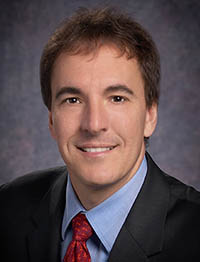
Dean Drako, founder of Drako Motors

Dean Drako, founder of Drako Motors

Dean Drako’s launched his first tech company while still attending high school in 1982, when computers with monitors were only just becoming the norm and what we now know as the Internet was still in its infancy. Bringing together more than 30 years of experience as a self-made entrepreneur, Drako is now looking to become a major player in the electric automobile industry.

“Growing up in Detroit, I’ve always had a connection to the automobile industry,” Drako said. “But what I’m really excited about is how electric cars are going to completely reinvent the industry.”

Drako Motors debuted its first product, the Drako DriveOS, in August, which was tested on a street-legal demonstration vehicle designed and built at the Helsinki Metropolia University of Applied Sciences in Finland. Equipped with the Austin-based startup’s operating system, the test car set a new lap record at the famous Nürburgring racetrack in Germany.

Markus Palttala, the Finnish racing driver who drove the test vehicle, said the operating system is an incredible technology that improves both the performance as well as the safety of the vehicle.

“The operating system improves handling, which is very important for safety,” Palttala said. “More importantly, it reacts very quickly, which is crucial when something suddenly happens on the road.”

The secret to the improved handling of the vehicle, Drako said, is software that replaces the function of a mechanical system called a “differential,” which is responsible for maintaining the balance of a car as it makes turns.

The system, which is traditionally located at the center of each axle, allows the wheels at the inside of a turn to spin at a different speed than that of the outer wheels, allowing the vehicle to maintain stability and traction while making the turn.

The design of electric vehicles allows for its wheels to be controlled individually through four separate motors, also known as “four-wheel torque vectoring.” Using a system of automated sensors, Drako’s operating system manages the calculations and measurements necessary to perform the function of “differentials” more effectively.

“The operating system is compatible with electric cars that have one or two motors, but I believe that the four motor design will become dominant for high-end street cars in the future,” Drako said.

By redesigning the operating systems of electric-powered vehicles, Drako said the company also seeks to reduce the number of computers that are needed in these vehicles.

“Instead of using millions of lines of code to control hundreds of different micro-controllers in the vehicle, we’re creating software that allows for these functions through two or three computers,” Drako said.

Drako Motors, courtesy photo.

Drako Motors, courtesy photo.

With this new concept, however, comes along the difficulty of finding vehicles to properly test and improve the existing operating system to maximum potential. Drako said that the company, which is still mostly in its research and developmental stage, is currently in the process of designing and developing its own test cars.

“The problem is that you can’t buy a four-motor car just anywhere because not many people make them yet,” Drako said. “We’re really talking about the future here.”

Drako said the company will target suppliers of high-performance street-legal electric vehicles, not to be confused with electric vehicles designed for professional racing.

And though the company has yet to attract outside investors, Drako said he believes his technology is far ahead of any competition that exists in the market. Though there are companies like Tesla motors that are dedicated to developing similar technology, Drako said other major players in the automobile industry will simply be too far behind to pose a threat.

“The industry is going through a big change, and we’re going to capitalize on that change,” Drako said. “Because we’re ahead of everyone else, we’ll win a significant market share, and end up with a high valuation.”

Dave Tuttle, a Ph.D candidate at The University of Texas at Austin who specializes in electric powered vehicles, said he also sees the four-motor torque vectoring system becoming standard for high-performance electric cars.

“In terms of high-performance vehicles, there really is no better option,” Tuttle said.

Before earning his Master’s degree in electrical engineering at The University of California, Berkeley, Drako paid for his undergraduate college education at the University of Michigan through selling software that allowed its users to maintain a rudimentary version of an online bulletin board.

Since then, Drako has founded and led multiple companies within various industries, and owns 29 patents in different fields ranging from cyber security to software for semiconductors. He is widely recognized for his success with Barracuda Networks, a company that provides protection for email and cloud servers from outside threats, which went public in 2013.

As the CEO and founder of Austin-based Eagle Eye Networks, which sells cloud-based security systems for businesses, Drako acquired Brivo, which specializes in cloud-based solutions for access control for office buildings, for $50 million in June.

“I love dislocations in industries,” Drako said. “I believe big changes create tremendous opportunities for new innovation.”

Drako said he loves Austin for its booming startup scene, and praised the city for what he called a “beautiful balance” between excitement and development. Serving as a mentor at Capital Factory, Drako said he wants to be a guide to those wanting to start their own ventures, a luxury he did not have.

“Everyone that could have been my mentor told me that my ideas were too risky,” Drako said. “Letting them hold me back from pursuing my ideas earlier was one of my biggest mistakes.”

Curtana Seeks to Cure Brain Cancer

By EVA RUTH MORAVEC
Special Contributor to Silicon Hills News

Scientific research photo, licensed from iStockphotos

Scientific research photo, licensed from iStockphotos

Dr. Gregory Stein had never been to Austin when he relocated his fledgling drug development company here from San Diego, a city rich with life sciences and its related ecosystem.

“Entrepreneurs will do whatever it takes to make it work,” said Stein, president and CEO of Curtana Pharmaceuticals. “You follow the money, and for Curtana, right now, the money is in Texas.”

Last year, Curtana was awarded a $7.6 million grant to develop a drug for glioblastoma and other brain cancers.

The catch: the grantor – the state of Texas, through the Cancer Prevention and Research Institute of Texas, or CPRIT – requires grantees to live in the Lone Star State and create jobs for Texans.

Stein had driven through Texas once, on a cross-country college road trip, but didn’t visit Austin. Sight unseen, he moved his family and the company targeting a transcription factor called Olig2, to Austin.
The drug concept first began with its patent holder, Dr. Santosh Kesari, a neuro-oncologist and Curtana’s co-founder and scientific advisor. Kesari was among scientists in Boston that discovered the Olig genes, which are paramount to brain development and brain cancer cell growth.

Kesari then moved to the University of California at San Diego, where he said he “interacted with many chemists in the drug development type of environment,” and created a computer model of Olig2.”

Using the 3D computer model, Kesari and others found compounds that targeted Olig2 were able to stop the growth of gliomas, the most common type of brain tumors, which originate in brain tissue called glial tissue.

“We found that it kills glioblastoma cells and makes them sensitive to radiation,” said Kesari, the senior author of an article about Olig2 published in the journal “Oncotarget” in October.

Meanwhile, the fight against glioblastomas had grown personal for Kesari, who said the cancer killed his aunt in 2011. Cancer experts say glioblastoma kill about 14,000 Americans each year, including Joseph “Beau” Biden, the son of Vice President Joe Biden in May; Sen. Edward “Ted” Kennedy in 2009 and Brittany Maynard, who chronicled her experience with glioblastoma and used Oregon’s assisted-suicide to end her life in 2014.

About half of Kesari’s patients at the John Wayne Cancer Institute in Santa Monica, Calif., suffer from a type of glioma, he said.

“It’s a hard disease, and there’ve been many drug failures in the past,” Kesari said. “It’s thought to be a small disease in terms of market, but I’m committed the next 10 years to finding a cure.”

Stein, who was working on pain research in San Diego, had already reached out to Kesari with questions about his work by the time their mutual friend – one of Kesari’s patients – died of glioblastoma in Oct. 2012.

“Watching someone who I cared for very much, and who was just so full of life and vivacious and strong, in the span of a year just deteriorate to nothing – it was tough,” Stein said. “It’s different when it’s personal.”

Kesari filed a patent on the research in 2012, and Stein, a doctor who got his MBA after several years of practice, set about finding funding, first with angel investors. Curtana –a British ceremonial sword of mercy – was born.

“I know the language of the science, but I’m not the expert drug developer,” said Stein in a recent interview in Curtana’s sleek, clean offices.

He soon learned about funding opportunities through CPRIT, which Stein called a “game-changer. Nobody’s doing what Texas is doing,” he said.

But the process is extremely competitive, Stein said, adding that it was helpful to tap into the Austin Technology Incubator at the University of Texas. If accepted into the incubator, startups pay at least $5,000 for management consulting and access to student interns.

When Cindy WalkerPeach, the life sciences program director at ATI, met Stein and Kesari, “I thought it was a bit of a long-shot,” she said of Curtana’s success.

But the company had a great management team, and the more she learned about the drug and the company, “the long shot became less and less so.”

imgres-2Curtana was one of about a dozen companies that gets into the incubator each year, and is among the recipients of CPRIT’s 919 grants totaling $1.4 billion.

In 2007, voters gave the state permission to sell up to $3 billion in bonds and use the cash for cancer research and prevention. Scandal soon followed, and CPRIT was revamped in 2013 to improve oversight.

While the controversy stalled the program for about a year, Stein said he works well with the new guard at CPRIT and may seek a second grant.

Under the terms of Curtana’s current three-year grant, it must create a dozen jobs, which they’re close to accomplishing, and raise half of the grant amount – Stein said so far, they’ve raised about $1 million. The first grant is only for pre-clinical work, Stein said, and Curtana is about one year away from beginning clinical trials.

Walking through his 5,000-square-foot office building, Stein explained how the drug is currently working in lab mice: after human cancer cells are injected in a mouse’s brain, Curtana’s scientists treat some of the mice. Of those that are treated for three weeks, Stein said, their median survival increased by 68 percent.

In humans, the median survival rate of someone with glioblastoma is 15 months, and there’s a three to six percent chance that a patient with the cancer will survive more than 36 months.

Critical to the process is getting the drug past the blood-brain barrier, which Curtana’s scientists have so far done successfully, Stein said. Eventually, the company’s leadership would like Curtana to be acquired or make an initial public offering, he said in a recent presentation to the Austin Technology Council.

“I’m pragmatic and understand that most things fail in this industry,” Stein said. “But we wouldn’t be working this hard if we didn’t think it was going to work.”

Instacart Delivers Booze on Demand in Austin and Houston

Specs 2 (1)Just in time for Thanksgiving, Instacart, the popular food delivery service, announced Tuesday it has partnered with select liquor stores to offer alcohol deliveries in as little as an hour.

The San Francisco-based startup has partnered with Spec’s Wine, Spirits and Finer Foods to offer delivery of fine foods, wine, liquor and beer.

Right now, the service is available in Austin and Houston.

“Historically, Spec’s has been a destination shopping experience,” John Rydman, President at Spec’s Wine, Spirits and Finer Foods, said in a news statement. “But in today’s on-demand world, we need to offer same-day delivery so that our customers can enjoy the breadth of our alcohol and food selection whenever they want it.”

In Austin, the service competes in a crowded marketplace with Drizly, BrewDrop, Couch Potato Austin, TopShelf and Minibar all providing alcohol delivery via a mobile phone app to residences and businesses.

In San Antonio, Minibar just launched its alcohol delivery service last week. Although others have mentioned they are expanding into San Antonio, Minibar is the only one providing service right now.

For the Instacart delivery, customers must provide their date of birth at checkout to confirm they are 21 or older. they must also be present to sign for the delivery and to show proof of legal age with a valid photo ID.

“Spec’s initial delivery includes select zip codes of downtown Houston and South Austin with expansion in both cities coming in the following weeks,” according to a news release. It costs $3.99 for two-hour delivery on Instacart or $5.99 for one-hour delivery for orders over 435. The minimum order size is $10.

Austin-based Silicon Labs Buys Telegesis of the U.K. for $20 million

silicon-labs-logo-red-2014-1538x769pxAustin-based Silicon Labs announced Monday it has acquired Telegesis, a privately-held supplier of wireless mesh networking modules, for approximately $20 million.

Telegesis, founded in 1998 in High Wycombe, England, outside of London, uses Silicon Labs’ ZigBee technology in its smart meters, USB adapters and other products. Other applications include home automation, connected lighting, security and industrial automation.

The acquisition of Telegesis lets Silicon Labs accelerate its roadmap for ZigBee and Thread-ready modules. It also improves the company’s customer service.

“The addition of Telegesis’s successful module business strengthens Silicon Labs’ position as the market leader in mesh networking solutions for the Internet of Things,” James Stansberry, senior vice president and general manager of Silicon Labs’ IoT products, said in a news statement.

“The Telegesis team is truly excited to become an integral part of Silicon Labs,” Ollie Smith, director of business development at Telegesis said in a statement. “Together, our hardware and software engineering teams will drive innovation in wireless mesh networking while giving customers a flexible choice of module and SoC-based designs leveraging both ZigBee and Thread technology.”

Telegesis has 20 employees who will join Silicon Labs’ staff of 1,100. Silicon Labs’ stock, traded under the symbol SLAB on the Nasdaq Stock Exchange, closed down almost two percent on Monday at $51.38.

Six Local Artists’ Designs Decorate Google’s Prototype Cars

Austin Artist Catherine Malloy's design for the Google prototype car.  Courtesy photo

Austin Artist Catherine Malloy’s design for the Google prototype car.
Courtesy photo

Google on Monday announced the winners of a design contest it held to to decorate its prototype autonomous vehicles.

It chose six local artist whose designs will be featured on the side of the vehicles. The artists each received a $500 gift card and the opportunity to ride in one of the driverless cars.

In September, Google began testing its self-driving prototype vehicles on Austin streets. The cars have test drivers onboard but the cars are doing the driving. They come equipped with removed steering wheel, accelerator pedal and break pedal that allow the test drivers to take over if necessary. This is the only location outside of Google’s headquarters of Mountain View, California, where the cars are being tested on city streets.

“The artists include a recent University of Texas graduate, a 93-year-old resident of a retirement home, an artist from Art from the Streets—a free and open studio in Austin that serves the homeless community—as well as professional artists and designers,” according to Google. “Artwork will be featured on the cars early next year.”

The contest was part of Google’s “Paint the Town: Austin.” It invited Austin residents to submit artwork for the Google cars with the theme, “my community, my neighbors.”

“The diversity of entries shows the passion Austinites have for art and the community,” Jennifer Haroon, head of business for Google’s self driving car project, said in a news release. “We saw a varied group of artists and even selected a mother and daughter by pure coincidence.”

Anna Vaught's Google prototype design. Courtesy photo.

Anna Vaught’s Google prototype design. Courtesy photo.

The artists include Anna Vaught, daughter of Catherine Malloy, with a picture of people enjoying the lake. Malloy’s design features people viewing the bats flying out from under the Congress Avenue Bridge at sunset.

Annette Neu's artwork featured on Google prototype car. Courtesy photo

Annette Neu’s artwork featured on Google prototype car. Courtesy photo

Annette Neu’s artwork featured a record player.

Andy Nelson's artwork on Google's prototype car. Courtesy photo.

Andy Nelson’s artwork on Google’s prototype car. Courtesy photo.

Andy Nelson’s designed featured an armadillo and a guitar.

Florence Swanson's artwork on Google's prototype car. Courtesy photo.

Florence Swanson’s artwork on Google’s prototype car. Courtesy photo.

Florence Swanson, who resides at a senior living facility, created a design of a man with his guitar.

Cathy Carr Hayes's design for Google's prototype car in Austin. Courtesy photo.

Cathy Carr Hayes’ design for Google’s prototype car in Austin. Courtesy photo.

Cathy Carr Hayes works with Art from the Streets, and her depiction of Austin was designed to inspire happiness and warmth through various types of art.

Honest Dollar Partners with Lyft to Provide Retirement Savings Plans

imagesAustin-based Honest Dollar has partnered with Lyft to provide its contract employees with a retirement savings plan.

Honest Dollar’s savings plan is designed to be a flexible way for contract workers to save for retirement with Lyft’s 100,000 drivers getting access to the benefit first. But Honest Dollar plans to roll out the savings plan to more freelance workers.

The market is large and growing. Today, an estimated 53 million Americans work independently as contractors, part-timers and solo business owners, according to Core Innovation Capital. And that is expected to increase to 66 million Americans in the next five years.

“The explosion of the gig economy brings an opportunity for progress and modernization of the extremely antiquated market of retirement benefits. Honest Dollar is following through on our promise to revolutionize financial services by delivering innovative products to underserved audiences,” Will Hurley, CEO of Honest Dollar, said in a news statement. “We started with small businesses and startups who weren’t offering retirement benefits because they were too costly and confusing, and follow today with a product for 1099 employees that works for everyone – employee, employer, and our changing economy.”

The savings plan meets an unmet need for independent workers, Hurley said.

Under the partnership, Honest Dollar will provide Lyft drivers with access to its new 1099 service for $3 per month. For the first 2 months, Honest Dollar will waive the $3 per month fee. And the first 10,000 Lyft drivers to sign up before the end of 2015 will be provided the service for only $1 per month in addition to the free months.

“We hear from drivers every day who use Lyft to help secure a bright future, from paying tuition to saving for a first home,” Oliver Hsiang, Lyft’s Vice President of Partnerships, said in a news statement. “We’re excited to partner with Honest Dollar to help drivers achieve these goals. This first-of-its-kind product is designed to meet the unique needs of independent contractors through access to financial planning and investment tools.”

Nextdoor Launches Nextdoor Now for Jobs in Austin

Nextdoor_NOW_three-up
Nextdoor, is an online network of neighbors that lets them exchange information about everything from lost dogs to furniture for sale, and now it’s launching Nextdoor Now for people to find neighborhood jobs in Austin.

The San Francisco-based startup chose Austin as one of the first cities to get Nextdoor Now because of its large Nextdoor community, which includes more than 600 neighborhoods, according to a news release.

Nextdoor Now lets residents make some extra money. Residents can sign up as “providers” and offer to do a variety of services including babysitting, dog walking, pet sitting, tutoring, tech help, yard work, odd jobs and handyman help. The provider gets to keep all the money they earn.

“Members in Austin use our product every day to find great service providers, and Nextdoor Now takes this experience to the next level,” Nirav Tolia, Co-Founder and CEO of Nextdoor.

To use the service, residents need to sign up with Nextdoor and have their address verified.

“Members simply click on the Nextdoor Now link on the Nextdoor website or mobile apps, choose the service they want, and follow the prompts to make a request for a service provider/service/job,” according to a news release. “They will receive notifications as service providers confirm their availability. Members can then browse the profiles of the available service providers and hire the neighbor of their choice with the tap of a button.”

Umbel of Austin Raises $20 Million

images1Umbel, which makes a customer data platform, announced it has raised $20 million in Series B financing led by Cielo Private Equity.

The Austin-based startup plans to use the funds to expand its sales and marketing efforts.

Lisa Harris, managing partner of Cielo Private Equity, has joined the company’s board of directors.

“We are incredibly excited to have this momentum boost. I have assembled the best leadership team in Austin and am confident that funding and the team combined will allow our business to accelerate and crack open new industries,” HO Maycotte, founder and CEO of Umbel, said in a news release.

“It is terrific to see new funding options in Austin and I am excited to partner with Cielo, as well as our existing investors, to build this city’s next breakout software company,” Tom Meredith, investor and board member at Umbel, said in a news release.

Umbel raised $3.7 million in Series A financing led by Austin Ventures in 2012. HO and Meredith Maycotte, Travis Turner and Nick Goggans founded the company in 2010. It recently moved into 20,000 square feet of new headquarters at the renovated Seaholm Power Plant downtown. It has 70 employees and has been doubling revenue every year, according to this Silicon Hills News profile on the company published last month.

Occipital Acquires Lynx Laboratories of Austin

KxA2G07-Occipital, based in Boulder, Colorado, announced Wednesday, it has acquired Lynx Laboratories of Austin.

The terms of the deal were not disclosed.

“Today, we’re announcing that we have acquired Lynx Laboratories,” according to a post on the company’s website. “Lynx has been at the forefront of developing mobile 3D scanning software since the launch of their Lynx A mobile 3D scanner on Kickstarter. More recently, Lynx shifted focus from building their own hardware towards building software that uses the Structure Sensor.”

Occipital, which has raised $21 million in venture capital in four rounds from six investors, created Structure Sensor, a 3D sensor for mobile devices and the 360 Panorama app, according to its CrunchBase profile.

In 2012, Lynx Laboratories, which developed a handheld 3-D camera to capture 3-D models of an environment, participated in the Longhorn Startup Lab at the University of Texas at Austin. At that time, the company raised funds through the National Science Foundation and the Defense Advanced Research Projects Agency.

In 2013, Lynx Laboratories raised an undisclosed seed round from Austin Ventures, Capital Factory and UT Horizon Fund, according to its CrunchBase profile. That same year, the company raised $86,733 in pledges from 219 backers Kickstarter for its Lynx Labs 3D Scanner.

The Lynx team has joined Occipital in Boulder and all of its technologies and intellectual property are now part of Occipital, according to the company.

Tritium Partners of Austin Closes on a $309 Million Fund

tritium-partners-logoTritium Partners of Austin has closed on its inaugural $309 million private equity fund.

The fund’s investors include leading retirement systems, private pension plans, university endowments, foundations, diversified financial institutions and insurance companies. Tritium plans to invest in companies in the Internet and information services, supply chain and logistics and financial and business services industries with larger growth potential led by experienced entrepreneurs.

“We are excited to have the support of a prestigious group of institutional investors as we launch our inaugural fund,” Philip Siegel, Managing Partner and Co-Founder of Tritium, said in a news statement. “They share our belief in the compelling investment opportunities that exist in the lower middle market and the advantage that Tritium has in realizing those opportunities with our growth-focused investment approach.”

The fund, called Tritium I, has already made four investments in Fexy Media, Global Access, Roadone and Giact.

« Older posts Newer posts »

© 2026 SiliconHills

Theme by Anders NorenUp ↑