Category: Austin (Page 145 of 318)

Vyopta Lands $5 Million in Venture Capital

Vyopta and AVX Partners, courtesy photo

Vyopta and AVX Partners, courtesy photo

Vyopta, a video analytics firm, Thursday announced a $5 million Series A funding led by Austin-based AVX Partners.

Austin-based Vyopta works with big companies to help them collaborate internally and serve customers better with videos. It has more than 70 customers including Vista Print and the Department of Veteran Affairs. It makes an analytics platform that lets companies monitor, support and optimize video.

With the funding, Vyopta, with 25 employees, plans to hire 35 more employees by July. New hires will include positions in software development, product management, sales, marketing and customer success.

“Vyopta is a rising player in Austin’s tech scene, and we are excited to use this funding to develop our products and build out our organization with over 35 planned hires in the next few months,” Alfredo Ramirez, CEO of Vyopta, said in a news release. “Our partnership with AVX will ultimately help to establish Vyopta as a core technology company in Austin and in our industry.”

Chris Pacitti, managing member of AVX Partners as well as general partner at Austin Ventures, led the funding. AVX Partners will provide a designated team of C-suite-level operational advisors to support Vyopta with marketing, development and operations. The advisory team includes three alumni of Austin-based SolarWinds: former CEO Mike Bennett, former CMO Rita Selvaggi and former VP of Technology Josh Stephens.

“The enthusiasm coming from our hand-selected advisory team combined with Vyopta’s achievements and vision felt like a perfect match for AVX,” Pacitti said in a news release. “Vyopta is distinct in their category, they have a strong management team in place and we are excited to back them and take things to the next level.”

Healthcare Cloud Provider ClearData Moves to Austin With 100 Jobs

cleardata-brand-logoClearDATA, a healthcare cloud services company, announced Wednesday to move their headquarters from Arizona to Austin.

The Phoenix-based company is expected to bring 100 jobs including 80 which will be created in Austin, according to a news release.

The company is working with Cushman & Wakefield to find its new headquarters in Austin.

“As a leader in digital healthcare cloud services, we have much to look forward to as we expand in Austin,: Aaron Barfoot, Chief Financial Officer of ClearData, said in a news release. “Austin’s growing healthcare industry, world-renowned technology sector and highly educated talent pool, make it a great opportunity for our company to continue to innovate the way healthcare professionals use, store and keep data safe. Central Texas is a great place to live and do business.”

The Austin Chamber of Commerce and Opportunity Austin, a five-county public-private economic development initiative, worked to bring ClearDATA to Austin.

“ClearDATA is entering the Austin market at a key time for our healthcare ecosystem,” Phil Wilson, Opportunity Austin Chair, said in a news release. “With the convergence of technology, healthcare and innovation, they join a growing number of companies seeing the potential in the Austin region. We welcome ClearDATA to our community and look forward to their success.”

ClearDATA has more than 310,000 healthcare professionals that rely on its ClearDATA’s HIPAA compliant cloud computing HealthDATA platform and infrastructure to store, manage, protect, and share their patient data and critical applications.

HomeAway Launches “Stay Neighborly” Pilot Program in Austin

Brian Sharples, CEO of HomeAway with supporters of the short-term rental industry in Austin.

Brian Sharples, CEO of HomeAway with supporters of the short-term rental industry in Austin.

At its downtown headquarters, HomeAway launched a pilot program Wednesday in Austin called “Stay Neighborly.”

“Austin is a very small part of our global business,” HomeAway CEO Brian Sharples said.

But HomeAway is a hometown business and it’s part of the Austin community, he said during a press conference. HomeAway, a subsidiary of Expedia, is the world leader in vacation rentals with sites representing more than one million paid listings of vacation rental homes in 190 countries.

“We intend to reset the conversation on short-term rentals to reflect the current landscape of the industry, especially in Austin,” Sharples said. “It’s time to shine a light on the thousands of property owners and managers who strengthen the Austin visitor experience and help get rid of those who don’t represent the spirit of what is now a preferred travel accommodation option.”

HomeAway has been embroiled in controversy for years now around short-term rentals, but that controversy concerns just four homes in the city, which have since been taken off the HomeAway site, he said.

The Stay Neighborly initiative includes a no-tolerance policy for disruptive behavior of short-term home rental owners and travelers.

Next week, on Feb. 23rd, the Austin City Council will consider whether to phase out type two rental homes, which are second homes where the owner doesn’t reside there. This industry has existed for decades and a few bad actors shouldn’t end an industry, Sharples said. He not only co-founded the company but he also owns a short term rental.

Among the 400,000 dwellings in Austin, there are 400 Type 2 rentals and short term-rentals have contributed an estimated $234 million to the local economy in 2014, alone, according to HomeAway.

Some homeowners have complained to the Austin City Council about Type 2 rental homes. They complain some of the homes, in densely populated residential neighborhoods, have become party homes. Type 1 rental homes are more like AirBnB’s business in which the homeowner resides on the property and rents out a spare room.

“We do not see the need for overly restrictive regulations where the system is actually working pretty well,” said Jay Reynolds, Austin Rental Alliance, nonprofit association of homeowners.

“Short term rentals, aside from the incredibly few bad actors, tend to be the best neighbors on the block,” Reynolds said. “We keep our yards and our homes clean and they are maintained and very safe for guests.”

HomeAway’s new Stay Neighborly effort is designed to promote compliance and provide guidelines to remove those who violate local nuisance regulations from HomeAway websites.

Elliott and Sheri Mitchell own a rental cottage in the South Congress area. They’ve run it for four and half years and they compile with all of the city regulations, Elliott Mitchell said. They’ve had hundreds of people stay in the cottage and they have never had any problems, he said.

“It’s been a perfect win-win situation for us and the people we serve,” he said.

The income they get from the rental is part of their retirement portfolio and they want to continue to rent the property to guests, Mitchell said.

“We’re troubled by the possibility that we may get regulated out of business for something that is non-existent,” he said.

In Austin, more than 2,500 people work in the short term rental business, said Davina Bruno, director of the Coalition of Short-Term Rental Employees, which represents house keeper and maintenance workers. The industry contributes more than $230 million to the economy, she said.

“There’s a huge economic impact from this industry,” Bruno said. “We don’t believe in changing an ordinance because of a few problematic property owners should be going through especially since there are so many jobs that will be impacted.”

Roy Spence, co-founder of GSD&M, a neighbor to HomeAway, said HomeAway is a great neighbor.

“The people of Austin are good people, the homeowners of Austin are good people. The people who come to visit Austin and stay in our hotels and homes are good people,” Spence said. And 99 times out of 100, good people will make good neighbors, he said.

When Austin is at its best, the city champions entrepreneurs, Spence said. When Austin is at its best, it champions new ideas and supports new ideas, and allows organizations and businesses to improve, adapt and change to new challenges, he said.

“I hope we just keep the rules on the books, and let them stay neighborly and give HomeAway and the entrepreneurs who own homes a chance to stay neighborly,” Spence said.

HomeAway is committed to be part of the solution in Austin and everywhere HomeAway has homeowners, said Tom Hale, Chief Operating Officer of HomeAway.

The program features an educational resource center online with information on licensing, tax compliance and regulation by community.

“We take this issue very seriously,” Hale said. “We want to make sure short term rentals work for everyone, the community, the owners, the renters. You have our word on it.”


BuildGroup Wants to Invest in High Growth Austin Startups

By LAURA LOREK
Reporter with Silicon Hills News

Jim Curry and Alan Schoenbaum, two of the co-founders of BuildGroup with Laura Kilcrease, Entrepreneur in Residence at UT at the Money Talks! event. Photo by Hojun Choi.

Jim Curry and Alan Schoenbaum, two of the co-founders of BuildGroup with Laura Kilcrease, Entrepreneur in Residence at UT at the Money Talks! event. Photo by Hojun Choi.

BuildGroup, one of Austin’s latest venture capital firms, plans to invest in two to three high growth companies a year, according to one of its founders.

“We want to find companies that have founders that welcome our activity,” said Alan Schoenbaum, co-founder of BuildGroup. “We don’t want to invest in a company that just wants money.”

Schoenbaum and Jim Curry participated in a Money Talks! Series hour-long interview with Laura Kilcrease, entrepreneur in residence at UT. The events are hosted by the Herb Kelleher Center for Entrepreneurship, Growth, and Renewal.

BuildGroup is a new source of capital for the region. It has already made two investments into Austin-based Continuum Analytics and Maintenance Assistant, a Toronto-based company. Continuum Analytics, which develops Anaconda, the leading modern open source analytics platform powered by Python, received $24 million in Series A funding led by BuildGroup and General Catalyst Partners last July. The details of its investment into Maintenance Assistant have not yet been made public.

BuildGroup doesn’t do consumer investments. It does invest in business to business software companies, vertical software as a service companies, open source innovations, data, analytics, machine learning, artificial intelligence, sales and marketing automation. It does not invest in biotechnology or medical technology companies.

Three former Rackspace executives founded BuildGroup last March. They include former Rackspace CEO Lanham Napier, former Rackspace General Counsel Schoenbaum and Curry, former senior vice president of strategy and corporate development. Klee Kleber, former Chief Marketing Officer at Rackspace and WP Engine also joined BuildGroup. And Peter Freeland, a venture capitalist in Boston, became a founding partner recently.

During the event, Curry, who graduated from UT and started his career as an investment banker in private equity, said he joined Rackspace in 2006 and he worked with Schoenbaum on 11 acquisitions. They also saw San Antonio-based Rackspace, which was founded in 1999, grow from a tiny company to a publicly traded tech giant with more than $2 billion in revenue. Rackspace went public in August of 2008, during the height of the financial crisis.

“We want to help entrepreneurs get the help we didn’t have previously in our careers,” Schoenbaum said.

BuildGroup is all about hands on investing. The firm wants to provide the guidance and services that Rackspace’s investors didn’t do, Schoenbaum said.

Schoenbaum graduated from UT’s law school in 1984 and became a corporate lawyer. He worked for the Akin Gump law firm for 21 years before he joined Rackspace.

“After nine years I really learned a lot about what it takes to run a business,” Schoenbaum said.

As it scaled, Rackspace was hiring 100 people a month, Schoenbaum said. The executives had to shift between many roles at the company, he said.

“We got really good at scaling and we think we know something about that now,” he said.

BuildGroup is not focused on making seed stage investments. It’s focused on people who have a market for their product and know how to scale their business, Schoenbaum said. It’s focused on finding entrepreneurs who want to build something big, he said.

“We’re looking for companies where we can help with that execution,” Curry said.

For example, with its first investment in Continuum Analytics, Napier serves on the board. Curry helps coach product and engineering and Schoenbaum helps with human resources and legal issues and Kleber with marketing.

“We’re spending a lot of time beyond the board time with the companies,” Schoenbaum said.

And even though one of its initial investments is in Canada, BuildGroup prefers to invest in startups in Austin, he said.

UT Energy Week Kicks Off

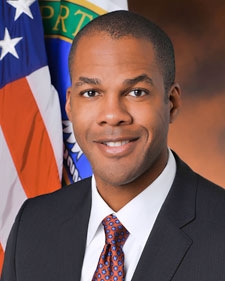
Christopher Smith, assistant secretary for fossil energy , U.S. Department of Energy, courtesy photo.

Christopher Smith, assistant secretary for fossil energy , U.S. Department of Energy, courtesy photo.

The University of Texas at Austin is hosting UT Energy Week today through Friday with important discussions on regulations, fracking, cities of the future, water initiatives, renewable energy sources and all of the challenges facing the oil and gas industry.

The United States still leads the world when it comes to innovations in the energy industry, said Christopher Smith, assistant secretary for Fossil Energy with the U.S. Department of Energy. But it does face increasing global competition, he said during his keynote address.

A real need exists for innovations to control emissions, Smith said. There’s an opportunity for UT to be at the forefront of those innovations, he said.

The clean energy economy of the future can be broken down into two type of countries, Smith said. There will be countries that innovate and create energy solutions, he said. The other countries will buy those innovations, he said.

It’s not just a moral issue, Smith said. The U.S. must ensure that the innovations and the solutions for the clean energy economy are happening here, he said.

The energy industry is a huge industry of great importance to Texas, which leads the nation in oil and gas production. It is also rapidly developing its wind technology and leads the nation in producing wind generated electricity. But the drop in the price of oil from $100 a barrel a year ago to around $28 today, affects the Texas economy. The oil industry here has seen a slow down in production and lots of layoffs of workers in the oil field. But the Texas economy has diversified in the last three decades and is not as slammed as it was in the 1980s when a glut of oil hit the market, demand dropped and Texas suffered from a major oil industry bust.

UT Energy Week is a conference focused on “world-class energy research taking place at UT, according to Thomas F. Edgar, director of the University’s Energy Institute.

“We’re known for our research into fossil fuels, but this conference illustrates that we do a lot more,” he said in a news statement.

The conference kicked off at the Etter-Harbin Alumni Center Tuesday morning with remarks from UT Austin President Gregory L. Fenves, followed by Smith’s keynote. In the afternoon, panels focus on examining Mexico’s recent entry into the world of competitive electric markets.

The conference also features a Startup Competition, organized by the Longhorn Energy Club, on Thursday with cash awards and prizes in four categories: Oil and Gas, CleanTech, Energy and Water Efficiency and Software.

Harvest Plans to Wrap All Your Food Delivery Into One Platform

By SUSAN LAHEY
Reporter with Silicon Hills News

From left to right Jake Bailey, Peter Silkowski (design lead), Chris Hume (developer) and Blake Ellingham, photo by Susan Lahey.

From left to right Jake Bailey, Peter Silkowski (design lead), Chris Hume (developer) and Blake Ellingham, photo by Susan Lahey.

Food delivery, whether in-home meal kits, like Blue Apron, or food service delivery, like Favor, is on the rise.

Restaurant delivery, excluding pizza, grew by 33 percent since 2012, according to NPD Group’s food service market research.

With food delivery skyrocketing, delivery companies are duking it out over contracts with top restaurants, with the hot breath of Amazon and Uber on their necks, as those behemoths ramp up their own delivery services.

Harvest Delivery has a different approach. The Austin-based startup plans to just slip into these highly competitive, fragmented markets and embrace them all in its user-friendly platform…like a big hug.

Harvest Delivery aggregates restaurants and delivery services, similar to GrubHub, but unlike GrubHub they don’t charge a fee to be in their platform. Nor do they charge customers. Harvest will show you all the restaurants that deliver to your address broken out by type of food, delivery time, delivery cost, and number of stars customers gave them. Since they don’t only list the restaurants that pay them, they think of themselves more like the Kayak of food delivery.

Without their permission

Founders Jake Bailey and Blake Ellingham are big fans of Alexis Ohanian’s book Without Their Permission: How the 21st Century Will Be Made, Not Managed about how some of the most successful companies—such as Uber—bypassed channels and focused on customer needs. That inspired the idea for Harvest. While other companies sign agreements with restaurants and delivery services for a cut of the order, Harvest just added these restaurants to their platform.

“What are they going to do?” Bailey asks. “Say, ‘No we don’t want this business you’re sending our way? We don’t want to fill this order?’”

So they’re restaurant agnostic. They can include everyone—including, one day, Amazon and Uber. They launched in Austin in February and plan to be coast-to-coast by year’s end.

Advisor Brandon Coleman III, former chief marketing officer for Romano’s Macaroni Grill, applauds their business model.
“They’re trying to go into markets where it’s highly competitive and that is their trump card…they can bring everybody together. They don’t have to fight.”

Of course, that means they’re not monetizing either. Bailey said they’re not going to worry about that right now. Once they’ve achieved scale, they’ll figure out a way to monetize. Other companies’ models—like taking a cut of the orders—has created a lot of resentment in the industry. One option might be to capitalize on the data Harvest collects through aggregating so many restaurants. For example in Austin, Bailey said people order a lot of Asian food during the weekdays. He assumes that’s because they want to at least believe their eating more healthfully. On the weekends people also order a lot during mid-day, but they go for tacos. Down the road, Bailey said, they might add a recommendation engine.

All the moving pieces

“A lot of our customers are young professionals…overachievers,” Bailey said. “They’re not working 9-to-5, they’re working 8 to whenever. They skipped lunch, they haven’t grocery shopped in two weeks and they’re thinking ‘All I have are some Hot Pockets.” Other customers include college students, office managers ordering food for the team and busy parents.
Victor Sverdlin, founder of dimeSocial, says he’s used Harvest more times than he can count.

“If you want to order out without Harvest,” Sverdlin said, “You can depend on opening five websites to figure out what you want, find the time of delivery, and order. By the time that’s gone down you’ve spent 45 minutes and now you have to wait for your food. With Harvest, it’s boom, I see exactly what’s around me. It’s even better since they launched their app because I can get in the car and by the time I get home the food will be there.”

But as an aggregator, Harvest has limited control. On a recent order (mine) there was a snafu about a change in the menu that didn’t get worked out until the restaurant’s kitchen had closed. Normally, Bailey said, a kitchen that’s about to close would get dropped off the options before a customer had a chance to order from it. Generally, Harvest lets the customer resolve issues like that with the restaurant or delivery company. Occasionally they jump in.

“We do it…to learn what it takes from customer support to handle refunding, canceling orders, replacing missing menu items, dealing with slow delivery times, incorrect orders, etc.,” Bailey said. “The more we learn, the better we can make the customer experience…we are creating ways to automate customer service so that we can maintain a solution that grows with us.”

They met in a cafeteria

Bailey and Ellingham met in the seventh grade cafeteria and were inseparable growing up. In college, Ellingham came to Austin, eventually ending up in the computer science program at UT. Bailey went to Emerson College in Boston to study marketing. There he started his first company–an online clothing store–and then went on to intern for Wefunder and Ditto Labs in marketing before co-creating the Emerson Launch accelerator program during his senior year. In their junior year Bailey and Ellingham started Recommenu Inc., a recommendation engine for restaurants. Ellingham learned iOS and got an internship at Rocksauce Studios. They got support from Longhorn Startup and Dorm Room Fund, a fund through First Round Capital that lets college students become investors in other students’ startups.

But restaurants only want to invest in things that show the immediate ROI, Bailey said, and they pivoted for “a much bigger opportunity.”

Harvest advisor Cullen Newton is attorney, investor and former vice president of corporate development at OrderUp, a company that handles delivery and payment services for “quick service” restaurants. A New Yorker, he said he gets a dozen emails a day from several food delivery services he’s signed up for.

“This idea resonated with me immediately,” Newton said. “It was the cleanest, simplest possible experience…as the competition ramps up you’re going to see things get increasingly fragmented with more and more delivery companies pushing for exclusive deals…. This is the right way, the right time, the right industry.”

That’s one reason he’s involved. The other reason is Bailey and Ellingham. “They’re essentially brothers,” he said. “They’re so persistent and earnest and passionate…within five minutes of talking to them I just trusted them. I trusted that they’re going to do whatever they need to do to see this through and do it the right way.”

Austin’s Newest Coworking Site TechSpace to Open in March

By LAURA LOREK
Reporter with Silicon Hills News

IMG_7162Just in time for South by Southwest, TechSpace, Austin’s newest coworking site is opening its doors.

TechSpace Austin expects to open the first week of March, said Mallory Beck, TechSpace Austin’s site manager.

TechSpace, located at 98 San Jacinto Blvd. next to the Four Seasons Hotel, will occupy 8,000 square feet of space on the first floor, which will be dedicated to coworking and events. It features storage facilities and lockers, a full kitchen space, day use offices and conference rooms, community lounge areas, private phone booths, dedicated events space and an outdoor porch. The space features high ceilings and a lot of natural light. It can accommodate about 91 coworking seats. Its event center will be able to handle 200 to 250 people. A café is also opening on the first floor directly across from the center.

TechSpace also has another 20,000 square feet on the fourth floor featuring 24 private office suites and 250 workstations. The offices offer views of downtown Austin and Lady Bird Lake. Parkway Properties owns the building.

TechSpace also has eight locations nationwide in New York City, Los Angeles, Orange County and San Francisco. TechSpace has been eyeing an expansion to Austin for some time, said Victor Memenas, Chief Executive Officer for TechSpace.

“We have been tracking Austin’s prolific growth over the last five years. It’s a market we’ve always desired to be in with the demographics of the growing tech community,” Memenas said.

TechSpace has had a lot of demand from the local audience with more than 85 inquiries from companies and entrepreneurs interested in the space, Memenas said. TechSpace has always positioned itself as alternative and flexible office space to the small businesses and entrepreneurs, he said. It added a traditional coworking environment downstairs to capture the full lifecycle of a startup business, he said. Entrepreneurs can startup out on the first floor and then expand to the fourth once they’ve built a team and they need more dedicated space, he said.

“Our ideal customer is the small business owner,” Memenas said. “You don’t have to be a high tech entrepreneur to be at TechSpace. We have a ton of different entrepreneurs, small businesses owners whether they have finance companies, marketing companies, media companies…. we solve a major problem for a small business owner that has multiple employees.”

The TechSpace solution allows companies to preserve capital and keep overhead to a minimum, while focusing on enhancing their core competencies, Memenas said. TechSpace handles all the nitty-gritty details of running an office space from furniture to electricity and Internet connections, he said.

TechSpace Austin’s fourth floor features flexible space including interconnecting and scalable offices and an advanced on-site technology platform with a firewalled data network providing high speed Internet connections.

“We don’t target one vertical or one industry,” Memenas said.

TechSpace has been creating alternative office space for some time so it has really mastered the layout and design of office space for small businesses, Memenas said.

The Austin location has drawn on inspiration from TechSpace’s San Francisco and New York locations, he said.

“We really think the Austin location is going to be the best location in our entire portfolio,” Memenas said.

Location is everything when it comes to creating a TechSpace center, Memenas said. But the company is generally agnostic when it comes to the type of building. It has TechSpace locations in historic buildings and modern skyscrapers.

“It’s all about our build out where we foster a very creative environment, really cool open space” Memenas said. “It energizes the people that work there.”

Editor’s note: TechSpace is a sponsor of Silicon Hills News

Hired Works with 150+ Austin Tech Companies, Raises $40 Million in Series C Funding

By LAURA LOREK
Reporter with Silicon Hills News

Hired's gift box to job candidates when they land their new job.  Courtesy photo.

Hired’s gift box to job candidates when they land their new job. Courtesy photo.

Hired is changing the way developers and knowledge workers find jobs.

The company, founded in 2012 in San Francisco, opened an office at WeWork in downtown Austin about a year ago.

It now works with more than 150 local technology companies from startups to publicly traded companies and it has helped thousands of employees find jobs.

But Hired isn’t for everyone. It’s selective. Only five to seven percent of the candidates that apply to its site get accepted into its pool of talent. The new job candidates get sent out in a batch that is released every Monday and they stay on the Hired marketplace for a maximum of 4 weeks.

“Everybody accepted on the platform is curated for both quality and intent,” said Brett Hogan, Hired’s Market Manager in Austin.

Hired is really flipping the recruiting model on its head, Hogan said. No more filling out applications that get sent into a black hole. Instead, Hired sources top talent at scale and then enables companies to apply to those candidates via the platform.

Hired also has Talent Advocates who act like career coaches for the job candidates and help them through the process, offering advice on everything from profile polishing and interview tips to helping prioritize interview requests based on the candidate’s professional goals.

“Most agency recruiters have a sales relationship with candidates since they’re paid on commission,” Hogan said. “We’re focused on if the candidate actually has a good experience. It’s shifting the relationship from a sales posture to an advocacy role. No sales commission is ever involved.”

Successful job candidates on Hired’s marketplace receive a signing bonus of $1,000 and a celebration box filled with Dom Perignon Champagne and other goodies.

“For clients, our value proposition is simple and compelling. We provide a curated channel of top talent that refreshes each week,” Hogan said. “Ninety-eight percent of our candidates respond within the first 72 hours of a company reaching out to them. And in Austin, 60 percent of interview requests are accepted.”

Hired specializes in filling all kinds of engineering roles, as well as product managers, data scientists, UX/UI designers, sales and many others. Ultimately, it plans to expand into marketing, legal, banking and all kinds of knowledge-based industries. Hired also recently started filling contract positions.

In February, Hired raised $40mm in Series C funding and announced three strategic acquisitions that will help accelerate its expansion into Asia, Europe and Australia.

“We’re focused on the knowledge worker,” Hogan said. “We want to be the place where the best companies and candidates go first to find their next role.”

Top technology companies in town seem to be taking note. Austin-based Spredfast, with 450 employees, contracts with Hired to use the marketplace to find engineers, said Sam Baber, VP of Talent and Development at Spredfast.

“We were looking for solutions that were smart, made sense and teed-up talent we wouldn’t have found otherwise,” Baber said.

The best solution was Hired, he said.

“The main reason is that it’s a tool and a platform that was easy to access,” Baber said. “It provided fresh talent in Austin…within a matter of four weeks, we filled three top engineering spots through Hired.”

It really does reduce the time to hire dramatically, Baber said.

“With Hired in our back pocket, it makes me sleep easier,” he said.

Hunter Sherman, Lead Software Engineer at Vantage Point Analytics, landed his job through Hired.

It was discreet, efficient and effective, he said.

“It was the easiest way I’ve ever gotten a job,” Sherman said.

Sherman’s credentials and criteria for his next position went out with a batch of new candidates on a Monday. Shortly after that he got a salary offer from Vantage Point and then he interviewed with them. The entire process took two weeks, he said.

Vantage Point Analytics, a supply chain fraud detection firm with offices in San Francisco and Austin, plans to hire more engineers from the platform as the business expands, Sherman said.

AT&T to Test 5G Wireless Service in Austin

attAT&T, the nation’s second largest wireless network, announced last week it plans to test super fast wireless connectivity in Austin.
While many carriers just rolled out 4G service, AT&T is working with Ericsson and Intel on 5G solutions. It’s going to do outdoor tests and trials this summer.

“And, we expect field trials of 5G technologies to provide wireless connectivity to fixed locations in Austin before the end of this year,” according to a news release. “The trials will help guide our 5G standards contributions, and set the stage for widespread commercial and mobile availability once technology standards for 5G are established.”

The 5G speeds are expected to “deliver speeds 10-100 times faster than today’s average 4G LTE connections,” according to AT&T. “Customers will see speeds measured in gigabits per second, not megabits. For reference, at one gigabit per second, you can download a TV show in less than 3 seconds. Customers will also see much lower latency with 5G. Latency, for example, is how long it takes after you press play on a video app for the video to start streaming on your device. We expect 5G latency in the range of 1 to 5 milliseconds.”

“New experiences like virtual reality, self-driving cars, robotics, smart cities and more are about to test networks like never before,” John Donovan, Chief Strategy Officer and Group President, AT&T Technology and Operations, said in a news release. “These technologies will be immersive, pervasive and responsive to customers. 5G will help make them a reality. 5G will reach its full potential because we will build it on a software-centric architecture that can adapt quickly to new demands and give customers more control of their network services. Our approach is simple – deliver a unified experience built with 5G, software-defined networking (SDN), Big Data, security and open source software.”

More than 60 percent of the data traffic on AT&T’s total network was video in 2015.

Indeed.com Hits a Record 200 Million Unique Visitors in 31 Days

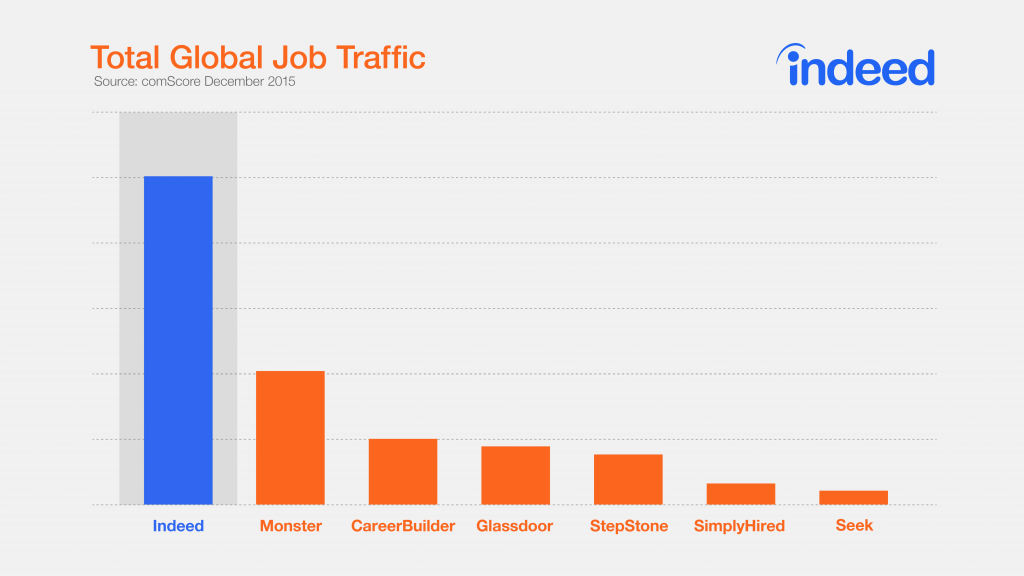
Graphic courtesy of Indeed.com

Graphic courtesy of Indeed.com

Lots of people are looking for a new job.

And where are they going?

From the traffic statistics, it looks like Austin-based Indeed.com. Over the past 31 days, Indeed reached a record number of 200 million unique visitors. “These candidates searched for jobs in over 60 markets and in 28 languages—a record number of countries served worldwide,” according to a blog post on the company’s site.

“Indeed continues to expand its global community of job seekers,” Indeed Senior Vice President Paul D’Arcy said in a news release. “In response to further labor market tightening in 2016, people looking for jobs have more control of their destinies, and many are actively looking for their next position. With over 16 million postings and over 10 million global company reviews, Indeed is uniquely positioned to help job seekers find the job that’s right for them.”

Indeed beat other job sites like Monster.com, CareerBuilder and Glassdoor.

Indeed is a home-grown startup success story. Rony Kahan co-founded the site in 2004 and sold it to Recruit Co., a Japanese-based human resources company, in 2012 for a reported price tag of $1 billion. Read the full story on Kahan’s entrepreneurial journey in Silicon Hills News.

Full disclosure: Silicon Hills News runs Indeed.com job advertisements and receives payment for running those ads.

« Older posts Newer posts »

© 2026 SiliconHills

Theme by Anders NorenUp ↑