Category: Austin (Page 113 of 318)

TrendKite Expands to London

TrendKite, a public relations analytics company for agencies and corporate brands, has opened a new office in London.

The Austin-based startup, founded in 2012, closed on $16.6 million in funding last year and to date has raised $37 million.

TrendKite hired Gerard McNamara as its vice president of sales for Europe, Middle East, and Africa. He previously worked Vuelio.

“I joined TrendKite because I saw the opportunity to bring real value to a disruptive, operationally excellent, hyper-growth company,” McNamara said in a news release. “TrendKite redefines how PR professionals quantify their success, and has exciting plans to redefine earned media, and I look forward to scaling operations in the EMEA region.”

TrendKite has experienced strong growth in the past year and envisions its London office as strategic way to serve its growing international customer base.

“After experiencing TrendKite’s triple-digit growth and increased interest in future investments, opening a European office was reinforced as our obvious next step,” Erik Huddleston, CEO TrendKite said in a news release. “This lets us serve our already-global customer base more effectively, covering all timezones, while increasing growth in some of the strongest markets for both PR and marketing technology.”

True Wealth Ventures’ $20 Million Fund Invests in Women-run Startups

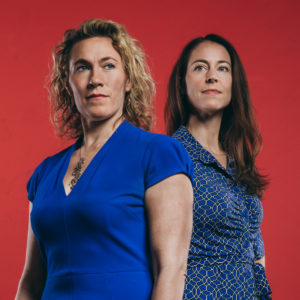
Austin’s Kerry Rupp and Sara Brand with True Wealth Ventures, seek to invest in women-run startups with a new $20 million fund. Photo by John Davidson.

By LAURA LOREK
Publisher and Senior Reporter with Silicon Hills News

Women run startups outperform all male teams yet they still struggle to get venture capital.

That’s a problem Sara Brand and Kerry Rupp, with True Wealth Ventures, are seeking to solve. They are raising a $20 million venture capital fund focused on investing in women led companies in the sustainable consumer and consumer health industries.

“It’s not a feminist manifesto, it’s a real thesis we have here,” Brand said. She spoke last week along with Rupp to a group of mostly women at RealCo, a new technology accelerator at Geekdom, during the second annual San Antonio Startup Week.

San Antonio is the number one place for women entrepreneurs out of 100 U.S. metropolitan cities to start a business, according to the 2015 State of Women Owned Business Report, commissioned by American Express.

And 22 percent of all women run businesses in San Antonio have revenue of more than $1.6 million, Rupp said. Overall, Texas is number two in the nation for fastest growth in women owned businesses, she said.

Brand, who has a bachelor’s degree, master’s degree and a doctorate degree in mechanical engineering, also founded (512) Brewing Company, a microbrewery in Austin, with her husband. She has worked in venture capital, management consulting and semiconductors.

Despite evidence in recent studies showing companies with women in leadership positions outperformed all male led companies, the numbers have not increased, Brand said. A McKinsey & Company study found large public companies with women in leadership positions saw a 41 percent return on equity and 56 percent return on operations.

Yet only 4.2 percent of Fortune 500 CEOs are women and only 14.6 percent of executive officer positions are held by women, Brand said. And only 16.9 percent of corporate board seats of Fortune 500 companies are filled by women, Brand said.

Still, greater than half of all small businesses today are started by women and they experience faster revenue growth, Brand said.

Despite all the statistics showing women leaders are an asset to companies, it’s still difficult for women to get venture financing. And that hinders innovation because VC money can help a company grow faster and bigger and create more jobs.

Part of the problem is that few VCs have women in decision making positions. Only four percent of women are partners in a VC firm and less than one percent of those are making investment decisions, Brand said.

“VC firms with women partners are twice as likely to invest in a company with a woman in management and three times as likely to invest when the woman is the CEO,” she said. “When women invest in women it has a huge benefit.”

Women led startups have 32 percent greater chance of an exit when fueled by women VCs, according to a Harvard Business Study.

“We saw that there was a gap in the funding opportunity for investing in women,” Rupp said. “We decided if they are not going to do it, why not us.”

Rupp previously served as CEO of DreamIt Ventures and raised a $20 million fund and helped to launch more than 150 companies. She’s also been an entrepreneur.

Women are outperforming men because they have strong leadership, communication and innovation skills, Rupp said.

Yet 85 percent of VC-backed companies don’t have a woman on their teams, Rupp said.

“Our thesis is about diversity,” Rupp said. “Diverse teams perform better across the board….You don’t want to have a group with all women either.”

When women start businesses, they often look for alternative funding. They use their savings, their retirement accounts and some turn to crowdfunding. On Kickstarter, 35 percent of total funding goes to companies with a women CEO, Rupp said.

The reason a lot of female run companies don’t land venture capital has to do with an unconscious bias in society, Rupp said. A Harvard Business School study in 2014 revealed “that investors prefer pitches from male entrepreneurs over those from female entrepreneurs, even when the content of the pitches is identical. And handsome men fare best of all.”

But True Wealth Venture Partners is not going to invest in women-run companies, just to invest in women-run companies. It is looking for companies with a female founder or a female member of the management team that have a great business plan and can scale the company and provide ten times return to investors, Rupp said. They are looking for companies that are going to have a $100 million exit within five years, she said.

Overall, with the fund will invest in 12 companies during the next four years with initial investments ranging from $250,000 to $500,000.

So far, True Wealth Ventures has looked at more than 200 companies and has invested in one: UnaliWear, a smart watch for seniors created by Jean Anne Booth, a serial entrepreneur, in Austin. She sold her previous startups to Texas Instruments and Apple.

“At the end of the day we’re still going to choose companies the way any other VCs chooses companies,” Rupp said. “Team is still the number one thing everyone looks at.”

Ten Takeaways from VentureCrushATX

Piggy Bank and Businessman

In Austin, new entrepreneurs often struggle to get cash, especially that early investment to fuel their startups from inception to billion dollar ventures.

Austin is also known for bootstrapping.

But lately, a number of venture capital firms have launched big funds here and others from Silicon Valley, Houston and Boston have offices here or regularly travel to Austin to hunt for good investments.

Last Tuesday, Lowenstein Sandler and ATX Factory, hosted VentureCrushATX to give startups advice on preparing their company for an investment. A panel discussion featured advice from Adam Marcus, general partner of OpenView Venture Partners, based in Boston, and L.K. Pryzant, senior analyst with Mercury Fund, an early stage investment fund based in Houston. Kathi Rawnsley, partner with Lowenstein Sandler, moderated the discussion.

About 100 people from the Austin technology community attended the gathering held at ATX Factory. Here’s 10 takeaways from the event.

  1. It’s hard to get venture capital. Marcus said his firm receives 185,000 pitches in its database and shifts through all that to find about 5,000 companies that someone from the firm contacts and it’s narrowed down to about 40 companies they meet with and then ultimately, they invest in four to five companies each year.
  2. What do they look for to make an investment? Reoccurring revenue, customer retention, growth with ability to scale and become a multi-billion-dollar company, Marcus said.
  3. Don’t just talk to the VC partners. It’s important to talk to associates and analysts, Marcus said. Partners in a VC firm don’t have time to meet with everyone and associates and analysts are often the first line of communication with a firm. At the end of the day, it’s about getting the junior people excited about the profile of the company so they refer it to a partner, Marcus said.
  4. Startups in Austin need to get their brand noticed by the coasts by participating in leadership activities, Pryzant said. There is a lot of hype in Silicon Valley, she said. But that doesn’t mean those companies have better metrics or better teams than they have here, she said.
  5. In Austin, entrepreneurs are more transparent and less full of shit, Marcus said. But the entrepreneurs here need to have more bravado and present their ideas bigger, he said. There’s a balance between being obnoxiously audacious and being a little more ambitious with your goals, Marcus said. The middle of the country is modest to a fault sometimes, he said. A $4 million to $5 million annual revenue run rate company in Austin needs to be able to tell a story about how they can get that to $3 billion or $4 billion, he said. It’s all about how you pitch your story and get people really excited about it, he said.
  6. Entrepreneurs also need to understand the VC firm they pitch to and what they invest in and what their expectations are, Marcus said. For example, his company has a $300 million fund. If they invest $10 million, and they get $50 million return, they are happy. If they get a $100 million return they are jumping up and down and you’ll probably get a car, he said.
  7. Who you pick as your VC partner is extremely important because if you get a big name to invest in the company early on and not in follow on rounds, everyone will wonder why they are not investing, Marcus said. Also, if things go sideways, some firms in Silicon Valley cut off the entrepreneurs. They stop returning phone calls and attending board meetings, he said. “If they think you are no longer a winner, you’re kind of dead to them,” he said.
  8. There’s a lot of hype in Silicon Valley. A startup company valued at more than $1 billion isn’t really a unicorn, Marcus said. Most unicorns will be sold for pennies on the dollar, he said.
  9. It isn’t always all about the team. The team in place is not as important as whether the entrepreneur can express the vision so they can recruit good people, Marcus said.
  10. Make sure when pitch you can tell how you are going to spend the money you raise, Marcus said. Building a company is really hard, he said. You are not going to get everything right, But you have to have a plan. You can’t just act like you’re just throwing something against the wall and hoping it will work.

Localeur Expands to London, Toronto and Vancouver

Localeur, a community of locals who share their favorite places to eat, drink and play online, Thursday announced its expansion to London.

The Austin-based company also recently announced expansion to Toronto and Vancouver.

The company created a website and free iOS and Android apps that allow travelers to discover unique places in a city that only a local might know about. Its target market is a service created by and for millennials.

Last October, Localeur closed on $4.2 million in venture capital financing. Joah Spearman and Chase White, both former employees of Bazaarvoice, founded the company in 2013 and launched right before SXSW. Silicon Hills News did this profile of the company.

“In 2013, Localeur was named the best new startup by Austin Monthly and has been named one of the top travel apps by “The Today Show”, Forbes, TIME, Travel & Leisure, BET, Black Enterprise, Examiner, MSN, MTV, Men’s Journal, and others since,” according to a news release. “To date, Localeur has captured local recommendations exclusively from locals on more than 10,000 of the best local bars, restaurants, shops and points of interest in more than 40 major U.S. cities from Austin and Boston to Los Angeles and New York City, and, now, Toronto and Vancouver and London.”

Conversable Launches New Software Program AQUA and Plans to Triple in Size This Year

Conversable, an intelligent conversation platform for businesses, Thursday announced the launch of a new product called AQUA, which stands for Answer Questions Using AI.

With AQUA, any employee in a company can push automated responses live to a bot without any knowledge of how to code.

“Bots are stupid,” said Ben Lamm, CEO of Conversable. “2016 was the year of bot hype.”

What Conversable has created is a software program that relies on a machine learning engine that learns from consumer interactions. That allows the intelligent program to sort through costumer queries and flag the most important ones for product managers. The managers can then respond to those questions and push them live to a bot for distribution.

“Andrew and I are big believers that words matter,” Lamm said. “We think of bots as the eyes, ears, nose and mouth of a company but they are not really the brain.” Andrew Busey is the co-founder and chief product officer of Conversable.

AQUA reaches consumers on all a company’s conversational channels, Lamm said. It also automates the flow of information and it provides data and insights back to the brand, he said.

For example, if a customer visits the restaurant chain Wingstop’s homepage, the program can recognize that customer and based on past purchases, it can tell she has a food allergy and requires gluten-free options. Instead of having the customer go looking for that information, the program can serve them up with suggestions for gluten-free entrees.

Like Amazon’s Alexa home management system that relies on artificial intelligence and becomes smarter with use, so does the AQUA program. It continually learns from interactions with consumers and employees.

“It gives the brand the ability to have better interactions and to better serve that consumer,” Lamm said.

“The combination of advances in AI with the rapid adoption of messaging platforms has opened up broad new opportunities to drive dramatic improvements in customer care,” Busey said in a news release. “The AQUA system combines human-assisted machine learning with adaptive systems and an easy to use console to let business managers deliver answers quickly, easily, and correctly, to their customers.”

AQUA manages frequently asked consumer questions, whether they are routine or obscure, and frees up the company’s employees to work on harder customer problems, Lamm said.

Conversable launched a little over a year ago, the company has raised about $3 million in seed stage capital from a handful of angel investors locally. Lamm and Busey have also invested in the company. Conversable has already attracted major brands like Budweiser, Whole Foods, Domino’s Pizza, Viacom, Wingstop, Victoria Secret, Ernst & Young and others as customers.

“We haven’t even built out a sales and marketing team yet,” Lamm said. “Conversable has zero sales people.”

The brands have been calling Conversable directly to solve problems they encounter. For example, Budweiser released a special Internet of Things cup in Canada for hockey fans. Every time their team scored, the cup would light up. That created a huge buzz for the company. But it also created a huge headache for their social media and consumer help teams that got swamped with customer inquiries about the cup. Budweiser turned to Conversable to create an automated response program to handle the huge volume of questions, Lamm said.

Conversable is building a multi-billion-dollar business in Austin with an office in Dallas, Lamm said. Its artificial intelligence driven platform helps brands reach their customers with automated experiences on all major messaging and voice applications. The company, which is currently based at Capital Factory, has 28 employees in Austin and five in Dallas. It expects to expand to 100 employees or more by the end of the year, Lamm said.

Asked if Conservable is a call center killer, Lamm said it will disrupt that industry.

“Automation has the potential to change jobs,” he said.

People need to evolve and adapt as artificial intelligence takes on a greater role in the workplace, Lamm said.

“Artificial intelligence can create new kinds of jobs,” he said. “Machines can’t do everything. They still need humans.”

Conversable is thinking big and has big goals, Lamm said.

“The machine learning, artificial intelligence space really matters,” he said. Conversational artificial intelligence, data, voice communications is going to lead to better conversations and better customer interactions, he said.

“It’s going to have a massive impact and change the world,” Lamm said.

Austin-based Next Coast Ventures Raises $85 Million Fund

Next Coast Ventures announced Thursday that it has closed on its debut fund at $85 million.

The fund was oversubscribed by $25 million and its limited partners include leading institutional investors, funds of funds and family offices.

Next Coast Ventures is looking at investing in deals in Austin and in the middle part of the country in emerging tech hubs – between the coasts, said Mike Smerklo, co-founder and managing director of Next Coast Ventures.

Mike Smerklo, co-founder and managing director of Next Coast Ventures

Next Coast Ventures plans to invest in software-powered, full stack business models designed for digital natives as well as innovative companies in the education, retail, business to business and business to consumer sectors. It has already invested in four Austin startups including Umuse, Dropoff, OnRamp and Phlur and one San Francisco-based startup Cloverpop and one New York-based startup Clarity Money, said Tom Ball, Co-Founder and Managing Director of Next Coast Ventures. It has also invested in another company, which it has not publicly announced yet.

“Tom and I have known each other for almost 20 years,” said Smerklo. “We’ve both been entrepreneurs.”

Before launching the firm, Smerklo ran ServiceSource and took it from a small startup to a public company with more than 3,000 employees. Ball was general partner with Austin Ventures. Before that, he founded Tahoe Domains, an ICANN accredited registrar and he worked as CEO and Co-Founder of Openfield and Razorgator Interactive; and Chairman, CEO and Founder of eCoupons.

They decided to launch Next Coast Ventures because of serendipity and market opportunity, Smerklo said.

“We wanted to create a different type of venture firm,” he said.

They are both from the Midwest and they’re both drawn to investing there. They also worked in Silicon Valley. So they have a strong network for future financing opportunities for companies in their portfolio.

Next Coast Ventures plans to invest in 20 to 30 companies over a three to five year period, Ball said. It invests in about five to seven companies a year or 1 percent to 2 percent of the overall companies it looks at, he said.

“At the end of the day, you’re looking for a needle in a haystack,” he said.

What makes the process easier is that Next Coast Ventures takes a thematic approach to investing and is very specific in the themes it looks at, Smerklo said.

“It’s a service to the entrepreneurs because we’re able to say no faster than most,” he said.

Tom Ball, Co-Founder and Managing Director of Next Coast Ventures

With traditional VCs, a lot of the investments flow around a software team and a hardware team, Ball said. That doesn’t allow you to be efficient, he said.

“We’re looking at what are the three or four things happening now and how they are going to change over the next five to ten years,” Smerklo said.

Another way to say it, using a hockey analogy, is they look for entrepreneurs who are skating to where the puck is going, not where it is, Ball said.

Twenty years ago, most venture capital investing was done by former entrepreneurs, Smerklo said.

“We’re just returning to its roots,” he said. “We’ve both been operators. We’ve both been entrepreneurs and we both had exits. When you run that gamut of the life cycle you’re able to give entrepreneurs relevant advice.”

A lot of talk in the Austin technology community for the past few years has been about a lack of funding for early stage entrepreneurs, but firms like Next Coast Ventures have formed to fill that gap. Other local VC firms include LiveOak Venture Partners, Silverton Partners, S3 Ventures, Sante Ventures, ATX Seed Ventures, True Wealth Venture Partners and angel investors like the Central Texas Angel Network. There’s also local technology accelerators with funds like Techstars Austin and Capital Factory.

“I’ve lived here 11 years and I think it’s better than it’s ever been,” Ball said. “There are more options for entrepreneurs in terms of firms now than in the last decade. There’s a good balance and a competitiveness and collaboration among the firms. I think it’s great right now… Good ideas are getting funded in Austin and it’s a great time to be in Austin.”

The super early seed and accelerator networks have filled in the gap left by Austin Ventures when it decided not to raise another fund after having raised a $900 million fund of which $300 million targeted early stage investing, Smerklo said.

“The challenge is Series A and Series B for companies,” Smerklo said.

That’s the role Next Coast Ventures plays. It can tap into its Silicon Valley network to help those investors find some great Austin-based investment opportunities at the later stages, Smerklo said.

Next Coast Ventures bought a house at 12th and Nueces and remodeled it into a cool office with entrepreneurs in mind, Smerklo said. It’s an open work space. They plan to move in by the end of March. They are also bringing on a new venture partner and they are hiring for a few more positions.

The talent in Austin is also great for building tech companies, but Austin can always use more, Ball said.

“A ridiculous number of people move to Austin every day,” Ball said. “The good news is with the successes of the last decade there’s no risk in moving to Austin anymore. When I first moved here it was hard to recruit people.”

Austin’s universities graduate talented students and those students are getting to stick around because of all the tech companies here now, Ball said. Established companies like Oracle, Facebook, Apple and Google allow the younger workforce to stay in town.

“You have all the ingredients that makes this a great talent pool for the tech industry,” he said.

And Austin is the best place to launch a company for a few years running, according to the Kauffman Foundation.

“It has a national buzz,” Smerklo said

And it’s cheaper to build a company here, Ball said.

The downside of that is Austin has venture-backed companies that aren’t going to have big exits and they stick around for a long time, Ball said. In Silicon Valley, there is a huge velocity of turnover, he said.

“Things just fail fast out there,” he said.

Austin needs a better flushing mechanism, Ball said. That way some of the great talent working on things that are never going to hit it big, can roll out and work on another startup, he said.

Silverton Partners Plans to Raise $100 Million Venture Capital Fund

Silverton Partners, a venture capital firm founded in 2005, is raising a $100 million Silverton Partners V fund, according to documents filed with the Securities and Exchange Commission.

The Austin-based venture capital firm lists Adam Chibib, Michael Dodd, Morgan Flagler and Kip McClanahan as its general partners. Bill Wood, Silverton Partners’ founder, was not listed on the latest filing.

Silverton Partners previously raised funds totaling $150 million. It has made 82 investments in 40 companies, according to its Crunchbase profile. Its portfolio has had two Initial Public Offerings and ten acquisitions, according to Crunchbase.

Silverton provides seed stage and early stage funding and later stage venture funding as well as debt financing. The firm targets investments in software, enterprise software and identity management. Its initial investments usually range between $200,000 and $4 million, according to information on its website.

It invests primarily in Austin-based companies. Silverton has invested in OutboundEngine, WP Engine, The Zebra, Favor, TrendKite, Turnkey Vacation Rentals and more.

Certain Affinity Moves to New Building, Plans to Double in Size

Max Hoberman, founder of Certain Affinity.

Max Hoberman grew up in Austin, graduated from the LBJ High School, now called the Liberal Arts and Sciences Academy of Austin.

Then he went on to get a bachelor’s degree in photojournalism from the University of Texas at Austin’s College of Communications. After graduation, he decided to pursue a career as a game developer and spent 10 years with Bungie Studios.

In 2006, Hoberman launched Certain Affinity, which is now Austin’s largest independent game studio. It has 125 employees currently with plans to hire 105 more game developers, Hoberman said.

And Certain Affinity just purchased the 55,000 square foot building which previously housed the Texas Association of School Boards at 7620 Guadalupe Street.

Mayor Steve Adler made the announcement Friday, noting its the first construction project to benefit from the Texas’ Media Production Facilities Development Program, according to a news release.

Hoberman said the project has been in the works for a year and construction began in November. The company expects to move from its 25,000 square feet of leased space in North Austin at 3107 Oak Creek Dr. in June. The new building will include two floors of creative development space, amenities, playtest labs, sound design suites and a virtual reality development lab.

The first floor will feature an open design and will be available for lease to other companies in June. STG Architects designed the site plans and Balfour Beatty is the general contractor.

“Everything we’ve done has been designed around fitting the maximum number of developers on the second and third floor of the building,” Hoberman said. “A lot of the work we do tends to be high profile and confidential.” And that’s why the company doesn’t plan to use the first floor, he said.

Certain Affinity also has plans down the road to expand further with plans for a parking garage and another 50,000 square foot building, Hoberman said.

Certain Affinity is entirely bootstrapped. The company has been profitable every year and has grown every year, Hoberman said. It has generated more than $100 million in revenue. For the first time, Hoberman said he’s looking at venture capital investment to expand the company even faster.

Certain Affinity co-develops major games such as Call of Duty, Halo and Doom. Currently, the company is working on four game titles, including two it has developed internally, Hoberman said.

“Austin is a city where good ideas become real, and this is one of the best. Certain Affinity is leveraging Austin’s strength as a game-developing center to create opportunities where, for too long, inequities have held entire communities back. This is exactly how we should be using economic incentives – in this case, sales tax exemptions – to target jobs and opportunity where Austin needs it most,” Mayor Adler said in a news release.

“Certain Affinity is a leader in digital gaming and home entertainment. It is fitting to have Certain Affinity as the first company in the state to be the recipient of this new incentive, which reinforces Austin’s standing as a center of innovation and creativity in digital media. The Chamber through Opportunity Austin is pleased to have worked alongside their leadership to reach this successful moment that will benefit the entire local community,” Kerry Hall, 2017 Chair, Opportunity Austin, said in a news release.

How to Get Your Company Noticed at SXSW Interactive

South by Southwest is a great place for a startup or even an established company to get some traction.

It doesn’t matter if you have a big budget or a low budget, there are all kinds of ways to stand out from the crowd at South by. Some of them require a lot of advance planning, while others require Guerrilla marketing tactics, imagination and a lot of legwork. Both can yield lots of impressions and tangible results. And make sure to work social media with a clever hashtag.

Lots of media attend SXSW every year, so it’s a great place to get some press.

Of course the best way to stand out at SXSW is to invent the next big thing. Twitter, Foursquare, Gowalla, Foodspotting, Meerkat and others all gained big traction at SXSW. Some like PR Pro Laura Beck advise startups not to launch at SXSW because it’s such a busy time, but it’s a great place to showcase your startups to an international audience of technology influencers. And Honest Dollar officially launched at SXSW in 2015 and a year later, Goldman Sachs bought the company. So who knows, your startup might just be the next big thing. Or it might just be a flash in the pan. RIP Meerkat.

  • PANELS – Pre-event: Pitch to Panel Picker and set up a panel with a compelling topic. (You can also try to hit up established panels to see if they had someone fall through and need to fill a spot.)
  • TRADE SHOW – Get a booth at the SXSW Trade Show. It’s fantastic real estate right in the convention center that reaches a global audience. TriNet, the human resources company, put a giant Yam in the convention center a few years ago and got press for pitching a faux YamTrader startup.
  • PARTY – Hold a party. Official parties must get approval from SXSW and other parties often require a permit from the City of Austin, which takes advanced planning. But you can do small pop up parties at hotels and other venues with select influencers in your industry. Gary Vaynerchuk used to host after hours wine tasting parties. He would send out the party invite via Twitter after midnight.
  • PODCAST – Podcast stage – this is new this year at SXSW. The conference organizers are giving 42 podcasts a Podcast stage to do live shows. It’s open to all badge holders. (Submissions are closed for this year but you’ll have another opportunity next year)
  • PITCH – Enter pitch competitions and other competitions that allow you to showcase your company on stage. Holt Ventures Industrial Technology Pitch Competition.SXSW Release It pitch competition. SXSW Accelerator. First Honest Dollar won the SXSW Release It pitch competition and then the startup won the 2015 ATI SXSW pitch competition.

Spotify branded Car2Go vehicles last year.

THINGS TO DO AT THE SHOW

  • MEDIA ROOM – Hit up the press room to reach the media. The media is everywhere at SXSW. One of the ways to get your name in front of them is to drop off goodies at the press room. Reporters like free stuff but ethics rules prohibit them from taking anything with a big price tag so keep it small like notebooks, pens, hangover kits, umbrellas, hats, T-shirts, candy, breathe mints – you get the idea. The possibilities are endless.
  • EMAIL – Reach out directly to media to set up appointments, if possible. The SXSW press department provides a list of journalists who are attending SXSW. Reach out to them on SXSW Social also. It’s not always possible to connect for a one on one meeting, but it doesn’t hurt to try. Also, there are several journalism related parties like The Awesomest Journalism Party Ever put on by Hacks and Hackers. Lots of media outlets also host their own parties like Mashable, CNN, etc.
  • Where’s Waldo? He was in line with Laura Lorek, editor of Silicon Hills News, at SXSW Interactive last year.

  • STUNTS – Attention-grabbing stunts – Last year, Wesley Faulkner, social media manager of NameCheap, dressed up like Waldo from the children’s books Where’s Waldo. He had people take pictures with him and post to social media with a special hashtag and they got a free domain name. The campaign went viral and earned more than 2 million impressions, according to the company. Big budget attractions include Mr. Robot’s Ferris Wheel last year and General Electric’s solar powered Merry-go-round from a few years ago. But by far, the biggest lines I’ve ever seen were at the Mashable tent in 2014 for people to get their picture taken with Grumpy Cat.
  • WEIRD FACTOR Host some weird stuff. Chaotic Moon does a great job of this. They famously tasered an intern with a drone strike a few years back. And every year, they’ve got about a dozen different projects on display.
  • LEGOS – The Lego Pit – a cheap way to get pictures of your logo out there. People build skyscrapers and other creations with company logos and others take pictures. It’s a low budget way to make an impression. And it’s fun.
  • T-SHIRTS – Not as big as several years ago, but people still love getting free T-shirts. Even better if you ask people to wear the T-shirt in exchange for a reward.
  • GIVEAWAYS – Candy with stickers. Or hangover bags with stickers. Or breathe mints with stickers. Or just stickers. People love free stuff and stickers. Bags. Just make sure the promotional giveaways have your brand, website and other details on them.
  • RIDES – Weird rides – TaskRabbit had a giant, furry truck that looked like a brown rabbit and handed out ice cream. Uber hired a fleet of branded pedicabs. Lyft gave piggyback rides. PayPal gave rides in antique and vintage cars.
  • PROBLEM SOLVER – Solve problems for people. Branded charging stations are a great idea. Also, portable chargers. And like in the example above, people need rides. Chevy had a fleet of electric vehicles that gave people rides to different venues one year. Paper maps of the best places to eat, get coffee, drinks, buy souvenirs, etc. (Posse did this in 2014 and reported it went over well)
  • COSTUMES – Mascots and costumes. Every year, I see people getting their picture taken with people in costumes whether it’s Hipmunk’s giant chipmunk, people dressed as pandas, robots, hearts, superheroes, etc. It must be working because people keep doing it.
  • POSTERS – Old fashion flyers – one of the cheapest ways to get the word out about your company is to create a poster and plaster it on the poles around the convention center. Just be prepared to make hundreds because they get covered up quickly. But they can make quite an impression.
  • PAPER – Paper products – The Daily Dot, which considers itself to be the newspaper of the Internet, created a real newspaper broadsheet for SXSW one year and placed it at parties around town. Silicon Hills News also produced a special 32-page magazine for SXSW twice. We’re not doing it this year, but we might bring it back next year. It was a huge hit.
  • POP-UPS – Last year, Besomebody, which is no longer around, created pop-ups around town with people displaying their passions – singing, dancing, painting, drawing. The platform was geared at teaching people a new skill. It also rented out a giant billboard.
  • GAMES – Sidewalk games – Foursquare used chalk to create Foursquare playing courts outside the convention center several years back. It was effective at getting their brand out there.
  • EVENTS – Host an event like running, hiking, going on a tour. Guy Kawasaki used to host an ice hockey meetup. Others have had skeet shooting outings. Lots of people in town want to see the area beyond the convention center. Sometimes organizing a bus to a getaway like Salt Lick is the perfect way to get some quality time with an influencer audience.

If you have a favorite attention-getting tip, that’s not mentioned here, please add it to the comments.

Also, ADVERTISE in Silicon Hills News – great way to reach the tech audience. (Only have two spots left for sidebar ads for March – act fast) HAVE FUN! BE SAFE! And contact Laura Lorek at 210-413-3955 LauraLorek@gmail.com or Laura@SiliconHillsNews.com to let us know what your company is doing at SXSW Interactive.

Apply Now to Pitch at Capital Factory’s Funding Day for a Chance at a $100,000 Investment

Photo licensed from Getty Images

Got a world changing idea?

Then you might want to apply to Capital Factory’s $100,000 pitch competition.

Capital Factory, a high tech accelerator and coworking center in Austin, announced recently that it has gathered together a group of investors to give one startup a $100,000 investment.

“Any tech or consumer startup can apply on AngelList to pitch at our Funding Day on February 24th,” according to a post in Austin Startups on Medium by Capital Factory.

“We want to see Austin entrepreneurs thinking bigger and shooting for the stars. If you’re really trying to change the world, we will help you get started,” Brett Hurt, CEO of data.world and founder of Bazaarvoice, Coremetrics and Hurt Family Investments, said in the post.

“This is the money you need to quit your job and become an entrepreneur,” Joshua Baer, founder of Capital Factory said in the post.

The $100,000 investment is the startup funds to get a team focused full time on building a product. In addition to the money, Capital Factory will provide free rent, free hosting and other perks. They also provide access to an extensive and well-connected mentor netowrk.

“Getting the first check is hard enough as it is — it’s even harder in today’s market if you are female. I’m looking forward to backing more diverse teams with women in key leadership positions,” Jan Ryan, founder of Women@Austin, said in the post.

Apply now, because according to a post by Baer on Twitter, they have already received 100 applications and they plan to meet Wednesday night to decide who gets to pitch on Feb. 24th.

« Older posts Newer posts »

© 2026 SiliconHills

Theme by Anders Noren — Up ↑