Protopia AI, based in Austin, announced it has closed on a $6 million seed round of funding led by ATX Venture Partners.
The company has developed a software solution that allows big companies to tap into key data by using artificial intelligence and machine learning to extract insights without exposing sensitive information.
Protopia cites a Gartner report on AI which found that CEOs major problem in using AI is data accessibility.
Other investors in the round included Galaxy Interactive, Silverton Partners, and DNX Ventures. Protopia has raised a total of $8 million, which includes an initial $2 million pre-seed round. All existing investors extended their commitment by participating in the new round.
Protopia AI’s core technology is based on inventions by Professor Hadi Esmaeilzadeh, endowed chair of computer architecture at the University of California San Diego. He is also Protopia AI’s co-founder and chief technology officer.
“We are at an inflection point where AI has unprecedented capabilities — but at the cost of losing the control and ownership of data,” Esmaeilzadeh said in a news release. “Protopia AI is the vision to enable practical AI without losing the control/ownership of data.”
Portopia.AI plans to use the funds raised to hire engineers and on product development. It is currently in beta-testing with customers in financial services, government and health care.
Funds raised from the round will be used to build out engineering teams and advance the product. The company is currently beta-testing its product across industries where data sensitivity causes the most operational slowdowns, including financial services, government and health care.
“Protopia AI empowers enterprises to extract maximal value using AI and machine learning from their data by providing the governance and protection that is necessary,” Eiman Ebrahimi, Protopia AI co-founder and CEO, said in a news release.
“Today, companies are looking to create real value from their data using artificial intelligence and machine learning, according to Protopia AI. “They frequently are blocked or slowed down by data-sensitivity issues. According to a Seagate Technology and IDC survey, respondents estimated their organizations collect only 56% of their operational data. Out of that 56%, 43% of data remains unused. Protopia AI solves this dilemma with its easy-to-use Stained Glass Transform™ that enables the operation of AI and ML while removing the need to access the company’s data in identifiable form.”
“Data-centric AI is the future, and Protopia is positioned to emerge as an industry innovator and market leader,” Chris Shonk, ATX Venture Partners managing partner, said in a news release. “No other software company in the market is offering a solution with privacy in mind, at all stages of the ML lifecycle, including deployment, in mind from inception. We have a shared vision for maximal data protection and are pleased to fund the company at this critical growth stage.”
Austin-based Ribbon has closed on $2.7 million to help nonprofit organizations.
The company has created a software platform that gives individuals and businesses the banking, accounting, fundraising, and organizational tools they need to build a successful charity under the umbrella of a fiscal sponsor.
Ribbon’s fiscal sponsorship model allows individuals looking to conduct charitable work to partner with existing 501c3s to help them accomplish their goals while enjoying the sponsor’s tax-exempt status.
“We believe starting a new charity should be quick, easy, and effortless,” Ribbon CEO Braden Fineberg said in a news release. “We already have 1.6 million registered nonprofits in the U.S. In a crowded market, there is a growing demand for a platform that makes charitable work more accessible without the need to create a new 501c(3).”
Austin-based Trust Ventures led the investment round.
“You can start a company in a day for a few hundred dollars, but a nonprofit can take years and thousands of dollars, not to mention countless hours working through legal red tape,” said Salen Churi, General Partner at Trust Ventures. “Ribbon helps those in the nonprofit sector move at the speed of business, spending their time and resources doing good rather than on tax lawyers.”
Ribbon thinks its sponsorship model will replace the vast majority of new nonprofit organizations. The platform aims to save nonprofit organizations time and money in filing and managing their charitable status.
“Imagine the good that could be accomplished if people who wanted to do charitable work could, in effect, create a nonprofit in minutes, enable tax-deductible donations instantly, and not have to manage their nonprofit status,” Fineberg said. “With IRS backlogs and the acceleration of Open Banking APIs, the industry is ripe for this product.”
Open banking is a system under which banks make their application programming interfaces (APIs) accessible for third parties to develop new apps and services. Ribbon’s fiscal sponsorship model will be the first product to allow this to happen in the nonprofit sector, Finberg added.
NASA has awarded Austin-based ICON a contract worth $57.2 to develop construction technologies that could help build habitats, landing pads, and roads on the moon.
NASA is planning for long-term human exploration of the moon under Artemis.
“In order to explore other worlds, we need innovative new technologies adapted to those environments and our exploration needs,” Niki Werkheiser, director of technology maturation in NASA’s Space Technology Mission Directorate (STMD). “Pushing this development forward with our commercial partners will create the capabilities we need for future missions.”
ICON already received a Small Business Innovation Research (SBIR) dual-use contract with the U.S. Air Force, partly funded by NASA. The new NASA SBIR Phase III award will support the development of ICON’s Olympus construction system, which is designed to use local resources on the Moon and Mars as building materials. The contract runs through 2028.
“To change the space exploration paradigm from ‘there and back again’ to ‘there to stay,’ we’re going to need robust, resilient, and broadly capable systems that can use the local resources of the Moon and other planetary bodies. We’re pleased that our research and engineering to-date has demonstrated that such systems are indeed possible, and we look forward to now making that possibility a reality,” Jason Ballard, ICON co-founder and CEO, said in a news release. “The final deliverable of this contract will be humanity’s first construction on another world, and that is going to be a pretty special achievement.”
ICON will work with NASA’s Marshall Space Flight Center in Huntsville, Alabama, under STMD’s Moon to Mars Planetary Autonomous Construction Technologies (MMPACT) project.
Previously, ICON 3D printed a 1,700-square-foot simulated Martian habitat, called Mars Dune Alpha, which will be used during NASA’s Crew Health and Performance Analog, or CHAPEA, analog mission starting in 2023.
ICON also competed in NASA’s 3D Printed Habitat Challenge. The company partnered with the Colorado School of Mines in Golden, and the team won a prize for 3D printing a structure sample that was tested for its ability to hold a seal, for strength, and for durability in temperature extremes.
The announcement comes after ICON’s warehouse and original headquarters in South Austin were severely damaged by a fire in the building the day after Thanksgiving, according to the Austin American Statesman. The paper reported a cause for the fire has not been determined.
ICON TO DEVELOP LUNAR SURFACE CONSTRUCTION SYSTEM WITH $57.2 MILLION NASA AWARD SBIR Phase III Contract Furthers ICON’s Space-based Construction Technology Developments & Will Target Humanity’s First-ever Construction on Another Planetary Body ….. ICON, a leader in advanced construction technologies and large-scale 3D printing, announced that it has received a contract awarded under Phase III of NASA’s Small Business Innovation Research (SBIR) program.
A ransomware attack at San Antonio-based Rackspace Technology has caused service disruptions for thousands of its customers.
The attack began last Friday, Dec. 2nd, and continues although the company reported Friday night that two-thirds of its customers’ services have been restored.
The ransom wear incident affected Rackspace’s Hosted Exchange Email business, which represents one percent of Rackspace’s total annual revenue and is comprised of primarily small and medium businesses that solely use this product, according to a filing with the Securities and Exchange Commission.
“No other Rackspace products, platforms, solutions, or businesses were affected or are experiencing downtime due to this incident,” according to Rackspace.
Rackspace hired a leading cyber defense firm to investigate along with its security team.
“Ransomware is a type of malicious software or malware that prevents you from accessing your computer files, systems, or networks and demands you pay a ransom for their return,” according to the Federal Bureau of Investigations. “Ransomware attacks can cause costly disruptions to operations and the loss of critical information and data.”
Computers can become infected with ransomware by opening an email attachment, clicking an ad, following a link, or even visiting a website that’s embedded with malware, according to the FBI.
“Once the code is loaded on a computer, it will lock access to the computer itself or data and files stored there,” according to the FBI. “More menacing versions can encrypt files and folders on local drives, attached drives, and even networked computers.”
Rackspace has been working with its customers to migrate them to a new environment as quickly as possible, according to a news release.
“Rackspace maintains cybersecurity insurance commensurate with the size of its business, and is confident in its ability to absorb potential financial costs associated with the incident and fulfill its obligations to other customers,” according to a filing with the SEC.
“As of today, more than two-thirds of our customers on the Hosted Exchange environment are back on email,” according to Rackspace. “Every customer who has reached us has been offered support to transition to Microsoft 365.”
“We are continuing to make significant progress in our recovery efforts. We have engaged industry-leading global cybersecurity firm CrowdStrike to help investigate and remediate,” according to Rackspace. “Due to swift action on the Company’s part in disconnecting its network and following its incident response plans, CrowdStrike has confirmed the incident was quickly contained and limited solely to the Hosted Exchange Email business.”
Rackspace is still investigating the root cause of the incident.
Meanwhile, Rackspace faces two class action lawsuits filed on December 6th against the company last week in U.S. District Court for the Western District of Texas.
Chris Ondo, represented by Jon B. Ellis of Sadovsky & Ellis, filed a class action lawsuit against Rackspace seeking injunctive relief and damages for alleged negligence and breach of confidence.
In addition, Garrett Stephenson and Gateway Recruiting, LLC, represented by Cole & Van Note, filed a class action lawsuit, Stephenson, et al. v. Rackspace Technology, Inc. for negligence and related violations arising out of the email hosting provider’s recent high-profile data breach. In addition to monetary damages, the suit demands Rackspace Technology implement and maintain sufficient security protocols going forward so as to prevent future attacks.
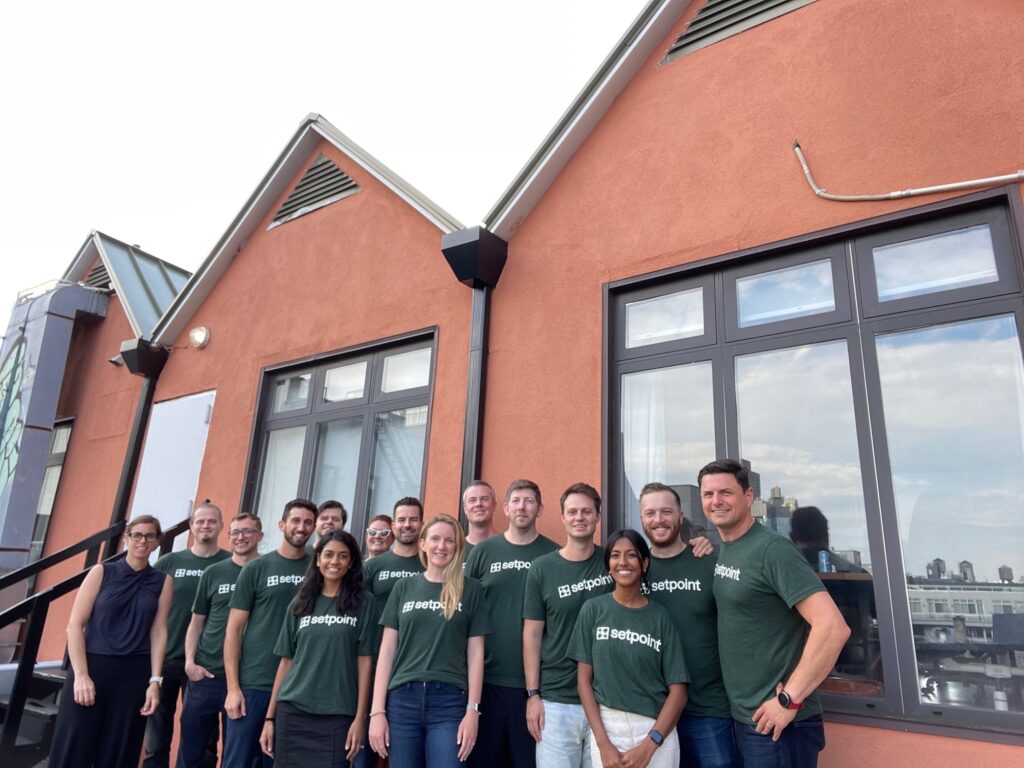
Stuart Wall, Michael Lam, and Ben Rubenstein, Co-Founders of Setpoint
In 2021, Ben Rubenstein left Realtor.com with Michael Lam to co-found Setpoint with another friend, Stuart Wall.
The problem they identified is a need for critical software to power a more efficient asset-based lending market. They’ve created a funding operating system to replace email, Excel spreadsheets, and computer folders which comprise the backend of real estate transactions. Setpoint’s software verifies, and stores documents automate interest rate calculations, and digitizes assets like homes or autos.
“The old real estate business backend is broken, and it is costing the consumer more money,” Rubenstein said. “This is a big problem that is hiding in plain sight and we’re solving it.”
On Wednesday, Setpoint announced it has closed a $43 million Series A round led by Andreessen Horowitz with participation from Henry Kravis, Spencer Rascoff, co-founder of Zillow and 75and Sunny, Fifth Wall, 645 Ventures, NextView Ventures, LiveOak Venture Partners, Vesta Ventures, ATX Venture Partners and Capital Factory.
“A lot of people say it’s impossible to get tech funding right now, but this shows it is possible,” Rubenstein said.
Setpoint also announced that it is on “track to power 25,000 home transactions this year and expects to power more than 100,000 in 2023 via single-family residences, iBuying, Power Buying, Fractional Ownership, Rent-to-Own, and other transactions that make buying, selling, and renting a home easier, faster and more accessible,” according to a news release.
In addition to his experience at Realtor.com, Rubenstein was an early investor in Austin-based Homeward, which allows homebuyers to buy a home before they sell their existing one. In the early days of Homeward, Rubenstein, and Lam supplied capital to the company. It was asset-backed lending to a tech company. And through that experience, they understood the internal financial operations and how it was done manually, and it didn’t scale, Rubenstein said.
Setpoint initially focused on power buyers like Flyhomes, Orchard, UpEquity and then expanded to all of PropTech like Opendoor, rent to own, home equity, and warehouse lending, Rubenstein said.
“They all have the same problem,” Rubenstein said. “It is a company that is accessing capital and needs to report on those assets.”
Last June, Setpoint came out of stealth mode with $615 million in debt capital when it officially launched its platform. That part of the business enables Proptech companies to offer contingent-free, all-cash offers on homes to customers, which it says accelerates funding and closing on properties.
“While there’s been much innovation and investment made upon improving the front-end of fintech transactions, behind-the-scenes capital market workflows are often a product of email, Excel, and FTP folders,” David Haber, General Partner at Andreessen Horowitz, said in a news release. “I believe that Setpoint’s Funding OS has the potential to significantly improve the efficiency of these transactions, resulting in lower cost for both borrowers and lenders.”
The latest funding round will allow Setpoint to invest further in software engineering and develop critical tools for their customers on both sides of asset-backed transactions. The firm will continue to focus on relationships with borrowers and lenders, while also expanding beyond its core market of real estate.
Real estate is just the first market Setpoint plans to address. It might expand into other areas like auto loans and credit card loans, Rubenstein said.
Setpoint’s Team
Half of Setpoint’s team is in Austin and the other half is in New York. The company has 25 employees and expects to double over the next year, Rubenstein said. The company primarily operates as a hybrid company with most employees working from home and office space at WeWork on Congress, he said.
The Covid-19 pandemic changed the way tech companies operate and remote working is now more acceptable, Rubenstein said.
Setpoint is Rubenstein’s third startup. He previously co-founded Yodle, which sold for $342 million to Web.com, and Opcity, which sold to Realtor.com for $200 million.
“I truly enjoy building startups,” Rubenstein said. “I’m much more zero to one guy. I like the super, super early days of building a company.”
Rubenstein and Lam previously worked together as founders of Opcity and they have known each other since college. Wall is also a friend who founded Signpost, a competitor to Yodle.
His experience at his previous companies taught Rubenstein that there are big problems in the world that software can really help with. And that it is important to go to the right partners and work with the right VCs, he said.
“Working with people you like, and know and trust is really fun,” Rubenstein said.
For more information, read David Haber’s blog post on Andreessen Horowitz’s investment in Setpoint.
A panel discussion with Virginia Cumberbatch as moderator, Michael Kelly with Participant, Tameshia Rudd-Ridge co-founder of kinkofa, Emmett Lewis, a descendant of Cudjoe Lewis, Joe Womack, Africatown community organizer and Jourdan Brunson, co-founder of kinkofa
By Laura Lorek, Publisher of Silicon Hills News
One of AfroTech’s most impactful events took place Tuesday night at the Paramount Theater in downtown Austin featuring a special screening of Descendant, hosted by kinkofa, a black genealogy website.
Descendant, a new documentary from Participant, Netflix, and the Obamas’ Higher Ground Productions tells a story that has been left out of history books. The story centers on the descendants of Africatown and the search for the Clotilda, one of the last recorded ships to illegally bring enslaved Africans to the U.S.
A Congressional Act made it illegal in 1808 for Americans to engage in the slave trade. But the film reports that Timothy Meaher, a wealthy Mobile shipyard owner, who built the Clotilda, bet that he could outwit authorities and bring slaves to Alabama in 1860. He hired Captain William Foster to sail the ship to Africa to buy 110 Africans and bring them back to Mobile.
Filmmaker Margaret Brown documents the search for and historic discovery of the Clotilda. Journalist Ben Raines discovered the shipwreck in 2019, 159 years after it was intentionally set ablaze and sunk to cover up the crime. The film notes that no one from the Meaher family would comment.
The movie blends history and modern-day activism by the people of Africatown seamlessly. It features film footage shot by Nora Neale Hurston, an American author, anthropologist, and filmmaker, of Cudjoe “Kazoola” Lewis, one of the last survivors of the Clotilda.
In the movie, Africatown residents read excerpts from Hurston’s book “Barracoon, The Story of the Last Black Cargo.” The book was published in 2018, 87 years after Neale Hurston wrote it. And it details Lewis’ story of being captured in Africa, enslaved, and brought to America on board the Clotilda.
In Descendant, Emmett Lewis, 32, a descendant of Cudjoe, speaks about the importance of telling his family’s story.
Lewis and other descendants of the Clotilda founded Africatown just north of Mobile, in a town formerly known as Magazine Point. After they were freed following the Civil War, they bought the land. The community became part of the National Register of Historic Places in 2012.
Today, descendants of Africatown are still fighting for economic and environmental justice. The townsite was home to a now-shuttered International Paper mill. Residents sued the company for releasing hazardous chemicals into the air and water. Several residents have gotten cancer. According to the movie, residents received $200 each from the lawsuit. Africatown residents are still fighting against active industrial chemical plants, quarries, and other businesses that pollute.
Joe Womack, Africatown native and founder of C.H.E.S.S. in a fireside chat with his son Joey Womack, founder and CEO of Goodie Nation
At the event, Joey Womack, founder and CEO of Goodie Nation, interviewed his father, Joe Womack, an Africatown native and retired Marine Corp. Major. Womack, 72, is featured in Descendant as one of Africatown’s community organizers. He runs Clean, Health, Educated, Safe & Sustainable, or C.H.E.S.S, a nonprofit organization.
Womack grew up in Africatown with International Paper and Scott Paper mills operating nearby. He recalled ash falling from the sky and onto his sandwich and into his drink. He said a lot of his peers are no longer here because they grew up in a toxic environment. He’s still fighting against environmental pollution in Africatown. A decade ago, he worked to organize a fight against a Canadian tar-sands storage facility and pipeline.
“I tell people all the time pollution is just another word for poison,” Womack said. “You are releasing poison into the air, you are poisoning me, you actually want to poison me in my community. No, you can’t come here. You have to use words like that.”
The most important weapons against polluting industry, land grabbers, and others seeking to do harm to Africatown is the stories, Womack said.
“Keep telling the stories,” Womack said. “The tremendous stories are the truth you don’t have to fabricate it, you don’t have to dress it up, the story is here and there’s one thing that we have that the other two generations didn’t have, and it’s called the Internet. You put stuff on the Internet and then it goes all over the world.”
Joe Womack, Retired Marine Corp. Major, Africatown Native and Community Organizer
Descendant recounts 1860 was when the enslavement of Africatown began but enslavement still exists today, Womack said.
“Enslavement is not just whips and stuff, but it’s mental,” Womack said.
The story of Descendant still continues today, Womack said. The story is still being written, he said.
“And we’re asking the world to be a part of this story,” Womack said.
At its height, Africatown had about 12,000 people, but now it’s down to 2,000 people, but the land is still there, Womack said. A lot of houses have been torn down, but a lot of structures still exist. Womack thinks they can get the community back to 5,000 to 6,000 people by putting in housing and repairing houses that are in disrepair.
Womack envisions Africatown’s Museum on the Clotilda and its descendants having as big a tourism impact as Montgomery’s National Memorial for Peace and Justice, dedicated to the victims of lynching in the United States. The economic impact from tourism for the city of Montgomery in the first 12 months of the museum being open was $1 billion, Womack said.
Beyond the film, the message from organizers was a plea to preserve black history. Participant, the filmmaker, recently partnered with kinkofa to launch DescendantFilm.com, an impact hub that features their platform, Rememory, a mobile and web-based application to document and archive family stories. Tameshia Rudd-Ridge and Jourdan Brunson, co-founders of kinkofa created kinkofa and Rememory to preserve the stories of black people.
Stories like Descendant are often left out of American history books, which is why it’s important to preserve family history through an app like Rememory, Brunson said during a panel discussion following the film.
Michael Kelly, vice president of Participant
Participant is a connector with partners like Womack’s C.H.E.S.S. to elevate their work which will help what’s happening in Africatown, Michael Kelly, vice president of Participant, said in a panel discussion following the film.
Netflix gives the film an opportunity to have a wider reach, Kelly said.
“When you get a platform such as Netflix, what you have the ability to do is allow a story like this to be elevated literally around the world,” Kelly said. “And people don’t even have to leave their homes to be able to watch it.
Descendant tells the story of the Clotilda – the last known ship to smuggle stolen Africans to America – the unthinkable cover-up, and the impact of that crime on generations of descendants living in Africatown. Once the past is revealed, can the future be reclaimed? #Descendant Descendant is only on Netflix, October 21st.
Smile a lot and wear a great outfit, those are a few pieces of advice given to women pitching their tech startups to investors.
But even that doesn’t seem to work. Women founders actually raised less money last year than in 2020 with female founders securing just 2 percent of venture capital in the U.S. in 2021, the smallest share since 2016, according to Bloomberg News.
To say things are not great for female founders in Texas or across the United States today is an understatement.
The landmark decision of the U.S. Supreme Court in which the court held that the constitution does not confer a right to abortion in Dobbs v. Jackson Women’s Health organization set women back years in their fight for equality.
Couple that with the fact that Texas bans abortions at all stages of pregnancy unless you have a life-threatening medical emergency. Texas law does not provide exceptions for cases that involve rape or incest.
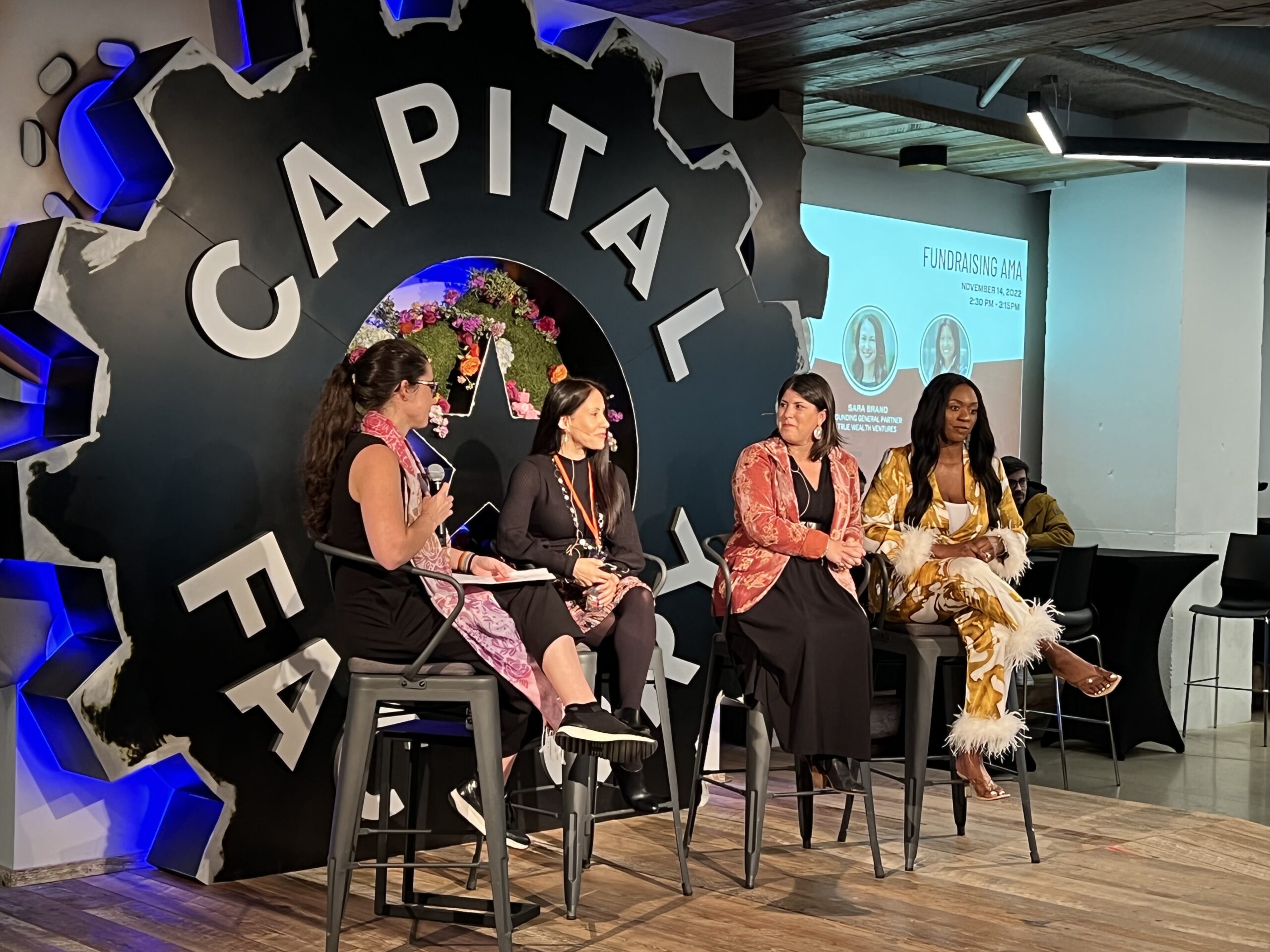
Despite all the obstacles, the first day of Austin Startup Week at Capital Factory focused on women in technology and showed how resilient and innovative female founders in Austin are.
For example, Eunice Ajim, the founding partner at Ajim Capital, launched an early-stage fund and angel community to provide startups in Africa with pre-seed to seed funding, with check sizes of $25,000 to $150,000.
Lesley Robinson, director of the Kendra Scott Women’s Entrepreneurial Leadership Institute, said she sees UT students interested in social, political, and environmental and impact startups.
“We’re seeing a lot more social impact, environmental entrepreneurs, and I like that trend,” Robinson said during an afternoon panel discussion titled “Who Runs the World.”
Ajim said women need to see their differences as advantages.
“When you get in a room and you are different people pay attention,” Ajim said.
She wears a great outfit in a room with a bunch of people wearing suits and that stands out.
“Use it to your advantage,” she said.
Bet on yourself every time, said Cat Dizon, Active Capital Co-Founder, and Chief Operating Officer.
Women pitching to investors need to come in with passion and determination, Dizon said.
“If it’s not a real problem, and you’re not really passionate about it, It comes through in everything that you do and that you say,” she said.
The largest black technology conference, AfroTech Conference, kicks off Sunday at the Austin Convention Center.
It marks a return to in-person events after two years of the AfroTech Conference held virtually due to the COVID-19 Pandemic.
The conference features fireside chats with technology leaders and music performances.
“We are continuing to tackle the diversity gap in Big Tech and AfroTech Conference serves as the destination for those fueling more inclusivity in the industry. As we return in person, our mission remains the same: to further build the Black Silicon Valley by helping fast-growing businesses effectively hire Black professionals and close the wealth gap,” Morgan DeBaun, CEO and Founder of Blavity, which puts on the conference, said in a news statement. “We are thrilled to announce our largest lineup of diverse industry speakers and brand partners looking to engage in meaningful discussions about tech disruption and Black innovation. I am excited for the ideas, funding, and career advancement that will come out of this experience and can’t wait to enhance the celebration with our first-ever music festival of Afro-Latinx and Black artists.”
More than 100 speakers will participate in this year’s AfroTech Conference, which will cover such timely topics as: Securing the Bag: Navigating Tech from Cradle to Career; Climbing to the Top of the Tech Ladder for Engineers and Managers; Web3, Crypto and the Black Economy: Unlocking Inclusive Access with a New Wave of Commerce; Inclusive Product Design: What It Is and Why It Matters, and more.
The 2022 conference takes place from Nov. 13th to Nov. 17th at the Austin Convention Center.
On Sunday, AfroTech’s official welcome and kickoff take place at 3:30 p.m. with DeBaun and Will Lucas in a fireside chat with a performance by Zaytoven.
Other highlights include:
NASCAR driver Bubba Wallace will speak in partnership with DoorDash to discuss strategies to thrive while being the First, being the Only, and being Different in your industry, company, or boardroom.
Rapper and businessman Chamillionaire will take the stage with Silicon Valley Bank to share his journey from rap star to successful founder and investor. He will discuss his entrepreneurial ventures, investment philosophy, and how he’s working to make the tech ecosystem more inclusive and accessible to the Black community.
Mark Cuban, Governor of the Dallas Mavericks professional basketball team of the National Basketball Association, Co-Founder of Mark Cuban Cost Plus Drug Company, and Investor on ABC’s Shark Tank, Haywood L. Perry III and Ansley Carlisle of Mark Cuban Companies will share insights from their journeys to entrepreneurship and how they support emerging founders and investors today.
Creative director, activist, and fashion designer Aurora James will be joined on stage by Blavity CEO and Founder Morgan DeBaun to discuss how to hold corporations accountable.
In another sign things in the Austin startup world are beginning to return to normal following the COVID-19 Pandemic, Austin Startup Week returns to in-person events next week.
The 12th annual Austin Startup Week takes place at Capital Factory downtown Monday through Friday next week. Register here.
“Austin Startup Week has always been about connecting the city’s entrepreneurs and tech community,” Austin Startup Week co-founder Jacqueline Hughes said in a statement. “After two years of virtual events because of COVID-19, we are so excited to be able to unite the people who make growth and innovation possible together in one place.”
Austin Startup Week is free to all registered participants. It features a series of talks, panel discussions, workshops, startup showcases, coffee meetups, lunches, happy hours, parties, and a startup crawl on Friday that requires a paid ticket.
Organizers anticipate 6,000 Austinites and visitors will attend throughout the five days.
This year’s event will feature 12 learning tracks with educational sessions. Featured sessions will include:
The Future is FemTech: Founders and health leaders will address how tech can advance health equity and protect patient rights.
Raising Your Seed Round: How startups can begin their fundraising journey.
How to Engineer a PR Strategy that Actually Works: A guide to credibility for emerging brands.
The Future of The Digital Economy, A Web3 Forecast: Influential web3 executives will discuss the next innovations being built using blockchain technology.
Industry leaders including IOOGO, McKesson, American Express, BCBSTX | C1 Innovation Lab, DuploCloud, SixLab by Studio X, Fross Zelnick, American Airlines, Chloe Capital, Perkins Coie, and Tech Girl will be on hand for sessions, panels, and networking events highlighting the latest trends in business and technology.
More than a decade ago, Nick Soman was learning to walk again after being fully paralyzed by an illness called GBS.
His motivation to start Decent. which provides affordable health insurance, came from that experience.
“When I had Guillain-Barre Syndrome or GBS, I went from a fully functional 30-year-old adult human to not being able to walk to being on a breathing machine so that I needed help to breathe,” Soman said. “And I really had to think about the fact that I was going to die for the first time in a significant and honest way.”
Soman didn’t want to die. He realized he couldn’t control as many things in life as he wished he could.
“I had a lot of time to think paralyzed in a hospital bed,” Soman said. “I started to think what can I control? I can control how I spend my time.”
He decided he only wanted to work on something he really cared about.
“My real bar was I said when I start companies, I’m not interested in working on something unless when I think deeply about the problem, we want to solve it, it’s meaningful enough to make me cry. And ultimately that’s what is behind Decent.”
Soman is the only one in his family who is not a primary care physician. That includes his dad, mom, sister, aunts, uncles and grandparents.
Soman decided not to go down that road primarily because of the problems his parents encountered with insurance companies when they were treating patients.
“My greatest win came out of our time of greatest pain for the company,” Soman said.
Decent came to market with a health plan marketed to freelance workers that was 40 percent cheaper than market rates. Then a federal law changed and that meant Decent couldn’t serve the self-employed market anymore, Soman said.
There is a movement afoot that could potentially open that door again, Soman said.
“I really miss that population,” he said.
It may not be this year or next year, but Decent plans to find a way to serve that market again, Soman said.
Decent also recently won a Muse Creative international design award for its in-house Small Business Monsters marketing campaign. Decent has put the campaign monsters on billboards around Austin. The monsters include personifications of all the frustrations that come along with being a small business owner like the Red Tape Worm monster or Paperwork Pest or Nickel and Demon. Decent helps companies offload their payroll, HR, and benefits frustrations.
Also, Decent recently announced a partnership with One Medical, the concierge medicine startup that was recently acquired by Amazon. Decent now has the only health plan in the country with One Medical as an in-network primarily care option.
The pandemic also had a big effect on Decent’s operations.
Self-employed people didn’t have insurance and more people bought insurance from Decent when COVID-19 was happening, Soman said. Decent also saw a massive spike in virtual primary care services, he said.
Soman said he talked to his parents a lot about tailoring Decent’s healthcare options to fit the patient’s needs. He recently lost his mother and that’s been tough on the entire family. As a primary care physician, she helped him shape Decent’s products along with his physician father. The right role for insurance is not to be dictating someone’s care, Soman said. It’s to stand in the background and be that safety net and make sure customers get what they expect, he said.
Decent has about 60 employees, Soman said. The company last week laid off a few employees to cope with the turbulent market. But Decent plans to hire strategically as it begins a national rollout next year, Soman said.
“Which is by far, the biggest thing we have coming,” he said.
Every signal company that has been on Decent’s healthcare and PEO plan has chosen to renew, Soman said.
“Once we get people this care, we are taking of them,” he said.
Decent has raised more than $50 million to date, including a series that closed in December of 2021. The company doesn’t need to raise money for some time, Soman said.
For more on Decent, please listen to the whole podcast, pasted below, or on iTunes, Amazon Music, Audible, Spotify, Player.FM, iHeart Media, Google Podcasts, or wherever you get your podcasts.