
Author: LauraLorek@gmail.com (Page 15 of 354)

LauraLorek@gmail.com

LiveOak Ventures Donates $1 Million in Grants to Local Nonprofit Organizations

LiveOak Ventures announced this week that it has awarded $1 million in grants to 20 local nonprofit organizations through its LiveOakGives program.

LiveOak Ventures began the program five years ago.

According to its blog post, LiveOak’s grants to nonprofit organizations reflect its “ethos that the “rising tide should raise all boats,” not just the tech community.

The LiveOak Gives program leverages its network to support “local non-profit organizations that focus on the vulnerable populations across Texas in three categories: children, the elderly, and families/women trapped in poverty,” according to LiveOak Ventures. The nonprofit organizations selected for grants go through an application process “that looks for alignment with the firm’s values and priorities around supporting vulnerable groups and the ability for the grant to make a material difference on the magnitude of services and capabilities of the organizations.”

In addition to the monetary donations, LiveOakGives also recognizes and advocates for the organizations through its social media channels and community events. That has led to more volunteers, donations, and organizational support.

LiveOakGives selected the following nonprofit organizations for grants this year:

AGE of Central Texas is a center for older adults to socialize with their peers during the daytime.

Chariot provides transportation to adults 60 and over for medical appointments, grocery shopping, and other errands.

Friends of Children connects children with unique talents to a paid, professional mentor called a Friend. They hire and train Friends whose full-time jobs are to support our youth’s success from as early as age four through high school graduation.

Women’s Fund, founded in 2004, focuses on the needs of women in Central Texas by providing grants for housing, education, childcare, and women’s health.

In addition, LiveOak Ventures launched LiveOak Scholars this year to assist Texas high school seniors interested in studying business or STEM fields at a Texas university. The program will be administered through the Austin Community Foundation.


From a Ferris Wheel to Royalty, SXSW 2024 Returns to Austin and is Bigger Than Ever

Audible is bringing a Sonic Ferris Wheel, game booths, and concessions to South by Southwest on Friday.

It’s one of the big activations at this year’s show.

The Audible Sound Experience will be at Third and Congress Avenue from Friday, March 8th, through Sunday, March 10th, and offers a carnival experience. It also includes an exclusive After Dark Party with a live performance by Grammy-nominated and multi-platinum-selling dance music duo The Knocks, in partnership with creative collective House of Yes.

Audible is owned by Amazon, which always puts on incredible activations at SXSW. A few years ago, they had a merry-go-round to promote Lizzo’s Big Girls show.

In addition to the carnival, Amazon Prime Video gives festivalgoers an immersive first look at its newest original series, Fallout. This year, it’s again taking over Hotel San Jose to create a post-apocalyptic terrain with activities like lassoing wasteland creatures, a shooting gallery, and encounters with rival factions.

Other SXSW sights not to be missed include Smirnoff’s Pop-up pickleball courts and Poo-Pourri spray’s 30-foot inflatable turd at the Camp Funk Experience.

Other activations include the Paramount’s The Lodge at the Clive Bar on Rainey Street. It’s the second year they’ve taken over the Clive Bar. This year, Paramount has put installations on the first floor dedicated to The Chi, Mean Girls, and Halo. Other floors are focused on Ink Master, with temporary airbrush tattoos, the iconic bridge of the U.S.S. Discovery, and more focused on Star Trek: Discovery. There’s even a space focused on Lawmen: Bass Reeves. The activation was well done last year and worth visiting, so it should be a fun time again.

South by Southwest 2024 kicks off in Austin on Friday, but SXSW Edu is already underway. This year, a crossover day, Thursday, is where people with SXSW badges can attend SXSW Edu programming. It’s a twofer on March 7th; all SXSW badges are admitted to SXSW EDU content.

There are so many incredible panels, parties, and performances this year, and Hugh Forrest, Co-President of SXSW and Chief Programming Officer, has been highlighting panels and speakers on LinkedIn. If you’re not following him, you should be. He’s got the scoop on everything.

SXSW is also full of surprises.

This week, SXSW announced the opening day keynote titled “Breaking Barriers, Shaping Narratives: How Women Lead On and Off the Screen,” on March 8th, which is International Women’s Day, featuring Meghan, The Duchess of Sussex, Katie Couric, Errin Haines, Brooke Shields and Nancy Wang Yuen.

Also, Forrest advises local attendees to pick up their badges early. “You can pick up your SXSW badge beginning Monday, March 4. Early week badge pick avoids all the stress of longer lines!” Forrest posted. More information can be found here.

UT at SXSW also has some great panels on brain implants, robotics, and Austin as the next hub for Life Sciences. UT’s programming is taking place at Antone’s Nightclub, which it has dubbed the Hook “Em House.

And there are more than 60 sessions focused on AI. Forrest created this list of the 60+ sessions in the AI track (March 11-15).

Forrest also highlighted a lot of content focused on Quantum computing.

Silicon Hills News tends to focus on Austin, San Antonio, and overall Texas-based content during SXSW; this year’s festival has plenty of it.  Forrest highlighted Austin-based sessions in one of his LinkedIn posts linked to this filtered list of Austin-based content.

And here are some excellent guidepost lists:

The Austin American Statesman has a comprehensive curated list of free stuff for the badgeless at SXSW.

Festival Saviors has a list of top attractions, musical and otherwise, at SXSW.

Are you looking for more activations and places of interest for badge holders and badgeless? Check out this list put together by ATXGossip.

Marc Nathan, a super-connector in the Austin startup scene, created the SXSW VIP Insider’s Guide, a comprehensive digest of tips, resources, and private events during Austin’s second and third weeks of March. 

Marisa Vickers of Builders + Backers also has a great list here.

Key Takeaways from the Ideas to Invoices Podcast with Austin Serial Entrepreneur Aruni Gunasegaram

Serial entrepreneur Aruni S. Gunasegaram is a veteran of Austin’s technology startup industry.

Gunasegaram has worked at SecureAuth,  Khorus, SailPoint, WP Engine, Querium, and other local companies. She also served as director of operations at the Austin Technology Incubator.

Gunasegaram was also a co-founding parent of the Magellan International School, a nonprofit language immersion International Baccalaureate school. She was also an adjunct lecturer on entrepreneurship at the University of Texas at Austin McCombs School of Business and is currently an MBA project coach.

Gunasegaram was co-founder/president of Isochron Data, a web and mobile application company targeting the vending and packaged ice industries (aka the “internet of things”), where she coordinated closing the company’s first $1 million in revenue, raising $15 million in equity financing, as well as built a team of employees, board members, and advisors. She co-founded Babble Soft, a web and mobile application company targeted at new parents. 

Gunasegaram talks about lessons learned from her entrepreneurial journey in this episode of the Ideas to Invoices podcast. Here are some key takeaways from the discussion. The entire podcast is embedded below and can be found on all popular podcast platforms.

1. Customer-Centric Approach: Gunasegaram emphasizes the importance of starting a successful business by understanding the customer’s needs and pain points. Successful companies often begin by providing solutions that improve people’s lives.

2. Human Connection in Customer Support: Despite advancements in technology and automation, maintaining a personal touch in customer support remains crucial. Gunasegaram highlights the challenge of balancing automation with personalized customer interactions, stressing the importance of the human touch in customer satisfaction.

3. Common Challenges Across Industries: Aruni identifies a common challenge across various industries, including cybersecurity, data privacy, and education technology, which is maintaining a personal touch while leveraging technological advancements. She emphasizes the significance of being the customer’s advocate, especially during challenging situations.

4. Experience at Austin Technology Incubator (ATI): Gunasegaram discusses her role at ATI and how it shaped her perspective on supporting entrepreneurial CEOs. She highlights the importance of having a supportive network for entrepreneurs, acknowledging the stress and challenges they face, and the need for community events and networking opportunities.

5. Importance of Mentorship and Networking: Gunasegaram emphasizes the significance of mentoring and networking in an entrepreneur’s journey. Informal mentorship, leaning from experiences and building meaningful connections contribute significantly to personal and professional growth.

6. Support for Female Entrepreneurs: Gunasegaram acknowledges the gender disparity in venture capital funding and advocates for more representation of women in decision-making roles within VC firms. She emphasizes the need for education, mentorship, and system changes to address this imbalance.

7. Focus on the Journey: Gunasegaram’s perspective on entrepreneurship emphasizes the importance of embracing the journey, learning from failures, and constantly evolving. She recommends books like “The Alchemist,” “The Monk and the Riddle” and “Siddhartha” for their insights into the entrepreneurial journey.

8. Future plans: Gunasegaram expresses her interests in supporting other entrepreneurs, investing in exciting companies, and exploring her creative side, including singing, songwriting, and publishing.

From Wimberley to Antarctica: Documentary Expedition Plans to Raise Awareness on Climate Change’s Global Impact

Wimberley, Texas, is more than 8,500 miles from Antarctica, but what happens there affects the local environment here.

“Mother Earth is our home; it’s a special place, and we need to protect it and understand it,” said Filmmaker James Douglas Cooper. “Whether we are standing on dirt here in Wimberley or on ice in Antarctica, it’s the same planet.”

National Geographic Photographer Rodney Bursiel is collaborating with Cooper to create a documentary on Antarctica called ‘Frozen in Time.”

On February 26th, Bursiel and Cooper hosted a fundraiser at the Montesino Ranch in Wimberley. More than 200 people attended the event, which featured music by Ruthie Foster, Jimmie Ray Vaughan, the Doc Carter Band, and Donovan Frankenreiter—the evening also featured a silent auction that raised thousands of additional dollars for the upcoming expedition.

“We’re at the beginning of the journey,” Cooper said. “We’re going to do something you’ve never seen before. We’re going to introduce you to places you have not seen before. We’re going to raise awareness for what’s going on and that we’re losing this beautiful white ice and how it’s impacting people back here.”

The filmmakers and photographers plan to take an eight-person boat to the area. Cooper said they intend to dive extensively in the new, undiscovered regions. He said the project will create a documentary, a book, and more. They plan to begin shooting next year, Cooper said.

They will track humpback whales, orcas, leopard seals, penguins, and more, Bursiel said.

“We’re documenting Antarctica, something that we are losing. It’s changing by the day, and we want to go capture this and see it before it’s gone because it could be gone in our lifetime,” Bursiel said.

The project seeks to create an awareness, Bursiel said.

Bursiel lives in Wimberley and has an art gallery downtown. In 2017, he won a National Geographic Travel Photographer of the Year award. He specializes in wildlife photography and has photographed famous musicians, including Willie Nelson, Paul Simon, Edie Brickell, Ruthie Foster, Kelly Willis, ZZ Top, and others.

For more information, visit Rodney Bursiel’s website and sign up for his newsletter. He plans additional fundraising events.

Key Takeaways from the Ideas to Invoices Podcast with Gary Stephens, CEO and Co-Founder of Vendidit

Vendidit, a software platform for the secondary market for retail returns, launched in early February.

Vendidit spun out of Renew Logic, which Gary Stephens co-founded and serves as CEO. John Paul DeJoria, the billionaire entrepreneur behind Patron Tequila and Paul Mitchell, is his business partner in both companies.

Stephens’s previous career included working on the Windows 95 launch team, being head of Windows NT updates under Steve Ballmer and Bill Gates, and building a third electronics recycling company to $400 million from scratch. His positive contributions to ethical business practices and industry improvements led to testifying before Congress in 2018 about innovative, diverse employment policies. Beyond tech, Gary’s diverse passions include race car driving, piloting, and philanthropy – particularly helping dog rescues.  

Here are the key takeaways from the podcast interview:

  1. Renew Logic’s Focus: Renew Logic specializes in the secondary market, particularly in dealing with end-of-life cycle products and overstocked items from various industries, such as electronics, home improvement, and consumer goods.
  2. Partnerships and Environmental Focus: The company has partnerships with other businesses, including former competitors, to ensure that electronic devices and other products don’t end up in a landfill. They are passionate about protecting the environment and are growing their business in this segment.
  3. Impact of the Global Pandemic on Returns: The COVID-19 pandemic has significantly increased the volume of merchandise returns, with nearly a third of all purchased items being returned. This surge in returns has highlighted the inefficiencies in the market for connecting buyers and sellers in the aftermarket.
  4. Challenges in the Reverse Logistics Industry: The reverse logistics industry has historically been inefficient, with little attention paid to efficiently managing returned merchandise. Vendidit aims to address this gap with its software solutions and marketplace platform.
  5. Positive Reception and Growth: Vendidit’s software solution has received a positive reception, with many stakeholders surprised by its efficiency and ease of use. The company has experienced rapid growth since its launch.
  6. Austin as a Startup Hub: Austin, Texas, is an ideal location for startups due to its supportive entrepreneurial ecosystem, diverse talent pool, and community of like-minded individuals concerned about the environment. Gary emphasizes the importance of building relationships and plugging into the local community.
  7. Philanthropic Endeavors: Gary is passionate about philanthropy, particularly animal rescue and welfare. He uses his piloting skills and resources to transport rescued animals to their forever homes, advocating for responsible pet ownership and spaying/neutering.
  8. Entrepreneurial Advice: Gary advises aspiring entrepreneurs to be resilient, surround themselves with supportive peers, and plug into local resources and networks. He emphasizes the importance of tenacity and leadership in achieving entrepreneurial success.
  9. Recommended Book: Gary recommends “Make It So,” a leadership companion book based on the television series Star Trek: The Next Generation. The book contains valuable leadership lessons that translate into practical insights for business leadership.

The podcast is embedded below; you can also listen to it wherever you get your podcasts.

Bodycam Startup HALO Lands $20 Million in Funding

HALO, a bodycam company with offices in both Austin and Dublin, Ireland, announced the closing of a $20 million funding round this week.

Volition Capital, based in Boston, led the Series A round.

HALO makes a subscription-based bodycam and cloud-based digital asset platform. According to the company, the global market for body-worn cameras is projected to reach $30 billion by 2030.

In addition to law enforcement customers, bodycam technology is popular with the private sector. HALO’s customers are retail, healthcare, transportation, private security, and other industries. According to the company, the technology is used to de-escalate incidents, deter crime, capture clear video evidence, and enhance employee and public safety.

HALO’s technology allows for live streaming events, and the uploaded videos can easily be searched, categorized, and shared, according to the company.

“We started HALO with a mission to fundamentally transform the safety and security sector and provide innovative technology that safeguards lives and businesses,” CEO Fiona Shanley said in a news release. “Various social and economic realities have escalated demand for effective and reliable security solutions that maximize tech budgets and most importantly protect people. This investment will enable us to continue to scale globally. We plan to invest substantially in further innovating our product, ensuring that we stay at the forefront of our industry and continuously meet the evolving needs of our customers.”

HALO plans to use the funds raised to advance its hardware and software platform, including adding new AI and analytics features. It will also be used to hire more U.S. and European employees. It will also fund market, use case, and partnership expansion.

“There are several converging trends driving increased demand, adoption, and growth potential of bodycam and digital asset management solutions in the public and private sectors,” Tomy Han, Volition Capital Partners, said in a news release. “Technology, including hardware and software, has become a critical part of safeguarding lives and businesses. The use cases for bodycam solutions have expanded well beyond traditional law enforcement.”

He said that with its subscription-based SaaS model and experienced leadership team, HALO is well-positioned to meet these sectors’ diverse and flexible needs globally.

5 Takeaways from the Future of Health Summit

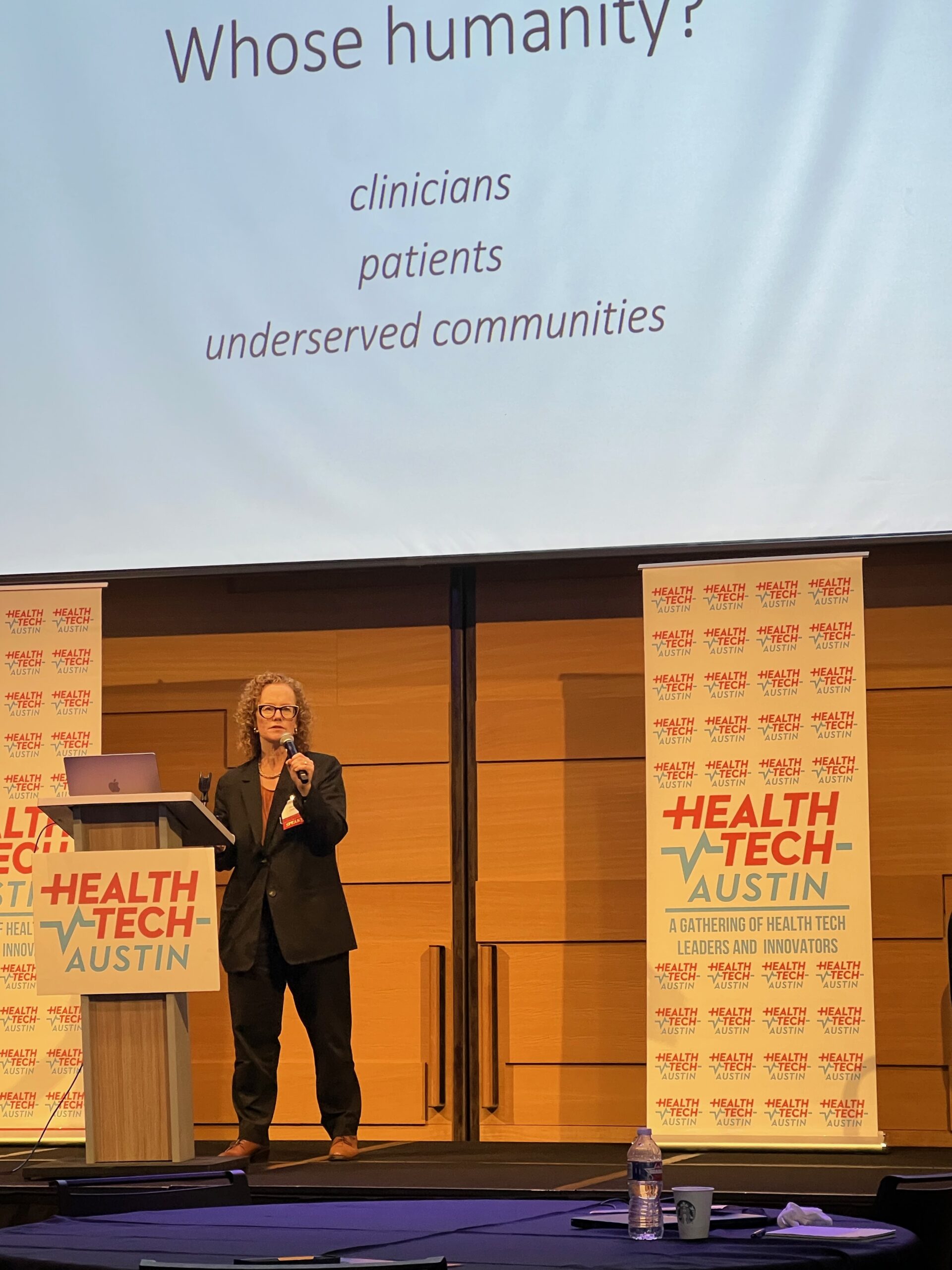
Kirsten Ostherr, professor and founder of Medical Future Labs at Rice University

Health Tech Austin hosted Tuesday’s Future of Health Summit at the downtown Austin Public Library. These are some key takeaways from some of the speakers.

  1. Using Tech for Better Health Outcomes: A National Science Foundation-funded Engineering Research Center called PATHS-UP at Texas A&M University studies biomarkers to detect cardiovascular disease and diabetes. It’s part of a 10-year, $40 million grant from NSF involving scientists, clinicians, and industry. Chris Finberg, Innovation Director at PATHS-UP, is spearheading the effort. They are studying inserting a rice-grain-sized monitor under patients’ skin to monitor glucose and macronutrients continuously. The researchers are holding a digital health workshop, 2024 PATHS-UP, on August 27 and 28th at Rice University.
  2. The Humanity Behind the Technology: Kirsten Ostherr, professor and founder of Medical Future Labs at Rice University, focuses on the humanity behind technological advances in healthcare, focusing on patients, clinicians, and underserved communities. “Because technology alone cannot solve our most pressing social, cultural, and ethical problems in health,” according to Ostherr. For example, people need to start focusing on the root causes of disease and prevention. Every year, $1.1 trillion is spent in the U.S. on healthcare for diet-related diseases, Ostherr said. More focus should be on food as medicine. Ostherr also warned of the risks of unregulated AI in healthcare, including inflated bills, denied claims, inaccurate records, inappropriate care, biases that could exacerbate health disparities, and other concerns.
  3. Show Me the Money: Claire England, investment partner in Austin with GPG Ventures, said a lot of venture capital is available in Texas looking for good deals to invest in. According to its website, the firm typically invests between $100,000 and $1 million in early-stage ventures. Its portfolio of investments includes several medical devices, diagnostic, therapeutic, consumer health, and health IT startups.
  4. The U.S. Healthcare System is a Mess: Charles Silver, professor and endowed chair at UT School of Law at Austin, co-authored a 2018 book, “Overcharged: Why Americans Pay Too Much for Health Care,” and spoke about why Americans are paying more. The U.S. spends twice as much per capita on healthcare compared to other developed countries, according to Silver. He said that Medicare is insolvent and contributes significantly to the U.S. deficit, including $446 Billion in 2023. He noted that healthcare providers’ lack of pricing transparency contributes to the problem. He pointed to the Surgery Center of Oklahoma, which provides transparent pricing for all procedures on its website, and said all hospitals should provide upfront transparent pricing.
  5. SXSW kicks off next week and has tons of healthcare programming: Hugh Forrest, Co-President and Chief Programming Officer of SXSW, gave an overview of the Health & MedTech Track at SXSW 2024, sponsored by Johnson & Johnson. The full schedule can be found here.

Addressing Bias in Healthcare AI: Expert Warns Incorrect Algorithms Could Cost Lives

Incorrect algorithms in healthcare can mean life or death to patients.

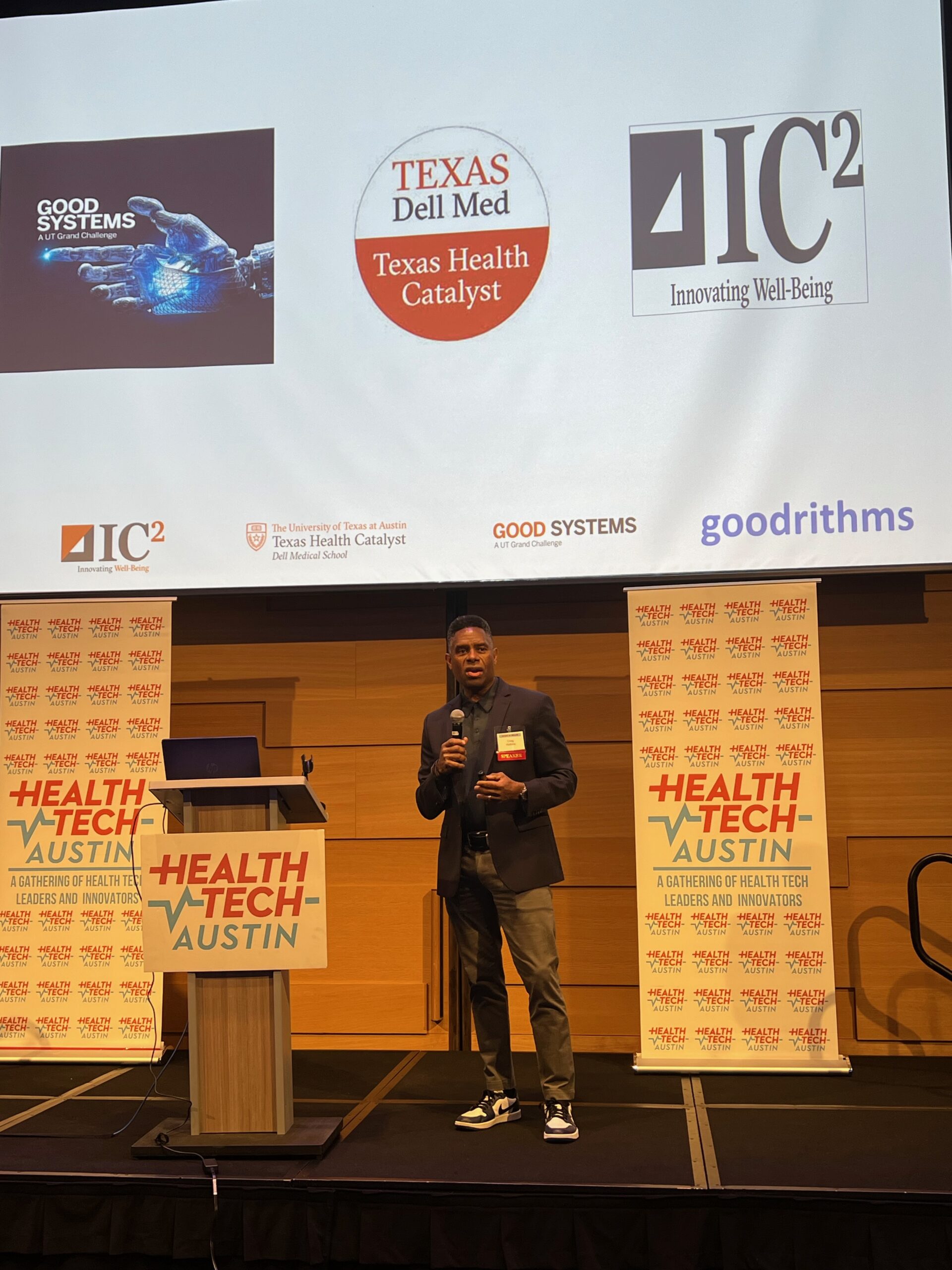
Unfortunately, AI systems designed to help healthcare workers streamline patient care operations might exacerbate biases against people of color, according to Craig Watkins, executive director of IC2 Institute at UT-Austin.

Watkins spoke Tuesday morning at the Future of Health Summit, a half-day conference hosted by Health Tech Austin, at the Austin Public Library’s special events center downtown.

“We need to design systems and AI that are not intended to replace healthcare workers but to augment their work,” Watkins said.

Watkins is one of the principal investigators for UT Austin’s Good Systems Grand Challenge, which examines the social and ethical impacts of artificial intelligence. His research focuses on two core questions: How are bias and systems in inequities expressed in health artificial intelligence? How are researchers designing AI systems to address some of the system factors driving the behavioral health crisis in the U.S.?

Healthcare technology powered by AI needs to work in ways that don’t replicate the bias that exists in society, Watkins said.

Watkins cited a ProPublica investigative series from 2016 that looked at machine bias in software used by law enforcement to target criminals that are biased against Blacks. Watkins also cited a New York Times article that showed false facial recognition software incorrectly matched an eight-month pregnant Black woman to a carjacking.

“Facial recognition has a significantly higher error rate with people of color,” Watkins said.

AI systems are beginning to undermine healthcare, he said

Fixing racial bias in an essential COVID diagnostic tool that measures oxygen in the blood could have helped people of color during the COVID-19 pandemic receive better healthcare, Watkins. He said the diagnostic tool needed to be more accurate when measuring the oxygen level in the blood of people with darker skin.

In another case, Chat GPT-4 was significantly less likely to recommend advanced imaging (CT, MRI, or abdominal ultrasound) for Black patients when compared to their Caucasian counterparts, Watkins said.

And it takes work to correct the bias in existing AI systems, Watkins said. In an experiment using medical X-ray images, Watkins said AI algorithms could detect race even when all markers had been removed.


“Researchers still don’t know how these algorithms can predict race when they remove all markers,” Watkins said. “These models behave in ways we cannot fully understand or comprehend.”

At UT Austin, Watkins and his research team created an AI-powered chatbot to support parents dealing with postpartum depression. His team focused on training a system that could respond in high-stakes situations the way a healthcare provider might respond.

Watkin’s team is also spearheading an effort to design an AI-based chatbot to deal with mental health issues. His team is part of the Texas Health Catalyst program at the Dell Medical School. The focus is to reduce suicide and homicide rates among young people.

“The future of all this is evolving as we convene here today,” Watkins said. “How do you design systems that are inclusive?”

To address the issue further, UT Austin is hosting a conference on April 4 called “Health AI for All.”

Hyve Managed Hosting Opens North American Hub in Austin

Hyve Managed Hosting announced it has opened its North American hub in Austin.

Hyve, based in Brighton, UK, provides infrastructure and management services, including private clouds, dedicated servers, colocation, and security services.

Major brands in the company’s portfolio include Capital, Caffe Nero, RSPCA, Superdrug, and U.S.-based customers such as Orders in Seconds Inc., Virium Technology, and CBHV.  

Stoney Reynolds is heading up the U.S. region for Hyve. Reynolds previously held leadership roles in sales and marketing at companies such as Trend Micro, FutureCom, Nortel, and NEC.

“The cloud has so much potential to accelerate business growth, but organizations lack the in-house knowledge and skillsets needed to get there,” Reynolds said in a news release. “That’s why they’re turning to managed service providers like Hyve. We have a massive opportunity in the U.S. market to empower businesses to innovate through a secure, reliable, and ‘always-on’ infrastructure. I can’t wait to be a part of this exciting new chapter in the company’s story.”  

Hyve’s U.S. expansion follows a substantial period of growth for the company, which has seen revenue grow by 51% over the last three years and its global headcount increase by over 30% in 2023. The company also moved to its new, larger headquarters in Brighton, UK, and was recognized for “Excellence in Service” at the 2023 Storage, Digitalization, and Cloud Awards (SDC).  

“Over the last several years, Hyve has been working hard to refine its best-in-class cloud hosting architecture, which is reflected by our recent successes and industry recognitions,” Charlotte Webb, marketing and operations director of Hyve Managed Hosting, said in a news release. “The U.S. is a key component to our continued growth in 2024, and we are building a strong team in the region to further cement Hyve as a global leader.”  

Hyve Managed Hosting’s U.S. team is located in downtown Austin in one of Industrious’ newly opened premium flexible workspaces, of which Hyve has become a founding member.

Hyve plans to hire additional employees in the U.S. over the next year. It is also exploring additional opportunities for expansion within Europe, and APAC, including Germany and Australia.  

Merit Medicine Raises $2 Million

Austin-based Merit Medicine, a health tech startup, announced it has raised $2 million.

Austin-based LiveOak Ventures led the seed stage investment.

Merit Medicine, founded in 2022, uses AI insights from millions of patients in extensive datasets to generate predictions for each employer.

Ali Panjwani founded the company and serves as CEO. He previously worked at Genentech, BridgeBio Pharma, Coherus Biosciences, and Aetion.

“Large self-funded employers cover over a quarter of the US population today,” Panjwani said in a news release.

And employer contributions to healthcare comprise roughly $600 billion of annual healthcare spending in the United States, Panjwani said. “Using AI insights from millions of patients, Merit Medicine ensures a smoother, more predictable budget for employers’ catastrophic healthcare spend, leading to more people getting affordable access to the care they need when they need it.”

“Stop-loss carriers, responsible for insuring employers against substantial claims arising from these drugs and treatments, handle extensive information to calculate the premiums for employers,” according to a news release. Self-funded employers rely solely on their employee population.

“Self-funded employers are faced with rising healthcare costs and significant financial risk based on the health of their employee base,” Mike Marcantonio, who is leading the investment for Live Oak Ventures, said in a news statement. “Unfortunately, they have very few tools today to evaluate this risk and plan for it.  When I met the Merit Medicine team, I was inspired by their mission to help employers address this risk by using AI to predict high-cost specialty drug usage and rare, chronic, and complex conditions.”

« Older posts Newer posts »

© 2026 SiliconHills

Theme by Anders Noren — Up ↑