
Category: Austin (Page 203 of 318)

Double Line Partners Goes from Zero to $20 Million in Five Years

By LAURA LOREK
Founder of Silicon Hills News
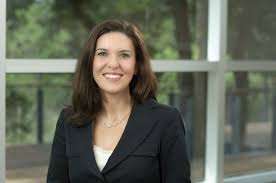
imgres-9Five years ago, Zeynep Young founded Double Line Partners in her dining room and has since grown it to $20 million in revenue with 120 employees.

The Austin-based startup provides data system dashboards and other tools to schools to improve student performance in grades K-12. Before founding the company, Young worked for the Michael & Susan Dell Foundation.

Last week, Young participated in the Dell Women’s Entrepreneur Network conference, a gathering of 200 female entrepreneurs from all over the world who run companies with revenue of more than $3 million. The three-day conference took place at the W Hotel and Austin City Limits.

Telling stories through data to help students and educators is Young’s passion.

Young was one of those students at risk of falling through the cracks when her parents immigrated to the U.S. and moved to Houston when she was in sixth grade.

One day, Young’s teacher called her mom and told her that her daughter would just smile and nod her head when the teacher told her to do something. Her mother told the teacher that Zeynep didn’t speak English. The teacher didn’t know that. That piece of data had not made it to her. Armed with that information, the teacher became one of Young’s biggest supporters.

“At middle school and high school, kids aren’t able to tell you what their problems are,’’ Young said.

Double Line Partners created a dashboard product that brings in a student’s records for attendance, discipline, grades, credits, local benchmarks, state assessments, AP, ACT and SAT scores.

The school districts already collected a tremendous amount of data on students. But Double Line’s system sits on top of all the existing systems and pulls the data together and recasts it in a student centric way that teachers can understand, Young said.

To develop the product, Young said they started off listening to the educators and their needs. Double Line also looked at the metrics that predict student success and then drafted a prototype product. Then they held focus groups nationwide with more than 3,500 educators and asked for feedback.

“We built the dashboard based on that, “ Young said. “The data provides a picture of the kid. It really resonates. It’s about the kid. It’s not about the technology. It is focused on individual kids in individual classrooms.”

Young first saw the need for the product when she worked at the Michael & Susan Dell Foundation.

“We were trying to fund projects just like this to give teachers the power of data right in their classrooms at their fingertips,” Young said. “And every time we tried to make a grant and find a vendor that would help our school districts we just fell short. There weren’t very many people out there that had the right skill set and the mindset.”

It was difficult to find a company that had both cutting edge and innovative technology and a deep and nuanced understanding of the education sector, Young said.

“And finally after a frustrating year of trying to get these projects off the ground I thought surely I can do this faster, better and cheaper,” Young said.

Her background was in starting software companies. She was at McKinsey for eight years. Then she worked at the Michael & Susan Dell Foundation for four years.

“I felt like I had that combination of tech skills and analytical skills with that real understanding of what our grantees and our clients needed,” she said.

She left the Michael & Susan Dell Foundation in 2009 and started bootstrapping her new venture.

“We decided to forgo raising capital in favor of working directly with our clients on Beta projects and self-funding the development of the systems through consulting engagements,” Young said.

The company started with a collaboration with the Texas Education Agency and the Dell family foundation to create a statewide system that would allow any school district to load up their data and power their dashboards for teachers on a voluntary basis and for free.

Double Line started at the state level because Texas has 1,200 independent school districts and 85 percent of them have less than 5,000 students, Young said.

“Our vision was to do this at the state level, create it once and allow districts to opt into the system for free,” she said.

Young named the company Double Line for its focus on profits and social good.

“What drove me, and I think what drove the success of the business, was the focus on the second bottom line – it has to drive value – social value to the sector,” she said. “It has to improve teachers’ lives and it has to improve students’ success. It has to make an impact at the end of the day. One of the things I wanted to protect was the focus on the second bottom line.”

That’s one reason the company didn’t raise venture capital, Young said.

“When you take capital the focus is on maximizing revenue,” she said.

Focusing on social good has paid off for Double Line.

“The other thing I’m really proud of is the culture that we’ve created in our company,” Young said.

The company’s culture drives success, she said. The first part is “amaze yourself.”

“I never started the company so we could fulfill our contractual obligations or even meet or exceed our customers expectations,” Young said. “I wanted to hire the smartest, most passionate people and at the end of the day have them step back and go wow I cannot believe we pulled this off.”

The next part of its culture is to assume goodness and lastly, people are expected to pick up the ball.

“Working at Double Line partners is an active, not passive job,” Young said. “We expect everyone to be a leader.”

In the future, Double Line sees more growth from existing and new customers and it plans to expand internationally.


Beyond Technology, the Michael & Susan Dell Foundation Focuses on Helping Children Worldwide

By LAURA LOREK
Founder of Silicon Hills News

Alex Witt, anchor with MSNBC interviewing Susan and Michael Dell at the Dell Women's Entrepreneur Network. Photo courtesy of Dell.

Alex Witt, anchor with MSNBC interviewing Susan and Michael Dell at the Dell Women’s Entrepreneur Network. Photo courtesy of Dell.

A lot of people in Austin and beyond know the story about how Michael Dell started his computer company at the age of 19 in a dorm room at the University of Texas with $1,000.

He grew the company into a multi-billion dollar international computer maker and he has recently taken it private and reinvented its focus on software, services, cloud computing and computers.

But last week 200 female CEOs from all over the world attended the Dell Women’s Entrepreneur Network conference in Austin and they got to hear about another part of Dell’s success.

Michael and Susan Dell participated in an afternoon fireside chat with Alex Witt, an anchor with MSNBC. She interviewed them about the impact of their private family foundation, which they started in 1999 with $277 million. It expanded to more than $1 billion in assets. And the foundation has given away close to $1 billion since its inception.

The Michael & Susan Dell Foundation focuses on urban education, childhood health and family economic stability. The foundation expanded its grants and programs to India in 2006 and Africa in 2010.

Helping Families in Urban Food Deserts

Susan Dell mentioned how difficult it can be for moms in urban settings in the U.S. to find fresh fruit and vegetables for their kids. She called them urban food deserts. She recounted a story about one mom who rode a bus two hours to get to a farmer’s market to buy fresh produce for her family. The mom convinced the farmers to set up a market at her children’s school, Dell said.

“These stories are important to share,” she said.

They illustrate how people can make a difference. She also said her foundation published a series of Be Well books aimed at moms with little resources in urban areas to help them lead healthier lifestyles. The books feature stories of moms who are creatively finding ways to fight childhood obesity in their homes and communities.

“It’s not that they don’t want healthy foods, it’s that it’s not available,” she said.

“If you’re a person who is living in an urban setting you find yourself with not as many options and you’ve got to get creative,” Susan Dell said.

Some of the moms took back a park and did neighborhood patrols to make sure it was safe for their kids to exercise and play, Dell said.

Michael and Susan Dell, photo courtesy of their family foundation.

Michael and Susan Dell, photo courtesy of their family foundation.

Susan and Michael Dell are the parents of four children and they know the challenges parents face in limiting screen time for their children and getting their kids to eat right and exercise.

“We limit screen time in our household,” Susan Dell said.

Other simple changes like not buying sugary drinks or junk food, putting out fresh fruits and vegetables as snacks, broiling and steaming foods, instead of frying, can make a huge difference, Dell said.

The Michael & Susan Dell Foundation Focus on Education

Witt asked Michael Dell how the foundation chooses the programs it wants to work on in the education area.

“We worked with individual schools, districts and the state level,” Michael Dell said.

But in running the foundation, he found there was very little data available to assess the effectiveness of programs. And the data varied vastly from school to school so there was no way to compare the data. So the foundation created Ed-Fi Alliance in 2012, a nonprofit startup focused on data collection in schools. And now it’s in half of the nation’s school districts.

“The foundation had a baby and it’s called the Ed-Fi Alliance,” he said.

The goal was to give teachers more information and enable better outcomes for students.

Dell has also established the Dell Scholars program nationwide. It has helped 2,500 Dell Scholars from underprivileged backgrounds. They have an 85 percent college graduation rate, compared to a 20 percent average for kids in the same socio-economic circumstances, Susan Dell said.

The key to the success is Dell also provides wraparound services to support the students, which includes everything from money for incidental expenses like clothes and laundry.

“These students are coming from very challenging backgrounds,” she said. “They have the ability to study hard and do well but they don’t have what it takes to get beyond these obstacles.”

Susan Dell about the success of one young woman, a Dell Scholar, who came from a family of six with an annual income of $21,500. The woman graduated from UT, went to Teach for America and then got a job with Goldman Sachs.

She recently quit because she’s going to graduate school at Harvard.

“Every once in awhile we can put a face to what we’re doing,” Susan Dell said.

The key to funding successful programs is to ask a lot of questions and get to the root cause of the problem and to have an understanding about what the problem is, Susan Dell said.

imgres-8And sometimes programs simply don’t work out. The Michael & Susan Dell Foundation recently published a website: LessonsEarned.org to share their successes and failures with others in hopes they can learn from them.

When Michael Dell invests in a country, he looks for an opportunity for progress and a stable and progressive government.

“If they don’t want to change, it’s pretty hard to convince them to change,” he said. “We also start with a baseline of data. What’s going on here and what’s the opportunity? What kind of progress can occur?”

The work requires patience and perseverance, Michael Dell said.

“You have to operate in a local context – understand the local rules, customs and the motivations of the individuals involved you are trying to impact in some way,” he said. “If we are not welcome there, we tend to go somewhere else.”

Government involvement is key to a program working in any country, he said.

“It’s important to recognize that governments have fairly enormous resources – far more than private foundations,” Michael Dell said. “And so one of the things private foundations can do is catalyze the spending or the activity of the government in a constructive way.”

The key to the success of the Michael & Susan Dell Foundation is its focus on children, Susan Dell said.

“You cannot do everything, but if you focus then you can make an impact with your work,” she said. “If you want to think about how you can change the world for the better, for us, we think that starting with the world’s children is a good place.”

Postmates Launches in Austin and Wants to be the Fedex of Home Delivery

By LAURA LOREK
Founder of Silicon Hills News

Bastian Lehmann, CEO of Postmates, which is launching in Austin, photo courtesy of Postmates

Bastian Lehmann, CEO of Postmates, which is launching in Austin, photo courtesy of Postmates

The self-proclaimed “Uber” of on demand delivery, Postmates, has launched in Austin.

The San Francisco-based company wants to be the “FedEx” of home delivery, said Bastian Lehmann, CEO of Postmates.

Postmates chose Austin for its expansion because of high demand and a hungry consumer base wanting more delivery options, Lehmann said.

‘Austin was requested heavily,” Lehmann said. “It’s a city that has a large tech community.”

And that fits with Postmates customer profile. It provides delivery from any restaurant or store including prescriptions, groceries, dry cleaning, electronics, cosmetics, etc. around the clock and in less than an hour.

On demand delivery service sounds a lot like Kozmo, a New York-based delivery service, which raised $250 million during the dot com boom to deliver everything from videos and groceries to coffee and ice cream to homes and offices. Kozmo went out of business in 2001.

But Postmates is different, Lehmann said.

“We don’t have any inventory or delivery vans,” he said.

Logo-PostmatesThe company is like Uber or Lyft and relies on individuals and their cars and bikes to pick up goods and delivery them to their customers. It has a network of 3,000 individual delivery couriers, called Postmates, in the six cities in which it operates. It’s the largest fleet behind Uber and Lyft, Lehmann said. The company currently makes more than 15,000 deliveries weekly nationwide.

Postmates has raised $23 million in venture capital and has 56 employees. It plans to hire between two to five full time employees in Austin.

Postmates officially launched today in Austin and it’s offering a promotion including free delivery through June 15th and free mini-pies from Sugar Mama’s Bakeshop on Thursday and Friday.

The Postmates “app, available for iOS and Android, allows users to browse an inventory of thousands of restaurants and stores in their city, add items instantly, watch their rated “Postmate” (either a driver or bike messenger) moving on the map, and track their order status in real time. Deliveries start at $5 and users pay for everything within the app — including tip — so you never have to run out and get cash,” according to the company.

Postmates currently operates in San Francisco, Seattle, New York, Washington, D.C., Chicago and Los Angeles. The company has driven more than $12 million in revenue to local businesses and paid more than $5 million to its couriers.

Photo courtesy of Postmates

Photo courtesy of Postmates

Austin’s delivery zone for Postmates includes downtown, South Congress, Zilker, Tarrytown, Rosedale, UT Campus, West Campus, part of Barton Hills, Rollingwood, West Lake Hills and most of South and East Austin. And it expects to expand even further shortly after its launch.

The on-demand delivery market is becoming a crowded one in Austin. Already, Burpy, a homegrown Longhorn startup company, offers grocery delivery. Favor, which relocated from California a few years ago, offers restaurant delivery. And Instacart, based in San Francisco, launched in Austin last month.

But the competition doesn’t worry Lehmann.

“Our competitors launched after us,” he said. “We are the leader in this space.”

And the idea is not worth anything, Lehmann said.

“The only thing that matters is the execution,” he said.

It’s Tough to Sell Your Tech Acumen in the Midst of a Military Junta

By SUSAN LAHEY
Reporter with Silicon Hills News

Susan Lahey, far left at Tiger Kingdom in Thailand, Photo courtesy of Anawat Chullasewok

Susan Lahey, far left at Tiger Kingdom in Thailand, Photo courtesy of Anawat Chullasewok

The Thai Board of Investment first invited a group of tech journalists to visit in February. But things were a little iffy, politically, so they held off. And we went, instead, for the two-week period before the prime minister was ousted and shortly before a military junta took over the country. Timing is everything.

Thailand is known for a lot of things: medical tourism, friendliness, elephants, tigers, beaches, sticky rice, automobile manufacture, sex change operations…. But they’ve never been known as a hub for tech, software and animation and they’re determined to become so.

They invited a group of tech journalists to spread the word—bring us your tech companies and investors. We can offer you three engineers for the price of one and a host of tax incentives. Plus entrée into the ASEAN market, a group of 10 Southeast Asian countries with a population of nearly 600 million people that in 2015 will become one unified market—like the European Economic Community.

As serial entrepreneur and Capital Factory mentor Fred Schmidt is fond of pointing out, these days almost any company can tap the global market. Why restrict yourself to the U.S. when some companies find a bigger, more enthusiastic market base overseas? Case in point, 7-Eleven. The company tanked in the U.S. but there’s one on every corner in Thailand. Plus, for any company that relies on social media, Thais are among the world’s biggest users. Facebook has 104 percent penetration in Bangkok—the largest of any city in the world.

So for five days, Supisara Chomparn and Anawat Chullasewok of the BOI wined and dined us, took us to see tigers, elephants and Buddhist temples and introduced us to Thailand Software Park and other incubators, members of the BOI, and companies that create enterprise software, robots and animated feature films. Two of the founders were expats from the U.S. and Canada who—like many Austin transplants—came for a visit and fell in love with the place.

The trouble is, while Thailand—which has had plenty of military juntas since the end of the absolute monarchy—treats the whole thing like a political “time out” from a frustrated parent, Westerners get pretty wigged about things like military juntas. So it’s hard to see that, really, there is a lot of opportunity.

The Labor Force

Thailand’s universities churn out 6,000 engineers every year, but many never take engineering jobs. As in the U.S., engineers are looking for stable jobs working on interesting problems. And many of the engineering jobs are in automobile manufacturing and similar industries present few creative challenges, particularly since Agile methodology hasn’t caught on with many Thai manufacturers yet. With a national unemployment rate of .7 percent, engineers and other techies can afford to be picky.

“They just don’t want to work in a factory,” said Apinetr Unakul, president of the Thai Embedded Systems Association (TESA) and a professor of engineering. “They prefer something in electronics and telecommunications.” Some employers, like Reuters in Bangkok which derives the bulk of its revenues from software development, has little trouble hiring and retaining qualified people because it has created the kind of culture contemporary Thai techies are looking for and can’t always find in traditional companies: a non-hierarchical employment structure, an office in the center of Bangkok, interesting problems to work on and community building activities.

But Thailand’s engineering graduates can prove challenging to employers. Many students graduate with little or no real-world experience and require an immense amount of training at the outset, a problem that—to be fair—is hardly restricted to Thailand. The U.S. deals with it, too.

“There’s so much demand for engineers, this country probably has eight-to-10 positions for every qualified engineer,” said Steven Prussky, founder of Aware, a consulting and developer of custom software and IT solutions in Chiang Mai. Prussky is getting ready to launch Aware Academy, which will be a finishing school for engineers and computer science graduates.

While many of the people he takes on as interns and employees are skilled engineers, designers or project managers, he said, “They have no business sense at all. “ In Chiang Mai, which is a hotbed of creativity, it is easy to find talented designers who know nothing about what intellectual property is, what an invoice is and who have never taken a single accounting course, he said.

Several organizations are working to combat that problem. Soft Square Group, which works with universities in Bangkok as well as Thailand’s northern provinces, offers internships and training not only in hard skills like programming, but also in soft skills like dealing with customers, managing your boss and change management. The organization hires developers then, after they’ve had sufficient training, incubates and spins off their own startups with an equity stake. Software Park Thailand incubates startups and works on “maturing people.” Chiang Mai University in Northern Thailand has begun requiring tech graduates to take business courses. It also works with area software and animation companies to create internships and offer opportunities for students to work abroad.

The other challenge is possibly connected with Thailand’s culture which tends to reward deferential rather than aggressive behavior. According to John Douglas, founder of Mycos Technologies, that means fewer techies will self-train in various skills such as programming languages. On the other hand, Douglas said, “The younger generation knows that that independent way of thinking is okay,” he said. Partly with his encouragement, his team is more willing to take the lead in innovation. “They’ll say ‘Why aren’t we using SignalR communications framework for sending messaging across different platforms? We’ve got to be on Java 2.8….’”

But while they may be less aggressive than developers in his home town of Denver, they’re consistent.

“Burnout really doesn’t exist here,” Douglas said. “In the west coast there’s this philosophy that you generate huge amounts of enthusiasm early on—‘We’re crazy, we’re going to take over the planet with our app.’ The sustainability, from my view point, is not so good. In Thailand, things get done. Nobody’s jumping up and down but they come in every morning and do their job and they come back and do their job.”

Thailand’s Political Troubles

Over the decades, Thailand has continually rebounded from one disaster after another to be named a success story by the World Bank. In 2012, after a flood devastated the country the year before, Thailand’s GDP was around six and a half percent, after growing steadily for 30 years. But its current battle over control of the government seems to be tanking its economy, whose GDP is now closer to two percent. Resolution over the issue has caused many investors to be cautious about putting money into the country.

In March, Moody’s Investor’s Services gave the country high marks, saying that the country’s rating was still high given “prudent monetary, macroeconomic and debt management, sustained external strength despite erosion of the post-Asian financial crisis current account surplus, a relatively strong growth outlook and an overall healthy banking system.” But it warned that if the country’s political issues aren’t straightened out by the second half of 2014 with a new election, the rating could drop. That’s right about now.

The Land of Smiles

I’m not an investor or even a startup. But I wound up thinking several times: I could live here. The weather is awesome by Texas standards. The jungles are beautiful. The fruit is twice as flavorful and a fourth the price. You can get an hour long massage for $5 and a nice two-bedroom apartment for around $250 a month. And the people are just…so….nice. Coming from Austin, that’s a big statement.

In all our high level meetings, government representatives and industry leaders were honest and self effacing about the places where the country is behind. And there was always a lot of laughter.

While some companies have dealt with bribery, the U.S. and Canadian entrepreneurs we talked to hadn’t experienced that. The BOI tries to make it easy for companies in sectors it’s interested in—like software. Qualified companies get corporate income tax exemption for three to eight years, double deduction on public utilities costs, and exemption or reduction of import duties on raw materials and machinery. The BOI office also helps handle visas and other immigration issues with an on-site immigration office.

But one of the easiest ways to get into Thailand, representatives said, was building partnerships with companies that are already there. In the U.S., you might be able to take a vague idea to an engineer and he or she will help you iterate. That’s not so much the case in Thailand where people are used to more direction.

But “Partnering is easy,” Douglas said. “Just call me.”

You might want to wait until the military junta’s over. Or not.

Thailand Stats

• Thailand ranks 18 in a World Bank list of easiest places to do business in and 91 in a list of easiest places to start a business. Though, if filtered for East Asia it ranks 5th and 11th.

• It takes 156 days, on average, to get a business up and running in Thailand, as compared to Singapore, where it takes 26.

• Thailand is outranked by Malaysia, Korea and Singapore in some categories but beats them when it comes to construction permits, registering property and some other measures.

• Thailand ranks first in the HSBC Expat Survey for best places to live as an expatriate, compared to Singapore which ranks sixth.

• The cost of living in Thailand is roughly half that of the cost of living in Singapore.

• According to JobStreet, monthly salary ranges for software engineers in Singapore range from $2,500 to $4,800 whereas the range in Thailand, sources said, is $500 to $5,000.

Editor’s note: Susan Lahey’s trip was sponsored and paid for by the Thailand Board of Investment (BOI), Thailand’s national economic development agency,

Panel at Dell Conference Advises Companies to Use Big Data Wisely

By LAURA LOREK
Founder of Silicon Hills News

BpLpenrCEAA-OkuThe big takeaway from a panel discussion on big data at the Dell Women’s Entrepreneur Network conference is to use data and analytics responsibly.

“Use data smartly,” said Matt Wolken, vice president and general manager of information management at Dell Software.

Wolken referenced a story in which Target mined its customer data and then sent coupons aimed at pregnant women to a teenager. The marketing outraged her father who complained. It turns out his daughter was pregnant but he shouldn’t have had to find out about that from Target, Wolken said. Companies need to understand how the data they gather impacts their customers, he said.

He spoke on a panel discussion on big data Monday morning at the Dell Women’s Entrepreneur Network conference at Austin City Limits.

“The bottom line is you have to have a discussion about how you are using your customers data,” said Connie Guglielmo, editor and chief of CNET and the panel’s moderator.

Data used for marketing purposes can narrow a person’s field of vision, said Nuala O’Connor, president and CEO of the Center for Democracy & Technology.

She recounted a story about how her six-year-old daughter turned on her e-reader and received books about Barbie.

“We want to see an Internet that is broadening our vision,” O’Connor said.

People need to be concerned and aware of the decisions that are being made about us from data, O’Connor said.

Having a growing and learning algorithm is a good thing, O’Connor said. Amazon does a good job of providing a feedback loop so customers can refine the products being pitched to them, she said.

Data can be a powerful tool, especially in the classroom setting, said Zeynep Young, Founder and CEO of Double Line Partners, which builds big data systems for teachers and schools to improve student performance.

Data is critical for educators to connect with students, she said.

“In the data there were stories you didn’t get to hear even though you are interacting with people face to face,” Young said.

“The data has its own story,” she said.

For example, one teacher noticed that a student was absent every Tuesday afternoon and she wanted to know what was going on. The student burst into tears and said he never knew he would be important enough that someone would notice when he wasn’t present. The kid faced a lot of hardships outside of school and the teacher was able to connect with him and help him.

The story hit home for Young. She was one of those students at risk of falling through the cracks in junior high school. She didn’t speak English as a sixth grader. Her parents moved from Turkey to Texas. Her mother told her to sit in the back of the classroom and if someone spoke to her to just be pleasant and smile. Her teacher called her mom and complained about Zeynep’s behavior in school. She said Zeynep not only didn’t participate but when she scolded her, Zeynep would just smile. The teacher didn’t know that Zeynep didn’t understand English. That data had not gotten to her. That’s a case where personal interactions didn’t tell the full story, Young said.

Kym Houden, executive chairman and founder of Task Retail Technology, says his customers are getting business intelligence information they never had before by mining data.

“You’ve got to think of big data as the biggest opportunity you can possible think of “ said Wolken with Dell. It can empower decisions about your company and customers, he said.

And look at what your competitors are doing, Wolken said. Think about how they are using data, he said.

“Big data is little data about people,” said O’Connor. Think about the real world consequences of using data, she said.

“Just be mindful,” she said.

Dell Sponsored Study Reveals Barriers Facing Female Entrepreneurs

By LAURA LOREK
Founder of Silicon Hills News

Panel of the Gender-GEDI study, sponsored by Dell, at the Dell Women's Entrepreneur Network conference in Austin, photos by Laura Lorek.

Panel on the Gender-GEDI study, sponsored by Dell, at the Dell Women’s Entrepreneur Network conference in Austin, photos by Laura Lorek.

Men and women do not have equal opportunity when it comes to launching a business today.

In fact, 75 percent of 30 countries surveyed for the second annual Gender Global Entrepreneurship and Development Index, commissioned by Dell, do not meet the basic needs for female entrepreneurs to launch a business.

“If there is a single message it’s that it’s not just a personal choice,” said Ruta Aidis, project director for the Gender-GEDI study. “There are conditions that prevent women from founding high growth businesses.”

Those conditions include lack of access to basic financial resources like a bank account, lack of access to education, technology, networks and the lack of equal legal rights for women, she said.

“It’s not acceptable,” Aidis said. “These are impediments to high performance female entrepreneurship.”

Aidis spoke during a lunchtime media presentation at the Dell Women’s Entrepreneurship Network conference being held at Austin City Limits and the W Hotel in Austin. The invitation-only global conference, which kicked off Sunday and concludes Tuesday, brings together top women business owners to discuss their most pressing business issues and to talk about technology solutions.

This is the fifth year Dell has hosted the conference. Last, year it was held in Istanbul and previously in New Delhi, Rio de Janeiro and Shanghai. The female business owners in attendance run fast-growth mid-market companies with more than 50 employees and revenues of $3 million or more. They come from 14 countries including Australia, Brazil, Canada, China, France, Germany, Japan, India, Mexico, Peru, South Africa, Turkey, U.K. and the U.S.

It’s the second time Dell has collected data on female entrepreneurs around the world. Last year, the Gender-GEDI study examined 17 countries and this year, the study expanded to examine female entrepreneurship trends in 30 countries.

The goal of the study is to help country leaders, policymakers and law-makers help women entrepreneurs succeed by providing them with basic tools, help and resources, said Karen Quintos, senior vice president and chief marketing officer at Dell.

Accountability at all levels of a country is needed, Quintos said. Supporting entrepreneurship for women makes economic sense and can help a country financially, she said.

“If a woman can earn an income, 90 percent of what she earns she can plow back into the community,” she said.

Creating an awareness of the plight of female entrepreneurs worldwide helps lead to change, she said.

For the second year in a row, the U.S. topped the list of most favorable conditions for high-growth potential female entrepreneurs followed by Australia. Other top countries included Sweden, France, Germany, Chile, the United Kingdom and Poland.

“The remaining 23 of the 30 countries studied received an overall index score of less than 50 out of 100, indicating that many of the fundamental conditions for high potential female entrepreneurship development are generally lacking in the majority of countries,” according to the study.

One of the best ways to support female entrepreneurs is to tell their stories, said Ingrid Vanderveldt, former Entrepreneur in Residence at Dell.

A lot of women lack self-confidence to launch a business, she said. Providing examples of women who have done it can help others, she said.

BpJVKK-CcAACUh2Dell is putting the spotlight on successful female entrepreneurs at this conference. It also highlights ten successful female entrepreneurs and tells the story of how they overcame obstacles in the Dell commissioned the free e-book “Forget the Glass Ceiling: Build Your Business Without One.”

They study also revealed 14 of the 30 countries do not provide female entrepreneurs with access to financing like bank loans, credit lines, etc. And worldwide women receive a tiny share of venture capital.

The study also found many industries remain male dominated, particularly in the science, technology, engineering and math industries, known as the STEM fields.

It also revealed female startup activity is on the rise in emerging markets.

“Despite being ranked as top performers and characterized by overall favorable business environments, opportunity perception is fairly low in the United States and Europe with less than one third of the female population measured identifying business opportunities,” according to the study. “In Africa, this number reaches 69 percent.”

San Antonio and Austin Plan to Change the World Through Civic Hacking

logo-1For many people, this weekend will be a time to relax and kick back and enjoy the beginning of summer.
But not for a group of dedicated citizens in San Antonio and Austin. They will be hacking away for free to make the world a better place for everyone.
Saturday is the National Day of Civic Hacking.
San Antonio and Austin are two of 79 cities and 98 civic hacking events taking place from May 31st to June 1st, according to Government Technology.
San Antonio’s Civic Day of Hacking takes place at Geekdom’s Rand building starting at 10 a.m. and runs through 5 p.m.
“This year, openSATX and Geekdom have partnered with CODE for AMERICA to host Cafe Commerce, an entrepreneurial incubator launched by ACCÍON and the Office if the Mayor last month,” according to a news release. “Using city data, we hope to build real-time applications that will ignite local business.”
This will be the second time Austin has held a National Day of Civic Hacking. Its program, ATX Hack for Change, will be held at St. Edwards University. It kicks off Saturday at 5:30 p.m. and it is sold out. A demonstration of the projects developed during the event will be held Sunday night.

Box Opens Austin Office and Plans to Create 200 Jobs

logoBox announced Friday morning it has selected Austin to expand its operations.
The Austin office will be the company’s first U.S. location outside of the Bay Area. The company spent more than a year on its site selection process.
The office will be located at One American Center and it will include workers in a wide variety of areas including customer service, finance, technical operations and other functions. The office is a 20,800 square foot.
Box plans to hire up to 90 workers by the end of this year and plans to eventually hire more than 200. Box plans to hold a recruiting event on June 4th at Easy Tiger.
“Today we have more than 25 million users globally and in addition to Austin, we’ve opened up offices in San Francisco, London, and Japan in the last two years,” according to a Box blog post.
Box, an online file sharing and cloud content management company, is based in Los Altos, Calif. The company has raised $414 million since its founding in 2005, according to Crunchbase.

Lyft Launches in Austin Without City Approval

images-3Despite restrictions, Lyft, the ride sharing company known for its cars emblazoned with giant pink mustaches, launched Thursday in Austin.
“The Austin community’s overwhelming calls for more transportation options have been heard,” according to Lyft’s blog post. “After a petition started by ATX Safer Streets garnered nearly 4,000 organic signatures from Austin residents – many of whom left comments explaining their need for Lyft and other ridesharing services – Lyft will now be providing friendly, reliable, and affordable rides throughout the Heart of Texas beginning tonight at 7 p.m.”
Lyft provides its ride-sharing service through a free app on an iPhone or Android smartphone. Customers download the app and then they can schedule a ride by inputting the time and place. For the first two weeks, Lyft is offering free rides to customers in Austin.
Lyft is known as a peer-to-peer ride sharing program which means its drivers use their own cars to provide rides to others. The drivers do have to pass a background check, according to Lyft.
“With Lyft, passengers are connected via smartphone to background-checked community drivers – which include a food truck owner and middle school social worker in Austin – all easily recognized by the furry pink mustaches on the front of their cars,” said Katy Dally, spokeswoman for Lyft.
The company is holding a kick off party to celebrate its Austin launch Friday evening at Bungalow on Rainey Street.
While Austin’s City Council formed a task force to study the issue of ridesharing at its recent meeting, the council did not approve the practice. And the city’s transportation department has issued a statement warning Lyft that its drivers could receive citations and have their vehicles could be impounded if they are found in violation of current laws.
“Lyft is not operating illegally in Austin nor San Antonio, as taxi and chauffeur laws in those cities do not apply to Lyft,” Dally wrote in a statement. “In Austin, the city’s passing of a resolution to create a new regulatory structure for TNCs demonstrates that the current structure does not account for emerging and unique business models. We are committed to staying at the table and continuing to work with the City, as we have in jurisdictions across the country.”
Austin is Lyft’s fifth city in Texas. The two year old San Francisco-based company launched in San Antonio in late March but it met with opposition from the city’s taxi cab industry and city officials. Uber also launched in San Antonio in late March and it also met with opposition.
San Antonio’s Police Chief William McManus warned Lyft and Uber drivers against providing rides for pay or else they would be cited for violating the city’s vehicle for hire law and their vehicles might be impounded.
The City of San Antonio formed a transportation study and has held hearings on the ride sharing services. Meanwhile, Lyft and Uber continue to operate and they have begun charging people for rides.
In Austin, Lyft created a Youtube video explaining why it chose the city and also outlining the need for its service including issues such as traffic congestion and drunk driving.
Yellow Cab Austin President Ed Kargbo released a statement regarding Lyft’s launch calling it an “illegal operation” with a “complete lack of respect for the City of Austin.”
“We strongly advise everyone to ask for proof of commercial insurance before using any illegal service,” Kargbo said in a news release. “While they choose to sidestep the rules, we’ll honor a commitment to addressing our city’s challenges through legal transportation options that prioritize the safety of both riders and drivers, including innovations like the Hail A Cab app. We will also continue to respect the process set forth by the Austin City Council — one that is in place for the protection of our residents and visitors.”
Lyft’s service is not illegal, Dally said.
“Despite what Yellow Cab representatives might say, Lyft does protect all passengers and drivers with commercial insurance,” she wrote in a statement. “In fact, Lyft offers three times the insurance coverage as an Austin taxi, and also has more strict background check and DMV driving record check requirements.”

Yan Engines Closes on $2 million in Funding

YanEnginesSplash1Yan Engines, a recent graduate of the Austin Technology Incubator, has closed on $2 million in funding.
The company has also developed a fuel efficient car engine and landed a contract to create a truck engine for the U.S. military.
Yan Engines recently graduated from ATI’s Clean Energy Incubator. The company also works closely with Prof. Ronald Matthews from UT’s Engines Research Laboratory in the Mechanical Engineering Department.
“At ATI, we look for major market disruptors, and Yan Engines fit that criterion and then some,” Mitch Jacobson, co-director, ATI Clean Energy Incubator, said in a news release. “By proving out that they could make a standard commercial engine 80% more fuel efficient, the future technology applications are literally endless. We are excited to continue to support Yan in its efforts to improve fuel efficiency of military fleets, shipping, power generation, and infinite other potentials.”
In 2008, Yan Engines completed a Honda engine prototype, which was built in Taiwan. But in the fall of 2011, the company moved to Austin and joine ATI.
To date, Yan Engines has raised $4 million through investors and contracts. Its latest investment came from New Energy Holdings, a private equity firm.

« Older posts Newer posts »

© 2026 SiliconHills

Theme by Anders NorenUp ↑