Category: Austin (Page 195 of 318)

Ten Startups to Watch in Austin and San Antonio

orb of fireThe criteria for being a hot startup in Central Texas is the founders need to disrupt an existing industry and create something compelling enough that people want to open up their wallets and buy their product.
The following ten startups in Austin and San Antonio fit that bill.

In Austin

Makexyz – a 3-D printing marketplace that links people who need something made with 3-D printers to people who have 3-D printers in their neighborhoods. Received an undisclosed amount in an investment from Intel Ventures this year.

The Daily Dot – Aims to be the newspaper of the Internet. The startup media publication launched in 2011 with a $600,000 angel investment and has grown steadily. Earlier this year, the Daily Dot acquired The Kernel, a U.K.-based online publication covering the culture of the Internet.

Silvercar – Founded in 2013, this startup created an App that lets business travellers rent a car – an Audi 4 – without any hassle at the airport. The company has raised $31 million since launch. The service is available in Austin, Dallas, Los Angeles, Miami, Phoenix and Denver.

Clarify – has created an API media search platform. Its technology allows people to search through video and audio files easily using keywords. The startup is backed by Projector Capital and angel investment. It was formerly named OP3NVoice , an alumnus of the Techstars London program, Fintech Innovation lab and the BBC Media Lab.

TrustRadius – Founded in 2012, the startup has raised $5 million and has created a platform for software users to review business software products. TrustRadius is used by 100,000 software buyers each month to make more informed decisions. Its directory includes more than 6000 in-depth reviews across 1,635 software products.”‘

In San Antonio

Storific – the company, originally founded in Paris in 2009, has relocated to San Antonio and is based at Geekdom, the downtown coworking and tech incubator. Its app, which is available for download on both iPhone and Android devices, lets people order and pay for food and drinks on their mobile phone.

Codeup – Founded in 2012, Codeup, based at Geekdom, offers 12-week boot camps to teach technical skills to people. It also offers free teen workshops. The startup, founded by Michael Girdley, Chris Turner and Jason Straughan, won the 2014 InnoTech Beta Summit.

WellAware.us – This startup provides a remote monitoring and production management platform for the oilfield. It recently raised $37 million in funding from Billionaire Carlos Slim, Ed Whitacre Jr., former CEO of AT&T and Former Vice President Dick Cheney.

TrueAbility – A cloud-based technical assessment tool for Linux professionals. It’s also a job board for technical positions. The startup, founded in 2012 and based at Geekdom, participated in the Techstars Cloud program and has attracted more than $2 million in venture capital.

Soloshot – This startup, founded in 2012, has created a self-tracking robotic camera on a tripod that allows people to film themselves surfing, skateboarding, skiing, motor biking and more. Soloshot won the InnoTech Beta Summit in 2013. The company has 15 employees and its products are available in more than 200 stores.

Pristine Lands $5.4 Million in Venture Capital

gI_59136_Glass with tools scaledPristine, a startup developing healthcare apps for Google Glass, has raised $5.4 million.

Austin-based S3 Ventures led the round, which also included Capital Factory, HealthFundr and several clients. The company plans to use the money to expand its research and development, sales, marketing and operations teams.

“The team at S3 has pioneered cutting-edge developments in medical devices, enterprise health IT solutions, and more,” Kyle Samani, cofounder and CEO of Pristine, said in a news release. “With our rapid growth, we are thrilled to have partners with a strong track record of guiding early stage companies to success.”

Pristine’s first product, EyeSight is a video platform for Google Glass that complies with government healthcare regulations for privacy. The company has since branched out with the application into the pharmaceutical, medical device and manufacturing industries with applications for support and training.

“Wearable technologies like Google Glass are revolutionizing how healthcare is delivered, and the Pristine platform is the market leader,” Brian R. Smith, Managing Director at S3 Ventures, said in a news release. “Current customers are raving about the product, and we are excited to partner with Pristine to continue innovating in healthcare, as well as remote support applications in other industries.”

“We have deployed EyeSight in ERs, ORs, ICUs, ambulances, and even patients’ homes,” Samani said. “We understand that security is paramount. There is a lot of misinformation about Glass and privacy out in the wild; we have gone the extra mile to guarantee security and control for our clients. Our utmost focus on security will fuel our growth as we scale our wearable communication technology throughout healthcare and across other industries.”

Drink Up! It’s International Coffee Day

iStock_000017583538Medium

“We want to do a lot of stuff; we’re not in great shape. We didn’t get a good night’s sleep. We’re a little depressed. Coffee solves all these problems in one delightful little cup.” – Jerry Seinfeld

Today is International Coffee Day.

What does that mean? it’s a global marketing gimmick designed to get you to go out and celebrate with coffee. But seriously, coffee is one of civilization’s oldest and most revered drinks. In A History of the World in Six Glasses, Tom Standage writes: “Coffee also originated in the Arab world and went on to inspire scientific, financial and political revolutions in Europe during the Age of Reason, when coffeehouses became centres of intellectual exchange.”

In Austin, PayPal is also offering coffee drinkers a special today. “PayPal is inviting java lovers to enjoy a cup of coffee, without using cash of course, by using the PayPal app to “check in” to pay; no cash or swiping a card required. Joe-seekers will get $3.00 off which also allows these merchants to attract new customers and ensure repeat coffee drinkers.” You can use the PayPal app for the discount at Caffe Medici, Dominican Joe, Seventh Flag Coffee, Irie Bean Coffee and Mozarts Coffee Roasters. Also, PayPal is hosting an after hours coffee tasting with A Taste of Koko from 7 p.m. to 8 p.m. at Seventh Flag Coffee Co., 1506 S. 1st St. on Oct. 1st.

So don’t feel guilty gulping down an extra cup of joe today. It’s a day to indulge. And here’s some of our top picks for places to grab a cup of fine coffee in Austin and San Antonio.

Juan Pelota – Lance Armstrong owns this coffee shop which shares a building with Mellow Johnny’s bicycle shop. Great coffee and a fun place to visit.
4th & Nueces Streets
Austin, TX 78701
512 – 473-0222

Caffe Medici – Three locations in Austin, and the downtown one is in the Austonian. It’s has a sleek, modern hip look to it but it’s atmosphere is laid back and it’s a great place for a meeting.
200 Congress Ave
Austin, TX 78701
512-827-2770

Jo’s Coffee – A great people watching place on Congress Ave. It’s outdoor café with spectacular coffee and good sandwiches too. It’s building sports some interesting graffiti too.
1300 S. Congress Ave.
Austin, TX 78704

Halcyon – Coffee, bar and lounge that serves chocolate espresso martinis, tableside s’mores, and grilled paninis.
218 W. 4th St.
Austin, TX 78701

Lola Savannah Coffee Lounge – This West Lake Hills coffee shop is a great place for meetings and serves up delicious coffee.
6317 Bee Caves Road
Austin, TX 78746

And in San Antonio:

Halcyon Southtown – This coffeehouse, lounge and bar is part of the same ownership as the Austin one. It serves chocolate espresso martinis, tableside s’mores, and grilled paninis.
1414 S. Alamo St. No. 101
San Antonio, TX 78210

Olmos Perk Coffee – Serves up great lattes and a good selection of pastries. It’s a comfortable place to hang out and work with a row of dedicated cubicles available on first come, first serve basis.
5223 N. McCullough Ave.
San Antonio, TX 78212
210-858-2956

Local Coffee – With locations in Stone Oak to the North and the Pearl Brewery closer to downtown and Alamo Heights, this locally owned coffee shop has become a locals favorite.
5903 Broadway
San Antonio, TX 78209
210-267-5494

Revolucion Coffee + Juice – Serving up a wide variety of coffee drinks as well as cold pressed juices.
7959 Broadway #507
San Antonio, TX 78209
210-701-0725

La Taza Coffee House – A favorite place for coworking and having meetings over a cup of excellent coffee. It’s located at the Brookhollow Shopping Center in North Central San Antonio.
15060 San Pedro
San Antonio, TX 78232
210-494-8292

Also, Krispy Kreme, McDonald’s and Dunkin Donuts are all offerings customers free coffee today.

Austin Technology Council Battle of the Bands: Geeks Who Rock

iStock_000020943970XLarge copy

By SUSAN LAHEY
Reporter with Silicon Hills News

There are moments in a person’s life when the stars line up and they are—at least for that moment—totally cool. Take geeks. Geeks used to be completely uncool, juxtaposed against people who played in a band who were inherently cool. But now, geeks are just about the coolest, and geeks who play in a band? Wow. Which brings us to the Austin Technology Council’s Battle of the Bands that will kick off Austin Startup Week October 6 at Mohawk.

Battle of the Bands was a notion ATC came up with last year and frankly, said ATC president and CEO Julie Huls, they didn’t know whether it would fly.

“We were looking for a fun activity to do and a way to showcase our member companies,” she said. “We had been hearing about the crossover between music and tech, a lot of people in tech play music. We wanted to showcase their talents in a way that was a unique, different, fun way for companies to compete with one another.”

But they didn’t know if anyone would show up. As it turned out, 1,000 people attended last year. Battle of the Bands, Huls said, is a great chance for Austin to shine in front of companies that might be in town for Startup Week trying to decide whether to locate here, as well as for companies that are recruiting, to demonstrate some of their internal culture for people interested in relocating.

The Contenders

This year, about 20 bands applied and 11 will play, largely chosen on a first-come-first-served basis. The bands are:

DevDigital– Mitch and the Texas Jam Band

SailPoint—Him and Her Crew & Justin Big and Black Heart

SpareFoot—Boogaloo Grove

HP—HP Austin Rocks

MapMyFitness—Digital Tiger

Spredfast—Golden Solid

Bazarrvoice—Feedback

Reachforce—Vorcha

WPEngine—The L4s

Securenet–$$

Athenahealth—P1

Each band gets two songs in a time span of 15 minutes.

Musicians Who Code

In order to play, bands had to be tech people employed by Austin tech companies, though they didn’t all have to be employed by the same tech company.

Golden Solid from Spredfast, for example, includes drummer Chad Gowan and bassist Zac Kloepping, both software engineers at Spredfast. But it also includes vocalist and guitarist Sam Berniard, storage marketing manager at Dell, and guitarist and keyboardist Ian White, who is a software engineer at T3. Gowan and Kloepping have played with the others in prior bands.

“I think Austin is the big correlation (between music and tech),” Gowan said. “A giant percent of people you meet are musicians or at least have an appreciation for music. And the tech world is really hot in Austin, there are a lot of companies moving in and a lot of good developers…. Being in a band is kind of a do-it-yourself thing and staying up with latest technology is do-it-yourself too.”

Previously Gowan and Kloepping said, they played in bands that focused on complex music, syncopated rhythms, similar to the Police. Their current band is more “melodically driven,” more like a cross between the Beach Boys and the Foo Fighters. Something people can sing along to. It’s less about showing off and more about entertaining people, they said.

SpareFoot’s Boogaloo Grove, on the other hand, leans toward funk.

“We gravitated toward a funk jam thing,” said “let’s just get together and see what happens,” said Ari Dvorin, saxophonist, base guitarist, and chef for SpareFoot. Their music might incorporate a variety of flavors, including hip hop, he said.

“Around the office one of our extracurricular activities is jam sessions,” said SpareFoot developer Alan Nguyen, who plays multiple instruments and hopes to be a professional musician some day. “We thought, ‘We play music recreationally, why not form into something solid for battle of the tech bands?” They also hope to perform at SpareFoot’s SXSW party.

In fact, a lot of tech organizations have loosely organized musical jams and bands, as do Capital Factory and Techstars. That makes sense since, besides the fact that these companies are located in the self-proclaimed Music Capital of the World, research shows a direct correlation in the brain between math and music. Also, Dvorin and Nguyen said, playing music with co-workers builds rapport. “It helps us feel more open and confident around each other,” Nguyen said.

Prizes for the winner include a day of recording at Arlyn Studios, two tickets for SXSW Interactive and two VIP passes for Fun Fun Fun Fest. Judges include Hugh Forrest, director of SXSW Interactive, Adi Anand, national program manager for DoStuff Media, Gillian Wilson, president of Austin Startup Games and Will Bridges, co-owner of Arlyn Studios.

“Ultimately,” Dvorin said, “it would nice to win. But it’s just awesome to get together and play music with people you work with.”

SpiceWorld App Center Announced at Austin Conference

By SUSAN LAHEY
Reporter with Silicon Hills News

ay Halberg, co-founder and COO, photos by Susan Lahey

Jay Halberg, co-founder and COO, photos by Susan Lahey

About 1,000 participants, plus 300 Spiceworks employees, converged in a giant orange mob on Austin Convention Center Tuesday and Wednesday for the seventh annual Spiceworld conference.

This year the Austin company, a professional network for IT professionals, debuted its new app center where Spiceworks network members can find, research and buy apps and cloud services, as well as a program to allow developers to use the Spiceworks platform to offer their own products to the network. The company has had a “one-off” program for years but finally opened it to the entire six million members, said Jay Halberg, co-founder and COO. The company is also offering a new network monitoring system.

The founders also talked about taking the company public in two to five years.

IMG_7100At a program entitled Coffee Talk with the Co-Founders, CEO Scott Abel said Spiceworks’ original business plan was for a desktop management system for small businesses that went for $30 a month. But then he looked at Google’s 1099, the company shifted to a model wherein the network, the software, the tech support and everything else would be free and the company would earn money by selling ads.

Co-founder Greg Kattawar was highly skeptical, said co-founder Francis Sullivan.

“He said ‘Nobody looks at ads!’” Sullivan recalled, “and he’s sitting there, wearing a Nike t-shirt!”

“I did not ever think we’d get to this place,” Kattawar said. “My belief was that this was a novel idea and early on it would fit in with some other company’s business model and we’d get sucked up.”

Instead, the company has raised $111 million including a $57 million investment from Goldman Sachs in February, that will allow it to develop and build products even faster. Halberg said that 70 percent of product ideas come from the Spiceworks’ community and 30 percent are projects that Abel, Kattawar and Sullivan undertake to keep pushing the company to the edge of innovation.

Currently, Halberg said, Spiceworks members comprise about 40 percent of the total market of IT pros. Most of its customers are in small businesses that use Spiceworks’ free software. But, according to Adam Schaeffer, manager of analyst and public relations with Spiceworks, many customers also use Spiceworks to test their products prior to launch and work out bugs. It gives them instant access to the kinds of customers they’re going after.
The company has kept its culture intact with careful management as it has grown. This year, the company is planning to grow again, by a third, adding 100 new employees. But the company is also working to figure out how to take Spiceworks public without ruining its culture. In an interview, Halberg said that even with 300 employees, at least two of the founders has to meet with and sign off on each new hire. Also, the company has a history of transparency. Every Friday afternoon, Halberg said, the whole company has a meeting with the dual purposes of relaxing together and updating employees on new products and the company’s finances.

“A lot of public companies wouldn’t share that,” Halberg said. “So it’s a question…how much information should we keep sharing?”

The two-to-five year timeline give Spiceworks time to make the transition without sacrificing its culture to the “bad behaviors” that strike some companies that go public, like factionalism and office politics.

Spiceworld

Spiceworks's exhibition hall

Spiceworks’s exhibition hall

The name Spiceworks was devised, Halberg said, because they wanted to “spice up” the IT world which was notoriously boring. Then, eight years ago, the company decided to invite its community of IT pros to a conference. The first Spiceworld took place at the Alamo Drafthouse which “was funky and cool and so us,” Halberg said. But that first conference only had 100 participants. The conference has grown about 50 percent each year and Spiceworks wants to make it the go-to conference for IT professionals and marketers. This year it held its first Spiceworld in London. IT programs included presentations on changes in data storage, going mobile, improving your help desk, large project planning, and disaster recovery. But the conference also has a marketing track that covered issues like IT personas and multiple devices, as well as sessions on IT pros career development.

Wearing a costume that looked sort of like the The Flash, with a San Antonio Spurs jersey (because he lost a bet), Darren Schoen, Director of Technology Infrastructure for Broward Center for the Performing Arts in Fort Lauderdale, Florida, gave a presentation on how IT professionals who aspire to leadership positions have to cultivate skills they previously ignored, like writing for publications, public speaking and networking.

Darren Schoen, Director of Technology Infrastructure for Broward Center for the Performing Arts in Fort Lauderdale, Florida.

Darren Schoen, Director of Technology Infrastructure for Broward Center for the Performing Arts in Fort Lauderdale, Florida.

Planners have tried to improve the conference every year. Last year, Halberg said, the exhibition hall was strictly vendor tables. This year the organization added giant Spiceworld displays, a Jo’s Coffee cart and more to make the event more festive.

But the important part, said Halberg, is community of people who share apps and intelligence online and get the opportunity to meet and connect in person.

Startup Week Founder Jacqueline Hughes: The Person Behind the Community

BY SUSAN LAHEY
Reporter with Silicon Hills News
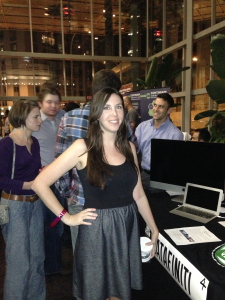
Jacqueline Hughes at Austin Startup Crawl last year at Capital Factory, photo by Laura Lorek

Jacqueline Hughes at Austin Startup Crawl last year at Capital Factory, photo by Laura Lorek

Jacqueline Hughes seems the antithesis of a typical event coordinator—what Austin Technology Council’s Grover Bynum calls “whistle and clipboard” people. Event coordinators have reputations for being frenetic, type A, wearing frozen, stressed smiles. Hughes, curled up in an easy chair at Techstars Austin, seems relaxed, chill, though she’s in the midst of putting final touches on several major events including her own creation: Austin Startup Week. She’d worked all night until 7 a.m. and was back in the early afternoon to do more.

“It’s kind of exciting to email someone at three a.m. asking for something you need and getting an answer back immediately,” she laughs. “It’s like ‘You are crazy too! What’s wrong with you? Who stays up working until three in the morning?’”

Hughes does. Regularly. Ever since she got introduced to the Austin tech community with her job as community manager for an Austin co-working site, she’s become a fixture at nearly every tech event, many of which she planned and executed. She not only created Austin Startup Week, she’s been either chief planner or involved to her elbows in numerous other events including several major events for Techstars, Made in Austin Career Fair, Rise Week and many SXSW events. The sociology major from Texas State University has become an expert in the sociology of Austin tech. It lets her exercise two of her favorite things: Getting to know interesting people and creating fun events.

The Person Behind the Community

“Sometimes, there are people out front and when you dig a little bit deeper, you find the person behind the person,” said Jason Seats, managing director of Techstars Austin. “I feel like Jacqueline’s the person behind the community. Almost anything that’s happening here, she’s really just one hop away from it, even the things she’s not directly involved in. She knows how all these things plug together, what’s involved, what kinds of things people like to do and don’t like to do. I feel like calling her a connector is underplaying it… I would be hard pressed to pull someone out of the startup community that she hasn’t done something for.”

In a town with more events than calendar days, planning something unique and fun is a huge challenge. Hughes’ take on it is: “I like to see people have fun. I like to see them happy.”
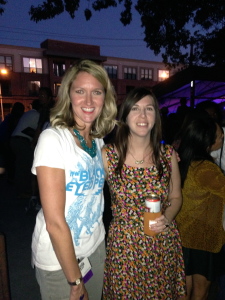
Julie Huls, President of Austin Technology Council with Jacqueline Hughes, founder of Austin Startup Week, at the ATC Battle of the Bands last year, photo by Laura Lorek

Julie Huls, President of Austin Technology Council with Jacqueline Hughes, founder of Austin Startup Week, at the ATC Battle of the Bands last year, photo by Laura Lorek

“What I observe her doing is she gets a rough plan and then she walks through it over and over in her mind,” Seats said. “Every time, she thinks up 15 more small details. Maybe this isn’t the right door for people to go in, because traffic clogs here. ..she likes people to have fun and enjoy themselves and that’s the mindset she has on. ‘Okay, I’m Joe Schmo, what will I think when I walk in? What am I going to see? Will be the music be too loud in this area? Will I be able to meet people? Will I feel awkward?’”

At the same time, Seats said, “She lets things happen the way they’re going to happen.”

Bynum, ATC senior advisor, said Hughes is not only incredibly laid back, but also transparent and eager to collaborate, let events evolve organically, give other people a voice in what the event will eventually become.

“She’s an excellent national ambassador for the city,” he said. “She recognizes that the value of Startup Week is still being determined and instead of trying to figure out what it is, she understands the community, lets different approaches be heard…she introduces the value and lets people chew on it.”
One Startup Week, he said, he wanted to bring his policy and advocacy background into the mix and offer a serious discussion on Internet policy led by a national advocacy group at City Hall. “We really didn’t know what the uptake was going to be,” he said. Though they had some concerns that the event—being less sexy and festive than other sessions—might not draw participants, Hughes encouraged Bynum to go for it. “It turned out we had a full house at City Hall when it might have just been me. That’s been a successful piece of Startup Week ever since.”

Falling Into the Startup World

In many ways, Hughes fell into the startup world and the world of event creation. A product of the Houston suburbs and its traditions—like Cotillion—she discovered a whole new world of interesting, passionate people when she went to Texas State for College.

“I had these amazing teachers,” she said. One class, A People’s History of the United States, gave her a completely new view on the world. “It was the first time I kind of learned that Christopher Columbus wasn’t the nicest guy in the world….I was interested in studying values and norms and it opened my eyes to the fact that I don’t have to fit into a square or a circle.”
imgresShe was living in Austin, a year into her master’s in sociology, when she decided to look for a program where she could get a Ph.D on environmental sociology and she and her boyfriend at the time planned a road trip to schools in Colorado, Utah, California, Oregon and Washington to find the right programs. Then they broke up. On the one hand, her plan had now disappeared and she was a little lost. But around the same time, her grandparents left her $20,000. She took off for London, then returned to the U.S. and spent the rest of the year making the money stretch, taking road trips all over the U.S. and spending tons of time alone.

“I loved it,” Hughes said. “I felt very free. I had this couch on the porch and I would lay on it and read (Harry Potter among others), then fall asleep, wake up, read some more. I napped during the day and only slept three or four hours at night. At one point I went to get a massage and the massage therapist said ‘You don’t have any stress…at all.’ I’m really glad I had that time. I don’t think a lot of people get to have that.”

But eventually the money was running out and it was time to get a job. She was living in Austin and knew networking was key. She got a Twitter account and started connecting with people and going to events. “Someone on Twitter told me about TabbedOut, Foursquare, I started thinking about what else you could do with apps.” This was another whole new world. When she started meeting techies and geeks, she didn’t even know there was code behind websites. But once again, she was surrounded by interesting people tackling cool projects.
After sending out 100 resumes, Hughes was hired to build membership at a co-working space. That year she attended 300 events, going from a life of near total solitude to one surrounded by people.

Bridging the City

“I spent time just meeting people for about six months,” she said. “I was that person who showed up at everything. That was what I was known for, just knowing people. I didn’t think that was really admirable. It came sort of naturally to me to meet people. I have a really good memory. I don’t remember movie quotes or actors but I’ll remember when I first met someone, where it was, what we talked about. People started putting me on a pedestal because I knew so many people. I felt like a phony, like that’s the only skill I have? So I decided to start working on my own startup.”

Hughes wanted to create a platform that would have all the city’s events listed in one place, without having to input the data. It was called Bridge the City and it was to be similar to Foursquare’s new Swarm app.

“One thing I think Foursquare is not as good at is, if I was going to Refresh Austin and it was at Buffalo Billiards, I wasn’t headed to Buffalo Billiards—I was headed to Refresh Austin.” Bridge the City would focus on the events and make it easy to find the people you wanted to meet at those events, something she said no app does well, even still.

She and her cofounders spent three months working on it, then they split up.

“We came together wanting to solve the same problem, but couldn’t align on how to get there. After we released a MVP — an events calendar – we began struggling with direction. Half of the team wanted to build something simple similar to what Swarm looks like, the other half envisioned something closer to what Do512 looks like today. In the end, neither side was willing to compromise and we split up. I think the team was looking to me to steer us in the right direction, and I didn’t step up.”

The Birth of Startup Week
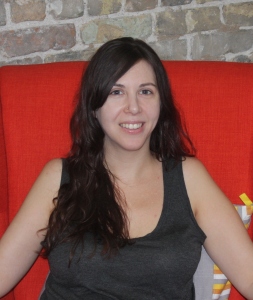
Jacqueline Hughes, photo by Susan Lahey

Jacqueline Hughes, photo by Susan Lahey

Hughes still had the co-working job and started working with startup Qrank, but neither was full time. One day, when she was planning a trip to San Francisco, she created a pitch to ask the CEO of Plancast whether he was interested in hiring her to do community management for that company as well. He hired her. The idea for Austin Startup Week came after Hughes realized that people in Boulder were using the app in a really “interesting way.” Plancast sent her to Boulder where she was introduced to Boulder’s Startup Week. The organizer gave her permission to borrow as many of their ideas as she liked.

The consummate event attender, Hughes wanted to put a lot of the area’s startup activities in the same week and anchor them with something like a UT or Capital Factory demo day. Josh Baer was the first person she approached.

“I wouldn’t say I’m a very good event planner but I’m a very good event creator. I’m really good at figuring out what’s fun. I like to create fun experiences for people…. I’ve worked with some event planners who were amazing. They make my life so much easier. They go through everything I’ve done to make sure I’m not leaving anything out.”

The first Austin Startup Week was in 2011 and those early budgets were meager. One good thing about that was that they had to ferret out interesting locations, like GSDM’s entryway, that could accommodate both their budget and their crowds. Sponsors covered specific events, usually to the tune of a few hundred dollars. But this year the organization decided to take on one big sponsor for each day of the event. Some of the early sponsors included Indeed and AT&T. Meanwhile, Hughes has been responsible for more than 50 events—everything from dinner parties to Startup Week.
She’s become to go-to events person for Austin Techstars.

“I love working for Techstars,” she said. “I have never worked with a group of people who work so hard. Everyone on the team is just so good at the things they’re good at and they trust me to own and be good at the things I’m good at.”

One of the most recent events she threw for Techstars was a retreat at Marfa. She remembered the last night, when they hadn’t brought a cooler so she lined a grocery cart with trash bags and filled it with ice for beer and Seats and a couple others pulled out their guitars and played under the starlight.

“Things that are easy to do in other places are not easy to do in Marfa,” Seats said. “Just finding seating for 40 people at once and catering—we had to have four or five different restaurants cater together when we were on that trip…I think she surprised herself at how well that worked out. It could have been horrible but every part of it was so over-the-top perfect.”

Hughes knows she’s the kind of person who could work herself into the ground. Her four-year-relationship with her boyfriend, Scott Gress, helps her to stay balanced. Gress, who is also working on a startup is an intense worker too. But he helps her know when it’s time to turn off the computer and say she’s done for now.

One day, Hughes wants to be an investor. Starting a business is so hard, she said, she wants to be able to support people’s entrepreneurial ventures. Meanwhile, she’s still more comfortable being the person in the background, making things happen.

“I would love for her to become more comfortable owning the recognition for the stuff she does at this level,” said Seats. “She does so many things for so many people and they get the credit, which is noble and nice and we all are the beneficiaries of it.”

The Central Texas Life Sciences Industry is Booming

By LAURA LOREK
Founder of Silicon Hills News

Scientific researchTeVido BioDevices, a startup in Austin, recreates nipples and other body parts with 3-D printers using human cells.

iTraumaCare in San Antonio has created a life-saving clamp that quickly and easily prevents blood loss.

WiseWear, based in both San Antonio and Austin, has created a patch-like fitness device to track vital signs and more while working out.

Those are just a few of the biotech startups you will read about in this first annual issue of Silicon Hills News focused on the life sciences industry in Central Texas. This is Silicon Hills News’ second print magazine. The first, a field guide to Silicon Hills, debuted at South by Southwest Interactive in March and our Kickstarter backers made it possible. This issue is possible thanks to our advertisers: BioMed SA, the Texas State University Small Business Development Center, bankSNB, University of Texas Health Science Center at San Antonio, the Greater Austin Chamber of Commerce, Texans for Economic Progress, the World Stem Cell Summit, Geekdom and the University of Texas at San Antonio. Our next issue is on technology startups and will be published in October.

And thank you to the writers for this issue: Susan Lahey, Jonathan Gutierrez. Tim Green and Leslie Anne Jones.

It’s an amazing time to be in the healthcare and biosciences industry with all the innovation going on in treatments, drug development, medical devices and more.

In Austin, the life sciences industry generates more than $1 billion in economic activity, according to a recent report from the Austin Technology Council. Its strengths are in pharmaceutical manufacturing, research and development in physical, engineering and life sciences, research and development in biotechnology, surgical appliance and supplies manufacturing and biological product manufacturing.

The industry is expected to grow with the new Dell Medical School at the University of Texas at Austin. The building is under construction now, and the school is expected to admit its first class in 2016.

A university-backed health science center can serve as a catalyst for a thriving healthcare and biotechnology industry in a city.

Look no further than San Antonio to see the impact of the University of Texas Health Science Center at San Antonio on the city. The Health Science Center serves as one of the cornerstones and catalysts of San Antonio’s bustling biosciences and healthcare industry, which employs more than one in every six jobs in San Antonio and has an overall economic impact of more than $29 billion, according to BioMed SA.
The Health Science Center has more than 3,000 students enrolled in five schools, which award 69 health-related degree specialties and pre- and post-baccalaureate certification programs.

Research organizations, private sector companies and the U.S. military drive the bioscience industry growth in San Antonio, according to BioMed SA. In addition to the Health Science Center, other major contributors to San Antonio’s industry include the University of Texas at San Antonio, InCube Labs Texas, the Texas Biomedical Research Institute, the Texas Research Park, Barshop Institute for Longevity and Aging Studies, Cancer Therapy and Research Center, Southwest Research Institute, San Antonio Army Medical Center, South Texas Accelerated Research Therapeutics and the National Trauma Institute.
Central Texas is a powerful region. When both communities collaborate and cooperate the region grows stronger and even more powerful. Cities no longer compete against each other. Austin, San Antonio and San Marcos are all thriving. The region competes globally for the best talent, resources, companies and institutions. And it has become a global hotspot for innovation in the life sciences industry with a cluster of universities, research and development institutions, medical technology startups and established companies.

Measr[food], a Smart Food Scale, Wins Intel’s Internet of Things Roadshow in Austin

By LAURA LOREK
Founder of Silicon Hills News

measr[food] Team Members Brad Hughes, V.J. Velacheri and Chris Boette

measr[food] Team Members Brad Hughes, V.J. Velacheri and Chris Boette

Americans have a problem counting calories which contributes to skyrocketing rates of obesity, said Brad Hughes, software engineer at National Instruments.

He thought Intel’s Internet of Things Hackathon might be a good place to tackle the problem.

He pitched the idea of a smart food scale connected to the Internet to measure portion size, weight and calorie content in a plate of food as well as tap into other online databases to coordinate with fitness programs.

V.J. Velacheri, a chip designer at Samsung, and Chris Boette, a full stack web developer at Game Salad, joined the team. They bought a food scale and spent Saturday and Sunday tearing it apart and hooking it up to the Internet with various sensors using Intel’s Galileo board, which packs the power of a miniature computer. Their hard work on their hardware paid off.

Their project, measr[food], won Intel’s Internet of Things Hackathon last weekend at TechShop in Austin. They received $1,500 in Amazon gift cards as a prize.

“It’s really cool that Intel is doing this and putting their money where their mouth is in the Internet of Things marketplace,” Hughes said. “Intel is giving people the tools and the power to build really cool stuff at a fraction of the price.”

Intel's Edison, "a small form factor single-board-computer."

Intel’s Edison, “a small form factor single-board-computer.”

Intel kicked off its Internet of Things Roadshow in Austin. It is hosting hackathons in 10 cities worldwide, but only three are in the U.S. In addition to Austin, Intel will host events in New York and Mountain View, Calif. Intel selected Austin because it has a campus of about 1,500 employees here with a big maker group, said Stewart Christie with Intel.

Intel cut off registration for the event at 200 people, Christie said. About half of those showed up. And a couple of hours before the event started Saturday a line formed at the front door.

Intel gave away Galileo boards and developer kits to the first 100 people. The kits contained sensors, software and other accessories.

“It’s kind of like Legos you can put the things together but you can also pull them apart as well,” Christie said.

Intel’s IoT hackers formed 14 teams but a couple of them dropped out, including a team building a wired chicken coop and another with an Internet-connected fishtank. The teams had to upload their projects to Hacker League by 2 p.m. Sunday and then pitch in front of a panel of five judges. The projects needed to use Intel’s developer kits, integrate with the Cloud and tap into online data. They also needed to have market potential.

The two second place winners included Smart Dog Collar, a fitness tracking collar for dogs, and Nursing Home Tracker, a clock-like device to monitor a patient’s environment and sends alerts. Each team won $1,000 in Amazon.com gift cards.

Three teams won third place and $500 Amazon.com gift cards. They were Car Alert, which alerts car owners when someone bumps into or breaks into their car, Save My Baby, a car seat with heat sensors and programmed to send out text messages when the temperature in a car get too hot, and GluLogic, a smart monitor to keep track of a diabetic’s medicine.

Bill Tyler, a diabetic, thought of the device to provide insulin dosage tracking, monitor blood sugar levels and provide reminders to take medicine, because he would like to have one. The device uses Bluetooth and WiFi to communicate online and to store data in the cloud.

Some of the Lego winners at Intel's IoT Hackathon at Techshop

Some of the Lego winners at Intel’s IoT Hackathon at Techshop

Several people also won Intel Basis watches throughout the weekend in a Lego building contest and a selfie Tweet contest. BeMyApp coordinated the event, which Intel sponsored.

In a month, the Intel roadshow team will be back for a show and tell to see how much progress the teams have made, Christie said.

Boette with the measr[food] team enjoyed the hackathon.

“I think getting people to think about applying technology to the Internet of Things from the bottom up is really useful and helpful,” he said.

Full disclosure: I served as a judge at the Intel IoT Roadshow Hackathon.

Smart Host Brings Intelligent Pricing to the Vacation Home Rental Market

By LAURA LOREK
Founder Silicon Hills News

Evan Hammer and Nick Persico, co-founders of Smart Host

Evan Hammer and Nick Persico, co-founders of Smart Host

Pricing a rental home correctly on HomeAway, Flipkey or AirBnB can put more money into a property owner’s pocket.

That’s the goal of Smart Host.

Smart Host wants to introduce intelligent pricing to the vacation rental market, said Evan Hammer, the company’s CEO and founder. Hotels and airlines have already mastered this. Yet vacation rentals are overlooking this innovation, he said.

“We help hosts make more money through market intelligence and dynamic pricing,” Hammer said.

There’s a need for this service, according to Ben Edwards, vacation rental manager and board president of the Vacation Rental Managers Association, a trade organization.

He flew in from Florida to introduce Smart Host during Techstars Demo Day in Austin on Sept. 3rd.

Smart Host is a subscription-based pricing engine for property owners or managers. The company helps them figure out the base price for a rental and then raise it for peak times or lower it as supply and demand in the marketplace changes. The goal is to increase the number of times a vacation rental home is rented at the best price, Hammer said.

“It’s a tool that is not readily available right now,” he said.

The vacation home rental market is made up of six million homes, which generate billions in annual revenue, Hammer said. When Smart Host has 1 million bookings on its site, it will net hundreds of millions in annual revenue, he said.

The startup, run by Hammer, Nick Persico and Dave Redding won the StartupBus North America 2014 competition last March.

The team of five met on the New York bus bound for Rackspace in San Antonio. They coded for five days to create a minimum viable product. In the end, they pitched SmartHost as an Android app. They won the competition. Then they went to Austin for South by Southwest Interactive. Hammer met with Jason Seats, managing director of Techstars.

Originally, Hammer applied to Techstars in New York with a different team. They didn’t get selected but they made the shortlist. Seats heard about them from the New York director. He liked the team and thought they would be a good fit for Techstars Austin.

Smart Host won a spot in the Techstars Austin class, which ran from June through August. Three of the original team members decided to continue on with the startup, Hammer said.

“Of all the teams in the last class, they were the youngest, in terms of business,” Seats said.

Smart Host spent a lot of time building their product to convince the market, investors, and partners that they could pull this off, he said.
In the end, SmartHost landed a pilot program with HomeAway, one of the largest vacation rental marketplaces in the world.

Massage.com Wants to Take the Stress Out of Getting a Massage

BY TIM GREEN
Reporter with Silicon Hills News

DanDan Graham wants Massage.com to work like a good massage, relieving stress for massage therapists and their customers.

Instead of kneading muscles, however, the online massage booking service does it by helping therapists find work and customers get a massage where it’s most convenient for them.

“Essentially, we want to be the live inventory of massage therapists and spa offerings for anyone, anywhere,” Graham said.

Massage.com is Graham’s first venture beyond Austin-based BuildASign, which he founded in 2005.

That venture is now a 260-employee company, operating in four countries with $57 million in revenue in 2013. Graham’s business and civic endeavors have earned accolades including being named Austinite of the Year by the Austin Under 40 group in 2012 and Ernst & Young Entrepreneur of the Year in 2013.

BuildASign attacked a market dominated by mom-and-pop operations with the concept that people would buy signs – from yard sale placards to big banners and more – over the Internet with no hands on experience.

Graham’s new business, in its first months of operation, is definitely hands on, at least for the therapists and their clients, but it seeks a similar result in a market that’s fragmented and sizable.

There are as many as 350,000 massage therapists in the U.S., according to the American Massage Therapy Association. Most are solo practitioners working at the client’s location or in a spa, health club, a healthcare setting or a massage-therapy franchise. In 2013, the massage industry generated $6 billion to $11 billion.

Massage.com’s initial play is to help individual massage therapists book appointments with clients in the location preferred by the clients such as home or office.

Graham said that Massage.com conducts background checks on therapists and customers so that both sides are comfortable with the arrangement.

Payment of $89 plus tip for an hour session is made online through Massage.com. The company takes a percentage of the fee.

Ron Shirley, an Austin logistics executive, used Massage.com to book a session and said “it worked extremely well.”

The therapist arrived at the appointed hour, he said, “and the massage was great.”

Graham said massage therapists can list with Massage.com whether they want to book 40 hours or two hours a month. “We just add their availability into our network,” he said.

Massage therapist Tony Castro used the site after hearing about it from colleague.

He said the process was easy and helped with bookings. He especially likes that he can stay close to home by specifying an area in which he’ll work.

So far, the service is available in Austin, Houston, Dallas and San Antonio.

But Graham, who continues as BuildASign CEO, has more in mind.

He plans to expand Massage.com’s services to about 6,000 spas across the country. He said the service would help spas with online marketing and fill empty slots in the appointment books of therapists who work in the spas.

“We offer a tool to say, “Hey, you don’t need become an expert in online marketing. We’ll do that for you. And we’ll just fill your vacancies and we’ll just take a small percentage of the booking fee,’ ” Graham said. “Nobody says no to that.”

Graham said Massage.com will offer more features as it builds out.

A feature he’s enthused about is a rating system in which customers can review and rate their massage therapists and the spas in which they work. He said this should be a boon for massage therapists because those who earn high ratings should be able to draw higher fees for their services.

Massage.com’s sources of revenue include a percentage of the fee for the massage, fees for membership and subscriptions and gift card sales. Graham added that the site will offer massage-related services and products.

Massage.com is one of several companies around the country offering scheduling services for the massage business.

While most operate only in their metro areas, Zeel.com, based in New York City, has expanded to Miami, Los Angeles and the San Francisco Bay area, according to an article in TechCrunch.

Graham said that Massage.com’s nationwide spa network will set it apart from companies that book at-home massages. He’s also looking to work with hotels, corporations and nonprofit events.

And, he’s looking to repeat BuildASign’s experience in dealing with growing competition in outperforming competitors.

“I think that being first mover is great and having a great brand name is really helpful,” he said. “But ultimately we’ve got to be able to execute in the idea.”

As a name Massage.com is direct and comprehensive. And Graham found in right in his backyard.

An Austin massage therapist had owned the domain name since 1995. Screen shots of a Massage.com website from the late 1990s (viewed via the web.archive.org), show a landing page that proposes to be a one-stop shop for massages and massage products. But apparently that’s as far as the website went.

“I talked to him over the course of many months, describing where I saw the vision for Massage.com,” Graham said.

After eight months, the owner bought Graham’s vision and sold the domain name to Graham outright. But, Graham said, the previous owner has ongoing incentives as the company progresses.

So far, Graham and three others have funded the company. He said he’s not ready to disclose the amount or who the investors are.

Besides building out the website, Graham, who remains BuildASign CEO, is hiring the Massage.com management team and looking for office space.

Once ensconced, he said, “We’ll probably need to hire a full-time massage therapist to make sure everybody’s relaxed.”

« Older posts Newer posts »

© 2026 SiliconHills

Theme by Anders NorenUp ↑