Author: LauraLorek@gmail.com (Page 104 of 354)

LauraLorek@gmail.com

UT Austin Honors Inventor of the Year and Emerging Inventor of the Year

Bill Williams, professor and head of UT Austin’s College of Pharmacy’s Division of Molecular Pharmaceuticals and Drug Delivery named UT Inventor of the Year


By LAURA LOREK
Publisher with Silicon Hills News

A crowd from the University of Texas at Austin of professors, staff, researchers and more turned out Thursday night at the AT&T Education and Conference Center in Austin to honor the UT Austin’s Inventor of the Year and Emerging Inventor of the Year.

The annual event is like the Super Bowl for innovators at the university.

The UT Austin Office of Technology Commercialization named Bill Williams, Ph.D., professor, and head of The University of Texas at Austin College of Pharmacy’s Division of Molecular Pharmaceuticals and Drug Delivery, as inventor of the year.

“The award honors a researcher whose discoveries have made a significant impact in commercialized technologies,” according to a news release.

“It is very humbling to me,” Williams said during a brief interview before the ceremony. “It’s a culmination of the last 22 years of graduate students, visiting scholars, faculty colleagues, interdisciplinary collaborations being put into the intellectual property. Companies are being formed.”

Williams has 35 patents and patent applications focused on the fields of drug delivery, processing, and biotechnology. He holds the Johnson & Johnson Centennial Chair.

“We are a really active research group,” Williams said.

Williams’ research has led to novel ways to administer drugs to patients through new ways such as sprays and mists. The focus is to enhance drug solubility and dissolutions for patients so they can quickly and easily absorb drugs. Williams has also co-founded a few pharmaceutical companies.

Many of Williams’ patents are licensed to technology and pharmaceutical companies. One company, DisperSol, based in Georgetown, created KinetiSol technology to create enhanced, soluble, and highly efficacious pharmaceutical products based on Williams’ patented technology.

Williams earned his B.S. in biology from Texas A&M University and a B.S. in pharmacy and Ph.D. in pharmaceutics from the University of Texas at Austin. He worked for nine years in the pharmaceutical industry before returning to UT Austin in 1995.

Everett Stone, a research assistant professor in the Department of Molecular Biosciences at UT Austin, is named the 2017 UT Austin Emerging Inventor of the Year.

In addition to Williams, the Office of Technology Commercialization at UT Austin, also named Everett Stone, a research assistant professor in the Department of Molecular Biosciences at UT Austin, as the 2017 Emerging Inventor of the Year.

“The award is given to recognize faculty members who excel in their fields and whose work produces practicable innovation and life-changing discoveries,” according to a news release.

Stone’s research focuses on enzyme therapeutics and using enzymes to effectively target cancer and metabolic diseases. He takes human enzymes and gives them properties they need to become therapeutics. He has co-founded two biopharmaceutical startups: Aeglea BioTherapeutics, which has three Phase I clinical trials underway using the therapeutic enzymes, and Kyn Therapeutics. He is the co-inventor on 13 patents and patent applications.

Stone earned his B.A. in chemistry and biology magna cum laude from Drury University and he received his Ph.D. in cell and molecular biology from UT Austin.

“It’s a nice recognition that this work we’re doing is going places,” Stone said about being named Emerging Inventor of the Year.

“I’m a little unused to all this attention,” he said.

Stone says he has more startups in the works and to stay tuned.

Video by UT’s Office of Technology Commercialization at UT Austin

Facebook’s Sheryl Sandberg Advocates for More Women in Leadership Positions

AUSTIN, TX – NOVEMBER 02: Sheryl Sandberg speaks at the Texas Conference For Women 2017 at Austin Convention Center on November 2, 2017 in Austin, Texas. (Photo by Marla Aufmuth/Getty Images for Texas Conference for Women)

By LAURA LOREK
Publisher of Silicon Hills News

The same leadership traits in men like decisiveness and ambition are often criticized in women, said Facebook’s Chief Operating Officer Sheryl Sandberg.

Take those same traits and apply them to women of color and the discrimination is even worse, Sandberg said.

“Women of color have all the gender biases and all the race biases,” she said. “And so, in order for us to get our share of the leadership roles, women overall, and especially for women of color, we’re going to have to fight all of those biases and we’re going to have to fight them every day in every way we can.”

In addition to discussing grief and gratitude and her book, Option B, Sandberg spoke at the Texas Conference for Women about gender discrimination and she talked about the labels women face in the workplace and how that leads to discrimination.

Sandberg asked the women attending the conference, how many of them had been called bossy as a little girl or if they have been called too aggressive at work. All kinds of hands shot up in the air.

Corporations need to strike the word aggressive from the performance reviews of women, Sandberg said. Too many women get unfairly labeled in the workplace and then they get overlooked for promotions and advancement because of gender bias and labels, she said.

On Thursday when Sandberg spoke, she pointed out that it was Latina Equal Pay Day.

“That means that Latinas had to work all of 2016 and this far into 2017 to catch up with what white men earned in 2016 alone,” Sandberg said.

That pay gap exists for all women, but it’s the worst for Latinas, Sandberg said.

“So as we think about getting to equality and getting to a better world, it is an important day to acknowledge how costly and expensive, especially for all the single moms out there, how costly these wage gaps are.”

“And I believe one of the best ways we can fix a lot of these problems is more women, more women in power,” Sandberg said.

“And for anyone that is a skeptic, I say let’s try it,” Sandberg said. “We’ve tried it the other way for a really long time and I’m not sure it’s going that well.”

LeanIn.org, the organization founded from Sandberg’s book: Lean In, recently released its Women in the Workplace 2017 report on the state of women in corporate America. It features 222 companies employing more than 12 million people sharing their pipeline data.

The conclusion is that women remain underrepresented at every level in corporate America, Sandberg said. Although awareness is increasing, progress is slow, she said.

“Many employees think women are well represented in leadership when they see only a few,” according to the report. “And because they’ve gotten comfortable with the status quo, they don’t feel any urgency for change. Further, many men don’t fully grasp the state of women in the workplace, and some worry that gender diversity efforts disadvantage them. As a result, men are less committed to the issue, and we can’t get to equality without them.”

Women of color face the greatest obstacles to get to leadership positions.

Adam Grant asked Sandberg “How do we get more women in power?”

“We have to acknowledge what the biases are,” Sandberg said.

Men get promoted on potential, but women have to prove it, Sandberg said. In areas of performance in the workplace, men are judged higher than women and that hurts the ability for women to get promoted and advance to leadership positions, she said.

Sandberg also acknowledged Anita Hill, who had spoken earlier in the day at the conference. Hill’s testimony during the 1991 confirmation hearing of Supreme Court Justice nominee Clarence Thomas sparked a national conversation about sexual harassment.

During her talk, Hill, now a civil rights leader and professor of social policy, law and women’s studies at Brandeis University, said the nation is ready to end sexual harassment.

“I am ready to believe that we outnumber the deniers, the enablers, and the abusers,” Hill said.

The outrage that is happening with Harvey Weinstein, Hollywood director, being accused by multiple women of alleged sexual harassment is appropriate, Sandberg said. That incident has opened the floodgate of accusations of sexual assault and harassment against other major Hollywood players. And it has prompted other women to come forward and complain about other men in positions of power in the media and other industries.

Hill started the movement, Sandberg said. She made it ok for women to come forward and complain about their treatment in the workplace, Sandberg said. The audience gave Hill a standing ovation.

To address gender inequality, what needs to happen in policy on a national level, Grant asked Sandberg.

“We need 21st-century policies for a 21st-century workforce,” Sandberg said.

Companies need to provide paid paternity and maternity leave, medical leave, sick leave, and companies need to pay a $15 living wage, Sandberg said. Facebook also gives its employees 20 days of bereavement leave for immediate family members, she said.

“We invest in our employees, they invest in us,” she said.

In closing, Grant asked Sandberg about how to create a movement and build a community around Option B and Sandberg’s previous book, Lean In.
When Sandberg wrote Lean In five years ago, she had an idea to create support circles or Lean In Circles for women. There are several groups in Texas including one with 100 members, she said.

The goal was to create 1,000 circles, but today there are more than 34,000 circles in more than 150 countries, Sandberg said. She met with the two Austin-based Lean In Circles on Thursday morning, she said.

“We don’t get through the hard things in life alone,” Sandberg said. “And we cannot achieve our dreams alone.”

Facebook’s Sheryl Sandberg on How to Find Joy Again After Tragedy

AUSTIN, TX – NOVEMBER 02: Sheryl Sandberg speaks at the Texas Conference For Women 2017 at Austin Convention Center on November 2, 2017 in Austin, Texas. (Photo by Marla Aufmuth/Getty Images for Texas Conference for Women)


By LAURA LOREK
Publisher of Silicon Hills News

Finding joy, being grateful and helping others are key to being resilient and living a fulfilling life, said Sheryl Sandberg, Chief Operating Officer of Facebook.

One of the most important lessons Sandberg learned through adversity is gratitude.

“Reminding ourselves of gratitude is so important,” Sandberg said.

After the sudden death of her husband, Dave Goldberg in 2015 at the age of 47, Sandberg felt extreme despair and loss. But through that tragic experience, she also began to embrace gratitude. She turned 48 last August and instead of being upset about getting older and almost being 50, she instead felt a deep sense of accomplishment that she had made it to 48.

The only two choices in life are “we grow older or we don’t,” Sandberg said. “Every year is a gift.”

Sandberg, author of Lean In, joined Adam Grant, author of Originals, in writing the book: Option B: Facing Adversity, Building Resilience, and Finding Joy. On Thursday, they spoke during the keynote luncheon to more than 7,500 women attending the sold-out 18th Annual Texas Conference for Women.

Today, Sandberg is a profoundly different person, she said.

Sandberg wrote Option B with Grant to share her experiences on dealing with loss after devastating events to embrace life, rediscover joy and persevere.

“Even without the trauma, can you wake up every single morning grateful to be alive?” Sandberg asked. “Probably not. Can you wake up a lot more mornings being grateful for that gift of life? I think we all can and that’s what we’re hoping Option B hopes to do.”

Grant said there’s a self-help section in all bookstores, but there isn’t a help others section.

“Which is really sad,” he said.

In the face of tragedy, it is important for others to show up and show support, Grant said.

Before Dave’s death, Sandberg said when she had friends or family going through devastating events she would say something once.

“And then I would never mention it again because I didn’t want to remind them,” she said. “Someone walks up to me two and a half years later and says I’m sorry for your loss, I don’t think oh I forgot. How could you remind me of such an awful thing? I know Dave is gone. I know that every single day. And the woman sitting next to you who is going through Chemo, she knows that too.”

It’s hard to reach out and not everyone wants to talk about everything all the time, but it’s key to make the effort to say, “I’m here if you want too,” Sandberg said.

“The power of doing anything is better than the offer to do something,” Sandberg said.

Too often people think someone else is going to show up with a hug and a stuffed animal, but all of us can do a lot more to be there for others, she said.
It’s also important for people who have gone through traumatic events to recapture the joy in their lives, Sandberg said.

At a party one night, a friend asked her dance and Sandberg had a great time until she burst into tears. She realized she was happy and she felt a flood of guilt because Dave was gone, and she didn’t think she deserved to be happy again.

But Adam Grant told her she needed to do more things in her life that made her happy and brought her joy.

To recapture joy in her life, Sandberg writes down three moments of joy that occurred throughout the day before she goes to bed and they can be small things like “my daughter gave me a hug without being asked” or “my coffee tasted great this morning.”

Before Dave died, Sandberg went to bed every single night worrying about what she did wrong.

Now giving herself a moment at night to focus on joy, helps her focus on joy throughout the day, she said.

RAD Office Tour in Austin Takes Place on Nov. 4th

Courtesy photo by Laura Alexandra Photography

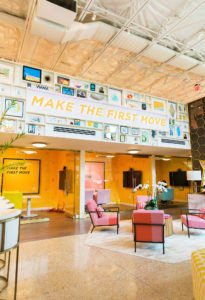
The RAD Office Tour is a one-day self-guided tour featuring 11 cool workspaces in Austin.

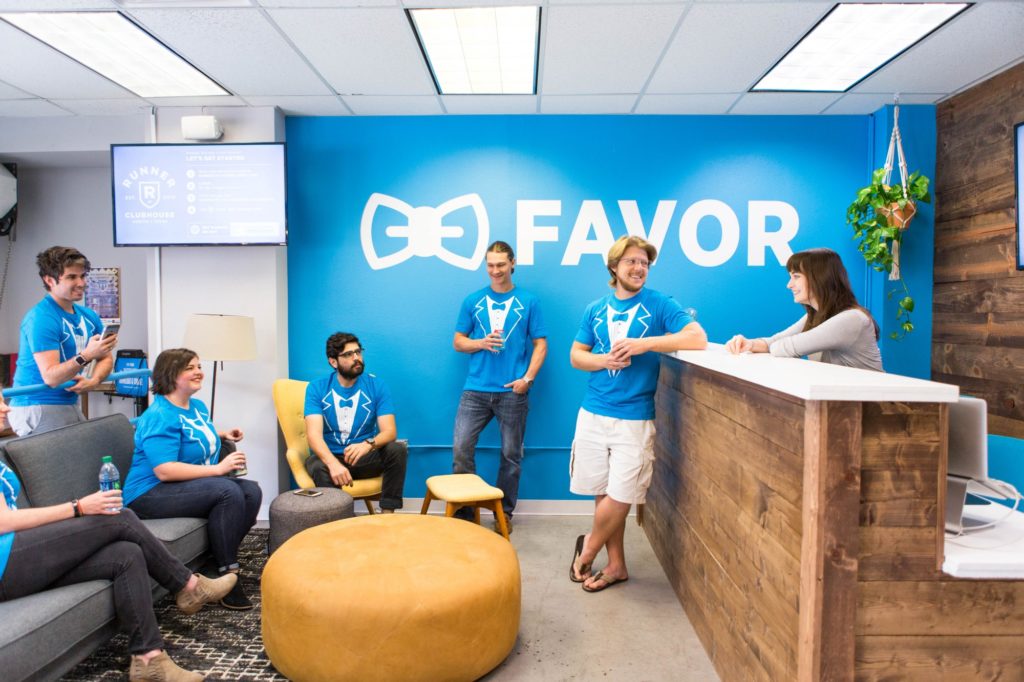
The RAD Office Tour takes place on Saturday from 10 a.m. to 5 p.m. General admission tickets include tour stops at Bumble, Condé Nast Co/Lab, Favor, argodesign, Kammok, Handsome, GasPedal, and Soma Vida Wellness Coworking.

VIP Only tour stops include all of those spaces and tours of MF Architecture, Atlassian, and a special hard hat tour of Springdale General. RAD Office Tours created a map of all the locations.

“Each of these companies are thoughtfully designing and building around people and have meaningfully invested in their workplace as a long-term competitive advantage for attracting and retaining top talent,” said Royal Frasier, RAD spokeswoman.

“The tour is a unique opportunity for business leaders, HR and operations professionals to tour nearly a dozen culture-forward offices in Austin,” Frasier said. “The event also caters to companies looking to buy, lease, or design new spaces in Austin, plus job seekers wanting to get an inside peek into the culture and workplace of any of our featured tour stops.”

“Many Austin companies are leaders in supporting innovative, healthy and inspiring workplaces, and RAD is all about spotlighting them and uncovering design solutions and tips/tricks for everyone in the community concerned with developing company cultures that are happy and productive,” Frasier said.

The event also includes a VIP opening party. For more information or to buy tickets, please visit RAD Office Tour’s Eventbrite page.

Favor Runner Clubhouse

Contract Simply’s Will Mitchell on Pivoting and Building the Business, on Ideas to Invoices

Will Mitchell, co-founder of Contract Simply, courtesy photo.

In this episode of Ideas to Invoices, Will Mitchell, co-founder of Contract Simply, discusses how his startup pivoted from a consumer marketplace called Renovate Simply to a business to business enterprise software company for the construction and banking industry.

The co-founders of Contract Simply spent last summer in Mountain View, California in the Y-Combinator program. Mitchell and his co-founder, Andrew Latimer, moved to California, rented an apartment and furniture and spent three months in the accelerator program.

The company initially got rejected when applying to the Y-Combinator program as Renovate Simply. So they re-examined their business and decided to focus directly on the construction contracting market. With the new concept, they got into the program.

Y-Combinator invests $120,000 in the startups for a seven percent equity stake.

The program was worth it, Mitchell said.

“It’s great at giving you a stamp of approval,” he said.

The network of folks for sales, marketing and product development and fundraising is incredible, Mitchell said.

“The program is very good at focusing the company and its objective,” he said. The focus is on revenue, customers and traction, he said.
“They do a fantastic job on emphasizing what’s important,” he said.

Contract Simply, founded in 2013 as Renovate Simply, raised a round last summer from the Central Texas Angel Network. The company recently closed a round of financing, which it will be announcing soon, Mitchell said.

Contract Simply has five employees. The company is hiring engineers and sales people, Mitchell said.

The cost of living and laid-back lifestyle are attractive features for being based in Austin, Mitchell said. The company has raised money from both coasts and has investors in 15 states and the geographic restriction of fundraising hasn’t been limiting for Contract Simply, Mitchell said.

Contract Simply is based at Link Flex, a co-working space in North Austin.

For more information, listen to the full interview below and please go to iTunes to subscribe, rate and review the Ideas to Invoices podcast.

Why Austin is a top contender for Amazon’s HQ2

Dave Manzer, ‎Founder of Manzer Communications in Austin


By DAVE MANZER
‎Founder of Manzer Communications in Austin
Guest Post

Let me just state for the record that I am not an economist nor an economic development professional with a chamber of commerce. Nor am I familiar with the different economic incentive packages (tax breaks and otherwise) that nearly 250 communities across the U.S., Canada, and Mexico have put together to win the Amazon HQ lottery.

I do know that Amazon will consider a wide variety of factors when deciding where it should build its HQ2. In my own view, Austin is on a very short list of cities that Amazon is actively considering, despite the city’s inherent growth challenges like traffic, zoning, and cost of living. Here are some obvious, and some not-so-obvious, reasons why:

Talent pool

There’s no question that Austin has become one of the few cities in America where there’s an abundance of tech talent. I know. I know. There is still a talent shortage for some jobs, and there has been upward pressure on wages because of it according to recent surveys by Dice and Hired. Still, Austin has proven adept at attracting new blood in order to meet the constant demand. Very few communities have the ability to absorb the number of startups and existing technology companies that call Austin home. Plus, with UT here and Texas A&M and Texas State University both within a 90-minute drive, you have no shortage of new graduates ready to enter the workforce.

Existing operations

Amazon caused quite a stir in the media when it purchased Whole Foods. The e-commerce giant has been quietly working to bring Austin’s iconic brand into the fold without any major disruptions. There’s a rumor that Whole Foods is ramping up hiring to beef up its software development team, including many operations the grocery chain used to outsource. Let’s not forget that Amazon also has a major distribution warehouse in San Marcos with plans to fill 1,000 openings. That gives Amazon a major workforce cluster in Central Texas that would make it easier for it to leverage as it looks to grow and integrate human resources across its disparate parts.

Logistics & Cost

Amazon is already in the farthest northwest corner of the lower 48 states. It makes a great deal of sense that it looks to locate somewhere other than the west coast or northeast corridor if only from practical perspectives like logistics and cost of living. Locating somewhere in the south or southeast of the U.S. comes with the advantage of lower cost of living and easy access to a different part of the country. The cost of doing business in California and New England is far greater than the south and central part of the country. What gives Texas an advantage is that it has a business-friendly climate. It’s also one of the few states with no personal income tax, which would allow Amazon to either give its employees a 3-8% raise or lower its salary structure for HQ2. DFW may have an edge on Austin when it comes to logistics owing to its airport being a hub for several airlines. That said, I feel confident that Austin’s bid included a promise to incentivize major airlines to add more direct flights to and from the Austin-Bergstrom airport, which would effectively negate DFW’s advantage.

Don’t forget politics

We are living in a highly polarized time in American politics. Right now, Amazon has its roots and global HQ in Seattle, Washington, a location known for progressive ideals and liberal politics. Seattle was one of the first and only cities to vote in a $15 minimum wage to help lower income earners enjoy a livable wage. Setting up shop in Austin would be a very shrewd move for Amazon in that it would instantly become a major employer in a red state with a powerful congressional block. Austin would allow Amazon to keep true to any ‘goodwill’ it has earned relative to being a progressive technology company based in the northwest. At the same time, Amazon can lobby Texas’ powerful Senators and Representatives to defend its business against a wide variety of legislation aimed at curbing Amazon’s influence. A long-term impact of Amazon locating in Austin would be to grow Austin’s power base in Texas, allowing it soften the rough edges Texas politics has developed over the past decade.

So, if you are a Machiavellian business mogul like Jeff Bezos with Libertarian leanings, an affinity for tech-friendly culture and a growing footprint in Central Texas, wouldn’t you put Austin on your shortlist, too?

Dave Manzer is the founder of Manzer Communications and PR Over Coffee in Austin. (Manzer Communications also an advertiser with Silicon Hills News)

Google Demonstrates its new Hardware Products at its Austin Office

Kayla Conti from Google shows off its latest line of hardware, made by Google.

Earlier this month, Google introduced its second generation of consumer hardware products, all made by Google.

On Friday at its downtown Austin office, Google showed off its new Pixel 2 phone, Google Home Mini, Google Clips hands-free camera, Google Pixel Buds, and an updated Daydream View headset. The products harness advanced artificial intelligence to assist consumers. Google also had a mobile truck parked at the Rainey Street District on Saturday that showed the products to the public and gave away Voodoo donuts to visitors.

Google showcased the following products: the $649 Pixel 2 with the best camera of any smartphone and augmented reality capabilities, $49 Google Home Mini with the artificial intelligence Google Assistant, $159 Pixel buds that lets users connect easily to the Google Assistant, the updated $99 Daydream View, a mobile virtual reality headset, and $249 Google Clips, a tiny mobile camera.

“Across all these devices, you can interact with the Google Assistant any way you want—talk to it with your Google Home or your Pixel Buds, squeeze your Pixel 2, or use your Pixelbook’s Assistant key or circle things on your screen with the Pixelbook Pen,” Rick Osterloh, senior vice president of hardware at Google, wrote in a blog post. “Wherever you are, and on any device with the Assistant, you can connect to the information you need and get help with the tasks to get you through your day. No other assistive technology comes close, and it continues to get better every day.”

In the video, Kayla Conti from Google shows off some of Google’s latest hardware products at Google’s office in downtown Austin.

SailPoint Files to Raise $100 Million in a Public Offering

SailPoint Technologies, founded in 2005, filed papers with federal regulators on Friday to raise $100 million in an initial public offering.

The Austin-based cybersecurity firm has raised $26 million to date in venture capital and private equity funding.

The company plans to use the proceeds of its offering to expand operations and add additional customers.

SailPoint creates and sells security software that manages and monitors which employees have access to various programs and platforms online for companies.

The company sells an open identity platform available both on-site and in the cloud to manage access to information for a company or government agency.

The company had more than 750 customers across a variety of industries nationally and worldwide, according to the IPO registration statement. It primarily sells to large companies with 7,500 or more employees and mid-market companies with more than 1,000 employees.

SailPoint’s revenue was $132.4 million in 2016 and $74. 7 million for the first six months of 2017. It reported a net loss of $3.1 million for 2016 and $6.5 million for the first six months of 2017.

Mark McClain co-founded the company with Kevin Cunningham and Jackie Gilbert.

SailPoint has global innovation centers in Austin, Pune, India and Tel Aviv, Israel and it has 228 employees in its research and development teams. Overall, SailPoint has 741 employees.

SailPoint recently “entered into a lease for a new 164,818 square-foot corporate headquarters” and plans to move in during the second quarter of 2019. It currently occupies 44,633 square feet.

Austin Bids to Become Amazon’s Second North American Headquarters

Jeff Bezos, founder and CEO of Amazon

“That’s right, you’re not from Texas, but Texas wants you anyway” to quote Lyle Lovett.

And Austin wants the second Amazon headquarters.

City leaders officially submitted Austin’s bid to Amazon on Wednesday, a day before the deadline.

On Sept. 7, Amazon announced the Seattle-based tech giant was looking for a second North American headquarters, Amazon HQ2. The company expects to invest more than $5 billion in construction for the second headquarters and it plans to create as many as 50,000 high-paying jobs.

Amazon then asked cities to submit bids for the project.

And since then Amazon has seen an outpouring of interest. Mayors have submitted videos. Members of Congress have written letters. And Tucson, Arizona even sent a 21-foot Saguaro cactus to Amazon’s headquarters in Seattle with a note “Amazon Can Grow in Arizona,” which the company politely declined, according to a story in Geekwire.

Amazon expects its HQ2 to “be a full equal to our Seattle headquarters,” Jeff Bezos, Amazon founder, and CEO said in a news statement.

Amazon’s criteria for choosing the second headquarters includes a metropolitan area with more than one million people, a stable business-friendly environment, urban or suburban locations with the potential to attract and retain strong technical talent and communities that think big and creatively when considering locations and real estate options.

Austin meets all that criteria.

Moody’s Analytics crunched the data and came up with Austin as its first place contender for Amazon HQ2. It cited Austin’s reputation as a tech hub and home to Dell, the largest Samsung facility outside South Korea, the second biggest Apple facility and a large IBM campus.

“Complementing these large IT employers are smaller IT companies that have either started in Austin or relocated,” according to Moody’s Analytics. Austin also has an educated workforce with 43 percent of its workers have completed college or graduate training, compared to about 30 percent nationally. It also cites the strength of the University of Texas at Austin’s Computer Science Department.

“Austin has a much lower cost of living than places such as Silicon Valley,” Moody’s Analytics reports. “Even though house prices have been rising and are high for Texas or the South, they are well below those in California or the Northeast. Anecdotally the quality of life is high, and many want to live in the “Silicon Hills.” Further, being in Texas, Austin resides in a business-friendly state that seeks to attract and keep companies. Amazon’s recent acquisition of Whole Foods, which is headquartered in Austin, is another factor in the metro area’s favor.”

In addition, Austin has good transportation facilities and is the Central Time zone with an international airport that makes it easy to travel nationally and internationally.

In the Moody’s Analytics report, Atlanta came in second followed by Philadelphia, Rochester, New York, and Pittsburgh.

Amazon launched operations in Texas in 2013 and already has a big presence here with humongous warehouse fulfillment centers located in Schertz and San Marcos in the Austin to San Antonio corridor. Amazon has other centers in Coppell, Haslet, Dallas, Fort Worth, Houston, and Katy. It has more than 10,000 employees in those centers.

Amazon also has a software development center in Austin.

In addition, Bezos owns Blue Origin, a privately-held aerospace company based in Kent, Washington that has a suborbital launch facility located in West Texas, near the town of Van Horn.

Another factor in Texas’ favor is its robust renewable energy market, particularly its wind farms in West Texas. On Wednesday, Bezos tweeted a picture of himself smashing a bottle to christen the company’s largest wind farm in Synder, Texas. Bezos is standing on top of the wind turbine in the video.

Amazon is also looking for an urban or downtown campus with a similar layout to Amazon’s Seattle campus.

“Amazon HQ2 will be a complete headquarters for Amazon – not a satellite office,” according to the company. “Amazon expects to hire new teams and executives in HQ2 and will also let existing senior leaders across the company decide whether to locate their teams in HQ1, HQ2 or both.”

Dallas and Houston plan to submit bids for Amazon HQ2. San Antonio’s city leaders already stated publicly that San Antonio would not be bidding for the project.

Amazon is expected to announce the new headquarters site in 2018.

Techstars Launches an Impact Accelerator Based in Austin

Techstars on Wednesday morning announced the launch of the Techstars Impact Accelerator, its first program aimed at for-profit startups that are tackling social and environmental problems.

The accelerator will be based in Austin. Applications open in December. The program kicks off in June of 2018. Zoe Schlag, the program’s Managing Director. Since 2014, Schlag has run UnLtd USA in Austin as its founder and CEO. The accelerator program backed entrepreneurs on a similar mission as the Techstars Impact Accelerator.

The accelerator is focused on financial services, healthcare, education, agriculture, and energy.

“UnLtd USA will join forces with Techstars to bring its global network in the impact space to the Techstars Impact Accelerator,” Schlag wrote in a blog post. “Meanwhile, since Techstars launched 10 years ago, we have had a deeply held belief that some of our biggest global challenges also represent some of our biggest opportunities, so investing in world-class, mission-driven founders is deeply embedded in our DNA.”

The Techstars Impact Accelerator fund is backed by Morgan Stanley, Impact America Fund and Cotter Cunningham, CEO of RetailMeNot.

Techstars has seen an average of 50 percent growth in startups tackling social impact issues over the last three years.

“Over the last several years, we have made several investments into impact companies, including category leaders such as Zipline, which builds drones to deliver crucial medical supplies in Africa; Aunt Bertha, the #1 ranked social service search and referrals platform; and Connxus, a supplier management solution that allows buyers to achieve their goals of responsible and sustainable sourcing,” according to Schlag.

« Older posts Newer posts »

© 2026 SiliconHills

Theme by Anders Noren — Up ↑