
 CSC, based in Falls Church, VA, has purchased Austin-based Infochimps.
“Infochimps Inc., with offices in both Austin, TX and Silicon Valley, becomes a wholly-owned subsidiary, reporting into CSC’s Big Data and Analytics business unit led by Sashi Reddi, VP and GM,” according to this blog post by Infochimps CEO Jim Kaskade.
Terms of the deal were not disclosed.
Infochimps has received $2.5 million in venture capital from the DFJ Mercury Fund, ff Venture Capital, Dundee Venture Capital and MFI Capital, according to its CrunchBase profile. Infochimps, which began as a data marketplace, provides data management products to companies.
“This acquisition aligns directly with CSC’s focus on next-generation technology solutions and services,” Sashi Reddi, CSC’s vice president and general manager for Big Data and Analytics, said in a news release. “Infochimps’ expertise in building industrial-strength data platforms on open source technologies will advance CSC’s big data capabilities significantly.”
Page 263 of 352
 By LAURA LOREK
Founder of Silicon Hills News
The $1.8 billion LSTAR passenger train from Georgetown to South San Antonio is on track, but will take about 10 years to complete.
When it’s up and running, the passenger train will make 32 round trips daily with 16 stations on a 118 mile railroad and will cost about $20 one-way, said Joseph Black, rail director with the Lone Star Rail District in San Marcos. The cars will offer wireless Internet connection along with a food and beverage car.
The train would offer an express service, which would take 75 minutes from downtown San Antonio to downtown Austin with stops in New Braunfels and San Marcos.
“The funding will come from private sources and federal and state grants as well,” Black said.
He spoke Tuesday afternoon at Geekdom in downtown San Antonio about the proposed project.
The idea of a passenger rail between Austin and San Antonio has been kicked around for more than 20 years, so what’s different this time? Back in the early 1990s, Southwest Airlines, then a Texas-based regional airline, opposed the idea of high-speed rail. And Union Pacific, which owned the existing railroad, was not in any hurry to vacate its tracks.
Now Union Pacific is on board with the idea and Southwest Airlines is a national carrier and doesn’t oppose the idea either, Black said.
The project involves the Lone Star Rail District, a state agency created in 2003, building a new railroad for Union Pacific commercial rail traffic. The LSTAR will take over the existing commercial tracks and convert them into a passenger rail line. The San Antonio stops would include New Braunfels, Schertz, Loop 1604, San Antonio International Airport, the downtown campus of the University of Texas at San Antonio, Port San Antonio and City South/Texas A&M San Antonio.
The Austin area stops include Kyle/Buda, Slaughter Lane, downtown Austin, 35/Mopac, Braker Lane/Domain, McNeil Junction, Round Rock and Georgetown.
The LSTAR passenger train would run on biodiesel and would alleviate congestion on I-35, one of the busiest and deadliest highways in the state.
“It will definitely be better than what exists today,” Black said.

By SUSAN LAHEY
Reporter with Silicon Hills News
 You too, can make your own robot, using Artoo, a micro-framework for robotics using the programming language Ruby. Mike Ford, a software engineer at Trion Worlds, spoke Monday night to a group of around 30 people at Austin RB meetup at Capital Factory about the Artoo technology and its uses in education.
Ford programmed a Sphero, robotic ball, to roll around in random directions using Artoo. At first it was just to mess with his cat, he said. But after spending time with his toddler niece, he realized that robotic technology could be used as a novel approach to teach Science, Technology, Engineering and Math, known as STEM, concepts to kids of any age.
You can, for example, program the ball to change colors on command. Kids could not only learn the words for colors in English, but you could program the ball to change colors when the commands were given in another language “rojo” or “rouge.”
It could be used to teach about the light spectrum. It can be programmed to outline specific geometric shapes, a fun way to teach kids geometry. Ultimately, kids can be taught programming languages so they can program their robots to do whatever they desire.
Artoo has a domain specific language that interfaces with all devices in the same way and supports multiple hardware types, he said, It’s also extendable to support new hardware.
It works with Arduino, AR Drone, Roomba vacuum cleaner to name a few, programmers can define their own “work” for the Artoo enabled robot to do.
“Of course,” Ford said, “When when you show this off to a one year old, all she wants to do is chase the ball. “
What is Sphero? from Sphero on Vimeo.
By ANDREW MOORE
Reporter with Silicon Hills News

Jacob Adberstein
First off, a young man named Jacob Adberstein pitched a new educational startup called Adaptive Mind.
“Our revenue system consists of having free and premium accounts. The premium accounts will have more space, be able to work offline, have more tools, and you can customize the site’s look,” said Adberstein. “We need your support to make our project a reality. We are looking for mentors who can help us with software development.. .. We also need your help for $8,000 that will be used for software tools and libraries, marketing, and legal matters.”
Adberstein is 14 years old.

Cristal Glangchai (left) and the High School Startup team
“There is no pretending,” said High School Startup Director Nick Honegger. “They get the real life experience of starting a company from the brainstorming, to the marketing, to the launch, to asking investors for how much they need funding-wise.”
The students touched every aspect of startup creation, which also included making profiles, Kickstarter pages, and demo videos with scripts. The program was so hands on that many of the students are now equipped with the confidence to continue through life as entrepreneurs.
“We learned just a ton about everything that has to do with starting our own business. So that even if our ideas now don’t work, we would be able to, in the future, still start up another company,” said student Brenda Kirlin, 15, from Providence Catholic School.

Brenda Kirlin presents Shéri Sandale

Brenda Kirlin and the Shére Sandale team.
“We came, we gave our pitch, and they destroyed us,” said Adberstein from Jose M. Lopez Middle School. “Every day we came all happy, and left all sad.”
Adberstein persevered, however. He kept working alongside his brother and the rest of his team and still presented Adaptive Mind for the demo day.
Adaptive Mind is a website that students can use to collect and organize text, photos, and video into notebooks and guides to help themselves and their peers learn more efficiently. It is built for both computers and mobile devices and supports forums where users can answer others questions and share information. The website even has a virtual assistant named Intelar which can help students search databases connected to the site.
Students came to the program with varying skill levels. For G.W. Brackenridge High School graduate Maletina Sanchez, 18, the experience was eye-opening.

Maletina Sanchez and Eliana Swart More 4 A Beat
Sanchez and home schooled student Eliana Swart, 14, were the two-person team behind the headphone making startup More 4 A Beat. More 4 A Beat’s headphones are designed to stand out in the same way as mobile phone covers — giving the user a unique design and style. The team used a 3D printer to manufacture a prototype of the product and are looking for $2,000 to start marketing and manufacturing. The startup hopes to partner with eBay Inc. and Etsy.com.
Not all students were new to the startup process, however. Ronald Reagan High School Senior Canzhi Ye is an iOS developer and the co-founder of San Antonio startup Rectangle. The program sill helped Ye sharpen his skills in a variety of areas.
“In terms of entrepreneurship I learned a lot such as doing market research, asking for money, that kind of stuff,” said Ye. “Pitching was kind of hard in the beginning, but we practiced every day so eventually we got much better at it.”
Ye’s team created Fresh Finds – an app that promotes shopping at farmers markets by giving users access to deals and discounts once they arrive at the market. When the team did their market research, 83 percent of iPhone users said they would be interested in using the app. Fresh Finds plans to make revenue by charging farmers to list deals and by using paid and ad-based forms of their app. They are currently looking for $5,000 to expand their company.
Founded in January 2012 by Cristal Glangchai, Venturelab is an evolution of a previous Geekdom company named ESTEAM which focused on STEM education. The educational nonprofit organization has multiple programs designed to fill gaps in the current education system and empower youth entrepreneurs. VentureLab adopted and modified the High School Startup program, originally created by Engineer Jeremy Guillory, which debuted last year at Anderson High School in Austin.
The first San Antonio High School Startup bootcamp was sponsored by Rackspace, Geekdom, and Akimbo. Mentors for the program included Nick Longo, Pat Condon, Mario Ochoa, Winslow Swart, Richard Ortega, and Greg Cerveny. According to Condon, programs such as the boot camp play a crucial role in motivating young people to consider entrepreneurship in the future.
“If a parent or a family friend was an entrepreneur, that’s a number one indicator whether somebody — a young person — will become one. To me not everyone has a parent that is an entrepreneur and this is one of the ways to expose young people early in life into creating something of their own,” said Condon.
 It’s no secret that men far surpass the number of women, especially in leadership positions, in the science, technology, engineering and math fields, known as STEM.
“The U.S. Department of Labor estimates that by 2020 there will be more than 1.4 million computing-related job openings,” according to a “Girls in IT: The Facts” report by the National Center for Women & Information Technology. “At current rates, however, we can only fill about 30% of those jobs with U.S. computing bachelor’s grads. Girls represent a valuable, mostly untapped talent pool.”
So what’s the solution?
Reaching girls when they are young and encouraging them to pursue careers in STEM fields.
And VentureLab, an educational organization at Geekdom, understands that problem and wants to be part of the solution.
VentureLab has launched a new program for girls five to 13 years old, which will educate them on entrepreneurship, science and technology. The second program, with 30 participants, kicks off Monday and runs through Friday next week at Geekdom. The first program featured girls making smart phone apps, creating websites and making 3D models.
During the program, girls come up with ideas for companies and then create prototypes of them. On Friday, the teams will pitch their business ideas to classmates, parents and Geekdom members.
Cristal Glangchai, CEO and Founder of VentureLab, created the program with the goal of increasing the participation of women in entrepreneurial activities in San Antonio. She also wants to fill the gap of women in the workforce by reaching girls earlier and encouraging them to pursue STEM fields. She also runs 3 Day Startup San Antonio, a weekend entrepreneurial “bootcamp” for budding college and professional entrepreneurs.
“The girls who signed up for 3 Day Startup would often back out the day before,” Glangchai said in a news release. “When I asked them why, they said they were intimidated. Our programs work to provide an inviting atmosphere for girls and women. We give young women the tools to feel more confident and creative in entrepreneurial and leadership roles.”
VentureLab’s other co-ed programs include Youth Startup for 5 to 12 year olds, High School Startup for teenagers and 3 Day Startup San Antonio.
 Dropbox, based in San Francisco, plans to open its second U.S. office in Austin and is hiring.
The company, founded in 2007 by Drew Houston and Arash Ferdowsi, has more than 175 million customers. The Austin office will focus on Dropbox’s growing business base, according to this post.
The company has raised $257 million and acquired Mailbox for $100 million this year, according to its CrunchBase profile.
Dropbox is a free online file sharing application. The company launched out of Y Combinator.
“When we began looking for our second US location, Austin was an obvious choice,” according to Dropbox’s post. “The city has a lot going on in tech and art, paired nicely with a healthy dose of Texan hospitality. Also, the food is pretty legit.”
By SUSAN LAHEY
Reporter with Silicon Hills News

Damon Clinkscales, organizer of Coffee for Entrepreneurs in Austin, photo by Susan Lahey
There was a large Techstars contingent including Brandon Marker, Techstars analyst who will be working with the newest Techstars Austin class on financial issues such as pitching for VCs. The class begins Monday.

Keith Casey Jr., software developer with Twilio
“The way it worked there is every other Friday we’d get together and the question was ‘What have you built since last we met?’ So it was really good, it was peer pressure but it was a lot of support as well.”
Clinkscales, who started Austin on Rails and Friday Hack Night along with other meetup groups, started Open Coffee in fall of 2010.
“I basically want to provide a place where entrepreneurs can help each other along,” he said.
 Jonathan Placa, co-founder of a cloud-based 3D printing service called Proto Exchange was fresh in, having moved from New Jersey 48 hours before.
“Everybody’s so friendly here,” he said. “New York City is just, you’re very much in your own world and you just pass people without making eye contact. You bump into someone and you may never see them again. Whereas here you may run into someone again and it’s a little more relaxed.”

Jonathan placa and P.J. Christie
 But there was also a group of regulars like Casey and Mark Phillip, founder of Are You Watching This? which contacts sports fans who can’t watch a game and lets them know when the game starts getting exciting. Many were just “hanging with friends” without any specific business objective.
For the last few years, Clinkscales has doing a North group as well as the one downtown but is thinking of centralizing all the Open Coffees downtown because of the growing startup presence there.

By ANDREW MOORE
Reporter with Silicon Hills News
 Austin is full of cool places to stop and have a few drinks, especially around 6th street but if you have too many, you might have to leave your car in an expensive parking space overnight or drive home while still intoxicated.
While out on the town, personal trainer Angie Brinkley noticed that far too many people were choosing the second option because they did not want to be without their car. As a result, Brinkley founded Sober Monkeys.
Sober Monkeys is a designated driving service in Austin that will drive a customer home in the customer’s own vehicle. Each Sober Monkeys team has a driver for the customer’s car and a follower that picks the driver up after they reach their destination. To date, Sober Monkeys has given more than 100 rides in 10 months.
Customers can sign up for Sober Monkeys on their website or by calling 512-808-9232. Pickups can be either scheduled in advance or requested at a moment’s notice. When the driver arrives, a customer must sign an insurance waiver before handing over the keys. Hiring a sober monkey costs $30 for the first five miles and $10 more for each additional five miles. Stopping for gas or other reasons will result in additional charges.
Sober Monkeys is currently running a $15,000 crowdfunding campaign on indiegogo to develop a native app for both iOS and Android. When completed, the app will make it easier for customers to schedule pickups and be found by drivers – even if they are intoxicated at 2 a.m. The remainder of the funds will be spent on car logos to make drivers more easily identified.
Sober Monkeys currently contracts five drivers and is looking to hire additional drivers for the Austin area.
Have questions, comments, or feedback for the show? Please leave a comment on Our Facebook page!
By SUSAN LAHEY
Reporter with Silicon Hills News

Chris Murphy, cofounder of Lawful.ly
“Having done my own startup a couple years ago, it’s amazing how much money I spent on the legal fees,” said Tony Frey, a product management and strategy executive who is advising the Lawful.ly team. “It’s easy to go find various resources, you can find these documents but if you’re not versed in legal issues you think ‘This sounded right to me.’ Then you go back to your legal advisors and they come unglued because they’re like: ‘You found this document? It’s a great document if you’re in California but you’re in Texas and you really screwed yourself with this.”
Murphy, started out in IT and then got his law degree, and now serves as an attorney at Dell. He doesn’t want to abolish lawyers but instead have them serve the function of counselors on complicated legal matters, not filling out forms.
“People who use contracts should be able to interpret them without having to go to a lawyer,” he said. “It should be understandable to you what is and isn’t allowed…. If you’re looking for auto mechanic advice you can go to a forum and find all sorts of great information. But it’s really hard to find that going on around legal advice. The other question is, ‘How much can I trust this advice?’ One thing we do differently is add that level of verification and trust. Explanations on documents will have been voted up, similar to Quora.”
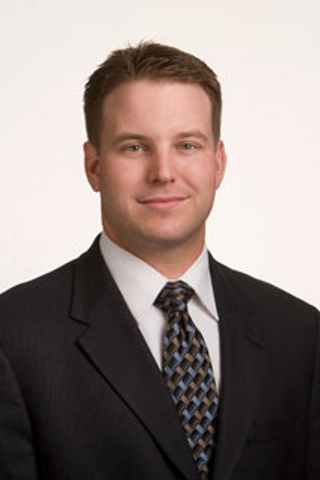
Bradley Clark, co-founder of Lawful.ly
The founders plan for the information on the site—including such documents as NDAs and series certifications of incorporation—to be free for the public. Business owners could use it. Lawyers, too. Murphy said that, as a corporate attorney, he’s familiar with corporate transactions but “I’m not a lot better than Joe-up-the-street at writing wills. Attorney’s tend to specialize.”
“When you go to law school they give you free access to Westlaw and Lexus, it’s like crack cocaine,” said Clark. But if you’re in private practice, those services cost a fortune. Last time they priced it, Lexus was about $2,000 a month.
The founders plan to monetize Lawful.ly through institutions like government agencies and law schools. Law schools, they said, give students access to expensive services like Lexus Nexus, but students could use even more.
Kyle Mitchell, a UT law student and open source coder who met Murphy through the site GitHub, is one of the beta users. As a law student, he said, he has access to all kinds of legal information through the library. “They give you a lot of information but it’s still rare and hard to find documents that explain themselves,” he said. With Lawful.ly, he said, it’s: “Here’s a form. Here are some comments that explain kinda sorta what these parts mean, what these words mean and not just the blanks for you to fill in. There are other services online that provide ‘Come and Take It’ legal services, Rocket Laywer, Legalzoom. They’re just providing forms with blanks to fill in and the ability to send them around and get them signed electronically.”
Lawful.ly is Murphy’s second company and he pitched at DEMO and applied with Tech Stars.
“When it comes to pitching I just tell him, make sure you don’t sound like a lawyer,” Frey said. “VCs are the farthest thing from a lawyer. They’re all seat-of-your-pants, all about what you feel. You’re going to want to make sure you have all your arguments lined up and they’re looking for your passion.”
“He’s making the transition very well. He’s articulate, comes across knowing what he’s talking about in this space and that’s paramount over everything. Legal scares everybody. Listening to Chris talk, he’s very even-toned…. Some of his success in the early beta is that he is good at connecting with people. People can grab onto that and make this community grow big, fast.”
By SUSAN LAHEY
Reporter with Silicon Hills News

Mike Maples Sr. with Startup Grind Austin’s Andi Gillentine
After his retirement in 1995, Maples said, he began investing partly because “I’m kinda driven by the concept that life dealt me an overly lucky hand. It had little to do with how smart I was. I was at the right place at the right time. Maybe you owe part of that back. You can’t just spend every day in Hawaii looking at sunsets.”
Investing to Stay in the Game
He picks companies with ideas that interest him, he said, because he wants to be part of the game. He’s not as worried about customers and revenue as people who invest more money. He’s not interested in “hockey stick charts” showing projected revenues 15 years out because, at 69, he said, he’s not going to be around to see any of that. “If all my investments hit home runs, I’m not going to change my lifestyle. If they all go to zero, I wouldn’t change my lifestyle. I’m just fat, dumb and happy.”
“Three days a month, I’ll talk to anybody who wants to talk for half an hour. I have an hourglass and I turn it over when you come. When it runs out you get to leave.”
What he wants to know is “What do you need besides money? What do you need besides an advisor? I might invest if I think the idea is interesting. There are certain things I know something about. My question is, ‘Do I know people to connect you with? Do I have experiences that will help?’ If the idea seems interesting and I can be of value, that filter works for me.”
Entrepreneurship is About the Struggle
Maples asked how many of the people in the audience had advanced degrees and many hands went up.
“Most of you voted out of being entrepreneurs,” he said. “If you look at the major tech companies, Bill Gates, Larry Ellison, Steve Jobs, they didn’t waste time going to college getting advanced degrees. They went out and built a company. The fact that you went to college means you may be a little conservative on the risk side…that’s not to say a PhD isn’t useful to running a company.”
Many incubators and accelerators he said, excessively baby entrepreneurs.
“There’s something about the struggle, adversity, the trial and error and worrying at night about things that makes the entrepreneur better and stronger. Of course, you can appreciate that more when it has passed than you do now.”
Lack of focus, he said, kills more startups than anything else.
“Good ideas without passion and execution never work,” he said. “A lot of companies that fail, they didn’t believe with all their hearts that this was the most important thing to be doing and they didn’t focus…any time you have pivots 4-or-5 times a year you haven’t got enough focus. If you don’t give ever give x a chance to work out, it never will.”
Among his suggestions for business success:
- Hire people smarter than you, and trust them to do their jobs.
- Don’t partner with a big company hoping “the magic will rub off.” Likely the big company will use you and your ideas and wind up with the credit and the money. But if you do link up with bigger partners, find those who need your solution more than you need their money.
- Ignore the advice to forget your competition and focus on your product. If you ignore the competition you’re losing a learning opportunity.
- You can put your product out if it doesn’t have full functionality. “No good idea is solved with one release.” And you can put it out late. But don’t put it out with poor quality.
“What you need to know is what does the customer expect?” he said. “When we came out with Word the fact that it would even print was important. That was back in the days when Word first came out and it barely worked. That was okay because the customer didn’t expect much more than that.” - Don’t focus on VCs until your company is ready to expand to the hundreds of millions. Look at “how can you get to revenue faster? How can you get by with less?”
On Microsoft and Bill Gates
Maples addressed questions about a recent Microsoft restructuring around devices and services. Structuring a company like Microsoft is a challenge, he said. When he was responsible for a restructuring, they tried to put teams around each of the products so each was like its own little company.
“The Word guys talked about the Word customers and the Excel guys were thinking about Excel and there was not a lot of talking about Microsoft Office. It got to be extreme so in 2005 they had a reorganization,” he said. There was a focus on bringing the company back together as a whole. A developer wasn’t an Xbox developer, but a Microsoft developer. That reorganization didn’t really work either, he said, because it sacrificed knowledge of specific customer bases. “Tradeoffs for the good of the whole are not very effective.”
Maples worked closely with Bill Gates as part of a “presidential office” team. Gates, he said, was one of the smartest men he’s ever known and he gets credited with both technical and business acumen. But what he believes accounts for Gates’ success is a near-perfect recall or photographic memory and an ability to synthesize information and analyze leading indicators to know what’s on the horizon. He can look at a sheet of statistics and recall the numbers perfectly months later.
“He’s an extraordinarily interesting person and he can be very emotional and get very loud but you never have a feeling that anything is personal,” he said.
Each year, Gates would ask his key people to suggest books or write white papers on topics they felt he should know about. Then he would take “think weeks” where he would consume all the material and return with a letter stating “I think these are the areas we want to look into.”
When asked what entrepreneurs should read to understand the direction of the future, Maples said Gates got it right about 65 percent of the time but other people get it right 40 percent.
“I’m opinionated about everything,” Maples said. “The advice I’m giving you is probably worth what you’re paying for it. I don’t think you’re learning any grand wisdom. The only thing you’re learning is a lot of experience.”