Page 218 of 352

RTX 2014 30,000 Fans Descend on Austin Convention Center

By LESLIE ANNE JONES
Reporter with Silicon Hills News

Rooster Teeth Convention, Photos by Leslie Anne Jones

Rooster Teeth Convention, Photos by Leslie Anne Jones

Thousands formed a line that snaked through the convention center foyer Friday morning, awaiting the beginning of the three-day RTX conference that included game designers, purveyors of Internet-culture miscellany, and most importantly appearances by the well-loved Rooster Teeth crew.

RTX started in 2011 as a fan event for Rooster Teeth, the online entertainment production house made famous by Red vs. Blue, a web series that combines video game play and voice over animation. The show is now in its eleventh season, and Rooster Teeth has diversified into new web series, podcasts and branded merchandise.

The first RTX event had 600 attendees, the following year it was 4,000. Last year saw 10,000 attendees, and this year tripled that – some came from as far as England and Australia. Attendees tested out new video games and attended panels like “Top Strategies for YouTube Gaming Creators” and “VFX: Digitally Blowing Stuff Up for Fun & Profit.” Some came in costume, as storm troopers or Bat Man villain Bane and also as Ruby, the super hero with a red cape who stars in Rooster Teeth’s most popular recent creation, RWBY. Many attendees were teenagers, the convention center lobby area had a parents lounge for chaperones.

Frank Motomochi and Katie Cates from San Antonio, photo by Leslie Anne Jones

Frank Motomochi and Katie Cates from San Antonio, photo by Leslie Anne Jones

In some ways, RTX is similar to the much bigger Comic-Con events that happen around the country, but on a more personable scale. RTX booths hosted lots of indie game companies, and the designers were present at many booths. Plus, Rooster Teeth founder Burnie Burns was spotted walking through the exhibition hall on Friday, mingling with fans – a more authentic interaction than the autograph tables of Comic-Con.

In the exhibition hall, I was invited to test Chariot, a game for PlayStation 4 and Xbox One made by Frima Studios of Quebec, Canada. The main character is a princess. Player two is her fiancé. “He’s there to help,” game designer Alex Van Chestein explained. The mission is to haul a chariot carrying the coffin of the princess’ dead father to its final resting place. The dead king is a ghost, and he pipes in with banter, but the patriarch has no agency, no one will play him. It’s up to the princess and her partner to shoulder him along.

“I really wanted the female character to be a badass,” Van Chestein said. “It goes against convention, but it felt right.”

panel watchers 2The gaming industry has been roundly criticized for its boys-club culture, even though research shows about half of gamers are women. At this year’s RTX, inclusivity seemed to be on the mind of industry workers.

During a panel introducing Sunset Overdrive, an open-world shooter loaded with referential humor, presenter Brandon Winfrey noted that character choices came in male, female and gender neutral. “If you want to be a dude in a skit, that’s fine. It’s fun.”

People waited patiently for a chance to play Titanfall, a product of California-based Respond Entertainment, which was created by the makers of juggernaut-game Call of Duty – when Call of Duty: Ghosts came out in 2013, it had sales of $1 billion on its first day.

Abbie Heppe is Titan Fall’s community manager – a job title that encompasses marketing, voiceover work for the game, and a lot of playing time in order to relay feedback to the development team

Heppe, who is 32, has been gaming for almost two decades. Back in the nineties when she played Quake and Doom, a gamer who was female didn’t have to reveal her gender, whereas now with voice-chat enabled play, things are much less anonymous.

“Companies are aware of it,” Heppe said of sexism in game play. “We think about it a lot too: How can you make the gaming experience better?”

Friday evening events were cancelled due to a bomb threat, but things were rescheduled and the rest of the weekend went smoothly.

The speedy rise of RTX is no surprise to those familiar with the trajectory of Rooster Teeth.

Exhibition hall square head

Exhibition hall square head

The company recently moved into a much-bigger space at Austin Studios and also announced plans for its first feature-length, live-action comedy. According to crowd-funding website Indiegogo, Rooster Teeth met its initial funding goal ($650,000) in 10 hours. To date, more than $2.2 million has been raised for the project, making it the most-funded film ever through Indiegogo.

In its early days, Rooster Teeth’s fans were predominantly male, but that too is changing. Achievement Hunter, a comedic series where staff demonstrate game play and make jokes over it, garners a mixed audience. And RWBY, Rooster Teeth’s Americanized anime that follows four girls with super powers and big weapons who battle evil, has really tipped the scale

At RTX, Rooster Teeth announced its expansion into video game development. RWBY will be its first show to become a game. Conference goers were able to play a demo version of the game created and presented to Rooster Teeth by 19-year-old fan Jordan Scott. Scott is now working at Rooster Teeth to develop the full version.

Scott’s story echoes that of Rooster Teeth’s founders. The company is sustained by a passion for gaming culture parlayed into new products delivered to a fan base that has continued to grow.

ENTvantage Aims to Curb Antibiotics with Better Diagnostics

By LESLIE ANNE JONES
Reporter with Silicon Hills News

From left to right: Rick Hawkins, Dr. Subinoy Das, Joseph Skraba, photo by Leslie Anne Jones

From left to right: Rick Hawkins, Dr. Subinoy Das, Joseph Skraba, photo by Leslie Anne Jones

Most sinus infections are viral and don’t require antibiotics. But how can a patient and doctor be sure? Presently, a family doctor can’t quickly diagnose his patient’s sinus infection as viral or bacterial. ENTvantage Diagnostics aims to change that with an in-office nose swab that will give results to physicians and patients within 15 minutes.

Too often unnecessary drugs are prescribed to put the patient’s mind at rest, and to cover the doctor from liability on the small chance the infection is in fact bacterial. However, mistreatment can cause chronic sinus problems for patients, and antibiotic over prescription contributes to the growing threat of drug-resistant bacteria worldwide. In April, the World Health Organization released a report on antibiotic resistance. The survey found that treatment resistance for common infections was increasingly common in many regions, resulting in people remaining sick longer, with an increased likelihood of death.

ENTvantage wants to secure $1 million in funding. Once received, chief medical officer Dr. Subinoy Das estimates the venture will be able to finish engineering the diagnostic swab and be ready for clinical trials in 18-24 months.

Das, an Ohio-based researcher and one of the nation’s top sinus surgeons, has been working toward a diagnostic solution for about five years.

In some ways his scientific quest is personal: Das used to play baseball and was hit in the face with a line drive that gave him sinus problems. As a teen, he attended prestigious Thomas Jefferson High School for Science and Technology, which allowed him to intern with the Department of Defense at a laboratory developing battlefield diagnostics. This gave him experience translating existing scientific knowledge to practical use.

In his undergrad, Das was exposed to pure scientific research, after which he went on to attend medical school. “I joined a relatively unique career-path of people known as clinician-scientists,” Das said, explaining that the medical field typically produces researchers who lack clinical experience and doctors with little research background. Because of his combined education, when Das began his career as a rhinologist, he made it his goal to find a practical solution for the most pressing problem in the field, which he believed to be that doctors don’t know if their patients have bacterial or viral sinus infections.

It’s not just the systemic problem of antibiotic over-prescription that makes this a pressing issue. Improper treatment of sinus infections can lead to chronic problems that might one day require surgery. Sinus surgery is highly invasive, it involves peeling the face down and cracking open the skull, and since the sinuses are so close to the eyes and brain, there is risk of injury.

“Our diagnostics will give patients and doctors more confidence to withhold antibiotics when they aren’t needed,” Das said.

The diagnostic kit Das has been developing works by identifying bacterial proteins present in the nose that indicate the cause of infection. In the lab at Ohio State University, the test proved highly effective on chinchillas, which have immune systems similar to humans because they hail from the Andes Mountains where there’s little exposure to bacteria.

Austin-based serial entrepreneur and CEO of Lumos Pharma Rick Hawkins attended a presentation by Das at the university and was impressed. “The technology solves a really critical problem,” he said. Hawkins is part of ENTvantage’s board of directors. The venture’s president is Joseph Skraba, who has been bringing medical devices to market for 30 years. Presently, the company is finalizing a licensing deal with Ohio State University.

The company will be based in Austin, where both Hawkins and Skraba are located. Once funding is secured, ENTvantage will hire employees and also engage development partners. The company already has a prototype with some basic engineering, but it needs to be refined.

If the product makes it to market, Skraba for one is optimistic about adoption. He cited strep throat as a relevant example: Before rapid strep tests were available, antibiotics for strep throat were prescribed with much greater frequency, though only about 30 percent of people who visit doctors with sore throats have the infection.

With sinusitis, it’s only about 10 percent of cases that have a true bacterial infection. Each year, about 30 million people in the United States are diagnosed with sinusitis, so the potential for ENTvantage to cut down on the superfluous use of antibiotics is huge.

WP Engine Opens an Office at Geekdom in San Antonio

By LAURA LOREK
Founder of Silicon Hills News

wp_engine_logo_bbWP Engine, founded in 2010 at Capital Factory, has 150 employees in Austin and it’s hiring.

The plucky startup also has another 10 employees in a satellite office in California.

And WP Engine has just opened a San Antonio office at Geekdom, a technology incubator and coworking space.

WP Engine doesn’t want to add people just for the sake of having additional headcount, said April Downing, the company’s Chief Financial Officer.

“That’s why we looked to San Antonio,” she said. “There’s a really good culture fit. “

WP Engine, a managed hosting platform for websites and apps built with WordPress, has more than 20,000 customers. It expects to have up to 20 employees in San Antonio by the end of the year, Downing said. Right now, the company has two offices on the seventh floor of Geekdom’s new headquarters in the historic Rand building, which can hold up to eight people. But as Geekdom builds out the sixth floor and additional floors for larger technology companies, WP Engine expects to expand its operations there.

WP Engine Chief Financial Officer April Downing

WP Engine Chief Financial Officer April Downing

Last summer, WP Engine moved out of Capital Factory and into 15,000 square feet at 504 Lavaca in downtown Austin. At the time, WP Engine had 50 employees; it has tripled in size since then and hired several key executives including Downing. WP Engine also hired Heather Brunner, who became CEO last October. Previously, Brunner served as COO of Bazaar Voice. Jason Cohen, who founded the company with Ben Metcalfe, now serves as Chief Technology Officer.

WP Engine also raised $15 million in venture funding in January, bringing its total investment to $16.2 million. That money has helped fuel the company’s expansion and fast growth.

Last week, WP Engine held a meet and greet recruiting event at the Peal Brewery and more than 50 people attended. The company got some great potential job candidates out of the event, but they also enjoyed meeting community members, Downing said.

“Our event last week was amazing,” Downing said. It proved the company’s decision to move to San Antonio was the right one, she said.

“It was a neat community embrace that we got,” Downing said.

WP Engine has had quite a few transplants from San Antonio who moved up to Austin to work at the company, she said. It also has a few who still commute daily, she said. The San Antonio office will allow those people to work closer to their home. A few people from the Austin office also want to move to San Antonio, she said.

San Antonio reminds Downing, who has lived in Austin for 15 years, of the early days of Austin’s high tech industry.

“There’s a lot of investment being made in San Antonio around technology,” Downing said. “Fifteen years ago that wasn’t the case.”

Rackspace has served as a major catalyst for San Antonio’s technology industry. And it’s producing a lot of technology talent.

WP Engine recently hired former Rackspace Senior Vice President of Marketing, Klee Kleber to serve as its Chief Marketing Officer. And it finds the talent coming out of the Open Cloud Academy and the Linux Ladies program, sponsored by Rackspace, attractive, Downing said.

The Central Texas area is becoming more of a tech region with Austin as the thriving technology hub and San Antonio as the emerging market, Downing said.

“It’s really exciting to see it happening in real time,” she said.

With the fast-paced growth, WP Engine works hard to preserve its company culture, Downing said.

Each week the company hosts a town hall conference call that everybody dials into. During the call, they share everything that has been happening in the company, Downing said.

WP Engine also hosts training sessions called “Full Frontal Nerdity” that are open to everyone and once every four months the company hosts a weeklong gathering, Downing said.

“We do a lot of team building exercises during that week,” she said. “It’s something you have to continue to cultivate.”

WP Engine is moving into Geekdom, where Pressable, formerly known as Zippy Kid, is housed. Vid Luther, Pressable’s CEO and founder, started the company around the same time as WP Engine.

But WP Engine doesn’t see Pressable as a direct competitor. WP Engine focuses more on enterprise businesses and medium sized businesses.

There’s still plenty of room for growth in the industry, Downing said. WordPress powers 22 percent of all Internet sites. If any company got one percent of that business, that would be a pretty big market, Downing said.

Silicon Hills News Contributor Tim Green did this profile of WP Engine last March.

Cafe Commerce Officially Launches in San Antonio

Entrepreneurs and small businesses now have a new resource to get help in San Antonio.

Café Commerce, operated by Accion Texas with funding from the city, officially opened Monday at the central library downtown.

Peter French, founder of FreeFlow Research, serves as president of Café Commerce.

Photos courtesy of Accion Texas and Cafe Commerce

Photos courtesy of Accion Texas and Cafe Commerce

Small businesses contribute three quarters of the new jobs to the city, Mayor Julian Castro said at a press conference broadcast online by NowcastSA.

“It’s an exciting journey we’re going to go on,” French said.

On July 9th, Café Commerce will launch One Million Cups San Antonio, a nationally licensed program developed by the Kauffman Foundation of Kansas. The program allows two local entrepreneurs pitch their startups each week to a diverse audience of mentors, advisors, and entrepreneurs. Each pitch is six minutes long followed by 20 minutes of feedback and Q&A. Codeup, a Geekdom-based startup founded by Michael Girdley teaches nonprogrammers how to code, is one of the first companies scheduled to pitch.

Photo of Peter French courtesy of Accion Texas

Photo of Peter French courtesy of Accion Texas

When G.P. Singh started Karta Technologies in 1989 but he couldn’t find information to help him with his business. He relied on one bookstore. Today, entrepreneurs and small businesses have access to a lot of information. They have information overload, Singh said.

“You need someone to guide you through the jungle of information out there,” Singh said. “That is what Café Commerce is going to do.”

Small businesses are the backbone of the city and the country, Singh said.

WellAware of San Antonio Lands $37 Million in Venture Funding

WellAware LogoWellAware, an oilfield analytics startup in San Antonio, received another $37 million in funding.

Billionaire Carlos Slim, Ed Whitacre Jr., former CEO of AT&T and General Motors and former vice president Dick Cheney led the investment.

The company plans to use the money to further develop its software for oilfield data collection, storage, visualization, mobility and predictive analytics.

“The oil and gas industry is predicted to spend over $33 billion by 2022 on oilfield intelligence solutions to address key industry challenges such as managing labor shortages, maintaining license to operate, reducing capital expenditure, and increasing efficiency and production,” according to a news release. “Current oilfield intelligence solutions are expensive, dependent on communication technologies that can be antiquated and may soon be retired, and often include a software interface that can be difficult to use and are limited with regard to interoperability and scale.”

WellAware’s product provides a remote monitoring and production management platform that is reliable, less expensive and provides for data visualization and predictive analytics.

Disrupting Education to Create a Highly Skilled Workforce

By LAURA LOREK
Founder of Silicon Hills News

IMG_3439To cultivate a high tech industry, a city needs highly skilled workers.

Yet almost every city in the country faces a shortage of workers with Science, Technology, Engineering and Math skills.

And San Antonio is no exception.

“San Antonio children face a crisis: only 63 percent of public school students graduate high school and, by national standards (ACT or SAT), only 9 percent of them graduate college ready,” according to Choose to Succeed.

To improve those statistics, the nonprofit organization has recruited and supported the nation’s highest performing public charter school operators to serve 80,000 San Antonio students by 2025.

To discuss “Innovation in Education,” Choose to Succeed hosted a panel Tuesday at the Pearl Brewery.

Richard Whitmire, author of On the Rocketship, moderated the panel featuring Jarrad Toussant, vice president of Rocketship Education Texas, Tom Torkelson, founder and CEO of IDEA Public Schools, Lorenzo Gomez, executive director of the 80/20 Foundation and Geekdom and Carri Baker Wells, board chair of the San Antonio Independent School District Foundation.

“What you have seen at public schools is an evolution of choice,” Wells said, citing magnet school programs, in district charter schools and public schools with programs specializing in architecture, engineering, business careers and health careers.

“You can see across our public schools how they are trying to reach the desires and wants of families with choice while preserving that which has been great within public schools,” she said.

Competition is spurring public schools to up their game, Wells said.

“But it can’t do it alone,” she said. “This city will never be a strong education city without a strong public school system.”

Yet Charter schools disrupt education by teaching kids better and cheaper than traditional public schools, Torkelson said. IDEA Public Schools plans to have 20 schools with 14,000 students by 2017 in San Antonio, he said.

Nearly 100 percent of its students get accepted to a four-year college or university, he said.

“It’s not just about more money and more resources,” he said. “It’s about a fundamental redesign about the way we do public education to improve student outcomes.’’

High tech businesses in San Antonio see the need for more highly skilled workers, said Gomez with Geekdom and the 80/20 Foundation and formerly with Rackspace.

To meet the needs for Geekdom and 80/20 Foundation, Gomez hires workers through Elance and oDesk to complement his staff of two employees at the foundation and four at Geekdom.

His virtual assistant in Bangladesh does WordPress, programming and backend database troubleshooting for $4 an hour, Gomez said.

“That’s what our students are up against,” he said. “They are being blasted by people who have superior skills in the marketplace.”

Efforts are underway to improve the skills of the local workforce.

Last year, the 80/20 Foundation worked with SAISD to bring CodeHS to Highlands High School to provide an introduction to computer programming class to 450 freshmen students. The program continues next school year.

“Technology is a second language just like everything else,” Gomez said. “Students need to get it as early as possible and as fast as possible.”

Gomez mentioned Netscape Co-Founder turned Venture Capitalist Marc Andreessen’s article “Why Software is Eating the World” as evidence of why students need programming skills. No industry is immune to the cannibalization of software, he said.

“Students that have these skills are going to be the students that win,” Gomez said. “The city that can produce these skilled students wins too.”

One of the biggest impediments of having ubiquitous computer programming education in the schools is the lack of qualified teachers to teach students, Gomez said.

Wells with SAISD agreed.

“You’ve got to have the talent in the classroom,” she said.

And businesses have a responsibility to drive innovation in the school system, because schools can’t do it on their own, she said.

Blended learning models integrate technology with traditional direct instruction to customize a student’s learning experience.

In San Jose, the schools leverage adaptive online programs to reconfigure the schedule to teach students each week, Toussant said.

“Real-time changing of the structure of instruction that wasn’t happening year to year. It was happening week to week,” he said.

“On state standardized tests, Rocketship is currently the highest-performing low income elementary school system in California, and its students are performing like those in nearby affluent suburbs such as Palo Alto, providing its ability to close the achievement gap,” according to a new release. “Rocketship is in the process of applying for a Texas charter, with plans to open its first school as early as the fall of 2015.”

Blended learning is catching on in San Antonio.

At Geekdom, Gomez mentioned Codeup, a 12-week program to teach nonprogrammers how to code. Codeup guarantees a student will find a job within six months of graduation or they will refund half of the $10,000 program fee. The program uses seven instructors but also has an online element.

At Highlands High School, the CodeHS program is a web-based program. Teachers can help students, but also the software has remote mentors who can help kids when they get stuck.

Gomez stressed the human element is still essential.

“If you lean too much into the software, you become the matrix,” he said.

Also, if you lean too much into the hardware you run into problems, Torkelson said. He mentioned Apple computers in the ‘80s, laptops in the ‘90s and now iPads as technology saviors for schools.

Google Glass is the next big transformative tech for schools, Toussant joked.

“There is a danger of this faddism,” Torkelson said. There isn’t a magic bullet that is going to save schools, he said.

“It still comes down to transformative classrooms teaching students and remarkable leadership at the principal level,” he said.

And for further reading – check out San Antonio Charter Mom’s review of Richard Whitmire’s book “On the Rocketship.”

Structuring an Investor Deal is Largely About Control

By SUSAN LAHEY
Reporter with Silicon Hills News

unnamed“If you take one thing away with you, let it be this: 51 percent does not equal control.” Kevin Castillo of the Baylor Angel Network explained to an audience of about 30 entrepreneurs. “In a public company you can say ‘I own 70 percent of the company, I have control.’ But in a private company control is very much defined by the minority.”

Castillo was the first of several speakers at presentation called The Art of the Deal held Tuesday at the Austin Chamber of Commerce. The program was sponsored by the Spectrum program of the Texas State Small Business Development Center.

The cost of investment is control over your company, Castillo said. If you take investor money, you’re most likely only going to be able to repay it when you sell the company. “So if you don’t want to sell the company, don’t take investor money,” he said. Entrepreneurs often focus too narrowly when thinking about funding. For example, when it comes to term sheets, they zero in on the valuation—what the investor is trying to say their company is worth—and too little on the other terms of the deal.

“A lot of them are looking at the term sheet and only caring about the valuation. That’s dangerous. It reminds me of the story of the entrepreneur who was arguing about valuation and the investor said ‘I’ll give you any valuation you want, as long as I get to set the rest of the terms.’”

Castillo busted some myths about valuations:

  • Valuations are not objective, aren’t necessarily going to comport with other companies in the same stage, industry or area; nor can you look at what valuation your buddy got in “the same space” and expect the same.
  • It’s a waste of time and money to get a valuation from an independent accounting firm. In short, Castillo said, “We don’t care what value that firm gave you.”
  • Valuations are what the investor says your company is worth. Period.

Those Other Items on the Term Sheet

Some things investors will ask for are about economics, Castillo said. Most want preferred stocks. They’re going to ask for dividends but they’re not going to expect a business to pay quarterly dividends. They’d rather keep the cash in the company. They’ll get their dividend payments at the sale of the company. They may ask for conversion rights—to convert preferred stock into common stock.

Then there are the terms that get into control. If they ask for redemption rights, that means that at some point in the future they can make you buy out their shares at a preset price—generally only slightly above what they put in. Rarely do investors actually call in their redemption rights, Castillo said. That’s more of a control move. It’s a foot to put on the CEO’s neck and tell him to get moving. (Which is a little bit of an oxymoron.)

They will probably ask for an anti-dilution provision, known as a “down round” such that subsequent rounds of financing don’t dilute the investors share values. And they’ll definitely get control in voting rights. What those rights entail might make a big difference in whether an entrepreneur wants to go for the investment. They might cover items as broad as “You can’t increase the number of shares without my permission” or as specific as “You can’t write a check above $10,000 without my permission.”

There are a few exceptions to the rule that investors only get their money when you sell the company. Some entrepreneurs can establish revenue based financing in which the investment is paid back as a percentage of revenue. Usually the numbers are three-to-10 percent of revenue and investors expect a 2X to 5X multiple of their original investment.

Don’t Ignore Due Diligence

Before any investment, however, comes due diligence. Castillo quoted a Kauffman Foundation study that the return for investors who perform less than 20 hours of due diligence receive considerably less return on investment.

Most investors have due diligence checklists that include, as Costillo put it “Every legal form you would ever need.” Investments are often held up while entrepreneurs collect these documents from lawyers and accountants. It can speed up the process by six weeks to have copies of them on hand. There’s also a qualitative analysis in which investors talk to the team, customers and suppliers.

If entrepreneurs know they have anything in their backgrounds that could kill the deal—even an old conviction—they should let investors know up front and not hope it won’t be discovered. There’s also the Bad Actor Rule in which, if any member of the management team or shareholders fail to qualify for investment, the whole deal dies.

One factor of the due diligence process is investigating whether the company has protected its intellectual property. But on that note, Costillo said, too many companies ask him to sign non-disclosure agreements at the beginning of a discussion. Investors, he said, aren’t interested in stealing entrepreneurs’ ideas and don’t want to sign NDAs until they get to the place where they’re actually looking at the details of your technology.

Bill Hulsey, partner with Hulsey-Calhoun, spoke about the kinds of attributes investors look for. Integrity, he said, is “permission to play.” Following closely after that is passion.

Christian Forgey, owner of LightBoard Inc., which makes a technology that lights up everything from skateboards to t-shirts, concluded the presentation.

“I’m living the dream,” he joked, “and I wake up every night in a cold sweat.”

Starting with a light-up skateboard, Forgey said, he and his wife put their entire life savings into the business, cashed out their IRA and 401K, maxed out credit cards and sold his BMW to make payroll one time. Ultimately, it turned out that the most profitable business model was to dump the skateboard/longboard business and offer the light-up technology in various verticals. Focus on the technology. They’ve built a team for the company and are leveraging those connections. They’re expecting an investment from Silicon Valley of $3 million-to-$5 million.

Most entrepreneurs don’t have the background to structure these deals favorably, Costillo said. The best advice is to get a good lawyer who specializes in entrepreneurial investments. It will cost a lot, he admitted, but not as much as trying to structure the deal without one.

For entrepreneurs interested in prepping themselves, however, he suggested the book Venture Deals by Brad Feld.

The Hard Truth About Entrepreneurship

By LAURA LOREK
Founder of Silicon Hills News

Photo courtesy of Gary Schoeniger

Photo courtesy of Gary Schoeniger

Entrepreneurship can empower ordinary people to do extraordinary things.

Yet a huge disconnect exists between what is being taught about entrepreneurship and what they are really doing, said Gary Schoeniger, co-founder and CEO of the Entrepreneurial Learning Initiative.

And the myths lead people to the wrong conclusions, he said.

In fact, the typical Inc. 500 startup has no new technology or Intellectual Property and the entrepreneurs are not writing business plans, Schoeniger said.

“They have little or no formal planning,” he said. “Their market research is ad hoc instead of in depth, the median startup capital is about $10,000 coming from credit cards, second mortgages, friends, fools and family.”

And 40 percent have no experience in their chosen field, he said.

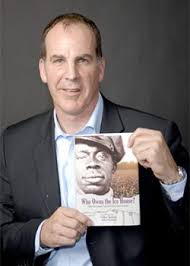
Schoeniger could not find a curriculum to explain how entrepreneurs actually operate so he created the Ice House Program. It is based on the book “Who Owns the Ice House” with interviews of more than 300 successful entrepreneurs. He wrote the book with Clifton L. Taulbert, one of the inventors of the Stairmaster. The Ice House Entrepreneurship Program is designed to teach the entrepreneurial mindset.

Peter French, president of Cafe Commerce, brought Schoeniger to San Antonio to teach the program to San Antonio entrepreneurs.

IMG_3437Schoeniger spoke for two hours Monday night to a group from Café Commerce in San Antonio about the Ice House Program, funded by the Ewing Marion Kauffman Foundation of Kansas City.

During his talk, Schoeniger dispelled some Silicon Valley stories about entrepreneurs getting rich quick and coming up with earth-shattering innovations. He thinks those stories give people the wrong impression about what it takes to succeed as an entrepreneur. His goal is make entrepreneurship accessible to everyone.

The need for entrepreneurship is huge, Schoeniger said. Studies show that 70 percent of all American workers are not engaged in their work, he said.

“Five us are flapping our paddles in the water and only three of us are pulling the whole boat,” he said.

Jason’s Story

To illustrate how transformative entrepreneurial thinking can be, Schoeniger recounted the story of Jason Campbell. He was a 12-year-old boy in his fourth foster home when Schoeniger met him.

“Jason never knew a father,” he said. “His mom was in prison for the fourth time in his life.”

Schoeniger took Jason in. He went to work on weekends with him at a construction management firm.

At 15, Jason went to live with his mom, but that didn’t last because his mom went back to prison during his junior year.

At the time, Jason had a 1.7 GPA. He dropped out of high school to work at Applebee’s full time. He wanted autonomy.

“I convinced him that movie had already been made and it didn’t end well,” Schoeniger said. “I wasn’t looking to be a hero. I knew the kid. I knew he was bright. I felt like I had no choice but to get custody of him and grab hold.”

Jason enrolled in high school and got a minimum wage job at a construction site. But six weeks into the job, Jason told Schoeniger he hated the job and he wanted to become an entrepreneur.

Schoeniger helped him launch “Jason’s Jobsite Cleanup” with a shop vac, push broom, mop, bucket and some fliers.

Schoeniger told Jason to charge $20 an hour even though Jason normally made $6 an hour.

“That terrified him,” Schoeniger said. It was outside his realm of understanding.

“It’s like I pushed him in the pool,” he said.

Jason spent his first day as an entrepreneur driving around in his 1986 Toyota Corolla looking for a customer. He was afraid to get out of his car. He had a fear of behaving in a way outside of societal norms, Schoeniger said.

When he did approach a group of construction workers, they laughed at him and offered him a job at $8 an hour. Jason said no thanks I own my own business.

“They laughed at him, but he thought that’s survivable,” Schoeniger said.

He kept pitching his service and his pitch got better. He also had to pitch to the decision makers and not the workers. But when he pitched to an owner, the guy turned him down and Jason wanted to lower his price.

“So often when we are behaving in these new ways, we are looking for excuses to go back to the old ways,” Schoeniger said.

The fifth or sixth time he encountered a builder the magic happened, Schoeniger said. The owner gave Jason an address of a house and told him to go there and tell him how much it would cost to clean it.

Jason estimated it would take four hours and offered to do the job for $75. He got the job. It actually took eight hours. But after a few jobs, the man saw Jason was reliable and consistent and he started recommending Jason for other jobs.

Jason hired two of his friends to work for him at $10 an hour. He charged the client $20.

“Which end of that transaction do you want to be on?” Schoeniger asked.

Jason graduated from high school, joined the Marine Corps. Special Forces and served two tours of duty in Iraq. Then he graduated with a B.A. in international relations from San Francisco State University.

Looking back on his experience as an entrepreneur, Jason said the fact that he was reliable was the key to his success. He also saw other people’s problems as opportunities. He would leave the house at 5 a.m. to go clean construction sites before school.

“This was the same job that he hated working for someone else,” Schoeniger said.

The impact of entrepreneurship on Jason was so profound; Schoeniger began teaching a course on entrepreneurship at a local high school. One of his students received a $100,000 contract to clean parking lots.

“I got a call from his father and he asked if there was any way he could take the class,” Schoeniger said.

That’s what led to the creation of the Ice House program, Schoeniger said.

Uncle Cleve is shown on the cover of the Who Owns the Ice House book.

Uncle Cleve is shown on the cover of the Who Owns the Ice House book.

Ice House Owner Uncle Cleve

Schoeniger met his co-author Taulbert in Tulsa. Taulbert, who was born to a teenage mom in the Mississippi Delta and picked cotton as a child, learned to be an entrepreneur from his Uncle Cleve.

Uncle Cleve owned the Ice House. He had four other businesses. He had money in the bank but he still drove an old car and people in the community ridiculed Uncle Cleve because he deviated from societal norms.

“It’s very difficult to make entrepreneurship education formulaic,” Schoeniger said.

That’s why Schoeniger dislikes articles in Inc. Magazine, Forbes that assign attributes to entrepreneurship with titles like “Do you have what it takes to be an entrepreneur?”

“They are assigning the wrong cause to the effect,” Schoeniger said.

People need to stop looking at characteristics and instead create the circumstances that allow entrepreneurs to thrive, Schoeniger said.
Entrepreneurs have to survive in resource-constrained environments and they develop traits to do that really quickly.

“It’s up to each of us as individuals to figure out how to do something useful,” Schoeniger said. “I don’t care if it’s washing windows, curing cancer or making sandwiches.”

Money is a horrible motivator, Schoeniger said.

“Jason hated the job when he was told to do it,” he said. “He was completely immersed in it when he had ownership of it.”

From his research, Schoeniger concluded it’s important for entrepreneurs to hang out with people who are entrepreneurial. They also have to have an entrepreneurial mindset or perspective.

And lastly, the situational facts that will push you down the path are important, Schoeniger said.

“It’s actually an advantage when you have nothing to lose,” he said. “The naiveté works for you.”

That’s because highly uncertain niche opportunities take years of being in the market and just scratching away – that’s how entrepreneurs uncover what’s otherwise undiscoverable, Schoeniger said.

“If you knew how hard it would be you would never get on the path,” he said. “You’re probably better off working for somebody else financially speaking.”

“The Silicon Valley stories pollute our thinking,” he said. “We start to think it should be easy. If I just had the right idea, someone should be throwing money at me.”

In reality, it takes eight years to get to $1 million in revenue.

“It’s not about getting rich quick,” he said.

Brewbot, Vaporshot and Other Tech Gadgets at Engadget Austin Live

McClellendon, CEO of Brewbot.

Chris McClellendon, CEO of Brewbot at Engadget Live Austin.

A big crowd turned out for Engadget Live Austin held last Friday to showcase some of the city’s latest tech products.

A customized beer brewing station controlled with a smartphone, a vaporized alcohol machine and a virtual reality Oculus Rift headset were a few of the devices on display at the Austin Music Hall.

Engadget, an online technology news site, is doing a series of live events around the country to showcase new gadgets, said Jeff Taylor with Engadget. More than 3,000 people got a ticket to attend the Austin event.

Other events will be held in Seattle, Boston, Los Angeles and New York.

Austin-based startups at the event included Atlas, which makes a wearable activity monitor, Chaotic Moon, maker of all kinds of software and hardware inventions, Brewbot, a robot that brews beer, Re3D, a 3D printer, Plum, a smart home lighting control device and Techjango, maker of a laptop Xbox gaming station.

The Brewbot booth attracted a steady crowd. It featured the Brewbot, a customized beer brewing device that can be controlled wirelessly with a smart phone. It’s about the size of a mini-frig and it contains everything necessary to brew homemade beer.
Brewbot moved to Austin from Belfast, Northern Ireland to participate in Techstars Austin, said Chris McClelland, its CEO.

The Brewbot costs $3,000 and they can be customized to meet the needs of the customer, McClelland said.

“It’s a robot that brews beer,” McClelland said.

Brewbot, which raised more than $194,000 from a successful Kickstarter campaign last year, is working on a venture-funding round, which the company will announce shortly.

The year old startup moved all five members of its team to Austin.

The line to sample vaporized alcohol from Vapshot was among the longest at the event.

A guy trying out Vapshot's vaporized alcohol shot at Engadget Live Austin.

A guy trying out Vapshot’s vaporized alcohol shot at Engadget Live Austin.

Victor Wong, co-founder of Vapshot, came up with the idea during a “boring weekend” last February. He got together with his friend and engineer, Larry Cotton, co-founder, and they created the Vapshot. They took the machine to a tradeshow in Las Vegas and sold $70,000 worth of the machines, which cost $4,000 each.

“We started shipping them last week,” Wong said.

The machine vaporizes alcohol into a bottle, which people then inhale with a straw. The Vapshot delivers alcohol into the lungs for an immediate buzz, which Wong estimates lasts only 15 minutes.

Vapshot is selling the machine to bars licensed to sell and distribute alcohol, Wong said. The machine can get 1,500 vaporized shots out of bottle of liquor, compared to about 20 shots in liquid form.

The Chaotic Moon booth at Engadget Live Austin

The Chaotic Moon booth at Engadget Live Austin

The line for Chaotic Moon’s demonstration stretched to the door. The company had an Oculus Rift virtual reality headset for 3D gaming interacting with an iPad app, which Chaotic Moon created. The person controlling the iPad used it to drop bombs on the person playing the Oculus Rift game.

The mash up isn’t anything Chaotic Moon plans to sell, said Chance Ivey, the company’s lead game designer.

“We look at how we can utilize it with other technologies we’ve been working with,” he said.

« Older posts Newer posts »

© 2026 SiliconHills

Theme by Anders NorenUp ↑