Author: LauraLorek@gmail.com (Page 117 of 354)

LauraLorek@gmail.com

EORA-3D and Quizling Win Australia’s Pitch Competition

By LAURA LOREK
Reporter with Silicon Hills News

Rahul Koduri, CEO and co-founder of EORA 3-D, which won Australia’s pitch competition for best business at SXSW.

Australia showed off its tech industry in a major way at South by Southwest Interactive 2017.

And the country’s tech startups performed well, said Patrick Hanlon, Trade and Investment Commissioner and Deputy Consul General in the Houston Australian Consulate-General. The Australian Trade and Investment Commission, known as Austrade, led the Australian events at SXSW.

Sounds Scouts, based in Sydney, Australia, won the SXSW Accelerator pitch competition in the Health and Wearables category.

The company created a game that is designed to test the hearing of children just starting school. It’s an accessible and low cost hearing test.

And on Monday, Australia held its first SXSW software and hardware pitch competition. Seven tech startups from Australia gave three minute pitches and then answered questions from a panel of judges. In the end, EORA 3D, which makes a high precision 3D Scanner powered by a smartphone, won for best business.

Rahul Koduri, CEO and co-founder of EORA 3-D, said the company is entirely bootstrapped. In 2015, the company raised nearly $600,000, far exceeding its $80,000 goal to launch the product. To date, the company has sold more than 4,500 units at $300 and is talks with major customers in heavy manufacturing, forensics and more, Koduri said. It already has customers in more than 60 countries that are using the scanner to digitize models for a variety of uses including 3D printing and industrial design.

The device is a fast and easy way to capture objects and surfaces accurately in 3D. Competing scanners cost anywhere from $18,000 to $100,000, Koduri said.

“The scanner works by projecting a green laser across an object and utilizing the smartphone’s camera and processor to study the distortion of the laser line and reconstruct a 3D model, that is accurate to sub-100 microns in under 10 seconds,” according to the company.

EORA-3D recently received Popular Science’s Invention of the Year for 2016 award.
Another startup, Quizling, based in Canberra, Australia, is a quiz platform where anyone can create, play and share quizzes. It won the pitch competition for best pitch.

Winners of the Australia pitch competition at SXSW.

Last week, Quizling presented in the SXSWedu Launch competition. School teachers Dion Oxley and Damien Trask founded the company in July 2014. The company has created quizzes for museums, galleries and libraries to make learning fun and easy for kids.

Its key partners include the National Gallery of Australia, The Royal Australian Mint, National Library of Australia and Inspiring Australia, a technology advocacy organization.

The other startups included Quitch, an educational technology company. Grainne Oates, a professor, started the company to engage students more in academic learning.

Linius Technologies, which makes video security and anti-piracy technology, is a public company based in Melbourne, Australia. It has a patented Video Virtualization Engine. Christopher Richardson is the CEO.

Jugglr, a mobile app that helps moms, created a platform for listing and getting paid for services. The platform also features a business affiliate program enabling local businesses and organizations of all sizes to have presence in Jugglr to market to moms. It is currently operating in Australia with plans to expand globally starting with North America and the UK. Elio Adragna is one of the founders.

Intelligent Security Integration Australia, which has been in business for 15 years, just launched its Mobile CCTV Command Center. It can be configured with customized video surveillance applications. It is marketing the product to government agencies, disaster management agencies, prisons, private security companies and others. Stephen Bell is the founder and CEO.

Artlivemedia, an enterprise search specialist agency, based in Minneapolis and Melbourne, Australia with 15 employees, specializes in Search Engine Optimization. It has worked with major companies including Cisco, Officemax and OfficeDepot, as well as Australian companies including Telstra, Henley, CGU and Tennis Australia. Michelle Bourke is the CEO and founder.

Editor’s note: Australia is an advertiser with Silicon Hills News

How Driverless Cars Can Impact Society

Driverless car panel at SXSW with Don Civgin, Allstate, former U.S. Secretary of Transportation Anthony Foxx, Chandra Bhat, UT’s director for the Center for Transportation Research, and Fast Company’s Neal Ungerleider. Photo by Susan Lahey.

By SUSAN LAHEY
Reporter with Silicon Hills News

No one knows precisely when driverless cars will become the norm in the U.S. but the speakers at a SXSW panel on the future of transportation can say they will impact society in myriad ways.

For example, the federal government collects more than $50 billion in taxes from automobile ownership, but with driverless cars providing public transport that may plummet. It will impact police stations where half the calls that come in are from traffic accidents. It will impact insurance companies who currently cover drivers, rather than manufacturers. It will impact cities planning roads, traffic, and parking. And it will impact people who don’t realize the huge role that transportation plays in how they live their lives and spend their money.

The Tuesday panel, sponsored by Allstate Insurance, featured Don Civgin, Allstate’s president of emerging businesses, former U.S. Secretary of Transportation Anthony Foxx, Chandra Bhat, UT’s director for the Center for Transportation Research, and was moderated by Fast Company’s Neal Ungerleider.

Civgin said there are more than 260 million automobiles in the U.S., most of which are only used four percent of the time. They cost a total of $3 trillion a year (in payments, insurance, fuel, parking, and maintenance) and 40,000 people died last year in automobile accidents.

“When I think about transportation it has three legs,” Civgin said. “The technology, the infrastructure, and human behavior.” Civgin noted that driverless cars were “rocket science” only seven years ago, and he thinks they’re going to be the norm much sooner than people currently expect.

Driving Social Change

But people need to consider how that will impact their lives. The current system was cobbled together over generations and doesn’t fit anyone’s idea of an efficient system for moving masses of people to different points. If people are shortsighted about driverless cars, similar mistakes could happen. For example, Civgin said, people might choose to move far outside the city because in a driverless car they can use their commute time to get things done. But that ignores the impact of the automobile on the environment. Foxx expressed concern that a move to driverless cars needed to consider accessibility issues. Having a four-door sedan pull up to pick up someone in a wheelchair, for example, wouldn’t work. Also, for many people who currently use taxis or rideshares, the interaction with the driver may be their only encounter with people of a different culture or socioeconomic status.

In addition, there are the typical questions about tech: whether people want data collected on where they’re going and whether the driverless car systems are vulnerable to cyberattack. But for all the risks, Civgin pointed out, 94 percent of auto accidents are caused by human error. He talked about watching an autonomous vehicle study at the University of Michigan where researchers were collecting data in a controlled environment. In an hour, they had only logged about a mile of actual driving time on which they were collecting data. But when he spoke to someone from Tesla, they informed him they were collecting data on more than a million miles a day.

“The players who are going to push this are not playing the traditional way,” Civgin said. But while the news gets up in arms about one driverless car accident, he said, we forget that we’re beginning with 40,000 deaths annually. If driverless cars could halve that, it would be a major success.

As we move into the era of driverless cars, the panelists all agreed, it’s important to think not just in terms of the next step in transportation but in the role transportation plays in our lives, how we plot our days and activities, and the impact of that on others and the environment.

“We need to broad our discussion,” Bhat said, “into a bigger picture of society and what we want it to be.”

Buzz Aldrin is on a Mission to Occupy Mars

By LAURA LOREK
Publisher and Reporter with Silicon Hills News

Buzz Aldrin, photo courtesy of SXSW

Buzz Aldrin, one of the first two men to set foot on the moon, thinks that should be a stop on the journey to Mars and the U.S. should occupy the red planet.

Aldrin participated in a featured session at South by Southwest Film on Tuesday with Time Magazine Editor-at-large Jeffrey Kluger, who just completed writing the book, Apollo 8, on the first manned mission to reach the moon, orbit it and return to earth safely.

Cycling Pathways to Mars, courtesy photo.

Aldrin, astronaut on Gemini 12 and Apollo 11 missions, was at the festival to premiere with 8i, a holographic technology company, and Time’s Life VR “Buzz Aldrin: Cycling Pathways to Mars, a virtual realty film featuring Aldrin’s hologram on a journey through space.

He wanted to do the project to share his plans with the world to create a human settlement on Mars. During the panel, they showed a trailer for the VR project, which features a photorealistic 3D hologram of Aldrin. It will be distributed across multiple VR platforms on Friday.

During the rest of the talk, Kluger asked Aldrin about his plans for space exploration and colonizing Mars and his experience as an astronaut and space pioneer.

Kluger asked Aldrin why he is critical of what he calls the “flags and footprints” model of exploring space and what are its limitations.

“It means that as a nation, we don’t care too much about the science, or the geology or how long you’re going to stay or what you’re going to eat, we just want you to go there and put a flag down,” Aldrin said. “It symbolizes an expedition. That’s not the way we want to venture outward at all. It’s kind of a degrading term. We don’t want any more of this flags and footprints.”

Instead, the plan is to go to Mars and stay there for five, seven or ten years and to continually occupy the planet and build a permanent settlement there, Aldrin said.

“The moon enables us to go to Mars,” Aldrin said. “It’s essential. It’s almost mandatory in my way of thinking. The base we want at Mars. We will design and place it on the moon.”

The moon will become a landing and refueling stop on the way to Mars as part of a multiple-step approach, Aldrin said. A spaceship would also continuously travel back and forth from Mars to Earth. The U.S. would design the moon station with participation from Europe, Russia, Japan and China, Aldrin said. He is already talking about these plans with the Chinese and Russians at the Buzz Aldrin Institute at the Florida Institute of Technology in Melbourne, Florida. He also serves as chancellor of the International Space University in Strasbourg, France.

During the talk, Aldrin recounted how the first person to propose going to Mars was President John F. Kennedy in April of 1961. He met with NASA officials at NASA headquarters and told them “we got to really boost our technology. I think we should go to Mars.” NASA officials told him that was beyond their capabilities but that maybe they could get to the moon in 15 years. They beat that goal and did it in a decade, Aldrin said.

On July 20th, 2019, it will be the 50th anniversary of the first moon landing and that would be a good time for the President to announce plans for the U.S. in two decades to lead international crews to occupy Mars, Aldrin said.

“Our purpose I believe is to settle the planet Mars,” he said. “And I think that should be our objective. We’re not going to sell the American people, certainly we’re not going to sell the government on that right away. But if we occupy, then we’ve got several years to fine tune that.”

Twelve years ago, NASA landed Spirit and Opportunity rovers on opposite sides of Mars. Spirit quit after five years and Opportunity is still working, Aldrin said.

“In five years, with both of them moving around, what they accomplished could have been done in one week if we had human intelligence around Mars,” he said.

The permanently shaded regions of Mars are where the ice is and that is where the source of hydrogen and oxygen is and NASA can use that to refuel spacecraft, Aldrin said.

Today, NASA’s budget is just shy of $20 billion, which is as much as it has been in several years, Kluger said.

“The budget in 1965, before we correct for inflation, was $7.5 billion, which would be just shy of $60 billion in today’s dollars,” he said. “NASA represented four percent of the U.S. budget in the sixties. It is now .04 percent. Do we have the wisdom to spend the money it takes to become a two-planet species?”

“The wisdom to spend the money,” Aldrin said. “That’s the first time I’ve heard that. It takes fiscal wisdom to do with the taxpayers’ money what we should be doing.”

The peak of NASA’s budget was the peak of the early Apollo missions, it was already on the decline by the time Aldrin and Astronaut Neil Armstrong went to the moon, he said.

For 10 to 15 years, it’s been a half a percent, Aldrin said.

NASA simply doesn’t get enough money to do what it needs to do, Aldrin said. The shuttle stopped flying in 2011 and the Orion spacecraft was supposed to take over. But it wasn’t ready.

“How do we get to our $100 billion space station?” Aldrin asked. “In a Russian space craft. And the price, as you expect, keeps going up.”

Commercial spacecraft and rockets felt they could replace the rocket that was not ready, Aldrin said.

SpaceX and Orbital Science have been delivering cargo. Within a year, SpaceX and Boeing are expected to deliver crew, Aldrin said.

“Without delivering crew to earth’s orbit, we’re not going anywhere,” he said. “That’s really worse than we were in April of 1961.”

“One of the reasons that we go to space is simply because we go because that’s what we as an idiosyncratic species do,” Kluger said. “It’s the same reason we write symphonies and we dance. None of that stuff keeps us alive but it’s all reasons we want to be alive in the first place. Do you feel there is a safe space for that sentiment or must it always be this is how we can benefit pragmatically, financially, technologically?”

“I had a speech writer help me out. He said We Explore or We Expire,” Aldrin said.

Aldrin also recounted a few stories from his time in space like when Astronaut Neil Armstrong left the capsule first feet first and then Aldrin. But he had to turn around and partially close the door to the capsule. He couldn’t close it all the way because there wasn’t a handle on the outside of the door and there would be no way to get back inside.

He also said when they were ready to return to earth, he had an “absurd” conversation with the mission command center in Houston.

They told him “Tranquility Base You’re cleared for takeoff.”

He answered: “Roger Houston, we’re number one on the runway.”

“Absurd,” Aldrin said. “We’re the only people up here. There’s no runway.”

Aldrin also advised the audience to train their brain to think outside the box.

“You have to expand your way of thinking, into not absurdities, not risky things, but better ways of doing things,” he said.

The Ubiquity of Fully Autonomous Cars is Inevitable

“The Rise of Self-Driving and Connected Cars” panel at SXSW, photo by Hojun Choi.

By HOJUN CHOI
Reporter with Silicon Hills News

Industry analysts have argued that the mainstream use of self-driving cars is inevitable, suggesting that the technology will be a norm within the next 30 years.

At this year’s “Innovation Policy Day” at South by Southwest, the Consumer Technology Association hosted a panel in which experts from academia, advocacy and the automobile industry shared their views on how government regulations can better facilitate the assimilation of this new technology.

A significant portion of the discussion, titled “The Rise of Self-Driving and Connected Cars,” revolved around regulations related to the safety standards of self-driving motor vehicles.

Hilary Cain, a representative of Toyota Motor North America, Inc., said her company’s invested interest in driverless car technology was largely driven by the fact that tens of thousands of drivers die in traffic incidents every year in the U.S. alone.

“Figuring out a way to dramatically reduce that number has led us to this self-driving technology revolution,” Cain said.

Cain, who serves as the company’s director of technology and innovation policy, said it is important to educate the public on the responsibilities that drivers will retain as the use of these vehicles becomes more widespread.

“Education of consumers could not be more essential than it is right now, especially if we’re dealing a variety of things that fall into the category of self-driving, driver-less or autonomous,” Cain said.

Despite what may be implied, she said these labels should not serve to diminish the role of the driver, as their attention and action may be pivotal in emergency situations.

In November 2015, Toyota announced that it would invest $1 billion into a new subsidiary, Toyota Research Institute, Inc., to research and develop artificial intelligence technology for autonomous vehicles.

Ram Vasudevan, an engineering professor at the University of Michigan, said the technology will take some time to be integrated into society, and said experts need to learn how to inform and educate consumers in an engaging way.

Though safety standards are currently being studied through road tests by companies like Google Inc., Vasudevan said the research is largely focused in California and Arizona.

“What everyone has realized is that this can only get us so far, we need to think about the ways to really find out how safe the system is,” Vasudevan said.

He said researchers will be playing a critical role in the simulation process, as automated systems cannot yet detect the wide variety of hazards that exist on and off the road. He also said not all companies that are leading the industry are depending on academics for help in research and development.

“Tesla, for example, is different from Ford and Toyota in that they have decided to keep their research completely in-house. I don’t know which strategy is going to pay off, but I would guess that it is going to take a combination of both,” Vasudevan said.

Cathy Chase, who spoke on behalf of the Advocates for Highway and Auto Safety, said researchers into safety standards should take care to communicate their finding and knowledge with consumers as frequently as possible.

“Consumers need to be involved, and transparency is key. The more that the public knows and understands what is happening here, the better,” Chase said.

Chase serves as the vice president for government affairs for the auto safety advocacy group, which has lobbied for a variety of consumer-related safety policies. She said state and city governments will need the federal government’s lead on how to deal with the disruptive impact of self-driving cars.

“I argue that the better way to go is for the federal government to have a more proactive role,” Chase said. “Guidelines on how to go about testing the technology would be a good first step, but there needs to be more.”

The all-day event was attended by five hundred people and also featured panel discussions on augmented and virtual reality, music licensing as well as tech policy under President Donald Trump. This was the fourth year that the Consumer Technology Association has hosted the free event.

Jamie Boone, who moderated the panel, said that policy makers and consumers need to come together to develop regulations that will shape how autonomous vehicles impact society.

“I think combining the viewpoints of the auto industry, safety industry and academia is a great exhibition of the need to work together to address some very complex questions that we all have in moving this technology forward,” Boone said.

3D Printing is Changing the World

Samantha Snabes, co-founder of re:3D speaks with an audience member following her SXSW panel, photo by Hojun Choi.

By HOJUN CHOI
Reporter with Silicon Hills News

As 3D printing technology continues to change the way companies approach product design and manufacturing, the industry is also reaching for new limits on its usability.

Samantha Snabes, founder of startup re:3D, told South by Southwest festival goers that as the technology reaches new limits, more research will be needed to make the hardware and design process more widely available.

“As opportunists, sometimes we get so fixated on what goes into designing and making product,” Snabes said. “We might need to go a step further when thinking about accessibility.”

Snabes’ panel titled, “Toilets and Trash: Will 3D Printers Save the World?” highlighted ways in which the industry could expand its reach.

Snabes highlighted recent efforts that aim to teach locals of impoverished areas how to make their own printers using electronic waste that would otherwise lay in a heap of trash. Snabes said these communities can take advantage of new manufacturing methods to improve the local economy.

“I personally think one of the biggest opportunities for us when thinking of 3D printing’s impact on society is its economic gains,” Snabes said.

Snabes also discussed how 3D printing continues to impact a wide variety of industries across construction, healthcare and education.

In addition to introducing new learning practices in the classroom setting, she said that the technology is also helping develop ways to protect the environment, such as less damaging methods to extract honey from beehives.

One part of the presentation showcased a project that uses 3D printing technology and drones to train landmine extractors to better recognize hazards.

Because 3D printing expedites the prototyping of products, Snabes said the technology empowers individuals to test out their imaginations in the real world.

“I think many people, including myself, see real opportunity in creating things more quickly and getting to scale faster,” Snabes said.

Snabes said leaders in the field should also focus on teaching the process of 3D printing in addition to working to improve the capabilities of 3D printing.

Though risk takers in the space are prone to jump into production, Snabes said more needs to be done to figuring out how to make the process more practical.

She said research into material selection and geometric design -among other things, can help innovators avoid making the same mistakes.

“If these repositories are not cultivated, we are constantly going to be reinventing the wheel,” Snabes said

The panel took place Tuesday at the J.W. Marriott hotel, and was attended by a crowd of about a hundred festival goers.

Alexander Crease, an applications engineer for Massachusetts-based Markforged, spoke to Silicon Hills News after the panel and said the event was an opportunity for those involved in the industry to explore and build new perspectives.

“The big step we have to take as a 3D printing community is to figure out how we educate and showcase the best practices of the technology,” Crease said.

“Even with internet and social media, networking at events like this is really important because we get to interact one-on-one with leaders in the field.”

Snabes’ startup, with offices in Austin and Houston, successfully raised $250,000 through a Kickstarter campaign it announced at SXSW 2013, which helped the company’s development of the “Gigabot” 3D printer.

According to its website, the company has sold more than 200 units. The University of Texas at Austin, Nokia Inc. and NASA are among the startup’s clientele. Prices of the 3D printers currently range from $8,500 to $16,995.

Last year, Forbes reported that the 3D printing, or “additive manufacturing” industry’s estimated value was more than $5 billion in 2015, citing a study published by Wohlers Associates.

Correction: This article has been updated to correct the amount of money raised by re:3D in its Kickstarter campaign.

Data Mining with Artificial Intelligence is Making Businesses Smarter

Argo Digital panel at SXSW

By LAURA LOREK
Publisher and reporter with Silicon Hills News

Social media has caused an explosion in the amount of data generated by people and businesses in the last five years.

Yet, data without analysis is worthless.

That has led to the rise of artificial intelligence and machine learning coupled with the input of humans to make sense of streams of data, according to experts on Argo Digital’s panel Sunday at South by Southwest on “How Data and Machine Learning/AI Affect Risk Transfer in the 21st Century.”

Jason Abbruzzese, business reporter with Mashable, moderated the panel for Argo Digital, an emerging insure tech practice within property and casualty carrier Argo Group, based in San Antonio.

By analyzing the data, all businesses are trying to make themselves smarter, said Andy Breen, senior vice president for Argo Digital and adjunct professor at NYU Stern School of Business and one of the panelists.

Until recently, the tools did not exist to sift through all the data and extract insights that make a business operate better, he said. Every day, people and companies generate all kinds of streams of new data on Google, Facebook, Twitter, Instagram and more.

“There was definitely a time when it was very uncomfortable, but now we have the tools to deal with it,” he said.

The fact that we have all this data out there is not very interesting, said Andrew Bocskocsky, co-founder and CEO of Grata Data and another panelist. Companies have been using data as long as data has been available, he said.

“When we start having buy in from industry it starts getting interesting,” he said. “We can generate value and get results everyone is happy with.”

Sambit Sahu, adjunct professor of computer science at Columbia University, and another panelist, said to get great analysis, companies need great data. He is also a data/telco analytics research scientist who was involved with the IBM Watson program.

“Garbage in, garbage out,” Sahu said. “The data collection is only as good as the data quality.”

That’s why businesses like Argo are looking for new ways to collect data.
For example, with a restaurant, Argo is learning new ways to assess risk, Breen said. It is now deploying sensors, drones and other internet of things devices to create new data streams continually, he said.

“Getting data constantly through the stream changes the conversation,” he said. “We can then talk to them about risk management.”

And data collection works hand in hand with humans, Breen said. A lot of data is unstructured and requires humans to figure it out, he said.

“It is the combination of algorithms helping people be better assessors of risks or people be better decision makers,” Breen said. “Let’s let algorithms do what algorithms are good at which is complex math and working with really large data sets. Things like that. And have people do the things they are good at like sales and negotiations and other types of things like that. When we reach the singularity, if we ever reach the singularity, we’re not going to have machines that are going to be at that level.”

Six month ago, Breen looked at the underwriting process, collecting data from ten different data sources to assess risk, and built a tool that can collect all that data and digest that, he said. That focuses Argo’s employees on what they are good at which is risk assessment, he said.

The cost has come down on data analysis computing power which has led to more data analysis and insights, Sahu said. That has accelerated the artificial intelligence part of the analysis, he said.

The data still cannot eliminate risk in the insurance industry, Breen said.

“No matter how much better the data is and no matter how much we underwrite there is still going to be hurricanes, tornados and floods and other things to deal with,” he said. “I would even be an advocate of leveraging the playing field for the data. Everyone should have equal access to equal amounts and open data. That would actually be better generally for the industry as a whole. They can decide how much risk to take on.”

The next five years is going to be a period of “choppiness” and transition with a trend toward artificial intelligence as a platform that creates its own neural networks to solve problems, Breen said.

“Maybe five, maybe ten years, someone can go in and say here’s my problem and the neural network will actually build itself,” he said. “That’s starting today. We’re not there yet, but it’s happening.”

Another trend is insurance companies are partnering with startups to leverage their technology and get into this space, Bocskocsky said.

“You’re giving data and expertise and they are giving you their knowledge and technology,” he said.

When it comes to privacy, all the data is out there, Breen said.

“Personally, I disengaged with Facebook three or four years ago,” he said. “I felt like it was wrong.”

Content on Facebook is developed to target behaviors and emotions, he said.

“You’re giving up tons of valuable data every time you’re on Facebook and you like something,” he said.

Editor’s note: Argo is an advertiser with Silicon Hills News

Bumble Dating Founder Focuses on Civility

SXSW Speaker Whitney Wolfe, photo by Geri Askew, courtesy photo.

By SUSAN LAHEY
Reporter with Silicon Hills News

It’s 2017 and the rules for women in the dating world haven’t changed much.

That’s what Whitney Wolfe, founder of Austin’s Bumble dating service, is trying to change. Bumble is the internet dating service that lets the woman make the first move. Men and women can express an interest in each other but the woman is the only one—in a hetero match—who can start the conversation. She has 24 hours to do so unless, under special circumstances, either party chooses to extend the option for an additional 24 hours.

In a featured speaker session at South By Southwest, Wolfe was interviewed Monday by CNBC journalist Julia Boorstin.

Wolfe, who formerly worked for Tinder, had initially wanted to start a social app that let women leave compliments for each other. The whole focus was to change the tone of discourse in social apps to something civil, nonsexist, and supportive. She came up with Bumble because she saw how women—even in this day and age—feel they have to play a passive role in the dating world. If she could say one thing to women it would be “Don’t play to men.”

“Don’t do that,” Wolfe said. “Don’t play a role with any man in the room.”

In the two years since its release Bumble has garnered 12.5 million users internationally in cities from Los Angeles to New York and countries including France, Australia, and the United Kingdom. There’s always a cultural difference, Wolfe said, in different countries. In France, for example, the motto “It’s Your Move” didn’t work. Women wanted to be chased. “It’s Your Choice” was more effective.

Users spend an average of 100 minutes a day on the app, Wolfe said. About a tenth of Bumble users use premium services that let them keep a match longer than 24 hours or even retrieve a deleted match. Bumble has also added a friends’ search function and a Business Bumble for networking. The point, Wolfe said, is to change the perception of meeting “online” to simply “connecting.”

The company is getting ready to open Bumble Hives where Bumble users can meet. These might be co-working spaces, coffee shops and other places where people can safely have a first date or a first meeting. The company also recently bought a gay dating service called Chappy, though Wolfe said the regular site was “fully optimized for LGBTQ dating.”

Wolfe’s business approach seems focused on civility. The app also rewards users who are particularly loyal, thoughtful and considerate of others in the Bumble community. Employees treat each other with respect. She rarely recruits, but when she does it’s on Instagram. Often she’ll just offer someone who isn’t technically qualified a job because they strike her as having the right attitude and the right potential.

She doesn’t think of herself as operating in a crowded space because no one else is doing exactly the same thing she is. She’s had plenty of naysayers but she has a rule about that. Take everything to mind, don’t take everything to heart. Everything is information and some of the harshest comments are the most useful. The important thing is: “Take away the noise.”

Mark Cuban Thinks Government Still Needs Thoughtful Disruption

By SUSAN LAHEY
Reporter with Silicon Hills News

Mark Cuban, Adam Lyons and Michelle Skelding at SXSW, photos by Susan Lahey.

In his heart, Mark Cuban says, he’s a libertarian.

Cuban supports the Trump administration’s efforts to get rid of excessive regulation. But there’s a difference between regulations designed to protect interests with money and regulations designed to protect people.

Cuban spoke at a keynote discussion on Sunday with Adam Lyons, co-founder of Austin’s The Zebra, a car insurance aggregation site. Cuban was an early investor in The Zebra. Michelle Skelding, an Austin-based global technology consultant, moderated the panel on the topic “Is Government Disrupting Disruption?” A lined formed around the block an hour before the discussion began and the ballroom quickly reached capacity.

As an example of government disruption, Cuban noted how he invested in Austin’s BeatBox Beverages, which manufactures party drinks, and also invested in a bar before learning that people aren’t allowed to own a part of a manufacturer of alcohol and also own part of a bar. He now has to disentangle his interests.

“There’s a difference between a regulation that protects somebody and regulations that protect all of us in some way because someone in the past was short sighted,” Cuban said. “In my mind those are good regulations…. Getting rid of regulations for short term thinking in an effort to try to create jobs when it won’t, that is the biggest myth.”

Cuban’s position on regulation has evolved, he said.

“As a country we have a balance sheet. We’ve taken on a responsibility for citizens and those create a liability…Reagan said you can’t fall over dead in the streets. We have to take you in and stabilize you,” Cuban said. “Those regulations are good. When we think the citizenry deserves something and that is a right you amend the Constitution to that. Healthcare for chronic illnesses and serious illnesses is a right…we all play the genetic lottery every day. Some disease is going to come out and we’re fucked. A toilet comes out of space labs and hits you on the head, you’re fucked. There should be healthcare for that.”

Next Up for Disruption: Tech

Lyons’ company has been called the Kayak of car insurance. He said they had to work within all the regulations of the insurance industry, using publicly available documents, to guide how they created the company. His company has more than 100 insurance certifications. A graduate of Temple University in Philadelphia, which has a top ranked program in risk management and insurance, Lyons said he was intrigued by the fact that Lloyd’s of London, a shipping company, created insurance to protect its investments if the ships sank.

When Cuban got an initial email from Lyons, he said, he believed the car insurance agency was ripe for disruption. That’s what caught his interest. But, he also said, everything can be disrupted. He made a mistake not investing in Uber because of all the regulatory hurdles. Everything, Cuban said, can be disrupted. The rule should still be “Ready, fire, aim.”

One of the prime targets for disruption may be the tech industry itself, Cuban said. While everyone is pushing STEM degrees, much of the work now done by mathematicians will be done in the future using machine learning and artificial intelligence. It would be better to have a philosophy degree and a knowledge of foreign languages than a math degree because deep learning, neural networks, and critical thinking will be the tasks left to humans. That’s the kind of thing that people—or the government—need to take to small towns that have lost manufacturing jobs, Cuban said.

Calling Donald Trump the “Zoolander President,” Cuban is toying with the idea of running in 2020 because “it would be nice to have a president who knows how to use a search engine.” Trump’s idea of efficiency, he said, is that Cuban sends him an email, Trump’s secretary prints it out, Trump writes a reply by hand, then the secretary scans it and sends it back as an attachment.

“He has never written an email in his life,” Cuban said. What’s worse, though, is that he believes Trump hasn’t read a book in 30 years.

“I like my presidents to read.”

Ideas and Innovation Exchange Between the EU and US at SXSW

By LAURA LOREK
Publisher and Reporter with Silicon Hills News

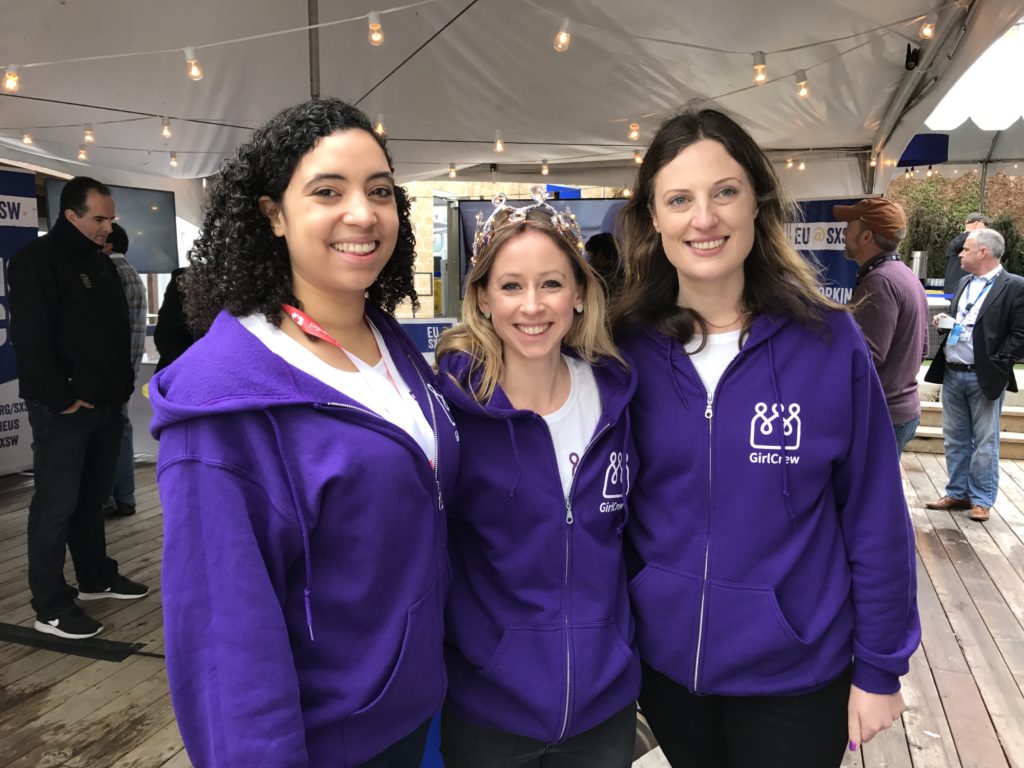
Aine Mulloy, Elva Carri and Pamela Newenham, founders of GirlCrew at EU@SXSW

For the first time, the European Union is showcasing its technology and innovation at South by Southwest.

The EU has 28 member states and various ones like the United Kingdom and Ireland have been at SXSW for years in different capacities, said James Barbour, spokesman with the European Union.

But 2017 is the first time for “EU@SXSW,” which is based at the Palm Door on 6th Street and features ten startup companies from throughout Europe. The EU is also promoting its film and music industries at the conference. And EU Ambassador David O’Sullivan is at SXSW promoting trade and cooperation between the European Union and the U.S.

SXSW has become the “go to place” for people who see themselves as leaders in the fields of technology, film and music globally, Barbour said.

“It’s about an exchange of innovative ideas, people working together,” Barbour said. “Also, the trade side is extremely important. The EU, as a whole, is the world’s largest single market for the U.S. to invest in and trade with.”

The EU is hosting panels on cybersecurity, innovation, cinema, creative cities and culture throughout SXSW.

James Barbour, spokesman with the European Union at SXSW

“At that end of the day, it’s all about jobs, and growth and innovation,” Barbour said.

SXSW is also an opportunity for the European Union to show off some of its best and brightest startups, Barbour said. More than 200 companies applied to be part of the EU’s SXSW Startup Showcase and ten companies made the cut.

GirlCrew, a startup based in Dublin, is one of the ten demonstrating its technology at SXSW. This year, the company is expanding to the U.S. with an office in San Francisco, said Aine Mulloy, spokeswoman.

“GirlCrew is the easiest way for girls to make new friends,” she said.

It’s a social network for career women, targeted at those between the ages of 25 and 40, to meet other women in the cities they live for networking, friendship and fun and to share advice and support.

In Austin, 400 women belong to GirlCrew. And Globally, Girl Crew has more than 85,000 members in 46 cities. It has a waiting list of 200 cities earmarked for further expansion, Mulloy said.

“We find that actual true connections happen offline,” she said. “Twenty women flying off to Morocco together and others getting together to go a walk and to have a coffee.”

Olivier Plante, CEO of Thingthing, based in London.

Thingthing, a smartphone keyboard platform, based in the London, is getting a lot of attention at SXSW, said Olivier Plante, its CEO.

“We disrupt what a mobile keyboard should be,” Plante said.

“Switching between apps on a mobile phone is a nightmare,” he said. “We’ve created the keyboard as a platform to solve that problem.”

Thingthing has created mobile keyboard technology that lets users insert photos, send calendar appointments, share links or search for documents with their keyboard without switching to other apps on their phone, he said. The company raised $350,000 Euro seed round and is in the U.S. meeting with investors for further expansion and to open a U.S. office, Plante said.

Thingthing, founded in 2015, is also in talks with smart phone manufacturers about licensing its software, he said.

The EU showcase not only helps the EU Startups but Austin-based startups looking for further expansion internationally can benefit too.

On Sunday, Joah Spearman, founder and CEO of Localeur, met with the startups from the EU and talked about how they can work together.

Joah Spearman, founder and CEO of Austin-based Localeur

Localeur, a travel site for locals by locals, is now in 45 cities including Toronto and London and plans to expand to more international cities this year, Spearman said. Localeur launched at SXSW four years with just Austin and now it’s going global, Spearman said.

“There are a lot of Millennial travelers out there that want travel recommendations from locals,” Spearman said.

In 2017, Localeur plans to launch in more English speaking foreign cities: Hong Kong, Sydney, Melbourne and Dublin, he said. And then expand into Spanish speaking countries like Barcelona and Madrid, he said.

SXSW is a great place for networking and making connection, Spearman said.

“During SXSW, Austin becomes the center of the world, in technology especially,” he said. “If you are a founder or an investor, you have to be here.”

Next week, Localeur is launching a print publication featuring content on 38 cities. And in April, its launching a video product, Spearman said.

“You have to reach people where they are,” he said. “You can’t wait for them to come to you.”

A lot of companies are trying to go international and building those network relationships early on is extremely important, said David Altounian, professor of entrepreneurship at St. Edward’s University and founder and CEO of Motion Computing.

“The overseas markets are critical to a businesses’ growth,” he said. “You’ve got to have an international pres

Encouraging More Startups at the University of Texas at Austin

By HOJUN CHOI
Reporter with Silicon Hills News

University of Texas president Greg Fenves and Bob Metcalfe, inventor of Ethernet, explored ways that universities can have a bigger impact on the world at the “Research Universities Should be Better at Startups” session at South by Southwest.

Metcalfe, professor of innovation at the Cockrell School of Engineering at UT, said that research universities are not doing enough to change the world, and said institutions of higher education should do more to foster startups on campuses.

“You know our motto here is ‘What starts here changes the world.’ The problem is, we’re not changing the world enough, and my hypothesis is that we can do a better job,” Metcalfe said.

Kerry Rupp, partner at True Wealth Ventures, who moderated the panel, asked what universities could do to improve the startup ecosystem.

“When a professor launches a startup, the impulse of the university is that that’s a conflict of interest, so all of the ‘antibodies’ of the university descend on this poor professor to make sure there are no conflicts of interest,” Metcalfe said.

He also said that licensing offices of universities should focus less on the monetary value of an innovation, but more on its potential impact on the world.

“One thing you notice in this field is that the licensing offices of all universities are generally hated,” Metcalfe said.

Metcalfe said startups at universities are also forced to leave the campus setting too early in their development.

“[We can] delegate the management of that decision to the deans of the departments, not to lawyers that are running around with state laws saying ‘you need throw this person out’,” Metcalfe said.

Fenves, who served as the vice provost of research before taking on his current position, said that he, too, thinks that research universities should value the impact of an innovation, rather than its monetary return.

“Universities should be flexible as possible in issues pertaining to ownership, and be flexible as possible in licensing or equity interest,” Fenves said.

Fenves said he believes the first step in encouraging entrepreneurship, however, is talent acquisition.

“The best basic researchers are deciding what they want to work on by what they’re seeing in the market,” Fenves said.

According to a 2015 study published by the National Academy of Inventors and the Intellectual Property Owners Association, The University of Texas at Austin was fourth in the number of granted U.S. patents.

“Research universities like the University of Texas at Austin have two major roles that are interconnected: education and discovery,” Fenves said.

One role that universities should not play, Fenves said, is that of the investor.

“The issues around conflict of interest are certainly there, but they can doubly amplify when the university is also doing the funding,” Fenves said.

Metcalfe, who serves on the advisory council of the University of Texas System’s “Horizon Fund,” said that a major weakness of the fund is that it is not allowed to lead investments.

The $50 million fund was created in 2011 by the board of regents to aid companies that are connected to the UT System.

“I would hope that the Horizon Fund would be used to fund startups that are having difficulty getting funding or might not be funding at all, because that’s where we should be stepping in,” Metcalfe said. “We can’t do that if we can’t lead.”

The panel took place Sunday evening at the Austin Convention Center, and was attended by a crowd of about 50 festival goers.

“I think the most valuable resource we can get from the [startup] community is knowledge and experience,” Fenves said.

« Older posts Newer posts »

© 2026 SiliconHills

Theme by Anders Noren — Up ↑